Crypto Basics

Types of Stablecoins: A Complete Guide for 2025

Discover the types of stablecoins—fiat-backed, crypto-backed, algorithmic, and commodity-based. Learn how they work, their pros and cons, and which is best for your crypto strategy in 2025.
Token Metrics Team
8 min
MIN

The cryptocurrency market is famous for volatility—Bitcoin can swing by thousands of dollars in a day, and altcoins can rise or crash in hours. But what if you need price stability? That’s where stablecoins come in.

Stablecoins are digital currencies pegged to stable assets like the US dollar, gold, or even algorithmically maintained price levels. They bridge the gap between the speed and efficiency of blockchain technology and the reliability of traditional money.

As of 2025, stablecoins account for over $140 billion in circulating supply, making them essential for traders, investors, and decentralized finance (DeFi) users. But not all stablecoins are the same—different types use different mechanisms to maintain their stability, each with unique pros and cons.

In this guide, we’ll break down the types of stablecoins, how they work, their risks, and which might be best for your needs.

What Are Stablecoins?

A stablecoin is a cryptocurrency designed to maintain a stable value by pegging its price to a reference asset. Most stablecoins are pegged to fiat currencies like the U.S. dollar (e.g., 1 USDT ≈ $1), but some track commodities (like gold) or are algorithmically balanced to hold value.

They are widely used for:

  • Trading: Moving quickly in and out of volatile assets.
  • DeFi: Providing liquidity, borrowing, and earning yields.
  • Remittances: Sending low-cost, fast cross-border payments.
  • Hedging: Protecting against crypto market volatility.

Types of Stablecoins

There are four main types of stablecoins:

  1. Fiat‑Collateralized Stablecoins
  2. Crypto‑Collateralized Stablecoins
  3. Algorithmic (Non‑Collateralized) Stablecoins
  4. Commodity‑Backed Stablecoins

Each has a different method of maintaining its peg. Let’s break them down.

1. Fiat‑Collateralized Stablecoins

Definition:
These are backed 1:1 by traditional currencies like the U.S. dollar, euro, or yen. For every stablecoin issued, an equivalent amount of fiat is held in reserve by a trusted custodian.

How They Work:
If you buy 1 USDC, Circle (its issuer) holds $1 in a regulated bank account or short-term U.S. Treasury securities. When you redeem that stablecoin, the issuer sends you the equivalent amount in fiat and burns the coin.

Examples:

  • Tether (USDT) – Largest stablecoin by market cap; widely used on exchanges.
  • USD Coin (USDC) – Issued by Circle, fully regulated and audited.
  • TrueUSD (TUSD) – Offers real-time attestation of reserves.
  • PayPal USD (PYUSD) – Launched by PayPal for payments and DeFi.

Pros:

  • High stability – Pegged directly to fiat.
  • Transparent – Many provide audits and attestations.
  • Easy adoption – Ideal for traders, merchants, and payment platforms.

Cons:

  • Centralization – Custodians control reserves and can freeze accounts.
  • Regulatory risks – Subject to government oversight.
  • Less transparency for some issuers – (e.g., Tether faced scrutiny over its reserves).

2. Crypto‑Collateralized Stablecoins

Definition:
These are backed by cryptocurrencies like Ethereum or Bitcoin instead of fiat. Because crypto is volatile, these stablecoins are overcollateralized (e.g., $150 in ETH backs $100 in stablecoins).

How They Work:
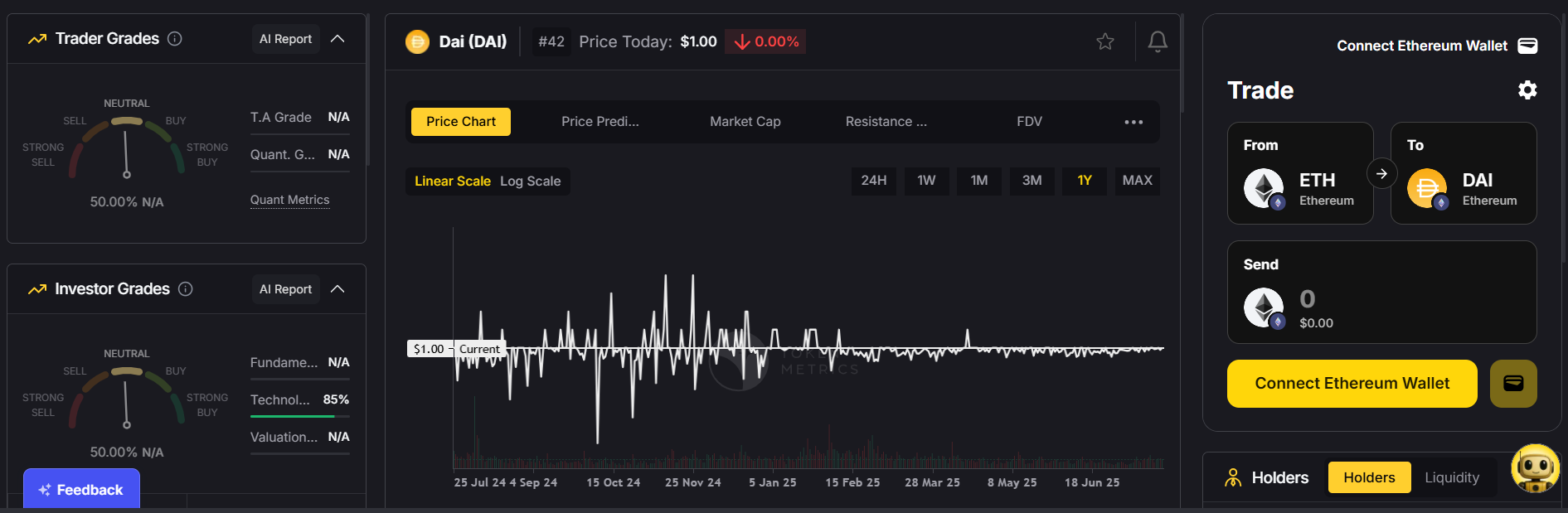
When you mint a crypto-backed stablecoin like DAI, you deposit collateral (e.g., ETH) into a smart contract. If the collateral value drops too much, the contract automatically liquidates some assets to maintain the peg.

Examples:

  • DAI – Issued by MakerDAO, backed by ETH, USDC, and other assets.

  • sUSD – A synthetic USD issued by Synthetix.
  • MIM (Magic Internet Money) – Collateralized by multiple crypto assets.

Pros:

  • Decentralized – No single company controls reserves.
  • Transparent – All collateral balances are viewable on-chain.
  • Resistant to censorship – Issuers can’t freeze accounts.

Cons:

  • Volatility risk – Collateral can lose value quickly, requiring liquidations.
  • Overcollateralization – Ties up more capital than fiat-backed options.
  • Complexity – Requires understanding of DeFi mechanics.

3. Algorithmic (Non‑Collateralized) Stablecoins

Definition:
These don’t use physical reserves. Instead, they maintain their peg via algorithmic supply adjustments—minting or burning tokens to balance price around $1.

How They Work:
If demand increases and the price rises above $1, the protocol mints more coins. If it falls below $1, the protocol burns coins or incentivizes users to buy them back.

Examples:

  • Ampleforth (AMPL) – Elastic supply adjusts daily.
  • UST (TerraUSD) – Infamously collapsed in 2022 after its peg broke.
  • Frax (FRAX) – Uses a hybrid model: partly collateralized, partly algorithmic.

Pros:

  • Highly capital-efficient – Doesn’t require large reserves.
  • Decentralized – Often governed by smart contracts and DAOs.

Cons:

  • Peg instability – Prone to “death spirals” when market confidence drops.
  • Complex mechanisms – Harder for average users to understand.
  • History of failures – UST/LUNA crash eroded trust in algorithmic coins.

4. Commodity‑Backed Stablecoins

Definition:
These stablecoins are pegged to commodities like gold, silver, or oil, giving them intrinsic value beyond fiat.

How They Work:
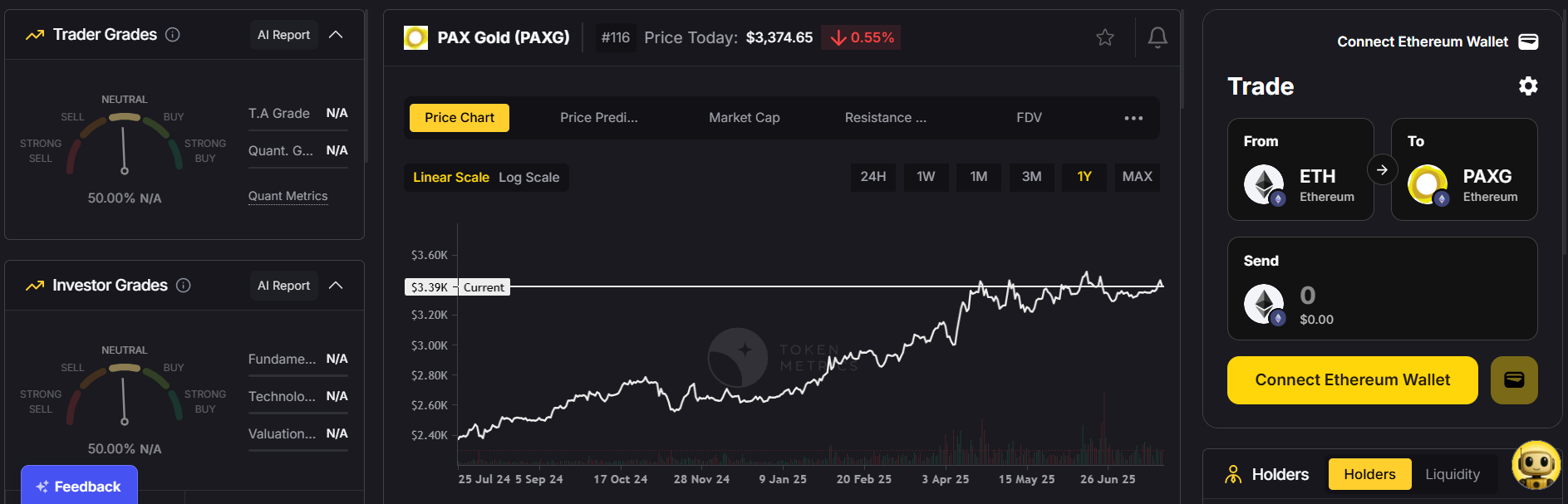
For every coin issued, an equivalent amount of the commodity is held in a secure vault. For example, owning 1 PAX Gold (PAXG) means you own 1 troy ounce of physical gold stored by the issuer.

Examples:

  • PAX Gold (PAXG) – Backed by physical gold.

  • Tether Gold (XAUT) – Gold-backed token from Tether.
  • Digix Gold (DGX) – Pegged to gold bars in Singapore vaults.

Pros:

  • Hedge against inflation – Commodities like gold retain value during economic uncertainty.
  • Diversification – Offers exposure to both crypto and commodities.

Cons:

  • Low liquidity – Less widely used than fiat-backed stablecoins.
  • Storage & audit challenges – Requires trust in the issuer to maintain reserves.

Why Do Stablecoins Matter?

Stablecoins are the backbone of DeFi and crypto trading.

  • Trading & arbitrage: They provide a quick way to exit volatile positions without converting back to fiat.
  • Cross-border payments: Cheaper and faster than SWIFT or remittance services.
  • DeFi participation: Essential for lending, borrowing, yield farming, and liquidity pools.
  • On-ramp/off-ramp: They simplify converting between traditional finance and blockchain.

Which Type of Stablecoin Should You Use?

If you want simplicity & security: Go with fiat-backed coins like USDC or PYUSD.

If you value decentralization: Choose crypto-collateralized options like DAI.

If you’re comfortable with high risk: Explore algorithmic models like FRAX (but beware of peg risks).

If you want inflation protection: Consider commodity-backed coins like PAXG.

Key Risks of Stablecoins

  • Regulation: Governments are increasing oversight of fiat-backed coins.
  • Centralization: Some issuers can freeze funds or blacklist wallets.
  • Smart contract risks: DeFi-based stablecoins can suffer from bugs or exploits.
  • Peg breaks: Algorithmic models are especially vulnerable to confidence loss.

The Future of Stablecoins

In 2025, stablecoins are evolving to meet regulatory and market demands:

  • Central Bank Digital Currencies (CBDCs): Governments are issuing digital dollars and euros, potentially competing with stablecoins.
  • Regulated issuers: Projects like USDC are working closely with regulators to ensure compliance.
  • Hybrid models: Combining fiat and algorithmic elements (e.g., Frax) to enhance stability.

As DeFi expands and global adoption grows, stablecoins will remain at the heart of crypto finance.

Final Thoughts

Stablecoins are more than just “digital dollars.” They’re a critical bridge between traditional finance and blockchain innovation.

  • Fiat-backed stablecoins bring stability and ease of use.
  • Crypto-collateralized ones offer transparency and decentralization.
  • Algorithmic models push innovation but carry higher risks.
  • Commodity-backed coins provide a hedge against inflation and diversify exposure.

Choosing the right type depends on your risk tolerance, use case, and trust level. Whether for trading, saving, or participating in DeFi, understanding the types of stablecoins can help you navigate the crypto ecosystem with confidence.

Build Smarter Crypto Apps &
AI Agents in Minutes, Not Months
Real-time prices, trading signals, and on-chain insights all from one powerful API.
Grab a Free API Key
Token Metrics Team
Token Metrics Team

Recent Posts

Announcements

🚀 Token Metrics API Goes Live on Hacker News – The AI Crypto Toolkit for Builders

Token Metrics Team
5 min
MIN

The Token Metrics API has officially launched on Hacker News, marking a major milestone in our mission to bring AI-powered crypto insights to every developer, founder, and builder in the Web3 space.

If you're building trading bots, dashboards, investment tools, or AI agents that interact with the crypto market, this is your developer edge in 2025. Forget raw feeds and static charts—this is real-time, AI-grade crypto intelligence available in minutes via a single API key.

What Is the Token Metrics API?

The Token Metrics API is a powerful crypto intelligence engine built for developers who want more than just price data. It combines machine learning, quantitative modeling, and narrative indexing to deliver structured signals that help users make smarter trading decisions.

Instead of simply showing what the market did, the API helps predict what it might do—with insights like:

  • Trader & Investor Grades (0–100 scores on momentum and fundamentals)
  • Bullish/Bearish Signals across 6,000+ assets
  • Narrative-based Indices like DeFi, AI, Memes, RWAs, and more
  • Quantitative Risk Scores and sentiment analysis
  • Real-time updates, no lag, no stale metrics

It’s like giving your crypto bot a brain—and not just any brain, an AI-trained crypto analyst that never sleeps.

Why It’s Different from Every Other Crypto API

Most APIs give you prices, volume, and maybe some on-chain data. Token Metrics gives you opinionated intelligence derived from over 80 on-chain, off-chain, technical, and sentiment indicators.

That means:

  • Your dashboard users get real-time grades and trending tokens.
  • Your AI agent can speak fluently about token fundamentals.
  • Your bot can act on bullish flips before the rest of the market.

We’ve designed this API for modularity and plug-and-play usability. With 21+ endpoints and official SDKs, you can ship faster and smarter—no custom pipeline needed.

What Can You Build?

Whether you're a solo developer or building inside a Web3 team, the possibilities are wide open.

Build smarter with Token Metrics if you’re creating:

  • 🧠 AI trading agents that query real-time token grades
  • 📊 Investor dashboards that surface top-rated altcoins
  • 📈 DApps that alert users to sector momentum shifts
  • 📱 Mobile apps with embedded market signals
  • 🧪 Backtesting systems for narrative-based portfolio strategies

Because the API supports OpenAI, Claude, Cursor, and Raycast integrations, your agents and LLM-powered tools can query live crypto intelligence in natural language—no additional parsing required.

Why the Hacker News Feature Matters

Token Metrics API just made it to the front page of Hacker News, one of the internet’s most trusted platforms for discovering high-impact developer tools.

This means:

  • 💬 A community of builders and engineers is already testing the API
  • 🧪 Feedback is pouring in, helping us evolve faster
  • 🚀 Your early adoption puts you ahead of the curve

If you’ve been waiting for the right time to integrate AI-native crypto signals into your product—this is it.

Get Started for Free

We’re offering 5,000 free API calls/month for every new developer.

Sign up, plug in your key, and build:

  • With one consistent schema
  • Across multiple clients
  • Without chasing multiple API docs

Your users don’t just want raw data anymore—they want insights. Token Metrics delivers those insights in real time, with zero guesswork.

Join the Developer Revolution

💥 Explore the API – Get your key in 30 seconds
💬 Join the Hacker News discussion – See what other devs are saying
📚 Browse Docs – View full endpoints and SDKs

One API. One schema. Smarter crypto apps.
The future of crypto building is AI-powered—and it starts here.

Research

Bullish or Bearish? Interpreting AI Signals in Today’s Volatile Crypto Market

Token Metrics Team
5 min
MIN

Introduction

Crypto moves fast — and traders who can't read the signs get left behind. But in a market where emotions dominate, how do you distinguish between a real trend and a fakeout? That’s where AI-powered trading signals come in.

Token Metrics AI monitors over 6,000 tokens using 80+ data points, from technical momentum to on-chain activity and social sentiment. Its bullish and bearish signals aren’t just flashes of color — they’re actionable, data-driven insights that can guide decisions in chaotic markets.

In this post, we break down how to interpret bullish and bearish signals, what they’ve been saying recently, and how to react when market direction flips suddenly.

What Are Bullish and Bearish Signals?

Let’s start with the basics:

  • Bullish Signal (Green Dot): Indicates that a token is showing signs of an upward trend based on combined technical, sentiment, and on-chain analysis.
  • Bearish Signal (Red Dot): Suggests that a token is losing momentum, and price downside or stagnation is likely.

But these signals aren’t standalone — they come with contextual grades, like the Trader Grade, which ranks signal strength from 0 to 100. This allows you to not just know the direction, but the confidence behind it.

What Happened Recently? The May 30 Flip

On May 30, 2025, Token Metrics AI issued a broad bearish flip across much of the market. That included:

  • Ethereum
  • Bittensor
  • Launchcoin
  • Many Real World Asset and L2 tokens

The AI signal flipped red, and Trader Grades fell across the board. Why? Here's what the AI detected:

  • Slowing volume
  • Negative sentiment shift
  • Liquidity thinning on DEXs
  • On-chain accumulation stalling

This wasn’t panic-driven — it was a data-driven, proactive warning that the cycle had peaked. In a world where most traders rely on lagging indicators or Twitter sentiment, this was an edge.

How to Interpret a Bullish Signal

A bullish signal isn’t an instant “buy” — it's a call to investigate. Here's what to check when a green dot appears:

✅ 1. Trader Grade Above 80

This means high conviction. If it's between 60–79, the trend is forming, but may lack strength.

✅ 2. Volume Confirmation

Price up + volume up = good. Price up + volume flat = caution.

✅ 3. Narrative Alignment

If the token fits a hot theme (like RWAs or AI), that adds strength to the signal.

✅ 4. Recent Price Action

Did the signal appear after a breakout, or just before? Entry timing depends on whether you're catching the beginning or chasing the middle of the trend.

✅ 5. Compare to Peers

If 3–5 similar tokens are also turning bullish, that indicates sector-wide rotation — a better entry environment.

How to Interpret a Bearish Signal

Red doesn’t mean "dump immediately" — it means it's time to tighten your risk.

❗ 1. Trader Grade Below 50

This indicates deteriorating conviction — exit or reduce exposure.

❗ 2. Volume Divergence

If price is flat but volume is fading, that’s a warning of a potential breakdown.

❗ 3. Signal Timing

Did the bearish flip happen near local highs? That’s often the best exit point.

❗ 4. Check for Repeats

Was this the second red dot in a week? That could confirm a longer-term downtrend.

❗ 5. BTC/ETH Context

If Bitcoin or ETH also flip bearish, it may suggest macro pressure, not just token-specific weakness.

Real-Time Examples from the Webinar

During the June 5 Token Metrics webinar, we walked through examples of how these signals worked in real time:

🟢 Bullish (April) – Launchcoin

Strong signal, grade in the 80s. Resulted in a massive short-term run.

🔴 Bearish (May 30) – Ethereum

Signal turned red around $3,490. Traders who followed it avoided the 55% drawdown that followed.

🔴 Bearish (June) – Fartcoin

After a 700% run-up, the signal flipped bearish with a low Trader Grade of ~24. Result? A slow bleed lower as sentiment cooled.

What Makes AI Signals Different from Traditional TA?

Feature                                                    Token Metrics AI                     Traditional TA

Combines social + on-chain                    ✅                                       ❌

Updated in real time                                 ✅                                       ❌

Machine learning trained on past data   ✅                                       ❌

Outputs confidence grade                       ✅                                       ❌

Adapts to new narratives                         ✅                                       ❌

This isn’t about moving averages or MACD — it’s about combining the entire digital footprint of a token to anticipate what comes next.

How to React to a Signal Flip

What do you do when your favorite token suddenly flips from bullish to bearish?

  1. Reduce exposure immediately — even if you don’t sell everything, cut risk.
  2. Check the Grade — if it’s falling, momentum is likely over.
  3. Watch Peer Tokens — if similar projects are also turning red, it confirms sector rotation.
  4. Set New Alerts — if the signal flips back to green, be ready to re-enter.

Your job isn’t to predict the market. It’s to respond to what the data is saying.

How to Combine AI Signals with a Strategy

Here’s a basic framework:

Entry

  • Bullish signal + Trader Grade > 80 = enter with full size.
  • Grade 60–79 = enter small or wait for confirmation.

Exit

  • Bearish signal = scale out or exit.
  • Grade < 50 = no new positions unless for short trades.

Risk

  • Position size scales with grade.
  • Only trade tokens with high liquidity and volume confirmation.

This keeps your system simple, repeatable, and data-driven.

Conclusion

In volatile markets, conviction matters. Token Metrics AI doesn’t just point up or down — it tells you how strong the trend is, how likely it is to last, and when it’s time to pivot.

Don’t trade on emotions. Don’t chase hype. Use the signals — and trust the grade.

Because in a market that never sleeps, it pays to have an AI watching your back.

Research

Crypto Market Cools Off: What Is Token Metrics AI Saying Now

Token Metrics Team
5 min
MIN

Introduction

The euphoria of April and May in the crypto market has officially hit the brakes. While traders were riding high just weeks ago, the mood has shifted — and the data confirms it. Token Metrics’ proprietary AI signals flipped bearish on May 30, and since then, the market has been slowly but steadily declining.

In this post, we break down what’s happened since the bearish signal, how major altcoins and sectors are reacting, and what Token Metrics’ indicators are telling us about what might come next.

The Big Picture: Cooling Off After a Hot Q1 and Q2 Start

The platform’s AI signal turned bearish on May 30 when the total crypto market cap hit $3.34 trillion. Since then, the momentum that defined early 2025 has reversed.

This wasn’t a sudden crash — it’s a slow bleed. The signal shift didn’t come from headline-driven panic, but from data-level exhaustion: volume softening, sentiment stalling, and trend strength fading across most tokens.

Token Metrics AI recognized the shift — and issued the warning.

What the Bearish Signal Means

The AI model analyzes over 80 metrics across price, volume, sentiment, and on-chain data. When key trends across these data sets weaken, the system flips from bullish (green) to bearish (red).

On May 30:

  • Trader Grades across most tokens declined
  • Signal sentiment flipped bearish
  • Momentum and velocity cooled down

According to the model, these were signs of a broad de-risking cycle — not just isolated weakness.

Sectors Showing Declines

Even tokens that had been performing well throughout Q2 began to stall or roll over.

🚨 Launch Coin

Previously one of the top performers in April, Launch Coin saw its grades decrease and price action softened.It may even be rebranding — a typical signal that a project is pivoting after a hype cycle.

🏦 Real World Assets (RWAs)

RWAs were hot in March–May, but by early June, volume and signal quality had cooled off significantly.

🔐 ZK and L2s

Projects like Starknet and zkSync, once dominant in trader attention, have seen signal strength drop, with many now scoring below 70.

The cooling effect is broad, touching narratives, sectors, and high-performing individual tokens alike.

The Bull-Bear Indicator in Action

One of the key tools used by Token Metrics is the Bull vs. Bear Indicator, which aggregates bullish vs. bearish signals across all tokens tracked.

As of early June:

  • The percentage of tokens with bullish signals dropped to its lowest since January.
  • New projects launching with strong grades also saw a decline.
  • Even community-favorite tokens began receiving “exit” alerts.

This isn’t fear — it’s fatigue.

How Traders Are Reacting

During the webinar, we noted that many users who rely on Token Metrics signals began rotating into stables once the May 30 signal flipped. Others reduced leverage, paused entries, or shifted into defensive plays like ETH and BTC.

This reflects an important philosophy:

"When the data changes, we change our approach."

Instead of trying to fight the tape or chase rebounds, disciplined traders are using the bearish signal to protect gains and preserve capital.

What About Ethereum and Bitcoin?

Even ETH and BTC, the two bellwether assets, aren’t immune.

  • Ethereum: Lost momentum after a strong May push. Its Trader Grade is dropping, and the AI signals currently reflect neutral-to-bearish sentiment.
  • Bitcoin: While still holding structure better than altcoins, it has also declined since peaking above $72k. Volume weakening and sentiment falling suggest caution.

In previous cycles, ETH and BTC acted as shelters during altcoin corrections. But now, even the majors show weakness — another reason why the bearish flip matters.

What Could Reverse This?

Abdullah Sarwar, head of research at Token Metrics, mentioned that for the signals to flip back bullish, we would need to see:

  • Increased momentum across top tokens
  • New narratives (e.g., real-world utility, cross-chain demand)
  • Higher volume and liquidity inflows
  • Positive macro or ETF news

Until then, the system will remain in defensive mode — prioritizing safety over chasing trades.

How to Act During a Bearish Signal

The team offered several tips for traders during this cooling-off period:

  1. Reduce exposure
    Don’t hold full positions in assets with weak grades or bearish signals.

  2. Watch signal reversals
    Keep an eye on sudden bullish flips with high Trader Grades — they often mark trend reversals.

  3. Rebalance into safer assets
    BTC, ETH, or even stables allow you to sit on the sidelines while others take unnecessary risk.

  4. Use Token Metrics filters
    Use the platform to filter for:

    • Top tokens with >80 grades
    • Signals that flipped bullish in the last 3 days
    • Low market-cap tokens with strong on-chain activity

These tools help find exceptions in a weak market.

Conclusion: Bearish Doesn’t Mean Broken

Markets cycle — and AI sees it before headlines do.

Token Metrics' bearish signal wasn’t a call to panic. It was a calibrated, data-backed alert that the trend had shifted — and that it was time to switch from offense to defense.

If you’re navigating this new phase, listen to the data. Use the tools. And most importantly, avoid trading emotionally.

The bull market might return. When it does, Token Metrics AI will flip bullish again — and you’ll be ready.

Choose from Platinum, Gold, and Silver packages
Reach with 25–30% open rates and 0.5–1% CTR
Craft your own custom ad—from banners to tailored copy
Perfect for Crypto Exchanges, SaaS Tools, DeFi, and AI Products