Crypto Basics

Types of Stablecoins: A Complete Guide for 2025

Discover the types of stablecoins—fiat-backed, crypto-backed, algorithmic, and commodity-based. Learn how they work, their pros and cons, and which is best for your crypto strategy in 2025.
Token Metrics Team
8 min
MIN

The cryptocurrency market is famous for volatility—Bitcoin can swing by thousands of dollars in a day, and altcoins can rise or crash in hours. But what if you need price stability? That’s where stablecoins come in.

Stablecoins are digital currencies pegged to stable assets like the US dollar, gold, or even algorithmically maintained price levels. They bridge the gap between the speed and efficiency of blockchain technology and the reliability of traditional money.

As of 2025, stablecoins account for over $140 billion in circulating supply, making them essential for traders, investors, and decentralized finance (DeFi) users. But not all stablecoins are the same—different types use different mechanisms to maintain their stability, each with unique pros and cons.

In this guide, we’ll break down the types of stablecoins, how they work, their risks, and which might be best for your needs.

What Are Stablecoins?

A stablecoin is a cryptocurrency designed to maintain a stable value by pegging its price to a reference asset. Most stablecoins are pegged to fiat currencies like the U.S. dollar (e.g., 1 USDT ≈ $1), but some track commodities (like gold) or are algorithmically balanced to hold value.

They are widely used for:

  • Trading: Moving quickly in and out of volatile assets.
  • DeFi: Providing liquidity, borrowing, and earning yields.
  • Remittances: Sending low-cost, fast cross-border payments.
  • Hedging: Protecting against crypto market volatility.

Types of Stablecoins

There are four main types of stablecoins:

  1. Fiat‑Collateralized Stablecoins
  2. Crypto‑Collateralized Stablecoins
  3. Algorithmic (Non‑Collateralized) Stablecoins
  4. Commodity‑Backed Stablecoins

Each has a different method of maintaining its peg. Let’s break them down.

1. Fiat‑Collateralized Stablecoins

Definition:
These are backed 1:1 by traditional currencies like the U.S. dollar, euro, or yen. For every stablecoin issued, an equivalent amount of fiat is held in reserve by a trusted custodian.

How They Work:
If you buy 1 USDC, Circle (its issuer) holds $1 in a regulated bank account or short-term U.S. Treasury securities. When you redeem that stablecoin, the issuer sends you the equivalent amount in fiat and burns the coin.

Examples:

  • Tether (USDT) – Largest stablecoin by market cap; widely used on exchanges.
  • USD Coin (USDC) – Issued by Circle, fully regulated and audited.
  • TrueUSD (TUSD) – Offers real-time attestation of reserves.
  • PayPal USD (PYUSD) – Launched by PayPal for payments and DeFi.

Pros:

  • High stability – Pegged directly to fiat.
  • Transparent – Many provide audits and attestations.
  • Easy adoption – Ideal for traders, merchants, and payment platforms.

Cons:

  • Centralization – Custodians control reserves and can freeze accounts.
  • Regulatory risks – Subject to government oversight.
  • Less transparency for some issuers – (e.g., Tether faced scrutiny over its reserves).

2. Crypto‑Collateralized Stablecoins

Definition:
These are backed by cryptocurrencies like Ethereum or Bitcoin instead of fiat. Because crypto is volatile, these stablecoins are overcollateralized (e.g., $150 in ETH backs $100 in stablecoins).

How They Work:
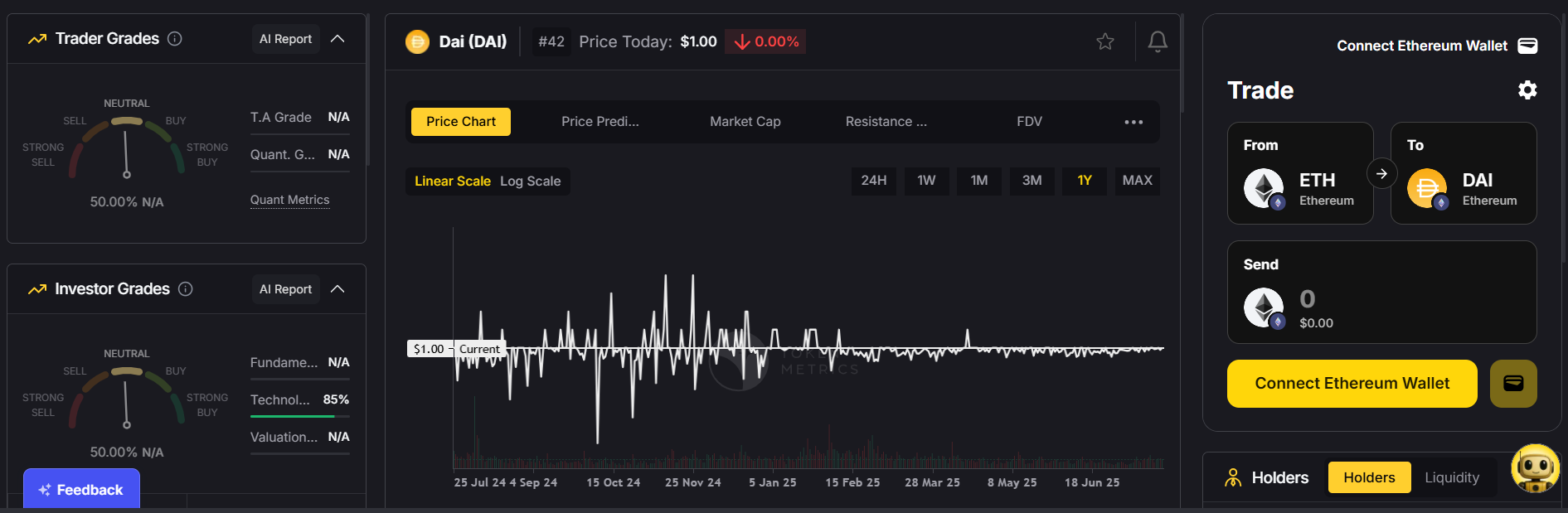
When you mint a crypto-backed stablecoin like DAI, you deposit collateral (e.g., ETH) into a smart contract. If the collateral value drops too much, the contract automatically liquidates some assets to maintain the peg.

Examples:

  • DAI – Issued by MakerDAO, backed by ETH, USDC, and other assets.

  • sUSD – A synthetic USD issued by Synthetix.
  • MIM (Magic Internet Money) – Collateralized by multiple crypto assets.

Pros:

  • Decentralized – No single company controls reserves.
  • Transparent – All collateral balances are viewable on-chain.
  • Resistant to censorship – Issuers can’t freeze accounts.

Cons:

  • Volatility risk – Collateral can lose value quickly, requiring liquidations.
  • Overcollateralization – Ties up more capital than fiat-backed options.
  • Complexity – Requires understanding of DeFi mechanics.

3. Algorithmic (Non‑Collateralized) Stablecoins

Definition:
These don’t use physical reserves. Instead, they maintain their peg via algorithmic supply adjustments—minting or burning tokens to balance price around $1.

How They Work:
If demand increases and the price rises above $1, the protocol mints more coins. If it falls below $1, the protocol burns coins or incentivizes users to buy them back.

Examples:

  • Ampleforth (AMPL) – Elastic supply adjusts daily.
  • UST (TerraUSD) – Infamously collapsed in 2022 after its peg broke.
  • Frax (FRAX) – Uses a hybrid model: partly collateralized, partly algorithmic.

Pros:

  • Highly capital-efficient – Doesn’t require large reserves.
  • Decentralized – Often governed by smart contracts and DAOs.

Cons:

  • Peg instability – Prone to “death spirals” when market confidence drops.
  • Complex mechanisms – Harder for average users to understand.
  • History of failures – UST/LUNA crash eroded trust in algorithmic coins.

4. Commodity‑Backed Stablecoins

Definition:
These stablecoins are pegged to commodities like gold, silver, or oil, giving them intrinsic value beyond fiat.

How They Work:
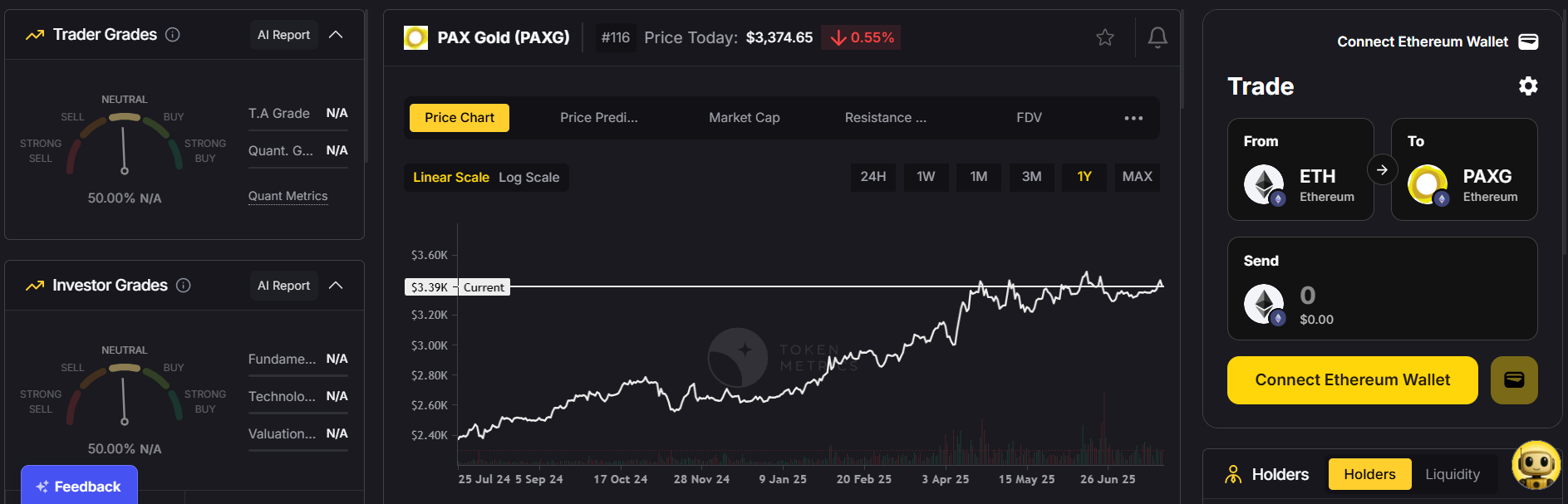
For every coin issued, an equivalent amount of the commodity is held in a secure vault. For example, owning 1 PAX Gold (PAXG) means you own 1 troy ounce of physical gold stored by the issuer.

Examples:

  • PAX Gold (PAXG) – Backed by physical gold.

  • Tether Gold (XAUT) – Gold-backed token from Tether.
  • Digix Gold (DGX) – Pegged to gold bars in Singapore vaults.

Pros:

  • Hedge against inflation – Commodities like gold retain value during economic uncertainty.
  • Diversification – Offers exposure to both crypto and commodities.

Cons:

  • Low liquidity – Less widely used than fiat-backed stablecoins.
  • Storage & audit challenges – Requires trust in the issuer to maintain reserves.

Why Do Stablecoins Matter?

Stablecoins are the backbone of DeFi and crypto trading.

  • Trading & arbitrage: They provide a quick way to exit volatile positions without converting back to fiat.
  • Cross-border payments: Cheaper and faster than SWIFT or remittance services.
  • DeFi participation: Essential for lending, borrowing, yield farming, and liquidity pools.
  • On-ramp/off-ramp: They simplify converting between traditional finance and blockchain.

Which Type of Stablecoin Should You Use?

If you want simplicity & security: Go with fiat-backed coins like USDC or PYUSD.

If you value decentralization: Choose crypto-collateralized options like DAI.

If you’re comfortable with high risk: Explore algorithmic models like FRAX (but beware of peg risks).

If you want inflation protection: Consider commodity-backed coins like PAXG.

Key Risks of Stablecoins

  • Regulation: Governments are increasing oversight of fiat-backed coins.
  • Centralization: Some issuers can freeze funds or blacklist wallets.
  • Smart contract risks: DeFi-based stablecoins can suffer from bugs or exploits.
  • Peg breaks: Algorithmic models are especially vulnerable to confidence loss.

The Future of Stablecoins

In 2025, stablecoins are evolving to meet regulatory and market demands:

  • Central Bank Digital Currencies (CBDCs): Governments are issuing digital dollars and euros, potentially competing with stablecoins.
  • Regulated issuers: Projects like USDC are working closely with regulators to ensure compliance.
  • Hybrid models: Combining fiat and algorithmic elements (e.g., Frax) to enhance stability.

As DeFi expands and global adoption grows, stablecoins will remain at the heart of crypto finance.

Final Thoughts

Stablecoins are more than just “digital dollars.” They’re a critical bridge between traditional finance and blockchain innovation.

  • Fiat-backed stablecoins bring stability and ease of use.
  • Crypto-collateralized ones offer transparency and decentralization.
  • Algorithmic models push innovation but carry higher risks.
  • Commodity-backed coins provide a hedge against inflation and diversify exposure.

Choosing the right type depends on your risk tolerance, use case, and trust level. Whether for trading, saving, or participating in DeFi, understanding the types of stablecoins can help you navigate the crypto ecosystem with confidence.

Build Smarter Crypto Apps &
AI Agents in Minutes, Not Months
Real-time prices, trading signals, and on-chain insights all from one powerful API.
Grab a Free API Key
Token Metrics Team
Token Metrics Team

Recent Posts

Announcements

Token Metrics API Joins RapidAPI: The Fastest Way to Add AI-Grade Crypto Data to Your App

Token Metrics Team
5 min
MIN

The hunt for a dependable Crypto API normally ends in a graveyard of half-maintained GitHub repos, flaky RPC endpoints, and expensive enterprise feeds that hide the true cost behind a sales call. Developers waste days wiring those sources together, only to learn that one fails during a market spike or that data schemas never quite align. The result? Bots mis-fire, dashboards drift out of sync, and growth stalls while engineers chase yet another “price feed.”

That headache stops today. Token Metrics API, the same engine that powers more than 70 000 users on the Token Metrics analytics platform, is now live on RapidAPI—the largest marketplace of public APIs with more than four million developers. One search, one click, and you get an AI-grade Crypto API with institutional reliability and a 99.99 % uptime SLA.

Why RapidAPI + Token Metrics API Matters

  • Native developer workflow – No separate billing portal, OAuth flow, or SDK hunt. Click “Subscribe,” pick the Free plan, and RapidAPI instantly generates a key.

  • Single playground – Run test calls in-browser and copy snippets in cURL, Python, Node, Go, or Rust without leaving the listing.

  • Auto-scale billing – When usage grows, RapidAPI handles metering and invoices. You focus on product, not procurement.

What Makes the Token Metrics Crypto API Different?

  1. Twenty-one production endpoints

    Live & historical prices, hourly and daily OHLCV, proprietary Trader & Investor Grades, on-chain and social sentiment, AI-curated sector indices, plus deep-dive AI reports that summarise fundamentals, code health, and tokenomics.

  2. AI signals that win

    Over the last 24 months, more than 70 % of our bull/bear signals outperformed simple buy-and-hold. The API delivers that same alpha in flat JSON.

  3. Institutional reliability

    99.99 % uptime, public status page, and automatic caching for hot endpoints keep latency low even on volatile days.

Three-Step Quick Start

  1. Search “Token Metrics API” on RapidAPI and click Subscribe.
  2. Select the Free plan (5 000 calls / month, 20 request / min) and copy your key.
  3. Test:

bash

CopyEdit

curl -H "X-RapidAPI-Key: YOUR_KEY" \

     -H "X-RapidAPI-Host: tokenmetrics.p.rapidapi.com" \

     https://tokenmetrics.p.rapidapi.com/v2/trader-grades?symbol=BTC

The response returns Bitcoin’s live Trader Grade (0-100) and bull/bear flag. Swap BTC for any asset or explore /indices, /sentiment, and /ai-reports.

Real-World Use Cases

Use case

How developers apply the Token Metrics API

Automated trading bots

Rotate allocations when Trader Grade > 85 or sentiment flips bear.

Portfolio dashboards

Pull index weights, grades, and live prices in a single call for instant UI load.

Research terminals

Inject AI Reports into Notion/Airtable for analyst workflows.

No-code apps

Combine Zapier webhooks with RapidAPI to display live sentiment without code.

Early adopters report 30 % faster build times because they no longer reconcile five data feeds.

Pricing That Scales

  • Free – 5 000 calls, 30-day history.
  • Advanced – 20 000 calls, 3-month history.
  • Premium – 100 000 calls, 3-year history.
  • VIP – 500 000 calls, unlimited history.

Overages start at $0.005 per call.

Ready to Build?

• RapidAPI listing: https://rapidapi.com/tm-ai/api/token-metrics 

https://rapidapi.com/token-metrics-token-metrics-default/api/token-metrics-api1
• Developer docs: https://developers.tokenmetrics.com
• Support Slack: https://join.slack.com/t/tokenmetrics-devs/shared_invite/…

Spin up your key, ship your bot, and let us know what you create—top projects earn API credits and a Twitter shout-out.

Announcements

Crypto MCP Server: Token Metrics Brings One-Key Data to OpenAI, Claude, Cursor & Windsurf

Token Metrics Team
5 min
MIN

The modern crypto stack is a jungle of AI agents: IDE copilots that finish code, desktop assistants that summarise white-papers, CLI tools that back-test strategies, and slide generators that turn metrics into pitch decks. Each tool speaks a different protocol, so developers juggle multiple keys and mismatched JSON every time they query a Crypto API. That fragmentation slows innovation and creates silent data drift.

To fix it, we built the Token Metrics Crypto MCP Server—a lightweight gateway that unifies every tool around a single Multi-Client Crypto API. MCP (Multi-Client Protocol) sits in front of the Token Metrics API and translates requests into one canonical schema. Paste your key once, and a growing suite of clients speaks the same crypto language:

  • OpenAI Agents SDK – build ChatGPT-style agents with live grades
  • Claude Desktop – natural-language research powered by real-time metrics
  • Cursor / Windsurf IDE – in-editor instant queries
  • Raycast, Tome, VS Code, Cline and more

Why a Crypto MCP Server Beats Separate APIs

Consistency – Claude’s grade equals Windsurf’s grade.
One-time auth – store one key; clients handle headers automatically.
Faster prototyping – build in Cursor, test in Windsurf, present in Tome without rewriting queries.
Lower cost – shared quota plus $TMAI discount across all tools.

Getting Started

  1. Sign up for the Free plan (5 000 calls/month) and get your key: https://app.tokenmetrics.com/en/api
  2. Click the client you want to setup mcp for: smithery.ai/server/@token-metrics/mcp or https://modelcontextprotocol.io/clients

Your LLM assistant, IDE, CLI, and slide deck now share a single, reliable crypto brain. Copy your key, point to MCP, and start building the next generation of autonomous finance.

How Teams Use the Multi-Client Crypto API

  • Research to Execution – Analysts ask Claude for “Top 5 DeFi tokens with improving Trader Grades.” Cursor fetches code snippets; Windsurf trades the shortlist—all on identical data.
  • DevRel Demos – Share a single GitHub repo with instructions for Cursor, VS Code, and CLI; workshop attendees choose their favorite environment and still hit the same endpoints.
  • Compliance Dashboards – Tome auto-refreshes index allocations every morning, ensuring slide decks stay current without manual updates

Pricing, Rate Limits, and $TMAI

The Crypto MCP Server follows the core Token Metrics API plans: Free, Advanced, Premium, and VIP up to 500 000 calls/month and 600 req/min. Paying or staking $TMAI applies the familiar 10 % pay-in bonus plus up to 25 % staking rebate—35 % total savings. No new SKU, no hidden fee.

Build Once, Query Everywhere

The Token Metrics Crypto MCP Server turns seven scattered tools into one cohesive development environment. Your LLM assistant, IDE, CLI, and slideshow app now read from the same real-time ledger. Copy your key, point to MCP, and start building the next generation of autonomous finance.

• Github repo: https://github.com/token-metrics/mcp

👉 Ready to build? Grab your key from https://app.tokenmetrics.com/en/api

👉 Join Token Metrics API Telegram group  

Step-by-step client guides at smithery.ai/server/@token-metrics/mcp or https://modelcontextprotocol.io/clients — everything you need to wire Token Metrics MCP into Open AI, Claude, Cursor, Windsurf and more.

Research

Unlock Smarter Trades: Explore the All-New Token Metrics Market Page for Crypto Signal Discovery

Token Metrics Team
4 min
MIN

In the fast-paced world of crypto trading, timing is everything. One small delay can mean missing out on a breakout — or getting caught in a dump. That’s why we’ve completely redesigned the Token Metrics Market Page for 2025, bringing users faster access to the most accurate crypto trading signals powered by AI, on-chain analysis, and proprietary data science models.

This isn’t just a design refresh. It’s a full rethinking of how traders interact with data — with one goal in mind: make smarter trades faster.

Why Interface Matters in 2025’s Data-Driven Crypto Market

Crypto has matured. In 2025, the market is no longer driven by just hype or tweets. The best traders are using quantitative tools, AI signals, and real-time on-chain intelligence to stay ahead. And the Token Metrics Market Page is now built to meet that standard.

Gone are the days of switching between ten different platforms to get a complete view of a token. With the new Market Page, everything you need to make a data-backed trading decision is at your fingertips — no noise, no fluff, just high-signal information.

What’s New: Market Page Features That Give You an Edge

🔥 High-Performing Signals Front and Center

At the top of the redesigned Market Page, we’ve surfaced the week’s most compelling bullish and bearish crypto signals. These aren’t just based on price action — they’re curated using a powerful blend of AI, technical analysis, momentum trends, and on-chain activity.

Take Launch Coin week. It’s been topping the bullish charts due to a sharp uptick in volume and social traction — even though the price has begun to stabilize. Our platform caught the early signal, helping users ride the wave before it showed up on mainstream crypto news feeds.

Every token featured here has passed through our proprietary signal engine, which incorporates:

  • Token Metrics Trader Grade (short-term technical outlook)
  • Investor Grade (longer-term fundamentals)
  • Volume & Liquidity metrics
  • Community sentiment and social velocity
  • Exchange and VC backing

The result? You don’t just know what’s pumping — you know why it’s moving, and whether it’s likely to hold.

🧠 Smarter Filtering and Custom Dashboards

Want to isolate tokens in the DeFi space? Looking for only high-grade bullish signals on Ethereum or Solana? With new filtering options by sector, signal strength, and chain, you can zero in on the exact types of trades you're looking for — whether you're a casual trader or running a portfolio strategy.

This personalized dashboard experience brings hedge-fund-grade analytics to your fingertips, democratizing access to sophisticated data tools for retail and pro traders alike.

📉 Data Visuals at a Glance

Every token card on the Market Page now comes with a visual snapshot showing:

  • Recent price movement
  • Momentum trends
  • Short-term vs. long-term grades
  • Signal performance over time

No need to deep-dive into separate pages unless you want to — Token Metrics puts quick visual context right where you need it to reduce friction and increase speed.

📱 Mobile-Optimized for Trading on the Go

We know many users monitor the market and execute trades from their phone. That’s why we’ve ensured the entire Market Page is fully mobile-responsive, optimized for fast swipes, taps, and decisions without losing any key insights.

With Token Metrics, your next trade idea can start while you’re commuting, grabbing coffee, or even mid-conversation at a crypto meetup.

The Token Metrics Advantage: AI-Powered Crypto Trading in Real-Time

This redesign is just one piece of the broader Token Metrics vision — making AI-driven crypto trading accessible to everyone.

If you’re serious about catching the next 10x altcoin, surviving market crashes, or just improving your signal-to-noise ratio, here’s why thousands of crypto traders choose Token Metrics:

  • Real-time trading signals for 6,000+ tokens
  • AI-generated Trader and Investor Grades
  • Market signals backed by 80+ data points
  • Daily updates from our deep-dive research AI
  • Integrated with self-custody workflows
  • Trusted by analysts, devs, and hedge funds

Our users aren’t just following the market — they’re leading it.

Use Case: How Traders Are Winning with Token Metrics

One of our users recently shared how they caught a 47% pump on an obscure DePIN token by acting on a Buy Signal that showed up in the Market Page’s Bullish section three days before the breakout. The token had minimal social chatter at the time, but our models flagged rising volume, strong fundamentals, and a breakout formation building on the technical side.

Stories like this are becoming common. With every new feature and dataset added to Token Metrics, users are getting smarter, faster, and more confident in their crypto trades.

What’s Next for the Market Page

This is just the beginning. Coming soon to the Market Page:

  • 💡 Auto-alerts based on your saved filters
  • 📊 Historical signal performance analytics
  • 🛠️ Integrations with our API for power users
  • 🧵 Narrative filters based on trending themes (AI, DeFi, Memes, RWA, etc.)

We’re building the most intelligent crypto trading assistant on the web — and the new Market Page is your window into it.

Final Thoughts: Don’t Just React — Predict

In crypto, being early is everything. But with thousands of tokens and hundreds of narratives, knowing where to look can be overwhelming.

The redesigned Token Metrics Market Page removes the guesswork.

By giving you AI-powered insights, real-time signals, and actionable visualizations, it transforms your screen into a decision-making engine. Whether you’re day trading or managing a long-term altcoin portfolio, the right data — surfaced the right way — gives you the edge you need.

Visit the new Market Page today, and see why 2025’s smartest crypto traders are making Token Metrics their go-to tool for navigating this volatile, opportunity-packed market.

Ready to Trade Smarter?

Explore the new Market Page

Want the signal before the crowd?

Try Token Metrics free and get instant access to:

  • AI Signals
  • Investor and Trader Grades
  • Market Timing Tools
  • Bullish and Bearish Alerts

Because in crypto, data is the new alpha — and Token Metrics helps you unlock it.

Choose from Platinum, Gold, and Silver packages
Reach with 25–30% open rates and 0.5–1% CTR
Craft your own custom ad—from banners to tailored copy
Perfect for Crypto Exchanges, SaaS Tools, DeFi, and AI Products