Back to blog
Crypto Basics

Types of Stablecoins: A Complete Guide for 2025

Discover the types of stablecoins—fiat-backed, crypto-backed, algorithmic, and commodity-based. Learn how they work, their pros and cons, and which is best for your crypto strategy in 2025.
Token Metrics Team
8 min
Want Smarter Crypto Picks—Free?
See unbiased Token Metrics Ratings for BTC, ETH, and top alts.
Thank you! Your submission has been received!
Oops! Something went wrong while submitting the form.
 No credit card | 1-click unsubscribe

The cryptocurrency market is famous for volatility—Bitcoin can swing by thousands of dollars in a day, and altcoins can rise or crash in hours. But what if you need price stability? That’s where stablecoins come in.

Stablecoins are digital currencies pegged to stable assets like the US dollar, gold, or even algorithmically maintained price levels. They bridge the gap between the speed and efficiency of blockchain technology and the reliability of traditional money.

As of 2025, stablecoins account for over $140 billion in circulating supply, making them essential for traders, investors, and decentralized finance (DeFi) users. But not all stablecoins are the same—different types use different mechanisms to maintain their stability, each with unique pros and cons.

In this guide, we’ll break down the types of stablecoins, how they work, their risks, and which might be best for your needs.

What Are Stablecoins?

A stablecoin is a cryptocurrency designed to maintain a stable value by pegging its price to a reference asset. Most stablecoins are pegged to fiat currencies like the U.S. dollar (e.g., 1 USDT ≈ $1), but some track commodities (like gold) or are algorithmically balanced to hold value.

They are widely used for:

  • Trading: Moving quickly in and out of volatile assets.
  • DeFi: Providing liquidity, borrowing, and earning yields.
  • Remittances: Sending low-cost, fast cross-border payments.
  • Hedging: Protecting against crypto market volatility.

Types of Stablecoins

There are four main types of stablecoins:

  1. Fiat‑Collateralized Stablecoins
  2. Crypto‑Collateralized Stablecoins
  3. Algorithmic (Non‑Collateralized) Stablecoins
  4. Commodity‑Backed Stablecoins

Each has a different method of maintaining its peg. Let’s break them down.

1. Fiat‑Collateralized Stablecoins

Definition:
These are backed 1:1 by traditional currencies like the U.S. dollar, euro, or yen. For every stablecoin issued, an equivalent amount of fiat is held in reserve by a trusted custodian.

How They Work:
If you buy 1 USDC, Circle (its issuer) holds $1 in a regulated bank account or short-term U.S. Treasury securities. When you redeem that stablecoin, the issuer sends you the equivalent amount in fiat and burns the coin.

Examples:

  • Tether (USDT) – Largest stablecoin by market cap; widely used on exchanges.
  • USD Coin (USDC) – Issued by Circle, fully regulated and audited.
  • TrueUSD (TUSD) – Offers real-time attestation of reserves.
  • PayPal USD (PYUSD) – Launched by PayPal for payments and DeFi.

Pros:

  • High stability – Pegged directly to fiat.
  • Transparent – Many provide audits and attestations.
  • Easy adoption – Ideal for traders, merchants, and payment platforms.

Cons:

  • Centralization – Custodians control reserves and can freeze accounts.
  • Regulatory risks – Subject to government oversight.
  • Less transparency for some issuers – (e.g., Tether faced scrutiny over its reserves).

2. Crypto‑Collateralized Stablecoins

Definition:
These are backed by cryptocurrencies like Ethereum or Bitcoin instead of fiat. Because crypto is volatile, these stablecoins are overcollateralized (e.g., $150 in ETH backs $100 in stablecoins).

How They Work:
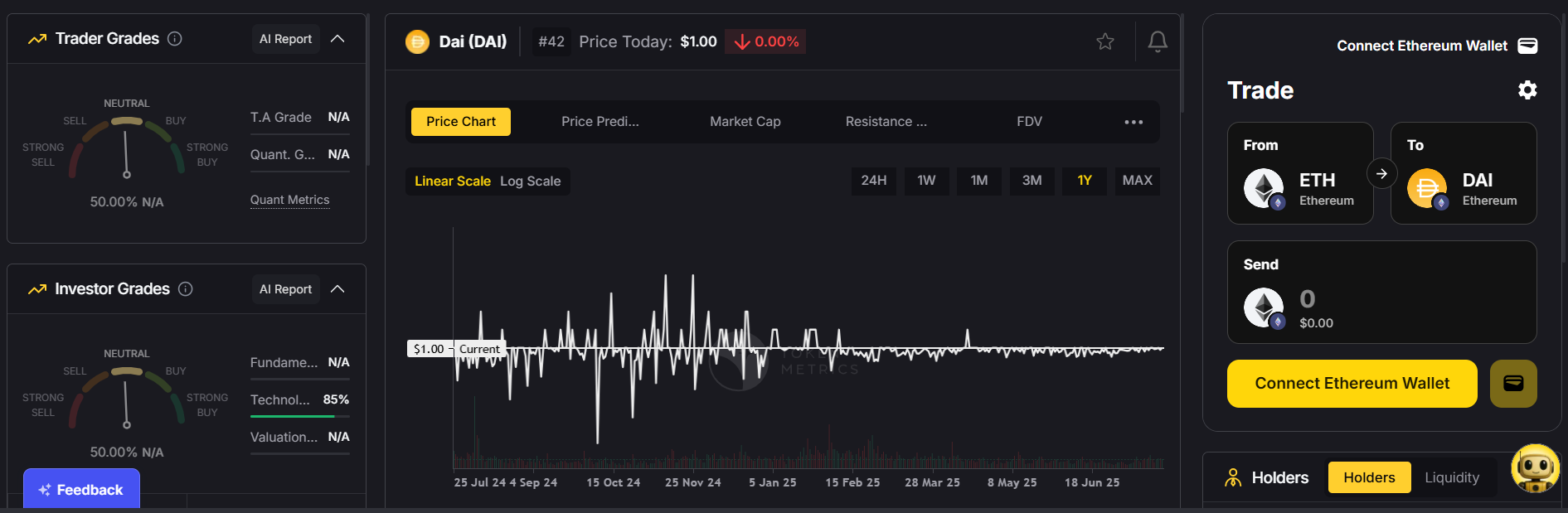
When you mint a crypto-backed stablecoin like DAI, you deposit collateral (e.g., ETH) into a smart contract. If the collateral value drops too much, the contract automatically liquidates some assets to maintain the peg.

Examples:

  • DAI – Issued by MakerDAO, backed by ETH, USDC, and other assets.

  • sUSD – A synthetic USD issued by Synthetix.
  • MIM (Magic Internet Money) – Collateralized by multiple crypto assets.

Pros:

  • Decentralized – No single company controls reserves.
  • Transparent – All collateral balances are viewable on-chain.
  • Resistant to censorship – Issuers can’t freeze accounts.

Cons:

  • Volatility risk – Collateral can lose value quickly, requiring liquidations.
  • Overcollateralization – Ties up more capital than fiat-backed options.
  • Complexity – Requires understanding of DeFi mechanics.

3. Algorithmic (Non‑Collateralized) Stablecoins

Definition:
These don’t use physical reserves. Instead, they maintain their peg via algorithmic supply adjustments—minting or burning tokens to balance price around $1.

How They Work:
If demand increases and the price rises above $1, the protocol mints more coins. If it falls below $1, the protocol burns coins or incentivizes users to buy them back.

Examples:

  • Ampleforth (AMPL) – Elastic supply adjusts daily.
  • UST (TerraUSD) – Infamously collapsed in 2022 after its peg broke.
  • Frax (FRAX) – Uses a hybrid model: partly collateralized, partly algorithmic.

Pros:

  • Highly capital-efficient – Doesn’t require large reserves.
  • Decentralized – Often governed by smart contracts and DAOs.

Cons:

  • Peg instability – Prone to “death spirals” when market confidence drops.
  • Complex mechanisms – Harder for average users to understand.
  • History of failures – UST/LUNA crash eroded trust in algorithmic coins.

4. Commodity‑Backed Stablecoins

Definition:
These stablecoins are pegged to commodities like gold, silver, or oil, giving them intrinsic value beyond fiat.

How They Work:
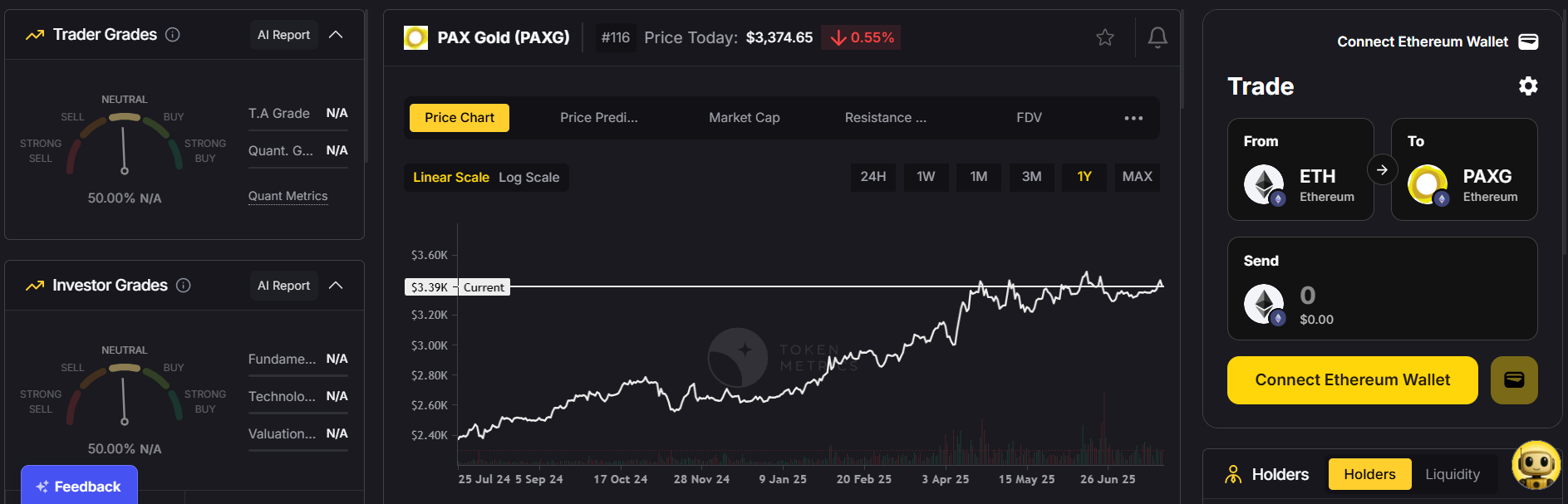
For every coin issued, an equivalent amount of the commodity is held in a secure vault. For example, owning 1 PAX Gold (PAXG) means you own 1 troy ounce of physical gold stored by the issuer.

Examples:

  • PAX Gold (PAXG) – Backed by physical gold.

  • Tether Gold (XAUT) – Gold-backed token from Tether.
  • Digix Gold (DGX) – Pegged to gold bars in Singapore vaults.

Pros:

  • Hedge against inflation – Commodities like gold retain value during economic uncertainty.
  • Diversification – Offers exposure to both crypto and commodities.

Cons:

  • Low liquidity – Less widely used than fiat-backed stablecoins.
  • Storage & audit challenges – Requires trust in the issuer to maintain reserves.

Why Do Stablecoins Matter?

Stablecoins are the backbone of DeFi and crypto trading.

  • Trading & arbitrage: They provide a quick way to exit volatile positions without converting back to fiat.
  • Cross-border payments: Cheaper and faster than SWIFT or remittance services.
  • DeFi participation: Essential for lending, borrowing, yield farming, and liquidity pools.
  • On-ramp/off-ramp: They simplify converting between traditional finance and blockchain.

Which Type of Stablecoin Should You Use?

If you want simplicity & security: Go with fiat-backed coins like USDC or PYUSD.

If you value decentralization: Choose crypto-collateralized options like DAI.

If you’re comfortable with high risk: Explore algorithmic models like FRAX (but beware of peg risks).

If you want inflation protection: Consider commodity-backed coins like PAXG.

Key Risks of Stablecoins

  • Regulation: Governments are increasing oversight of fiat-backed coins.
  • Centralization: Some issuers can freeze funds or blacklist wallets.
  • Smart contract risks: DeFi-based stablecoins can suffer from bugs or exploits.
  • Peg breaks: Algorithmic models are especially vulnerable to confidence loss.

The Future of Stablecoins

In 2025, stablecoins are evolving to meet regulatory and market demands:

  • Central Bank Digital Currencies (CBDCs): Governments are issuing digital dollars and euros, potentially competing with stablecoins.
  • Regulated issuers: Projects like USDC are working closely with regulators to ensure compliance.
  • Hybrid models: Combining fiat and algorithmic elements (e.g., Frax) to enhance stability.

As DeFi expands and global adoption grows, stablecoins will remain at the heart of crypto finance.

Final Thoughts

Stablecoins are more than just “digital dollars.” They’re a critical bridge between traditional finance and blockchain innovation.

  • Fiat-backed stablecoins bring stability and ease of use.
  • Crypto-collateralized ones offer transparency and decentralization.
  • Algorithmic models push innovation but carry higher risks.
  • Commodity-backed coins provide a hedge against inflation and diversify exposure.

Choosing the right type depends on your risk tolerance, use case, and trust level. Whether for trading, saving, or participating in DeFi, understanding the types of stablecoins can help you navigate the crypto ecosystem with confidence.

Build Smarter Crypto Apps &
AI Agents in Minutes, Not Months
Real-time prices, trading signals, and on-chain insights all from one powerful API.
Grab a Free API Key
About Token Metrics
Token Metrics: AI-powered crypto research and ratings platform. We help investors make smarter decisions with unbiased Token Metrics Ratings, on-chain analytics, and editor-curated “Top 10” guides. Our platform distills thousands of data points into clear scores, trends, and alerts you can act on.
30 Employees
analysts, data scientists, and crypto engineers
Daily Briefings
concise market insights and “Top Picks”
Transparent & Compliant
Sponsored ≠ Ratings; research remains independent
Want Smarter Crypto Picks—Free?
See unbiased Token Metrics Ratings for BTC, ETH, and top alts.
Thank you! Your submission has been received!
Oops! Something went wrong while submitting the form.
 No credit card | 1-click unsubscribe
Token Metrics Team
Token Metrics Team

Recent Posts

Crypto Basics

Are There Crypto Indices for DeFi, AI, and Other Sectors? Exploring Thematic Index Investing in 2025

Token Metrics Team
8 min

In the fast-moving world of crypto, one of the smartest ways to invest in 2025 is by aligning your portfolio with emerging narratives. Whether it’s DeFi, AI, Memecoins, or Real World Assets (RWAs), crypto’s growth is fueled by themes—and the easiest way to capitalize on them is through sector-based crypto indices.

But are there crypto indices tailored to specific sectors?
Absolutely. In fact, thematic crypto indices are one of the hottest trends in index-based investing right now.

This article explores the most popular sector-based crypto indices in 2025, how they work, and how you can use them to build a diversified, trend-aligned portfolio.

What Is a Thematic or Sector-Based Crypto Index?

A sector-based crypto index is a basket of cryptocurrencies selected based on a specific theme or market narrative. Instead of tracking the overall market, these indices focus on high-growth areas such as:

  • Decentralized Finance (DeFi)
  • Artificial Intelligence (AI) Tokens
  • Memecoins
  • Real World Assets (RWA)
  • Layer 1 Blockchains
  • Gaming / Metaverse

Each index includes multiple tokens within that category, allowing investors to gain exposure to the entire theme without picking individual winners.

Why Sector Indices Matter in 2025

In today’s market, performance is narrative-driven. A single meme can send a coin flying, or a regulatory shift can pump RWAs. Sector indices help investors:

Capitalize on trends early
Avoid single-token risk
Ride sector momentum without constant research
Balance exposure across tokens within a theme

Instead of trying to guess which AI token will win, you can hold the AI Index and benefit from the entire trend.

Top Sector-Based Crypto Indices in 2025

Here are the most popular and best-performing thematic indices this year:

1. Token Metrics AI Tokens Index

Focus: Artificial Intelligence & Agent Economy
Constituents: FET, AGIX, GRT, TAO, NUM, OCEAN
Management: AI-powered with weekly rebalancing

Why It’s Hot:
AI is dominating tech and crypto alike. This index tracks high-conviction AI tokens and rotates into bullish ones each week. Its performance outpaced most passive indices during Q1 2025.

2. Token Metrics DeFi Index

Focus: Core DeFi protocols
Constituents: AAVE, LDO, UNI, RUNE, DYDX, GMX
Management: AI-managed, rebalanced weekly

Why It’s Hot:
DeFi is crypto’s infrastructure. This index rotates into projects showing strength in TVL, volume, and sentiment—giving you DeFi exposure without the need to manage protocol risk manually.

3. Token Metrics Memecoin Index

Focus: Viral meme tokens
Constituents: DOGE, SHIB, PEPE, WIF, BONK, FLOKI
Management: AI-powered signals and weekly adjustments

Why It’s Hot:
This index tracks social momentum and market sentiment, allowing traders to ride the waves while mitigating downside through AI-powered exits.

4. Token Metrics RWA Index

Focus: Real World Asset tokens
Constituents: MKR, ONDO, POLYX, XDC, CFG
Management: Thematic + risk-adjusted AI overlay

Why It’s Hot:
The RWA narrative is exploding as institutions tokenize bonds, treasuries, and assets. This index includes top-performing RWA projects with liquidity and regulatory traction.

5. Token Metrics Layer 1 Index

Focus: Smart contract platforms
Constituents: ETH, SOL, AVAX, NEAR, SUI, TON
Management: Passive or AI-optimized version

Why It’s Hot:
The infrastructure battle among Layer 1s continues. This index provides broad exposure to the platforms that power most of Web3.

6. Index Coop DPI (DeFi Pulse Index)

Focus: Leading Ethereum DeFi protocols
Constituents: AAVE, UNI, COMP, SNX, LRC
Management: DAO-governed, passive rebalance

Why It’s Hot:
DPI is the OG DeFi index—trusted, decentralized, and consistently rebalanced on-chain.

7. Phuture Custom Indices

Focus: User-created strategies
Constituents: Fully customizable
Management: On-chain rules, community-driven

Why It’s Hot:
Create your own sector index or invest in curated strategies. Fully composable within DeFi.

How to Choose the Right Sector Index

Choosing the best sector-based index depends on your goals and your belief in specific narratives.

AI vs. Passive Sector Indices

Many sector indices today are AI-powered, meaning they adjust weights and tokens dynamically based on real-time data. This is especially useful in volatile or hype-driven narratives (like Memecoins or AI tokens).

Where to Invest in Sector-Based Indices

Here’s where to find and invest in thematic indices:

  • Token Metrics – Sector-specific AI indices with weekly signals
  • Index Coop – Ethereum-based DeFi indices with DAO governance
  • Phuture – On-chain, user-customized index strategies
  • Set Protocol – Technical and trend-driven portfolios
  • Centralized Brokers – Limited thematic access (e.g., Bitwise)

You can access these using fiat, stablecoins, or crypto wallets depending on the platform.

Final Thoughts: Sector Indices Help You Invest in What Matters

In 2025, the biggest opportunities in crypto are often found in narrative-driven sectors. Whether it’s AI, DeFi, Memecoins, or tokenized real-world assets, sector-based crypto indices offer:

  • Smart diversification
  • Aligned exposure to growing trends
  • Hands-free portfolio management
  • Reduced risk of picking the wrong token

For the best results, explore platforms like Token Metrics, where AI-enhanced sector indices help you adapt to the market and capitalize on breakout themes with data-backed precision.

Click here to get early access to Token Metrics indices.

Crypto Basics

Where Can I Invest in the Crypto Index? Best Platforms to Start in 2025

Token Metrics Team
8 min

Crypto index investing has exploded in popularity as more investors look for smarter, simpler ways to grow their portfolios without tracking hundreds of tokens. But one of the most important questions to ask in 2025 is:

Where can I actually invest in crypto indices?

From passive funds to AI-powered smart portfolios, there are now several high-quality platforms that offer access to crypto indices—both centralized and on-chain.

In this guide, we’ll break down the best places to invest in crypto indices, what each platform offers, how they work, and which type of investor each is best for.

What Does It Mean to Invest in a Crypto Index?

Investing in a crypto index means buying into a portfolio of cryptocurrencies that tracks:

  • The overall market (Top 10/25 tokens)
  • A narrative (AI, DeFi, Memecoins, Layer 1s, etc.)
  • A strategy (passive, active, or AI-managed)

The index handles rebalancing, asset weighting, and selection, allowing you to focus on growth—not micromanaging trades.

Platforms today offer access through:

  • Web dashboards
  • Mobile apps
  • On-chain tokenized indices
  • Brokerage platforms (in regulated markets)

Best Platforms to Invest in Crypto Indices in 2025

Here are the leading platforms based on performance, ease of use, index variety, and technology.

1. Token Metrics

Type: Centralized + AI-Powered
Access: Web-based dashboard
Best For: Smart retail investors, growth-focused portfolios

Key Features:

  • AI-powered indices with weekly rebalancing
  • Sector-based themes: Memecoins, AI, DeFi, RWA, Layer 1s
  • Passive HODL indices (Top 5, 10, 25, 100)
  • Real-time signal tracking and market insights

Why It’s Great:

Token Metrics offers the most intelligent index engine in the market. It uses 80+ data points per token (momentum, sentiment, technicals, etc.) to adjust portfolios weekly—automatically allocating to bullish tokens and exiting risky ones.

2. Bitwise Asset Management

Type: Traditional / Regulated
Access: Available via brokerages (Fidelity, Schwab)
Best For: Institutions, conservative investors, U.S.-based users

Key Features:

  • BITW (Bitwise 10 Index Fund): Tracks the top 10 cryptocurrencies
  • Institutional-grade custody and compliance
  • Passive strategy with periodic rebalancing

Why It’s Great:

Bitwise is ideal for investors looking for regulated exposure to crypto without managing private keys or wallets. It's simple, safe, and SEC-compliant.

3. Index Coop

Type: DAO-governed / On-chain
Access: Web3 wallet (e.g., MetaMask)
Best For: DeFi-native investors, DAO supporters

Key Features:

  • DeFi Pulse Index (DPI)
  • Metaverse Index (MVI)
  • Bankless GMI Index (innovation-focused)
  • Community-driven governance

Why It’s Great:

Index Coop is 100% decentralized. Investors can buy index tokens on-chain, hold them in their wallets, and participate in DAO governance if they wish.

4. Phuture Finance

Type: On-chain Index Protocol
Access: DApp + Web3 wallets
Best For: Developers, yield hunters, DeFi builders

Key Features:

  • Sector-based indices with real-time rebalancing
  • User-created custom indices
  • Full composability with DeFi protocols

Why It’s Great:

Phuture allows custom index creation, making it ideal for investors or DAOs looking to launch their own strategies. Fully non-custodial.

5. Tokensets (Set Protocol)

Type: Strategy Index Protocol
Access: On-chain via Ethereum or Polygon
Best For: Advanced DeFi users, automated traders

Key Features:

  • Strategy-based indices using technical indicators (RSI, moving averages)
  • Create or follow “Set Strategies”
  • Tokenized exposure via ERC-20 index tokens

Why It’s Great:

Tokensets bring active trading strategies into index form, letting you automate trades based on predefined logic—perfect for traders who want hands-free execution.

Comparison Table

How to Start Investing in a Crypto Index

Step 1: Choose Your Platform

Pick based on your profile: centralized vs. decentralized, active vs. passive.

Step 2: Choose an Index

Select based on theme (e.g., DeFi, AI), market cap (e.g., Top 10), or strategy (AI-powered, yield-focused).

Step 3: Fund Your Account or Wallet

Use fiat, stablecoins, or crypto—depending on the platform.

Step 4: Monitor or Automate

Passive indices need little attention. AI or strategy indices may benefit from weekly check-ins to track rebalancing or updates.

Tips for Choosing the Right Platform

Want automated, data-driven investing? Use Token Metrics AI Indices
Want regulated, TradFi exposure? Use Bitwise
Want DeFi-native exposure? Use Index Coop
Want to launch your own index? Use Phuture
Want auto-trading with technical rules? Use Tokensets

Final Thoughts: The Best Place to Start Is Where You Feel in Control

In 2025, crypto indices are everywhere—but not all platforms are created equal.

  • For maximum performance with AI-driven signals, Token Metrics is unmatched.
  • For institutional access, Bitwise is the gold standard.
  • For full decentralization, Index Coop, Phuture, and Tokensets lead the charge.

No matter your background, there’s a crypto index platform designed for you. All it takes is a few clicks to get started with smarter, diversified crypto investing.

Research

Can I Make Money by Investing in Crypto Indices? What You Need to Know in 2025

Token Metrics Team
8 min

One of the most common questions in crypto investing today is: “Can I actually make money with a crypto index?” The short answer is yes—but like any investment, your success depends on the market, your strategy, and the type of index you choose.

In 2025, crypto indices have become one of the most popular ways to invest, especially for people who want exposure to digital assets without actively trading. Whether you’re using a passive index to track the top 10 cryptocurrencies or an AI-powered index that rotates between bullish tokens, the potential for profit is real.

This article explores how crypto indices generate returns, how much money you can make, and what you need to know before diving in.

What Is a Crypto Index?

A crypto index is a bundle of cryptocurrencies grouped together into one investment product. The index can track:

  • Top coins by market cap (e.g., BTC, ETH, SOL)
  • A specific theme (e.g., DeFi, Memecoins, AI)
  • A strategy (e.g., trend-following, momentum)
  • Signals generated by AI (e.g., Token Metrics AI Indices)

Investors can gain exposure to multiple tokens through a single purchase—and benefit from automatic rebalancing, diversification, and sometimes even active risk management.

How Do You Make Money With Crypto Indices?

There are three primary ways to earn returns from crypto index investing:

✅ 1. Capital Appreciation

When the tokens in your index increase in value, the overall index value rises—and so does your investment.

Example:
If the AI sector pumps and your AI Tokens Index includes FET, AGIX, and TAO, you benefit from their combined price growth—even if you didn’t pick the best-performing token individually.

✅ 2. Rebalancing Gains

Rebalancing can lock in profits from over-performing assets and reallocate them into undervalued ones.

This helps “sell high and buy low” automatically, which can enhance long-term performance—especially in volatile markets.

Example:
If SHIB spikes and becomes 40% of a Memecoin Index, the index may sell SHIB and redistribute gains into PEPE or WIF—helping you capture profits before a correction.

✅ 3. AI Signal Performance (for AI Indices)

AI-powered indices don’t just hold and rebalance—they use real-time signals to actively manage exposure.

This can include:

  • Exiting underperforming or risky tokens
  • Increasing allocation to trending assets
  • Moving capital into stablecoins in bearish conditions

These dynamic strategies often outperform static indices, especially during market uncertainty.

How Much Can You Make?

This depends on several factors:

📊 1. Market Conditions

  • In bull markets, most indices generate strong returns
  • In sideways markets, AI indices typically outperform
  • In bear markets, passive indices may suffer unless they include stablecoin buffers

📈 2. Type of Index

  • AI indices tend to generate higher returns due to active management
  • Passive indices offer more stable, long-term gains

💼 3. Your Strategy

  • Compounding small gains over time leads to powerful results
  • Reinvesting or auto-DCA into indices amplifies returns

Pros of Making Money with Crypto Indices

  • ✅ Don’t need to time individual token pumps
  • ✅ Protection from single-token crashes
  • ✅ Hands-free portfolio management
  • ✅ Exposure to trends without speculation
  • ✅ Smart rebalancing = better trade entries/exits

Potential Pitfalls to Watch Out For

While you can make money with crypto indices, it’s not guaranteed. Be mindful of:

⚠️ 1. Market-Wide Downturns

If the entire crypto market crashes, even diversified indices may lose value—though AI indices can reduce losses better than passive ones.

⚠️ 2. Poor Index Construction

Some indices include illiquid or low-performing tokens. Always check the index methodology.

⚠️ 3. Over-Exposure to a Single Narrative

Putting all your money in a Memecoin or AI index during a hype cycle can be risky. Diversify across index types.

How to Maximize Profits With Crypto Indices

Here are proven tips to make the most of index investing:

  1. Start Early – Let compounding work over time
  2. Use AI Indices in Volatile Markets
  3. Diversify Across Themes – (e.g., 40% passive, 30% AI, 30% thematic)
  4. Reinvest Gains – Set up auto-DCA (dollar-cost averaging)
  5. Monitor Platform Updates – AI logic often improves over time
  6. Choose Indexes With Strong Methodology – Like those from Token Metrics

Beginner-Friendly Earning Strategy

If you’re new to crypto:

  • Start with a Token Metrics HODL Index (e.g., Top 10 or Top 25)
  • Add a low-risk AI-powered index (e.g., RWA or DeFi)
  • Avoid going all-in on trending narratives without a hedge

This gives you a balanced mix of growth and stability, with automated management.

Final Thoughts: Yes, You Can Make Money With Crypto Indices

Crypto indices—especially AI-powered ones—are a smart, strategic way to grow wealth in crypto without having to trade constantly or chase pumps.

You can earn money by:

  • Capturing market-wide gains
  • Letting the index rebalance for you
  • Leveraging AI to rotate into outperforming assets

Platforms like Token Metrics offer some of the best-performing AI indices in 2025, designed to help you make money smarter—not harder.

So yes, you can absolutely make money by investing in crypto indices—if you choose the right ones and manage your exposure wisely.

Click here to get early access to Token Metrics indices.

Choose from Platinum, Gold, and Silver packages
Reach with 25–30% open rates and 0.5–1% CTR
Craft your own custom ad—from banners to tailored copy
Perfect for Crypto Exchanges, SaaS Tools, DeFi, and AI Products