Crypto Basics

What is Wash Trading and How to Identify It?

Learn everything about wash trading and how to identify it, in this descriptive guide.
S. Vishwa
7 Minutes
MIN

The financial market can be a mysterious and complex world to navigate, especially for novice investors. It's no secret that there are some shady practices that can take place in it, and one of the most prevalent is wash trading.

In simple terms, wash trading is a practice in which an investor buys and sells the same asset, such as a stock or cryptocurrency, in rapid succession, with the intention of creating the illusion of market activity and inflating the asset's price.

In this article, we'll dive deep into what wash trading is, how it works, and most importantly, how to identify and avoid it.

What is Wash Trading?

Wash trading is, when an individual or group of people buy and sell the same asset to create a false sense of trading activity. The goal of this practice is to manipulate the market by making it seem like there is more demand for an asset than there actually is.

This leads to a rise in the asset's value, which the individuals conducting the wash trade can then take advantage of.

Now, you might be thinking, "Well, that doesn't sound too bad. What harm could it do?" Well, the problem with wash trading is that it's illegal.

It's considered market manipulation and can result in fines, legal action, and even jail time. Not to mention, it's unfair to honest traders who are playing by the rules.

How Does Wash Trading Work?

Wash trading can take many forms, but the most common method involves an investor using multiple accounts to buy and sell the same asset. This creates the appearance of multiple buyers and sellers, when in reality, it is just one person or entity behind all the transactions.

For example, let's say an investor owns 100 shares of ABC Company's stock. The investor uses one account to sell the shares for $10 each, and then immediately uses another account to buy the shares back for $12 each.

The investor has effectively created the illusion of market activity and has also artificially inflated the assets price.

Wash trading can also be done by colluding with other investors to create the illusion of market activity. In some cases, a group of investors will agree to buy and sell an asset amongst themselves, with the intention of inflating the price and then selling the asset to unsuspecting buyers.

Why is Wash Trading a Problem?

Wash trading is a problem for a number of reasons. Firstly, it creates an unfair advantage for the investor who continues to engage in this unethical practice.

They are able to artificially inflate the price of an asset, which can lead to unsuspecting investors buying in at a higher price than they should. This is particularly damaging for new or inexperienced investors who may not be aware of wash trading and its effects.

Wash trading can also lead to market instability and volatility. When an asset's price is artificially inflated, it can create a bubble that eventually bursts, leading to a rapid drop in price. This can have a ripple effect on the market as a whole, potentially leading to panic selling and a market crash.

Also Read: Pump and Dump Schemes - How to Spot and Avoid Investment Scams

Examples of Wash Trading

There have been several high-profile cases of wash trading in recent years, particularly in the world of cryptocurrency. Here are a few examples:

Bitfinex and Tether: In 2018, the New York Attorney General's office accused cryptocurrency exchange Bitfinex and its affiliated stablecoin issuer Tether of engaging in a massive wash trading scheme. The scheme allegedly involved Bitfinex using Tether's USDT stablecoin to artificially inflate the price of Bitcoin and other cryptocurrencies, creating a false sense of demand. The case is still ongoing.

Mt. Gox: Mt. Gox was once the largest Bitcoin exchange in the world, but it infamously collapsed in 2014 after it was revealed that it had lost hundreds of millions of dollars worth of its users' Bitcoin. It was later discovered that Mt. Gox had also been engaging in wash trading, which helped to artificially inflate the price of Bitcoin on its platform.

How to Detect Wash Trading in the Market?

Identifying wash trading can be difficult, as the practice is designed to create the illusion of market activity. However, there are a few red flags to look out for:

Abnormal trading volumes: If you notice that an asset is experiencing unusually high trading volumes, it could be a sign of wash trading.

Abnormal price movements: Wash trading is often used to artificially inflate the price of an asset, so if you notice that an asset's price is moving in an abnormal or inconsistent way, it could be a sign of wash trading.

Suspicious trading patterns: If you notice that the same investor is buying and selling an asset at the same time, or if a group of investors are all buying and selling an asset amongst themselves, it could be a sign of wash trading.

How to Avoid Wash Trading?

The best way to avoid wash trading is to do your research before investing in any asset. Look for assets with high trading volumes and solid fundamentals, and be wary of assets that seem too good to be true.

It is also important to keep an eye out for red flags that may indicate wash trading, such as abnormal trading volumes, abnormal price movements, and suspicious trading patterns.

If you suspect that an asset is being manipulated through wash trading, it is best to avoid investing in that asset altogether.

Finally, it is important to stay educated and informed about the market and its practices. The more you know, the better equipped you will be to recognize and avoid unethical practices like wash trading.

Wash Trade vs Cross Trade

Wash trading and cross trading are both market manipulation techniques that involve buying and selling securities or assets to create false activity and inflate prices.

The key difference between the two is that wash trading involves buying and selling the same asset, while cross trading involves buying and selling different assets at the same time.

Wash trading is often used to create the illusion of market activity, while cross trading is often used to manipulate prices for a particular asset or group of assets.

Both practices are illegal in most financial markets and can lead to heavy fines and legal penalties for those caught engaging in them.

Is Wash Trading illegal in Crypto?

Wash trading is illegal in most financial markets, including the cryptocurrency market. The practice is considered a form of market manipulation that creates false activity and distorts prices, which can harm investors and disrupt the market as a whole.

In the United States, the Commodity Futures Trading Commission (CFTC) has taken action against several cryptocurrency exchanges for engaging in wash trading, and has imposed heavy fines on those found guilty.

Additionally, many cryptocurrency exchanges have implemented measures to prevent wash trading on their platforms, such as using trading volume as a metric to determine the validity of trades.

The Bottom Line

In conclusion, wash trading is a sneaky and illegal practice that can have serious consequences for traders and the market as a whole. Remember to always do your research, stay informed, and be wary of red flags that may indicate wash trading.

With a little knowledge and vigilance, you can avoid falling victim to this harmful practice and make smart, informed investment decisions.

Also by understanding the signs of wash trading and taking action to report it when necessary, investors and traders can help to keep the market fair and transparent for everyone.

Disclaimer

The information provided on this website does not constitute investment advice, financial advice, trading advice, or any other sort of advice and you should not treat any of the website's content as such.

Token Metrics does not recommend that any cryptocurrency should be bought, sold, or held by you. Do conduct your own due diligence and consult your financial advisor before making any investment decisions.

Build Smarter Crypto Apps &
AI Agents in Minutes, Not Months
Real-time prices, trading signals, and on-chain insights all from one powerful API.
Grab a Free API Key
Token Metrics Team
Token Metrics Team

Recent Posts

Crypto Basics

Top Ways to Swap Cryptocurrency Efficiently and Cost-Effectively

Token Metrics Team
6 min
MIN

Introduction to Crypto Swap

Swapping cryptocurrency has become an essential part of the digital currencies market, allowing users to exchange one digital asset for another quickly and efficiently. Whether you want to swap bitcoin for altcoins or exchange other cryptocurrencies, understanding how to swap crypto efficiently with low fees and the best rates is crucial. By using a reliable crypto exchange, you can securely store and swap cryptocurrencies with confidence. Many users prefer to manage their assets through a self-custody wallet, which offers greater control and security. To complete a cryptocurrency swap, you must enter a receiving wallet address. To get started, it is important to choose a trustworthy cryptocurrency exchange that supports seamless crypto swaps and provides a smooth user experience.

Choosing a Reliable Crypto Exchange

Understanding Crypto Exchanges

Selecting the right crypto exchange is key to swapping cryptocurrency effectively. Begin by researching and comparing various crypto exchanges to find platforms that offer the best rates and low fees. A non-custodial platform is often preferred because it allows users to securely store and swap cryptocurrencies without relinquishing control of their digital assets. Security features should be a top priority—look for exchanges with strong encryption, two-factor authentication, and a responsive support team to assist you when needed. Additionally, you send the cryptocurrency you want to swap to a generated deposit address provided by the platform. Reviewing transaction history and user feedback can provide insights into the platform’s reliability and performance, helping you make an informed decision.

Efficient Crypto Swap Processes

Swap Crypto Strategies

To swap crypto efficiently, consider using a decentralized exchange (DEX). Decentralized exchanges enable users to trade directly from their wallets, avoiding the high network fees often associated with centralized platforms. These exchanges leverage smart contracts to execute swaps securely and automatically, reducing the risk of errors or fraud. Users often receive tokens in their wallet after the exchange completes, which can take from a few minutes to several hours depending on network conditions. When swapping crypto, it’s important to select the best crypto pair or swap pairs that align with your trading goals, as this can maximize the value of your transaction. Always factor in gas fees and other costs associated with the swap to ensure the process remains cost-effective.

Non Custodial Platforms

Non-custodial platforms have grown in popularity among crypto users who want full control over their digital assets. By using a self-custody wallet, you can securely store and swap cryptocurrencies without relying on third parties. This flexibility means you maintain control over your funds at all times, reducing exposure to hacks or mismanagement. Non-custodial swaps empower users to manage their assets directly, execute transactions quickly, and maintain privacy. Swapping crypto usually incurs a network fee, paid in the native currency of the blockchain used for the swap. Learning how to navigate these platforms is essential for anyone looking to swap crypto securely and efficiently.

Buy Crypto and Swap

For those new to the market, buying crypto is the first step before swapping. You can buy bitcoin or other cryptocurrencies using various payment methods such as bank transfers, credit cards, or digital payment services. Once you have acquired your digital assets, you can swap crypto immediately to take advantage of favorable market trends. However, the amount you can swap may be subject to platform limitations, such as minimum or maximum amounts. Using a reliable crypto exchange ensures you get the best exchange rate and pay minimal fees during both the purchase and swap processes. Always consider the exchange rate and associated fees to optimize your investment.

Swapping Bitcoin

Bitcoin remains the most traded cryptocurrency, and swapping bitcoin for other cryptocurrencies is a common practice. Utilizing a decentralized exchange to swap bitcoin can help you benefit from low fees and the best rates available. Storing bitcoin in a self-custody wallet before swapping provides an added layer of security, ensuring your funds are safe throughout the transaction. Once a swap is confirmed, it may take time for the transaction to complete based on the blockchain used. Understanding how to swap bitcoin efficiently empowers users to diversify their portfolios and capitalize on market opportunities without unnecessary delays or costs.

Swap Pairs and Rates

Choosing the right swap pairs is fundamental to maximizing the value of your crypto swaps. Different crypto pairs offer varying exchange rates and liquidity, so comparing rates and fees across multiple crypto exchanges can help you find the most advantageous options. Reliable platforms often provide transparent pricing and low fees, enabling users to make swaps with confidence. Crypto swaps can involve fluctuating fees based on network traffic and volatility. Keeping an eye on market trends and exchange rates ensures you execute swaps at the most favorable times, enhancing your overall crypto trading strategy.

Best Rates for Crypto Swap

Securing the best rates when you swap cryptocurrency depends largely on the platform you use. By selecting a reputable crypto exchange, you can access competitive prices and benefit from low fees. Decentralized exchanges often provide an edge by minimizing network fees, making them an attractive option for cost-conscious users. Changelly, for instance, has industry-low fees of up to 0.25% on crypto exchanges. Comparing rates and fees across several exchanges before executing a swap is a smart practice that helps you get the most value from your digital assets.

Crypto Swap Security

Security is paramount when swapping crypto. Using a self-custody wallet allows you to securely store and swap cryptocurrencies without exposing your funds to third-party risks. Smart contracts enhance security by automating swap execution in a transparent and tamper-proof manner. When choosing a crypto exchange, pay close attention to its security features and the responsiveness of its support team. Learning how to securely swap crypto and manage your digital assets protects you from fraud and ensures peace of mind.

Worldwide Crypto Exchange

Accessing a worldwide crypto exchange opens the door to global markets, providing more swap pairs and competitive rates. These platforms typically offer low fees and robust security features, supported by dedicated teams that assist users around the clock. Using a worldwide exchange allows you to diversify your portfolio and take advantage of opportunities across different regions. Mastering how to use such exchanges can help you swap crypto efficiently and manage your assets with greater flexibility.

Easiest Crypto Exchange

For beginners and experienced users alike, the easiest crypto exchange combines user-friendliness with powerful features. These platforms provide intuitive interfaces, clear instructions, and helpful tools that simplify the swapping process. Low fees and the best rates are often part of their offerings, making it easier for users to trade and swap crypto without hassle. Learning how to navigate the easiest crypto exchange can significantly enhance your crypto trading experience, allowing you to execute swaps quickly and cost-effectively.

Crypto Swap Frequently Asked Questions

Many users have questions about how to swap crypto and manage their digital assets effectively. Common inquiries include the benefits and risks of swapping, how to choose swap pairs, and how to handle fees and security. Understanding these aspects helps users make informed decisions and avoid common pitfalls. Accessing resources and support from reliable crypto exchanges further aids in efficient and cost-effective crypto swaps.

Crypto Swap Tips and Tricks

To swap crypto efficiently, it’s important to follow some key tips and tricks. Always prioritize security by using non-custodial wallets and reputable exchanges. Take advantage of market trends and choose swap pairs with favorable exchange rates. Managing gas fees and network fees carefully can save you money. Additionally, leveraging the flexibility and control offered by reliable platforms ensures a smooth swapping experience.

Crypto Swap Mistakes to Avoid

Avoiding common mistakes is crucial for a successful crypto swap. Neglecting security, ignoring fees, and rushing into swaps without research can lead to losses. Always maintain control of your assets by using self-custody wallets and avoid platforms with poor reputations. Utilize available support resources to navigate the swap process confidently and secure the best rates.

Crypto Swap Market Trends

Staying informed about crypto swap market trends allows you to make smarter trading decisions. Market analysis helps you understand price movements, liquidity changes, and emerging swap pairs. By leveraging these insights, you can time your swaps to maximize returns and minimize costs. Reliable exchanges often provide tools and resources to keep users updated on the latest market developments.

Crypto Swap Regulation

The regulatory landscape for crypto swap is evolving rapidly. Staying compliant with relevant laws and regulations is essential for secure and legal transactions. Reliable crypto exchanges typically adhere to regulatory standards and provide users with guidance to ensure compliance. Keeping abreast of regulatory changes helps you avoid legal issues and maintain a secure trading environment.

Crypto Swap Future Outlook

The future of crypto swap looks promising, with ongoing innovations enhancing security, speed, and accessibility. Advances in smart contracts, non-custodial swaps, and decentralized exchanges are shaping the next generation of crypto trading platforms. Staying informed about these developments and using reliable exchanges prepares users to benefit from future trends. Embracing these innovations will help you stay ahead of the curve in the dynamic world of digital assets.

By understanding these key aspects of swapping cryptocurrency, you can navigate the market efficiently, securely, and cost-effectively. Whether you are swapping bitcoin, exchanging other cryptocurrencies, or exploring new digital assets, choosing the right platform and strategies will maximize your success in the evolving crypto landscape.

Crypto Basics

Understanding Cryptocurrency Trading Pairs: A Comprehensive Overview

Token Metrics Team
6 min
MIN

Introduction to Crypto Trading

Cryptocurrency trading involves the exchange of one digital asset for another on a trading platform, a process made possible through the use of cryptocurrency trading pairs. These trading pairs are essential components of the cryptocurrency market, serving as the foundation for all trading activities. They allow traders to evaluate market trends and make informed decisions by comparing the relative value of the base currency against the quote currency. Understanding how crypto trading pairs work is vital not only for executing trades but also for effective portfolio diversification and navigating the complex market dynamics of the cryptocurrency market. With a wide range of different trading pairs available, traders are presented with diverse trading opportunities that reflect the unique characteristics and market conditions of various digital assets.

What Are Trading Pairs?

A trading pair consists of two different digital assets, such as BTC/ETH or ETH/BTC, enabling traders to exchange one cryptocurrency for another. In these pairs, the first currency listed is known as the base currency, which serves as the reference point for the trading pair. The second currency is called the quote currency, representing the currency used to price the base currency. For example, in the BTC/ETH pair, Bitcoin (BTC) is the base currency, and Ethereum (ETH) is the quote currency. Similarly, in the trading pair BTC/USD, Bitcoin is the base currency and USD is the quote currency. Trading pairs allow traders to compare costs between different cryptocurrencies by showing the exchange rate or comparative value of one crypto asset relative to another. This system also extends to fiat currency pairs, where digital assets are traded against traditional currencies like the US dollar, providing an essential link between the crypto market and the broader financial ecosystem.

How Crypto Trading Pairs Work

Crypto trading pairs work by facilitating the exchange of one digital asset for another on a trading platform. The price of the trading pair is determined by market sentiment and current market conditions, reflecting the supply and demand dynamics between the two cryptocurrencies involved. Trading pairs serve as unique value equations between two parts, allowing traders to speculate on price movements between different cryptocurrencies, offering opportunities for profit as well as risk of loss. Different crypto exchanges offer a variety of trading pairs, and the availability of specific pairs can significantly affect liquidity and trading opportunities. Some pairs, like BTC/ETH or stablecoin pairs, often provide better liquidity, making it easier for traders to enter and exit positions. Understanding how trading pairs work is essential for developing a successful trading strategy and implementing effective risk management techniques in the fast-paced crypto market.

Analyzing Trading Pairs

Analyzing trading pairs is a crucial step in cryptocurrency trading. It involves examining price charts, market movements, and trading volume to gain insights into market trends and make informed trading decisions. Technical analysis serves as an essential tool in this process, helping traders identify patterns, trends, and potential price movements within the crypto market. Additionally, incorporating risk management strategies is vital when analyzing trading pairs, as these strategies help mitigate potential losses and optimize gains. Understanding trading pairs is crucial for exploiting arbitrage opportunities, as traders can identify price discrepancies across different markets. By carefully studying trading pairs, traders can better understand market dynamics and improve their ability to make trading decisions that align with their goals and risk tolerance.

Understanding Market Trends

Market trends play a pivotal role in cryptocurrency trading, and trading pairs provide valuable information about market sentiment and price movements. Understanding these trends requires analyzing various market data, including price charts and trading volumes, to detect patterns that indicate whether the market is bullish, bearish, or ranging. Illiquidity in the market can create opportunities for arbitrage, as price discrepancies between trading pairs may arise. Trading pairs enable traders to identify these trends by comparing the performance of two cryptocurrencies relative to each other, offering insights into market movements and potential future developments. By staying informed about market trends, traders can tailor their trading strategies to current market conditions, increasing their chances of success and better managing the risks associated with volatile crypto markets.

Trading Strategies

A well-defined trading strategy is essential for navigating the complexities of cryptocurrency trading. Such a strategy outlines a plan for buying and selling digital assets, leveraging trading pairs to facilitate transactions and manage risk effectively. Trading strategies often incorporate technical analysis, market trend evaluation, and risk management principles to help traders meet their specific trading goals. Using stop-loss orders and maintaining favorable risk-reward ratios enhances trading strategies, providing a structured approach to managing trades. Since different trading pairs exhibit unique market behaviors and liquidity levels, traders must adapt their strategies to the characteristics of each pair and the prevailing market conditions. By developing and adhering to a robust trading strategy, traders can enhance their ability to capitalize on trading opportunities while minimizing potential losses in the highly dynamic crypto economy.

Managing Risks

Risk management is a fundamental aspect of successful cryptocurrency trading, and trading pairs provide various avenues for managing risk through diversification and hedging. By spreading investments across different crypto assets and trading pairs, traders can reduce their exposure to adverse market movements affecting a single digital asset. Risk management often requires a balanced approach, combining strategies such as setting stop-loss orders, controlling position sizes, and using stablecoin pairs for stability to help mitigate potential losses and protect capital. Effective risk management enables traders to preserve their portfolios and maintain a balanced approach to trading, aligning with their risk tolerance and long-term trading goals within the crypto market.

Conclusion

In conclusion, understanding cryptocurrency trading pairs is indispensable for success in the crypto market. Trading pairs offer a framework for buying and selling digital assets, providing insights into market trends, facilitating risk management, and enabling the development of effective trading strategies. The most widely traded digital asset that is integrated into the cryptocurrency market is BTC, which often serves as a base currency in many trading pairs. Each trading pair presents unique opportunities and challenges, requiring traders to cultivate a deep understanding of market dynamics and the specific characteristics of different digital assets. By analyzing trading pairs, staying informed about market sentiment and trends, and implementing sound trading and risk management strategies, traders can enhance their ability to make informed decisions and achieve their trading objectives. Ultimately, cryptocurrency trading pairs are essential tools that empower traders to navigate the evolving digital asset landscape with confidence and precision.

Crypto Basics

How Cryptos and Meme Coins Are Shaping the 2025 Crypto Market

Token Metrics Team
5 min
MIN

Introduction
With Bitcoin in price discovery and meme coins dominating short-term trends, crypto markets in 2025 are in a new phase of the cycle. At Token Metrics, we’ve been tracking smart money, emerging tokens, and high-conviction sectors like DeFi, AI, and meme assets. This post breaks down what we’re seeing—and how traders are adapting.

Current Market Sentiment

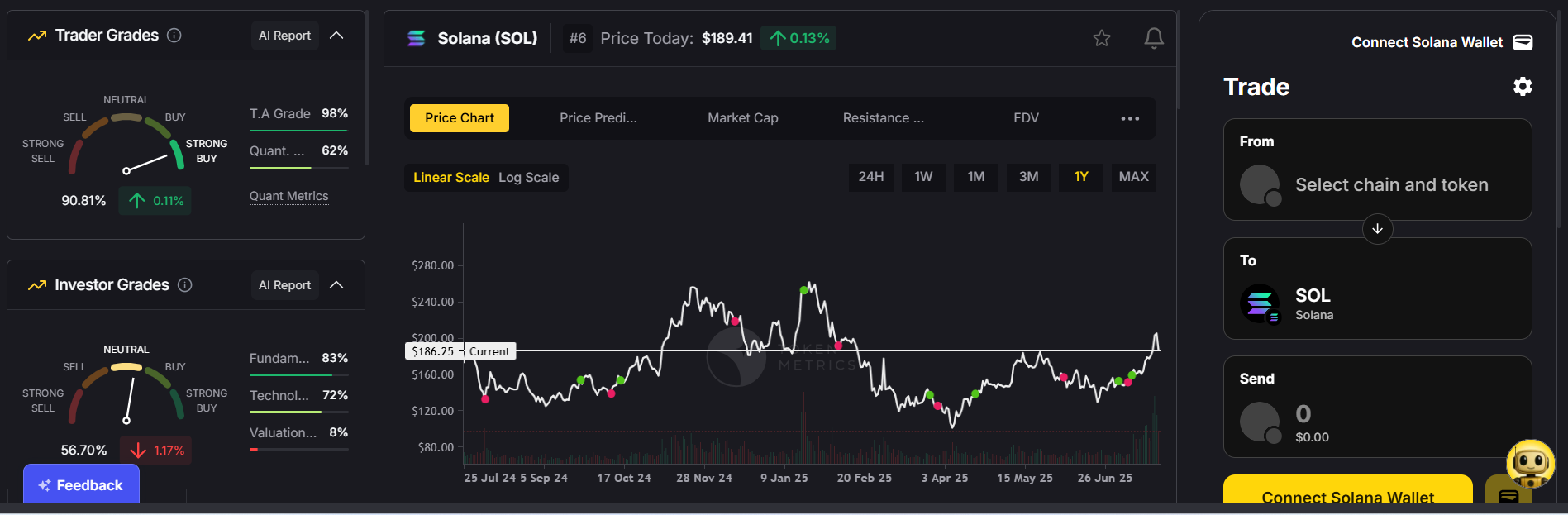
Bitcoin remains strong, with ETH and SOL following closely. Our models suggest:

  • ETH base case: $5,700

‍

  • SOL base case: $630

‍

  • Market cap projection: $8–14 trillion

Despite regulatory noise, crypto’s fundamentals—liquidity, user growth, and capital rotation—remain bullish.

Meme Coin Resurgence

Meme coins are leading short-term market action. Among the top gainers:

  • LoFi (SUI Ecosystem): Under $50M FTV, high liquidity, listed on Kraken and KuCoin
  • Sign, Gradient, Zerebro: Mixed quality; require caution

While volatility is high, top-performing meme coins on new chains often yield strong short-term returns—especially when backed by rising ecosystems like SUI.

Smart Money Tracking with Nansen

We’ve doubled down on using platforms like Nansen to follow profitable wallet cohorts. These tools help us identify early-stage tokens with smart money inflows. Key indicators:

  • Positive net inflow from smart wallets
  • Low concentration in top 100 holders
  • Distribution to non-suspicious fresh wallets
  • Whale cohort accumulation

We also track wallet activity over time to confirm whether top-performing wallets are accumulating or exiting positions.

Deep Dives Over Speculation

While meme coins grab headlines, we’re also analyzing sectors with long-term viability:

  • AI Agents (e.g., Fractal AI, Swarms)
  • Real-World Asset Stablecoins (e.g., USUAL with 9% APY)
  • Narrative Ecosystems (e.g., Hedera’s DEX activity surge)

We balance high-risk meme trades with deep fundamental research into projects gaining traction on-chain and in product development.

Sector Watch: Hedera Ecosystem

The Hedera (HBAR) ecosystem recently saw a 5x spike in DEX volume. Tokens like:

  • SaucerSwap (DEX)
  • HashPack (wallet)
  • Bonzo (lending)

are trending upward. While TVL remains low, increased volume may spark price momentum.

We’re not rotating capital aggressively here yet, but we’re watching closely for sustained on-chain activity.

Capital Flow Outlook

Altcoin rotation often follows BTC consolidation. With BTC and ETH leading the charge, we expect:

  • Meme coins and DeFi tokens to lead early-stage alt rotations
  • AI and DePin narratives to pick up mid-cycle
  • ETH and SOL outperformance in layer-1 competition

Internal price models and momentum indicators support further upside, assuming macro remains stable and regulatory conditions don’t sharply deteriorate.

Conclusion

The current cycle rewards those who combine quantitative analysis, on-chain tracking, and strong narrative awareness. Whether trading LoFi for a quick flip or accumulating tokens like Fractal AI or USUAL for a thesis-driven hold, the key is staying ahead of trends without abandoning discipline.

Choose from Platinum, Gold, and Silver packages
Reach with 25–30% open rates and 0.5–1% CTR
Craft your own custom ad—from banners to tailored copy
Perfect for Crypto Exchanges, SaaS Tools, DeFi, and AI Products