Research

What are Decentralized AI Marketplaces? The Future of Peer-to-Peer AI Innovation

Explore decentralized AI marketplaces, their benefits and challenges, and how they are reshaping the tech landscape. Read on to understand their impact.
Talha Ahmad
5 min
MIN

The artificial intelligence revolution is entering an exciting new phase in 2025, shifting away from centralized corporate control toward decentralized, community-driven ecosystems. Decentralized AI marketplaces are emerging as transformative platforms that democratize access to artificial intelligence tools, models, and services. These innovative platforms leverage blockchain technology to create peer-to-peer networks where developers, businesses, and individuals can buy, sell, and collaborate on AI solutions without relying on traditional intermediaries.

As the global AI landscape evolves, decentralized AI marketplaces address critical issues of accessibility, transparency, and ownership that have long hindered centralized AI systems. These platforms enable small businesses to tap into enterprise-grade AI tools, provide new revenue streams for AI developers, and reshape the way artificial intelligence is developed and deployed worldwide. By fostering open participation and fair compensation, decentralized AI marketplaces are setting the stage for a more inclusive and innovative AI industry.

Understanding Decentralized AI Marketplaces

Decentralized AI marketplaces represent disruptive platforms that utilize blockchain technology and decentralized networks to empower peer-to-peer exchanges of AI assets. Unlike traditional AI platforms controlled by a single party or tech giants, these marketplaces operate on distributed networks where no single entity has complete control, reducing risks of censorship, data monopolies, and single points of failure.

At their core, decentralized AI marketplaces are peer-to-peer platforms designed to democratize how AI is built, accessed, and monetized. Developers can upload AI models, data providers can offer curated datasets, and GPU owners can rent out computing power. These assets are traded openly, with contributors receiving direct rewards through smart contracts and token rewards, ensuring transparency and fair compensation.

The fundamental architecture of these platforms includes several key components:

  • Smart Contract Infrastructure: These automated agreements handle transactions, payments, and governance without human intervention, fostering trust and transparency between participants.
  • Tokenization Layer: Tokenization represents AI services, data, models, and computing resources as digital tokens on blockchain networks. This layer provides liquidity, fractional ownership, and efficiency within decentralized marketplaces.
  • Decentralized Storage: Secure, distributed storage systems safeguard AI models and datasets, ensuring availability and preventing single points of failure.
  • Consensus Mechanisms: Validation systems maintain the quality and authenticity of AI services and models offered on the platform.

Together, these components create an open, transparent, and resilient AI marketplace that empowers users to maintain control over their assets while enabling seamless collaboration across distributed networks.

Key Features and Benefits

Democratization of AI Access

Traditionally, developing and deploying advanced AI models required significant resources, technical expertise, and infrastructure, limiting access to large corporations and research institutions. Decentralized AI marketplaces level the playing field by making powerful AI tools and models accessible to smaller businesses, startups, and individual researchers.

This democratization goes beyond mere access; it encompasses ownership and control. Unlike centralized AI systems that can change terms of service or restrict access, decentralized marketplaces allow users to maintain sovereignty over their AI tools and data. By allowing open participation and removing single-party gatekeepers, these platforms enable a broader range of businesses and individuals to innovate and benefit from AI.

Enhanced Privacy and Security

Data privacy remains a paramount concern in today's digital world. Decentralized AI marketplaces address these concerns by enabling data providers to retain control over their sensitive information while still benefiting from AI insights. Techniques such as federated learning and secure multi-party computation allow AI models to be trained on decentralized data sources without exposing raw data.

This approach aligns with growing demands for patient privacy, data sovereignty, and compliance with regulations. By decentralizing data storage and AI training, these marketplaces reduce risks associated with centralized data breaches and misuse, fostering trust among participants.

Transparent and Fair Monetization

Unlike traditional AI platforms dominated by centralized providers, decentralized AI marketplaces offer transparent and fair monetization mechanisms. Verifiable training data lineage, censorship-resistant model hosting, and decentralized governance via DAOs ensure accountability and equitable value creation.

Token rewards and smart contracts automate payments and incentivize contributors fairly, distributing ownership and access across a wide network. This permissionless, open ecosystem resists censorship and expands the reach of artificial intelligence beyond corporate and political gatekeepers, empowering developers, data providers, and computing resource owners alike.

Cost Efficiency

By eliminating intermediaries and reducing overhead costs, decentralized marketplaces allow sellers to offer AI solutions at more competitive prices. This dynamic attracts more buyers and increases revenue opportunities. Additionally, pay-as-you-go or subscription-based pricing models enable businesses to access AI tools at a fraction of traditional costs, making AI development and deployment more affordable and scalable.

Sharing GPU resources and computing power within distributed networks optimizes resource allocation and reduces barriers for AI model training and AI tasks, benefiting both providers and users.

Market Growth and Industry Impact

The decentralized AI marketplace sector is experiencing rapid expansion. Currently, there are over 230 companies engaged in decentralized AI projects, including notable names like Filecoin, Raiinmaker, 0G Labs, Masa, and Storj. Among these, 132 companies have secured funding, with 21 reaching Series A rounds. The United States leads with 78 companies, followed by Singapore and the United Kingdom.

This growth signals a significant shift in AI development and deployment, with decentralized AI marketplaces unlocking vast economic opportunities across sectors such as healthcare, education, and finance. By empowering individuals and businesses, these platforms help address longstanding concerns about bias, discrimination, and concentration of power in the AI industry.

Decentralization fosters innovation by enabling open source protocols, transparent governance, and token-based incentives that drive sustainable AI development and adoption.

Leading Platforms and Technologies

SingularityNET

SingularityNET is the world's first decentralized AI network, enabling anyone to create, share, and monetize AI services at scale. Using its native AGIX token, the platform facilitates transactions within a decentralized protocol that supports AI development and collaboration across distributed networks.

Ocean Protocol and Fetch.AI

Ocean Protocol empowers data providers by securing data ownership and allowing users to share and monetize their data while retaining full control. Fetch.AI complements this by enhancing automation and efficiency, enabling AI systems and autonomous economic agents to optimize decisions across decentralized networks.

Emerging Innovations

MWX is poised to revolutionize the AI landscape with its upcoming global launch of the first decentralized, open-access AI marketplace tailored for small and medium enterprises (SMEs). By removing intermediaries and gatekeepers, MWX aims to bring powerful, ready-to-use AI tools directly to millions of SMEs worldwide.

Infrastructure Development

0G Labs is pioneering critical infrastructure that redefines what's possible for AI and blockchain integration. Their architecture lays the foundation for truly decentralized, performant AI infrastructure, including decentralized storage, verifiable inference, and service marketplaces. These developments underpin the next generation of decentralized AI applications.

Real-World Applications and Use Cases

Small and Medium Enterprises (SMEs)

The demand for SME-friendly AI solutions has never been greater. As global competition intensifies and customer expectations evolve, small businesses face pressure to deliver more with fewer resources. Despite AI’s promise of productivity gains and cost reductions, many SMEs remain locked out due to complexity and expense.

Decentralized AI marketplaces address this gap by providing affordable, accessible AI tools designed specifically for smaller businesses. By leveraging distributed networks and open marketplaces, SMEs can tap into AI solutions that were previously accessible only to tech giants.

Computing Resource Sharing

Decentralized AI marketplaces enable providers to lend out idle GPU power and computing resources through lending protocols and tokenized incentives. This approach maximizes utilization of existing capacity, reduces costs by up to 70%, and democratizes access to computing power necessary for AI model training and AI tasks.

Such resource sharing optimizes allocation, supports long-term contracts, and fosters an open participation model that benefits both providers and users.

Specialized Industry Solutions

The decentralized AI marketplace ecosystem is rapidly diversifying, with platforms emerging to serve specific industries such as healthcare, finance, and creative content generation. These specialized marketplaces facilitate collaboration among domain experts, accelerate AI development tailored to industry needs, and promote innovation in areas like patient privacy, real-time data processing, and autonomous AI assistants.

Token Metrics: The Premier AI-Powered Crypto Analytics Platform

In the evolving world of decentralized AI marketplaces, Token Metrics exemplifies how artificial intelligence can be harnessed to provide sophisticated crypto trading and analytics solutions.

Advanced AI-Driven Analytics

Token Metrics consolidates research, portfolio management, and trading into a unified ecosystem. It assigns each token a Trader Grade for short-term potential and an Investor Grade for long-term viability, enabling users to prioritize opportunities effectively.

The platform’s AI algorithms analyze thousands of data points across blockchain networks, providing comprehensive insights that would be impossible to process manually.

Real-Time Market Intelligence

Token Metrics offers real-time AI buy and sell signals, helping users spot winning tokens early among thousands of options. With AI-curated portfolios for short and long-term gains, the platform simplifies market research and tracking, making sophisticated analytics accessible to individual investors.

Comprehensive Trading Ecosystem

With the launch of Trading on Token Metrics, users can act on AI-generated signals directly within the platform, creating an end-to-end solution that integrates ratings, token details, and trading functionalities seamlessly.

Developer-Friendly Infrastructure

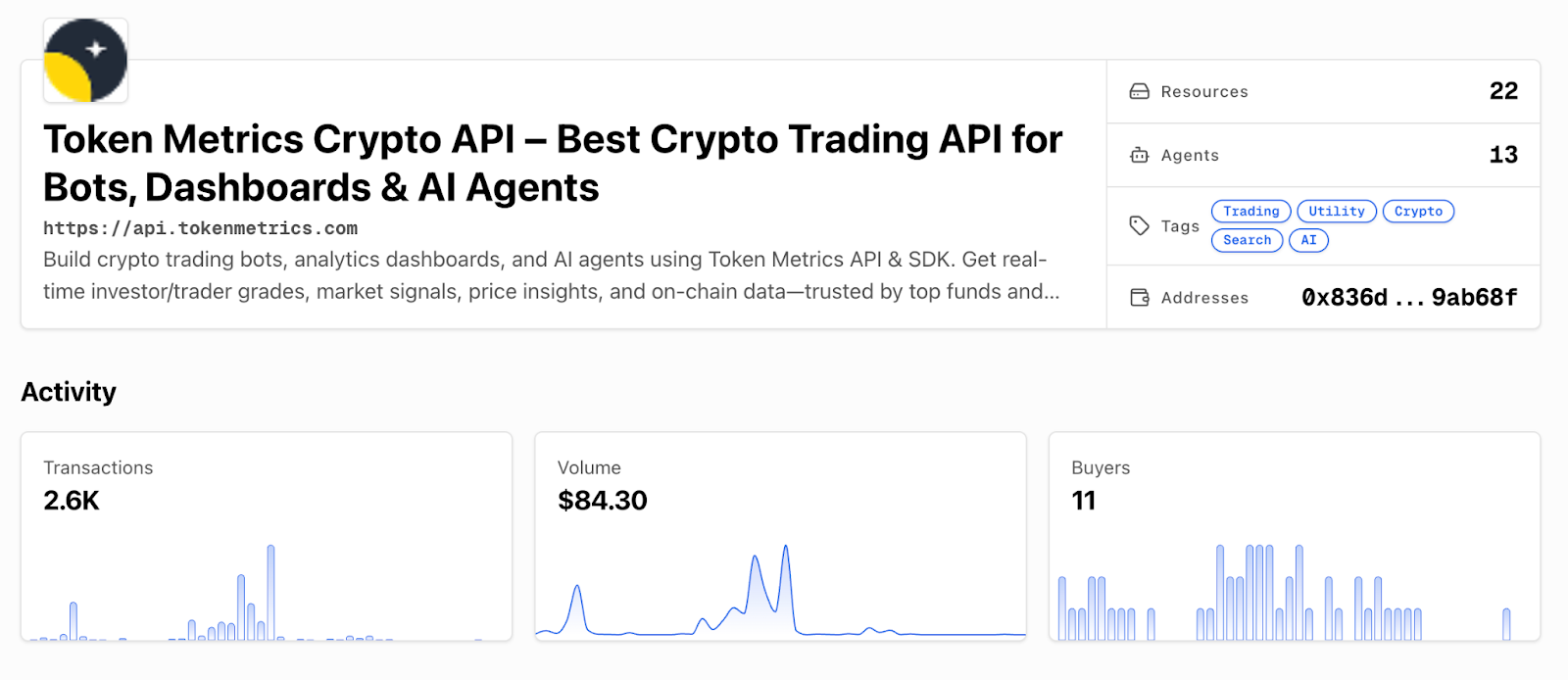
Token Metrics provides a modular, scalable API offering real-time ratings, sentiment analysis, indices, and AI signals. This infrastructure supports developers and teams looking to integrate AI capabilities into their own applications, exemplifying how decentralized AI marketplaces can foster innovation across ecosystems.

Innovation in AI Engagement

Token Metrics’ AI-powered agent on X (formerly Twitter), @0xTMAI, delivers timely, data-backed content and actionable intelligence to the community. By leveraging proprietary data and back-tested signals, the agent provides real-time insights, automated posts, and instant replies, showcasing how AI agents can enhance engagement and information flow beyond traditional platforms.

Challenges and Considerations

Technical Complexity

Integrating blockchain technology with AI systems introduces technical challenges, including slower processing speeds, scalability issues, and regulatory uncertainties. Ensuring seamless interoperability and user-friendly experiences remains an ongoing focus for decentralized AI projects.

Governance and Incentives

Establishing fair and sustainable incentive structures is critical, especially when decentralizing infrastructure control. Without a central authority, creating trust and managing disputes through decentralized governance, chain governance, and dispute resolution mechanisms requires careful design and community participation.

Market Maturation

The decentralized AI marketplace ecosystem is still maturing. Platforms are increasingly adopting modular architectures, allowing users to select components such as decentralized storage, computing, or full-stack AI solutions tailored to their needs. As the technology evolves, user interfaces and developer tools are becoming more accessible, driving broader adoption.

The Future of Decentralized AI Marketplaces

2025 and Beyond

0G Labs is spearheading the creation of a decentralized AI operating system, integrating multiple layers including decentralized storage, verifiable inference, and service marketplaces. This system aims to enhance transparency, trust, and performance in AI applications, marking a critical step forward in decentralized artificial intelligence.

Integration with Web3

By combining blockchain infrastructure, decentralized governance, and token rewards, these platforms are building a people-powered internet that supports AI compute, content streaming, and digital storage. This integration with Web3 technologies defines the future of decentralized AI infrastructure.

Market Expansion

MWX’s launch as the first one-stop decentralized marketplace for AI products tailored to SMEs exemplifies the expanding market reach. By bridging the gap between businesses and AI advancements, platforms like MWX are driving adoption and innovation across diverse sectors.

Conclusion: The Dawn of Democratized AI

Decentralized AI marketplaces represent a fundamental shift in how artificial intelligence is developed, accessed, and monetized. Leveraging blockchain technology and distributed networks, these platforms dismantle traditional barriers that have confined AI access to a few tech giants and well-funded institutions.

The key benefits are clear: enhanced data privacy and security, transparent and fair monetization, cost efficiency, and democratized access to cutting-edge AI tools. From small businesses gaining enterprise-grade AI solutions to developers receiving fair compensation for their innovations, decentralized AI marketplaces are creating new opportunities throughout the AI ecosystem.

Platforms like Token Metrics illustrate the transformative potential of democratized AI, making sophisticated analytics and real-time insights accessible to individual users while supporting professional applications. With comprehensive APIs and AI agents, Token Metrics exemplifies how decentralized AI marketplaces empower users and developers alike.

As we progress through 2025, the growth of decentralized AI marketplaces appears unstoppable. Hundreds of companies are building in this space, significant funding is flowing, and the technology is maturing rapidly. The future of AI is no longer centralized in the hands of a few tech giants; it is distributed across a global network of contributors, innovators, and users.

Decentralized AI marketplaces are the infrastructure that will make this future possible, fostering a more inclusive, transparent, and democratized artificial intelligence ecosystem. For businesses, developers, and individuals eager to participate in this revolution, the time to engage with decentralized AI marketplaces is now—the tools are ready, the ecosystem is expanding, and the opportunities have never been greater.

‍

Build Smarter Crypto Apps &
AI Agents in Minutes, Not Months
Real-time prices, trading signals, and on-chain insights all from one powerful API.
Grab a Free API Key
Token Metrics Team
Token Metrics Team

Recent Posts

Research

What Are the Core Skills Needed for Blockchain Development? A Complete 2025 Guide

Talha Ahmad
5 min
MIN

The blockchain revolution has evolved from a niche curiosity into a foundational element of modern digital infrastructure. As we move through 2025, the demand for skilled blockchain developers is skyrocketing, driven by the rapid expansion of blockchain technology across various sectors. Experts predict that the global blockchain technology market will reach an astounding USD 1,879.30 billion by 2034. Whether you are an aspiring blockchain developer or an experienced software engineer looking to transition into this dynamic field, understanding what are the core skills needed for blockchain development is essential to thrive in today’s competitive landscape.

Understanding Blockchain Development in 2025

Blockchain development involves creating and maintaining decentralized applications (DApps), blockchain protocols, and innovative blockchain solutions. This technology is revolutionizing industries ranging from finance and healthcare to supply chain management by offering secure, transparent, and immutable systems. In 2025, blockchain developers typically fall into two main categories:

Blockchain Core Developers focus on the foundational layers of blockchain technology. They design and build blockchain architecture, including consensus algorithms such as Proof of Work (PoW), Proof of Stake (PoS), and Proof of History (PoH). Their work ensures the security, scalability, and resilience of blockchain networks by managing blockchain nodes and maintaining network security. These core developers possess a thorough knowledge of distributed ledger technology, cryptographic principles, and network architecture.

On the other hand, Blockchain Software Developers leverage existing blockchain platforms and protocols to build decentralized applications and smart contracts. They specialize in smart contract development, integrating frontend web development with blockchain backends, and creating user-friendly decentralized apps (DApps). These developers work on blockchain applications that interact with blockchain transactions, digital assets, and decentralized exchanges, often utilizing APIs to connect blockchain services with traditional business processes.

Understanding this distinction is critical to identify the core blockchain developer skills required for each role and to tailor your learning path accordingly.

Essential Programming Languages for Blockchain Development

Mastering specific programming languages is a cornerstone of blockchain developer technical skills. Here are the top languages that every blockchain professional should consider:

1. Solidity: The King of Smart Contracts

Solidity reigns supreme in the blockchain space, especially for Ethereum-based development. Created by Gavin Wood in 2014, Solidity is a statically typed language specifically designed for writing smart contracts. It combines the familiarity of C++, JavaScript, and Python syntax, making it accessible for many software developers.

Solidity’s strong community support, extensive documentation, and widespread adoption make it the backbone of approximately 90% of smart contracts deployed today. Major decentralized finance (DeFi) platforms like Compound, Uniswap, and MakerDAO rely heavily on Solidity for their smart contract infrastructure. For any developer aiming to become a blockchain developer, proficiency in Solidity and smart contract logic is indispensable.

2. Rust: Performance and Security Combined

Rust is gaining significant traction in blockchain development due to its focus on memory safety and high performance. Unlike languages with garbage collection, Rust’s ownership model guarantees memory safety without sacrificing speed, reducing common programming pitfalls such as race conditions and memory corruption.

Rust is extensively used in cutting-edge blockchain platforms like Solana, NEAR, and Polkadot. Developers familiar with C++ will find Rust’s syntax approachable, while appreciating its enhanced security features. For blockchain core developers working on blockchain systems that demand speed and reliability, Rust is a top blockchain developer skill.

3. JavaScript: Bridging Web2 and Web3

JavaScript remains a versatile and essential language, especially for integrating blockchain applications with traditional web interfaces. Its extensive ecosystem, including frameworks like Node.js, React.js, Angular, and Vue.js, enables developers to build responsive frontends and backend services that interact seamlessly with blockchain networks.

Libraries such as Web3.js and Ethers.js facilitate blockchain integration, allowing developers to manage blockchain transactions, interact with smart contracts, and maintain decentralized applications. JavaScript skills are vital for blockchain software developers aiming to create intuitive decentralized apps and blockchain services.

4. Python: Simplicity Meets Power

Python’s simplicity and versatility make it a popular choice for blockchain development, particularly for scripting, backend integration, and prototyping. Python is also the foundation for Vyper, a smart contract language designed to complement Solidity with a focus on security and simplicity.

Python’s easy-to-learn syntax and broad application in data science and machine learning make it a valuable skill for blockchain developers interested in emerging technologies and AI integration within blockchain solutions.

5. Go: Google's Blockchain Powerhouse

Go (Golang) is renowned for its user-friendliness, scalability, and speed, making it ideal for blockchain development. It powers prominent projects such as Go-Ethereum (the official Ethereum client), Hyperledger Fabric, and various DeFi protocols.

For blockchain developers focusing on enterprise blockchain applications and network architecture, Go offers the tools necessary to build efficient distributed systems and maintain decentralized networks.

Critical Technical Skills Beyond Programming

While programming languages form the foundation, several other technical competencies are essential to excel in blockchain development.

Smart Contract Development

Smart contracts are self-executing agreements coded directly into blockchain networks. Proficiency in creating smart contracts is central to blockchain development involves creating automated, transparent, and secure agreements without intermediaries. Developers must master gas optimization to reduce transaction fees, apply security best practices to prevent vulnerabilities, and adopt rigorous testing and deployment strategies to ensure contract reliability.

Blockchain Architecture and Cryptography

A deep understanding of blockchain architecture is vital. This includes knowledge of consensus mechanisms such as PoW, PoS, and emerging alternatives, which govern how blockchain networks agree on the validity of transactions. Familiarity with cryptographic principles, including hash functions, cryptographic hash functions, digital signatures, and public key cryptography, is necessary to secure blockchain transactions and digital assets.

Moreover, blockchain developers should understand how blockchain nodes communicate within distributed networks, the structure of data blocks, and how blockchain consensus ensures data integrity across decentralized systems.

Web Development Integration

Modern blockchain applications require seamless integration between traditional web technologies and blockchain backends. Developers use libraries like Web3.js, Ethers.js, and Web3.py to connect decentralized apps with user-friendly interfaces. Skills in frontend frameworks (React.js, Angular, Vue.js), backend development (Node.js, Python), and API development are essential to build responsive and scalable blockchain applications that cater to diverse user needs.

Essential Development Tools and Frameworks

Development Frameworks

Frameworks such as Hardhat and Truffle simplify blockchain development by providing comprehensive environments for compiling, testing, and deploying smart contracts. Hardhat is a flexible JavaScript-based framework favored for its powerful debugging capabilities, while Truffle offers an end-to-end development suite for scalable blockchain applications. For beginners, Remix IDE presents a browser-based environment ideal for learning and experimenting with smart contracts.

Testing and Security Tools

Security is paramount in blockchain development. Developers must rigorously test smart contracts using tools like Remix, Hardhat, and Truffle to simulate various scenarios and identify vulnerabilities. Adhering to security best practices, such as leveraging established libraries like OpenZeppelin, conducting professional security audits, and following industry-standard coding conventions, ensures that blockchain applications remain secure against attacks like reentrancy or denial-of-service.

Blockchain Platforms and Networks

Proficiency across different blockchain platforms is crucial. Ethereum remains the most popular blockchain development platform, supported by a vast ecosystem and extensive developer resources. Layer 2 solutions such as Polygon, Arbitrum, and Optimism address Ethereum’s scalability challenges, while alternative blockchains like Solana, Binance Smart Chain, and Avalanche cater to specific use cases with unique performance attributes.

Enterprise-focused platforms like Hyperledger Fabric offer permissioned blockchain networks tailored for business applications, emphasizing privacy and compliance. Understanding these platforms enables developers to select the appropriate blockchain ecosystem for their projects.

The Role of Token Metrics in Blockchain Development Success

Beyond technical skills, understanding token economics and market dynamics is increasingly important for blockchain developers. Token Metrics is an invaluable platform offering AI-powered analytics that help developers navigate the cryptocurrency market and make informed technical decisions.

Why Token Metrics is Essential for Developers

Token Metrics equips developers with market intelligence by analyzing over 6,000 tokens daily, providing insights into which blockchain platforms and projects are gaining traction. This knowledge aids developers in selecting technologies and designing blockchain solutions aligned with market trends.

The platform’s comprehensive analysis of token economics supports developers working on DeFi protocols, decentralized finance applications, and tokenized ecosystems. Real-time performance tracking and sentiment analysis help developers evaluate project viability, guiding architecture choices and consensus mechanism implementations.

Leveraging Token Metrics for Career Growth

By using Token Metrics, blockchain professionals can build expertise that combines technical proficiency with market awareness—an increasingly sought-after combination in the blockchain industry. The platform’s scoring systems teach developers to evaluate projects systematically, a skill crucial for leadership roles.

Staying current with emerging trends through Token Metrics’ real-time alerts ensures developers remain at the forefront of innovation, enabling them to create innovative solutions that meet evolving market demands.

Advanced Skills for 2025 and Beyond

Emerging Technologies Integration

The blockchain space is rapidly evolving, with new languages like Move, Cadence, Cairo, and Ligo addressing challenges related to scalability, security, and usability. Integration with AI and machine learning technologies is becoming more prevalent, enhancing blockchain applications’ capabilities.

Cross-chain development skills, including knowledge of interoperability protocols and bridges, are essential as decentralized networks become more interconnected. Privacy-preserving technologies like zero-knowledge proofs (zk-SNARKs and zk-STARKs) are critical for developing secure, confidential blockchain applications.

Performance Optimization

Efficient transaction processing and scalability are vital for blockchain usability. Developers must master gas optimization techniques to minimize transaction fees and implement scalability solutions such as Layer 2 protocols and sidechains. Load testing ensures that blockchain applications can handle high volumes of transactions without compromising performance.

Security and Auditing

Security remains a top priority. Developers should acquire skills in code review methodologies, vulnerability assessments, penetration testing, and formal verification to audit smart contracts thoroughly. Choosing programming languages with strong typing and memory safety features helps prevent common security threats, reinforcing blockchain security.

Building Your Blockchain Development Career

Learning Path Recommendations

To become a proficient blockchain developer, a structured learning path is beneficial:

Phase 1: Foundation (2-3 months)
Start by mastering a core programming language such as Python or JavaScript. Build a solid understanding of blockchain basics, cryptographic concepts, and blockchain fundamentals. Utilize platforms like Token Metrics to gain insights into market dynamics.

Phase 2: Specialization (4-6 months)
Learn Solidity and focus on smart contract development. Gain hands-on experience with development frameworks like Hardhat or Truffle. Build and deploy simple decentralized applications on testnets to apply your knowledge practically.

Phase 3: Advanced Development (6-12 months)
Delve into advanced topics such as Layer 2 solutions, cross-chain interoperability, and blockchain consensus algorithms. Contribute to open-source blockchain projects and develop expertise in specific blockchain ecosystems to build a robust portfolio.

Portfolio Development

A strong portfolio is essential for showcasing your blockchain developer skills. Include smart contracts with clean, audited code, full-stack DApps featuring intuitive user interfaces, and contributions to open-source blockchain projects. Demonstrate your understanding of token economics and market dynamics to highlight your comprehensive blockchain expertise.

Industry Outlook and Opportunities

The blockchain development landscape in 2025 offers unprecedented opportunities fueled by exponential market growth. The expanding blockchain industry creates demand across multiple sectors:

  • DeFi and Financial Services: Innovating next-generation financial applications that disrupt traditional financial services.
  • NFTs and Digital Assets: Developing marketplaces and platforms for tokenizing digital assets.
  • Enterprise Blockchain: Building permissioned networks tailored for business applications requiring privacy and compliance.
  • Web3 Infrastructure: Designing the protocols and tools that power decentralized applications and services.

As blockchain technology continues to integrate with emerging technologies, blockchain professionals with a blend of technical and soft skills will be pivotal in driving the future of decentralized solutions.

Conclusion: Your Path to Blockchain Development Success

In 2025, what are the core skills needed for blockchain development extends beyond just programming. It encompasses a thorough understanding of blockchain architecture, cryptographic principles, smart contract development, and seamless web integration. Equally important is market awareness, token economics knowledge, and the ability to evaluate projects critically.

Platforms like Token Metrics provide indispensable market intelligence that complements technical skills, empowering developers to make informed decisions and create innovative blockchain applications. The blockchain revolution is still unfolding, and developers who combine technical proficiency with market insight will lead the next wave of innovation.

Start your journey today by mastering the fundamentals, leveraging professional tools, and building projects that demonstrate both your technical competence and market understanding. The future of decentralized technology depends on blockchain developers equipped with the right skills to build secure, scalable, and transformative blockchain systems.

‍

Research

How Do I Start a Career in Web3: Your Complete Guide to Success in 2025

Talha Ahmad
5 min
MIN

The digital revolution has ushered in an era of unprecedented opportunity, and nowhere is this more evident than in the rapidly expanding Web3 ecosystem. As we navigate through 2025, the landscape of decentralized technologies, blockchain applications, and crypto innovations continues to evolve at breakneck speed, creating a wealth of career opportunities for forward-thinking professionals. If you're wondering how do I start a career in Web3, this comprehensive guide will provide you with the essential knowledge, skills, and strategies to build a successful career in this exciting and constantly evolving industry.

Understanding the Web3 Revolution

Web3 represents the third iteration of the internet as we know it—a decentralized web built on principles of trust, transparency, and individual ownership. Unlike the centralized nature of Web2, where tech giants control data and platforms, Web3 leverages blockchain technology, smart contracts, and cryptography to facilitate peer-to-peer interactions and create more robust, transparent systems. This paradigm shift empowers users with control over their data and digital assets, enabling new forms of interaction through decentralized applications (dApps) and decentralized autonomous organizations (DAOs).

The Web3 career landscape has fundamentally shifted as well. According to the 2025 Web3.Career Intelligence Report, job postings have reached all-time highs, reflecting an industry that has matured beyond experimentation into execution. This maturation has drastically changed the skills that matter most, especially with the rise of hybrid work models and geographic arbitrage opportunities. For anyone eyeing a career in Web3, understanding this revolution is the first step toward success.

The Current State of Web3 Careers in 2025

The Web3 job market is experiencing explosive growth across both technical and non-technical domains. Since 2023, the market has seen a staggering 300% surge in job openings by 2025. This growth is fueled by the industry’s transition from speculative hype to building practical, real-world blockchain projects and blockchain based applications that solve tangible problems.

Key market insights include:

  • Web3 Jobs currently lists over 66,000 active positions, ranging from blockchain developers and smart contract developers to community managers and tokenomics specialists.
  • Contrary to popular belief, non-technical jobs are now rising faster than technical roles, highlighting the diverse career paths available.
  • There has been a 50% reduction in fully remote jobs year-over-year, signaling a structural shift toward hybrid work models.

Salary and compensation in Web3 can vary significantly depending on the specific job role, with some roles commanding much higher pay due to specialized skills or responsibilities. The explosive growth in the Web3 job market is influenced by various factors such as skills, experience, and regional demand.

This growing demand reflects the high demand for skilled professionals who possess a solid understanding of Web3 technologies and business models.

Essential Skills for Web3 Success

Technical Skills

To build a successful career in Web3, acquiring the right technical skills is crucial.

  • Blockchain Fundamentals: A solid foundation in blockchain technology is essential. This includes understanding decentralized systems, consensus algorithms, and the architecture of peer-to-peer networks.
  • Programming Languages: Proficiency in certain programming languages is highly sought after. These include:
    • Solidity for smart contract development on Ethereum.
    • Rust for high-performance blockchain systems.
    • JavaScript for frontend web development and Web3 integration.
    • Python for backend development and blockchain data analysis. Learning a programming language such as Solidity or Vyper is crucial for developing smart contracts and decentralized applications, as these languages directly impact smart contract security, readability, and functionality.
  • Smart Contract Development: Since smart contracts are the backbone of many Web3 applications, mastering Solidity and understanding how to write, deploy, and audit smart contracts is vital. This skill opens doors to roles such as smart contract developer and blockchain developer.
  • Web3 Libraries and Frameworks: Familiarity with tools like Web3.js, ethers.js, and frontend frameworks such as React is important for building user-friendly decentralized apps.

If you are new to JavaScript, you can learn JavaScript through online platforms like freeCodeCamp, Codecademy, or Udemy, which offer courses tailored for Web3 and blockchain development.

Non-Technical Skills

Web3 careers are not limited to coding. Several non-technical skills are equally important:

  • Understanding the Web3 Ecosystem: A good understanding of decentralized finance (DeFi), non-fungible tokens (NFTs), the metaverse, and various types of decentralized applications is essential for many roles. While NFTs are often associated with digital art, their applications extend far beyond, impacting creative industries and marketing strategies.
  • Community Management: Given the decentralized nature of Web3, community building and engagement are critical. Being active in online communities and managing blockchain communities can lead to roles like community manager or content creator.
  • Analytics and Research: The ability to analyze market trends, token performance, and blockchain data is increasingly valuable, especially for roles like crypto analyst or tokenomics specialist.

Top Web3 Career Opportunities in 2025

Technical Roles

  1. Blockchain Developer: These professionals design and build decentralized systems and blockchain based applications. dApp developers in this role are responsible for designing and implementing a decentralized application, which requires programming skills in languages like Solidity and experience with frameworks such as Web3.js for seamless blockchain integration. Their responsibilities include writing code, managing data structures, and ensuring security. Salaries range from $80,000 to over $200,000 depending on experience and location.
  2. Smart Contract Developer: Writing and deploying smart contracts on platforms like Ethereum is a core function. This role requires strong programming skills and an understanding of decentralized applications architecture, including the ability to implement a decentralized application using Solidity and frameworks like Web3.js.
  3. Web3 Frontend Developer: Creating responsive, intuitive interfaces that interact with blockchain backends is key. Knowledge of JavaScript and Web3 libraries is essential.

Non-Technical Roles

  1. Crypto Analyst: Professionals who analyze token economies, decentralized finance protocols, and market trends to provide actionable insights.
  2. Community Manager: Building and maintaining engaged communities around Web3 projects is a vital role given the emphasis on decentralization.
  3. Web3 Project Manager: Overseeing blockchain product development from conception to launch, requiring skills in project management and understanding of the Web3 ecosystem.
  4. Tokenomics Specialist: Designing and analyzing economic models for token ecosystems, critical for sustainable project growth.

The Role of Token Metrics in Web3 Career Success

For professionals entering the Web3 space, understanding the crypto market and developing analytical skills is crucial. Token Metrics is an AI-powered crypto analytics platform that provides cutting edge technology and market intelligence essential for career development.

Advanced Market Intelligence

Token Metrics helps you identify promising tokens early by leveraging AI analytics that combine technical analysis, on-chain data, sentiment analysis, and more. This insight is invaluable for roles such as crypto analyst, tokenomics specialist, and blockchain developer.

Professional Development Tools

The platform supports career growth by enabling users to:

  • Develop market expertise through daily scans of over 6,000 tokens.
  • Build analytical skills with AI-powered rating systems that teach systematic project evaluation.
  • Stay current with real-time signals and alerts to keep up with new trends.

Career-Enhancing Features

Token Metrics consolidates research, portfolio management, and trading into a unified interface, providing:

  • AI-powered analytics for both retail and institutional users.
  • Comprehensive scoring systems that evaluate tokens’ short-term and long-term viability.
  • Sector-specific analysis that builds expertise valuable across diverse Web3 roles.

Your Step-by-Step Web3 Career Roadmap

Phase 1: Foundation Building (1-3 months)

Start by building a basic understanding of blockchain and web development fundamentals:

  1. Learn blockchain basics such as decentralized networks, consensus algorithms, and smart contracts.
  2. Master the fundamentals of web development including HTML, CSS, and JavaScript.
  3. Begin using tools like Token Metrics to grasp market dynamics and develop analytical thinking.

Phase 2: Skill Development (3-6 months)

  1. Dive deeper into smart contract development by studying Ethereum’s architecture, the Ethereum Virtual Machine (EVM), and Solidity.
  2. Build simple decentralized applications (dApps) or smart contracts to gain hands on experience.
  3. Engage with online communities on Discord, Twitter Spaces, and community forums to learn from industry professionals.

Phase 3: Professional Development (6-12 months)

  1. Contribute to open source projects related to Web3 to gain practical experience and showcase your skills.
  2. Network actively by attending meetups, hackathons, and conferences. While sharing your LinkedIn profile can be helpful, authentic engagement and meaningful participation in Web3 communities often precede formal connections and are more valuable for building trust.
  3. Specialize in an area such as decentralized finance, non fungible tokens, or decentralized autonomous organizations to deepen your expertise.

Creating a Professional Portfolio for Web3

Building a professional portfolio is a critical step toward a successful career in Web3. In this constantly evolving industry, your portfolio serves as a showcase of your skills, creativity, and hands-on experience with blockchain technologies. To stand out in the competitive Web3 job market, highlight your proficiency in key programming languages such as Solidity, JavaScript, and Python—these are essential for smart contract development and building decentralized applications.

Include detailed examples of your work, such as deployed smart contracts, decentralized finance projects, or contributions to decentralized autonomous organizations. If you’ve participated in open source blockchain projects or created your own decentralized applications, be sure to feature these prominently. Demonstrate your understanding of the broader Web3 ecosystem by including projects that touch on decentralized finance, governance, or innovative uses of blockchain technology.

A strong portfolio not only displays your technical skills but also your ability to solve real-world problems using decentralized technologies. By curating a collection of relevant projects and achievements, you’ll position yourself as a capable and motivated candidate ready to thrive in the exciting industry of Web3.

Crafting a Compelling Web3 Cover Letter

A compelling cover letter can set you apart in the Web3 job market, serving as your personal introduction to hiring managers and project leads. When applying for a job in this industry, your cover letter should clearly communicate your passion for blockchain technologies, your strong programming skills, and your relevant experience with smart contracts and decentralized applications.

Start by thoroughly researching the company and carefully reviewing the job description. Tailor your cover letter to address the specific skills and qualifications they are seeking, using language that mirrors the job posting. Highlight your experience with smart contract development, your familiarity with blockchain technologies, and any notable projects or achievements that demonstrate your expertise.

Be sure to emphasize your ability to adapt to new trends and your enthusiasm for contributing to the company’s mission within the rapidly changing Web3 landscape. A well-crafted cover letter that showcases your skills, relevant experience, and genuine interest in the industry can make a significant impact, increasing your chances of landing an interview and advancing your career in Web3.

Exploring Content Creation and Writing Careers in Web3

The Web3 industry is not just for developers—there is a high demand for skilled content creators and writers who can translate complex concepts like smart contracts, blockchain technology, and decentralized finance into engaging, accessible content. As blockchain technologies and decentralized autonomous organizations continue to grow, top companies and projects are seeking professionals who can educate, inform, and inspire their communities.

To build a successful career in content creation and writing within Web3, focus on developing a strong understanding of the industry’s core concepts and trends. Hone your writing and storytelling skills, and learn to communicate technical information in a user-friendly way. Experiment with different formats, such as blog posts, articles, social media threads, and video scripts, to showcase your versatility.

Engage with online communities and connect with industry professionals to stay updated on the latest developments and opportunities. By building a portfolio of high-quality content and actively participating in the Web3 ecosystem, you can establish yourself as a go-to resource for blockchain-based projects, decentralized autonomous organizations, and top companies in this exciting industry. With the right skills and network, content creation offers a dynamic and rewarding path in the world of Web3 careers.

Overcoming Common Challenges

Breaking into Web3 Without Experience

Starting a Web3 career without prior experience can be daunting, but several strategies can improve your chances:

  • Build a strong portfolio on GitHub featuring personal projects and contributions to open source.
  • Engage in continuous learning to stay updated with the latest developments in blockchain technology and Web3.
  • Use analytics tools like Token Metrics to demonstrate your market understanding during job applications and interviews.

Geographic Opportunities

An important trend is the dramatic geographic salary differences, creating unprecedented opportunities. Web3 professionals in emerging markets can earn 3-10 times local rates, and many companies hiring offer the flexibility to work remotely, broadening access to exciting career opportunities worldwide.

Salary Expectations and Growth Potential

Web3 careers offer competitive compensation that often surpasses traditional tech roles:

  • Entry-level positions typically pay between $50,000 and $80,000.
  • Mid-level roles range from $80,000 to $150,000.
  • Senior positions can command $150,000 to $300,000 or more.
  • Specialized roles, especially in high-demand areas, can exceed $500,000.

Many jobs also offer equity or token compensation, which can significantly increase total earnings.

The Future of Web3 Careers

The Web3 ecosystem continues to mature, with several key trends shaping future career opportunities:

  1. Integration with Traditional Industries: Blockchain is increasingly used beyond cryptocurrency, including supply chain, healthcare, and media sectors.
  2. AI Integration: Combining Web3 and AI skills will be highly valuable as AI becomes mandatory in many applications.
  3. Regulatory Clarity: Clearer regulations will encourage more traditional companies to enter the Web3 space, expanding job opportunities.

Building Your Professional Network

Success in Web3 heavily depends on community engagement and networking:

  • Join blockchain communities on Discord, Telegram, and Twitter.
  • Attend industry events such as conferences, hackathons, and meetups.
  • Contribute to discussions by writing articles on platforms like Medium or Mirror.
  • Engage actively with projects, as many hire from their communities.

Continuous Learning and Adaptation

Given the constantly evolving nature of Web3, continuous learning is essential:

  • Stay updated by following industry publications, podcasts, and thought leaders.
  • Experiment with new protocols, DeFi platforms, NFT marketplaces, and decentralized apps.
  • Use professional tools like Token Metrics to keep pace with market trends and deepen your expertise.

Conclusion: Your Web3 Journey Starts Now

The Web3 revolution is creating unprecedented opportunities for professionals willing to embrace decentralized technologies and innovative business models. Working in Web3 offers the chance to engage with cutting edge technology, develop new skills, and participate in an exciting industry with vast growth potential.

Success requires a combination of technical proficiency, market understanding, and active community involvement. Platforms like Token Metrics provide the analytical foundation needed to navigate the complex crypto landscape, making your journey smoother and more informed.

Whether you aspire to be a developer, analyst, marketer, or entrepreneur, the decentralized future has a place for your talents. Start today by learning, building personal projects, and contributing to the ecosystem. The future is decentralized, and it’s being built by professionals like you. Your Web3 career journey begins with the first step—embrace the revolution and unlock your potential in this dynamic and rewarding field.

‍

Research

What is a Token Economy? A Complete Guide to Understanding Token Economies in 2025

Talha Ahmad
5 min
MIN

In today’s rapidly evolving world, the concept of a token economy has become increasingly significant, especially as digital technologies reshape how we interact, transact, and manage behavior. Whether you're exploring digital finance or behavioral interventions, understanding what is a token economy is essential for grasping how tokens function as powerful tools for motivation and change. This article provides a comprehensive overview of token economies, delving into their applications both in digital ecosystems and behavior management contexts.

Understanding the Token Economy

A token economy is fundamentally a system designed to reinforce positive behaviors by using tokens as a form of secondary reinforcement. In behavioral psychology, a token economy system involves awarding tokens or points to individuals when they exhibit desired behaviors or complete specific tasks. These tokens can later be exchanged for rewards, such as preferred items or privileges, effectively serving as backup reinforcers.

This system is widely used in various settings, including educational environments, therapeutic interventions for individuals with developmental disabilities such as autism spectrum disorder, and even in organizational behavior management. The core idea is to reinforce positive behaviors and reduce negative behavior by providing a clear, structured method of positive reinforcement that helps individuals learn and maintain appropriate behavior.

Key Components of a Token Economy System

To understand how a token economy works, it is important to recognize its key components. A well-designed token economy typically involves three major components:

  1. Tokens or Points: These are symbolic items, such as star stickers, poker chips, or even fake money, that participants earn for exhibiting target behaviors. The choice of tokens can vary depending on the setting and the preferences of the individuals involved.
  2. Target Behaviors: These are the specific behaviors that the system aims to encourage. It is crucial to identify target behaviors clearly, whether they are completing homework, demonstrating social skills, or reducing disruptive behavior.
  3. Backup Reinforcers: These are the reinforcing rewards or preferred items that tokens can be exchanged for. The number of tokens required to obtain these rewards is predetermined, providing motivation to earn and collect tokens.

A token economy chart or token boards often serve as a visual representation of progress, helping participants track how many tokens they have earned and how close they are to exchanging them for a reward.

How Token Economies Reinforce Positive Behaviors

The effectiveness of a token economy lies in its ability to reinforce positive behaviors through continuous reinforcement. When individuals earn tokens immediately after demonstrating a desired behavior, they receive timely feedback that strengthens the likelihood of repeating that behavior.

This system is grounded in operant conditioning, a learning process where behaviors are shaped by their consequences. By providing tokens as a form of token reinforcement, the token economy creates a motivational system that encourages individuals to engage in appropriate behavior and acquire new skills.

In settings like classrooms, a classroom token economy can be instrumental in promoting positive behavior reinforcement, improving attention, cooperation, and task completion among students.

Applications in Developmental and Educational Settings

Token economies have proven particularly effective in interventions for individuals with developmental disorders such as autism spectrum disorder. When combined with applied behavior analysis (ABA) and intensive behavior intervention, token economies help shape complex behaviors by breaking them down into manageable steps and reinforcing each step with tokens.

In educational settings, teachers use token economies to encourage students to complete assignments, participate actively, and display social behavior that supports a positive learning environment. The ability to choose tokens that are meaningful to participants enhances engagement and internal motivation.

Moreover, the flexibility of the system allows it to be tailored to different age groups, abilities, and goals, making it a versatile behavior modification technique.

Managing Negative and Inappropriate Behavior

Beyond promoting positive behaviors, token economies can also be used to reduce negative behavior and inappropriate behavior through strategies like response cost or token loss. In these cases, tokens may be taken away when undesirable behaviors occur, providing a clear consequence that discourages such actions.

This dual approach—rewarding positive behaviors and discouraging negative ones—makes token economies a comprehensive tool for behavior management in various contexts, from classrooms to therapeutic programs.

Designing an Effective Token Economy

Creating a successful token economy involves careful planning and implementation. Key considerations include:

  • Choosing tokens or points that are easily understandable and motivating for participants.
  • Clearly identifying target behaviors that are specific, measurable, and achievable.
  • Establishing how many tokens are needed to exchange for each reward, balancing effort and motivation.
  • Selecting backup reinforcers that are genuinely desirable to the participants, which may include tangible items, privileges, or social praise.
  • Using visual representations like token boards or charts to track progress and maintain engagement.
  • Ensuring consistent and immediate delivery of tokens to maintain the effectiveness of positive reinforcement.

The Role of Behavior Analysts in Token Economy Interventions

Behavior analysts today play a crucial role in designing, implementing, and evaluating token economy systems. By applying principles from experimental analysis and applied behavior analysis, they tailor interventions to individual needs, monitor progress, and adjust parameters to maximize behavior change.

Their expertise ensures that token economies function as effective behavioral interventions, promoting lasting improvements in behavior and skill acquisition.

Conclusion

Understanding what is a token economy reveals its power as both a motivational and behavior modification tool. Whether used in clinical settings for individuals with developmental disabilities, classrooms to encourage positive behavior reinforcement, or broader social applications, token economies offer a structured, evidence-based approach to shaping behavior.

By leveraging tokens as a form of secondary reinforcement, and allowing for the exchanging tokens for meaningful rewards, token economy systems create an engaging and effective framework for fostering desired behaviors and reducing negative behavior. As a widely recognized behavior management strategy grounded in operant conditioning, token economies continue to be a cornerstone of modern behavioral interventions and educational practices.

For anyone interested in behavior change, motivation, and reinforcement strategies, mastering the principles of token economies is essential for achieving successful and sustainable outcomes.

‍

Choose from Platinum, Gold, and Silver packages
Reach with 25–30% open rates and 0.5–1% CTR
Craft your own custom ad—from banners to tailored copy
Perfect for Crypto Exchanges, SaaS Tools, DeFi, and AI Products