Research

What Are the Biggest Risks in Crypto Trading?

Discover the biggest risks in crypto trading—from volatility and scams to emotional mistakes—and learn how Token Metrics’ AI tools can help you trade smarter and safer.
Token Metrics Team
8 min
MIN

Cryptocurrency trading can be highly rewarding, but it’s also one of the riskiest financial activities you can engage in. Prices can swing wildly within minutes, markets are largely unregulated, and scams remain rampant. Whether you’re a beginner investor or a seasoned trader, understanding these risks is critical for protecting your capital and making informed decisions.

In this guide, we’ll break down the biggest risks in crypto trading, how to recognize them, and how Token Metrics can help you minimize those risks using AI-driven insights.

1. Extreme Volatility

The crypto market is famous for its rapid price fluctuations. Unlike traditional stocks, which typically move in small percentages daily, cryptocurrencies can experience 10–50% swings in a single day.

  • Why it matters:

    • Quick price drops can wipe out profits or even your entire portfolio.
    • Leverage trading amplifies these risks, often leading to liquidations.

  • Example:
    In May 2021, Bitcoin fell from $64,000 to $30,000 in just weeks, catching many traders off guard.

How Token Metrics Helps:
Token Metrics provides AI-powered trading signals and market trend analysis to help you avoid trading blindly. Our Trader Grades let you know when an asset is trending bullish or bearish, giving you data-driven entry and exit points.

2. Lack of Regulation

Unlike traditional finance, cryptocurrency operates in a largely unregulated space. This creates both opportunities and risks.

  • Key risks:

    • Exchanges can shut down or get hacked with little recourse.
    • Bad actors can manipulate prices (pump-and-dump schemes).
    • Regulatory crackdowns in certain regions can cause market crashes.

How Token Metrics Helps:
We track regulatory trends and narratives using AI-driven sentiment analysis, alerting you to shifts that could impact your holdings.

3. Security Risks & Hacking

Crypto traders often store their assets on exchanges or hot wallets—prime targets for hackers.

  • Risks include:

    • Exchange hacks leading to stolen funds.
    • Phishing scams that trick users into giving away private keys.
    • Rug pulls in DeFi projects that drain liquidity.

How Token Metrics Helps:
Token Metrics evaluates crypto projects with AI-based risk scoring, helping you avoid tokens and platforms with poor security practices or suspicious activity.

4. Scams & Fraud

From rug pulls to fake ICOs and Ponzi schemes, crypto has become a hotbed for scams targeting inexperienced traders.

  • Examples of common scams:

    • Pump-and-dump groups on Telegram.
    • Fake airdrops asking for wallet connections.
    • Impersonation scams on social media.

How Token Metrics Helps:
Our Moonshot Finder doesn’t just find hidden gem tokens—it uses AI-driven vetting to filter out high-risk projects, helping you spot potential scams before you invest.

5. Emotional Trading

The fear of missing out (FOMO) and panic selling are two of the biggest psychological pitfalls in crypto trading.

  • How it affects traders:

    • FOMO causes impulsive buying at peaks.
    • Panic selling during dips leads to unnecessary losses.
    • Overtrading erodes profits through excessive fees and bad timing.

How Token Metrics Helps:
By offering objective, AI-driven market insights, Token Metrics removes the emotional bias from trading. Our data-backed signals tell you when to hold, sell, or accumulate—reducing emotionally driven mistakes.

6. Liquidity Risks

Some cryptocurrencies—especially low-cap altcoins—have low liquidity, making it difficult to buy or sell without significantly impacting the price.

  • Why this matters:

    • You may be unable to exit a position when needed.
    • Large trades can cause slippage and losses.

How Token Metrics Helps:
Our platform tracks liquidity metrics for thousands of tokens, ensuring you know the trading conditions before entering or exiting a position.

7. Leverage & Margin Trading Dangers

While leverage trading can amplify profits, it can also wipe out your portfolio quickly.

  • Risks include:

    • Liquidation if prices move against your position.
    • Amplified emotional stress and poor decision-making.

How Token Metrics Helps:
Token Metrics identifies high-probability trades using AI-based technical analysis, reducing the guesswork in leveraged trading.

8. Narrative & Hype Cycles

Crypto prices are often driven by hype, social media trends, and narratives, which can be unpredictable and short-lived.

  • Example:
    The rapid rise and fall of meme tokens like Dogecoin and Shiba Inu, which surged based on social media buzz but saw massive corrections.

How Token Metrics Helps:
Our AI detects emerging narratives early—whether it’s AI tokens, DeFi, or RWA projects—so you can position yourself before the hype cycle peaks.

How to Mitigate These Risks

Here are some best practices for reducing crypto trading risks:

  1. Diversify your portfolio: Don’t put all your funds into one token.
  2. Use AI-powered tools like Token Metrics: Let data, not emotions, guide your trades.
  3. Practice good security hygiene: Use hardware wallets and enable two-factor authentication.
  4. Avoid leverage until experienced: Trade with spot assets before exploring margin.
  5. Stay updated: Monitor news and regulatory developments.

Why Token Metrics Is the Best Tool for Risk Management

Token Metrics is more than a research platform—it’s your AI-powered trading assistant. Here’s why traders trust it:

  • AI-Powered Signals: Get real-time bullish/bearish alerts for smarter trading.
  • Risk Scoring: Avoid scams and unsafe projects with our proprietary evaluations.
  • Moonshot Finder: Discover promising low-cap tokens with AI-vetted potential.
  • Trader & Investor Grades: Balance short-term trading with long-term investing.
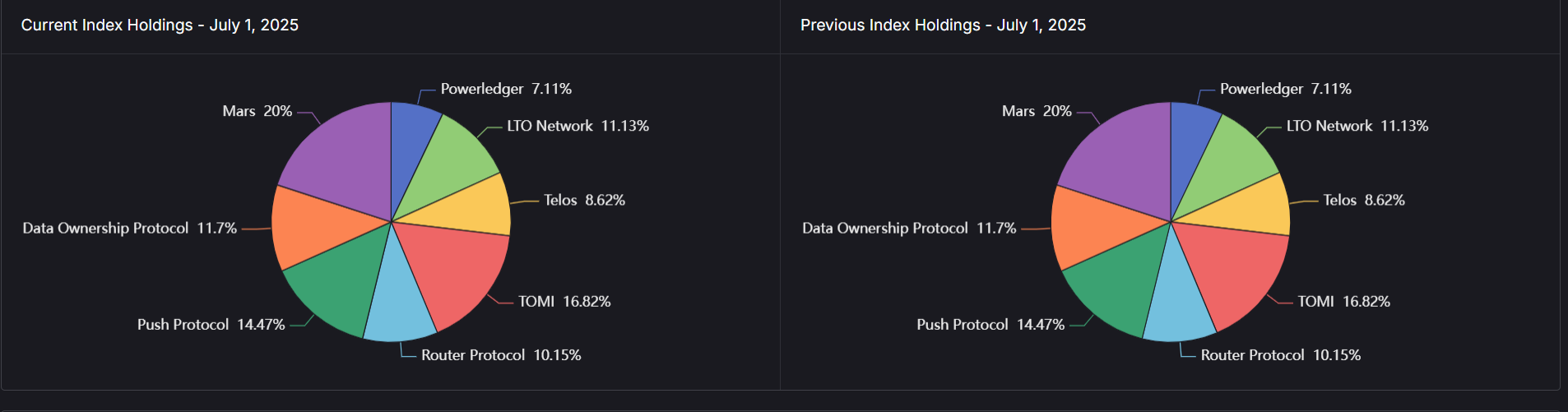
  • AI Indices: Use auto-managed portfolios to reduce risk through diversification.

Whether you’re a beginner looking to avoid common pitfalls or an advanced trader seeking data-driven edge, Token Metrics helps you trade smarter and safer.

Final Thoughts

So, what are the biggest risks in crypto trading? From extreme volatility and scams to emotional decision-making and security threats, the dangers are real. But with the right strategies and tools, you can navigate the market with confidence.

By using Token Metrics’ AI-powered insights, you can reduce emotional bias, avoid high-risk tokens, and make smarter, data-driven trades—turning crypto’s volatility from a threat into an opportunity.

Build Smarter Crypto Apps &
AI Agents in Minutes, Not Months
Real-time prices, trading signals, and on-chain insights all from one powerful API.
Grab a Free API Key
Token Metrics Team
Token Metrics Team

Recent Posts

Research

Understanding REST APIs: A Practical Guide

Token Metrics Team
5
MIN

Modern web and mobile apps exchange data constantly. At the center of that exchange is the REST API — a widely adopted architectural style that standardizes how clients and servers communicate over HTTP. Whether you are a developer, product manager, or researcher, understanding what a REST API is and how it works is essential for designing scalable systems and integrating services efficiently.

What is a REST API? Core principles

A REST API (Representational State Transfer Application Programming Interface) is a style for designing networked applications. It defines a set of constraints that, when followed, enable predictable, scalable, and loosely coupled interactions between clients (browsers, mobile apps, services) and servers. REST is not a protocol or standard; it is a set of architectural principles introduced by Roy Fielding in 2000.

Key principles include:

  • Statelessness: Each request from the client contains all information needed; the server does not store client session state between requests.
  • Resource orientation: Everything is modeled as a resource (users, orders, posts), each identified by a URI (Uniform Resource Identifier).
  • Uniform interface: A standard set of operations (typically HTTP methods) operate on resources in predictable ways.
  • Client-server separation: Clients and servers can evolve independently as long as the interface contract is maintained.
  • Cacheability: Responses can be labeled cacheable or non-cacheable to improve performance and scalability.

How REST APIs work: HTTP methods, status codes, and endpoints

A REST API organizes functionality around resources and uses standard HTTP verbs to manipulate them. Common conventions are:

  • GET — retrieve a resource or list of resources.
  • POST — create a new resource under a collection.
  • PUT — replace an existing resource or create if absent (idempotent).
  • PATCH — apply partial updates to a resource.
  • DELETE — remove a resource.

Responses use HTTP status codes to indicate result state (200 OK, 201 Created, 204 No Content, 400 Bad Request, 401 Unauthorized, 404 Not Found, 500 Internal Server Error). Payloads are typically JSON but can be XML or other formats. Endpoints are structured hierarchically, for example: /api/users to list users, /api/users/123 to operate on user with ID 123.

Design patterns and best practices for reliable APIs

Designing a robust REST API involves more than choosing verbs and URIs. Adopt patterns that make APIs understandable, maintainable, and secure:

  • Consistent naming: Use plural resource names (/products, /orders), and keep endpoints predictable.
  • Versioning: Expose versions (e.g., /v1/) to avoid breaking clients when changing the contract.
  • Pagination and filtering: For large collections, support parameters for page size, cursors, and search filters to avoid large responses.
  • Error handling: Return structured error responses with codes and human-readable messages to help client debugging.
  • Rate limiting and throttling: Protect backends by limiting request rates and providing informative headers.
  • Security: Use TLS, authenticate requests (OAuth, API keys), and apply authorization checks per resource.

Following these practices improves interoperability and reduces operational risk.

Use cases, tools, and how to test REST APIs

REST APIs are used across web services, microservices, mobile backends, IoT devices, and third-party integrations. Developers commonly use tools and practices to build and validate APIs:

  • API specifications: OpenAPI (formerly Swagger) describes endpoints, parameters, responses, and can be used to generate client/server code and documentation.
  • Testing tools: Postman, curl, and automated test frameworks (JUnit, pytest) validate behavior, performance, and regression checks.
  • Monitoring and observability: Logs, distributed tracing, and metrics (latency, error rates) help identify issues in production.
  • Client SDKs and code generation: Generate typed clients for multiple languages to reduce integration friction.

AI-driven platforms and analytics can speed research and debugging by surfacing usage patterns, anomalies, and integration opportunities. For example, Token Metrics can be used to analyze API-driven data feeds and incorporate on-chain signals into application decision layers without manual data wrangling.

Build Smarter Crypto Apps & AI Agents with Token Metrics

Token Metrics provides real-time prices, trading signals, and on-chain insights all from one powerful API. Grab a Free API Key

FAQ: What is REST API — common questions

What is the difference between REST and RESTful?

"REST" refers to the architectural constraints described by Roy Fielding; "RESTful" is a colloquial adjective meaning an API that follows REST principles. Not all APIs labeled RESTful implement every REST constraint strictly.

How does REST compare to SOAP and GraphQL?

SOAP is a protocol with rigid standards and built-in operations (often used in enterprise systems). GraphQL exposes a single endpoint and lets clients request precise data shapes. REST uses multiple endpoints and standard HTTP verbs. Each approach has trade-offs in flexibility, caching, and tooling.

When should I version my REST API?

Version your API before making breaking changes to request/response formats or behavior that existing clients depend on. Common strategies include URI versioning (e.g., /v1/) or header-based versioning.

Are REST APIs secure by default?

No. Security must be designed in: use HTTPS/TLS, authenticate requests, validate input, apply authorization checks, and limit rate to reduce abuse. Treat REST APIs like any other public interface that requires protection.

How do I test and document a REST API effectively?

Use API specifications (OpenAPI) to auto-generate docs and client stubs. Combine manual testing tools like Postman with automated integration and contract tests in CI pipelines to ensure consistent behavior across releases.

Can REST APIs handle streaming or real-time data?

REST is request/response oriented and not ideal for continuous real-time streams. For streaming, consider WebSockets, Server-Sent Events (SSE), or specialized protocols; REST can still be used for control operations and fallbacks.

Disclaimer: This article is educational and technical in nature. It does not provide investment or legal advice. The information is intended to explain REST API concepts and best practices, not to recommend specific products or actions.

Research

FastAPI: Build High-Performance Python APIs

Token Metrics Team
4
MIN

FastAPI has become a go-to framework for teams that need production-ready, high-performance APIs in Python. It combines modern Python features, automatic type validation via pydantic, and ASGI-based async support to deliver low-latency endpoints. This post breaks down pragmatic patterns for building, testing, and scaling FastAPI services, with concrete guidance on performance tuning, deployment choices, and observability so you can design robust APIs for real-world workloads.

Overview: Why FastAPI and where it fits

FastAPI is an ASGI framework that emphasizes developer experience and runtime speed. It generates OpenAPI docs automatically, enforces request/response typing, and integrates cleanly with async workflows. Compare FastAPI to traditional WSGI stacks (Flask, Django sync endpoints): FastAPI excels when concurrency and I/O-bound tasks dominate, and when you want built-in validation and schema-driven design.

Use-case scenarios where FastAPI shines:

  • Low-latency microservices handling concurrent I/O (databases, HTTP calls, queues).
  • AI/ML inference endpoints that require fast request routing and input validation.
  • Public APIs where OpenAPI/Swagger documentation and typed schemas reduce integration friction.

Async patterns and performance considerations

FastAPI leverages async/await to let a single worker handle many concurrent requests when operations are I/O-bound. Key principles:

  1. Avoid blocking calls inside async endpoints. Use async database drivers (e.g., asyncpg, databases) or wrap blocking operations in threadpools when necessary.
  2. Choose the right server. uvicorn (with or without Gunicorn) is common: uvicorn for development and Gunicorn+uvicorn workers for production. Consider Hypercorn for HTTP/2 or advanced ASGI features.
  3. Benchmark realistic scenarios. Use tools like wrk, k6, or hey to simulate traffic patterns similar to production. Measure p95/p99 latency, not just average response time.

Performance tuning checklist:

  • Enable HTTP keep-alive and proper worker counts (CPU cores × factor depending on blocking).
  • Cache expensive results (Redis, in-memory caches) and use conditional responses to reduce payloads.
  • Use streaming responses for large payloads to minimize memory spikes.

Design patterns: validation, dependency injection, and background tasks

FastAPI's dependency injection and pydantic models enable clear separation of concerns. Recommended practices:

  • Model-driven APIs: Define request and response schemas with pydantic. This enforces consistent validation and enables automatic docs.
  • Modular dependencies: Use dependency injection for DB sessions, auth, and feature flags to keep endpoints thin and testable.
  • Background processing: Use FastAPI BackgroundTasks or an external queue (Celery, RQ, or asyncio-based workers) for long-running jobs—avoid blocking the request lifecycle.

Scenario analysis: for CPU-bound workloads (e.g., heavy data processing), prefer external workers or serverless functions. For high-concurrency I/O-bound workloads, carefully tuned async endpoints perform best.

Deployment, scaling, and operational concerns

Deploying FastAPI requires choices around containers, orchestration, and observability:

  • Containerization: Create minimal Docker images (slim Python base, multi-stage builds) and expose an ASGI server like uvicorn with optimized worker settings.
  • Scaling: Horizontal scaling with Kubernetes or ECS works well. Use readiness/liveness probes and autoscaling based on p95 latency or CPU/memory metrics.
  • Security & rate limiting: Implement authentication at the edge (API gateway) and enforce rate limits (Redis-backed) to protect services. Validate inputs strictly with pydantic to avoid malformed requests.
  • Observability: Instrument metrics (Prometheus), distributed tracing (OpenTelemetry), and structured logs to diagnose latency spikes and error patterns.

CI/CD tips: include a test matrix for schema validation, contract tests against OpenAPI, and canary deploys for backward-incompatible changes.

Build Smarter Crypto Apps & AI Agents with Token Metrics

Token Metrics provides real-time prices, trading signals, and on-chain insights all from one powerful API. Grab a Free API Key

FAQ: What is FastAPI and how is it different?

FastAPI is a modern, ASGI-based Python framework focused on speed and developer productivity. It differs from traditional frameworks by using type hints for validation, supporting async endpoints natively, and automatically generating OpenAPI documentation.

FAQ: When should I use async endpoints versus sync?

Prefer async endpoints for I/O-bound operations like network calls or async DB drivers. If your code is CPU-bound, spawning background workers or using synchronous workers with more processes may be better to avoid blocking the event loop.

FAQ: How many workers or instances should I run?

There is no one-size-fits-all. Start with CPU core count as a baseline and adjust based on latency and throughput measurements. For async I/O-bound workloads, fewer workers with higher concurrency can be more efficient; for blocking workloads, increase worker count or externalize tasks.

FAQ: What are key security practices for FastAPI?

Enforce strong input validation with pydantic, use HTTPS, validate and sanitize user data, implement authentication and authorization (OAuth2, JWT), and apply rate limiting and request size limits at the gateway.

FAQ: How do I test FastAPI apps effectively?

Use TestClient from FastAPI for unit and integration tests, mock external dependencies, write contract tests against OpenAPI schemas, and include load tests in CI to catch performance regressions early.

Disclaimer

This article is for educational purposes only. It provides technical and operational guidance for building APIs with FastAPI and does not constitute professional or financial advice.

Research

Practical API Testing: Strategies, Tools, and Best Practices

Token Metrics Team
5
MIN

APIs are the connective tissue of modern software. Testing them thoroughly prevents regressions, ensures predictable behavior, and protects downstream systems. This guide breaks API testing into practical steps, frameworks, and tool recommendations so engineers can build resilient interfaces and integrate them into automated delivery pipelines.

What is API testing?

API testing verifies that application programming interfaces behave according to specification: returning correct data, enforcing authentication and authorization, handling errors, and performing within expected limits. Unlike UI testing, API tests focus on business logic, data contracts, and integration between systems rather than presentation. Well-designed API tests are fast, deterministic, and suitable for automation, enabling rapid feedback in development workflows.

Types of API tests

  • Unit/Component tests: Validate single functions or routes in isolation, often by mocking external dependencies to exercise specific logic.
  • Integration tests: Exercise interactions between services, databases, and third-party APIs to verify end-to-end flows and data consistency.
  • Contract tests: Assert that a provider and consumer agree on request/response shapes and semantics, reducing breaking changes in distributed systems.
  • Performance tests: Measure latency, throughput, and resource usage under expected and peak loads to find bottlenecks.
  • Security tests: Check authentication, authorization, input validation, and common vulnerabilities (for example injection, broken access control, or insufficient rate limiting).
  • End-to-end API tests: Chain multiple API calls to validate workflows that represent real user scenarios across systems.

Designing an API testing strategy

Effective strategies balance scope, speed, and confidence. A common model is the testing pyramid: many fast unit tests, a moderate number of integration and contract tests, and fewer end-to-end or performance tests. Core elements of a robust strategy include:

  • Define clear acceptance criteria: Use API specifications (OpenAPI/Swagger) to derive expected responses, status codes, and error formats so tests reflect agreed behavior.
  • Prioritize test cases: Focus on critical endpoints, authentication flows, data integrity, and boundary conditions that pose the greatest risk.
  • Use contract testing: Make provider/consumer compatibility explicit with frameworks that can generate or verify contracts automatically.
  • Maintain test data: Seed environments with deterministic datasets, use fixtures and factories, and isolate test suites from production data.
  • Measure coverage pragmatically: Track which endpoints and input spaces are exercised, but avoid chasing 100% coverage if it creates brittle tests.

Tools, automation, and CI/CD

Tooling choices depend on protocols (REST, GraphQL, gRPC) and language ecosystems. Common tools and patterns include:

  • Postman & Newman: Rapid exploratory testing, collection sharing, and collection-based automation suited to cross-team collaboration.
  • REST-assured / Supertest / pytest + requests: Language-native libraries for integration and unit testing in JVM, Node.js, and Python ecosystems.
  • Contract testing tools: Pact, Schemathesis, or other consumer-driven contract frameworks to prevent breaking changes in services.
  • Load and performance: JMeter, k6, Gatling for simulating traffic and measuring resource limits and latency under stress.
  • Security scanners: OWASP ZAP or dedicated fuzzers for input validation, authentication, and common attack surfaces.

Automation should be baked into CI/CD pipelines: run unit and contract tests on pull requests, integration tests on feature branches or merged branches, and schedule performance/security suites on staging environments. Observability during test runs—collecting metrics, logs, and traces—helps diagnose flakiness and resource contention faster.

AI-driven analysis can accelerate test coverage and anomaly detection by suggesting high-value test cases and highlighting unusual response patterns. For teams that integrate external data feeds into their systems, services that expose robust, real-time APIs and analytics can be incorporated into test scenarios to validate third-party integrations under realistic conditions. For example, Token Metrics offers datasets and signals that can be used to simulate realistic inputs or verify integrations with external data providers.

Build Smarter Crypto Apps & AI Agents with Token Metrics

Token Metrics provides real-time prices, trading signals, and on-chain insights all from one powerful API. Grab a Free API Key

What is the difference between unit and integration API tests?

Unit tests isolate individual functions or routes using mocks and focus on internal logic. Integration tests exercise multiple components together (for example service + database) to validate interaction, data flow, and external dependencies.

How often should I run performance tests?

Run lightweight load tests during releases and schedule comprehensive performance runs on staging before major releases or after architecture changes. Frequency depends on traffic patterns and how often critical paths change.

Can AI help with API testing?

AI can suggest test inputs, prioritize test cases by risk, detect anomalies in responses, and assist with test maintenance through pattern recognition. Treat AI as a productivity augmenter that surfaces hypotheses requiring engineering validation.

What is contract testing and why use it?

Contract testing ensures providers and consumers agree on the API contract (schemas, status codes, semantics). It reduces integration regressions by failing early when expectations diverge, enabling safer deployments in distributed systems.

What are best practices for test data management?

Use deterministic fixtures, isolate test databases, anonymize production data when necessary, seed environments consistently, and prefer schema or contract assertions to validate payload correctness rather than brittle value expectations.

How do I handle flaky API tests?

Investigate root causes such as timing, external dependencies, or resource contention. Reduce flakiness by mocking unstable third parties, improving environment stability, adding idempotent retries where appropriate, and capturing diagnostic traces during failures.

Disclaimer

This article is educational and technical in nature and does not constitute investment, legal, or regulatory advice. Evaluate tools and data sources independently and test in controlled environments before production use.

Choose from Platinum, Gold, and Silver packages
Reach with 25–30% open rates and 0.5–1% CTR
Craft your own custom ad—from banners to tailored copy
Perfect for Crypto Exchanges, SaaS Tools, DeFi, and AI Products