Back to blog
Research

What Happens When Your Crypto Index Goes to Cash (Stablecoins)?

Discover how regime-switching strategies with stablecoins can enhance risk management and resilience in volatile crypto markets using Token Metrics analytics.
Token Metrics Team
11 min read
Want Smarter Crypto Picks—Free?
See unbiased Token Metrics Ratings for BTC, ETH, and top alts.
Thank you! Your submission has been received!
Oops! Something went wrong while submitting the form.
 No credit card | 1-click unsubscribe

In the fast-paced and often unpredictable world of cryptocurrency investing, knowing when to step aside can be as valuable as knowing when to jump in. This wisdom is especially pertinent in 2025, a year marked by heightened market volatility and growing institutional interest in digital assets. Stablecoins are a type of cryptocurrency designed to maintain a stable value relative to another asset, such as the US dollar, making them a unique crypto asset that offers lower volatility and greater usability in transactions. As the stablecoin market surpasses $232 billion in market capitalization and regime-switching strategies gain traction among professional investors, understanding what happens when your crypto index goes to cash stablecoins could be the key to preserving wealth amid turbulent markets.

Moving your crypto index to cash—specifically into stablecoins—does not mean abandoning the crypto market altogether. Instead, it represents a tactical shift designed to protect your portfolio’s value when market conditions become unfavorable. Stablecoins are digital tokens that act as stable assets and serve as a form of money within the crypto ecosystem, providing a digital representation of fiat currencies on the blockchain. What makes stablecoins attractive for this strategy is their ability to provide price stability and reduce risk during market downturns. This article explores the mechanics, rationale, and real-world impact of this increasingly popular strategy, with a focus on how stablecoins function as a defensive asset in the evolving crypto landscape.

The Evolution of Smart Index Strategies

Traditional crypto indices typically maintain constant exposure to a broad basket of crypto assets, forcing investors to endure the full brunt of market crashes from peak to bottom. This static approach can be punishing given the crypto market’s notorious volatility, where sharp drawdowns can erase years of gains in just a few weeks.

However, 2025 has ushered in a new paradigm: regime-switching indices that dynamically allocate between risk assets and defensive positions based on quantifiable market signals. These smart index strategies adjust exposure in real time, shifting from volatile crypto assets to stablecoins when indicators suggest heightened market risk.

A prime example is Token Metrics’ TM Global 100 Index, which leverages AI-powered analytics to monitor market conditions and execute these regime switches systematically. This approach represents one of the most significant innovations in crypto portfolio management since the advent of Bitcoin ETFs, offering investors a way to maintain participation in the crypto market while actively managing downside risk.

Unlike traditional indices that remain fully invested regardless of market turmoil, regime-switching strategies prioritize capital preservation by moving into cash stablecoins during bearish phases. This dynamic allocation is a data-driven response to the brutal reality of crypto’s worst drawdowns and aims to protect investors from severe losses.

Understanding the Cash Transition: The Mechanics

When a regime-switching crypto index like the TM Global 100 moves to cash stablecoins, several important processes take place simultaneously:

  • Portfolio Liquidation: The index systematically sells its crypto holdings—whether that includes the top 100 crypto assets by market capitalization or a more focused selection—and converts the proceeds into stablecoins such as USDC or USDT. These stablecoins are typically backed by reserve assets, which help maintain their value and stability. Companies that issue stablecoins must follow certain regulatory requirements and proposed rules to ensure transparency, proper management of reserve assets, and overall stability in the market. USDT alone processes over $1 trillion in transactions monthly and the total stablecoin transaction volume exceeds $4.7 trillion in recent 30-day periods.
  • Capital Preservation Mode: Once converted, your investment no longer rides the waves of highly volatile cryptocurrencies but instead resides in dollar-pegged stablecoins that maintain a stable value relative to the US dollar. This means that while the broader crypto market could plunge by 30%, 50%, or even more, your portfolio’s value remains anchored, shielding you from significant losses.
  • Transaction Transparency: Platforms like Token Metrics provide full visibility into every rebalance and transaction. Investors can track exactly when the switch occurred, the prices at which assets were sold, and the current holdings in stablecoins. The process to issue stablecoins involves compliance with proposed rules and oversight by the issuing company, which further enhances transparency and regulatory confidence. This transparency addresses common concerns about algorithmic trading strategies operating as a “black box.”
  • Fee and Slippage Management: Moving from crypto assets to stablecoins isn’t without cost. Gas fees, platform fees, and potential slippage during asset liquidation can impact returns. However, leading platforms disclose these costs upfront, enabling investors to weigh the benefits of risk reduction against transaction expenses before executing the switch.

Types of Stablecoins: What Your Index Might Hold

Stablecoins are a unique class of digital asset designed to maintain a stable value, typically pegged to a traditional asset like the US dollar. For crypto investors and stablecoin issuers, understanding the different types of stablecoins is crucial for navigating the crypto market and making informed decisions about risk and exposure.

  • Fiat-backed stablecoins: are the most widely used, with examples like Tether (USDT) and USD Coin (USDC). These stablecoins are backed by reserves of fiat currency, such as dollars, held in bank accounts or with trusted custodians. This direct link to fiat currency helps maintain price stability and makes them a preferred choice for investors seeking a stable value during periods of market volatility.
  • Commodity-backed stablecoins: offer another approach, using physical assets like gold to back their value. Tether Gold (XAUt) is a prominent example, allowing investors to hold a digital token that represents ownership of a specific amount of gold. These stablecoins provide exposure to traditional assets while leveraging the efficiency of blockchain technology.
  • Crypto-backed stablecoins: use other cryptocurrencies as collateral. Dai (DAI) is a leading example, where users lock up crypto assets in smart contracts to issue new stablecoins. This model relies on overcollateralization to absorb market fluctuations and maintain the stablecoin’s value, offering a decentralized alternative to fiat-backed options.
  • Algorithmic stablecoins: take a different route, using computer algorithms and smart contracts to automatically adjust supply and demand. Projects like Ampleforth (AMPL) aim to maintain price stability without direct backing from fiat currencies or other assets. While innovative, algorithmic stablecoins can be more susceptible to market shocks and require careful monitoring by both investors and stablecoin issuers.

By understanding these types of stablecoins—fiat-backed, commodity-backed, crypto-backed, and algorithmic—crypto investors can better assess the risks and benefits of each, ensuring their portfolios are aligned with their risk tolerance and market outlook.

Stablecoin Mechanism: How Stability is Maintained

The stability of stablecoins is achieved through a combination of collateralization, algorithmic controls, and transparent reserve management. Each type of stablecoin employs a distinct mechanism to maintain its peg and ensure trust among users and investors.

  • Fiat-backed stablecoins: maintain price stability by holding reserves of fiat currency, such as US dollars, in bank accounts or with regulated custodians. For every stablecoin issued, an equivalent amount of fiat currency is held in reserve, allowing holders to redeem their tokens for cash at any time. Stablecoin issuers are often required to disclose their reserves monthly, providing transparency and reinforcing confidence in the stablecoin’s value.
  • Commodity-backed stablecoins: operate similarly, but their reserves consist of physical assets like gold or other commodities. The value of the stablecoin is directly linked to the market value of the underlying asset, and regular audits help ensure that the reserves match the outstanding supply.
  • Crypto-backed stablecoins: use overcollateralization to manage risk. By locking up more value in crypto assets than the stablecoins issued, these projects create a buffer against market volatility. Smart contracts automatically manage the collateral, liquidating positions if the value of the backing assets falls below a certain threshold, thus maintaining the stablecoin’s peg.
  • Algorithmic stablecoins: rely on smart contracts and computer algorithms to dynamically adjust the supply of tokens in response to changes in demand. If the stablecoin’s price rises above its target, new tokens are issued to increase supply; if it falls below, tokens are removed from circulation. This approach aims to maintain price stability without direct backing from fiat or other assets, though it can be more vulnerable to extreme market conditions.

Regulatory frameworks like the GENIUS Act require stablecoin issuers to hold reserves in cash or short-term Treasurys and to provide regular disclosures. These measures, combined with robust reserve management and transparent reporting, are essential for maintaining trust and stability in the rapidly evolving stablecoin market.

Why Stablecoins? The Strategic Rationale

The choice to move into stablecoins as a defensive position is far from arbitrary. In 2025, stablecoins have evolved beyond niche crypto instruments to become a mainstream component of the financial market infrastructure. Stablecoins aim to provide a stable alternative to volatile cryptocurrencies, making them attractive for both retail and institutional investors. This transformation is fueled by explosive growth, regulatory clarity, and increasing integration with traditional finance.

Regulatory frameworks such as the European Union’s MiCA regulation and the proposed U.S. GENIUS Act have provided much-needed legal protections and guidelines for stablecoin issuers. These frameworks have a significant impact on companies operating in the digital asset and stablecoin ecosystem, shaping their compliance strategies and opening new opportunities for growth. The passage of such legislation is also aimed at establishing national innovation and promoting national innovation in blockchain technology and digital assets, positioning these sectors as pillars of future economic advancement.

Major financial institutions have also embraced stablecoins. For example, JPMorgan has expanded its JPM Coin platform to facilitate euro-denominated payments, while PayPal has begun using its PYUSD stablecoin for business transactions. These developments validate stablecoins as a legitimate, dollar-equivalent medium of exchange within the digital asset ecosystem. However, unlike central banks, which issue central bank digital currencies (CBDCs) recognized as legal tender by governments, stablecoins are typically issued by private companies and are not considered legal tender. This distinction highlights the differences in credibility, backing, and regulatory oversight between stablecoins and CBDCs.

Stablecoins offer distinct advantages over traditional fiat currency held in bank accounts. They provide 24/7 availability, near-instant settlement of transactions, transparent on-chain tracking, and the ability to redeploy capital rapidly when market conditions improve. When your crypto index signals a return to risk-on mode, converting stablecoins back into crypto assets can happen in just a few hours—something impossible with conventional cash.

Additionally, regions like Latin America have seen rapid adoption of stablecoins, driven by currency instability and limited access to traditional banking infrastructure. This trend underscores the growing importance of stablecoins in emerging markets as a practical solution for financial inclusion and stability.

Regulatory Environment: Navigating Compliance and Oversight

As stablecoins become an integral part of the digital asset ecosystem, the regulatory environment is rapidly evolving to ensure their safety, transparency, and reliability. Governments and regulatory bodies worldwide are establishing comprehensive frameworks to oversee stablecoin issuance, trading, and reserve management.

In the United States, the GENIUS Act, enacted in 2025, sets clear standards for USD-backed payment stablecoins. Under this regulatory framework, stablecoin issuers must hold reserves in cash or short-term Treasurys and disclose their reserves monthly. The Act also provides legal protections for stablecoin holders, ensuring that their assets are safeguarded in the event of issuer insolvency. These requirements are designed to foster trust, support mainstream adoption, and protect investors in the growing stablecoin market.

Europe has taken a similarly proactive approach with the Markets in Crypto Assets Regulation (MiCAR). This regulatory framework bans algorithmic stablecoins and mandates that other stablecoins maintain liquid reserves held by third-party custodians at a strict 1:1 asset-to-coin ratio. These rules are intended to prevent systemic risks and ensure that stablecoins can reliably serve as a medium of exchange and store of value within the broader financial market infrastructure.

For stablecoin issuers and crypto investors, navigating this evolving regulatory landscape is essential. Compliance with reserve requirements, regular disclosures, and legal protections not only supports the stability of individual stablecoins but also underpins the credibility and growth of the entire digital asset sector. As the stablecoin market cap continues to expand—now exceeding $162 billion—regulatory clarity will be a key driver of innovation, investor confidence, and the integration of stablecoins into global digital payments and cross border payments systems.

Token Metrics: Leading the Regime-Switching Revolution

While regime switching is a familiar concept in traditional finance, Token Metrics has pioneered its application in the crypto industry by combining AI-powered analytics with systematic portfolio management. Token Metrics employs a team of data scientists, machine learning experts, and crypto-native analysts to provide insights on over 6,000 crypto and NFT projects.

The TM Global 100 Index embodies this innovative approach. During bullish market phases, it holds the top 100 crypto assets by market capitalization to capture broad upside potential. When bearish signals emerge, it moves entirely to stablecoins, waiting for a green light to re-enter crypto markets. The index rebalances weekly, offering complete transparency including strategy rules, live market gauges, holdings visualized in treemap and table formats, and a full log of every transaction.

What distinguishes Token Metrics is its dual-rating system, assigning each token a Trader Grade for short-term potential and an Investor Grade for long-term viability. These proprietary market signals feed into the regime-switching logic, enabling disciplined and data-driven decisions about when to move to cash stablecoins.

In March 2025, Token Metrics expanded its capabilities with the launch of Trading on Token Metrics, allowing users to execute trades directly on the platform. This integration streamlines the investment process, reducing execution risk and decision fatigue by enabling research, analysis, and trading within a single ecosystem.

The Real-World Impact: What Investors Experience

When your crypto index shifts to stablecoins, the effects on your portfolio and investment experience are tangible:

  • Immediate Volatility Reduction: The most noticeable change is a dramatic reduction in daily portfolio swings. While crypto markets can fluctuate 5-10% or more daily, stablecoins remain pegged to the US dollar, providing a stable value that cushions against market shocks.
  • Opportunity Cost Considerations: Holding stablecoins during sudden market rallies means missing out on potential gains. However, data from 2024-2025 shows that crypto market narratives rotate rapidly—often within weeks—across sectors like AI agents, gaming, and DePIN protocols. Systematic signals help remove emotional bias and timing errors, enhancing long-term returns despite short-term opportunity costs.
  • Tax Implications: Converting crypto assets to stablecoins may trigger taxable events in many jurisdictions. Investors should consult tax professionals to understand the implications of frequent rebalancing, which can complicate tax reporting.
  • Psychological Relief: Perhaps less quantifiable but equally important is the peace of mind that comes from knowing your capital is preserved during market turmoil. The mental toll of watching portfolio values collapse can be severe, and regime switching addresses this human factor by providing a disciplined safety net.

The 2025 Market Context

The relevance of moving your crypto index to cash stablecoins is heightened by the current market environment in 2025. Bitcoin dominance hovers around 58%, while the CoinMarketCap Altcoin Season Index sits at 55/100, indicating a phase of consolidation and mixed performance rather than clear upward momentum.

This environment is characterized by rapid shifts in market narratives and fragmented liquidity, making systematic risk management strategies more valuable than ever. Moreover, institutional interest in digital assets continues to grow, with 67% of firms planning to increase crypto holdings and professional investors managing $27.4 billion in U.S. Bitcoin ETFs.

As sophisticated capital enters the crypto markets with disciplined risk frameworks, retail investors stand to benefit by adopting similar regime-aware strategies that leverage stablecoins for capital preservation.

Implementing Your Strategy

For investors considering regime-switching indices that move to cash stablecoins, several practical steps can help optimize outcomes:

  • Understand the Signal Logic: Different platforms employ various market indicators to trigger regime switches. Token Metrics uses proprietary signals classifying market conditions as bullish or bearish, but transparency about methodology is crucial for trust.
  • Evaluate Historical Performance: While past performance does not guarantee future results, reviewing how the strategy fared during previous bear markets provides valuable context and confidence.
  • Consider Your Time Horizon: Regime switching suits investors seeking systematic risk management without the need for daily liquidity. Tax considerations related to frequent rebalancing should also be factored into your decision.
  • Start with Core Allocation: Using a regime-switching index for your core crypto allocation allows you to maintain risk-managed exposure while pursuing higher-conviction satellite positions separately.

Conclusion: The Future of Disciplined Crypto Exposure

The question facing crypto investors today is not whether their indices should move to cash stablecoins, but whether their strategies have the discipline to do so when market conditions demand it. Token Metrics’ TM Global 100 Index demonstrates that combining broad crypto exposure with systematic risk management through stablecoin rotation offers a more mature and resilient approach to investing in digital assets.

Transitioning to stablecoins is not about perfectly timing the market; it’s about surviving the inevitable steep drawdowns that have historically wiped out significant value multiple times in crypto’s history. Preservation of capital is as vital as participation in upside moves.

As regulatory frameworks mature, institutional adoption accelerates, and market infrastructure improves throughout 2025, investors have unprecedented tools to navigate crypto’s volatility. Token Metrics’ integration of AI analytics, regime detection, and seamless trade execution creates an ecosystem where investors can capture crypto’s upside while managing downside risks effectively.

When your crypto index goes to cash stablecoins, it’s not retreating—it’s regrouping. In the volatile and rapidly evolving world of digital assets, knowing when to step aside might just be your most genius act yet.

Build Smarter Crypto Apps &
AI Agents in Minutes, Not Months
Real-time prices, trading signals, and on-chain insights all from one powerful API.
Grab a Free API Key
About Token Metrics
Token Metrics: AI-powered crypto research and ratings platform. We help investors make smarter decisions with unbiased Token Metrics Ratings, on-chain analytics, and editor-curated “Top 10” guides. Our platform distills thousands of data points into clear scores, trends, and alerts you can act on.
30 Employees
analysts, data scientists, and crypto engineers
Daily Briefings
concise market insights and “Top Picks”
Transparent & Compliant
Sponsored ≠ Ratings; research remains independent
Want Smarter Crypto Picks—Free?
See unbiased Token Metrics Ratings for BTC, ETH, and top alts.
Thank you! Your submission has been received!
Oops! Something went wrong while submitting the form.
 No credit card | 1-click unsubscribe
Token Metrics Team
Token Metrics Team

Recent Posts

Research

How to Use x402 with Token Metrics: Composer Walkthrough + Copy-Paste Axios/HTTPX Clients

Token Metrics Team
9 min read

What You Will Learn — Two-Paragraph Opener

This tutorial shows you how to use x402 with Token Metrics in two ways. First, we will walk through x402 Composer, where you can run Token Metrics agents, ask questions, and see pay-per-request tool calls stream into a live Feed with zero code. Second, we will give you copy-paste Axios and HTTPX clients that handle the full x402 flow (402 challenge, wallet payment, automatic retry) so you can integrate Token Metrics into your own apps.

Whether you are exploring x402 for the first time or building production agent workflows, this guide has you covered. By the end, you will understand how x402 payments work under the hood and have working code you can ship today. Let's start with the no-code option in Composer.

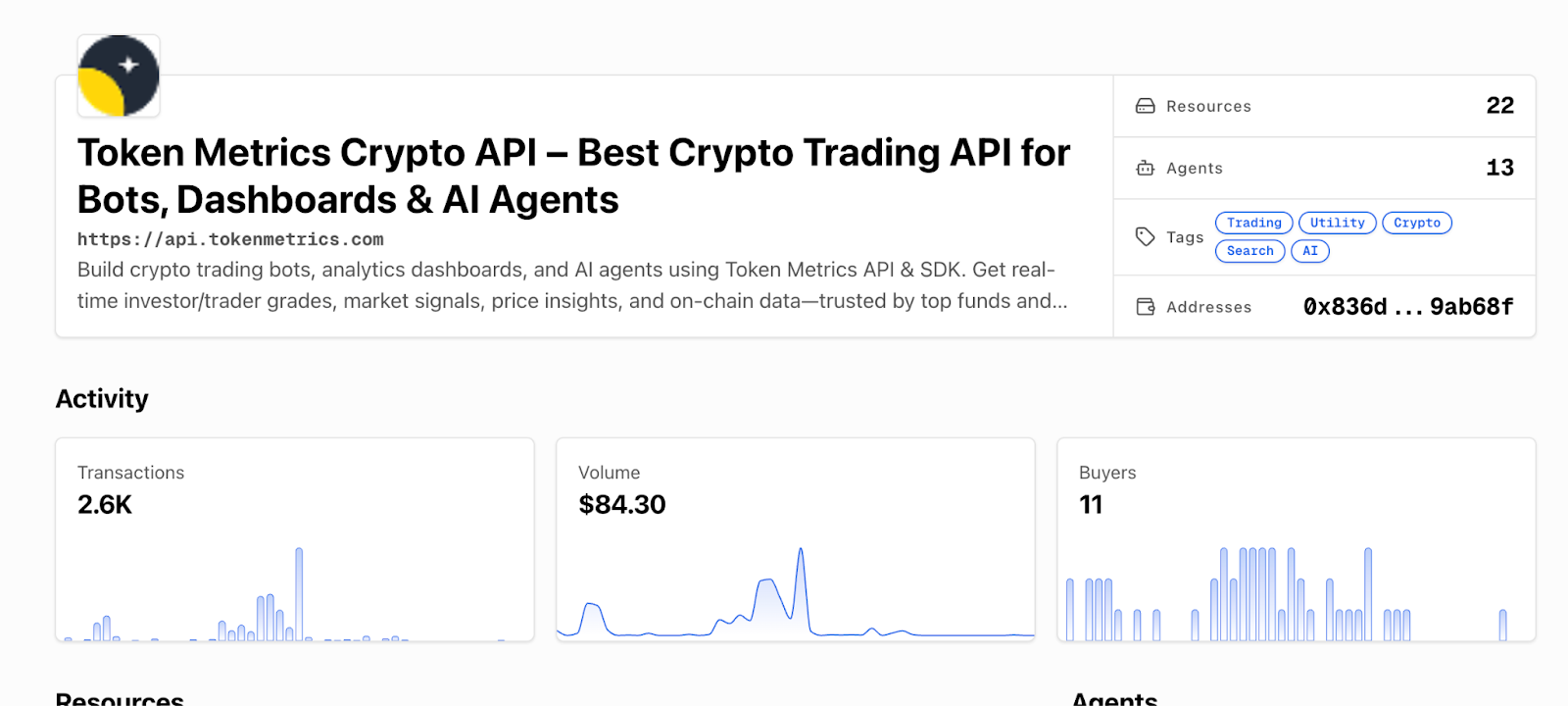
Start using Token Metrics X402 integration here. https://www.x402scan.com/server/244415a1-d172-4867-ac30-6af563fd4d25 

Part 1: Try x402 + Token Metrics in Composer (No Code Required)

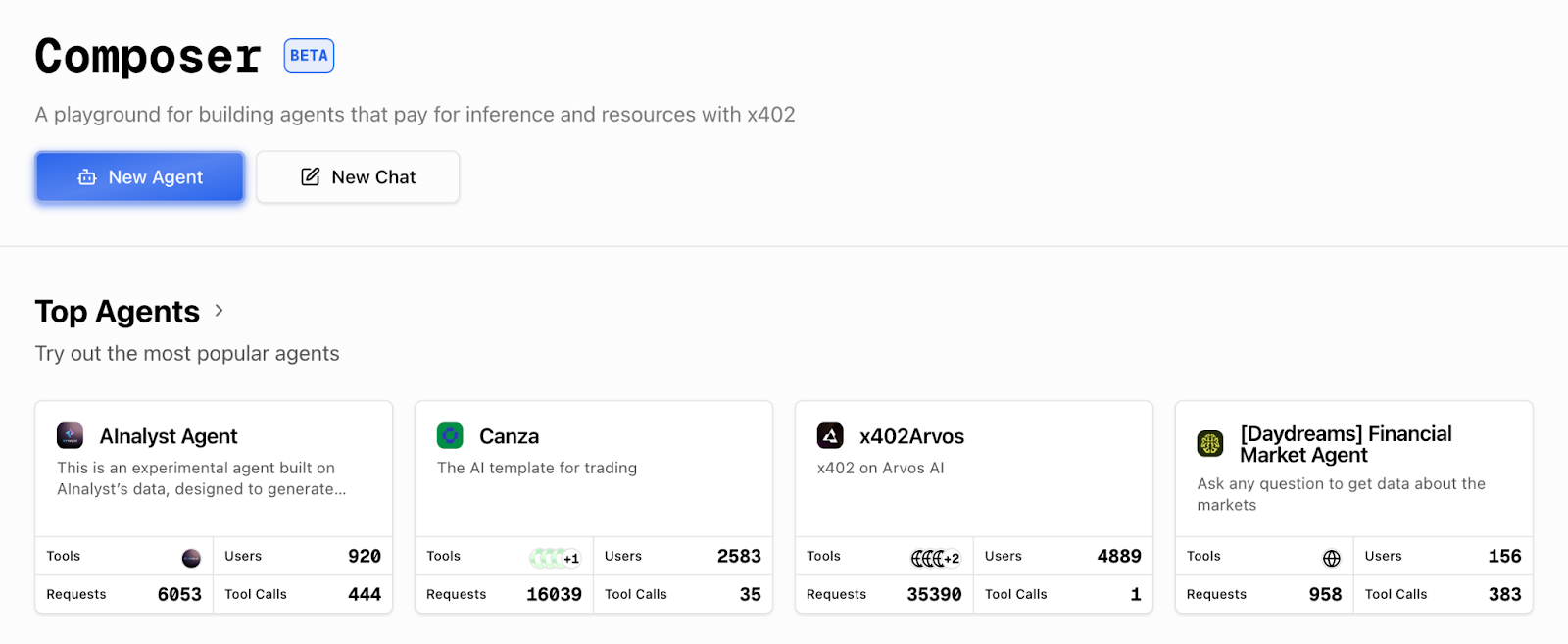
x402 Composer is a playground for AI agents that pay per tool call. You can test Token Metrics endpoints, see live payment settlements, and understand the x402 flow before writing any code.

What Is Composer?

Composer is x402scan's hosted environment for building and using AI agents that pay for external resources via x402. It provides a chat interface, an agent directory, and a real-time Feed showing every tool call and payment across the ecosystem. Token Metrics endpoints are available as tools that agents can call on demand.

Explore Composer: https://x402scan.com/composer

Step-by-Step Walkthrough

Follow these steps to run a Token Metrics query and watch the payment happen in real time.

  1. Open the Composer agents directory: Go to https://x402scan.com/composer/agents and browse available agents. Look for agents tagged with "Token Metrics" or "crypto analytics." Or check our our integration here. https://www.x402scan.com/server/244415a1-d172-4867-ac30-6af563fd4d25 
  2. Select an agent: Click into an agent that uses Token Metrics endpoints (for example, a trading signals agent or market intelligence agent). You will see the agent's description, configured tools, and recent activity.
  3. Click "Use Agent": This opens a chat interface where you can run prompts against the agent's configured tools.
  4. Run a query: Type a question that requires calling a Token Metrics endpoint, for example "Give me the latest TM Grade for Ethereum" or "What are the top 5 moonshot tokens right now?" and hit send.
  5. Watch the Feed: As the agent processes your request, it will call the relevant Token Metrics endpoint. Open the Composer Feed (https://x402scan.com/composer/feed) in a new tab to see the tool call appear in real time with payment details (USDC or TMAI amount, timestamp, status).


Composer agents directory: Composer Agents page: Each agent shows tool stack, messages, and recent activity.


Individual agent page: Agent detail page: View tools, description, and click "Use Agent" to start.

[INSERT SCREENSHOT: Chat interface]

Chat interface: Chat UI: Ask a question like "What are the top trading signals for BTC today?"

[INSERT SCREENSHOT: Composer Feed]

Composer Feed: Live Feed: Each tool call shows the endpoint, payment token, amount, and settlement status.

That is the x402 flow in action. The agent's wallet paid for the API call automatically, the server verified payment, and the data came back. No API keys, no monthly bills, just pay-per-use access.

Key Observations from Composer

  • Tool calls show the exact endpoint called (like /v2/tm-grade or /v2/moonshot-tokens)
  • Payments display in USDC or TMAI with the per-call cost
  • The Feed updates in real time, you can see other agents making calls across the ecosystem
  • You can trace each call back to the agent and message that triggered it
  • This is how agentic commerce works: agents autonomously pay for resources as needed

Part 2: Build Your Own x402 Client (Axios + HTTPX)

Now that you have seen x402 in action, let's build your own client that can call Token Metrics endpoints with automatic payment handling.

How x402 Works (Quick Refresher)

When you make a request with the x-coinbase-402 header, the Token Metrics API returns a 402 Payment Required response with payment instructions (recipient address, amount, chain). Your x402 client reads this challenge, signs a payment transaction with your wallet, submits it to the blockchain, and then retries the original request with proof of payment. The server verifies the settlement and returns the data. The x402-axios and x402 Python libraries handle this flow automatically.

Prerequisites

  • A wallet with a private key (use a testnet wallet for development on Base Sepolia, or a mainnet wallet for production on Base)
  • USDC or TMAI in your wallet (testnet USDC for testing, mainnet tokens for production)
  • Node.js 18+ and npm (for Axios example) or Python 3.9+ (for HTTPX example)
  • Basic familiarity with async/await patterns

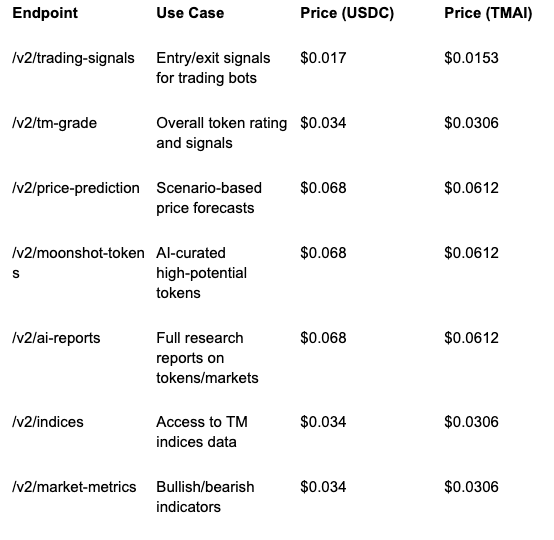
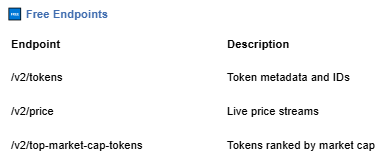
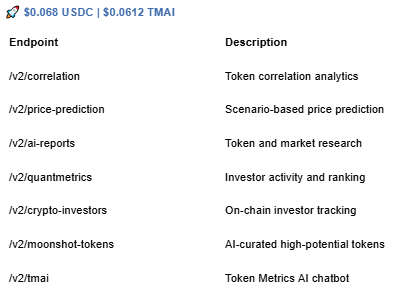
Recommended Token Metrics Endpoints for x402

These endpoints are commonly used by agents and developers building on x402. All are pay-per-call with transparent pricing.

Full endpoint list and docs: https://developers.tokenmetrics.com 

Common Errors and How to Fix Them

Here are the most common issues developers encounter with x402 and their solutions.

Error: Payment Failed (402 Still Returned After Retry)

This usually means your wallet does not have enough USDC or TMAI to cover the call, or the payment transaction failed on-chain.

  • Check your wallet balance on Base (use a block explorer or your wallet app)
  • Make sure you are on the correct network (Base mainnet for production, Base Sepolia for testnet)
  • Verify your private key has permission to spend the token (no allowance issues for most x402 flows, but check if using a smart contract wallet)
  • Try a smaller request or switch to a cheaper endpoint to test

Error: Network Timeout

x402 requests take longer than standard API calls because they include a payment transaction. If you see timeouts, increase your client timeout.

  • Set timeout to at least 30 seconds (30000ms in Axios, 30.0 in HTTPX)
  • Check your RPC endpoint is responsive (viem/eth-account uses public RPCs by default, which can be slow)
  • Consider using a dedicated RPC provider (Alchemy, Infura, QuickNode) for faster settlement

Error: 429 Rate Limit Exceeded

Even with pay-per-call, Token Metrics enforces rate limits to prevent abuse. If you hit a 429, back off and retry.

  • Implement exponential backoff (wait 1s, 2s, 4s, etc. between retries)
  • Spread requests over time instead of bursting
  • For high-volume use cases, contact Token Metrics to discuss rate limit increases

Error: Invalid Header or Missing x-coinbase-402

If you forget the x-coinbase-402: true header, the server will treat your request as a standard API call and may return a 401 Unauthorized if no API key is present.

  • Always include x-coinbase-402: true in headers for x402 requests
  • Do not send x-api-key when using x402 (the header is mutually exclusive)
  • Double-check header spelling (it is x-coinbase-402, not x-402 or x-coinbase-payment)

Production Tips

  • Use environment variables for private keys, never hardcode them
  • Set reasonable max_payment limits to avoid overspending (especially with TMAI)
  • Log payment transactions for accounting and debugging
  • Monitor your wallet balance and set up alerts for low funds
  • Test thoroughly on Base Sepolia testnet before going to mainnet
  • Use TMAI for production to get the 10% discount on every call
  • Cache responses when possible to reduce redundant paid calls
  • Implement retry logic with exponential backoff for transient errors

Why This Matters for Agents

Traditional APIs force agents to carry API keys, which creates security risks and requires human intervention for key rotation and billing. With x402, agents can pay for themselves using wallet funds, making them truly autonomous. This unlocks agentic commerce where AI systems compose services on the fly, paying only for what they need without upfront subscriptions or complex auth flows.

For Token Metrics specifically, x402 means agents can pull real-time crypto intelligence (signals, grades, predictions, research) as part of their decision loops. They can chain our endpoints with other x402-enabled tools like Heurist Mesh (on-chain data), Tavily (web search), and Firecrawl (content extraction) to build sophisticated, multi-source analysis workflows. It is HTTP-native payments meeting real-world agent use cases.

FAQs

Can I use the same wallet for multiple agents?

Yes. Each agent (or client instance) can use the same wallet, but be aware of nonce management if making concurrent requests. The x402 libraries handle this automatically.

Do I need to approve token spending before using x402?

No. The x402 payment flow uses direct transfers, not approvals. Your wallet just needs sufficient balance.

Can I see my payment history?

Yes. Check x402scan (https://x402scan.com/composer/feed) for a live feed of all x402 transactions, or view your wallet's transaction history on a Base block explorer.

What if I want to use a different payment token?

Currently x402 with Token Metrics supports USDC and TMAI on Base. To request support for additional tokens, contact Token Metrics.

How do I switch from testnet to mainnet?

Change your viem chain from baseSepolia to base (in Node.js) or update your RPC URL (in Python). Make sure your wallet has mainnet USDC or TMAI.

Can I use x402 in browser-based apps?

Yes, but you will need a browser wallet extension (like MetaMask or Coinbase Wallet) and a frontend-compatible x402 library. The current x402-axios and x402-python libraries are designed for server-side or Node.js environments.

Next Steps

Disclosure

Educational and informational purposes only. x402 involves crypto payments on public blockchains. Understand the risks, secure your private keys, and test thoroughly before production use. Token Metrics does not provide financial advice.

Quick Links

About Token Metrics

Token Metrics provides powerful crypto analytics, signals, and AI-driven tools to help you make smarter trading and investment decisions. Start exploring Token Metrics ratings and APIs today for data-driven success.

Research

Our x402 Integration Is Live: Pay-Per-Call Access to Token Metrics—No API Key Required

Token Metrics Team
7 min read

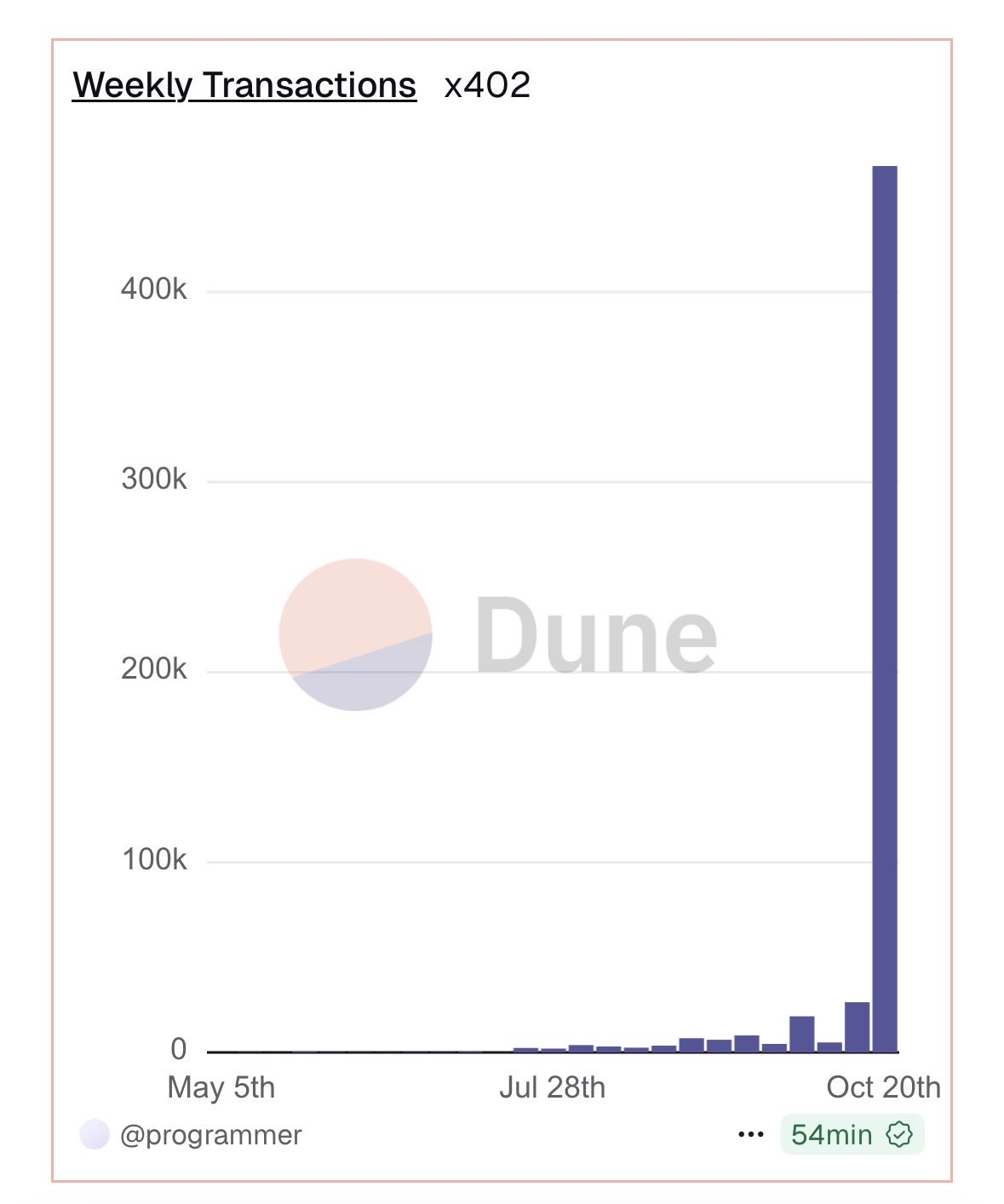
Developers are already shipping with x402 at scale: 450,000+ weekly transactions, 700+ projects. This momentum is why our Token Metrics x402 integration matters for agents and apps that need real crypto intelligence on demand. You can now pay per API call using HTTP 402 and the x-coinbase-402 header, no API key required.

   _ 

Summary: Pay per API call to Token Metrics with x402 on Base using USDC or TMAI, set x-coinbase-402: true, and get instant access to trading signals, grades, and AI reports.

Check out the x402 ecosystem on Coingecko.


What You Get

Token Metrics now supports x402, the HTTP-native payment protocol from Coinbase. Users can call any public endpoint by paying per request with a wallet, eliminating API key management and upfront subscriptions. This makes Token Metrics data instantly accessible to AI agents, researchers, and developers who want on-demand crypto intelligence.

x402 enables truly flexible access where you pay only for what you use, with transparent per-call pricing in USDC or TMAI. The integration is live now across all Token Metrics public endpoints, from trading signals to AI reports. Here's everything you need to start calling Token Metrics with x402 today.

Quick Start

Get started with x402 + Token Metrics in three steps.

  1. Create a wallet client: Follow the x402 Quickstart for Buyers to set up a wallet client (Node.js with viem or Python with eth-account). Link: https://docs.cdp.coinbase.com/x402/docs/quickstart-buyers
  2. Set required headers: Add x-coinbase-402: true to any Token Metrics request. Optionally set x-payment-token: tmai for a 10% discount (defaults to usdc). Do not send x-api-key when using x402.
  3. Call any endpoint: Make a request to https://api.tokenmetrics.com/v2/[endpoint] with your wallet client. Payment happens automatically via x402 settlement.

That is it. Your wallet pays per call, and you get instant access to Token Metrics data with no subscription overhead.

Required Headers


Endpoint Pricing

Transparent per-call pricing across all Token Metrics public endpoints. Pay in USDC or get 10% off with TMAI.


All prices are per single call. Paying with TMAI automatically applies a 10% discount.

Try It on x402 Composer

If you want to see x402 + Token Metrics in action without writing code, head to x402 Composer. Composer is x402scan's playground for AI agents that pay per tool call. You can open a Token Metrics agent, chat with it, and watch real tool calls and USDC/TMAI settlements stream into the live Feed.

Composer surfaces active agents using Token Metrics endpoints like trading signals, price predictions, and AI reports. It is a great way to explore what is possible before you build your own integration. Link: https://x402scan.com/composer

Why x402 Changes the Game

Traditional API access requires upfront subscriptions, fixed rate limits, and key management overhead. x402 flips that model by letting you pay per call with a crypto wallet, with no API keys or monthly commitments. This is especially powerful for AI agents, which need flexible, on-demand access to external data without human intervention.

For Token Metrics, x402 unlocks agentic commerce where agents can autonomously pull crypto intelligence, pay only for what they use, and compose our endpoints with other x402-enabled tools like Heurist Mesh, Tavily, and Firecrawl. It is HTTP-native payments meeting real-world agent workflows.

What is x402?

x402 is an open-source HTTP-native payment protocol developed by Coinbase. It uses the HTTP 402 status code (Payment Required) to enable pay-per-request access to APIs and services. When you make a request with the x-coinbase-402 header, the server returns a payment challenge, your wallet signs and submits payment, and the server fulfills the request once settlement is verified.

The protocol runs on Base and Solana, with USDC and TMAI as the primary payment tokens. x402 is designed for composability, agents can chain multiple paid calls across different providers in a single workflow, paying each service directly without intermediaries. Learn more at the x402 Quickstart for Buyers: https://docs.cdp.coinbase.com/x402/docs/quickstart-buyers

FAQs

Do I need an API key to use x402 with Token Metrics?

No. When you set x-coinbase-402: true, your wallet signature replaces API key authentication. Do not send x-api-key in your requests.

Can I use x402 with a free trial or test wallet?

Yes, but you will need testnet USDC or TMAI on Base Sepolia (testnet) for development. Production calls require mainnet tokens.

How do I see my payment history?

Check x402scan for transaction logs and tool call history. Your wallet will also show outgoing USDC/TMAI transactions. Visit https://www.x402scan.com.

What happens if my wallet balance is too low?

The x402 client will return a payment failure before making the API call. Top up your wallet and retry.

Can I use x402 in production apps?

Yes. x402 is live on Base mainnet. Set appropriate spend limits and handle payment errors gracefully in your code.

Next Steps

Disclosure

Educational and informational purposes only. x402 involves crypto payments on public blockchains. Understand the risks, manage your wallet security, and test thoroughly before production use. Token Metrics does not provide financial advice.

Powered by Token Metrics

Your AI-powered crypto research experience is made possible by Token Metrics. Discover data-driven insights and advanced analytics on your favorite coins and tokens.

Research

Uniswap Price Prediction 2027: $13.50-$43 Target Analysis

Token Metrics Team
8 min read

Uniswap Price Prediction: Market Context for UNI in the 2027 Case

DeFi protocols are maturing beyond early ponzi dynamics toward sustainable revenue models. Uniswap operates in this evolving landscape where real yield and proven product market fit increasingly drive valuations rather than speculation alone. Growing regulatory pressure on centralized platforms creates tailwinds for decentralized alternatives.

The price prediction scenario bands below reflect how UNI might perform across different total crypto market cap environments. Each tier represents a distinct liquidity regime, from bear conditions with muted DeFi activity to moon price prediction scenarios where decentralized infrastructure captures significant value from traditional finance.


Disclosure

Educational purposes only, not financial advice. Crypto is volatile, do your own research and manage risk.

How to read this price prediction:

Each band blends cycle analogues and market cap share math with TA guardrails. Base assumes steady adoption and neutral or positive macro. Moon layers in a liquidity boom. Bear assumes muted flows and tighter liquidity.

TM Agent baseline:

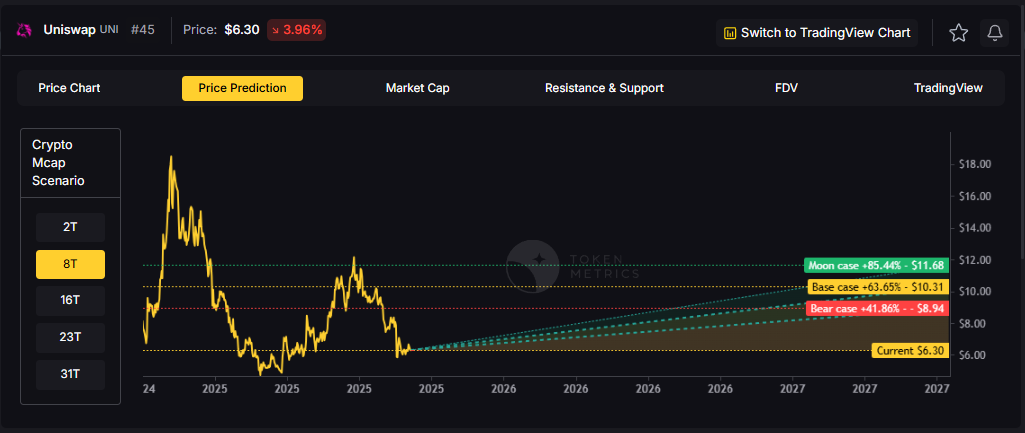
Token Metrics TM Grade is 69%, Buy, and the trading signal is bullish. Price prediction scenarios cluster roughly between $6.50 and $28, with a base case price target near $13.50.

Live details: Uniswap Token Details 

Affiliate Disclosure: We may earn a commission from qualifying purchases made via this link, at no extra cost to you.

Key Takeaways

  • Scenario driven, outcomes hinge on total crypto market cap, higher liquidity and adoption lift the bands.
  • Fundamentals: Fundamental Grade 79.88% (Community 77%, Tokenomics 100%, Exchange 100%, VC 66%, DeFi Scanner 62%).
  • Technology: Technology Grade 86.88% (Activity 72%, Repository 72%, Collaboration 100%, Security N/A, DeFi Scanner 62%).
  • TM Agent gist: bullish bias with a base case near $13.50 and a broad range between $6.50 and $28.
  • Education only, not financial advice.

Uniswap Price Prediction: Scenario Analysis

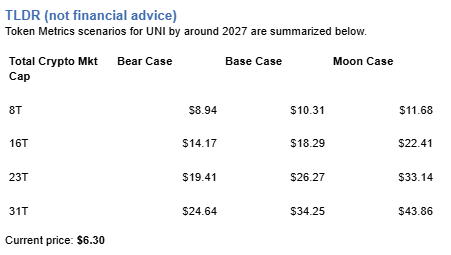
Token Metrics price prediction scenarios span four market cap tiers, each representing different levels of crypto market maturity and liquidity:

8T Market Cap Price Prediction:

At an 8 trillion dollar total crypto market cap, UNI price prediction projects to $8.94 in bear conditions, $10.31 in the base case, and $11.68 in bullish scenarios.

16T Market Cap Price Prediction:

Doubling the market to 16 trillion expands the price prediction range to $14.17 (bear), $18.29 (base), and $22.41 (moon).

23T Market Cap Price Prediction:

At 23 trillion, the price forecast scenarios show $19.41, $26.27, and $33.14 respectively.

31T Market Cap Price Prediction:

In the maximum liquidity scenario of 31 trillion, UNI price prediction could reach $24.64 (bear), $34.25 (base), or $43.86 (moon).

Each tier assumes progressively stronger market conditions, with the base case price prediction reflecting steady growth and the moon case requiring sustained bull market dynamics.

Why Consider the Indices with Top-100 Exposure

Uniswap represents one opportunity among hundreds in crypto markets. Token Metrics Indices bundle UNI with top one hundred assets for systematic exposure to the strongest projects. Single tokens face idiosyncratic risks that diversified baskets mitigate.

Historical index performance demonstrates the value of systematic diversification versus concentrated positions.

Join the early access list

What Is Uniswap?

Uniswap is a decentralized exchange protocol built on Ethereum that enables token swaps using automated market makers instead of order books. It aims to provide open access to liquidity for traders, developers, and applications through transparent smart contracts.

UNI is the governance token that lets holders vote on protocol upgrades and parameters, aligning incentives across the ecosystem. The protocol is a market leader in decentralized exchange activity with broad integration across wallets and DeFi apps.

Token Metrics AI Analysis for Price Prediction

Token Metrics AI provides comprehensive context on Uniswap's positioning and challenges that inform our price prediction models.

Vision: Uniswap aims to create a fully decentralized and permissionless financial market where anyone can trade or provide liquidity without relying on centralized intermediaries. Its vision emphasizes open access, censorship resistance, and community driven governance.

Problem: Traditional exchanges require trusted intermediaries to match buyers and sellers, creating barriers to access, custody risks, and potential for censorship. In DeFi, the lack of efficient, trustless mechanisms for token swaps limits interoperability and liquidity across applications.

Solution: Uniswap solves this by using smart contracts to create liquidity pools funded by users who earn trading fees in return. The protocol automatically prices assets using a constant product formula, enabling seamless swaps. UNI token holders can participate in governance, influencing parameters like fee structures and protocol upgrades.

Market Analysis: Uniswap operates within the broader DeFi and Ethereum ecosystems, competing with other decentralized exchanges like SushiSwap, Curve, and Balancer. It is a market leader in terms of cumulative trading volume and liquidity depth. Adoption is strengthened by strong developer activity, widespread integration across wallets and dApps, and a large user base.

Fundamental and Technology Snapshot from Token Metrics

Fundamental Grade: 79.88% (Community 77%, Tokenomics 100%, Exchange 100%, VC 66%, DeFi Scanner 62%).


Technology Grade: 86.88% (Activity 72%, Repository 72%, Collaboration 100%, Security N/A, DeFi Scanner 62%).

Catalysts That Skew Bullish for Price Prediction

  • Institutional and retail access expands with ETFs, listings, and integrations
  • Macro tailwinds from lower real rates and improving liquidity
  • Product or roadmap milestones such as upgrades, scaling, or partnerships
  • These factors could push UNI toward higher price prediction targets

Risks That Skew Bearish for Price Prediction

  • Macro risk off from tightening or liquidity shocks
  • Regulatory actions or infrastructure outages
  • Competitive displacement across DEXs or changes to validator and liquidity incentives
  • These factors could push UNI toward lower price prediction scenarios

FAQs: Uniswap Price Prediction

Will UNI hit $20 by 2027 according to price predictions?

The 16T price prediction scenario shows UNI at $18.29 in the base case, which does not exceed $20. However, the 23T base case shows $26.27, surpassing the $20 target. Price prediction outcome depends on total crypto market cap growth and Uniswap maintaining market share. Not financial advice.

Can UNI 10x from current levels based on price predictions?

At current price of $6.30, a 10x would reach $63.00. This falls within none of the listed price prediction scenarios, which top out at $43.86 in the 31T moon case. Bear in mind that 10x returns require substantial market cap expansion beyond our modeled scenarios. Not financial advice.

What price could UNI reach in the moon case price prediction?

Moon case price predictions range from $11.68 at 8T to $43.86 at 31T total crypto market cap. These price prediction scenarios assume maximum liquidity expansion and strong Uniswap adoption. Not financial advice.

What is the 2027 Uniswap price prediction?

Based on Token Metrics analysis, the 2027 price prediction for Uniswap centers around $13.50 in the base case under current market conditions, with a range between $6.50 and $28 depending on market scenarios. Bullish price predictions with strong market conditions range from $10.31 to $43.86 across different total crypto market cap environments.

What drives UNI price predictions?

UNI price predictions are driven by DEX trading volume, liquidity provider activity, governance participation, protocol fee revenue, and competition from other decentralized exchanges. The strong technology grade (86.88%) and bullish signal support upward price potential. DeFi adoption rates and regulatory clarity around decentralized exchanges remain primary drivers for reaching upper price prediction targets.

Can UNI reach $30-$40 by 2027?

According to our price prediction models, UNI could reach $30-$40 in the 23T moon case ($33.14) and in the 31T scenarios where the base case is $34.25 and the moon case is $43.86. These price prediction outcomes require significant crypto market expansion and Uniswap maintaining DEX market leadership. Not financial advice.


Next Steps

Disclosure

Educational purposes only, not financial advice. Crypto is volatile, do your own research and manage risk.

Why Use Token Metrics for Uniswap Research?

  • Get on-chain ratings, AI-powered scenario projections, backtested indices, and exclusive insights for Uniswap and other top-100 crypto assets.
  • Spot emerging trends before the crowd and manage risk with our transparent AI grades.
  • Token Metrics helps you save time, avoid hidden pitfalls, and discover data-driven opportunities in DeFi.
Choose from Platinum, Gold, and Silver packages
Reach with 25–30% open rates and 0.5–1% CTR
Craft your own custom ad—from banners to tailored copy
Perfect for Crypto Exchanges, SaaS Tools, DeFi, and AI Products