Research

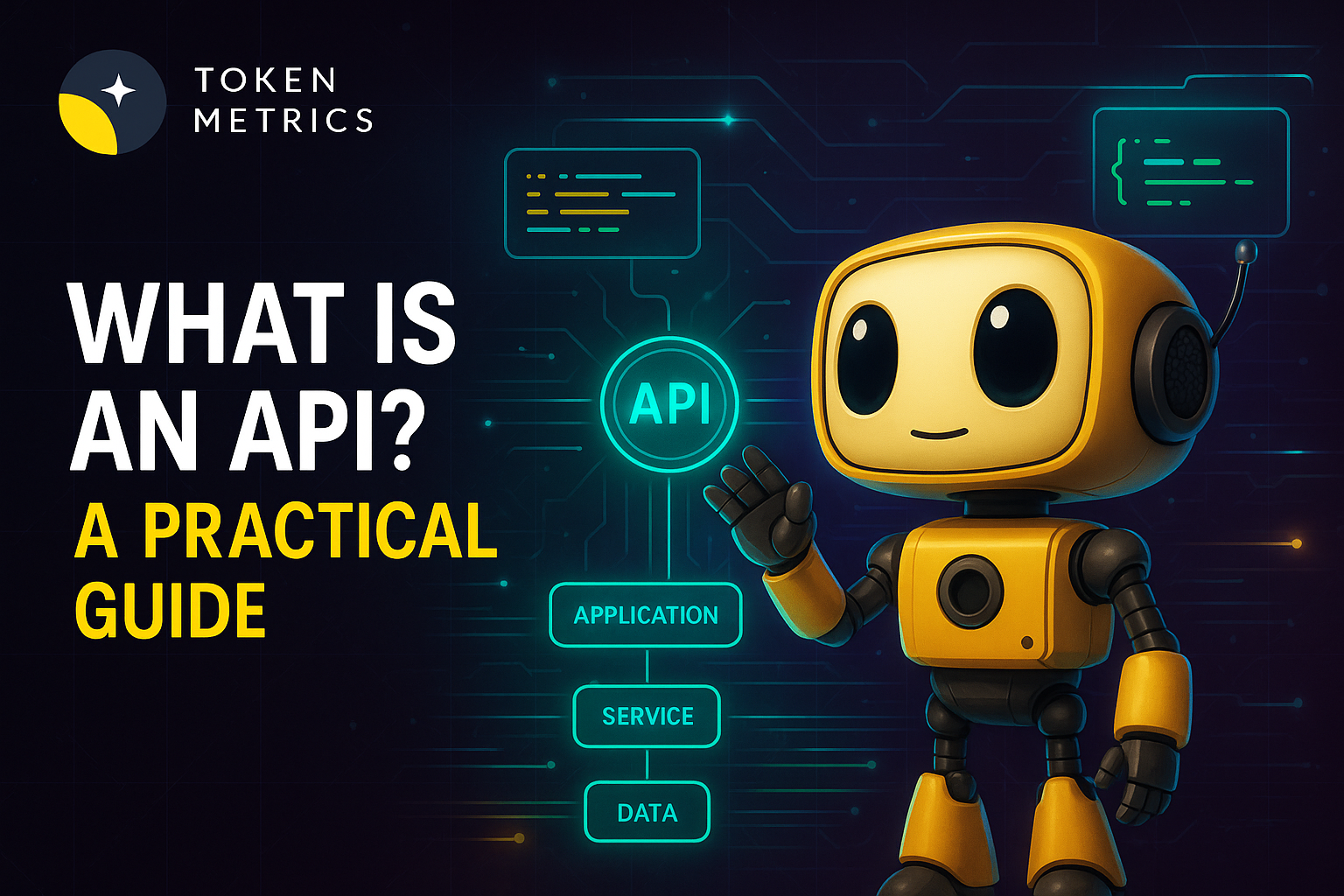
What Is an API? A Practical Guide

Learn what an API is, how APIs work, and how to evaluate and integrate them for apps, data feeds, and AI-driven research—plus practical tips for selecting reliable crypto APIs.
Token Metrics Team
4
MIN

APIs power modern software, enabling apps to share data, automate workflows, and connect services. Whether you use a weather feed, social login, or a crypto data stream, understanding what an API is helps you design, evaluate, and integrate digital products more effectively.

What is an API?

An API, or application programming interface, is a defined set of rules that lets one software system communicate with another. At its simplest, an API specifies how requests are structured, which methods are available, and how responses are returned. Developers use APIs to access functionality or data without needing to know internal implementation details.

Think of an API as a contract: it tells you the inputs required, the outputs to expect, and any constraints or error cases. This separation of concerns enables modular development, third-party integrations, and scalable ecosystems.

How APIs work: components and protocols

Most modern APIs expose endpoints—URLs or functions—that accept requests and return responses. Key components include:

  • Endpoints: Specific URLs or methods that provide a capability or data set.
  • Methods: Actions such as GET, POST, PUT, DELETE in HTTP-based APIs.
  • Payloads: Structured request and response bodies (commonly JSON).
  • Authentication: Keys, tokens, or OAuth flows that control access.
  • Rate limits: Constraints on usage to protect service availability.

Different protocols influence API behavior. REST uses resource-oriented URLs and standard HTTP verbs; GraphQL offers flexible queries over a single endpoint; gRPC supports high-performance, binary-protocol calls suitable for microservices. Choosing a protocol depends on latency requirements, payload complexity, and developer experience.

Common API use cases: web, mobile, and crypto

APIs underpin many real-world scenarios:

  • Web and mobile apps: Fetching user data, processing payments, or embedding maps.
  • Microservices: Internal APIs let services communicate within distributed systems.
  • Third-party integrations: Social logins, analytics platforms, and CRM synchronization.
  • Data feeds and analytics: Market prices, news, and on-chain metrics delivered via APIs enable automated research pipelines.

In the crypto space, APIs expose on-chain data, aggregated price feeds, and derived indicators. Developers can combine multiple APIs to build dashboards, bots, or AI research agents. When evaluating crypto APIs, consider latency, historical coverage, and data provenance.

For example, research teams often use AI-driven platforms to enrich raw feeds with signals and insights. One such platform, Token Metrics, integrates data and models to support comparative analysis and idea generation.

Choosing and evaluating APIs: practical criteria

When selecting an API, use a structured evaluation framework:

  1. Functionality — Does the API provide required endpoints and historical coverage?
  2. Reliability — Look at uptime SLAs, error rates, and redundancy.
  3. Data quality — Verify schemas, sample payloads, and provenance.
  4. Performance — Measure latency and throughput relevant to your use case.
  5. Security and access control — Inspect auth models, encryption, and rate limits.
  6. Costs and licensing — Understand pricing tiers and any usage restrictions.
  7. Documentation and SDKs — Clear docs and client libraries speed integration.

Combine quantitative tests (latency, success rate) with qualitative checks (docs clarity, community support). For complex builds, sandbox environments and trial keys help validate assumptions before full integration.

Build Smarter Crypto Apps & AI Agents with Token Metrics

Token Metrics provides real-time prices, trading signals, and on-chain insights all from one powerful API. Grab a Free API Key

FAQ: What is an API?

An API (application programming interface) is a specification that allows software systems to request and exchange data or trigger actions without exposing internal code. It defines endpoints, parameters, and response formats.

FAQ: How is a REST API different from GraphQL?

REST organizes interactions around resources and uses multiple endpoints; clients request predefined payloads. GraphQL exposes a single endpoint where clients define the shape of the response, reducing over- or under-fetching in many scenarios.

FAQ: What security measures should APIs use?

Common measures include HTTPS/TLS, API keys or OAuth tokens, rate limiting, input validation, and monitoring for unusual patterns. Secure defaults and least-privilege access reduce attack surface.

FAQ: Can I use public APIs for production applications?

Many public APIs are production-ready if they provide SLAs, reliable documentation, and appropriate rate limits. Validate through trials and consider failover strategies and caching for resilience.

FAQ: How do APIs support automation and AI?

APIs provide structured, machine-readable data and endpoints that automation tools and AI agents can call programmatically. Combining APIs with model inference enables workflows like signal generation, backtesting, and report automation.

FAQ: What are rate limits and why do they matter?

Rate limits control how many requests a client can make in a time window to ensure fair usage and protect service availability. Exceeding limits typically leads to temporary blocking or throttled responses.

Disclaimer

This article is educational and informational only. It does not constitute financial, legal, or investment advice. Readers should perform their own research and consult appropriate professionals before making decisions.

Build Smarter Crypto Apps &
AI Agents in Minutes, Not Months
Real-time prices, trading signals, and on-chain insights all from one powerful API.
Grab a Free API Key
Token Metrics Team
Token Metrics Team

Recent Posts

Research

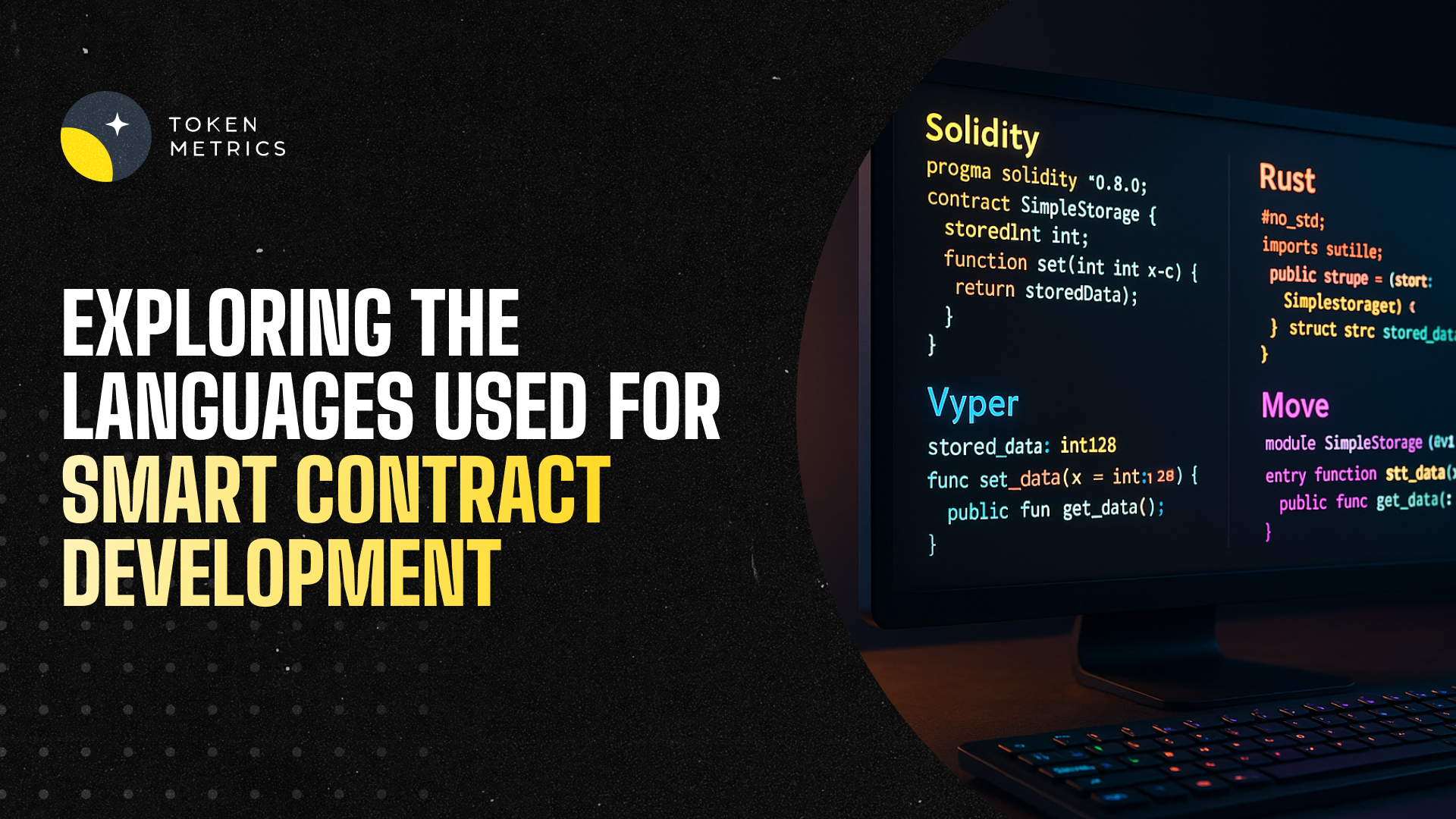
Exploring the Languages Used for Smart Contract Development

Token Metrics Team
5
MIN

Introduction

Smart contracts have become an integral part of blockchain technology, enabling automated, trustless agreements across various platforms. Understanding what languages are used for smart contract development is essential for developers entering this dynamic field, as well as for analysts and enthusiasts who want to deepen their grasp of blockchain ecosystems. This article offers an analytical and educational overview of popular programming languages for smart contract development, discusses their characteristics, and provides insights on how analytical tools like Token Metrics can assist in evaluating smart contract projects.

Smart contract languages are specialized programming languages designed to create logic that runs on blockchains. The most prominent blockchain for smart contracts currently is Ethereum, but other blockchains have their languages as well. The following section outlines some of the most widely-used smart contract languages.

  • Solidity: Often considered the standard language for Ethereum smart contracts, Solidity is a high-level, contract-oriented language similar in syntax to JavaScript and influenced by C++ and Python. It is statically typed and supports inheritance, libraries, and complex user-defined types. Solidity is compiled into EVM (Ethereum Virtual Machine) bytecode executable on Ethereum and compatible blockchains.
  • Vyper: Developed as an alternative to Solidity, Vyper emphasizes simplicity, auditability, and security. With a syntax inspired by Python, it is designed to be more readable and to reduce the potential for errors in contract code, though it currently has fewer features than Solidity.
  • Rust: Rust is gaining popularity especially on blockchains like Solana, Near, and Polkadot. It is a systems programming language known for safety and performance. Rust smart contracts tend to be compiled to WebAssembly (Wasm) bytecode, enabling cross-chain compatibility and faster execution on supported platforms.
  • Michelson: Michelson is a low-level stack-based language used to write smart contracts on Tezos blockchain. It is designed for formal verification, allowing high-security guarantees which is important for mission-critical applications.
  • Move: Move is a language developed by Facebook's Diem project and adapted by blockchains like Aptos and Sui. It offers resource-oriented programming to handle digital assets safely and efficiently.
  • Clarity: Used primarily on the Stacks blockchain, Clarity is a decidable language, which means actions of the contract can be predicted and verified before execution. It favors safety and transparency.

Criteria for Language Selection

Developers evaluate smart contract languages based on various factors such as security, expressiveness, ease of use, and compatibility with blockchain platforms. Below are some important criteria:

  1. Security Features: Languages like Vyper and Michelson prioritize simplicity and formal verification to minimize vulnerabilities.
  2. Community and Ecosystem: Solidity benefits from a large developer community, extensive documentation, and extensive tooling which facilitates easier development and auditing.
  3. Performance Efficiency: Languages compiled to Wasm such as Rust-based smart contracts can offer superior speed and reduced resource consumption.
  4. Formal Verification and Auditing: Languages that support rigorous mathematical verification methods help ensure contract correctness and prevent exploits.
  5. Interoperability: The ability of a smart contract to work across multiple blockchains enhances its utility and adoption.

Overview of Leading Smart Contract Languages

Solidity remains the dominant language due to Ethereum's market position and is well-suited for developers familiar with JavaScript or object-oriented paradigms. It continuously evolves with community input and protocol upgrades.

Vyper has a smaller user base but appeals to projects requiring stricter security standards, as its design deliberately omits complex features that increase vulnerabilities.

Rust is leveraged by newer chains that aim to combine blockchain decentralization with high throughput and low latency. Developers familiar with systems programming find Rust a robust choice.

Michelson’s niche is in formal verification-heavy projects where security is paramount, such as financial contracts and governance mechanisms on Tezos.

Move and Clarity represent innovative approaches to contract safety and complexity management, focusing on deterministic execution and resource constraints.

How AI Research Tools Support Smart Contract Analysis

Artificial Intelligence (AI) and machine learning have become increasingly valuable in analyzing and researching blockchain projects, including smart contracts. Platforms such as Token Metrics provide AI-driven ratings and insights by analyzing codebases, developer activity, and on-chain data.

Such tools facilitate the identification of patterns that might indicate strong development practices or potential security risks. While they do not replace manual code audits or thorough research, they support investors and developers by presenting data-driven evaluations that help in filtering through numerous projects.

Practical Considerations for Developers and Analysts

Developers choosing a smart contract language should consider the blockchain platform’s restrictions and the nature of the application. Those focused on DeFi might prefer Solidity or Vyper for Ethereum, while teams aiming for cross-chain applications might lean toward Rust or Move.

Analysts seeking to understand a project’s robustness can utilize resources like Token Metrics for AI-powered insights combined with manual research, including code reviews and community engagement.

Security should remain a priority as vulnerabilities in smart contract code can lead to significant issues. Therefore, familiarizing oneself with languages that encourage safer programming paradigms contributes to better outcomes.

Conclusion

Understanding what languages are used for smart contract development is key to grasping the broader blockchain ecosystem. Solidity leads the field due to Ethereum’s prominence, but alternative languages like Vyper, Rust, Michelson, Move, and Clarity offer different trade-offs in security, performance, and usability. Advances in AI-driven research platforms such as Token Metrics play a supportive role in evaluating the quality and safety of smart contract projects.

Disclaimer

This article is intended for educational purposes only and does not constitute financial or investment advice. Readers should conduct their own research and consult professionals before making decisions related to blockchain technologies and smart contract development.

Research

Exploring Trusted Crypto Exchanges: A Comprehensive Guide

Token Metrics Team
4
MIN

Introduction

With the increasing popularity of cryptocurrencies, selecting a trusted crypto exchange is an essential step for anyone interested in participating safely in the market. Crypto exchanges serve as platforms that facilitate the buying, selling, and trading of digital assets. However, the diversity and complexity of available exchanges make the selection process imperative yet challenging. This article delves into some trusted crypto exchanges, alongside guidance on how to evaluate them, all while emphasizing the role of analytical tools like Token Metrics in supporting well-informed decisions.

Understanding Crypto Exchanges

Crypto exchanges can broadly be categorized into centralized and decentralized platforms. Centralized exchanges (CEXs) act as intermediaries holding users’ assets and facilitating trades within their systems, while decentralized exchanges (DEXs) allow peer-to-peer transactions without a central authority. Each type offers distinct advantages and considerations regarding security, liquidity, control, and regulatory compliance.

When assessing trusted crypto exchanges, several fundamental factors come into focus, including security protocols, regulatory adherence, liquidity, range of supported assets, user interface, fees, and customer support. Thorough evaluation of these criteria assists in identifying exchanges that prioritize user protection and operational integrity.

Key Factors in Evaluating Exchanges

Security Measures: Robust security is critical to safeguarding digital assets. Trusted exchanges implement multi-factor authentication (MFA), cold storage for the majority of funds, and regular security audits. Transparency about security incidents and response strategies further reflects an exchange’s commitment to protection.

Regulatory Compliance: Exchanges operating within clear regulatory frameworks demonstrate credibility. Registration with financial authorities, adherence to Anti-Money Laundering (AML) and Know Your Customer (KYC) policies are important markers of legitimacy.

Liquidity and Volume: High liquidity ensures competitive pricing and smooth order execution. Volume trends can be analyzed via publicly available data or through analytics platforms such as Token Metrics to gauge an exchange’s activeness.

Range of Cryptocurrencies: The diversity of supported digital assets allows users flexibility in managing their portfolios. Trusted exchanges often list major cryptocurrencies alongside promising altcoins, with transparent listing criteria.

User Experience and Customer Support: A user-friendly interface and responsive support contribute to efficient trading and problem resolution, enhancing overall trust.

Overview of Some Trusted Crypto Exchanges

While numerous crypto exchanges exist, a few have earned reputations for trustworthiness based on their operational history and general acceptance in the crypto community. Below is an educational overview without endorsement.

  • Exchange A: Known for advanced security protocols and regulatory compliance, this platform supports a broad range of assets and offers an intuitive interface suitable for various experience levels.
  • Exchange B: Distinguished by high liquidity and extensive global reach, it incorporates transparent fees and educational resources designed to assist users in understanding market dynamics.
  • Exchange C: Offers both centralized and decentralized trading options, catering to users interested in flexible trading environments, with robust customer support channels.

These examples illustrate the diversity of trusted exchanges, highlighting the importance of matching exchange characteristics to individual cybersecurity preferences and trading needs.

Leveraging AI and Analytics for Exchange Assessment

The rapid evolution of the crypto landscape underscores the value of AI-driven research tools in navigating exchange assessment. Platforms like Token Metrics provide data-backed analytics, including exchange ratings, volume analysis, security insights, and user sentiment evaluation. Such tools equip users with comprehensive perspectives that supplement foundational research.

Integrating these insights allows users to monitor exchange performance trends, identify emerging risks, and evaluate service quality over time, fostering a proactive and informed approach.

Practical Steps for Researching a Crypto Exchange

  1. Verify Regulatory Status: Check official financial authority websites to confirm the exchange's registration and compliance status.
  2. Review Security Practices: Investigate the exchange’s implementation of security measures such as cold storage percentages, MFA, and incident history.
  3. Analyze Market Data: Utilize platforms like Token Metrics to explore trading volumes, liquidity, and user ratings.
  4. Examine Asset Listings: Assess the exchange’s supported cryptocurrencies and token listing policies to ensure transparency.
  5. Evaluate User Feedback: Search for community reviews and support responsiveness to detect potential red flags.
  6. Test User Interface: Navigate the platform’s interface, testing ease of use and access to necessary functionalities.

Common Risk Factors and Mitigation

Despite due diligence, crypto trading inherently involves risks. Common concerns linked to exchanges encompass hacking incidents, withdrawal delays, regulatory actions, and operational failures. Reducing exposure includes diversifying asset holdings, using hardware wallets for storage, and continuously monitoring exchange announcements.

Educational tools such as Token Metrics contribute to ongoing awareness by highlighting risk factors and providing updates that reflect evolving market and regulatory conditions.

Conclusion

Choosing a trusted crypto exchange requires comprehensive evaluation across security, regulatory compliance, liquidity, asset diversity, and user experience dimensions. Leveraging AI-based analytics platforms such as Token Metrics enriches the decision-making process by delivering data-driven insights. Ultimately, informed research and cautious engagement are key components of navigating the crypto exchange landscape responsibly.

Disclaimer

This article is for educational purposes only and does not constitute financial, investment, or legal advice. Readers should conduct independent research and consult professionals before making decisions related to cryptocurrency trading or exchange selection.

Research

Where to Ask Beginner Blockchain Questions: A Practical Guide

Token Metrics Team
3
MIN

Introduction

Blockchain technology has rapidly evolved into a foundational innovation affecting many industries. For newcomers eager to understand the basics, finding reliable and informative platforms to ask beginner blockchain questions is essential. This guide explores where you can pose your questions, engage with experts, and leverage analytical tools to deepen your understanding.

Why Ask Questions in the Blockchain Space?

Blockchain, despite its increasing adoption, remains a complex and multifaceted topic involving cryptography, decentralized networks, consensus mechanisms, and smart contracts. Beginners often require clear explanations to grasp fundamental concepts. Asking questions helps clarify misunderstandings, connect with experienced individuals, and stay updated with evolving trends and technologies.

Online communities are often the first port of call for learners. They foster discussion, provide resources, and offer peer support. Some trusted platforms include:

  • Reddit: Subreddits like r/Blockchain, r/CryptoTechnology, and r/ethereum have active members willing to discuss beginner questions.
  • Stack Exchange: The Bitcoin Stack Exchange and Ethereum Stack Exchange provide Q&A forums with a more technical focus and community voting.
  • Discord Groups: Many blockchain projects and educational communities host Discord servers that encourage real-time conversations.
  • Telegram Channels: Similar to Discord, Telegram channels often feature moderated groups dedicated to blockchain education.
  • BitcoinTalk Forum: One of the oldest cryptocurrency forums, it has sections welcoming beginners’ questions across blockchain topics.

Educational Platforms with Question Features

Several courses and online platforms integrate Q&A functionalities to help learners ask questions in context, such as:

  • Coursera and edX: Blockchain courses often include discussion boards where beginners can post queries related to coursework.
  • Medium and Dev.to: While primarily content platforms, comments sections and dedicated posts often invite questions and discussions.
  • Github Discussions: For those interested in open-source blockchain projects, GitHub provides a collaborative environment to ask technical questions.

Leveraging AI-Driven Research Tools

Advanced tools now assist users in analyzing blockchain projects and data, complementing learning and research efforts. Token Metrics is an example of an AI-powered platform that provides ratings, analysis, and educational content about blockchain technologies.

By using such platforms, beginners can strengthen their foundational knowledge through data-backed insights. Combining this with community Q&A interactions enhances overall understanding.

Best Practices for Asking Blockchain Questions

To get useful responses, consider these tips when posting questions:

  1. Be specific: Clearly state your question’s context and which aspects need clarification.
  2. Research beforehand: Check existing threads or resources to avoid duplicates.
  3. Use proper terminology: Even basic usage of correct terms makes understanding easier for responders.
  4. Be patient and polite: Community members help voluntarily; respectful interactions encourage assistance.

Additional Learning Resources

Besides Q&A, structured learning is valuable. Consider:

  • Books and Articles: Introductory texts on blockchain fundamentals.
  • Video Tutorials: Platforms like YouTube feature comprehensive beginner guides.
  • Webinars and Podcasts: Regular industry updates can enhance contextual understanding.

Disclaimer

This article is intended solely for educational purposes and does not constitute financial, investment, or legal advice. Always conduct independent research and consult professional advisors before making decisions related to blockchain technology or cryptocurrency.

Choose from Platinum, Gold, and Silver packages
Reach with 25–30% open rates and 0.5–1% CTR
Craft your own custom ad—from banners to tailored copy
Perfect for Crypto Exchanges, SaaS Tools, DeFi, and AI Products