Crypto Basics

What Is Cryptocurrency Market Cap? A Comprehensive Guide

Discover the significance of cryptocurrency market cap and how it impacts investments. Learn the essentials in our comprehensive article. Read more now!
Token Metrics Team
6 min
MIN

Understanding the cryptocurrency market cap is fundamental for anyone interested in investing or trading digital currencies. Market capitalization, often referred to as market cap, is a key metric that reflects the total value of a cryptocurrency in the market. Cryptocurrency market capitalization represents the total value of all coins that have been mined for a specific cryptocurrency or all cryptocurrencies combined. This article will explore what cryptocurrency market cap means, how it is calculated, and why it matters for investors navigating the dynamic crypto market.

Introduction to Market Capitalization

Market capitalization represents the total value of a cryptocurrency's circulating coins in the market. It is a crucial metric used by investors and professionals to gauge the relative size and importance of a digital currency within the crypto ecosystem. Understanding market cap is essential for making informed investment decisions, as it provides a snapshot of a cryptocurrency’s size, popularity, and growth potential.

The market cap of a cryptocurrency is calculated by multiplying its current price by the number of coins in circulation. This simple formula offers insight into the cryptocurrency’s total value and helps investors compare different crypto assets effectively. By knowing the market cap, investors can better understand a cryptocurrency’s position in the market and assess its potential for future growth.

Crypto Market Cap and Circulating Supply

To fully grasp the concept of crypto market cap, it is important to understand the role of circulating supply. The circulating supply refers to the number of coins currently available and actively traded in the market. It is this supply that determines the crypto market cap when multiplied by the cryptocurrency’s current price.

Circulating supply is distinct from total supply, which includes all coins that have been created, including those not yet available for trading or locked in reserves. For example, some projects may have a large total supply but a smaller circulating supply due to tokens held by the development team or locked in smart contracts. Recognizing the difference between circulating supply and total supply is vital when evaluating a cryptocurrency’s market capitalization and its potential impact on price and growth.

Calculation and Importance

Market cap is calculated by multiplying the current price of a cryptocurrency by its circulating supply, providing a real-time measure of the asset's total value in dollars or other fiat currencies. This calculation is dynamic, as both price and circulating supply can fluctuate, causing the market cap to change rapidly.

This metric is important because it helps investors assess the size and value of a cryptocurrency relative to others in the crypto market. A higher market cap often indicates a more established and widely adopted cryptocurrency, such as Bitcoin or Ethereum, which tend to have greater network security and liquidity. Conversely, a low market cap may signal a newer or more speculative digital asset, often associated with higher risk and volatility.

Understanding market cap allows investors to make informed choices by comparing the total value of different cryptocurrencies and evaluating their potential for growth or decline.

Investment Strategies and Market Trends

Market capitalization plays a significant role in shaping investment strategies within the crypto market. It influences the level of risk investors are willing to take and the potential returns they might expect. Cryptocurrencies are categorized into three market cap sizes: large-cap (over $10 billion), mid-cap ($1 billion to $10 billion), and small-cap (under $1 billion). Large cap cryptocurrencies, typically those with a market cap exceeding $10 billion, are generally less volatile and more stable. These assets are favored by conservative investors who prioritize security and steady growth.

On the other hand, mid cap and small cap cryptocurrencies often present higher growth potential but come with increased risk and price volatility. Small cap cryptocurrencies may be more susceptible to market fluctuations and liquidity challenges but can offer substantial returns if their underlying projects succeed.

Staying informed about market trends and understanding how market cap affects demand, liquidity, and price movements are essential for developing effective investment strategies. Investors who respond appropriately to these factors are better positioned to capitalize on opportunities and mitigate risks.

Characteristics of a Liquid Market

A liquid market is characterized by the ability to quickly buy or sell assets without causing significant price changes. In the crypto market, liquidity is a critical factor affecting volatility and trading volume. High liquidity means that there is a large number of buyers and sellers, facilitating smooth transactions and reducing price manipulation risks.

Cryptocurrencies with a high market cap tend to have more liquid markets due to their popularity and widespread adoption. This liquidity attracts institutional investors and traders who require the ability to enter and exit positions efficiently. Conversely, small cap cryptocurrencies may suffer from low liquidity, leading to higher volatility and wider bid-ask spreads.

A liquid market with high trading volume provides better price stability and more trading opportunities, making it more attractive for both short-term traders and long-term investors.

The Crypto Market Ecosystem
The crypto market ecosystem is a complex and evolving environment influenced by various factors beyond market cap. Blockchain technology underpins all cryptocurrencies, providing the decentralized infrastructure that ensures transparency and security. Network security, driven by consensus mechanisms and the number of active nodes, plays a crucial role in maintaining trust and stability in the market.

Institutional investors have increasingly entered the crypto market, bringing greater capital, legitimacy, and scrutiny. Their participation often affects market trends and can lead to increased liquidity and reduced volatility in large cap cryptocurrencies.

Understanding this ecosystem and the interplay of technology, investor behavior, and market dynamics is essential for anyone looking to navigate the crypto market successfully. The market is constantly responding to new technologies, regulatory developments, and shifts in investor sentiment.

Large Cap Cryptocurrencies
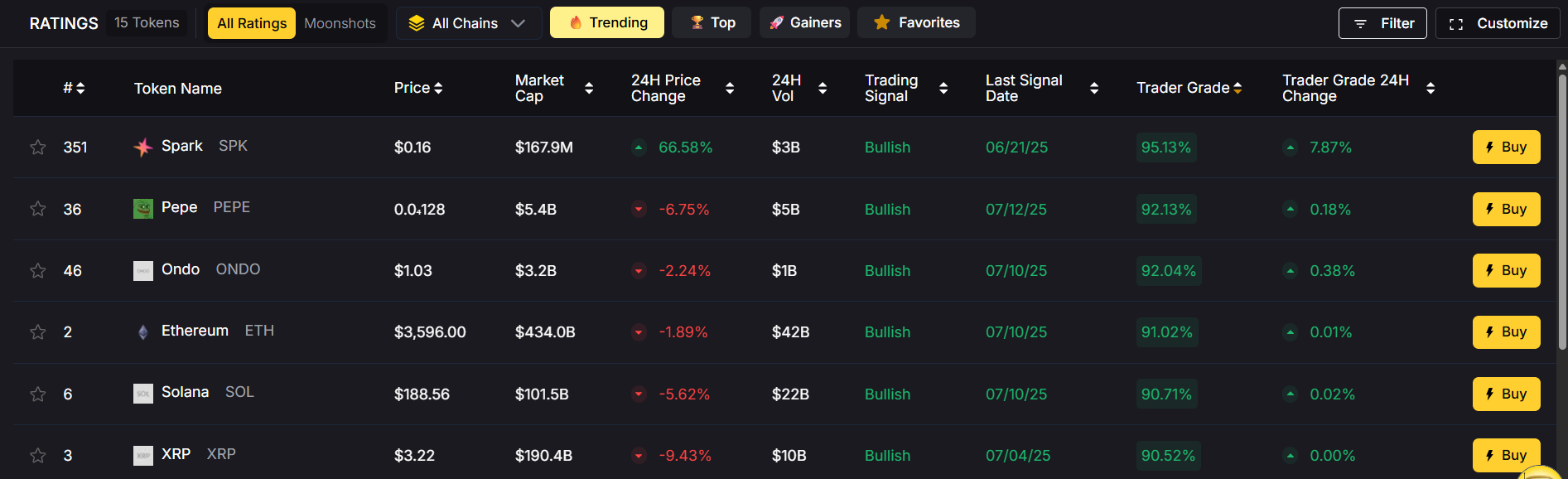
Large cap cryptocurrencies, such as Bitcoin and Ethereum, dominate the crypto market with market caps exceeding $10 billion. These digital assets are widely regarded as more stable and less volatile compared to smaller cryptocurrencies. Their established track records and strong network security make them attractive safe havens during periods of market uncertainty.

Large cap cryptocurrencies benefit from high liquidity and trading volume, which contribute to better price stability and ease of trading. However, because of their already substantial market capitalization, these assets may experience slower price growth compared to mid or small cap cryptocurrencies.

Investors often include large cap cryptocurrencies in their portfolios to provide balance and reduce overall risk.

Growth Potential and Analysis
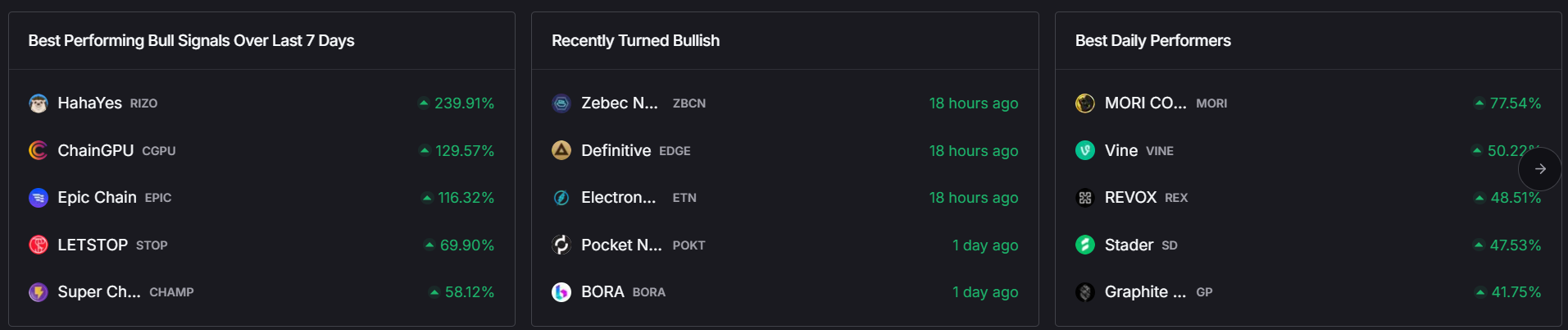
While large cap cryptocurrencies offer stability, mid cap and small cap cryptocurrencies often present greater growth potential. These smaller crypto assets may be in earlier stages of development, with innovative projects and technologies that can lead to significant price appreciation.

Analyzing growth potential involves examining a cryptocurrency’s market cap, trading volume, underlying blockchain technology, and the strength of its project or business model. Investors also consider factors such as tokenomics, total supply, and network security to assess long-term viability.

However, higher growth potential comes with increased risk, including higher volatility and liquidity challenges. Investors must carefully weigh these factors and conduct thorough research before committing to investments in smaller cap cryptocurrencies.

Developing Effective Investment Strategies

Crafting effective investment strategies in the crypto market requires a comprehensive understanding of market trends, risk management, and portfolio diversification. Investors should clearly define their investment goals and risk tolerance before entering the market.

Market capitalization is a critical consideration in strategy development, as it affects liquidity, volatility, and potential returns. Diversifying investments across large cap, mid cap, and small cap cryptocurrencies can help balance risk while capturing growth opportunities.

Staying informed about the latest market trends, technological advancements, and regulatory changes is essential. Investors should be prepared to adapt their strategies as the crypto market evolves, responding to shifts in demand, supply, and broader economic factors.

In conclusion, understanding what cryptocurrency market cap is and how it influences the crypto market is vital for making informed investment decisions. By considering market cap alongside other metrics such as circulating supply, trading volume, and network security, investors can navigate the complex world of digital assets with greater confidence and success.

Build Smarter Crypto Apps &
AI Agents in Minutes, Not Months
Real-time prices, trading signals, and on-chain insights all from one powerful API.
Grab a Free API Key
Token Metrics Team
Token Metrics Team

Recent Posts

Research

A Practical Guide to HMAC Authentication for REST API Endpoints

Token Metrics Team
6
MIN

Securing REST API endpoints has become a fundamental concern for developers, especially as sensitive data and critical operations traverse the web. Choosing the right authentication process is vital, and one approach—HMAC (Hash-Based Message Authentication Code)—provides a robust mechanism to ensure secure and tamper-proof communications. But how exactly do you implement HMAC authentication for a REST API endpoint in practice?

What is HMAC Authentication?

HMAC, or Hash-Based Message Authentication Code, is a cryptographic technique that combines a secret key with a message (such as an HTTP request) and then hashes the combination using a secure hash algorithm (like SHA-256). The output hash, called the HMAC signature, is sent along with the API request. On the server side, the same process is repeated to confirm the authenticity and integrity of the request.

This approach protects against request tampering and eavesdropping because only someone with the shared secret key can generate a valid HMAC signature. Unlike basic authentication, which sends credentials with every request, HMAC signatures help defend APIs against replay attacks and man-in-the-middle threats. Additionally, as requested data is included in the signature, any changes during transit will invalidate the signature and trigger security alerts.

Why Use HMAC for REST API Authentication?

REST APIs are widely adopted due to their scalability, simplicity, and statelessness. However, such characteristics make them attractive targets for unauthorized actors. The benefits of using HMAC authentication for REST APIs include:

  • Integrity & Authenticity: Every request is verified using a unique signature, ensuring that data has not been altered in transit.
  • Replay Attack Protection: HMAC implementations often incorporate timestamps or unique nonces, preventing reuse of intercepted requests.
  • Credential Privacy: With HMAC, the secret key is never transmitted over the network, reducing exposure risk.
  • Lightweight Security: HMAC is computationally efficient compared to more resource-intensive methods like asymmetric cryptography, making it suitable for high-throughput applications or microservices.

Financial institutions, crypto APIs, and enterprise SaaS solutions often favor HMAC as a standard defense mechanism for their public endpoints.

Step-by-Step: Implementing HMAC Authentication

Below is a practical workflow to implement HMAC authentication on your REST API endpoint:

  1. Generate and Distribute API Keys: Each client receives a unique API key and secret. The secret must be safely stored on the client and never exposed.
  2. Prepare HTTP Request Data: Define the data included in the signature, typically a combination of HTTP method, endpoint, query string, body, timestamp, and sometimes a nonce for uniqueness.
  3. Create the HMAC Signature: The client concatenates the necessary request elements in a specific order, hashes them with the secret key using an algorithm like HMAC-SHA-256, and produces a signature.
  4. Send the Request with Signature: The client places the resulting HMAC signature and related headers (API key, timestamp, nonce) into each API request—commonly within HTTP headers or the Authorization field.
  5. Server-Side Verification: Upon receiving the request, the server retrieves the API secret (based on the provided API key), reconstructs the signing string, computes its own HMAC signature, and compares it to the one sent by the client.
  6. Grant or Deny Access: If the signatures and provided timestamps match and the request falls within an acceptable window, the request is processed. Otherwise, it is rejected as unauthorized.

An example Authorization header might look like:

Authorization: HMAC apiKey="abc123", signature="d41d8cd98f00b204e9800998ecf8427e", timestamp="1660000000", nonce="fGh8Kl"

Always use time-based mechanisms and nonces to prevent replay. For REST APIs built in Python, Node.js, or Java, popular libraries are available to generate and validate HMAC signatures. Ensure secure storage of all secrets and keys—never hard-code them in source files or share them over email.

HMAC Implementation Best Practices

Even well-designed authentication processes can be vulnerable if not properly managed. To maximize HMAC's security benefits, follow these best practices:

  • Rotate Keys Regularly: Implement a lifecycle for API secrets and automate rotation policies to mitigate risks from key compromise.
  • Use Secure Algorithms: Stick to industry standards like SHA-256; avoid outdated hash functions such as MD5 or SHA-1.
  • HTTPS Only: Transmit all API traffic over HTTPS to further protect against network-level attacks—even though the secret is never sent directly.
  • Implement Rate Limiting: Guard against brute-force attempts or webhook floods by capping request rates per user or IP.
  • Comprehensive Logging & Monitoring: Track failed authentication attempts and alert on anomalies for early incident response.

Furthermore, document the required signature format and header structure for your API consumers to minimize implementation errors.

HMAC in the Crypto API Landscape

HMAC authentication is standard in the world of cryptocurrency APIs, where secure and rapid access to on-chain data and market signals is paramount. Leading blockchain data providers, crypto trading platforms, and analytic tools incorporate some variant of HMAC to manage authentication and authorization.

For developers building trading bots, portfolio trackers, or AI-driven analysis platforms, HMAC-protected REST endpoints are both flexible and secure. They allow granular control of permissions and can support high-frequency interactions without the heavy computational load of asymmetric encryption systems.

As the crypto ecosystem evolves, API authentication standards must adapt. Devs should look for providers and platforms—like Token Metrics—that offer transparent, HMAC-secured endpoints and clear implementation guidelines.

Build Smarter Crypto Apps & AI Agents with Token Metrics

Token Metrics provides real-time prices, trading signals, and on-chain insights all from one powerful API. Grab a Free API Key

Frequently Asked Questions

What different algorithms can I use for HMAC?

The most common algorithms are HMAC-SHA-256 and HMAC-SHA-512, both providing strong security. Avoid using outdated algorithms like MD5 or SHA-1 due to known vulnerabilities. HMAC's flexibility allows other hash functions, but always prioritize well-supported, secure industry standards.

How are HMAC secrets shared and stored?

API secrets are typically generated and securely shared out-of-band (e.g., within a secure dashboard or encrypted email during onboarding). On the client, store secrets in environment variables or encrypted secrets managers; on the server, keep secrets in secure databases and never log them.

Is HMAC better than OAuth or JWT for APIs?

HMAC and OAuth/JWT are different approaches. HMAC is simpler, faster, and well-suited for service-to-service API authentication. OAuth and JWT, meanwhile, support more sophisticated user-based access or delegated authorization. The best choice depends on your use case and security goals.

Can HMAC protect against all types of API attacks?

HMAC is excellent for ensuring integrity and authenticity, but is not a complete solution against all attacks. Use it in combination with HTTPS, strict input validation, throttle policies, and regular security reviews. Comprehensive threat protection requires defense in depth.

How do I test my HMAC implementation?

Test both client and server components by intentionally altering requests to ensure invalid signatures are rejected. Use available unit tests, API mocking tools, and logging to confirm signatures are computed and validated as expected. Rotate secrets during testing to check for proper handling.

Disclaimer

This content is for informational and educational purposes only. It does not constitute security advice or endorse any provider. Implementation details may vary by project and threat model. Always consult with professional security experts to ensure compliance and best practices.

Research

Understanding Symmetric vs Asymmetric Encryption in Crypto APIs

Token Metrics Team
6
MIN

In the rapidly evolving world of cryptocurrencies and blockchain development, security is a top concern—especially when building or integrating with crypto APIs. Encryption forms the backbone of secure data exchange, but the landscape includes more than one approach. Understanding the differences between symmetric and asymmetric encryption, and how each fits into the architecture of a secure crypto API, is fundamental for developers and technical decision-makers. In this article, we'll break down these encryption models, explore their uses within a crypto API, and illustrate how secure apps and services leverage them to safeguard digital assets and sensitive data.

What Is Symmetric Encryption?

Symmetric encryption is one of the oldest and most widely used cryptographic techniques. At its core, symmetric encryption uses a single, secret key to both encrypt (encode) and decrypt (decode) data. Popular algorithms include Advanced Encryption Standard (AES), Data Encryption Standard (DES), and Triple DES (3DES).

  • How it works: The sender encrypts plaintext using a shared secret key, resulting in ciphertext. The recipient, who possesses the same secret key, uses it to decrypt the ciphertext back to plaintext.
  • Efficiency: Symmetric encryption algorithms are computationally efficient, making them well-suited for securing large volumes of data or real-time data transfers.
  • Key Management Challenge: The challenge lies in the secure distribution and storage of the secret key. Both parties must keep the key confidential, as anyone with access can decrypt the protected information.

Within crypto APIs, symmetric encryption is often used for encrypting traffic between trusted systems or storing data securely on disk.

What Is Asymmetric Encryption?

Asymmetric encryption, also known as public-key cryptography, solves some of the key distribution problems faced by symmetric encryption. It employs a pair of mathematically related keys: a public key (which can be freely distributed) and a private key (which must be kept secure).

  • How it works: Data encrypted with the public key can only be decrypted using the corresponding private key—and vice versa.
  • Popular Algorithms: RSA, Elliptic Curve Cryptography (ECC), and Diffie-Hellman are commonly used in blockchain and crypto API scenarios.
  • Security Advantage: Since the private key is never shared, there is a reduced risk of interception during transmission. Only the intended recipient, holding the private key, can read the data.

Asymmetric encryption underpins digital signatures, public key infrastructure (PKI), and secure client authentication mechanisms found in most modern crypto APIs.

Symmetric vs Asymmetric Encryption: Key Differences

Both symmetric and asymmetric encryption play vital roles in data security, but each comes with its trade-offs. Here’s a breakdown:

  1. Number of Keys: Symmetric uses one key; asymmetric uses two (public/private pair).
  2. Speed: Symmetric is much faster and more resource-efficient for bulk data; asymmetric is slower and computationally intensive.
  3. Key Distribution: Symmetric requires secure key exchange in advance; asymmetric allows secure data exchange without prior secret sharing.
  4. Use Cases: Symmetric is best for encrypting stored data or ongoing transmissions after authentication. Asymmetric is ideal for establishing trust, securely exchanging symmetric keys, and digital signatures.
  5. Security Considerations: A compromised symmetric key can jeopardize all data protected with it. Asymmetric relies on private key secrecy and robust algorithms to resist brute force attacks.

Crypto APIs often combine both methods in a model called hybrid encryption, capitalizing on the strengths of each approach.

Real-World Crypto API Encryption Flows

In the context of crypto APIs—whether for wallet integration, on-chain analytics, or exchange connectivity—security is not just about encrypting transmission but also about robust authentication and authorization.

  1. Establishing a Secure Channel (TLS/SSL): When a client connects to a crypto API, a handshake using asymmetric encryption (often via TLS/SSL) occurs. Digital certificates validate identities (often issued by a Certificate Authority), and public/private key pairs facilitate secure negotiation.
  2. Session Key Exchange: Asymmetric encryption is used to securely exchange a temporary symmetric session key between client and server.
  3. Bulk Data Transmission: Once the session key is established, symmetric encryption (e.g., AES) encrypts high-volume API traffic efficiently.
  4. API Authentication: Some APIs leverage asymmetric keys for verifying client authenticity—API clients submit signed requests using their private key, which the server checks against stored public keys.
  5. Data-at-rest Encryption: Sensitive data stored by the API backend is commonly protected using symmetric encryption, with additional layers of access control.

This layered approach is considered a best practice for maximizing performance and security in crypto API design.

Encryption Best Practices for Crypto API Developers

Developers and architects integrating or building crypto APIs can follow these data-backed practices:

  • Use proven algorithms: Favor industry-standard schemes such as AES (symmetric) and RSA/ECC (asymmetric).
  • Hybrid models: Start with asymmetric encryption for authentication/key exchange, then switch to symmetric for speed.
  • Protect private keys: Use secure elements, Hardware Security Modules (HSM), or secure enclaves for key storage.
  • Rotate keys regularly: Periodic key renewal limits exposure in case of compromise.
  • Secure API endpoints: Always serve APIs over TLS/SSL, and validate client/server certificates.
  • Monitor and audit: Track cryptographic operations and maintain logs for compliance and forensic analysis.

By combining these strategies and leveraging strong encryption, API providers can reduce risk and deliver more secure crypto solutions.

Build Smarter Crypto Apps & AI Agents with Token Metrics

Token Metrics provides real-time prices, trading signals, and on-chain insights all from one powerful API. Grab a Free API Key

Frequently Asked Questions

What is the biggest disadvantage of symmetric encryption?

The primary drawback is key management: securely distributing and storing the same key among multiple parties can be challenging. If a key is leaked, all previously encrypted data may be exposed.

Why use asymmetric encryption for API authentication?

Asymmetric encryption allows one party to authenticate itself by proving knowledge of a private key without directly sharing that key, reducing the risk of credential theft during communication.

How is hybrid encryption applied in crypto APIs?

Hybrid encryption uses asymmetric algorithms for secure key exchange and authentication, then switches to symmetric encryption to protect high-speed or large-volume API traffic efficiently.

Are encrypted APIs immune to all security threats?

No. While encryption is essential, APIs must also enforce secure authentication, authorization, rate limiting, input validation, and regular security audits to guard against non-cryptographic attacks.

What tools can help assess API encryption security?

Developers can use tools like SSL Labs, cryptography libraries supporting key rotation and auditing, and AI-based monitoring within platforms like Token Metrics to monitor crypto ecosystem security risks.

Disclaimer

This article is for educational and informational purposes only. It does not constitute investment advice, legal advice, or an endorsement of any protocol, technology, or platform. Always consult security professionals when implementing or handling cryptographic systems.

Research

Understanding Idempotency Keys: Secure and Reliable Order Placement

Token Metrics Team
6
MIN

In the fast-paced world of crypto trading and financial transactions, ensuring every order is executed exactly once—even when things go wrong—is crucial. Imagine you’re placing a trade but your app crashes or the network glitches. How do you guarantee that your trade is not executed twice by accident? The answer lies in a powerful concept: the idempotency key. Let’s explore what idempotency keys are, why they matter for order placement, and how you can implement them for safer and smarter transactions.

What Is an Idempotency Key?

An idempotency key is a unique value generated by the client (such as a web or mobile app) to identify a specific API request. Its primary purpose is to guarantee that a particular operation—like placing a trade order—will only be executed once, even if the request is accidentally submitted multiple times due to network retries, page refreshes, or user error.

The term "idempotent" comes from mathematics and computer science, meaning an operation can be repeated any number of times without changing the result beyond the initial application. In the context of APIs and order placement, an idempotency key helps systems recognize repeated requests and avoid processing them as duplicates.

Why Idempotency Matters in Order Placement

Let’s consider why idempotency is crucial in placing orders, especially in financial and trading applications:

  • Prevents Duplicate Trades: Without idempotency, a network hiccup or user double-click could submit the exact same order multiple times, potentially causing unwanted trades and financial mismanagement.
  • Ensures Consistency: Reliable order placement means users and trading systems can trust results, even if a request is re-submitted accidentally or due to a timeout.
  • Improves User Experience: Traders receive clear, consistent feedback: an order is executed once, regardless of how many times they click 'submit' during a lag.
  • Reduces Reconciliation Effort: Idempotent systems minimize back-office efforts required to identify and resolve duplicate transactions or trades.

Such reliability is especially important as trading becomes increasingly automated and more users interact with exchanges and APIs simultaneously.

How Idempotency Keys Work in Trading APIs

The typical workflow for using an idempotency key looks like this:

  1. The client (your app or bot) generates a unique idempotency key—usually a random string or UUID—each time a new order is created.
  2. It sends this key along with the order details to the trading API’s endpoint (for example, /orders).
  3. The trading platform’s backend stores the idempotency key and order data.
  4. If the same key is received again, the server recognizes it and returns the result of the original order—without creating a duplicate trade.

Many leading crypto APIs, including those provided by major exchanges, support idempotency for precisely this reason. The flow ensures that if network issues, user actions, or any other glitches cause the order submission process to be repeated, only one actual trade is created and processed.

Implementing Idempotency: Best Practices

Successful and safe use of idempotency keys requires the following best practices within your trading application or order management system:

  • Generate Unique Keys Per Action: Use universally unique identifiers (UUIDs) or securely random strings for each order attempt, and avoid re-using them for unrelated requests.
  • Set a Key Lifetime: Servers should decide for how long to retain a given idempotency key (for example, 24 hours), after which keys can safely expire and be deleted to manage storage.
  • Pair With Order Data: Some APIs store associated order details alongside the key. If identical idempotency keys arrive with different order payloads, APIs should reject the request, helping catch client-side bugs.
  • Handle API Responses Properly: Always check the server’s response. If you get a successful result (or even an error message tied to your key), you can be confident a duplicate hasn’t occurred.
  • Document and Monitor Usage: Track when and why requests are retried or rejected due to repeated idempotency keys, supporting debugging and audit trails for peace of mind.

By following these shared practices, developers and organizations can shield users from costly mistakes and make order processing both robust and predictable.

Real-World Scenarios: Preventing Duplicate Orders

Consider a trader using an automated crypto bot to submit limit orders to an exchange API. The bot transmits an order, but midway through, the network drops and the bot retries the submission. If the bot includes the same idempotency key on each attempt, only one order is created—even if the server receives two or more requests. This saves both the trader and the market from redundant or distorted trading actions.

This same principle applies to manual trading: if you hit "refresh" after submitting a trade due to uncertainty or a missed confirmation, idempotency keys guarantee that your assets are not exposed to the risk of repeated, unintended purchases or sales.

Major financial institutions and crypto exchanges have widely adopted idempotency key systems. It’s not just technical hygiene—it’s a frontline defense for trust in digital markets.

Build Smarter Crypto Apps & AI Agents with Token Metrics

Token Metrics provides real-time prices, trading signals, and on-chain insights all from one powerful API. Grab a Free API Key

FAQs About Idempotency Keys and Order Placement

What happens if I don't use an idempotency key when placing orders?

If you do not include an idempotency key, duplicate order submissions may be processed multiple times. This can result in repeated trades, leading to unintended financial outcomes and complicating reconciliation efforts.

How should I generate idempotency keys for crypto orders?

Best practice is to generate a random, unique string for each order submission—commonly a UUID. This ensures the key cannot be predicted or duplicated unintentionally between requests.

Is support for idempotency keys standard across all crypto APIs?

Idempotency support is common among leading exchanges and institutional-grade APIs, but not universal. Always consult the documentation for your chosen platform and test thoroughly before integrating.

Can idempotency keys help with non-trading operations?

Absolutely. Idempotency keys are useful for various critical actions such as funds transfers, withdrawals, and other transactions where only one occurrence is desired, guarding against unexpected duplicates.

Are idempotency keys secure?

Idempotency keys do not carry sensitive user data—they’re simply unique tokens for tracking API requests. Always use securely generated, random keys to prevent guessing or reuse by malicious actors.

Are there drawbacks to using idempotency keys?

While minimal, the main consideration is ensuring keys are actually unique and properly paired to each transaction. Key storage by the server increases infrastructure complexity slightly, but the benefits far outweigh these small operational concerns in mission-critical applications.

Disclaimer

This article is for informational and educational purposes only and does not constitute investment, trading, or financial advice. Always consult relevant professionals and conduct your own research before engaging with APIs or trading platforms. Token Metrics does not provide investment recommendations.

Choose from Platinum, Gold, and Silver packages
Reach with 25–30% open rates and 0.5–1% CTR
Craft your own custom ad—from banners to tailored copy
Perfect for Crypto Exchanges, SaaS Tools, DeFi, and AI Products