Back to blog
Research

What is the GENIUS Act and How Does It Affect Crypto? Complete 2025 Guide

Learn about the 2025 GENIUS Act and its impact on crypto regulation, stability, and institutional adoption with comprehensive insights and analysis.
Token Metrics Team
10
Want Smarter Crypto Picks—Free?
See unbiased Token Metrics Ratings for BTC, ETH, and top alts.
Thank you! Your submission has been received!
Oops! Something went wrong while submitting the form.
 No credit card | 1-click unsubscribe

The cryptocurrency industry experienced a turning point on July 18, 2025, when President Donald Trump signed the GENIUS Act into law. This landmark piece of major crypto legislation marks the first major federal crypto legislation ever passed by Congress and fundamentally reshapes the regulatory landscape for stablecoins. The GENIUS Act brings much-needed clarity and oversight to digital assets, including digital currency, signaling a dramatic shift in how the United States approaches the rapidly evolving crypto space. For anyone involved in cryptocurrency investing, trading, or innovation, understanding what the GENIUS Act is and how it affects crypto is essential to navigating this new era of regulatory clarity.

Introduction to Digital Assets

The digital asset landscape is undergoing a profound transformation, with the GENIUS Act representing a pivotal moment in establishing national innovation for U.S. stablecoins. Digital assets—ranging from cryptocurrencies and stablecoins to digital tokens and digital dollars—are at the forefront of financial innovation, reshaping how individuals, businesses, and financial institutions interact with money and value. As decentralized finance (DeFi) and digital finance continue to expand, the need for regulatory clarity and robust consumer protections has never been greater.

The GENIUS Act aims to address these needs by introducing clear rules for stablecoin issuers and setting a new standard for regulatory oversight in the crypto industry. By requiring permitted payment stablecoin issuers to maintain 1:1 reserves in highly liquid assets such as U.S. treasury bills, the Act ensures that stablecoin holders can trust in the stable value of their digital assets. This move not only protects consumers but also encourages greater participation from traditional banks, credit unions, and other financial institutions that had previously been wary of the regulatory uncertainties surrounding digital currencies.

One of the GENIUS Act’s most significant contributions is its comprehensive regulatory framework, which brings together federal and state regulators, the Federal Reserve, and the Federal Deposit Insurance Corporation to oversee payment stablecoin issuers. The Act also opens the door for foreign issuers to operate in the U.S. under specific conditions, further enhancing the role of cross-border payments in the global digital asset ecosystem. By aligning stablecoin regulation with the Bank Secrecy Act, the GENIUS Act requires issuers to implement robust anti-money laundering and customer identification measures, strengthening the integrity of the digital asset market.

President Trump’s signing of the GENIUS Act into law marks a turning point for both the crypto space and the broader financial markets. The Act’s focus on protecting consumers, fostering stablecoin adoption, and promoting financial innovation is expected to drive significant growth in digital finance. Crypto companies and major financial institutions now have a clear regulatory pathway, enabling them to innovate with confidence and contribute to the ongoing evolution of digital currencies.

As the digital asset market matures, staying informed about regulatory developments—such as the GENIUS Act and the proposed Asset Market Clarity Act—is essential for anyone looking to capitalize on the opportunities presented by digital finance. The GENIUS Act establishes a solid foundation for the regulation of payment stablecoins, ensuring legal protections for both the buyer and stablecoin holders, and setting the stage for future advancements in the crypto industry. With clear rules, strong consumer protections, and a commitment to national innovation for U.S. stablecoins, the GENIUS Act is shaping the future of digital assets and guiding the next era of financial markets.

What is the GENIUS Act?

The GENIUS Act, officially known as the Guiding and Establishing National Innovation for U.S. Stablecoins Act, establishes the first comprehensive federal regulatory framework specifically designed for stablecoins in the United States. Introduced by Senator Bill Hagerty (R-Tennessee) on May 1, 2025, the bill received strong bipartisan support, passing the Senate 68-30 on June 17, 2025, before clearing the House on July 17, 2025.

Stablecoins are a class of cryptocurrencies engineered to maintain a stable value by pegging their worth to another asset, typically the U.S. dollar. Unlike highly volatile crypto assets such as Bitcoin or Ethereum, stablecoins provide price stability, making them ideal for payments, trading, and serving as safe havens during market turbulence. At the time of the GENIUS Act’s passage, the two largest stablecoins—Tether (USDT) and USD Coin (USDC)—dominated a $238 billion stablecoin market.

This legislation emerged after years of regulatory uncertainty that left stablecoin issuers operating in a legal gray zone. The collapse of TerraUSD in 2022, which wiped out billions of dollars in value, underscored the risks of unregulated stablecoins and accelerated calls for federal oversight. The GENIUS Act aims to address these concerns by establishing clear standards for reserve backing, consumer protection, and operational transparency, thereby fostering national innovation in digital finance.

Provisions of the GENIUS Act

The GENIUS Act introduces several critical provisions that fundamentally change how stablecoins operate within the United States. One of the most significant is the reserve backing requirement, which mandates that stablecoin issuers maintain 100% reserves backing their tokens with highly liquid, low-risk assets such as U.S. Treasury securities and U.S. dollars. This one-to-one backing ensures that stablecoin holders can redeem their tokens for the underlying asset at any time, protecting against the type of collapse witnessed with TerraUSD.

Another cornerstone of the Act is its consumer protection measures. These provisions prioritize stablecoin holders' claims over all other creditors in the event of issuer insolvency, providing a critical safety net. The law also guarantees clear redemption rights, allowing stablecoin holders to convert their tokens back into U.S. dollars on demand, enhancing legal protections for consumers.

The Act further establishes stringent licensing and oversight requirements, specifying that only permitted payment stablecoin issuers—including subsidiaries of insured depository institutions, federally qualified issuers, and state-qualified issuers—may issue stablecoins in the U.S. These permitted issuers are subject to rigorous approval processes and dual oversight by federal and state regulators, creating a regulatory framework akin to traditional banking supervision.

Addressing national security concerns, the GENIUS Act explicitly subjects stablecoin issuers to the Bank Secrecy Act, requiring them to implement robust anti-money laundering (AML) and sanctions compliance programs. Issuers must have the technical capability to seize, freeze, or burn payment stablecoins when legally mandated, enhancing the Treasury Department’s enforcement capabilities. These measures ensure that stablecoins cannot be exploited for illicit activities, reinforcing the integrity of the financial markets.

Immediate Market Impact and Regulatory Clarity

The passage of the GENIUS Act was met with enthusiasm across the cryptocurrency market. Following the Senate vote, the total crypto market capitalization surged by 3.8%, reaching an impressive $3.95 trillion. By the time President Trump signed the bill into law, the market had climbed further, hitting a record $4 trillion—a clear indication of how much regulatory uncertainty had previously suppressed institutional participation.

The stablecoin market experienced particularly explosive growth under this new regulatory framework. By early August 2025, stablecoin market capitalization had climbed past $278 billion, with net stablecoin creation increasing by an astonishing 324% from Q2 to Q3 2025, reaching approximately $300 billion. This surge demonstrates that regulatory clarity has unlocked significant institutional capital that had been waiting on the sidelines.

Major financial institutions, including JPMorgan and Meta Platforms, accelerated their stablecoin initiatives following the law’s enactment. Traditional banks, which had been cautious about entering the crypto space, now have a clear regulatory pathway to participate. Stablecoins are rapidly evolving from niche crypto products to mainstream financial infrastructure, with applications in cross-border payments and other financial services.

How the GENIUS Act Affects Stablecoin Issuers and Different Crypto Sectors

Although the GENIUS Act primarily targets stablecoins, its effects resonate throughout the broader cryptocurrency ecosystem. In the realm of decentralized finance (DeFi), the enhanced reliability and regulatory compliance of stablecoins strengthen the foundation for lending, borrowing, and yield-generating protocols. However, DeFi platforms must ensure that the stablecoins they integrate comply with the new licensing requirements, which may limit the tokens they can support.

NFT marketplaces benefit indirectly from the Act. With stablecoins now backed by clear regulatory guidelines and consumer protections, users gain greater confidence when using these digital dollars for high-value NFT transactions. While the GENIUS Act does not regulate NFTs directly, it removes uncertainty around the payment mechanisms that facilitate their exchange.

Crypto exchanges face a mix of new opportunities and compliance obligations. Exchanges listing stablecoins must verify that issuers hold proper licenses and maintain required reserves. Those acting as custodians or facilitators for stablecoin transactions may be classified as digital asset service providers, triggering additional regulatory oversight. Nonetheless, legitimate exchanges stand to gain a competitive edge as regulated stablecoins attract more institutional clients.

The payments and remittances sector arguably stands to benefit the most. With clear legal status and consumer protections, stablecoins can now effectively compete with traditional payment networks for cross-border transactions. This is especially impactful in emerging markets, where stablecoins often serve as hedges against local currency instability, improving the efficiency and cost-effectiveness of cross-border payments.

As the cryptocurrency industry transitions from regulatory ambiguity to a structured framework, investors and traders require sophisticated tools to navigate this evolving landscape. Token Metrics, a leading crypto trading and analytics platform, offers the comprehensive data and insights essential for making informed decisions under the GENIUS Act’s new regulatory environment.

Token Metrics provides real-time tracking of stablecoin market dynamics, including reserve ratios, trading volumes, and compliance status for major issuers. This information is crucial for understanding which stablecoins meet the GENIUS Act’s requirements and which may face regulatory challenges. By aggregating this data into actionable intelligence, Token Metrics supports effective portfolio construction and risk management.

The platform’s advanced analytics help investors identify emerging opportunities resulting from the regulatory shift. As traditional financial institutions launch regulated stablecoins and new use cases arise, Token Metrics’ AI-driven ratings and market analysis guide allocation decisions. Whether evaluating established stablecoins like USDC or assessing new entrants from banks such as JPMorgan, Token Metrics delivers objective, data-backed assessments.

For active traders, Token Metrics offers market intelligence needed to capitalize on volatility and trends driven by regulatory developments. When news surfaces about licensing approvals, reserve audits, or enforcement actions, Token Metrics equips users to respond swiftly with comprehensive context on how events impact specific tokens and broader market sectors.

Moreover, Token Metrics helps investors understand correlation effects—how stablecoin regulation influences Bitcoin, Ethereum, and altcoin markets. As stablecoins become more mainstream and integrated into financial markets, their relationship with other crypto assets evolves. Token Metrics’ correlation analysis and market structure insights enable more sophisticated trading and hedging strategies.

What Comes Next

The GENIUS Act is only the beginning of comprehensive crypto regulation in the United States. The Digital Asset Market Clarity Act (CLARITY Act), which passed the House on July 17, 2025, aims to extend regulatory frameworks to the broader cryptocurrency market, clearly defining the roles of the SEC and CFTC. As this legislation moves through the Senate, the regulatory landscape will continue to evolve rapidly. Industry experts anticipate that the next 18 months will be crucial as other crypto sectors seek regulatory clarity following the stablecoin model. The emerging framework approach suggests future cryptocurrency regulation will be use-case specific rather than technology specific, with payment tokens receiving banking-like oversight while investment products remain under SEC jurisdiction.

Conclusion

The GENIUS Act fundamentally transforms the cryptocurrency landscape by delivering regulatory clarity to the $300 billion stablecoin market. By establishing strict reserve requirements, consumer protections, and licensing frameworks, the law removes major barriers to institutional adoption while safeguarding against catastrophic failures that have plagued unregulated stablecoins.

For investors, traders, and businesses operating in the crypto space, understanding what the GENIUS Act is and how it affects crypto is no longer optional—it is essential. As regulated stablecoins become the backbone of crypto payments, DeFi protocols, and cross-border transactions, those equipped with superior analytics and market intelligence will be best positioned to capitalize on emerging opportunities while effectively managing risks.

Platforms like Token Metrics provide the comprehensive tracking, analysis, and insights needed to successfully navigate this new regulatory era. As the cryptocurrency industry matures from experimental technology to regulated financial infrastructure, such tools become indispensable for anyone serious about succeeding in digital asset markets.

Build Smarter Crypto Apps &
AI Agents in Minutes, Not Months
Real-time prices, trading signals, and on-chain insights all from one powerful API.
Grab a Free API Key
About Token Metrics
Token Metrics: AI-powered crypto research and ratings platform. We help investors make smarter decisions with unbiased Token Metrics Ratings, on-chain analytics, and editor-curated “Top 10” guides. Our platform distills thousands of data points into clear scores, trends, and alerts you can act on.
30 Employees
analysts, data scientists, and crypto engineers
Daily Briefings
concise market insights and “Top Picks”
Transparent & Compliant
Sponsored ≠ Ratings; research remains independent
Want Smarter Crypto Picks—Free?
See unbiased Token Metrics Ratings for BTC, ETH, and top alts.
Thank you! Your submission has been received!
Oops! Something went wrong while submitting the form.
 No credit card | 1-click unsubscribe
Token Metrics Team
Token Metrics Team

Recent Posts

Research

Top Performing Altcoins: Best Picks for Your Investment Portfolio

Token Metrics Team
8 min

As the cryptocurrency market continues to evolve rapidly, many investors are keen to discover the top performing altcoins that could redefine digital currencies in 2025. While bitcoin remains the flagship asset and a dominant store of value, the real innovation and growth opportunities are increasingly found in altcoins—cryptocurrency tokens created to power unique blockchain platforms beyond bitcoin’s original vision, with each cryptocurrency created to address specific limitations or expand on the capabilities of earlier blockchain technologies. These altcoins, along with other cryptos such as Ethereum, USDT, and Binance USD, represent a broad and diverse range of digital currencies discussed throughout this article. In this article, we explore the top 15 altcoins poised to shape the crypto market this year, analyzing their performance over recent periods and in comparison to other cryptos, the reasons behind their rise, and essential strategies for investing and trading in this dynamic landscape.

Introduction to Altcoins

Altcoins are digital currencies that serve as alternatives to Bitcoin, each offering unique features and functionalities within the crypto market. The term “altcoin” combines “alternative” and “coin,” reflecting their role as other cryptocurrencies beyond Bitcoin. With thousands of coins and tokens available, altcoins have become an essential part of the evolving landscape of digital currencies. They enable a wide range of uses, from peer-to-peer transactions and online purchases to innovative investment opportunities and decentralized applications. For investors and users looking to expand their understanding of the crypto market, exploring altcoins is crucial. Staying informed about market trends and technological advancements, and conducting thorough research, can help investors identify promising coins and make smarter investment decisions in this dynamic environment.

Understanding the Crypto Market

The crypto market is known for its rapid price swings and ever-changing dynamics, making it both exciting and challenging for investors. Crypto prices are influenced by a variety of factors, including market trends, investor sentiment, and ongoing technological advancements. Decentralized exchanges (DEXs), smart contracts, and other cryptocurrencies like Bitcoin Cash, XRP, and Shiba Inu play pivotal roles in shaping the market’s direction. When considering investments, it’s essential to look at market capitalization, trading volume, and the security of each asset. Thorough research is key—investors should analyze the fundamentals of each coin, monitor market trends, and stay updated on new developments. By understanding these elements, investors can better navigate the volatile crypto market and make informed trading and investment decisions.

Why Altcoins Are Poised for Growth in 2025

Entering the mid-2020s, the crypto market is witnessing an unprecedented acceleration in technological advancements and blockchain innovation. Bitcoin (BTC) continues to hold its position as the leading digital currency with the highest market capitalization, often seen as “digital gold.” Ethereum, as a cryptocurrency created in 2015 to address the limitations of earlier blockchain technologies, is now the second-largest cryptocurrency by market cap and remains the backbone of smart contracts and decentralized applications (dApps). However, altcoins—other cryptocurrencies built on their own networks or as tokens on existing platforms—are driving the next wave of breakthroughs.

These altcoins are spearheading progress across several critical sectors:

  • AI & automation: By integrating artificial intelligence with blockchain, altcoins enable smarter trading algorithms, automated research tools, and enhanced blockchain interactions. This fusion helps investors and developers optimize portfolios and streamline transaction processing. The process of automating these blockchain operations is crucial for improving efficiency and scalability.
  • DeFi 2.0: Decentralized finance continues to evolve with improved lending, borrowing, and yield-generating strategies. New DeFi protocols offer greater capital efficiency, reduced fees, and innovative staking mechanisms, attracting a growing number of users. The process behind these protocols often involves complex smart contracts and automated liquidity management.
  • Creator economies & entertainment: Platforms powered by altcoins are transforming how creators and communities monetize content. By leveraging NFTs, tokenized royalties, and AI-generated media, these ecosystems empower artists, gamers, and fans to participate in decentralized digital economies.
  • Decentralized infrastructure: Altcoins also support the development of decentralized compute networks, tokenization of real-world assets, and AI training marketplaces. These platforms expand blockchain’s utility beyond payments and peer-to-peer transfers, enhancing security and scalability through a robust underlying system that supports these innovations.
  • Performance over time: Analyzing altcoin growth or performance over a specific period is essential for understanding market trends and making informed decisions.

For investors looking to diversify their crypto portfolio and gain exposure to cutting-edge blockchain narratives, altcoins present compelling opportunities that go beyond bitcoin and popular stablecoins like USD-backed tokens. However, those who choose to invest in altcoins should be aware that they may carry more risk, and many of the smaller ones may not be trustworthy investments, making thorough research essential.

Memecoins and Their Impact

Memecoins, such as Dogecoin and Shiba Inu, have captured the imagination of the crypto market with their viral appeal and community-driven hype. These coins often start as internet jokes or memes but can quickly gain traction, leading to dramatic rises in price and trading volume. While some investors have gained significant returns from the rapid appreciation of memecoins, their value can be highly unpredictable and subject to sudden drops. The hype surrounding these coins can create both opportunities and risks, making them a high-risk investment option. Despite their volatility, memecoins have contributed to the diversity and growth of the crypto market, sometimes even supporting charitable causes or community projects. Investors should approach memecoins with caution, carefully weighing the potential rewards against the risks before investing.

Stablecoins and Security Tokens

Stablecoins and security tokens are two important categories within the crypto market, each serving distinct purposes for investors and users. Stablecoins, like Tether (USDT) and USD Coin (USDC), are pegged to traditional currencies such as the US dollar, providing a stable store of value and facilitating smooth transactions in the often-volatile crypto environment. They are widely used for payments, trading, and as a safe haven during market turbulence. Security tokens, on the other hand, represent ownership in real-world assets like companies or properties. These tokens can offer benefits such as dividend payments, voting rights, and increased transparency. Understanding the differences between stablecoins and security tokens is essential for investors seeking to diversify their portfolios and participate in a broader range of investment opportunities within the cryptocurrency market.

Top 15 Altcoins to Watch in 2025

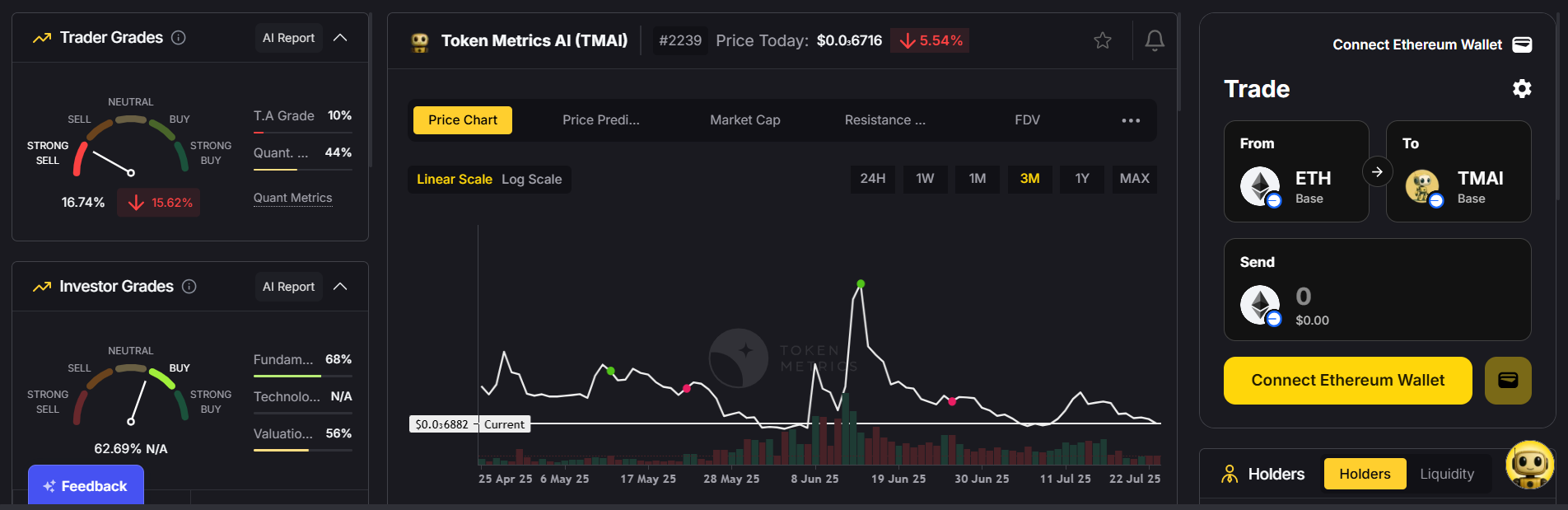
1. Token Metrics AI ($TMAI)

Token Metrics AI stands at the forefront of the connection between AI and crypto analytics. This platform offers automated research, real-time trading signals, and portfolio rebalancing tools powered by advanced machine learning models. Investors who stake $TMAI tokens gain access to premium features such as AI-driven indices and research automation, providing a significant edge for both short-term traders and long-term holders. The integration of AI enhances decision-making in the highly volatile crypto market, making $TMAI a must-watch asset.

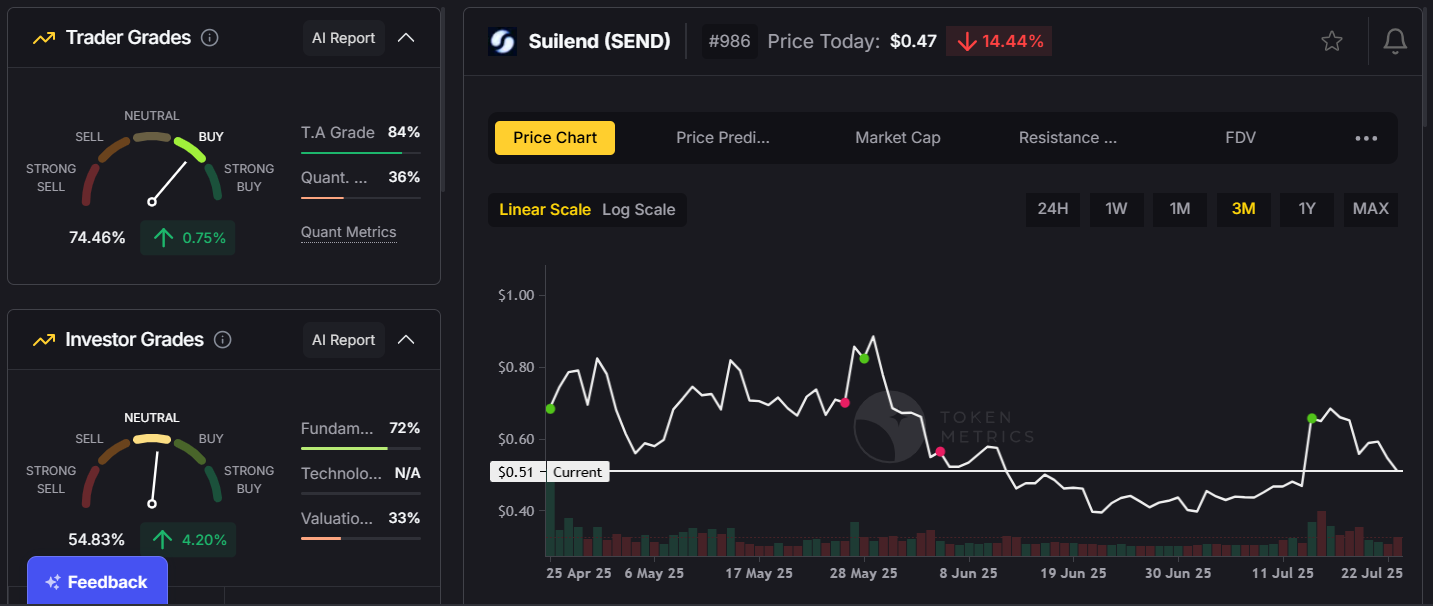
2. Suilend ($SEND)

Operating as a DeFi lending protocol on the Sui blockchain, Suilend leverages parallel transaction processing and ultra-low fees to stand out in the crowded lending space. By integrating with a decentralized exchange, Suilend can enable users to seamlessly swap assets and access liquidity directly from peer-to-peer markets without relying on centralized intermediaries. Its efficient architecture allows traders and investors to access competitive yields with minimal cost, providing an attractive alternative to traditional DeFi lenders. As decentralized finance continues to mature, protocols like Suilend are essential for improving user experience and expanding market participation.

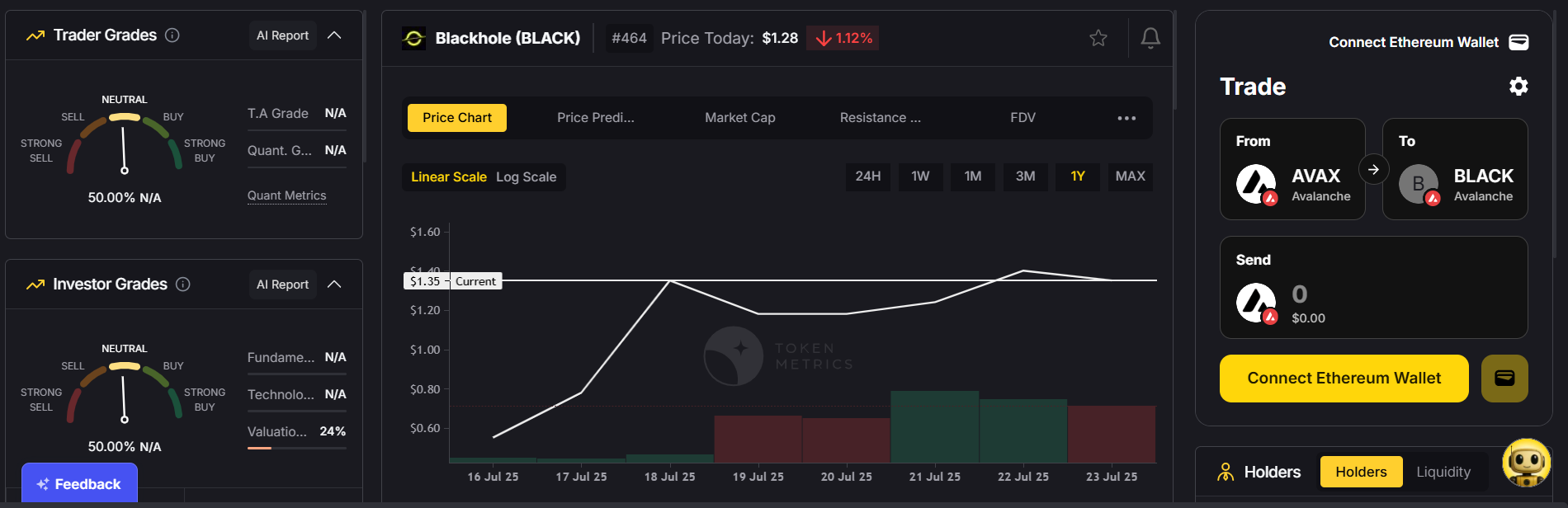
3. Blackhole ($BLACK)

Blackhole addresses the growing demand for decentralized GPU compute power—a vital resource for AI developers and blockchain projects requiring substantial computational capacity. By creating a marketplace that connects GPU providers with AI developers, Blackhole facilitates the sharing of compute resources in a secure, peer-to-peer manner. This decentralized approach is crucial for scaling AI applications and blockchain-based machine learning models, positioning $BLACK as a key player in the intersection of AI and blockchain.

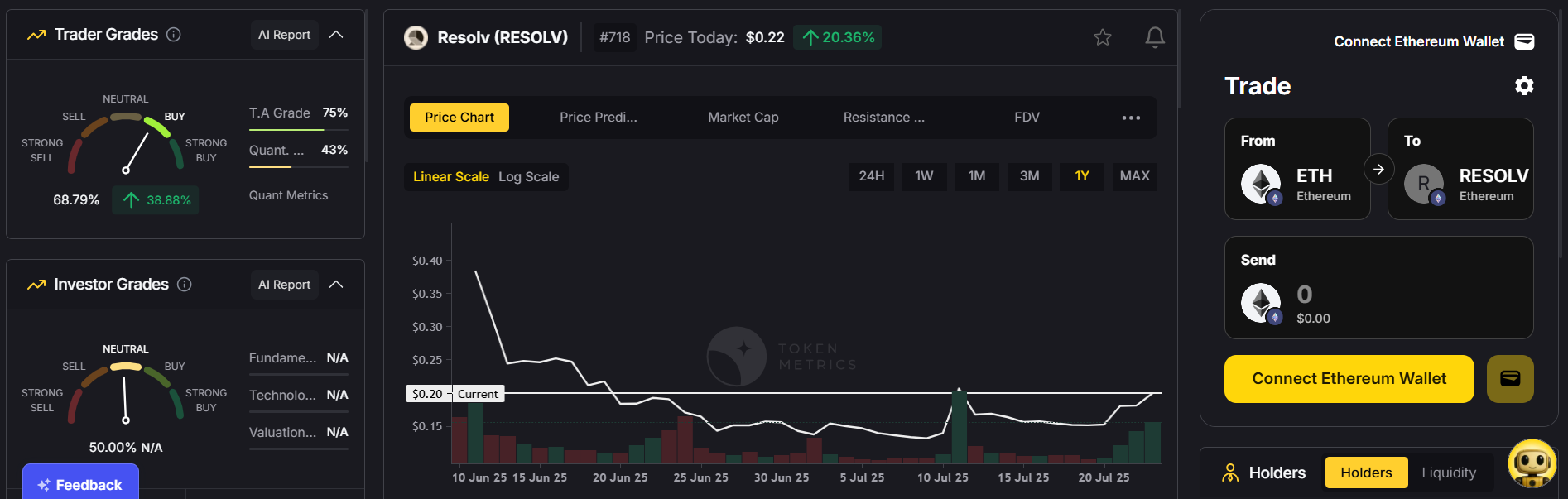
4. Resolv ($RESOLV)

Resolv is innovating the way legal contracts are managed on-chain by introducing AI-driven arbitration and compliance tools. As governments and financial institutions tighten regulations around cryptocurrency transactions, platforms like Resolv that automate contract enforcement and dispute resolution on the blockchain could become indispensable. This altcoin is particularly relevant for investors interested in the growing field of decentralized legal infrastructure.

Note: On-chain contracts may be subject to evolving legal and regulatory risks, and compliance requirements can vary by jurisdiction.

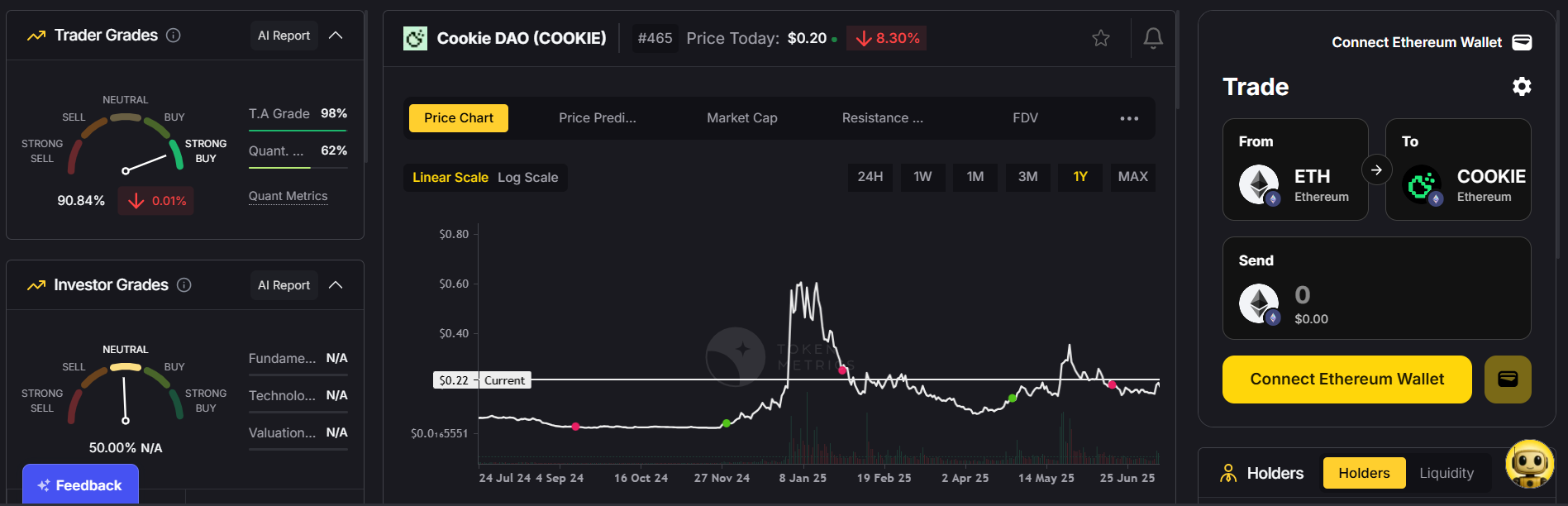
5. Cookie.fun ($COOKIE)

Fusing meme culture, AI-generated animation, and NFTs, Cookie.fun creates a decentralized platform for community-driven content creation and monetization. This playful yet monetizable ecosystem taps into the hype surrounding digital collectibles and creator economies, allowing users to engage with unique digital assets while supporting artists. For those interested in the entertainment and gaming sectors of crypto, $COOKIE offers an innovative entry point.

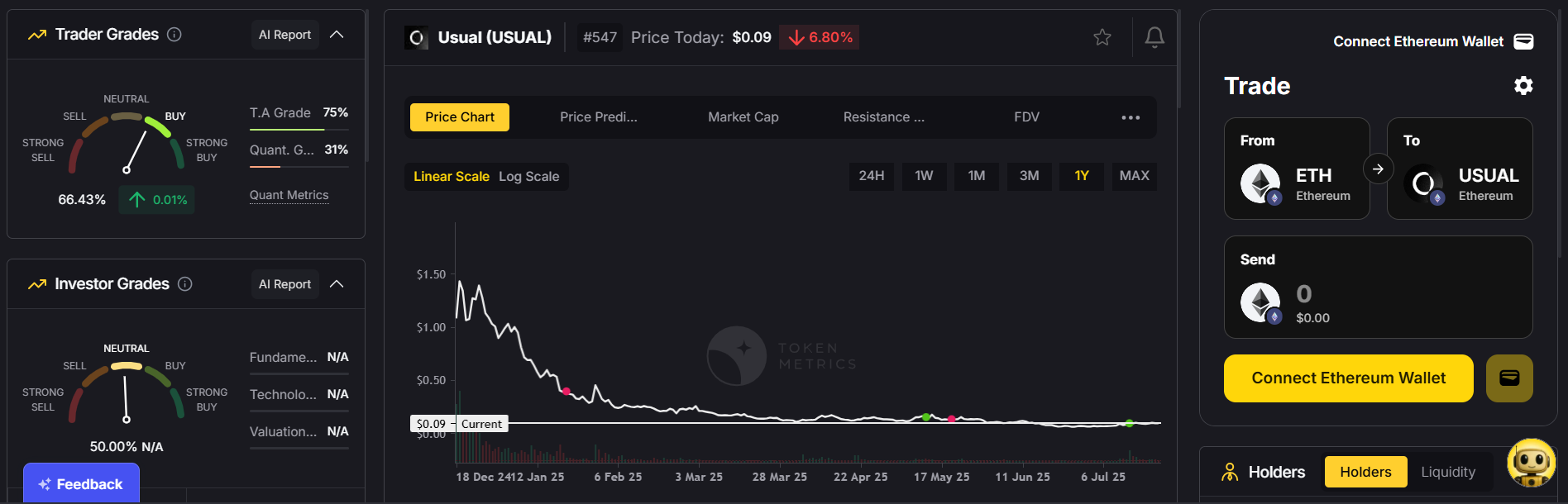
6. Usual Money ($USUAL)

Usual Money is a user-friendly stablecoin platform optimized for DeFi payments and yield strategies. By focusing on capital efficiency and seamless user experience, it aims to lead in the popular stablecoins sector, which is essential for reducing volatility and enabling smooth transactions within the crypto ecosystem. Tether (USDT), another stablecoin pegged to the US dollar at a 1:1 ratio, is widely used to stabilize other cryptocurrencies during market fluctuations. $USUAL’s stable value pegged to the dollar makes it an attractive asset for traders and investors seeking stability amid market fluctuations.

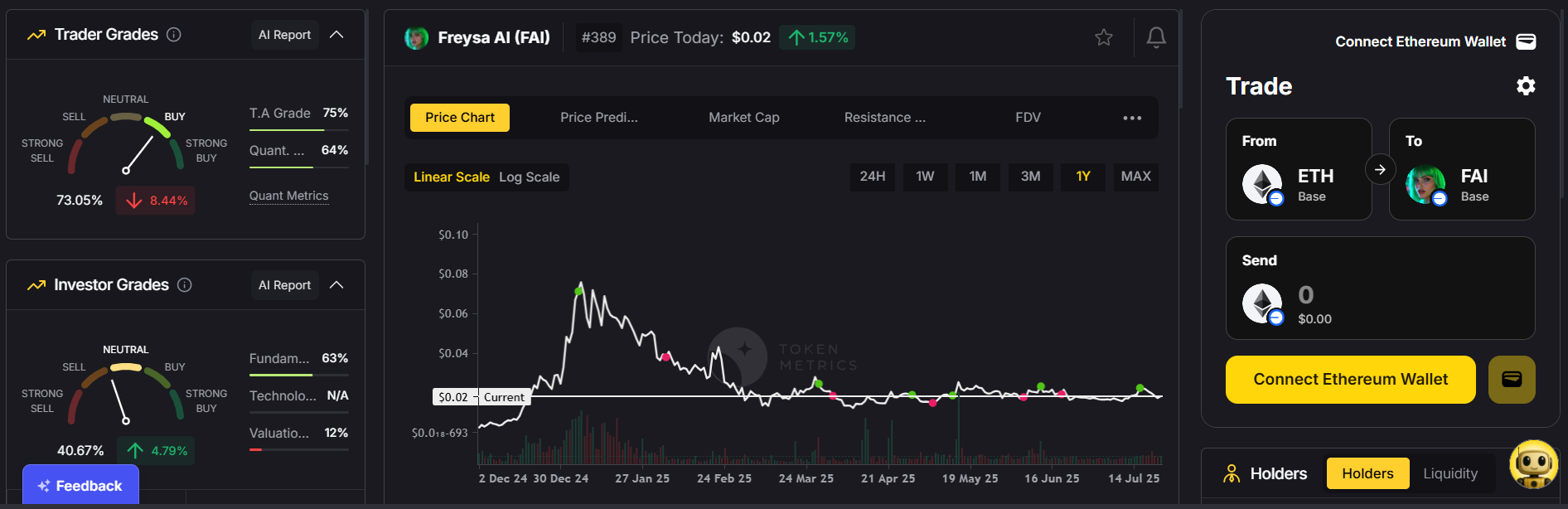
7. Freysa AI ($FAI)

Freysa AI builds decentralized frameworks for autonomous AI agents capable of executing blockchain transactions and interacting with dApps without human intervention. This innovation is ideal for automating complex on-chain workflows, granting users enhanced control over their DeFi activities. As smart contracts gain prominence, platforms like Freysa AI that combine AI and blockchain will be crucial for the next generation of decentralized applications.

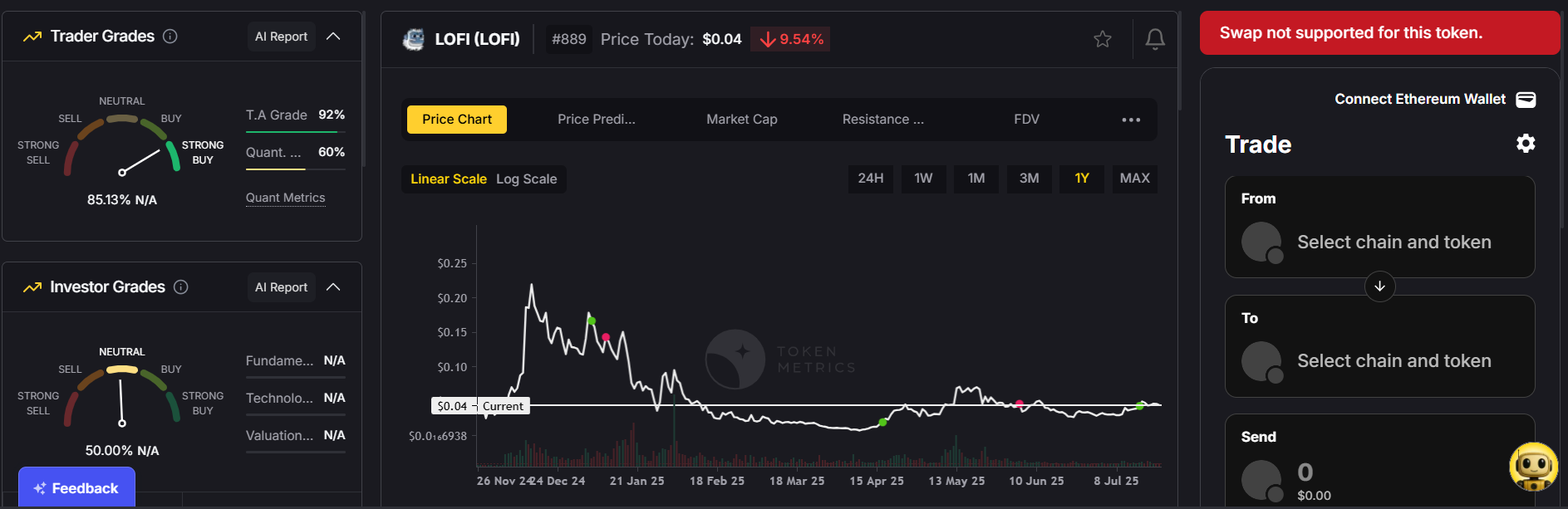
8. LOFI

LOFI revolutionizes the music industry by enabling artists and fans to co-create generative soundscapes and monetize their work through tokenized royalties and NFTs. By merging blockchain, culture, and AI, LOFI offers a promising platform for long-term growth in the creative economy. This altcoin exemplifies how digital currencies can transform traditional sectors like entertainment and gaming.

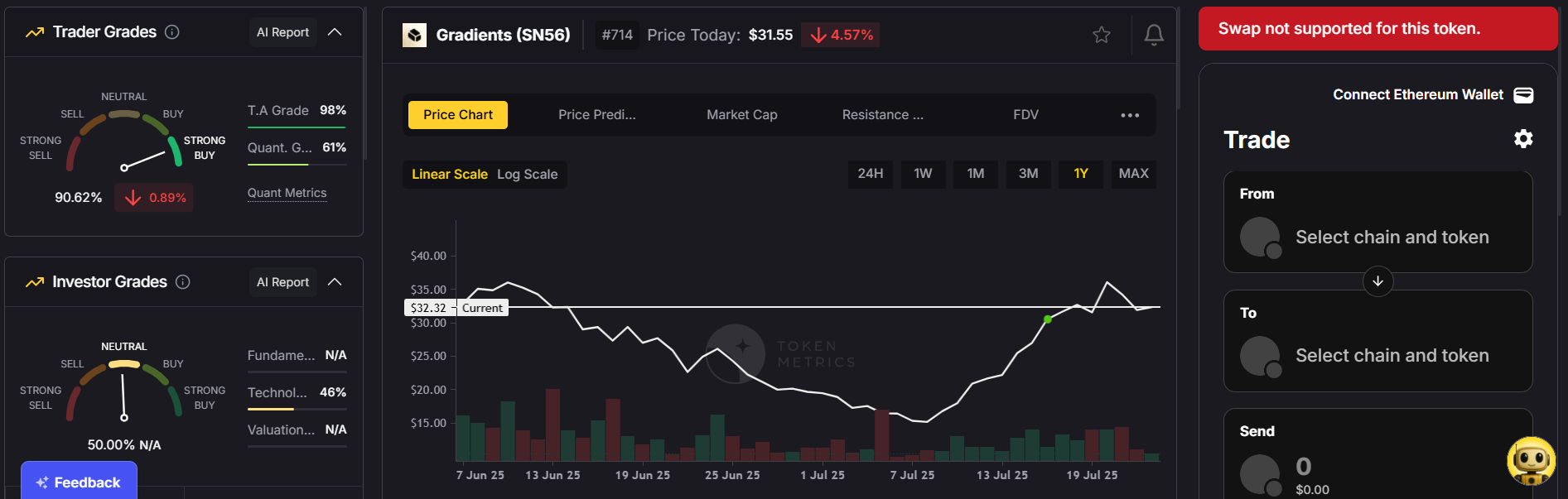
9. Gradients ($SN56)

Gradients offers a token-incentivized data marketplace designed for AI developers. By crowdsourcing datasets and rewarding contributors with tokens, it addresses the critical data scarcity problem in AI model training. This innovative approach to data sharing could accelerate AI advancements and create new investment opportunities in the intersection of data, AI, and blockchain.

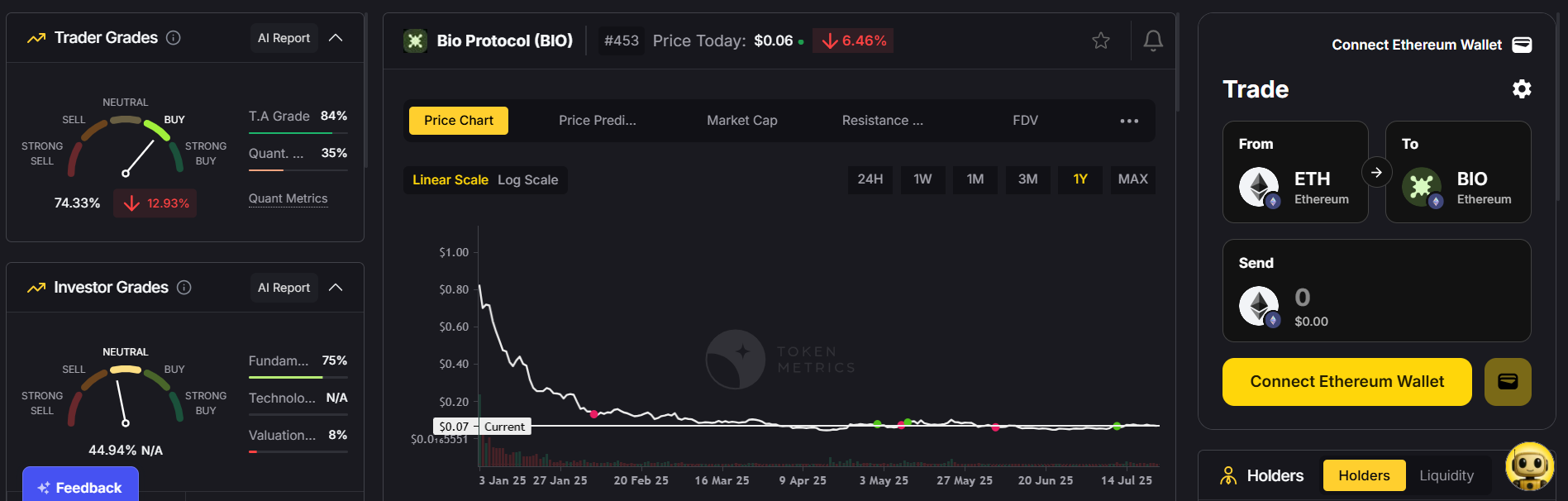
10. BIO Protocol ($BIO)

BIO Protocol integrates biotech research with decentralized science (DeSci), enabling scientists to tokenize their research, securely share datasets, and earn royalties. This platform pushes biotech innovation into the Web3 era, fostering collaboration and transparency. Investors interested in cutting-edge scientific applications of blockchain should keep an eye on $BIO.

11. Swarms ($SWARMS)

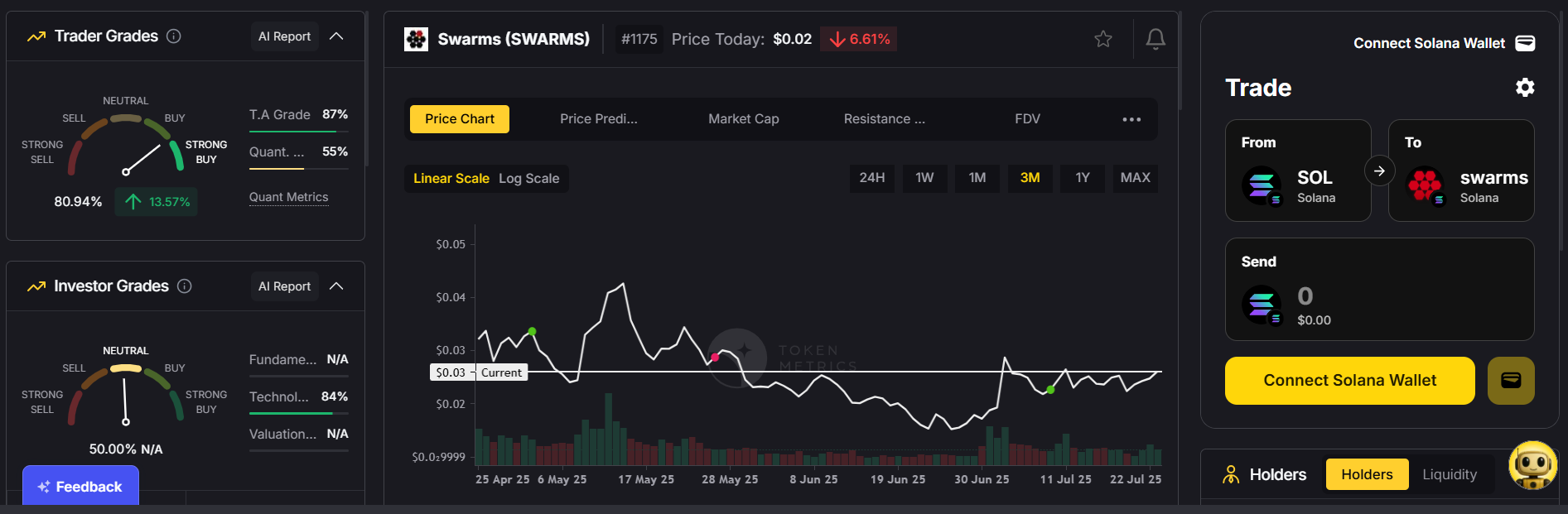
Swarms focuses on multi-agent AI coordination to optimize complex on-chain activities such as DAO voting and DeFi arbitrage. By enhancing scalability and efficiency, it offers a solution that could significantly improve how decentralized organizations operate. This altcoin is essential for investors looking into governance and automation within the crypto ecosystem.

12. Creator.bid ($BID)

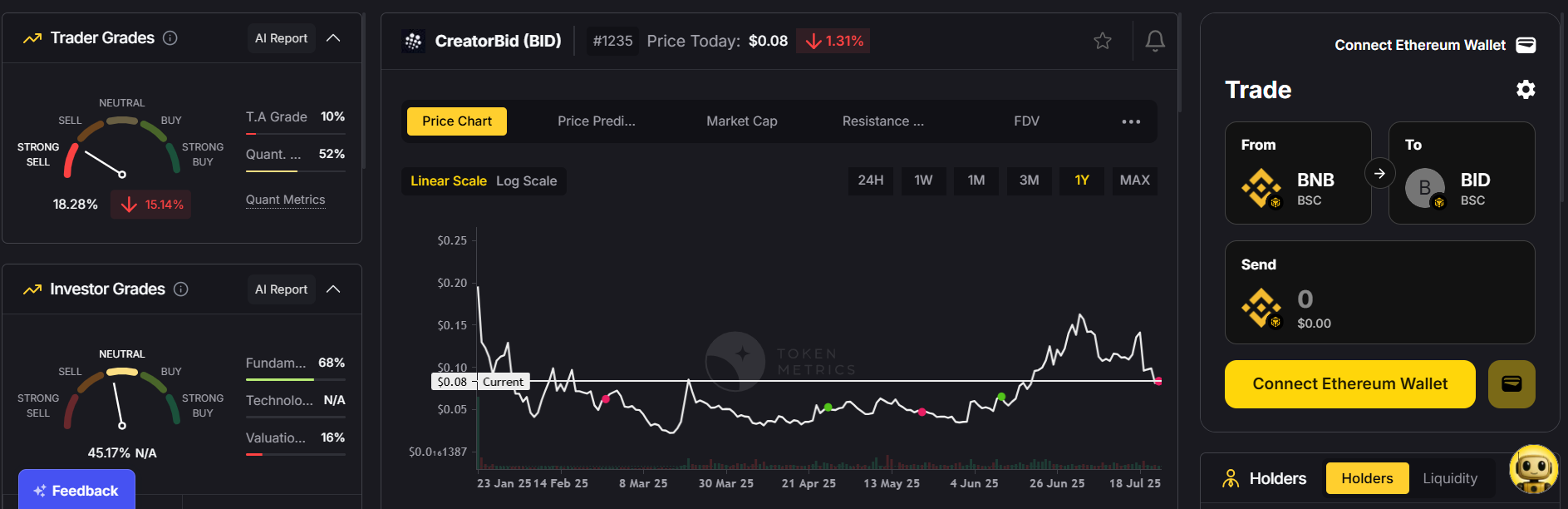
Creator.bid connects fans with AI-powered creators through auctioned personalized content, introducing innovative monetization models for influencers. This platform taps into the burgeoning AI-avatar economy and the broader creator economy, offering new ways for digital artists to generate income and engage with their audience.

13. Collaterize ($COLLAT)

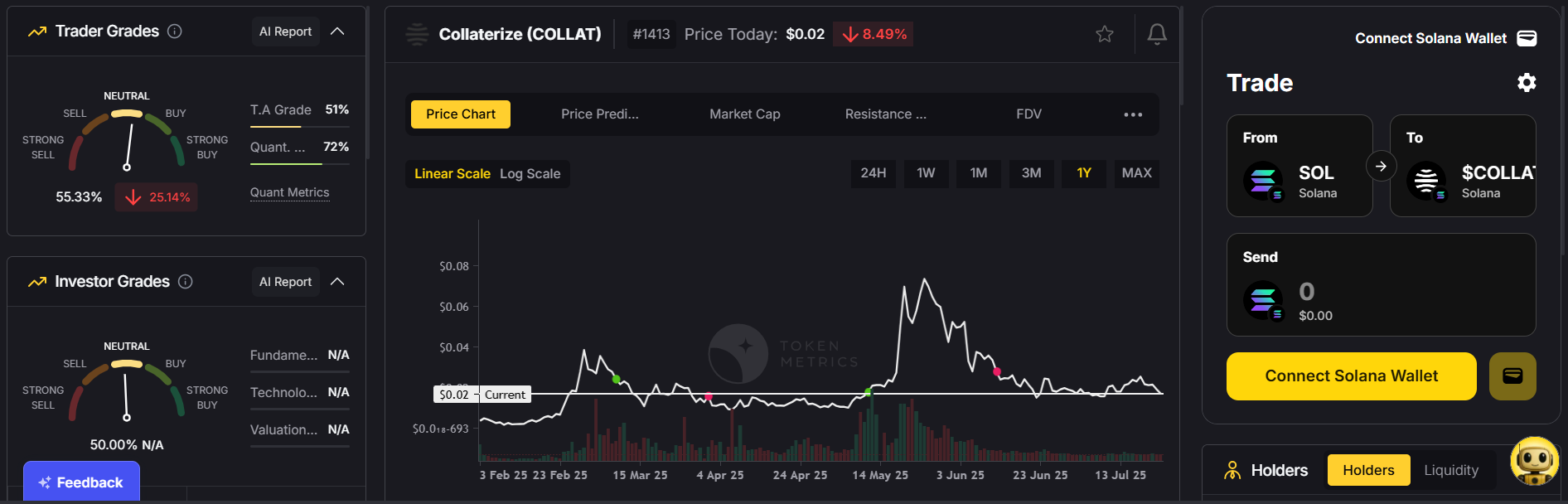
Collaterize bridges real-world assets (RWAs) and DeFi by enabling users to tokenize property, invoices, and other tangible assets. With rising demand for asset-backed lending and decentralized finance solutions, $COLLAT serves as a critical link between traditional finance and blockchain, broadening the scope of crypto investment.

14. aixbt by Virtuals ($AIXBT)

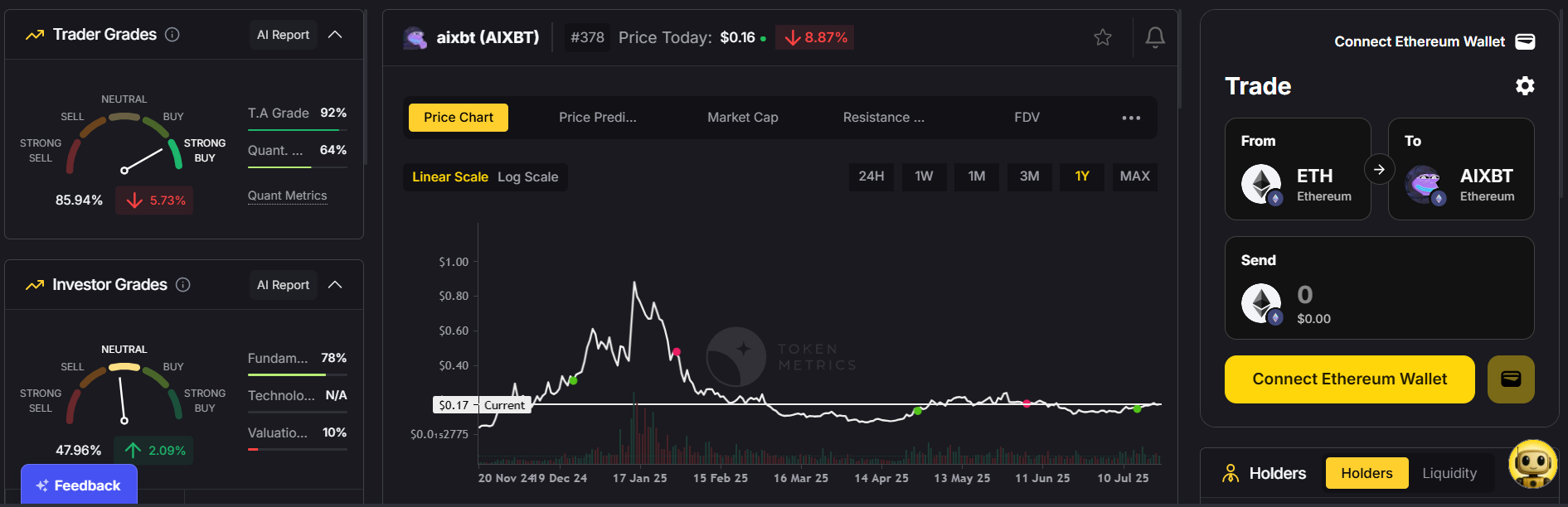
AIXBT provides AI-driven trading bots that autonomously execute cross-exchange strategies, appealing to traders who seek automation without sacrificing strategic control. This altcoin is particularly attractive to active market participants aiming to capitalize on volatile crypto prices and market trends through sophisticated algorithms.

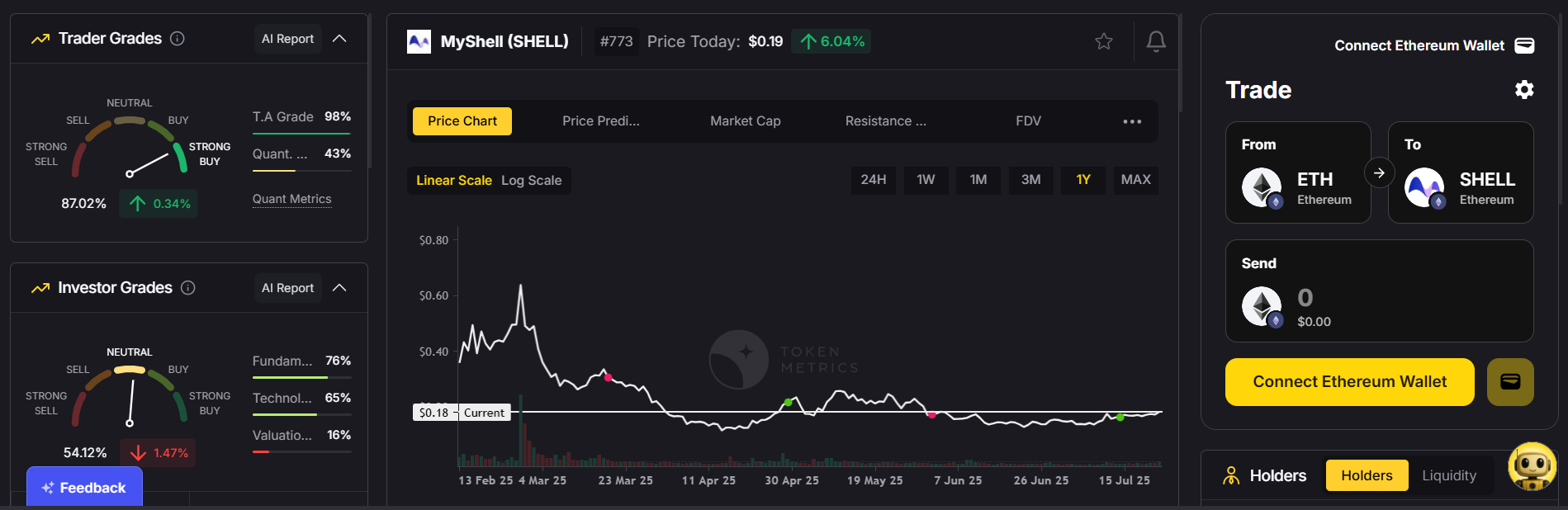
15. MyShell AI ($SHELL)

MyShell AI allows users to build voice-based AI characters that operate across platforms like Telegram and Discord. Its voice-to-earn model combines entertainment with real-world utility, tapping into the conversational AI boom. This innovative approach to digital interaction highlights the expanding role of AI in the crypto market.

Cryptocurrency Regulation

Cryptocurrency regulation is an evolving area as governments and financial institutions strive to create clear rules for the growing crypto market. Regulations are designed to protect investors, ensure market stability, and encourage responsible innovation in digital currencies like Bitcoin and other altcoins. Staying informed about regulatory changes is crucial, as new laws and guidelines can significantly impact the value and legality of various cryptocurrencies. Investors should conduct thorough research and consider consulting financial experts to understand how regulations may affect their investments. As the crypto market matures, regulation will play a key role in shaping its future, making it essential for investors to stay updated and adapt their strategies accordingly.

How to Trade Altcoins in 2025

Successfully trading altcoins requires a balance of data-driven decision-making and disciplined risk management. Utilizing AI analytics tools such as Token Metrics can provide real-time trading signals and actionable insights, helping investors navigate the volatile crypto market. Diversifying your portfolio across sectors like AI, DeFi, and real-world asset tokenization reduces exposure to sector-specific risks.

When conducting market analysis, it is important to understand how certain metrics, such as Bitcoin dominance, are determined by comparing Bitcoin's market cap to the overall crypto market capitalization. This helps traders assess market sentiment and make informed decisions.

Setting clear stop-loss and take-profit levels is essential to protect gains and limit losses in this highly volatile environment. Monitoring the top losers in the market can also help you avoid assets experiencing significant declines and manage risk more effectively. Additionally, staying informed about evolving market narratives—such as the rise of AI coins, DeFi 2.0 platforms, and cross-chain interoperability—as well as regulatory changes, can help you catch early momentum and capitalize on emerging trends.

Managing Risks in Altcoin Investing

While altcoins offer the potential for outsized returns compared to bitcoin or Ethereum, they also come with greater risk and price volatility. Thorough research is essential before investing: evaluate tokenomics, development teams, project roadmaps, and the platform’s security measures. When assessing investments, it's important to analyze performance and risk over a specific period to better understand market trends. Investors are advised to conduct their own independent research into investment strategies before making an investment decision. Avoid over-leveraging, especially in derivatives or high-yield farming, as these can amplify losses.

Regulatory developments remain a critical factor; some tokens might face compliance hurdles as governments and financial institutions scrutinize the crypto space. In the context of DeFi, some altcoins are specifically designed to replace or interact with banks, offering decentralized alternatives to traditional financial services. Any investments in the crypto space should be part of a broader investment strategy to offset potential losses. Consider staking or holding coins with strong utility and adoption, such as TRON and its native token TRX, to benefit from network incentives and long-term value appreciation. Notable altcoins like BCH (Bitcoin Cash) offer unique features such as larger block sizes and faster transaction times. Additionally, infrastructure like the XRP Ledger plays a key role in facilitating fast and cost-effective transactions across the network.

Final Thoughts

The best crypto assets in 2025 will be those that combine technological innovation, robust communities, and clear real-world applications. From AI-powered analytics platforms like Token Metrics AI ($TMAI) to decentralized compute networks such as Blackhole ($BLACK) and creator-focused ecosystems like Cookie.fun ($COOKIE), these top performing altcoins are driving the next chapter of blockchain evolution.

For investors eager to navigate the next altcoin season, pairing thorough research with AI-powered trading platforms is essential to stay ahead in this fast-moving market. Always remember to manage your risk prudently, as the cryptocurrency market remains volatile despite its tremendous growth potential. With the right approach, these altcoins could be valuable additions to your crypto portfolio as the digital currency landscape continues to expand and mature.

Crypto Basics

How to Start Crypto Trading?

Token Metrics Team
8 min

Entering the world of crypto trading can be both exciting and daunting. With the rapid growth of the cryptocurrency market and the increasing popularity of digital assets, many individuals are eager to learn how to start crypto trading effectively. This guide will walk you through the essential steps and considerations to help you navigate the crypto world confidently.

Understanding Cryptocurrency Basics

Before diving into trading, it’s crucial to understand how cryptocurrency works. Unlike traditional currencies issued by a central bank, cryptocurrencies are digital coins that operate on blockchain technology. This decentralized network uses cryptographic techniques to verify and validate transactions without the need for a central authority. Popular examples include Bitcoin and Ethereum, which have paved the way for numerous cryptocurrency projects and decentralized applications.

Cryptocurrency works by leveraging a blockchain network—a distributed ledger that records every transaction transparently and securely. Mining cryptocurrency is one method by which new digital coins are created and transactions are verified, especially in networks like the Bitcoin blockchain. Understanding these fundamentals is vital to grasp the volatile nature of crypto prices and the broader crypto markets.

Setting Up Your Crypto Account and Wallet

To trade cryptocurrency, you first need to gain access to the market through a cryptocurrency exchange or crypto exchange. These platforms act as brokerage services where you can buy and sell various crypto assets. When choosing a crypto exchange, consider factors such as regulatory compliance, security measures like two-factor authentication, fees, and the availability of high liquidity for quick order execution.

Once you have selected a crypto exchange and created a crypto account, securing your digital assets is paramount. A crypto wallet stores your private key—a unique code that grants access to your digital coins. Wallets can be hardware-based or software-based, and they help protect your investments from unauthorized access. Keeping your private key safe is essential because losing it means losing access to your cryptocurrency.

Learning How to Trade Cryptocurrency

Trading crypto involves buying and selling digital assets to capitalize on price movements and market trends. Unlike traditional currencies, the cryptocurrency market operates 24/7, offering continuous opportunities. However, the market’s volatile nature means prices can shift rapidly due to factors such as regulatory changes, market conditions, and shifts in investor sentiment.

There are various trading strategies you can employ, including day trading, which focuses on quick profits by capitalizing on short-term price fluctuations, and a long-term strategy that involves holding valuable cryptocurrency assets to benefit from potential appreciation over time. Regardless of the approach, understanding technical analysis—using historical price data and chart patterns to predict future price trends—is a valuable skill for any trader.

Managing Risks and Understanding Market Volatility

Crypto trading carries significant risk due to the market’s unpredictable and volatile nature. Price trends can be influenced by numerous factors, including regulatory announcements, technological advancements in blockchain technology, and changes in the broader financial landscape. It’s essential to assess your risk tolerance before investing and to be prepared for significant losses as well as gains.

Diversifying your cryptocurrency investments across different crypto assets can help mitigate risks. Additionally, staying informed about market trends and regulatory compliance updates can provide insights into potential downsides and opportunities within the crypto world. Remember, unlike traditional financial institutions, the decentralized finance ecosystem can be less predictable and more susceptible to rapid changes.

Executing Trades on a Cryptocurrency Exchange

Once you understand how to start crypto trading and have set up your account, you can begin to buy crypto and sell crypto on a crypto exchange. Centralized exchanges are popular choices for beginners because they offer user-friendly interfaces, customer support, and brokerage services similar to traditional bank accounts.

When trading, it’s important to consider other fees associated with transactions, such as withdrawal fees or trading commissions, which can impact your overall profitability. Utilizing tools like market orders, limit orders, and stop-loss orders can help you manage your trades effectively and protect your capital gains.

Conclusion

Learning how to start crypto trading involves a blend of understanding cryptocurrency basics, setting up secure accounts, mastering trading strategies, and managing the inherent risks of this dynamic asset class. By gaining knowledge of blockchain technology, market volatility, and price movements, you can make informed decisions and navigate the crypto markets with greater confidence. Whether you aim for quick profits through day trading or prefer a long-term strategy, staying educated and cautious will help you succeed in the fast-evolving crypto world.

Crypto Basics

How to Make Money Trading Crypto?

Token Metrics Team
8 min

Cryptocurrency trading has become an increasingly popular way for investors and traders to generate profits by leveraging the dynamic and often volatile nature of the crypto market. Unlike traditional currencies controlled by central banks, digital currencies operate on decentralized blockchain networks, offering unique opportunities and challenges. If you're interested in how to make money trading crypto, this article will guide you through the essential concepts, strategies, and tools needed to succeed in this exciting market.

Understanding Crypto Trading and the Cryptocurrency Market

Crypto trading involves buying and selling digital assets such as bitcoin, ethereum, and other popular cryptocurrencies on various cryptocurrency exchanges or crypto platforms. The cryptocurrency market operates 24/7, unlike traditional markets, providing continuous opportunities to trade and capitalize on value changes.

To successfully trade cryptocurrency, it's crucial to have a good understanding of how the crypto market functions. This includes knowing how price movements are influenced by market conditions, news, technological developments, and broader economic factors. Since virtual currency prices can be highly volatile, traders must stay informed about market trends and recognize patterns that could indicate optimal entry or exit points.

Setting Up Your Crypto Account and Choosing a Crypto Exchange

Before you can trade crypto, you need to set up a crypto account on a reputable crypto exchange or platform. These exchanges act as intermediaries where you can buy cryptocurrencies using fiat currency like the US dollar or other traditional currencies. Many crypto exchanges offer low fees, robust security measures, and user-friendly interfaces, making it easier for both beginners and experienced traders to buy and sell digital assets.

When selecting a crypto platform, consider factors such as security protocols, available cryptocurrencies, trading tools, and customer support. Some exchanges also provide additional features like debit cards linked to your crypto account, allowing you to spend your digital currency more conveniently.

Key Strategies to Trade Crypto Profitably

To make money trading crypto, it’s essential to develop effective strategies that align with your risk tolerance and investment goals. One common approach is day trading, where traders capitalize on short-term price fluctuations within a single day. Day traders use technical analysis to predict price movements by studying charts, recognizing patterns, and analyzing historical data.

Another strategy involves setting limit orders to buy or sell cryptocurrencies at predetermined prices, helping traders manage risk and execute trades at optimal entry points. Additionally, understanding market trends and how they relate to broader economic indicators can help you anticipate opportunities before they arise.

Leveraging Technical Analysis and Market Trends

Technical analysis plays a pivotal role in cryptocurrency trading. By analyzing price charts and market data, traders can identify trends, support and resistance levels, and potential reversals. This approach allows traders to predict price movements more accurately and make informed decisions about when to buy or sell.

Recognizing patterns such as head and shoulders, double tops, or triangles can provide valuable insights into market sentiment. Combining technical analysis with an understanding of market conditions enhances your ability to respond quickly and capitalize on favorable price changes.

Managing Risks and Maximizing Profits in Crypto Trading

Trading crypto comes with inherent risks due to the market's volatility and the unique characteristics of digital assets. To protect your investment, it’s important to manage risk by diversifying your portfolio, setting stop-loss orders, and only investing what you can afford to lose.

Understanding your risk tolerance will help you determine the best trading style, whether that’s conservative buy and hold strategies or more aggressive day trading. Staying disciplined and avoiding emotional decisions are critical to long-term success.

Moreover, keeping up with developments in blockchain technology and cryptocurrency mining can provide additional context for market movements and help you anticipate shifts in the value of crypto assets.

The Role of Blockchain Technology and Digital Currency

At the core of all cryptocurrencies is blockchain technology, a decentralized ledger that records all transactions securely and transparently. This innovation ensures the integrity of digital currency and enables peer-to-peer transactions without the need for intermediaries like banks.

Unlike traditional currencies, cryptocurrencies are not issued or controlled by a central bank, which can lead to significant fluctuations in value. However, this decentralization also offers advantages such as lower transaction fees and faster settlement times, making crypto trading an attractive option for many investors.

Getting Started on Your Crypto Journey

Embarking on your crypto journey requires education, practice, and a strategic approach. Start by familiarizing yourself with popular cryptocurrencies like bitcoin, bitcoin cash, and ethereum. Open a crypto account on a trusted exchange, and consider starting with small investments to gain experience.

As you dive deeper into cryptocurrency trading, continue to refine your skills in technical analysis, stay updated on market trends, and learn how to predict price movements effectively. By combining knowledge with disciplined trading practices, you can increase your chances of earning rewards and achieving profits in the cryptocurrency market.

In conclusion, making money trading crypto involves understanding the intricacies of the cryptocurrency market, setting up the right accounts and platforms, applying strategic trading methods, and managing risks effectively. With the right tools and mindset, you can navigate the dynamic world of digital assets and capitalize on the many opportunities that arise in crypto trading.

Choose from Platinum, Gold, and Silver packages
Reach with 25–30% open rates and 0.5–1% CTR
Craft your own custom ad—from banners to tailored copy
Perfect for Crypto Exchanges, SaaS Tools, DeFi, and AI Products