Crypto Basics

What is Polkadot (DOT) Crypto and Is It a Good Investment?

Learn everything about Polkadot (DOT) crypto and how it works in this descriptive guide.
Token Metrics Team
8 minutes
MIN

Polkadot is an innovative, interoperable blockchain network that has the potential to revolutionize the crypto industry. It is the brainchild of Dr. Gavin Wood, one of the co-founders of Ethereum.

Polkadot provides a platform for different blockchains to interact with each other, enabling the exchange of data and assets between them.

With its scalability, robust security features, and cross-chain compatibility, Polkadot is quickly becoming one of the most popular networks for developers and users. This comprehensive guide will provide an overview of the Polkadot network and its features and a look at some of the projects built on the platform. From its scalability to its security and interoperability, this guide will cover the basics of Polkadot and why it is revolutionizing the blockchain industry.

History of the Polkadot Network

‍The Polkadot network is a scalable, interoperable blockchain network designed to connect numerous blockchain networks and facilitate data and asset transfer between them. It was proposed by Gavin Wood, one of the co-founders of Ethereum, and was funded by a successful ICO in 2017. 

The network is powered by a native token known as DOT, which governs the network and exchanges data between chains.

Polkadot is unique in that it is designed to be "hack-proof", due to its implementation of a "democratic" consensus mechanism. While a small number of miners control other blockchain networks, Polkadot's consensus is controlled by a large pool of validators who are democratically elected by users of the network. This ensures that no one party can completely control the network, making it resistant to cyber-attacks.

Polkadot's Scalability

One of the biggest issues affecting the blockchain industry is scalability. Networks like Ethereum can only process 15 transactions per second, which is far from sufficient for mass adoption. If a blockchain network hopes to be used by large corporations and governments, a low transaction capacity is a huge barrier to entry.

Polkadot uses a unique relay chain system to solve the scalability problem. The relay chain system acts as a bridge between different blockchains, allowing them to connect to each other. The chains are controlled by validators who process transactions for chains they are not a part of. 

This allows for transactions on the Polkadot network to be processed by a network of blockchains instead of one single blockchain. This allows for a significant increase in transaction capacity, with one estimate showing 200,000 transactions per second.

The Security Benefits Of Polkadot

Polkadot is committed to providing secure, stable blockchain networks that are not susceptible to cyber attacks. To achieve this, Polkadot uses a unique governance model that allows a large pool of validators to secure the network against attacks.

‍Any party can become a validator on the network by staking DOT tokens. Validators are then rewarded for their work by being paid a portion of DOT token fees generated by the network. 

Validators have a lot of power on the Polkadot network and are responsible for:

  • Confirming transactions
  • Producing blocks
  • Processing cross-chain communication, and 
  • Governing the network. 

If a validator behaves maliciously on the network, the network can punish them by reducing their reward or completely removing them from the network.

Polkadot's Interoperability

One of the biggest problems facing blockchain networks is interoperability. Blockchains cannot communicate with each other, which is a significant barrier to the implementation of blockchain technology on a large scale. Polkadot uses a unique system known as the relay chain to enable cross-chain communication between different networks. 

For example, let's say that a business wants to move funds from a corporate blockchain network to a public blockchain network for the purpose of trading digital assets. Currently, there is no way for these blockchains to communicate with each other, which makes the process extremely difficult and expensive.

With Polkadot's relay chain, the funds are sent from one blockchain to the relay chain; then they are sent to the other blockchain. The relay chain allows blockchain networks to communicate with each other and exchange data, removing the interoperability barrier.

Projects Built on Polkadot

Polkadot has a handful of projects being built on its network. Acala is one such project.

Acala is the ultimate DeFi solution, providing a secure and scalable blockchain platform built on Polkadot, along with a variety of cross-chain financial tools. Users can trade, borrow, provide liquidity, access staking derivatives, and earn high-interest returns on their digital assets. Compatible with Ethereum and optimized for DeFi, Acala's all-in-one network offers endless possibilities for decentralized finance.

How to Buy Polkadot Crypto?

To buy Polkadot’s token, follow these 3-simple steps:

1. Select a Cryptocurrency Exchange

If you’re new to investing in cryptocurrency, you’ll have to open an account with a cryptocurrency exchange. If you’re deciding between exchanges, pay attention to the platform’s security features, account minimums and added fees. Eg: Binance, Coinbase, Kraken

2. Submit Your Polkadot Order

Once you get an exchange account, you can fund it by either linking your bank account or entering your debit card information. Some exchanges allow you to use a credit card, but think twice before using credit as it might charge excess fees. When you’re ready to purchase Polkadot, use the ticker symbol—DOT—and enter the amount you want to invest, such as $50 or $100.

3. Store Your Polkadot

Whenever you buy cryptocurrencies, you have to handle storage on your own. Properly storing your investment is essential to ensure you keep your tokens safe. There are several storage options:

Hard Wallet: A hard wallet resembles a flash drive or USB drive. It’s a small, physical device that plugs into your computer or laptop and stores your private and personal crypto keys. They are considered “cold” because they aren’t connected to the internet or a network when not actively in use.

Paper Wallet: This form of storage is less popular than it used to be but can be a viable storage option. With a paper wallet, you write down keys or apps to download a QR code. If you lose it, you can recover your cryptocurrencies.

Software Wallet: Software wallets are apps or programs you can download to manage your cryptocurrencies electronically. Because they’re connected to the internet and networks, they’re less secure, but they make it easy to trade your holdings.

Crypto Exchanges: Some cryptocurrency exchanges, such as Coinbase, has built-in storage and store cryptocurrencies on your behalf. But relying on an exchange for storage can be risky, and you may want to consider other solutions for long-term storage.

Is Polkadot A Good Investment?

Although Polkadot might experience a bearish 2023, this indeed can be the right time to invest. Because, In 2021, Polkadot concreted its worth to potential traders and investors with apparent proof.

How?

Polkadot has actually kept its promise as the DOT token went on to hit an all-time high along with ranking well among the crypto peers in 2021. Despite a market crash or a price drop, Polkadot is still estimated to be in the profit zone. 

To cut it short, crypto prediction experts suggest that 2023 is the ideal time to buy DOT tokens, yet, it’s suggestible to do your own research and analysis before you make the call.

Future Of Polkadot Crypto

Polkadot is a fairly young asset of the crypto world,  but it saw a great surge in its popularity among cryptocurrencies in 2021 and 2022. Experts project that Polkadot's position would rise over time and confront other high-ranking cryptos like Ethereum.

Polkadot’s big aspect is its interoperability with various independent blockchains. Interoperability is a broad term used in the crypto space to describe the process of interacting between two or more different blockchains.

Although many networks share similar concepts, Polkadot is the only platform that makes this vision a reality, as it is the first solution that can achieve significantly high interoperability.

The Bottom Line

The Polkadot network aims to be the internet of blockchains by allowing different blockchain networks to connect with each other and exchange data. With its scalable network, robust security features, and cross-chain compatibility, Polkadot is quickly becoming one of the most popular networks for developers and users.

With the implementation of the relay chain, Polkadot is positioning itself as the first truly interoperable blockchain network and a game-changer in the blockchain industry.

Build Smarter Crypto Apps &
AI Agents in Minutes, Not Months
Real-time prices, trading signals, and on-chain insights all from one powerful API.
Grab a Free API Key
Token Metrics Team
Token Metrics Team

Recent Posts

Research

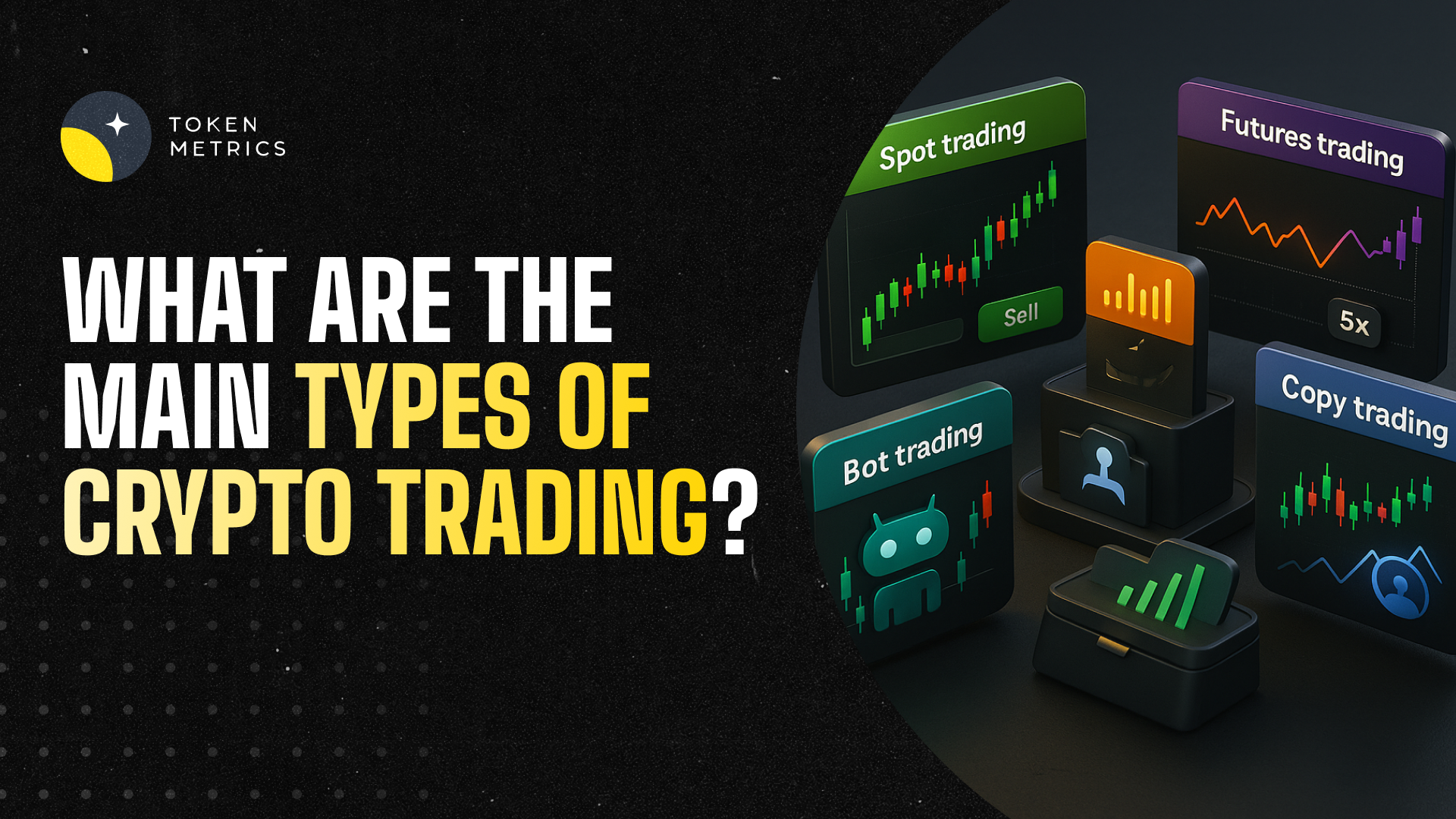
What Are the Main Types of Crypto Trading?

Token Metrics Team
8 min
MIN

Cryptocurrency trading has evolved into one of the most dynamic ways to generate profits in financial markets. But before jumping in, it’s crucial to understand the different types of crypto trading strategies. Whether you’re a beginner or an experienced trader, knowing these styles will help you choose an approach that matches your risk tolerance, time commitment, and profit goals.

In this guide, we’ll break down the main types of crypto trading, who they’re best for, and how platforms like Token Metrics can help you succeed with AI-powered insights.

Why Understanding Crypto Trading Types Matters

Crypto is a 24/7, high-volatility market where fortunes can be made—or lost—quickly. Picking the right trading style helps you:

  • Align with your financial goals (short-term gains vs. long-term growth).
  • Manage risk by using strategies that suit your experience level.
  • Maximize opportunities by applying the right tools and insights.

‍

The 5 Main Types of Crypto Trading

There are several trading strategies in crypto, but these five dominate the space:

1. Day Trading

Day trading involves buying and selling crypto within the same day to profit from short-term price movements.

  • Key Features:

    • Traders close all positions before the day ends.
    • Relies on technical analysis and real-time data.
    • Requires constant market monitoring.

  • Who It’s For:

    • Active traders with time to watch charts and news.
    • Those who enjoy fast-paced decision-making.

  • How Token Metrics Helps:
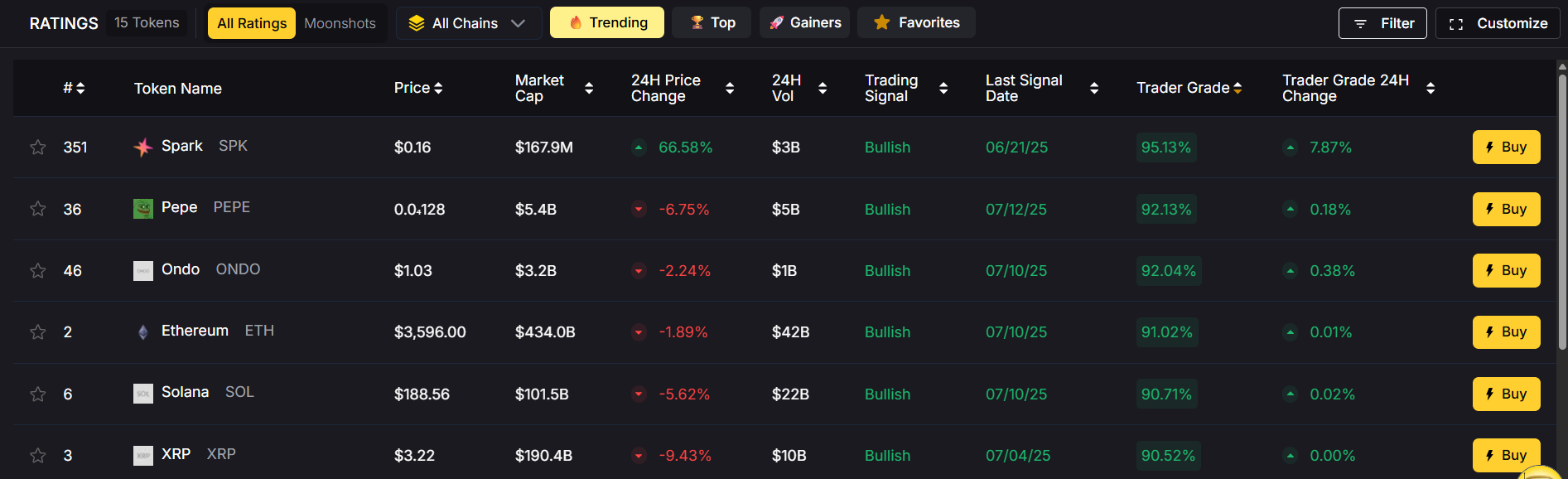
    Token Metrics offers AI-powered trading signals to identify optimal entry and exit points, giving day traders a data-driven edge.

2. Swing Trading

Swing trading focuses on holding positions for several days or weeks to capture larger price swings.

  • Key Features:

    • Less intense than day trading.
    • Combines technical and fundamental analysis.
    • Aims to profit from medium-term trends.

  • Who It’s For:

    • Traders who want flexibility without 24/7 screen time.
    • Those who prefer a balance between risk and reward.

  • How Token Metrics Helps:
    Use Trader and Investor Grades to spot crypto assets with the strongest short- to mid-term growth potential.

3. Scalping

Scalping involves making dozens (or even hundreds) of trades daily to profit from tiny price changes.

  • Key Features:

    • High-frequency trading for micro-gains.
    • Requires low fees and ultra-fast execution.
    • Focuses on high-liquidity assets like BTC and ETH.

  • Who It’s For:

    • Experienced traders who thrive under pressure.
    • Those comfortable with high-volume trading.

  • How Token Metrics Helps:
    Scalpers can leverage real-time AI signals and market sentiment analysis to identify high-probability trades quickly.

4. Position Trading (HODLing)

Position trading, often called HODLing, is a long-term investment strategy. Traders buy and hold assets for months or years, ignoring short-term fluctuations.

  • Key Features:

    • Focuses on long-term growth.
    • Less stressful and time-intensive.
    • Ideal for blue-chip cryptos like Bitcoin, Ethereum, and top altcoins.

  • Who It’s For:

    • Investors with a long-term outlook.
    • Beginners who want low-maintenance strategies.

  • How Token Metrics Helps:
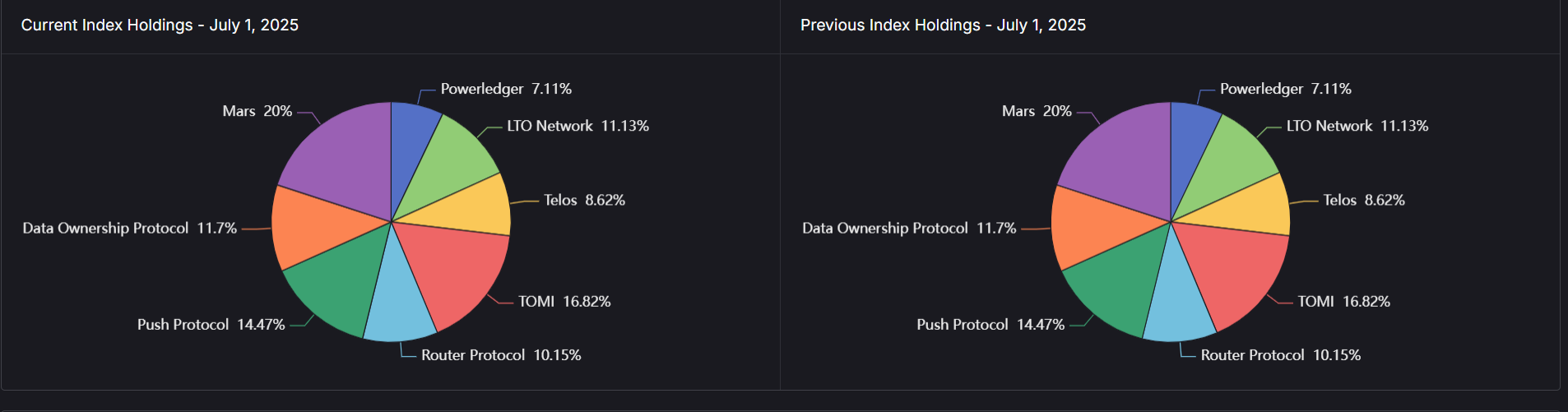
    Use AI Indices—auto-managed portfolios that rebalance based on market conditions—to maximize long-term returns without manually tracking assets.

5. Arbitrage Trading

Arbitrage trading exploits price differences for the same crypto on different exchanges.

  • Key Features:

    • Buy low on one exchange, sell high on another.
    • Requires speed and knowledge of multiple platforms.
    • Margins are small but relatively low-risk.

  • Who It’s For:

    • Advanced traders who can move funds quickly.
    • Those familiar with cross-platform trading tools.

  • How Token Metrics Helps:
    Our data-rich API can be integrated with arbitrage bots to monitor price discrepancies in real time.

How to Choose the Right Trading Style

When deciding which type of trading suits you, consider:

  1. Time Commitment:

    • Day trading and scalping require constant attention.
    • Swing and position trading allow more flexibility.

  2. Risk Tolerance:

    • Scalping and day trading are riskier but can deliver faster returns.
    • Position trading offers lower risk over time.

  3. Capital Available:

    • Arbitrage often requires higher liquidity for meaningful profits.
    • Day or swing trading can start with smaller amounts.

  4. Experience Level:

    • Beginners are better off starting with swing trading or HODLing.
    • Advanced traders can explore scalping or arbitrage.

Why Token Metrics Is the Perfect Companion for Any Trading Style

No matter your trading strategy, Token Metrics provides the tools to help you succeed:

  • AI-Powered Trading Signals: Make smarter decisions using data-driven bullish/bearish signals.
  • Proprietary Trader & Investor Grades: Identify the best short-term and long-term crypto investments.
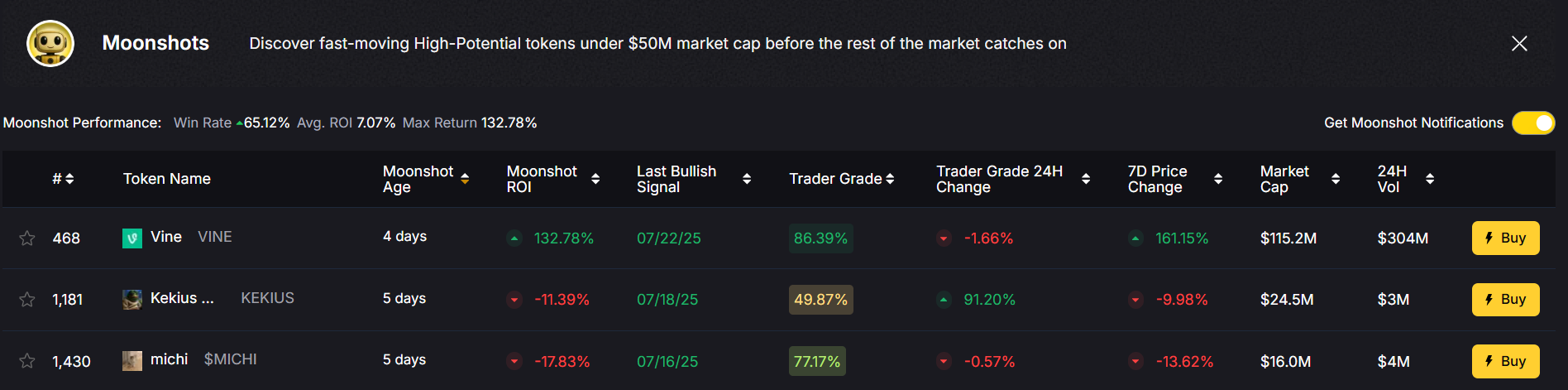
  • Moonshot Finder: Discover undervalued altcoins before they explode in value.
  • AI Indices: Auto-managed portfolios for long-term investors.
  • Flexible API & MCP Server: Integrate trading strategies with automation tools.

Whether you’re a day trader chasing fast gains or a long-term HODLer, Token Metrics simplifies research and helps you execute strategies with confidence.

Final Thoughts

So, what are the main types of crypto trading?

  • Day Trading: For active traders who thrive on quick decisions.
  • Swing Trading: For those wanting balance between time and profit potential.
  • Scalping: For high-frequency, experienced traders.
  • Position Trading: For long-term investors looking for steady growth.
  • Arbitrage: For advanced traders seeking low-risk, small-margin opportunities.

Each type of trading has its pros and cons, but with AI-powered tools from Token Metrics, you can make smarter decisions, reduce guesswork, and trade confidently—regardless of your preferred style.

Research

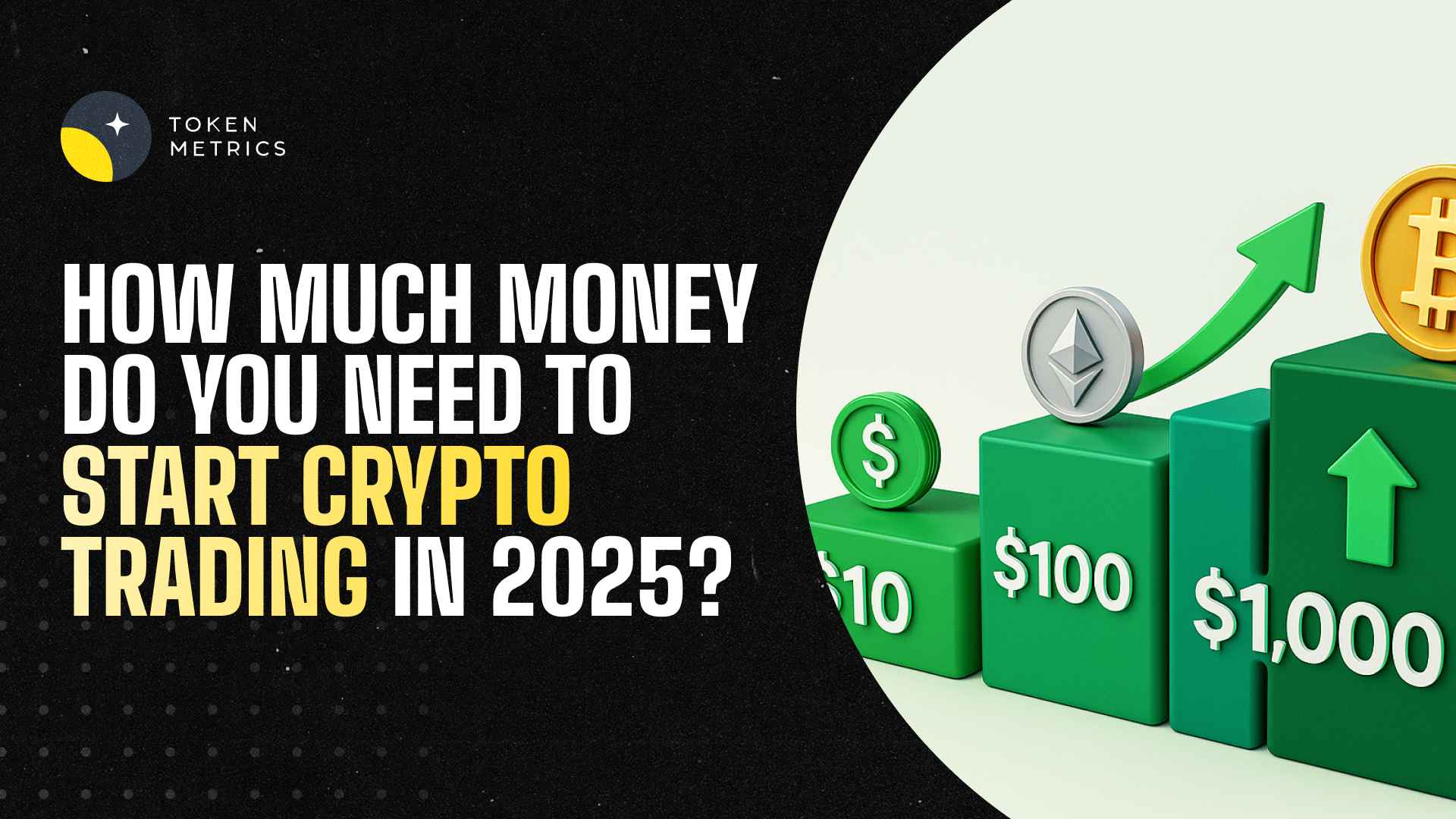
How Much Money Do I Need to Start Crypto Trading?

Token Metrics Team
8 min
MIN

Cryptocurrency trading has revolutionized how people invest, allowing anyone with an internet connection to access global markets 24/7. But one of the most common questions beginners ask is: "How much money do I need to start trading crypto?"

The answer depends on your goals, risk tolerance, and the strategies you intend to use. In this article, we’ll explore how much you really need to get started, break down different trading approaches, and explain how platforms like Token Metrics can help you trade smarter with AI-driven insights—even with a small budget.

Understanding Crypto Trading: The Basics

Before determining how much money you need, it’s essential to understand what crypto trading involves. Cryptocurrency trading is the process of buying and selling digital assets like Bitcoin, Ethereum, and altcoins to profit from price movements. Unlike traditional stock markets, crypto markets:

  • Operate 24/7, offering constant trading opportunities.
  • Allow fractional ownership, meaning you can buy a small portion of a cryptocurrency instead of a whole coin.
  • Have low barriers to entry, enabling traders to start with minimal funds.

However, the volatile nature of crypto means your starting amount must align with your risk management plan.

How Much Money Do You Need to Start Crypto Trading?

There’s no single amount required to start trading crypto—it largely depends on your trading style, goals, and platform. Here’s a breakdown:

1. The Absolute Minimum: $10–$50

Most exchanges like Binance, Coinbase, and Kraken allow users to start trading with as little as $10–$50. This is a great entry point for beginners who want to learn the ropes without risking too much.

  • Pros:

    • Low financial commitment.
    • Great for testing strategies.
    • Less emotional stress compared to larger investments.

  • Cons:
    • Limited profit potential.
    • Transaction fees may eat into gains.

2. A Practical Starting Point: $250–$500

Many beginner traders find $250–$500 to be a sweet spot. This amount allows for diversification—spreading funds across multiple tokens—and gives you enough margin to experiment with different strategies.

  • Example:

    • $200 in Bitcoin or Ethereum (low-risk, high-liquidity assets).
    • $100–$200 in promising altcoins (higher growth potential).
    • $50–$100 reserved for short-term trades.

This amount balances risk and opportunity, helping you learn without overexposing yourself.

3. For Serious Traders: $1,000+

If your goal is to actively trade (day trading, swing trading, or building a diversified portfolio), starting with $1,000+ gives you more flexibility.

  • Why?

    • Allows for better diversification across multiple crypto assets.
    • Provides room to absorb market volatility without liquidating too early.
    • Enables you to take advantage of advanced tools and AI-driven insights on platforms like Token Metrics.

Factors That Influence How Much You Should Start With

When deciding how much to invest, consider these factors:

1. Risk Tolerance

Crypto is volatile—price swings of 10–20% in a single day are common. Only invest what you can afford to lose.

2. Trading Goals

Are you aiming for quick profits (day trading), medium-term growth (swing trading), or long-term wealth (HODLing)? Your goals will dictate your starting amount.

3. Trading Strategy

Scalping or day trading requires more capital for frequent trades, while long-term investing can start with smaller amounts.

4. Fees

Trading fees, withdrawal fees, and network fees can impact your profits. Some exchanges have minimum trade sizes, so starting with too little might not be practical.

How Token Metrics Helps You Trade Smarter—Even with a Small Budget

Starting with a small amount doesn’t mean you can’t succeed. With AI-driven research and trading tools, platforms like Token Metrics level the playing field for beginners and experienced traders alike.

Here’s how Token Metrics can help:

1. AI-Powered Trading Signals

Token Metrics provides real-time bullish and bearish signals based on 80+ data points. This helps you make smarter entry and exit decisions—crucial when trading with limited funds.

2. Proprietary Trader and Investor Grades

Our Trader and Investor Grades score tokens based on short-term and long-term potential, helping you focus on assets with the best risk-reward profile.

3. Moonshot Finder for Low-Cap Opportunities

Want to turn a small investment into something bigger? Token Metrics’ Moonshot Finder identifies high-potential low-cap altcoins before they pump, giving you an edge.

4. AI Indices & Auto-Managed Portfolios

Don’t know where to start? Token Metrics offers AI-driven crypto indices, automatically managing a diversified portfolio based on current market conditions.

5. Free & Flexible Plans

Whether you’re starting with $0 or $166.7 per month, Token Metrics offers free and paid plans to match your needs.

Can You Really Make Money Starting Small?

Yes, you can—but it requires patience, strategy, and the right tools. Many traders have grown $100–$500 portfolios into thousands by leveraging long-term investments in quality projects and AI-guided trading signals.

  • Example:

    • A $100 investment in Ethereum in early 2020 would have grown to over $4,000 by 2021.
    • A $50 investment in a low-cap moonshot token could multiply 10x or more if chosen wisely.

Best Practices for Starting Small in Crypto Trading

  1. Start with what you can afford to lose – Never invest rent or essential funds.
  2. Diversify your portfolio – Spread your investment across multiple tokens.
  3. Use AI-powered tools – Platforms like Token Metrics reduce guesswork and improve decision-making.
  4. Avoid emotional trading – Stick to your strategy and avoid panic-selling.
  5. Stay educated – Follow market trends, join crypto communities, and use analytical tools.

Final Thoughts

So, how much money do you need to start crypto trading?
The truth is—you can start with as little as $10, but for a more meaningful experience and potential growth, $250–$1,000 is a practical starting range.

The key isn’t just the amount—it’s how you trade. Using AI-driven insights from Token Metrics, you can make smarter decisions, find hidden gems, and navigate crypto’s volatility like a pro.

Whether you’re starting small or diving in with a bigger budget, Token Metrics helps you trade confidently and build a strategy tailored to your goals.

Research

What’s the Difference Between Trading and Investing in Crypto?

Token Metrics Team
8 min
MIN

Introduction: Why This Question Matters

In 2025, crypto has matured into a multi‑trillion‑dollar market, attracting everyone from day traders to long‑term institutional investors. But not all approaches to crypto are the same.

If you’re new to digital assets, you might wonder: “What’s the difference between trading and investing in crypto?” Understanding the distinction will help you choose the strategy that matches your goals, risk tolerance, and time commitment.

This guide breaks down trading vs. investing in crypto — explaining their key differences, benefits, risks, and how Token Metrics empowers you to succeed at either.

What Is Crypto Trading?

Crypto trading is the short‑term buying and selling of cryptocurrencies to profit from price fluctuations.

Timeframe:

  • Minutes to weeks. Traders enter and exit positions quickly.

Objective:

  • Profit from volatility. Traders capitalize on price swings rather than holding assets for the long term.

Approach:

  • Use technical analysis (TA), price charts, and AI signals to make quick decisions.

Common Trading Styles:

  1. Day Trading: Multiple trades in a single day, holding no overnight positions.
  2. Swing Trading: Holding assets for days or weeks to capture short‑term trends.
  3. Scalping: Executing many small trades for tiny gains.
  4. Futures & Margin Trading: Using leverage for higher potential returns (and risk).

Pro Tip:
Traders rely heavily on real‑time data and AI‑driven insights to react fast. Tools like Token Metrics provide trading signals, narrative detection, and technical ratings for hundreds of tokens.

What Is Crypto Investing?

Crypto investing is the long‑term holding of digital assets based on their growth potential.

Timeframe:

  • Months to years. Investors aim to benefit from long‑term appreciation.

Objective:

  • Accumulate wealth over time. Investors believe in the future of blockchain technology and hold through volatility.

Approach:

  • Focus on fundamental analysis (FA) — evaluating project teams, technology, tokenomics, and adoption potential.

Common Investing Strategies:

  1. HODLing: Holding strong assets like Bitcoin and Ethereum long‑term.
  2. Staking: Locking tokens (e.g., ETH, ADA) for passive income.
  3. Dollar‑Cost Averaging (DCA): Investing fixed amounts regularly regardless of price.
  4. Narrative‑Driven Investing: Allocating capital to emerging sectors (AI tokens, real‑world assets).

Pro Tip:
Investors benefit from portfolio optimization tools like Token Metrics, which helps identify high‑potential projects and maintain balanced allocations.

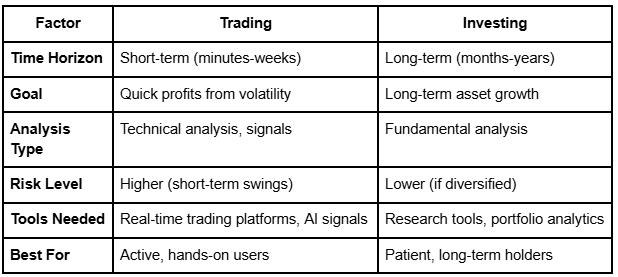
Trading vs. Investing: Key Differences

‍

Which One Is Right for You?

Choose Trading If:

  • You enjoy fast‑paced decision‑making.
  • You can dedicate time to monitoring markets daily.
  • You’re comfortable with higher short‑term risk.

Choose Investing If:

  • You believe in crypto’s long‑term potential.
  • You prefer less active management.
  • You want to earn passive income (staking, yield farming).

Or Do Both:
Many crypto enthusiasts combine the two — holding long‑term assets like Bitcoin and Ethereum while trading smaller portions for short‑term gains.

How Token Metrics Supports Both Traders and Investors

Whether you’re trading or investing, Token Metrics is an essential AI‑powered platform for making smarter decisions.

For Traders:

  • AI‑Driven Trading Signals: Detect bullish or bearish momentum.
  • Technical Ratings: Evaluate coins based on chart patterns and historical performance.
  • Real‑Time Alerts: Get notified when tokens hit target levels.

For Investors:

  • Fundamental Analysis: Access in‑depth ratings for over 6,000 projects.
  • Narrative Detection: Identify emerging sectors like AI tokens or DeFi 2.0 early.
  • Portfolio Optimization: Build and maintain a risk‑adjusted portfolio for the long term.

In short: Token Metrics helps traders react faster and investors plan smarter.

Benefits of Trading

  • Quick Profits: Capitalize on volatility.
  • Flexible: Enter and exit markets at any time.
  • Exciting: Appeals to those who enjoy active engagement.

Drawbacks:

  • Requires constant monitoring.
  • Higher emotional stress.
  • Greater risk of losses.

Benefits of Investing

  • Wealth Accumulation: Capture long‑term growth.
  • Less Time‑Intensive: No need for constant market tracking.
  • Passive Income: Earn from staking and yield farming.

Drawbacks:

  • Exposed to long‑term downturns.
  • Slower returns compared to active trading.

Practical Example: Combining Both

Imagine you allocate:

  • 70% to long‑term investments (BTC, ETH, Token Metrics AI (TMAI), and Layer 2 solutions).
  • 30% to short‑term trading (narrative‑driven altcoins).

How Token Metrics Helps:

  • Long‑Term: Use AI ratings and portfolio optimization for your HODL assets.
  • Short‑Term: Get trading alerts and technical signals for timely entry and exits.

‍

Conclusion

The difference between trading and investing in crypto comes down to timeframes, goals, and risk tolerance.

  • Trading is for those who want to actively profit from volatility.
  • Investing is for those who aim for long‑term wealth accumulation.

No matter which approach you choose, Token Metrics — the leading AI crypto analysis, research, and trading platform — gives you the tools to succeed.

By combining AI‑powered insights, narrative detection, and portfolio optimization, Token Metrics helps both traders and investors make smarter, data‑driven decisions in 2025.

Choose from Platinum, Gold, and Silver packages
Reach with 25–30% open rates and 0.5–1% CTR
Craft your own custom ad—from banners to tailored copy
Perfect for Crypto Exchanges, SaaS Tools, DeFi, and AI Products