Back to blog
Crypto Basics

What is Spot Trading in Crypto: A Complete Beginner’s Guide

Learn the essentials of spot trading in crypto. Discover how to buy and sell directly for effective trading strategies. Read more to get started!
Token Metrics Team
8 min
Want Smarter Crypto Picks—Free?
See unbiased Token Metrics Ratings for BTC, ETH, and top alts.
Thank you! Your submission has been received!
Oops! Something went wrong while submitting the form.
 No credit card | 1-click unsubscribe

When you buy Bitcoin on Coinbase and it instantly appears in your wallet, you’ve just completed a spot trade. Unlike complex derivatives or leveraged products, spot trading in crypto represents the most straightforward way to buy and own digital assets at current market prices.

Spot trading refers to the practice of buying and selling cryptocurrencies for immediate delivery and settlement. The term “spot” indicates that transactions happen “on the spot” - you purchase crypto at the current market price and gain immediate ownership without any future obligations or contractual arrangements.

In this comprehensive guide, you’ll discover exactly how crypto spot trading works, how it compares to other trading methods, and whether it’s the right approach for your investment goals. Whether you’re a complete beginner or looking to understand the fundamentals better, this article will give you the knowledge needed to begin spot trading confidently.

What is Spot Trading in Cryptocurrency?

Spot trading is the direct purchase and sale of digital assets at their current market prices with immediate settlement and ownership transfer. When you execute a spot trade, you’re buying the actual cryptocurrency - not a contract or derivative based on its value.

The “on the spot” concept means trades execute instantly at real-time market prices determined by supply and demand on the crypto exchange. Unlike futures contracts or options trading, there are no predetermined price agreements or future delivery dates involved. You pay the current price, receive the digital asset immediately, and gain full control over your cryptocurrency.

Popular trading pairs in spot markets include:

  • BTC/USDT (Bitcoin paired with Tether stablecoin)
  • ETH/USD (Ethereum paired with US dollars)
  • ADA/BTC (Cardano paired with Bitcoin)
  • DOT/USDC (Polkadot paired with USD Coin)

The immediate ownership transfer distinguishes spot trading from derivatives trading. Once your buy order executes, the cryptocurrency moves directly into your exchange wallet or can be withdrawn to your personal wallet. This direct asset ownership provides complete control over your digital assets, including the ability to stake, lend, or transfer them as desired.

How Does Crypto Spot Trading Work?

The process of crypto spot trading follows a straightforward sequence that beginners can master quickly:

Step 1: Choose a Crypto Exchange Select a reputable cryptocurrency exchange like Binance, Coinbase Pro, Kraken, or Gemini. Consider factors like security measures, trading volume, supported cryptocurrencies, and fee structures.

Step 2: Register and Verify Your Account Complete the registration process and KYC (Know Your Customer) verification. Most exchanges require identity verification to comply with regulations and implement security measures.

Step 3: Deposit Funds Fund your account using fiat currency (USD, EUR) via bank transfer or credit card, or deposit existing cryptocurrencies from another wallet.

Step 4: Select Your Trading Pair Choose the cryptocurrency you want to buy and the currency you’ll use to purchase it. For example, if you want to buy Ethereum with US dollars, you’d select the ETH/USD trading pair.

Step 5: Place Your Order Submit either a market order or limit order based on your trading strategy and timing preferences.

Market Orders vs Limit Orders

Understanding order types is crucial for effective spot trading:

Market Orders execute immediately at the current market price. When you place a market order to buy Bitcoin, you’ll purchase it at the lowest available ask price. This guarantees execution but not the exact price, especially during periods of high market volatility.

Limit Orders specify the exact price you’re willing to pay. For example, if Bitcoin trades at $45,000 but you only want to buy at $44,000, you’d place a limit order at that specified price. The trade only executes if the market reaches your target price.

Order Book Mechanics

The order book displays all pending buy orders (bids) and sell orders (asks) for a trading pair. Bids appear in descending price order, while asks appear in ascending order. The difference between the highest bid and lowest ask creates the “spread.”

When you place a market order, the exchange’s matching engine pairs your order with the best available opposite order. High liquidity markets with many participants typically have tighter spreads and faster execution, while low liquidity markets may experience price slippage during volatile periods.

The immediate settlement process means ownership transfers instantly upon order execution. Unlike traditional stock markets with T+2 settlement, cryptocurrency spot trades settle in real-time, giving you immediate access to your purchased digital assets.

Spot Trading vs Other Trading Methods

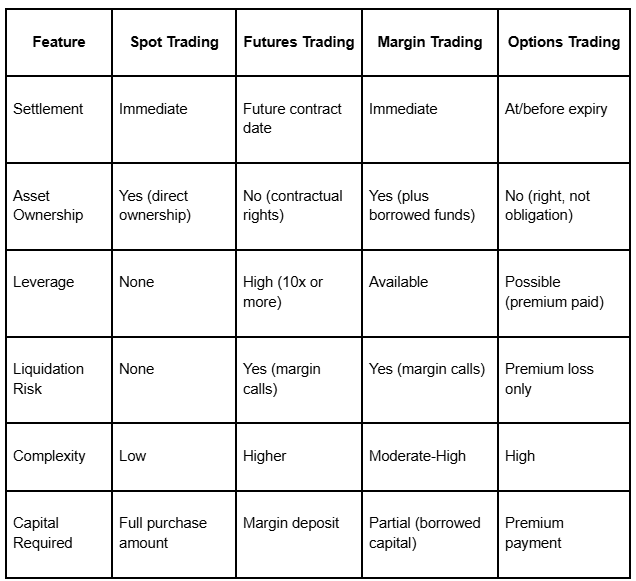
Understanding how spot trading compares to other trading methods helps you choose the right approach for your risk tolerance and investment goals.
Spot Trading vs Margin Trading

Margin trading allows traders to borrow funds from the crypto exchange to increase their position size beyond their initial investment. While this can amplify potential profits, it also magnifies losses and introduces significant risks that don’t exist in spot trading.

In margin trading, borrowing funds creates leverage that can lead to margin calls when positions move against you. If your trade loses value and approaches the minimum margin requirement, the exchange may forcibly close your position to protect the borrowed funds. This liquidation can result in losing more than your initial investment.

Spot trading eliminates these risks by limiting potential losses to your initial investment. You can’t lose more than you put in because you’re not borrowing money. This makes spot trading the safer choice for beginners and risk-averse traders who want exposure to price movements without the downside risk of liquidation.

Experienced traders might use margin trading to amplify gains, but the commodity futures trading commission and other regulatory bodies consistently warn about the significant risks involved with leveraged products.

Spot Trading vs Futures Trading

Futures contracts obligate traders to buy or sell an underlying crypto asset at a predetermined price on a specific future date. These financial instruments allow speculation on future price movements without immediate purchase or delivery of the digital asset.

Spot trading provides immediate settlement and direct ownership, while futures trading involves contractual obligations and potential leverage. Futures prices can diverge from spot prices based on market expectations, interest rates, and other factors affecting the cryptocurrency market.

Traders speculate on price movements differently in each market. Spot traders profit by buying low and selling at a higher price, while futures traders can profit from both rising and falling markets through long and short positions. However, futures trading requires more sophisticated understanding of market conditions and carries higher risks due to leverage and margin requirements.

Advantages of Spot Trading

Spot trading offers several compelling benefits that make it attractive to both newcomers and experienced traders:

Simplicity and Ease of Understanding Spot trading’s straightforward nature makes it accessible to beginners. You buy cryptocurrency at the current price and own it immediately - no complex contracts, expiration dates, or margin calculations to worry about.

Direct Asset Ownership Unlike derivatives trading, spot trading gives you actual ownership of digital assets. You can withdraw your Bitcoin to a hardware wallet, stake your Ethereum, or use your cryptocurrencies in DeFi protocols. This direct ownership provides complete control over your financial assets.

Transparent Pricing Spot market prices reflect real supply and demand dynamics without the complexity of futures curves or options pricing models. The current market price you see represents what other traders are willing to pay right now.

Lower Risk Profile Spot trading eliminates the risk of margin calls, liquidations, and borrowing costs associated with leveraged products. Your maximum loss equals your initial investment, providing clear risk boundaries for portfolio management.

Wide Availability Major cryptocurrency exchanges like Binance, Coinbase, Kraken, and others offer robust spot markets with high trading volumes. This broad availability ensures you can access spot trading regardless of your location or experience level.

No Time Pressure Unlike options with expiration dates or futures contracts with settlement requirements, spot positions have no time constraints. You can hold your digital assets as long as desired without worrying about contract expiration.

Disadvantages of Spot Trading

Despite its advantages, spot trading has limitations that traders should understand:

Full Market Volatility Exposure Crypto spot trading exposes you to the complete volatility of the cryptocurrency market without built-in hedging mechanisms. When Bitcoin drops 20% in a day, your spot position loses the same percentage with no protection.

No Short Selling Capability Spot trading only allows you to profit from rising prices unless you already own the asset to sell. You cannot profit from falling markets through short selling without using additional financial instruments like futures or margin trading.

Capital Intensive Spot trading requires the full purchase amount upfront. If you want $10,000 exposure to Ethereum, you need $10,000 in capital. Leveraged products allow similar exposure with less capital, though with higher risks.

Limited Profit Potential Without leverage, your profit potential is limited to the actual price movements of the underlying crypto asset. A 50% increase in Bitcoin price generates a 50% profit, while leveraged trading could amplify those gains (and losses).

Price Slippage Risk During periods of high market volatility or low liquidity, large market orders may experience slippage - executing at worse prices than expected. This particularly affects trading in smaller altcoins with lower trading volumes.

No Built-in Risk Management Spot trading lacks the sophisticated risk management tools available in derivatives markets. You cannot easily hedge positions or create complex trading strategies without using multiple instruments.

Popular Spot Trading Strategies

Successful spot traders employ various trading strategies based on their risk tolerance, time horizon, and market analysis approach:

Buy and Hold (HODL) This long-term strategy involves purchasing major cryptocurrencies like Bitcoin or Ethereum and holding them for extended periods. Buy and hold traders believe in the long-term adoption and price appreciation of established digital assets, ignoring short term price fluctuations.

Dollar Cost Averaging (DCA) DCA involves making regular purchases regardless of current market price to smooth out volatility over time. For example, buying $500 worth of Bitcoin every month reduces the impact of timing the market and can lower your average purchase price during volatile periods.

Day Trading Day traders capitalize on short term price movements within a single trading session. They use technical analysis to identify entry and exit points, often making multiple trades per day to profit from intraday volatility in the crypto market.

Swing Trading Swing traders hold positions for days or weeks to capture medium-term trends. This trading strategy requires analyzing both technical indicators and fundamental factors that might drive price movements over several days.

Arbitrage Trading Arbitrage involves exploiting price differences for the same cryptocurrency across different exchanges. If Bitcoin trades at $45,000 on Exchange A and $45,200 on Exchange B, arbitrage traders buy on the cheaper exchange and sell on the more expensive one for risk-free profit.

Range Trading Range traders identify cryptocurrencies trading within specific price ranges and buy near support levels while selling near resistance levels. This strategy works best during sideways market movements when prices oscillate within defined boundaries.

Getting Started with Spot Trading

Beginning your spot trading journey requires careful preparation and a methodical approach:

Choose Reputable Exchanges Start with established cryptocurrency exchanges that prioritize security and regulatory compliance. Binance offers high liquidity and numerous trading pairs, Coinbase Pro provides user-friendly interfaces for beginners, while Kraken and Gemini are known for strong security measures.

Complete Security Setup Implement security measures including two-factor authentication (2FA), strong passwords, and withdrawal whitelist features. Never share your login credentials and consider using a dedicated email address for your crypto exchange accounts.

Start with Major Cryptocurrencies Begin with established digital assets like Bitcoin (BTC) and Ethereum (ETH) before exploring smaller altcoins. These major cryptocurrencies typically have higher liquidity, tighter spreads, and more predictable price movements suitable for learning.

Begin with Small Amounts Start with amounts you can afford to lose while learning platform mechanics and developing your trading strategy. Small initial investments allow you to understand how orders work, how fees impact profits, and how market volatility affects your positions.

Use Limit Orders for Better Control Limit orders help you control entry prices and avoid paying more than intended, especially important during volatile market conditions. While market orders guarantee execution, limit orders provide price protection at the cost of potential missed opportunities.

Educate Yourself Continuously Develop skills in both technical analysis and fundamental analysis. Technical analysis helps identify entry and exit points using price charts and indicators, while fundamental analysis evaluates the underlying value and adoption prospects of different cryptocurrencies.

Practice Risk Management Never invest more than you can afford to lose, diversify across multiple cryptocurrencies, and consider setting stop-loss levels even though spot trading doesn’t require them. Successful trading depends more on managing downside risk than maximizing gains.

Is Spot Trading Profitable?

Spot trading profitability depends on multiple factors including market timing, research quality, risk management, and trading discipline. While the cryptocurrency market has created significant wealth for early adopters and skilled traders, success is never guaranteed.

Factors Affecting Profitability:

Market volatility creates both opportunities and risks. The crypto market experiences significant price fluctuations that can generate substantial profits for well-timed trades, but the same volatility can lead to significant losses if you buy at market peaks.

Your research and analysis capabilities directly impact trading success. Traders who understand fundamental analysis (evaluating project technology, adoption, and competition) combined with technical analysis (chart patterns and indicators) typically achieve better results than those trading on emotions or tips.

Risk management practices separate successful traders from those who lose money. Using proper position sizing, maintaining diversified portfolios, and having clear exit strategies help protect capital during inevitable market downturns.

Short-term vs Long-term Approaches:

Short term trading requires more active management and technical skills but can potentially generate quicker profits during favorable market moves. However, frequent trading increases costs through fees and taxes while requiring significant time investment.

Long-term holding strategies have historically rewarded patient investors in major cryptocurrencies, though past performance doesn’t guarantee future results. Bitcoin and Ethereum have appreciated substantially over multi-year periods despite significant interim volatility.

Risk Considerations:

All crypto trading involves substantial risk of loss. The market can move against positions quickly, and even established cryptocurrencies can lose significant value during market downturns. Regulatory changes, security breaches, and technological issues can also impact cryptocurrency values.

Trading costs including exchange fees, withdrawal fees, and tax implications reduce net profits. High-frequency trading strategies may see profits eroded by cumulative fees, making longer-term approaches more cost-effective for smaller accounts.

Success Requirements:

Profitable spot trading typically requires continuous education about cryptocurrency technology, market dynamics, and trading techniques. Successful traders develop discipline to stick to their strategies during emotional market periods and avoid impulsive decisions based on fear or greed.

Market conditions constantly evolve, requiring adaptation of trading strategies and ongoing learning. What works during bull markets may fail during bear markets, and successful traders adjust their approach based on changing market cycles.

Conclusion

Spot trading in crypto offers the most straightforward path to cryptocurrency ownership, providing immediate settlement, direct asset control, and transparent pricing without the complexity of derivatives or the risks of leverage. While it requires full capital upfront and limits profit potential to actual price movements, spot trading eliminates margin call risks and provides a solid foundation for building cryptocurrency knowledge.

Whether you choose buy-and-hold strategies for long-term wealth building or more active approaches like swing trading, spot trading gives you real ownership of digital assets with clear risk boundaries. The key to success lies in choosing reputable exchanges, starting with established cryptocurrencies, implementing proper risk management, and continuing your education about market dynamics.

For newcomers to the cryptocurrency market, spot trading represents the safest entry point to gain exposure to this revolutionary asset class while learning essential trading skills that can be applied to more sophisticated strategies later.

Build Smarter Crypto Apps &
AI Agents in Minutes, Not Months
Real-time prices, trading signals, and on-chain insights all from one powerful API.
Grab a Free API Key
About Token Metrics
Token Metrics: AI-powered crypto research and ratings platform. We help investors make smarter decisions with unbiased Token Metrics Ratings, on-chain analytics, and editor-curated “Top 10” guides. Our platform distills thousands of data points into clear scores, trends, and alerts you can act on.
30 Employees
analysts, data scientists, and crypto engineers
Daily Briefings
concise market insights and “Top Picks”
Transparent & Compliant
Sponsored ≠ Ratings; research remains independent
Want Smarter Crypto Picks—Free?
See unbiased Token Metrics Ratings for BTC, ETH, and top alts.
Thank you! Your submission has been received!
Oops! Something went wrong while submitting the form.
 No credit card | 1-click unsubscribe
Token Metrics Team
Token Metrics Team

Recent Posts

Crypto Basics

Types of Stablecoins: A Complete Guide for 2025

Token Metrics Team
8 min

The cryptocurrency market is famous for volatility—Bitcoin can swing by thousands of dollars in a day, and altcoins can rise or crash in hours. But what if you need price stability? That’s where stablecoins come in.

Stablecoins are digital currencies pegged to stable assets like the US dollar, gold, or even algorithmically maintained price levels. They bridge the gap between the speed and efficiency of blockchain technology and the reliability of traditional money.

As of 2025, stablecoins account for over $140 billion in circulating supply, making them essential for traders, investors, and decentralized finance (DeFi) users. But not all stablecoins are the same—different types use different mechanisms to maintain their stability, each with unique pros and cons.

In this guide, we’ll break down the types of stablecoins, how they work, their risks, and which might be best for your needs.

What Are Stablecoins?

A stablecoin is a cryptocurrency designed to maintain a stable value by pegging its price to a reference asset. Most stablecoins are pegged to fiat currencies like the U.S. dollar (e.g., 1 USDT ≈ $1), but some track commodities (like gold) or are algorithmically balanced to hold value.

They are widely used for:

  • Trading: Moving quickly in and out of volatile assets.
  • DeFi: Providing liquidity, borrowing, and earning yields.
  • Remittances: Sending low-cost, fast cross-border payments.
  • Hedging: Protecting against crypto market volatility.

Types of Stablecoins

There are four main types of stablecoins:

  1. Fiat‑Collateralized Stablecoins
  2. Crypto‑Collateralized Stablecoins
  3. Algorithmic (Non‑Collateralized) Stablecoins
  4. Commodity‑Backed Stablecoins

Each has a different method of maintaining its peg. Let’s break them down.

1. Fiat‑Collateralized Stablecoins

Definition:
These are backed 1:1 by traditional currencies like the U.S. dollar, euro, or yen. For every stablecoin issued, an equivalent amount of fiat is held in reserve by a trusted custodian.

How They Work:
If you buy 1 USDC, Circle (its issuer) holds $1 in a regulated bank account or short-term U.S. Treasury securities. When you redeem that stablecoin, the issuer sends you the equivalent amount in fiat and burns the coin.

Examples:

  • Tether (USDT) – Largest stablecoin by market cap; widely used on exchanges.
  • USD Coin (USDC) – Issued by Circle, fully regulated and audited.
  • TrueUSD (TUSD) – Offers real-time attestation of reserves.
  • PayPal USD (PYUSD) – Launched by PayPal for payments and DeFi.

Pros:

  • High stability – Pegged directly to fiat.
  • Transparent – Many provide audits and attestations.
  • Easy adoption – Ideal for traders, merchants, and payment platforms.

Cons:

  • Centralization – Custodians control reserves and can freeze accounts.
  • Regulatory risks – Subject to government oversight.
  • Less transparency for some issuers – (e.g., Tether faced scrutiny over its reserves).

2. Crypto‑Collateralized Stablecoins

Definition:
These are backed by cryptocurrencies like Ethereum or Bitcoin instead of fiat. Because crypto is volatile, these stablecoins are overcollateralized (e.g., $150 in ETH backs $100 in stablecoins).

How They Work:
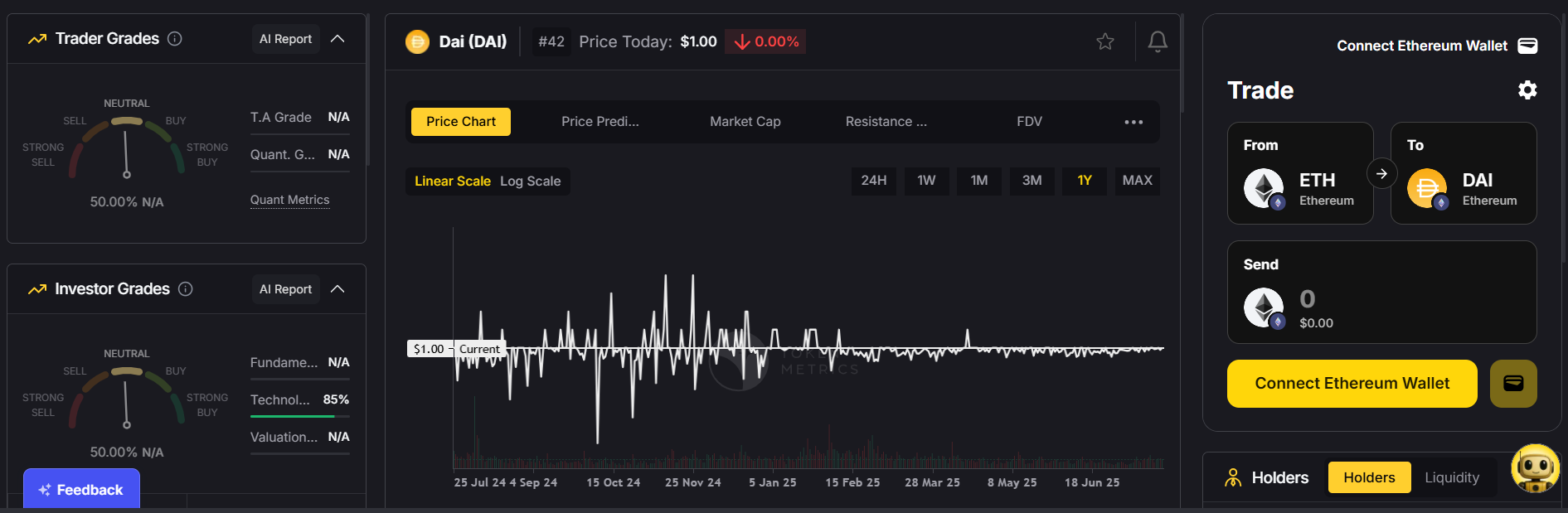
When you mint a crypto-backed stablecoin like DAI, you deposit collateral (e.g., ETH) into a smart contract. If the collateral value drops too much, the contract automatically liquidates some assets to maintain the peg.

Examples:

  • DAI – Issued by MakerDAO, backed by ETH, USDC, and other assets.


  • sUSD – A synthetic USD issued by Synthetix.
  • MIM (Magic Internet Money) – Collateralized by multiple crypto assets.

Pros:

  • Decentralized – No single company controls reserves.
  • Transparent – All collateral balances are viewable on-chain.
  • Resistant to censorship – Issuers can’t freeze accounts.

Cons:

  • Volatility risk – Collateral can lose value quickly, requiring liquidations.
  • Overcollateralization – Ties up more capital than fiat-backed options.
  • Complexity – Requires understanding of DeFi mechanics.

3. Algorithmic (Non‑Collateralized) Stablecoins

Definition:
These don’t use physical reserves. Instead, they maintain their peg via algorithmic supply adjustments—minting or burning tokens to balance price around $1.

How They Work:
If demand increases and the price rises above $1, the protocol mints more coins. If it falls below $1, the protocol burns coins or incentivizes users to buy them back.

Examples:

  • Ampleforth (AMPL) – Elastic supply adjusts daily.
  • UST (TerraUSD) – Infamously collapsed in 2022 after its peg broke.
  • Frax (FRAX) – Uses a hybrid model: partly collateralized, partly algorithmic.

Pros:

  • Highly capital-efficient – Doesn’t require large reserves.
  • Decentralized – Often governed by smart contracts and DAOs.

Cons:

  • Peg instability – Prone to “death spirals” when market confidence drops.
  • Complex mechanisms – Harder for average users to understand.
  • History of failures – UST/LUNA crash eroded trust in algorithmic coins.

4. Commodity‑Backed Stablecoins

Definition:
These stablecoins are pegged to commodities like gold, silver, or oil, giving them intrinsic value beyond fiat.

How They Work:
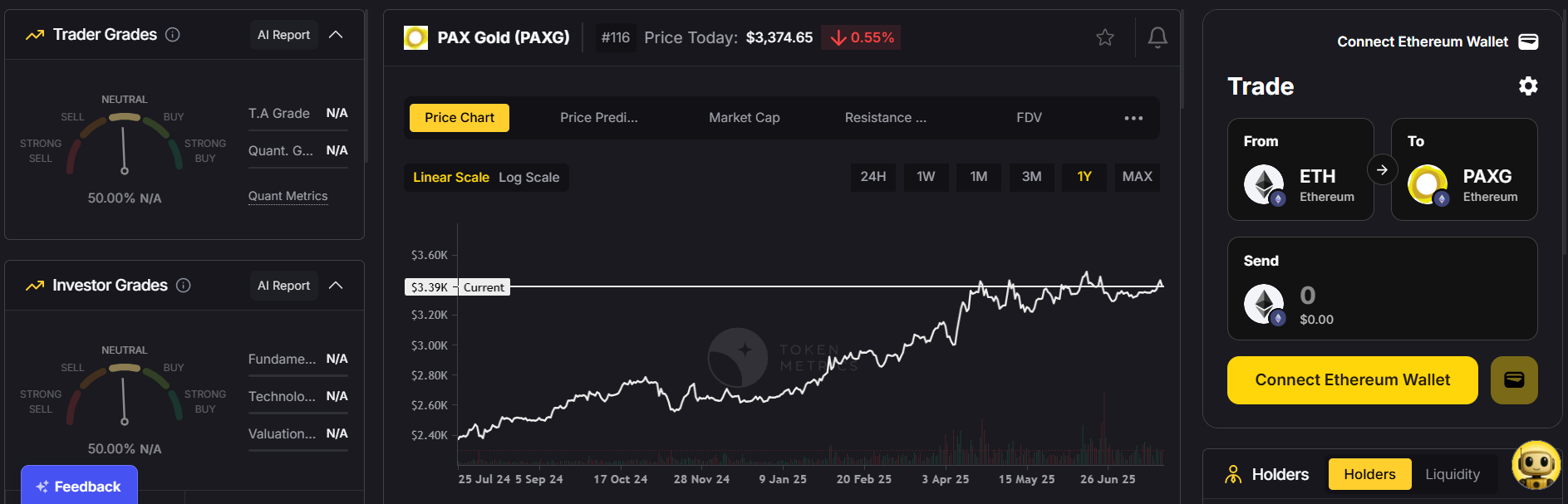
For every coin issued, an equivalent amount of the commodity is held in a secure vault. For example, owning 1 PAX Gold (PAXG) means you own 1 troy ounce of physical gold stored by the issuer.

Examples:

  • PAX Gold (PAXG) – Backed by physical gold.


  • Tether Gold (XAUT) – Gold-backed token from Tether.
  • Digix Gold (DGX) – Pegged to gold bars in Singapore vaults.

Pros:

  • Hedge against inflation – Commodities like gold retain value during economic uncertainty.
  • Diversification – Offers exposure to both crypto and commodities.

Cons:

  • Low liquidity – Less widely used than fiat-backed stablecoins.
  • Storage & audit challenges – Requires trust in the issuer to maintain reserves.

Why Do Stablecoins Matter?

Stablecoins are the backbone of DeFi and crypto trading.

  • Trading & arbitrage: They provide a quick way to exit volatile positions without converting back to fiat.
  • Cross-border payments: Cheaper and faster than SWIFT or remittance services.
  • DeFi participation: Essential for lending, borrowing, yield farming, and liquidity pools.
  • On-ramp/off-ramp: They simplify converting between traditional finance and blockchain.

Which Type of Stablecoin Should You Use?

If you want simplicity & security: Go with fiat-backed coins like USDC or PYUSD.

If you value decentralization: Choose crypto-collateralized options like DAI.

If you’re comfortable with high risk: Explore algorithmic models like FRAX (but beware of peg risks).

If you want inflation protection: Consider commodity-backed coins like PAXG.

Key Risks of Stablecoins

  • Regulation: Governments are increasing oversight of fiat-backed coins.
  • Centralization: Some issuers can freeze funds or blacklist wallets.
  • Smart contract risks: DeFi-based stablecoins can suffer from bugs or exploits.
  • Peg breaks: Algorithmic models are especially vulnerable to confidence loss.

The Future of Stablecoins

In 2025, stablecoins are evolving to meet regulatory and market demands:

  • Central Bank Digital Currencies (CBDCs): Governments are issuing digital dollars and euros, potentially competing with stablecoins.
  • Regulated issuers: Projects like USDC are working closely with regulators to ensure compliance.
  • Hybrid models: Combining fiat and algorithmic elements (e.g., Frax) to enhance stability.

As DeFi expands and global adoption grows, stablecoins will remain at the heart of crypto finance.

Final Thoughts

Stablecoins are more than just “digital dollars.” They’re a critical bridge between traditional finance and blockchain innovation.

  • Fiat-backed stablecoins bring stability and ease of use.
  • Crypto-collateralized ones offer transparency and decentralization.
  • Algorithmic models push innovation but carry higher risks.
  • Commodity-backed coins provide a hedge against inflation and diversify exposure.

Choosing the right type depends on your risk tolerance, use case, and trust level. Whether for trading, saving, or participating in DeFi, understanding the types of stablecoins can help you navigate the crypto ecosystem with confidence.

Crypto Basics

How Do You Purchase Cryptocurrency? A Beginner’s Step-by-Step Guide (2025)

Token Metrics Team
8 min

Cryptocurrency has moved from niche tech circles to the mainstream, with millions of people worldwide investing in Bitcoin, Ethereum, and thousands of other digital assets. Whether you want to trade actively, hold long-term, or explore decentralized finance (DeFi), the first step is understanding how to purchase cryptocurrency safely and efficiently.

In this guide, we’ll walk you through everything you need to know—**from choosing the right platform to securing your crypto—**so you can get started with confidence.

Step 1: Understand What Cryptocurrency Is

Before you dive in, it’s important to understand what you’re buying. Cryptocurrency is a digital asset that uses blockchain technology to enable secure, decentralized transactions. Unlike traditional currencies, crypto isn’t controlled by banks or governments.

Some of the most popular cryptocurrencies include:

  • Ethereum (ETH): A blockchain supporting smart contracts and decentralized applications.


  • Stablecoins (USDT, USDC): Pegged to fiat currencies like the US dollar for stability.
  • Altcoins: Thousands of other coins with unique use cases (Solana, Cardano, etc.).

Once you know your options, you’re ready to buy.

Step 2: Choose a Cryptocurrency Exchange

To purchase crypto, you’ll need an exchange—a platform that lets you buy, sell, and trade digital assets.

Types of exchanges:

  1. Centralized Exchanges (CEX): User-friendly and beginner-friendly. Examples: Coinbase, Binance, Kraken, eToro.
  2. Decentralized Exchanges (DEX): Peer-to-peer trading directly from your wallet (Uniswap, PancakeSwap). Better for experienced users.
  3. Brokerage Apps: Apps like PayPal, Cash App, Robinhood let you buy crypto, though withdrawals may be limited.

What to look for in an exchange:

  • Security: Two-factor authentication (2FA), insurance, and strong history.
  • Fees: Look for transparent trading, deposit, and withdrawal fees.
  • Supported assets: Ensure your chosen exchange lists the coins you want.
  • Regulation: Use platforms compliant with your country’s laws.

Step 3: Create and Verify Your Account

Most centralized exchanges require Know Your Customer (KYC) verification for security and regulatory compliance.

What you’ll need:

  • Email & phone number: For account creation.
  • Government-issued ID: Passport, driver’s license, or national ID.
  • Proof of address: Sometimes required for higher transaction limits.

Once verified, you’ll gain full access to trading and withdrawals.

Step 4: Deposit Funds Into Your Account

You can’t buy crypto without adding funds.

Common payment methods:

  • Bank transfers: Usually the cheapest option but may take 1–3 days.
  • Debit/Credit cards: Fast but with higher fees (often 2–4%).
  • E-wallets & PayPal: Convenient but may have limits.
  • P2P transfers: Directly buy from other users (on platforms like Binance P2P).


Pro Tip: Always compare deposit fees before funding your account.

Step 5: Choose Which Cryptocurrency to Buy

Beginners often start with Bitcoin or Ethereum due to their liquidity and stability. However, thousands of altcoins are available—each with unique purposes.

Factors to consider before buying:

  • Market cap: Large-cap coins are generally less volatile.
  • Project fundamentals: Check the coin’s whitepaper and team.
  • Use case & community: Active projects with strong ecosystems are more promising.
  • Volatility: Understand the risks of smaller, high-reward tokens.

Step 6: Place Your Order

When you’re ready, navigate to the Buy/Sell section of your exchange.

Order types:

  • Market Order: Instantly buys at the current price. Best for beginners.
  • Limit Order: Sets a specific price at which to buy. Great for strategic entry.
  • Recurring Buy: Automates purchases (also known as dollar-cost averaging).

Example: If Bitcoin is $50,000 and you want to buy $100 worth, your market order will instantly execute at the best available price.

Step 7: Store Your Cryptocurrency Safely

Once purchased, you’ll need a wallet to store your crypto. Leaving assets on an exchange can expose you to hacking risks.

Types of wallets:

  • Hot Wallets: Online, exchange-based, or software wallets (MetaMask, Trust Wallet). Easy to use but more vulnerable.
  • Cold Wallets: Offline storage like Ledger or Trezor hardware wallets. Ideal for long-term security.

Tip: “Not your keys, not your coins.” If you hold significant funds, transfer them to a private wallet where you control the keys.

Step 8: Stay Informed and Manage Your Investment

Crypto markets are volatile. Prices can change rapidly, so keep track of market trends and news.

Best practices:

  • Set alerts: Use tools like Token Metrics or CoinMarketCap to monitor prices.
  • Diversify: Don’t put all your money in one coin.
  • Avoid emotional trading: Stick to your plan and avoid panic-buying or selling.
  • Use security tools: Enable 2FA and avoid sharing sensitive information.

How Much Should You Invest in Crypto?

Only invest what you can afford to lose. Experts often recommend starting with 1–5% of your portfolio and increasing gradually as you gain confidence.

Common Mistakes to Avoid When Buying Crypto

  1. Skipping research: Don’t buy a coin just because it’s trending.
  2. Using unsecured exchanges: Stick to reputable platforms.
  3. Not securing your wallet: Leaving funds on exchanges long-term.
  4. Falling for scams: Avoid too-good-to-be-true offers and unverified projects.
  5. Overtrading: Excessive buying/selling leads to higher fees and losses.

FAQs: Buying Cryptocurrency

1. Can I buy crypto without an exchange?
Yes. You can use peer-to-peer platforms or crypto ATMs, though fees may be higher.

2. Do I need a lot of money to start?
No. Many exchanges let you buy as little as $10 worth of crypto.

3. Is buying crypto legal?
In most countries, yes. Always check your local regulations.

4. What’s the safest way to buy?
Use a regulated exchange and store your funds in a hardware wallet.

Final Thoughts: Getting Started with Cryptocurrency

Purchasing cryptocurrency isn’t complicated—it’s about choosing the right platform, securing your funds, and investing wisely. Whether you’re buying Bitcoin as a long-term investment or exploring altcoins for potential growth, the steps are the same:

  1. Pick a reliable exchange
  2. Verify and fund your account
  3. Select your crypto and buy
  4. Secure it in a private wallet

The crypto market is full of opportunities—but also risks. Start small, do your research, and approach your investment journey with a long-term mindset.

Crypto Basics

Crypto Trading: Understanding Bitcoin Season Index and BTC Market Dominance with Token Metrics AI

Token Metrics Team
6 min

The cryptocurrency market is known for its cyclical patterns, where Bitcoin and alternative cryptocurrencies, commonly called altcoins, take turns leading market performance. Cryptocurrency is a digital or virtual currency that operates on distributed ledger technology called a blockchain and uses cryptography for security. Unlike traditional currencies, cryptocurrencies are decentralized and not backed by any central bank, which sets them apart from government-issued money. Blockchain technology is the foundational element that underpins cryptocurrency, ensuring transaction transparency and security. For traders and investors engaged in crypto trading, understanding when Bitcoin dominates the market is crucial for effective portfolio management and maximizing profits. The Bitcoin Season Index, derived from Bitcoin dominance metrics, serves as a fundamental indicator to identify periods when the flagship cryptocurrency outperforms the broader cryptocurrency market. This insight enables traders to time their investments optimally and navigate the notoriously volatile crypto market with greater confidence.

What is the Bitcoin Season Index?

The Bitcoin Season Index is a specialized metric that measures Bitcoin’s market dominance and performance relative to other cryptocurrencies over specific time frames. Essentially, it quantifies Bitcoin’s share of the total cryptocurrency market capitalization. The value of cryptocurrencies is determined by market demand and supply. When 25% or fewer altcoins outperform Bitcoin, the market is said to be in a Bitcoin Season. This indicates that Bitcoin is maintaining its leadership position, attracting the majority of capital flows within the ecosystem.

The index is calculated by dividing Bitcoin’s market capitalization by the total market capitalization of the entire cryptocurrency market, then multiplying by 100 to get a percentage. More precisely, some methodologies consider the market cap of the top 125 coins to ensure comprehensive coverage. In this context, a coin refers to an individual cryptocurrency token, each with its own ticker symbol, that can be bought, sold, or traded on exchanges. When Bitcoin’s dominance remains elevated—typically above 60-65%—it signals that investors are preferentially allocating capital to Bitcoin rather than altcoins.

By tracking this metric, traders can better understand Bitcoin’s influence over the crypto market and recognize the inverse correlation between Bitcoin dominance and altcoin performance during different market phases. Many novice and experienced traders are drawn to cryptocurrency for its volatility and high reward potential. This understanding is invaluable for those looking to trade cryptocurrency effectively, as it helps predict price movements and market trends.

How Bitcoin Dominance Works as a Market Indicator

Bitcoin dominance is one of the most reliable indicators of market sentiment and capital allocation within the cryptocurrency ecosystem. It represents the percentage of total cryptocurrency market capitalization attributed to Bitcoin, reflecting its market share and influence.

The mechanics behind Bitcoin dominance are straightforward yet powerful. When Bitcoin’s price rises faster than the overall cryptocurrency market, its dominance increases. Conversely, when altcoins collectively outperform Bitcoin, its dominance decreases. This dynamic creates predictable patterns that experienced traders use to time their market entries and exits.

During Bitcoin seasons, several key dynamics typically emerge. Institutional investors often favor Bitcoin due to its perceived stability, regulatory acceptance, and status as the first cryptocurrency. Retail traders may also flock to Bitcoin during uncertain market conditions, viewing it as a safer store of value compared to the more volatile altcoins. Additionally, Bitcoin’s established liquidity and widespread support across cryptocurrency exchanges make it the preferred choice during risk-off periods. Trading cryptocurrency carries risk, and it is important to only trade what you can afford to lose. Trading cryptocurrencies is generally suitable for individuals with a high risk tolerance.

Understanding these dynamics allows traders to recognize when to increase Bitcoin exposure or diversify into altcoins, depending on prevailing market conditions and their individual risk tolerance.

Current Market Status: Bitcoin's 2025 Performance

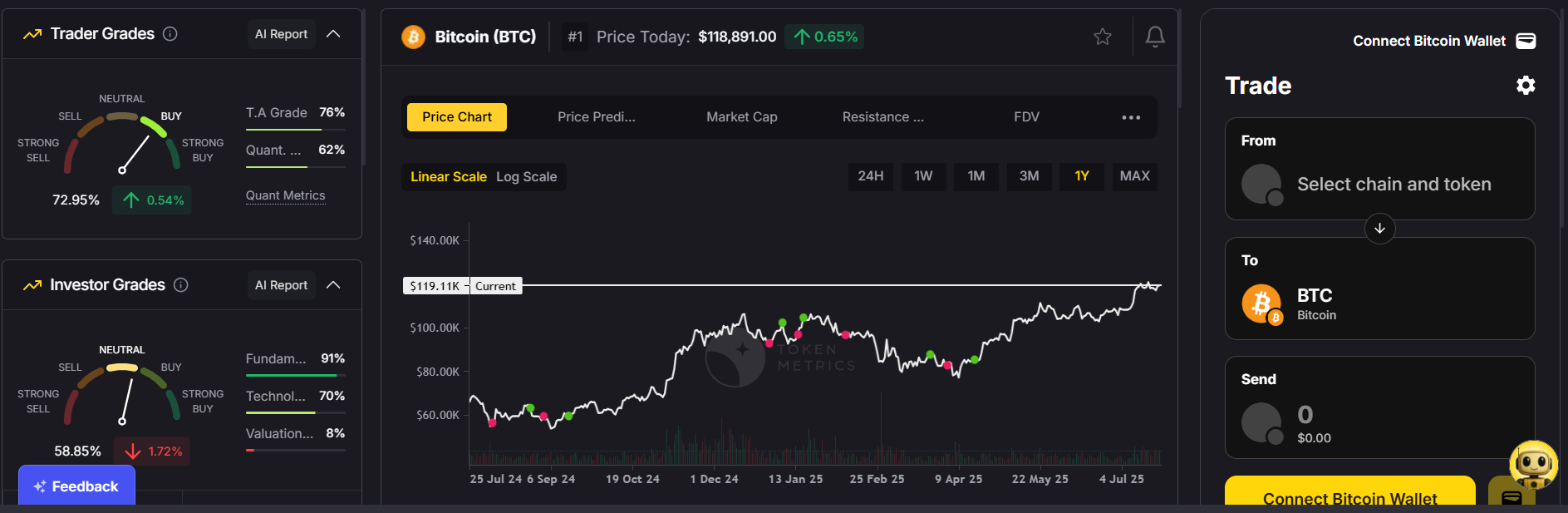
As of mid-2025, Bitcoin has demonstrated exceptional performance, exemplifying a strong Bitcoin season. Year-to-date, Bitcoin is up approximately 10%, outperforming nearly all major altcoins except XRP, which has gained over 12%. Meanwhile, Ethereum has declined by 30%, and altcoins such as LINK, DOGE, AVAX, and SHIB have all dropped more than 20%.

Bitcoin dominance (BTC.D) currently stands at about 64%, a high level that historically signals Bitcoin season conditions. A decline below 60% often marks the beginning of altcoin seasons, where capital shifts toward alternative cryptocurrencies. The sustained high dominance level in 2025 suggests that Bitcoin continues to lead the cryptocurrency market.

Unlike fiat currencies, which are issued and managed by a central bank, Bitcoin operates independently without central bank involvement. Analysts from institutions like Standard Chartered predict Bitcoin could reach $200,000 by the end of 2025, fueled by robust inflows into Bitcoin ETFs and favorable political developments, including the election of a pro-crypto US president. These factors contribute to Bitcoin’s sustained outperformance and elevated dominance.

Recent market indicators, such as the Altcoin Season Index dropping to 41, further confirm a dominant Bitcoin season within the cryptocurrency market. This dynamic underscores Bitcoin’s ability to reclaim market leadership when conditions favor the flagship digital currency.

Historical Context and Market Patterns

Understanding historical Bitcoin seasons provides valuable context for interpreting current market conditions and anticipating future trends. Bitcoin dominance has exhibited clear cyclical patterns throughout cryptocurrency market history, with periods of expansion and contraction correlating with broader market trends and investor sentiment. High volatility creates profit opportunities for day traders, making it a key factor in cryptocurrency trading strategies. Monitoring value changes in Bitcoin and altcoins helps traders identify market trends and optimal entry or exit points.

For example, during the 2017-2018 cycle, Bitcoin dominance fell from over 80% to below 40% as the ICO boom drove massive capital flows into altcoins. However, during the subsequent bear market, Bitcoin dominance recovered significantly as investors sought safety in the most established cryptocurrency. A similar pattern occurred during the 2020-2021 bull market, where Bitcoin initially led before altcoins took over in the later stages.

The 2022 bear market saw Bitcoin dominance rise again as altcoins suffered disproportionate losses. These historical precedents demonstrate that Bitcoin seasons often coincide with either early bull market phases or extended periods of market uncertainty and decline. Bitcoin’s perceived stability and growing institutional adoption make it the preferred choice during such conditions.

The current market dynamics in 2025 reflect these historical patterns. Strong institutional adoption through Bitcoin ETFs, combined with favorable regulatory developments, have created conditions that favor Bitcoin accumulation over altcoin speculation. This environment naturally leads to increased Bitcoin dominance and prolonged Bitcoin season conditions.

The Science Behind Bitcoin Dominance Calculations

Calculating Bitcoin dominance involves sophisticated methodologies to ensure accuracy and relevance for trading decisions. While the basic formula divides Bitcoin’s market capitalization by the total cryptocurrency market capitalization, selecting which assets to include in the denominator is crucial.

Most platforms exclude stablecoins, wrapped tokens, and derivative assets from total market cap calculations to provide a more accurate representation of genuine price appreciation dynamics. This approach ensures that Bitcoin dominance reflects actual capital allocation preferences rather than artificial inflation from pegged assets.

Different time frames offer varying insights into market trends. Daily dominance readings can be volatile and influenced by short-term market movements, whereas weekly and monthly averages provide more stable trend indicators. The 90-day rolling analysis used in Bitcoin Season Index calculations helps filter out noise while maintaining responsiveness to real market shifts.

Advanced platforms like Token Metrics incorporate these dominance metrics into comprehensive market analysis frameworks. By combining Bitcoin dominance data with technical indicators, on-chain metrics, and sentiment analysis, traders gain a nuanced understanding of market conditions and timing opportunities, enhancing their ability to trade crypto effectively. Blockchain technology records all transactions on a shared ledger, and transaction data is a key component of on-chain metrics, providing valuable insights for dominance calculations and broader market analysis. Market analysis and trend observation are critical components of successful day trading, further emphasizing the importance of these tools.

Strategic Trading Applications During Bitcoin Season

Bitcoin seasons present unique opportunities and challenges for cryptocurrency traders employing various strategies and time horizons. Properly positioning portfolios during these periods can significantly impact returns and risk management.

Momentum traders benefit from Bitcoin seasons by adopting a clear directional bias toward Bitcoin. During established Bitcoin seasons, traders often reduce altcoin exposure and increase Bitcoin allocation to capitalize on continued outperformance. This strategy is particularly effective when Bitcoin dominance is trending upward with strong volume confirmation.

Contrarian traders may view extreme Bitcoin dominance levels as accumulation opportunities for quality altcoins. When Bitcoin dominance reaches high levels, investing in fundamentally strong altcoins can offer asymmetric risk-reward profiles for patient investors. However, timing these contrarian positions requires careful analysis of multiple market indicators and a good understanding of price trends.

Portfolio rebalancing during Bitcoin seasons demands a dynamic approach that accounts for shifting market conditions. Traders must be prepared to act quickly when opportunities arise during Bitcoin seasons. AI-powered platforms like Token Metrics excel in this area by providing real-time portfolio optimization recommendations based on current market dynamics and individual risk tolerance.

Risk management is especially important during Bitcoin seasons, as altcoin volatility often increases during periods of underperformance. Proper position sizing, use of stop-loss orders, and diversification strategies help protect capital while maintaining exposure to potential trend reversals.

Token Metrics: Revolutionizing Bitcoin Season Analysis

The advent of artificial intelligence and advanced analytics platforms has transformed cryptocurrency trading, with Token Metrics leading this technological revolution. The platform’s sophisticated approach to Bitcoin dominance analysis and market cycle identification provides traders with unprecedented insights into optimal positioning strategies. In addition, Token Metrics gives users access to advanced analytics and real-time market intelligence, making it easier to enter and navigate financial markets.

Token Metrics’ AI-driven methodology integrates Bitcoin dominance data with over 80 different metrics per cryptocurrency, creating a multidimensional view of market conditions that far surpasses traditional analysis. This comprehensive approach enables traders to dive deeper into market trends, recognize patterns, and predict price movements more accurately.

The platform’s real-time analysis capabilities are particularly valuable during Bitcoin season transitions. Token Metrics’ AI systems can identify subtle shifts in market dynamics that may signal the end of Bitcoin seasons and the beginning of altcoin outperformance periods. Early detection of these inflection points provides significant advantages for active traders and portfolio managers.

Beyond dominance analysis, Token Metrics incorporates fundamental research, technical analysis, and sentiment metrics, ensuring that Bitcoin season insights are contextualized within broader market trends and individual cryptocurrency prospects. This holistic approach empowers traders to make informed decisions on when to buy and sell crypto assets.

Earning Rewards During Bitcoin Seasons

Earning rewards during Bitcoin seasons is a compelling prospect for both traders and investors navigating the dynamic cryptocurrency market. These periods, marked by heightened volatility and pronounced price movements, present unique opportunities to trade cryptocurrencies for substantial profits. To capitalize on these market trends, it’s essential to develop a good understanding of technical analysis and risk management, enabling informed decisions when buying and selling digital assets.

Traders can employ a variety of strategies to earn rewards during Bitcoin seasons. Day trading, for example, involves executing multiple trades within a single day to take advantage of short-term price fluctuations in the crypto market. Swing trading and position trading, on the other hand, focus on capturing larger price movements over days or weeks, allowing traders to benefit from broader market trends. Regardless of the approach, recognizing patterns and predicting price movements are crucial skills for maximizing profits.

Selecting a reliable crypto platform is equally important. Platforms that offer low fees and high liquidity empower traders to execute trades efficiently, minimizing costs and slippage. This efficiency is vital when trading popular coins like Bitcoin and other cryptocurrencies, as it allows for quick responses to market changes and optimal entry and exit points.

By staying attuned to market trends, leveraging technical analysis, and utilizing platforms with robust trading features, traders and investors can position themselves to earn rewards during Bitcoin seasons. The ability to adapt strategies to evolving market conditions and manage risks effectively is key to sustained success in the cryptocurrency market.

High Liquidity and Its Impact on Bitcoin Season Dynamics

High liquidity is a cornerstone of effective trading during Bitcoin seasons, profoundly shaping the dynamics of the cryptocurrency market. In essence, liquidity refers to how easily traders can buy and sell cryptocurrencies without causing significant price changes. When a crypto asset like Bitcoin enjoys high liquidity, it means there are ample buyers and sellers, resulting in a stable and efficient market environment.

This abundance of trading activity is especially beneficial during periods of intense price movements, as it allows traders to enter and exit positions swiftly and at predictable prices. High liquidity reduces the risk of slippage—the difference between the expected price of a trade and the actual executed price—ensuring that traders can execute their strategies with precision. This is particularly important for those relying on technical analysis, as stable markets provide more reliable signals and patterns to inform trading decisions.

Moreover, high liquidity supports the ability to earn rewards by enabling traders to capitalize on rapid market shifts without being hindered by large spreads or limited order book depth. It also enhances the overall trading experience, making it easier to manage risk and maximize profits, whether trading Bitcoin or other cryptocurrencies.

Understanding the impact of high liquidity on Bitcoin season dynamics empowers traders to make more informed decisions in the crypto market. By prioritizing assets and platforms that offer high liquidity, traders can navigate volatile periods with greater confidence, efficiently buy and sell assets, and optimize their trading outcomes.

Risk Management During Bitcoin Seasons

Effective risk management during Bitcoin seasons involves understanding both the opportunities and limitations inherent in these market conditions. While Bitcoin seasons can provide a clear directional bias, they also introduce specific risks that traders must address. Trading during these periods can be particularly risky due to heightened volatility and rapid market shifts. Traders should set clear boundaries for acceptable losses to ensure long-term success in navigating these volatile periods.

Concentration risk is a primary concern during extended Bitcoin seasons. Traders heavily weighted in Bitcoin may experience strong short-term gains but face significant downside if market conditions shift abruptly. Balancing concentration with diversification is key to managing this risk.

Timing risk also presents challenges. Cryptocurrency markets are cyclical, and Bitcoin seasons eventually end, often with sudden and dramatic reversals. Developing systems to recognize potential inflection points and adjust positions accordingly is critical for preserving gains.

Liquidity considerations become important during Bitcoin season transitions. As market conditions change, altcoin liquidity may decrease, making it more difficult and costly to adjust positions. Planning exit strategies during periods of high liquidity helps mitigate this risk.

Token Metrics addresses these challenges by providing real-time risk assessment tools and portfolio management features. These capabilities help traders maintain an appropriate balance between capitalizing on Bitcoin season opportunities and managing associated risks effectively.

Technology Integration and AI-Powered Analysis

The integration of artificial intelligence into Bitcoin season analysis marks a fundamental shift in how traders approach the cryptocurrency market. While traditional methods remain valuable, AI systems offer unmatched speed and accuracy in processing vast data sets necessary for optimal decision-making.

Token Metrics exemplifies this evolution by combining traditional dominance analysis with advanced machine learning algorithms. Its AI continuously analyzes market data, identifying subtle patterns and correlations that human analysts might overlook or process too slowly to capitalize on.

Machine learning models can detect early changes in Bitcoin dominance trends that precede major market shifts. These early warning signals provide traders with crucial timing advantages, enhancing both returns and risk management.

Additionally, Token Metrics leverages natural language processing to analyze news sentiment, social media trends, and regulatory developments that influence Bitcoin dominance cycles. This comprehensive approach ensures that Bitcoin season analysis incorporates all relevant market factors, including those affecting price trends and volatility.

Future Outlook: Bitcoin Seasons in an Evolving Market

The cryptocurrency market is rapidly evolving, driven by institutional adoption, regulatory clarity, and technological innovation. These factors will likely influence the dynamics of Bitcoin seasons and dominance cycles in the coming years. Unlike traditional markets, which operate within limited hours, cryptocurrency trading is available 24/7, offering continuous trading opportunities and flexibility for investors.

Institutional adoption through Bitcoin ETFs and corporate treasury allocations may lead to more stable and extended Bitcoin seasons. As traditional financial institutions increase their Bitcoin exposure, dominance patterns may become less volatile and more predictable, creating new trading opportunities and challenges.

Regulatory clarity in major markets could further strengthen Bitcoin’s position relative to altcoins, especially if regulations favor established cryptocurrencies over newer, less tested alternatives. This regulatory preference may extend Bitcoin seasons and elevate average dominance levels.

Technological advancements in the Bitcoin ecosystem, such as the growth of the Lightning Network and potential smart contract capabilities, could also influence dominance dynamics. Enhanced functionality may attract capital that might otherwise flow to altcoins with more advanced features.

Advanced Analytics and Market Intelligence

The sophistication of Bitcoin season analysis continues to improve through enhanced data collection, processing capabilities, and analytical methodologies. Platforms like Token Metrics leverage these advancements to provide traders with increasingly accurate and actionable market intelligence.

On-chain analysis has become particularly valuable for identifying Bitcoin seasons. Metrics such as exchange flows, wallet activity, and transaction patterns offer insights into institutional and retail behavior that complement traditional dominance calculations.

Cross-market correlation analysis helps identify global factors influencing Bitcoin seasons. Understanding relationships between Bitcoin dominance and traditional financial markets, commodities, and fiat currencies like the US dollar provides additional context for market dynamics. Fiat currency refers to government-issued money, such as the US dollar, which is not backed by a physical commodity and is commonly used as a benchmark in market analysis.

Sentiment analysis through social media monitoring, news analysis, and options market data offers leading indicators for potential Bitcoin season transitions. These alternative data sources often provide early signals before traditional metrics reflect changing market conditions.

Conclusion

The Bitcoin Season Index and associated dominance metrics are essential tools for navigating the complex and dynamic cryptocurrency market. Recognizing when Bitcoin is likely to outperform altcoins enables traders and investors to optimize portfolio allocation and timing decisions for maximum profits and effective risk management. Successful crypto trading also requires careful investment planning and a clear understanding of the potential to make or lose money in this volatile environment.

Success in cryptocurrency trading during Bitcoin seasons requires more than just understanding dominance metrics; it demands sophisticated analytical tools and real-time data processing capabilities. Token Metrics represents the pinnacle of AI-driven cryptocurrency analysis, offering traders the advanced insights necessary to capitalize on Bitcoin season opportunities while managing inherent risks.

By integrating artificial intelligence, machine learning, and comprehensive market analysis, traders gain unprecedented opportunities to recognize patterns, predict price movements, and execute trades on optimal entry points. As the crypto market matures, combining proven indicators like Bitcoin dominance with cutting-edge analytical platforms will be increasingly important for sustained trading success.

Whether you are a professional trader, institutional investor, or individual participant in the crypto market, leveraging Bitcoin season analysis supported by advanced tools like Token Metrics is crucial for navigating the rewarding yet volatile world of cryptocurrency trading. Embrace your crypto journey by leveraging advanced tools and analytics to improve your trading outcomes. The future belongs to those who can blend traditional market wisdom with modern technology to capture the significant opportunities Bitcoin seasons provide while effectively managing risk.

Choose from Platinum, Gold, and Silver packages
Reach with 25–30% open rates and 0.5–1% CTR
Craft your own custom ad—from banners to tailored copy
Perfect for Crypto Exchanges, SaaS Tools, DeFi, and AI Products