





What Languages Are Used for Smart Contract Development?
%201.svg)
%201.svg)
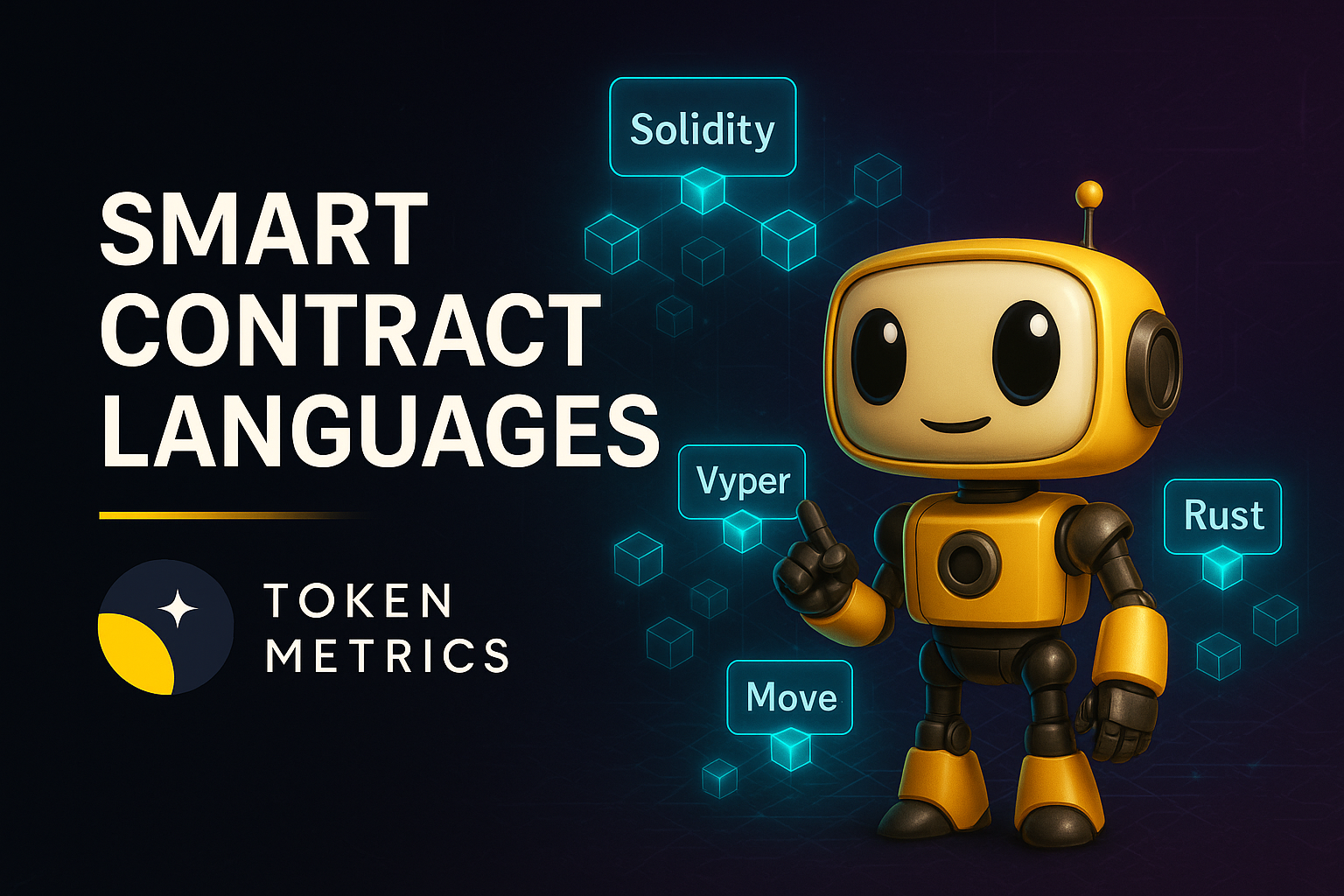

Smart contracts have revolutionized blockchain technology by enabling self-executing agreements that automatically enforce terms without intermediaries. As decentralized applications (dApps) continue to gain widespread adoption in 2025, understanding the programming languages behind these powerful tools becomes essential for developers, investors, and blockchain enthusiasts alike.
Understanding Smart Contract Programming
Smart contracts are computer programs stored on blockchain networks that execute automatically when predetermined conditions are met. Unlike traditional contracts requiring lawyers, banks, or notaries, smart contracts eliminate intermediaries, reducing costs, delays, and human error. However, their immutable nature means vulnerabilities cannot be patched post-deployment, making language choice and security paramount.
The blockchain ecosystem has evolved significantly, with multiple specialized programming languages emerging to address unique challenges like security, gas efficiency, and on-chain execution. While traditional languages like Python and JavaScript excel in conventional software development, blockchain requires purpose-built languages optimized for decentralized environments.
Solidity: The Industry Standard
Solidity remains the most widely used smart contract programming language in 2025, primarily designed for the Ethereum Virtual Machine (EVM) and EVM-compatible blockchains. Created specifically for blockchain applications, Solidity has become the de facto standard for smart contract development.
Solidity is a high-level, statically-typed language with syntax similar to JavaScript, making it accessible for developers transitioning from traditional web development. Its object-oriented approach supports inheritance, libraries, and complex user-defined types, providing developers with powerful tools for creating sophisticated decentralized applications.
The Solidity Compiler v0.8.30 was recently released as a maintenance release in preparation for the Pectra Ethereum network upgrade scheduled for May 7, 2025, demonstrating the language's continued evolution and strong community support.
The language's extensive ecosystem includes comprehensive documentation, numerous learning resources, and a massive developer community. Major projects like Uniswap, Aave, and OpenSea are built using Solidity, solidifying its position as the go-to language for Ethereum-based development.
Vyper: Security-First Alternative
Vyper is the second most widely used Web3 programming language, featuring Python-like syntax with strong typing and efficient bytecode generation. Designed as a simpler, more secure alternative to Solidity, Vyper prioritizes code readability and auditability.
Vyper deliberately eliminates complex features like function overloading and inheritance to reduce attack surfaces and enhance security. While this security-first approach requires developers to work around certain limitations, it significantly minimizes unexpected behaviors and vulnerabilities.
Vyper's clean, concise syntax appeals to Python developers entering the Web3 space, though its smaller ecosystem and fewer features compared to Solidity mean it has less widespread adoption. However, for projects where security and code clarity are paramount, Vyper presents an excellent choice.
Rust: High-Performance Blockchain Development
Rust has emerged as the primary language for Solana blockchain development, known for its memory safety, performance, and efficiency. Solana processes over 65,000 transactions per second in 2025, requiring programs that deliver exceptional efficiency and security.
Rust's unique ownership model ensures memory safety without garbage collection, making it both fast and secure for blockchain applications. Beyond Solana, Rust powers other major blockchain projects including Polkadot's Substrate framework, Near Protocol, and Elrond.
The language's systems-level capabilities make it ideal for blockchains requiring high throughput and low latency. While Rust has a steeper learning curve than Solidity, its performance advantages and growing ecosystem make it increasingly popular among blockchain developers.
Move: Asset-Oriented Programming
Move is a revolutionary smart contract language originally developed for the Diem blockchain, designed specifically around asset ownership and transfers. The language provides first-class abstractions for assets, making programming safer and more efficient.
Move's innovative approach treats digital assets as first-class citizens in the programming model, providing built-in safety guarantees around ownership and scarcity similar to physical assets. The language enables programmable transaction blocks that can call up to 1,024 separate Move functions in a single transaction, significantly improving gas efficiency and code simplicity.
Currently powering blockchains like Sui and Aptos, Move represents a paradigm shift in how developers think about asset management and smart contract security.
Emerging Smart Contract Languages
Tact is designed specifically for TON blockchain development, offering simple, intuitive syntax optimized for performance and resource utilization. Its clean design reduces smart contract development complexity while maintaining efficiency.
Clarity is a non-Turing-complete programming language introduced for the Stacks blockchain, designed to prevent various smart contract hacks through its limited computational model. While less flexible than Turing-complete languages, this approach enhances security.
Yul and Yul+ are intermediate languages for Ethereum that translate straightforwardly to bytecode, excelling at optimizing smart contracts and reducing gas costs. Yul+ extends Yul with additional features for advanced developers seeking maximum performance.
Choosing the Right Language
When selecting a smart contract programming language, developers should consider several critical factors:
- Security Features: Languages must prioritize type safety, memory management, and built-in protective measures to prevent vulnerabilities that could lead to exploits.
- Platform Compatibility: Different blockchains support different languages. Ethereum and EVM-compatible chains use Solidity, while Solana requires Rust.
- Performance Requirements: High-throughput applications benefit from languages like Rust and Move, while standard dApps may perform well with Solidity.
- Developer Experience: Consider your existing programming knowledge and the availability of learning resources, documentation, and community support.
- Ecosystem Maturity: Established languages like Solidity offer more libraries, tools, and developer support compared to newer alternatives.
Making Informed Investment Decisions with Token Metrics
As smart contract development evolves across multiple blockchains and programming languages, staying informed about the crypto ecosystem becomes increasingly complex. This is where Token Metrics emerges as a game-changing platform for traders and investors.
Discover Crypto Gems with Token Metrics AI
Token Metrics uses AI-powered analysis to help you uncover profitable opportunities in the crypto market. Get Started For Free
Token Metrics is an AI-powered cryptocurrency analytics and trading intelligence platform that provides data-driven insights, trading signals, and research tools. The platform consolidates research, portfolio management, and real-time analytics into a comprehensive solution for navigating the volatile crypto market.
Token Metrics delivers AI ratings (0-100 Trader and Investor Grades), automated index portfolios, smart contract audits, risk flags, and an AI chatbot agent for instant token research. In March 2025, Token Metrics launched integrated on-chain trading, transforming the platform into an end-to-end solution connecting research with execution.
Whether you're evaluating projects built on Ethereum with Solidity, Solana programs written in Rust, or emerging Move-based protocols, Token Metrics provides the analytical depth needed to make informed investment decisions. The platform's AI-driven approach processes vast datasets instantaneously, identifies market trends before they materialize, and offers customizable alerts to help traders respond to opportunities in real-time.
The Future of Smart Contract Development
The smart contract landscape continues to evolve rapidly in 2025. WebAssembly (Wasm) is enabling developers to write smart contracts in mainstream languages like JavaScript, TypeScript, and Python, potentially lowering barriers to entry for blockchain development.
As the industry matures, we're seeing increased focus on security, formal verification, and developer tooling. Languages like Vyper and Move demonstrate how language design can proactively prevent entire classes of vulnerabilities. Meanwhile, established languages like Solidity continue innovating with regular updates and improvements.
For developers entering the space, starting with Solidity provides access to the largest ecosystem and most learning resources. Those interested in high-performance chains should explore Rust for Solana development. Python developers might find Vyper's familiar syntax appealing, while those seeking cutting-edge asset-oriented programming can investigate Move.
Conclusion
Smart contract programming languages are the foundation of the blockchain revolution, each offering unique strengths tailored to specific use cases and platforms. From Solidity's industry dominance to Rust's high-performance capabilities and Move's innovative asset model, developers have more options than ever for building secure, efficient decentralized applications.
As the ecosystem continues expanding, staying informed about both technical developments and market opportunities becomes essential. Platforms like Token Metrics provide the analytical tools needed to navigate this complex landscape, combining AI-powered insights with comprehensive data to help traders and investors make smarter decisions in the dynamic world of cryptocurrency.
Whether you're a developer choosing your next language to learn or an investor evaluating blockchain projects, understanding the programming foundations behind smart contracts provides crucial context for participating in the decentralized future being built today.
AI Agents in Minutes, Not Months

.svg)


%201.svg)


.png)











.svg)
No Credit Card Required


Online Payment


SSL Encrypted
.png)
Token Metrics Media LLC is a regular publication of information, analysis, and commentary focused especially on blockchain technology and business, cryptocurrency, blockchain-based tokens, market trends, and trading strategies.
Token Metrics Media LLC does not provide individually tailored investment advice and does not take a subscriber’s or anyone’s personal circumstances into consideration when discussing investments; nor is Token Metrics Advisers LLC registered as an investment adviser or broker-dealer in any jurisdiction.
Information contained herein is not an offer or solicitation to buy, hold, or sell any security. The Token Metrics team has advised and invested in many blockchain companies. A complete list of their advisory roles and current holdings can be viewed here: https://tokenmetrics.com/disclosures.html/
Token Metrics Media LLC relies on information from various sources believed to be reliable, including clients and third parties, but cannot guarantee the accuracy and completeness of that information. Additionally, Token Metrics Media LLC does not provide tax advice, and investors are encouraged to consult with their personal tax advisors.
All investing involves risk, including the possible loss of money you invest, and past performance does not guarantee future performance. Ratings and price predictions are provided for informational and illustrative purposes, and may not reflect actual future performance.