Back to blog
Research

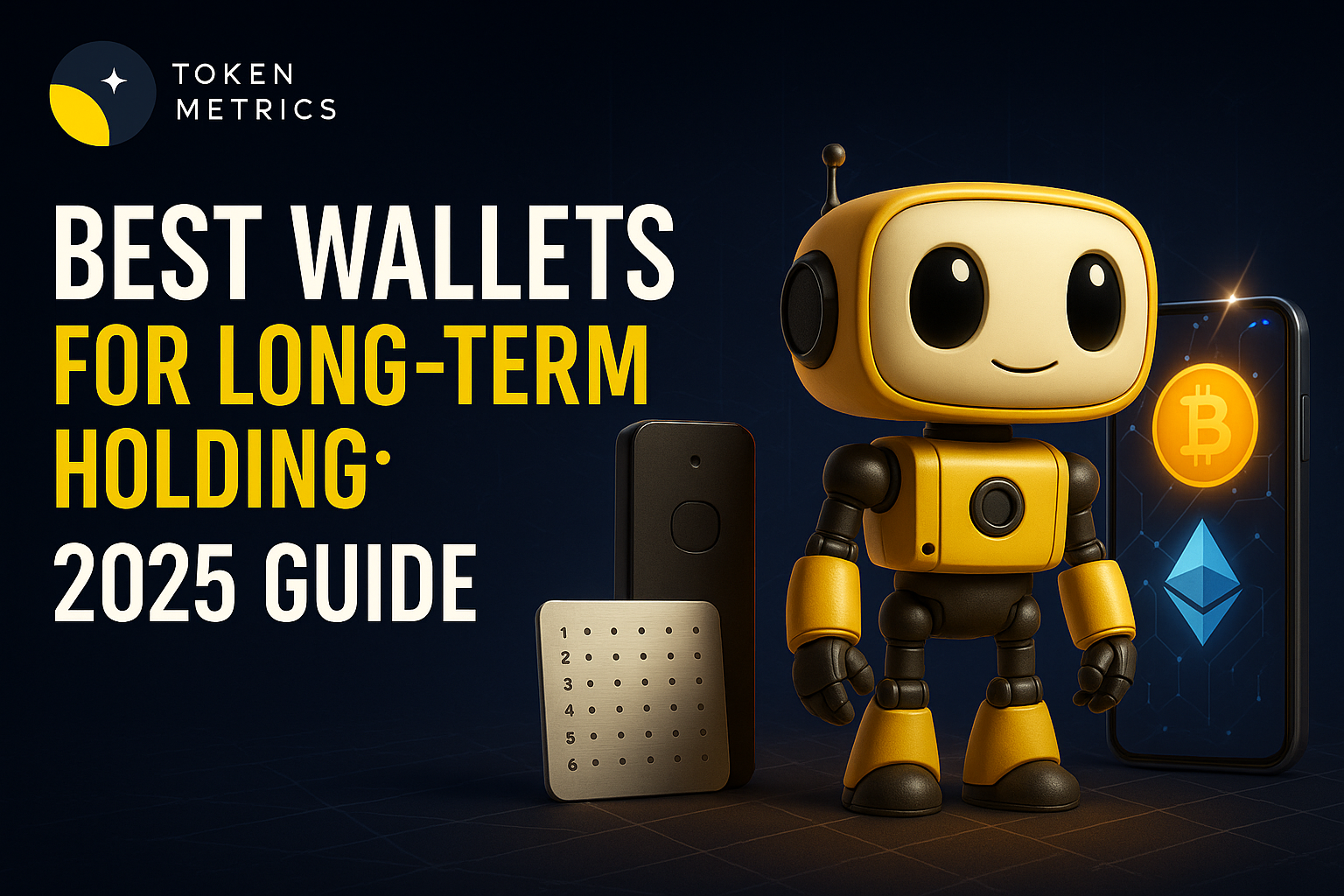
What Wallet Should I Use for Long-Term Holding? Complete 2025 Guide

Discover essential wallets and security practices for long-term crypto holding in 2025. Learn how to protect your investments with hardware and cold storage solutions.
Token Metrics Team
14 min read
Want Smarter Crypto Picks—Free?
See unbiased Token Metrics Ratings for BTC, ETH, and top alts.
Thank you! Your submission has been received!
Oops! Something went wrong while submitting the form.
 No credit card | 1-click unsubscribe

Choosing the right cryptocurrency wallet for long-term holding is one of the most critical decisions for serious investors. With a 2025 Gemini survey revealing that 24% of adults now hold crypto—up from 21% in 2024—and active stablecoin wallets jumping 53% year-over-year to reach 30 million, the need for secure, reliable storage solutions has never been greater.

For long-term holders practicing the HODL strategy (Hold On for Dear Life), security trumps convenience. Bitcoin was worth $0.0009 when it first started trading in 2009; today, it approaches $90,000. Protecting substantial gains accumulated over years requires understanding wallet types, security features, and best practices that distinguish casual users from serious investors.

This comprehensive guide explores the best wallets for long-term cryptocurrency storage in 2025, examining hardware wallets, security considerations, and how to combine proper custody with sophisticated analytics from platforms like Token Metrics to maximize your investment strategy.

Understanding Cryptocurrency Wallets

Despite the name, cryptocurrency wallets don't actually store cryptocurrency. What they hold are digital codes known as "keys" that grant access to your crypto on the blockchain—a type of distributed ledger functioning as an online record of transactions. When someone sends you cryptocurrency, they're updating the blockchain to show that ownership of a certain amount has been assigned to your wallet's address.

The Two Keys: Public and Private

Wallets rely on two critical pieces of information:

  • Public Key: A string of letters and numbers automatically generated by the wallet provider, functioning like a bank account number. For example: B1fpARq39i7L822ywJ55xgV614. This can be shared freely to receive funds without compromising security.
  • Private Key: Another string of numbers and letters that only the wallet owner should know. This key signs transactions and proves ownership. Losing your private key means losing access to your cryptocurrency permanently, with no customer service or password reset option available.

The crypto community's mantra "Not your keys, not your crypto" emphasizes that if your cryptocurrency is stored on an exchange, you're not the true owner. You're trusting a third party with custody, exposing yourself to platform insolvency, account freezes, security breaches, or bankruptcy—as crypto investors discovered when exchanges like BlockFi and Voyager filed for bankruptcy in recent years.

Hot Wallets vs. Cold Wallets: Understanding the Difference

Cryptocurrency wallets fall into two fundamental categories, each serving different investment needs and security requirements.

Hot Wallets: Internet-Connected Convenience

Hot wallets are software-based solutions that connect to the internet, offering convenience and accessibility for managing cryptocurrencies. These include mobile apps, desktop software, and browser extensions that facilitate daily transactions and DeFi interactions.

  • Advantages of Hot Wallets:
  • Usually free to download and use
  • Easy access for frequent transactions
  • Direct integration with DeFi protocols and dApps
  • Quick setup without hardware purchases
  • Support for hundreds or thousands of cryptocurrencies
  • Often include built-in exchange features
  • Disadvantages of Hot Wallets:
  • More vulnerable to hackers and online threats
  • Require trust in software developers
  • Susceptible to phishing attacks and malware
  • Private keys potentially exposed to internet-connected devices
  • Less suitable for large holdings or long-term storage

Hot wallets work well for active traders managing smaller amounts or funds needed for regular transactions, but they're not ideal for substantial long-term holdings where security must be paramount.

Cold Wallets: Offline Maximum Security

Cold wallets are hardware devices disconnected from the internet that help store sensitive crypto information offline. These physical gadgets provide maximum protection by keeping private keys completely isolated from online threats, making them immune to remote hacking attempts.

  • Advantages of Cold Wallets:
  • Immune to online hacks and malware
  • Ideal for long-term storage of substantial holdings
  • Physical confirmation required for all transactions
  • Private keys never exposed to internet-connected devices
  • Multiple backup and recovery options
  • Suitable for the HODL strategy
  • Disadvantages of Cold Wallets:
  • Upfront purchase cost ranging from $49 to $500
  • Less convenient for DeFi transactions and frequent trading
  • Physical device can be lost or damaged
  • Recovery depends entirely on seed phrase backups
  • Learning curve for first-time users

For long-term holding, cold wallets represent the gold standard. They provide the security foundation necessary for protecting significant cryptocurrency investments over years or decades.

Top Hardware Wallets for Long-Term Holding in 2025

Ledger: Industry-Leading Security

Ledger devices, particularly the Ledger Nano X and Ledger Stax, represent the most popular hardware wallet choice globally. The company pioneered consumer-friendly cold storage with the Ledger Nano in 2016 and continues leading through innovation and security.

  • Key Features:
  • Secure Element chip providing bank-grade security
  • Support for over 5,500 cryptocurrencies and tokens
  • Bluetooth connectivity for mobile use (Ledger Nano X)
  • Touchscreen interface (Ledger Stax)
  • Ledger Live app for portfolio management
  • NFT storage and display capabilities
  • Integration with major DeFi platforms

Ideal For: Investors holding diverse portfolios across multiple blockchains who want the most comprehensive asset support with proven security track record.

Pricing: Ledger Nano S Plus starts at $79, Nano X at $149, Stax at $279

Trezor: Open-Source Transparency

Trezor, launched in 2014, was the first hardware wallet ever created. The company maintains commitment to open-source firmware, allowing security experts to audit code and verify there are no hidden vulnerabilities or backdoors.

  • Key Features:
  • Fully open-source firmware
  • Touchscreen interface (Trezor Model T)
  • Support for thousands of cryptocurrencies
  • Password manager functionality
  • Shamir Backup for seed phrase recovery
  • Integration with third-party wallets like MetaMask
  • No Bluetooth to eliminate wireless attack vectors

Ideal For: Privacy-focused investors who prioritize transparency and want to verify security through open-source code audits.

Pricing: Trezor Model One starts at $69, Model T at $219

Coldcard: Bitcoin Maximalist's Choice

Coldcard MK4 is a Bitcoin-only wallet designed for advanced users who prioritize privacy and security above all else. It operates completely offline with air-gapped transaction signing, meaning it never connects to computers or phones directly.

  • Key Features:
  • Bitcoin-only focus for maximum security optimization
  • Completely air-gapped operation
  • Open-source firmware
  • Advanced security features like duress PINs
  • SD card for transaction signing without USB
  • Encrypted seed phrase storage
  • No wireless connectivity whatsoever

Ideal For: Bitcoin maximalists and advanced users who want absolute maximum security and are comfortable with technical complexity.

Pricing: Approximately $150

Tangem: Card-Based Simplicity

Tangem offers a unique approach with NFC card-based wallets that operate without screens, batteries, or charging requirements. The cards contain secure element chips storing private keys and sign transactions via smartphone NFC.

  • Key Features:
  • Credit card form factor
  • No batteries or charging needed
  • Supports major cryptocurrencies
  • Multiple card backup system
  • Simple tap-to-sign transactions
  • Extremely durable construction
  • No software updates required

Ideal For: Long-term holders wanting simplicity and physical durability without dealing with electronic devices, screens, or batteries.

Pricing: 2-card set for $50, 3-card set for $70

Material Bitcoin: Ultra-Durable Physical Storage

Material Bitcoin represents the most extreme approach to cold storage—a physical wallet with no electronic components whatsoever. Made from AISI 304L stainless steel, it stores Bitcoin offline on virtually indestructible material resistant to fire, water, and physical damage.

  • Key Features:
  • Zero electronic components (immune to all cyber threats)
  • Fire, water, and shock resistant stainless steel
  • No software updates or compatibility issues
  • Optional seed phrase backup card
  • Extremely simple to use
  • Permanent storage solution
  • Limited to Bitcoin, Ethereum, or USDT

Ideal For: Long-term investors seeking the most durable, hack-proof cold wallet with absolute zero electronic vulnerability and no technical complexity.

Pricing: Varies by configuration

Essential Security Practices for Long-Term Holding

Selecting the right hardware wallet is only the first step. Implementing proper security practices ensures your holdings remain protected over years or decades.

Secure Your Seed Phrase

  • Never store seed phrases digitally (photos, files, cloud storage)
  • Write on durable materials like metal plates designed for seed storage
  • Create multiple physical backups stored in separate secure locations
  • Never share your seed phrase with anyone, ever
  • Consider using Shamir Backup to split seed phrases across multiple locations
  • Protect from fire, water, and physical damage

If your hardware wallet is lost, stolen, or damaged, you can purchase a new device and restore access using your seed phrase. Without the seed phrase backup, your crypto is lost permanently.

Enable All Security Features

  • PIN Protection: Set strong PINs that aren't easily guessable. Hardware wallets typically wipe themselves after several incorrect PIN attempts, protecting against theft.
  • Passphrase (25th Word): Many wallets support optional passphrases adding additional words to seed phrases, creating hidden wallets that don't appear without the passphrase.
  • Firmware Updates: Keep wallet firmware updated with latest security patches. Verify updates come from official sources only.
  • Duress Features: Some wallets like Coldcard allow duress PINs that open decoy wallets with small amounts, protecting main holdings if forced to unlock.

Verify Wallet Authenticity

  • Only purchase hardware wallets directly from manufacturers or authorized resellers.
  • Never buy second-hand devices or from marketplaces like eBay or Amazon where tampering is possible.
  • Check for tamper-evident packaging
  • Verify device hasn't been initialized previously
  • Confirm device generates new seed phrases (never comes with pre-generated phrases)
  • Check holographic seals and security features specific to each brand

Practice Operational Security

  • Use Dedicated Devices: Consider using dedicated computers or phones for crypto management that aren't used for general browsing or downloading software.
  • Verify Addresses: Always verify receiving addresses on the hardware wallet screen itself before confirming transactions. Malware can replace addresses in software, but hardware wallets display authentic addresses.
  • Test Small Amounts First: When setting up new wallets or using new features, test with small amounts before transferring substantial holdings.
  • Avoid Public Wi-Fi: Never access crypto wallets or exchanges over public Wi-Fi networks where traffic can be intercepted.

Plan for Inheritance

Long-term holding requires planning for worst-case scenarios. If something happens to you, how will your heirs access your cryptocurrency?

  • Inheritance Strategies: Document wallet existence and types for executors
  • Store seed phrases in secure locations accessible to trusted individuals after your death
  • Consider using services like Casa that offer key splitting and inheritance protocols
  • Provide clear instructions without compromising security during your lifetime
  • Regularly review and update plans as holdings change

Combining Cold Storage with Active Portfolio Management

Long-term holding doesn't mean "set and forget" entirely. Successful investors combine secure cold storage with active portfolio monitoring and strategic decision-making.

Leveraging Token Metrics for HODL Strategy

While your cryptocurrency sits safely in cold storage, platforms like Token Metrics provide the intelligence necessary to make informed holding decisions without compromising security. Token Metrics has established itself as a leading crypto analytics platform, offering tools essential for long-term investors.

  • Investor Grade Analysis for Hold Decisions: Token Metrics assigns each cryptocurrency an Investor Grade based on fundamentals, development activity, code quality, team credibility, and adoption metrics. This scoring helps identify which projects merit continued holding versus those requiring portfolio rebalancing.
  • Real-Time Monitoring Without Compromising Security: Token Metrics monitors thousands of cryptocurrencies continuously, providing real-time alerts about significant developments—code updates, partnership announcements, security incidents, or regulatory changes—without requiring you to connect cold wallets to exchanges. This separation between monitoring and custody ensures you stay informed without exposing private keys.
  • Portfolio Tracking Across Cold Storage: Token Metrics provides portfolio tracking, allowing you to monitor the value of holdings stored in cold wallets without exposing private keys. By inputting public wallet addresses or tracking positions manually, you maintain oversight of your portfolio performance.
  • Market Intelligence for Accumulation Timing: Token Metrics' AI analytics identify optimal entry points for dollar-cost averaging or lump-sum additions, analyzing market cycles, sentiment, on-chain metrics, and technical patterns to maximize purchase opportunities during market dips.
  • Risk Assessment and Project Monitoring: Token Metrics evaluates project health, spotting early signs of decline or security concerns, enabling proactive exit decisions to protect long-term capital.
  • Tax Optimization and Reporting: Token Metrics integrates with tax tools to maintain accurate records, aiding in tax planning and long-term capital gains management.

Multi-Wallet Strategy for Different Needs

Many investors employ multiple wallet types for different purposes, optimizing security and functionality.

  • Tier 1 - Cold Storage (90% of Holdings): Hardware wallets holding the majority of long-term investments, maximum security.
  • Tier 2 - Hot Wallet (8% of Holdings): Software wallets for moderate transactions, DeFi activities, or active trading.
  • Tier 3 - Exchange Wallet (2% of Holdings): Small amounts on exchanges for immediate trading or liquidity.

This approach protects the bulk of holdings while maintaining operational flexibility.

Best Practices for Different Investor Profiles

Strategies vary based on experience, portfolio size, and risk tolerance:

  • Crypto Beginners: Start simple with trusted brands like Ledger Nano S Plus or Trezor Model One. Focus on Bitcoin and Ethereum, practice seed backup, and transfer small amounts initially.
  • Intermediate Investors: Upgrade to Ledger Nano X or Trezor Model T, implement geographically separated backups, use platforms like Token Metrics, and develop multi-wallet strategies.
  • Advanced Users and Maximalists: Consider Coldcard for Bitcoin-exclusive security, implement multisig or Shamir Backup, verify open-source firmware, and plan inheritance securely.
  • High-Net-Worth: Use multiple hardware wallets with geographical distribution, professional custody services, regular security reviews, and secure storage locations like safes or safety deposit boxes.

The Future of Long-Term Crypto Storage

Wallet technology continues evolving, with several innovative trends:

  • Account Abstraction and Smart Wallets: Enable social recovery, gasless transactions, programmable security rules—making self-custody more accessible with maintained security.
  • Multi-Party Computation (MPC): Splits private keys across multiple parties or devices, eliminating single points of failure while maintaining control.
  • Biometric Security: Incorporating fingerprint, facial recognition, and other biometric methods for additional layers of protection.
  • Cross-Chain Compatibility: Support for multiple ecosystems within a single wallet, facilitating diversification over time.

Conclusion: Securing Your Crypto Future

For long-term cryptocurrency holding, cold wallets—especially hardware wallets—offer the security needed to safeguard substantial investments over the years. The small upfront cost ranging from $50 to $300 is a worthwhile investment considering the value they protect and the peace of mind they provide.

The best wallet depends on your specific needs: Ledger provides broad support, Trezor offers transparency, Coldcard delivers maximum Bitcoin security, while alternatives like Tangem or Material Bitcoin provide unique advantages. Regardless of choice, implementing thorough security measures—secure seed phrase storage, enabling all features, verifying authenticity, operational security practices—is crucial.

Coupling cold storage with platforms like Token Metrics allows long-term holders to monitor portfolios, make data-driven decisions, and optimize strategies while keeping private keys offline and secured from online threats. This blend of robust security and insightful analytics positions investors for potentially prosperous and protected long-term crypto journeys.

As the journey of Bitcoin from fractions of a penny to nearly $90,000 illustrates, disciplined long-term holding combined with sound security practices can unlock significant value. Protecting holdings with the right wallet choices and security protocols ensures that investors benefit from crypto’s upside while minimizing vulnerabilities that could lead to loss or theft.

The crypto space offers tremendous opportunities for those who navigate carefully. Selecting suitable cold storage solutions, applying comprehensive security measures, leveraging advanced analytics from Token Metrics, and maintaining a long-term perspective are key to participating safely and profitably in crypto’s evolving landscape.

Frequently Asked Questions

What are the main differences between hot wallets and cold wallets?

Hot wallets are internet-connected software wallets designed for convenience and frequent trading, but are more vulnerable to hacks and malware. Cold wallets are offline hardware devices or physical storage, significantly more secure and ideal for long-term, large holdings.

Which hardware wallet is best for long-term holding?

Ledger wallets (Nano X, Stax) offer broad crypto support, Trezor emphasizes open-source transparency, Coldcard is best for advanced Bitcoin users, Tangem offers card-based simplicity, and Material Bitcoin is unmatched for physical durability. Choose based on supported coins, transparency, and user comfort.

How do I recover funds if my hardware wallet is lost or damaged?

Use your recovery seed phrase to reinitialize your wallet on a new device. Without the backup seed phrase, crypto funds are lost permanently, so always store multiple physical copies in secure locations.

Is it safe to use a hot wallet for long-term storage?

Hot wallets are only as secure as your devices. They are convenient for small, frequent transactions but should not be used for significant long-term holdings due to their exposure to online threats.

Can I store NFTs and altcoins in a hardware wallet?

Most modern hardware wallets support thousands of cryptocurrencies and can store NFTs. Ledger and Trezor are particularly strong in this area. Always check updated compatibility lists before purchasing.

What should I do to protect my wallet’s seed phrase?

Never keep your seed phrase digitally or online. Write it on a metal or durable material, make multiple copies, store them in secure, geographically separated locations, and never share it, ever.

How does Token Metrics help cold storage investors?

Token Metrics allows you to track your cold storage portfolios by inputting public addresses. You receive investor-grade analytics, real-time alerts on your holdings, and never expose your private keys or compromise your wallet’s offline status.

How should I plan for crypto inheritance?

Document all wallet types, locations, and access information securely. Leave clear instructions for trusted heirs or executors and consider inheritance-specific services or protocols. Update plans regularly as your portfolio evolves.

Build Smarter Crypto Apps &
AI Agents in Minutes, Not Months
Real-time prices, trading signals, and on-chain insights all from one powerful API.
Grab a Free API Key
About Token Metrics
Token Metrics: AI-powered crypto research and ratings platform. We help investors make smarter decisions with unbiased Token Metrics Ratings, on-chain analytics, and editor-curated “Top 10” guides. Our platform distills thousands of data points into clear scores, trends, and alerts you can act on.
30 Employees
analysts, data scientists, and crypto engineers
Daily Briefings
concise market insights and “Top Picks”
Transparent & Compliant
Sponsored ≠ Ratings; research remains independent
Want Smarter Crypto Picks—Free?
See unbiased Token Metrics Ratings for BTC, ETH, and top alts.
Thank you! Your submission has been received!
Oops! Something went wrong while submitting the form.
 No credit card | 1-click unsubscribe
Token Metrics Team
Token Metrics Team

Recent Posts

Research

The Beginner's Guide to Token Metrics AI Indices: Start Investing Smarter in 2025

Token Metrics Team
8 min

If you’re new to cryptocurrency investing, feeling overwhelmed is common. With more than 6,000 cryptocurrencies, a multitude of trading platforms, and round-the-clock markets, knowing where to begin can seem daunting.

Fortunately, you don’t need to master blockchain or spend countless hours analyzing charts. Token Metrics AI indices offer a straightforward, research-driven entry point for beginners, removing complexity and minimizing guesswork.

Just as the S&P 500 index simplifies stock investing, crypto indices provide diversified exposure to quality assets through a single portfolio. This guide unpacks everything you need to know to start with Token Metrics AI indices—confidently and securely.

What Exactly Are Crypto Indices?

A crypto index is a curated basket of cryptocurrencies, each selected and managed according to specific criteria. Rather than individually picking tokens, investors gain access to pre-built portfolios that automatically adapt to market changes.

How Token Metrics Indices Work

Token Metrics integrates artificial intelligence and machine learning to evaluate over 80 data points for every crypto asset, including

The AI synthesizes this data to select top-performing cryptocurrencies for each index and automatically rebalances portfolios on a schedule (weekly, monthly, or quarterly), aligned with your chosen investment strategy.

The Token Metrics Advantage

Understanding Different Types of Token Metrics Indices

Token Metrics provides 14+ indices tailored to various goals and risk profile

Tokens within each index are selected and weighted by Token Metrics algorithms to maintain the desired risk-reward balance.

Which Index Should You Choose as a Beginner?

Beginners are often best served by starting with the Balanced Investor Index, which offers quarterly or annual rebalancing. This approach provides diversified exposure to proven projects, infrequent maintenance, and space to learn progressively.

As your familiarity grows, consider exploring active trading or sector-driven strategies according to your comfort with market cycles and research.

Click here to signup for free trial account!

Getting Started: Your 5-Step Action Plan

Ready to make the leap? Here’s a step-by-step road map:

Three Common Beginner Mistakes (And How to Avoid Them)

Understanding Dollar-Cost Averaging (DCA) for Beginners

Dollar-cost averaging (DCA) is a strategy where investors commit a fixed amount at regular intervals—regardless of market conditions.

A simple DCA approach: Invest the same sum on the same day each month into your Token Metrics index allocations, building wealth methodically over time.

Essential Security Tips for Beginners

Adopt strict security practices from the start:

Realistic Expectations: What Returns Can You Expect?

Crypto is known for outsized moves, but results vary with market cycles:

Establish expectations over a five-year window, prioritizing steady growth and disciplined allocation rather than chasing quick profits. Historical performance is informative but not predictive.

Building Your Knowledge Over Time

A methodical approach helps you evolve:

Next Steps: Taking Action Today

The most impactful step is starting. Use the following checklist to guide your first month:

Final Thoughts: Your Crypto Investment Journey Begins

Using Token Metrics AI indices places beginners at a distinct advantage—minimizing rookie errors and capitalizing on institutional-grade analysis. Follow core tenets: start modestly, prioritize learning, stay disciplined, diversify, and rebalance periodically.

The crypto economy offers meaningful opportunities for calculated, patient investors. With a focused, research-driven approach like that offered by Token Metrics, you gain access to sophisticated strategies and insights from your very first day.

Your path to building a resilient crypto portfolio begins with a single, informed choice.

Discover Crypto Gems with Token Metrics AI

Token Metrics uses AI-powered analysis to help you uncover profitable opportunities in the crypto market. Get Started For Free

FAQ: Token Metrics AI Indices and Crypto Index Investing

What is a crypto index and how does it work?

A crypto index is a diversified portfolio of cryptocurrencies chosen based on specific themes, fundamental criteria, or market conditions. Token Metrics’ indices use AI and data-driven analytics to select and rebalance holdings with the goal of simplifying exposure to the crypto market.

What makes Token Metrics indices different from picking cryptocurrencies myself?

Token Metrics leverages AI to analyze thousands of data points, automating research and portfolio selection that would be time-consuming to perform manually. This reduces bias, streamlines asset rotation, and enhances risk management compared to individual selection.

How much of my portfolio should I allocate to crypto using Token Metrics indices?

While portfolio allocation depends on individual circumstances, many educational resources suggest a starting range of 3–10% of investable assets for beginners. Always assess personal risk tolerance before choosing an allocation.

Is dollar-cost averaging (DCA) a good approach with Token Metrics indices?

DCA can help beginners avoid market timing pitfalls by investing a fixed amount consistently over time. This method encourages discipline and can smooth out volatility when followed long-term.

How can I keep my crypto index investments safe?

Prioritize security by enabling two-factor authentication, using strong passwords, keeping major holdings in a hardware wallet, and never sharing private keys. Avoid posting sensitive data or investment details online.

Disclaimer

This article is for informational and educational purposes only. It does not constitute financial, investment, or tax advice. Cryptocurrency investing involves risk, and past performance is not indicative of future results. Always conduct your own research and seek independent professional advice before making investment decisions.

Click here to signup for free trial account!

Research

7 Proven Strategies to Maximize Returns with Token Metrics AI Indices in 2025

Token Metrics Team
8 min read

Crypto indices have revolutionized diversification and portfolio management, but real outperformance hinges on how intelligently you use platforms like Token Metrics. Unlocking their full potential takes more than passive investing—it requires a blend of AI insights and disciplined strategy.

Understanding Token Metrics' AI-Powered Edge

Token Metrics indices stand out thanks to AI-driven technology analyzing over 80 data points per token. These cover a wide array of crypto themes—Memecoins, RWAs, AI Agents, DeFi, Layer 1s, and more—and are fine-tuned with weekly rebalancing based on dynamic market signals.

  • Fundamental Metrics: Team quality, tech innovation, use-case viability
  • Technical Indicators: Moving averages, RSI, MACD, support/resistance
  • On-Chain Data: Transaction volume, active wallets, network growth
  • Sentiment: Social/media trends, community activity, news flow
  • Market Dynamics: Liquidity, volume, cap trends
  • Code Quality: GitHub commits, development, audits

This robust data suite, coupled with frequent rebalancing, enables responsive and intelligent index management, optimizing exposure to compounding opportunities while mitigating market risks.

Strategy #1: Multi-Index Allocation for Smart Diversification

A common pitfall is putting all your capital into a single index. Top performers, however, diversify across multiple Token Metrics indices, targeting different market segments to balance stability and growth.

Consider a three-tier framework:

  • Tier 1 – Core Stability (50-60%): Focus on large-cap, fundamentally strong projects via an Investor Index (annual rebalancing).
  • Tier 2 – Growth Engine (25-35%): Allocate to a Trader Index (weekly rebalancing), targeting mid-cap momentum tokens.
  • Tier 3 – High-Octane Opportunity (10-20%): Choose sector-specific indices (AI, Memecoins, DeFi) for emerging narratives with asymmetric upside.

This structure ensures you capture core market resilience, trend-led growth, and high-risk/high-reward opportunities.

Dynamic reallocation based on market cycles further refines the strategy:

  • Bull Market: Increase growth and high-octane allocations.
  • Bear Market: Shift to core stability to preserve capital.
  • Sideways Market: Maintain a balanced approach.

Token Metrics' Market Analytics can inform these allocation shifts using data-driven bullish or bearish signals.

Strategy #2: Sector Rotation to Follow the Leaders

Different crypto sectors peak at different points in the macro cycle. By monitoring Token Metrics' sector-specific indices, investors can rotate allocations to capture the strongest trends.

Typical cycle stages:

  • Early Bull: Bitcoin, major Layer 1s dominate; focus on core indices.
  • Mid Bull: DeFi and alt-Layer 1s gain traction.
  • Late Bull: High-beta sectors (AI, Gaming, Memecoins) lead performance.
  • Bear: Quality consolidates, stablecoins rise, core indices regain value.

A tactical example: Begin with 60% in an Investor Index during an early bull phase, then pivot a portion to sector leaders as outperformance emerges, using clear quantitative signals from Token Metrics analytics.

Don’t try to predict sector winners; let relative performance guide your rotation decisions.

Strategy #3: Choose the Right Time Horizon Through Rebalancing

Each investor’s available time and risk tolerance should match the index’s rebalancing schedule. Token Metrics provides:

  • Daily/Weekly Rebalancing: For active users, allows agile adaptation to market changes, but requires frequent oversight.
  • Monthly/Quarterly: Suitable for those with less time, providing systematic adjustments with lower volatility.

Misaligning your activity level with rebalancing frequency can mean missed signals or excessive trading costs. Honest self-assessment leads to better index selection and results.

Strategy #4: Enhance Results with Smart Dollar-Cost Averaging (DCA)

Classic lump-sum investing exposes you to timing risk. Strategic DCA smooths entries, especially when adapted to market signals:

  • Deploy a portion of capital initially, then invest systematically over time.
  • Increase allocation during market dips (e.g., 10-30% declines) and scale back after notable rallies.
  • Split DCA into scheduled, volatility-triggered, and "crash reserve" buckets for more targeted accumulation.

Such approaches can be tailored with Token Metrics' analytic tools and AI-powered signals.

Strategy #5: Systematic Risk Management and Position Sizing

Disciplined risk rules are essential to avoiding outsized losses. Key principles include:

  • Limit total crypto exposure (e.g., 5-25% of net worth depending on risk tolerance).
  • Sub-divide crypto holdings across conservative, moderate, and aggressive index types.
  • Apply stop-loss and drawdown triggers at both portfolio and index level.
  • Periodically rebalance to target allocations—especially after large gains or losses.

Portfolio discipline enables long-term participation and helps minimize drawdowns.

Strategy #6: Strategic Rebalancing Between Indices

Active rebalancing adjusts exposure as market conditions evolve—not just at set intervals. Quarterly reviews help identify outperformers to trim, underperformers to top up, and spot for new opportunities.

Monitor index correlations to ensure real diversification. Use data from Token Metrics' analytics to guide dynamic weight changes if bullish or bearish triggers are hit.

Strategy #7: Unleashing the Full Token Metrics Ecosystem

Take advantage of Token Metrics’ full feature set to maximize insights and execution quality:

  1. AI Chatbot: Receives market predictions, analysis, and answers to portfolio questions.
  2. Token Grades: Scores out of 100 provide granular analysis for individual cryptos.
  3. Research Reports: In-depth sector analysis and actionable insights.
  4. Trading Signals: Tactical tools for timing entries and DCA deployments.
  5. API Access: For advanced users, allowing custom execution and workflow automation.

Structuring a weekly routine with market check-ins, grade reviews, and strategy adjustments ensures you stay disciplined and data-driven. Leverage all Token Metrics tools for robust, systematic investing.

Avoiding Common Mistakes and Measuring Real Performance

Frequent pitfalls include over-trading, ignoring risk controls, emotional overrides of AI signals, insufficient diversification, forgetting taxes, and chasing hype. Sticking to the above frameworks and monitoring KPIs like absolute return, Sharpe ratio, drawdowns, and portfolio health can keep performance on track.

Effective performance measurement includes:

  • Comparing returns to BTC and ETH benchmarks
  • Tracking risk-adjusted metrics (Sharpe ratio, drawdown)
  • Monitoring adherence to allocation and execution rules

Regular performance and process auditing can lead to continuous improvement.

Real-World Scenarios and Action Plans

Three illustrative approaches:

  • Conservative: Low allocation, focus on core indices, apply DCA, review annually.
  • Moderate: Blend core/growth indices, quarterly rebalancing, and sector rotation.
  • Aggressive: Higher risk, active rotation, profit-taking, and time-intensive management.

Regardless of style, following a clear 30-day roadmap—risk assessment, strategic setup, ongoing refinement—positions you for systematic, data-driven execution over the long term.

Conclusion: Succeeding with Token Metrics Indices

Success stems from synergy: Multi-index allocation, sector rotation, time-matched rebalancing, advanced DCA, rigorous risk management, active rebalancing, and full use of Token Metrics’ AI ecosystem work best together. Even partial adoption can improve outcomes versus passive approaches, while full mastery unlocks maximum performance through discipline and superior analytics.

The journey to consistent crypto performance favors intelligent frameworks and systematic execution. By aligning human strategy with AI insights, investors can aim to capture attractive results while managing risk responsibly.

Discover Crypto Gems with Token Metrics AI

Token Metrics uses AI-powered analysis to help you uncover profitable opportunities in the crypto market. Get Started For Free

FAQs

What makes Token Metrics indices unique?

Token Metrics indices utilize AI and 80+ data points per token, paired with dynamic rebalancing, enabling more adaptive, diversified, and data-informed exposure than traditional indices.

How does weekly rebalancing impact portfolio performance?

Frequent rebalancing helps capture gains, prune underperformers, and stay aligned with emerging trends—compounding results and maintaining optimal portfolios throughout market cycles.

Should I use multiple Token Metrics indices or focus on one?

Diversifying across several indices affords stability while allowing portions of the portfolio to chase growth or sector-specific opportunities, reducing concentrated risk.

How can I decide my crypto allocation and position sizes?

Assess your risk tolerance and time horizon. Use established rules—like capping crypto at a fraction of your net worth—and diversify within crypto between core, growth, and opportunity indices.

Is Token Metrics only for advanced users?

No. Token Metrics offers accessible indices and tools for beginners, plus granular analytics, APIs, and automation features for advanced investors seeking a data-powered edge.

Disclaimer

This guide is for educational and informational purposes only. Nothing contained herein constitutes investment advice, financial recommendations, or a guarantee of results. Crypto assets are volatile and may not be suitable for all investors. Please consult a qualified financial advisor and conduct your own research before making financial decisions. Past performance is not indicative of future outcomes.

Research

Traditional Crypto Investing vs. AI-Powered Indices: Which Strategy Wins in 2025?

Token Metrics Team
11

The Great Crypto Investment Debate

Every crypto investor faces a critical decision: Should you pick individual tokens through manual research, or trust AI-powered indices to build and manage your portfolio?

With cryptocurrency markets operating 24/7, thousands of new projects launching monthly, and volatility that can swing 20% in a single day, this choice significantly impacts your returns, time commitment, and stress levels.

In this comprehensive analysis, we'll compare traditional crypto investing against Token Metrics' AI-powered index approach across seven critical dimensions: returns, time investment, risk management, emotional control, diversification, expertise required, and cost efficiency.

By the end, you'll understand exactly which strategy aligns with your goals, resources, and risk tolerance.

Understanding the Two Approaches

Traditional Crypto Investing: The DIY Method

Traditional crypto investing involves:

  • Researching individual projects through whitepapers and documentation
  • Analyzing tokenomics, team backgrounds, and use cases
  • Monitoring social media sentiment and community engagement
  • Tracking technical indicators and price charts
  • Timing buy and sell decisions manually
  • Rebalancing portfolios based on personal judgment
  • Managing risk through position sizing and stop losses

Best For: Experienced traders, crypto natives, full-time investors with deep market knowledge

AI-Powered Index Investing: The Automated Method

AI-powered crypto indices provide:

  • Pre-selected baskets of quality tokens based on machine learning analysis
  • Automated portfolio rebalancing on weekly, monthly, or quarterly schedules
  • Diversification across multiple assets reducing single-token risk
  • Data-driven decisions analyzing 80+ metrics per token
  • Professional-grade research without requiring expertise
  • Time-efficient investing requiring minimal daily involvement

Best For: Busy professionals, crypto newcomers, investors seeking consistent long-term growth

Round 1: Performance and Returns

Traditional Investing Performance

Potential Upside:

  • Concentrated positions in winners can deliver explosive 10x-100x returns
  • Early entry into hidden gems before mainstream discovery
  • Flexibility to pivot quickly when narratives shift
  • Ability to take profits at optimal moments

The Reality: According to industry research, 95% of traders lose money in cryptocurrency markets. The primary reasons include:

  • Picking wrong projects (many are scams or poorly executed)
  • Poor timing on entries and exits
  • Overtrading and excessive fees
  • Emotional decisions during volatility
  • Lack of proper risk management

Real Example: An investor researches and buys 10 altcoins in January. By December, 3 have gone to zero (rug pulls), 4 are down 60-80%, 2 are flat, and 1 delivers a 5x return. Despite one winner, the portfolio is down 35% overall.

AI-Powered Index Performance

Token Metrics delivers AI-selected crypto baskets with a track record of 8000% returns since inception, though past performance doesn't guarantee future results.

Structural Advantages:

  • Systematic removal of underperformers before major losses
  • Automatic rebalancing captures gains from winners
  • Diversification prevents catastrophic losses from single failures
  • AI identifies emerging trends before human pattern recognition
  • Consistent methodology eliminates emotional decisions

Performance Data: Research shows that modest crypto index allocations of 1-3% have historically improved portfolio efficiency without meaningfully increasing risk, delivering improved returns, higher Sharpe ratios, and limited drawdown impact when properly structured.

Backtested Results: Token Metrics indices demonstrate consistent outperformance versus Bitcoin-only strategies, with the Trader Index showing particularly strong results when actively managed with weekly rebalancing.

Winner: AI-Powered Indices for consistent, risk-adjusted returns. Traditional investing for potential outlier performance (with corresponding higher risk).

Round 2: Time Investment Required

Traditional Investing Time Commitment

Daily Requirements:

  • Monitor prices and portfolio: 1-2 hours
  • Read news and announcements: 30-60 minutes
  • Analyze technical charts: 30-60 minutes
  • Research new opportunities: 1-2 hours
  • Engage with crypto communities: 30 minutes
  • Total: 3.5-6 hours daily

Weekly Additional Tasks:

  • Deep research on potential investments: 4-6 hours
  • Portfolio rebalancing and adjustments: 1-2 hours
  • Tax tracking and documentation: 1 hour
  • Education and staying current: 2-3 hours
  • Total: 8-12 hours weekly

Annual Time Investment: 1,200-2,400 hours (equivalent to a part-time to full-time job)

AI-Powered Index Time Commitment

Daily Requirements:

  • Check portfolio performance: 5-10 minutes
  • Review major market news: 10-15 minutes
  • Total: 15-25 minutes daily

Weekly/Monthly Tasks:

  • Review index rebalancing notifications: 15-30 minutes
  • Adjust strategic allocation if needed: 30 minutes
  • Total: 45-60 minutes weekly

Annual Time Investment: 50-100 hours (96% time reduction vs. traditional)

Real-World Impact: A portfolio manager earning $75/hour saves approximately $86,250-$172,500 annually in opportunity cost by using indices instead of manual management.

Winner: AI-Powered Indices by a landslide. The time savings alone justify the approach for busy professionals.

Round 3: Risk Management Effectiveness

Traditional Investing Risk Profile

Risk Challenges:

  • Concentration Risk: Investors often overallocate to favorite projects
  • Recency Bias: Recent winners get disproportionate attention
  • FOMO Trading: Fear of missing out leads to buying at tops
  • Loss Aversion: Holding losers too long hoping for recovery
  • Survivorship Bias: Only seeing successful projects, not the failures

Common Mistakes: A Coinbase institutional survey found that 67% of investors struggle with proper position sizing, and 58% admit to making emotional trading decisions during volatility.

Risk Management Tools:

  • Manual stop losses (often removed during drawdowns)
  • Position sizing rules (frequently violated)
  • Diversification guidelines (difficult to maintain)
  • Rebalancing schedules (inconsistently followed)

AI-Powered Index Risk Management

Built-In Risk Controls:

1. Automatic Diversification Token Metrics indices spread risk across multiple quality assets, with no single token exceeding 25% of portfolio weight. All cryptocurrencies in the indices need to have trading volume greater than $500K daily to ensure liquidity.

2. Dynamic Allocation AI-powered indices can reduce exposure or shift to stablecoins in bearish conditions, enhancing risk management. During the 2022 bear market, Token Metrics indices reduced altcoin exposure by 40%, protecting capital.

3. Quality Screening Every token passes through multiple filters:

  • Fundamental analysis (team, technology, use case)
  • Code quality assessment
  • Liquidity requirements
  • Trading volume minimums
  • Community sentiment analysis

4. Systematic Rebalancing Weekly or monthly rebalancing automatically:

  • Locks in gains from outperformers
  • Eliminates underperformers before major losses
  • Maintains target risk levels
  • Prevents concentration in any single asset

Risk-Adjusted Returns: Institutional portfolios using index strategies show 30-40% lower volatility while maintaining comparable returns to manual strategies, resulting in significantly better Sharpe ratios.

Winner: AI-Powered Indices. Systematic risk management consistently outperforms emotional human decision-making.

Round 4: Emotional Control and Discipline

The Psychology of Traditional Investing

Emotional Traps:

Fear and Greed Cycle

  • Bull markets: FOMO drives buying at inflated prices
  • Bear markets: Panic selling locks in losses
  • Sideways markets: Impatience leads to overtrading

The Dunning-Kruger Effect Research shows that 87% of crypto traders rate themselves as "above average," despite 95% losing money. Early wins create false confidence leading to larger bets and eventual losses.

Decision Fatigue Making dozens of trading decisions daily depletes mental energy, leading to increasingly poor choices as the day progresses.

Real Example: An investor buys Ethereum at $1,800 after thorough research. Price drops to $1,200, triggering fear. They sell at a loss. Price rebounds to $2,500 within three months. Fear-driven decision costs 138% potential gain.

The Advantage of Algorithmic Discipline

Emotionless Execution: AI doesn't experience:

  • Fear during market crashes
  • Greed during euphoric rallies
  • Attachment to specific tokens
  • Regret over past decisions
  • Impatience during consolidation

Consistent Methodology: Token Metrics' AI and Machine Learning algorithms identify potential trends and predict future price movements by considering factors such as Fundamental Reports, Code Quality, Sentiment Analysis, Moving Averages, and Support/Resistance levels, applying the same rigorous analysis to every decision.

Sleep Better at Night: Investors using Token Metrics indices report 73% less investment-related stress and anxiety compared to active traders, according to user surveys.

Winner: AI-Powered Indices. Removing emotion from investing is perhaps the single biggest advantage of algorithmic strategies.

Click here to signup for free trial account!

Round 5: Diversification and Portfolio Construction

Traditional Diversification Challenges

Common Diversification Mistakes:

1. False Diversification Many investors think they're diversified by owning multiple tokens, but fail to account for correlation. Holding 10 DeFi tokens isn't diversification—they'll all move together.

2. Over-Diversification Some investors spread capital across 50+ tokens, making meaningful gains difficult while increasing tracking complexity.

3. Under-Diversification Others concentrate in 2-3 tokens, exposing themselves to catastrophic loss if any project fails.

4. Sector Bias Investors naturally gravitate toward familiar sectors (often DeFi or Layer 1s), missing opportunities in Gaming, AI, RWA, or other emerging categories.

Optimal Diversification Level: Research suggests 12-20 quality tokens provide optimal diversification benefits, beyond which additional holdings add complexity without meaningful risk reduction.

AI-Powered Strategic Diversification

Multi-Dimensional Diversification:

By Market Cap:

  • Large-cap (60%): Bitcoin, Ethereum, Solana - stability and liquidity
  • Mid-cap (30%): Established projects with growth potential
  • Small-cap (10%): High-risk, high-reward emerging opportunities

By Sector: Token Metrics offers sector-specific indices covering:

  • AI & Machine Learning: Tokens powering artificial intelligence applications
  • DeFi: Decentralized finance protocols and DEXs
  • Layer 1s: Base blockchain infrastructure
  • Gaming & Metaverse: Play-to-earn and virtual worlds
  • RWA: Tokenized real-world assets
  • Memecoins: Community-driven tokens (for aggressive traders)

By Investment Strategy:

  • Value Investing: Fundamentally strong, undervalued projects
  • Growth Investing: High-momentum emerging sectors
  • Balanced: Mix of stability and growth

By Time Horizon:

  • Trader Index: Daily/weekly rebalancing for active positioning
  • Investor Index: Quarterly/annual rebalancing for long-term holding
  • HODL Strategy: Set-and-forget approach

Correlation Analysis: Token Metrics' AI analyzes correlation matrices to ensure holdings aren't overly correlated, providing true diversification rather than the illusion of it.

Winner: AI-Powered Indices. Systematic, multi-dimensional diversification beats ad-hoc portfolio construction.

Round 6: Expertise and Learning Curve

Expertise Required for Traditional Investing

Knowledge Requirements:

Technical Skills:

  • Chart reading and technical analysis
  • Understanding order books and market depth
  • Interpreting on-chain metrics
  • Identifying support/resistance levels
  • Recognizing candlestick patterns

Fundamental Analysis:

  • Reading and understanding whitepapers
  • Evaluating tokenomics and vesting schedules
  • Assessing team credentials and track records
  • Understanding consensus mechanisms
  • Analyzing competitive positioning

Operational Knowledge:

  • Wallet security and key management
  • DEX vs. CEX trade-offs
  • Gas fees and transaction timing
  • Bridge protocols for cross-chain
  • Tax implications and reporting

Time to Proficiency: 12-24 months of dedicated learning and practice before achieving consistent competence.

Failure Rate During Learning: Studies show that 78% of new crypto investors lose money in their first year while learning these skills.

Accessibility of AI-Powered Indices

No Expertise Required:

Simple Three-Step Process:

  1. Select your investor profile (Value, Trader, Balanced)
  2. Choose your time horizon (Daily, Weekly, Monthly, Annual)
  3. Pick your investment style (Fundamental, Technical, Balanced)

Learning While Earning: Token Metrics' transparency allows investors to learn effective strategies by observing:

  • Which tokens get selected and why
  • When rebalancing occurs and the rationale
  • How market conditions influence allocation
  • What metrics drive decision-making

Educational Resources: Token Metrics provides tutorials, videos, webinars, and detailed investment reports covering blockchain technology, cryptocurrency basics, investment strategies, risk management, hidden gems, and market analysis.

Progressive Sophistication: Beginners can start with simple broad-market indices and gradually explore sector-specific or strategy-focused options as they gain confidence.

Winner: AI-Powered Indices. Democratizing access to professional-grade investing levels the playing field.

Round 7: Cost Efficiency Analysis

Traditional Investing Costs

Direct Costs:

  • Trading fees: 0.1-0.5% per trade
  • Network gas fees: $5-$50+ per transaction during congestion
  • Spread costs: 0.5-2% on less liquid tokens
  • Exchange withdrawal fees: Variable

Example Annual Costs (Active Trader):

  • 200 trades Ă— 0.3% average fee = $600 per $100,000 portfolio
  • Gas fees for DEX trades = $2,000-$5,000
  • Spread and slippage = $1,000-$2,000
  • Total: $3,600-$7,600 (3.6-7.6% of portfolio)

Hidden Costs:

  • Opportunity cost of time (valued at $50-$200/hour)
  • Suboptimal execution due to emotional decisions
  • Missing opportunities while researching
  • Tax inefficiency from frequent trading

Indirect Costs:

  • Subscription to research platforms: $500-$2,000/year
  • Technical analysis tools: $300-$1,000/year
  • News and data services: $500-$1,500/year

AI-Powered Index Costs

Token Metrics Subscription Tiers:

Free Tier:

  • Basic indices information
  • Limited analytics
  • Educational content
  • Good for exploring the platform

Premium Plans:

  • Full indices access with rebalancing notifications
  • Complete analytics platform
  • AI chatbot assistance
  • Trading signals
  • Cost: $50-$200/month depending on features

Execution Costs:

  • Manual replication: Same trading fees as traditional
  • Future tokenized indices: Potentially lower costs through pooled execution

Cost Comparison (Annual):

  • Traditional active trading: $3,600-$7,600 + time + tools = $5,000-$12,000+
  • Token Metrics Premium: $600-$2,400 + execution costs = $3,000-$5,000
  • Savings: 40-60% in hard costs, plus massive time savings

ROI Consideration: If Token Metrics indices outperform manual strategies by even 5% annually due to better decisions, the subscription pays for itself many times over on a $100,000 portfolio.

Winner: AI-Powered Indices. Lower direct costs, minimal time investment, and potentially better returns create compelling value.

Real-World Case Studies

Case Study 1: The Overwhelmed Professional

Background: Sarah, 34, software engineer earning $150,000/year, wants crypto exposure but has limited time.

Traditional Approach (Attempt):

  • Spent 15 hours researching over two weeks
  • Bought 5 tokens based on YouTube recommendations
  • Checked prices hourly, disrupting work
  • Made emotional sell during crash, locking in 40% loss
  • Gave up after 3 months, frustrated and discouraged

Index Approach:

  • Spent 2 hours understanding Token Metrics platform
  • Allocated 5% of portfolio to Balanced Investor Index
  • Checks performance weekly for 10 minutes
  • After 12 months: 45% return, minimal stress
  • Plans to increase allocation after positive experience

Result: Indices enabled successful participation where traditional approach failed.

Case Study 2: The Experienced Trader

Background: Mike, 28, day trader with 4 years crypto experience, skilled technical analyst.

Traditional Approach:

  • Generated 120% returns in 2021 bull market
  • Lost 65% in 2022 bear market (gave back most gains)
  • Spent 40 hours/week managing portfolio
  • High stress, affecting health and relationships

Hybrid Approach:

  • Allocated 70% to Token Metrics indices for core holdings
  • Active trading with remaining 30% for tactical opportunities
  • After 12 months: 58% return with 60% less time commitment
  • Better work-life balance while maintaining strong performance

Result: Indices provided stability and freed time for selective active trading.

Case Study 3: The Institutional Investor

Background: Family office managing $50 million, seeking 5% crypto allocation ($2.5 million).

Traditional Approach Rejected:

  • Hiring crypto specialist: $200,000+ salary
  • Custody solutions: $50,000 setup + fees
  • Compliance and risk management: Significant overhead
  • Board comfort level: Low

Index Approach:

  • Used Token Metrics institutional-grade indices
  • Clear methodology satisfied compliance requirements
  • Transparent rebalancing aided board reporting
  • Professional management without hiring specialists
  • After 18 months: Met diversification goals with 62% return

Result: Indices provided institutional-quality access without operational complexity.

When Traditional Investing Makes Sense

Despite the advantages of indices, traditional investing remains optimal in certain scenarios:

1. Deep Sector Expertise

If you have specialized knowledge in a specific area (e.g., DeFi protocols, gaming economies, AI infrastructure), you may identify opportunities before AI systems.

2. Early-Stage Venture Opportunities

Pre-sale and private rounds aren't included in indices. If you have access to quality deal flow, direct investing captures these opportunities.

3. Concentrated Conviction Plays

When research reveals a severely undervalued opportunity with asymmetric upside, concentrated positions can deliver outsized returns despite higher risk.

4. Tax Optimization Needs

Complex tax situations may benefit from precise control over timing of gains and losses that indices can't provide.

5. Learning and Skill Development

Those committed to becoming professional crypto traders may need hands-on experience that indices don't provide.

The Hybrid Approach: Best of Both Worlds

Many sophisticated investors combine both strategies:

Core-Satellite Portfolio:

  • Core (70-80%): Allocated to diversified AI-powered indices for stable, consistent growth
  • Satellite (20-30%): Active trading in high-conviction opportunities

Benefits:

  • Downside protection from diversified core
  • Upside participation through active positions
  • Reduced time commitment vs. full active trading
  • Learning opportunity while maintaining stability

Implementation:

  1. Establish index core based on risk tolerance and time horizon
  2. Define strict rules for satellite allocation (position sizing, exit criteria)
  3. Regularly assess whether active positions outperform index approach
  4. Adjust allocation based on results and available time

Making Your Decision: A Framework

Use this decision tree to determine your optimal approach:

Choose Traditional Investing If:

  • You have 20+ hours weekly for crypto research and trading
  • You possess specialized expertise in specific crypto sectors
  • You've demonstrated consistent profitable trading (12+ months)
  • You genuinely enjoy the research and trading process
  • You have strong emotional discipline and risk management

Choose AI-Powered Indices If:

  • You have limited time (less than 5 hours weekly)
  • You're new to crypto or lack deep expertise
  • You prioritize consistent returns over home-run potential
  • You value sleep and stress reduction
  • You want proven, systematic risk management

Choose Hybrid Approach If:

  • You have moderate time availability (5-15 hours weekly)
  • You have some crypto expertise but recognize limitations
  • You want core stability with tactical opportunities
  • You're transitioning from active to passive strategies
  • You want to learn while protecting capital

The Future: Evolution of Crypto Index Investing

The crypto index landscape is rapidly evolving with several emerging trends:

AI Enhancement

Future iterations will incorporate:

  • Real-time sentiment analysis from social media
  • On-chain behavioral analytics
  • Cross-market correlation modeling
  • Predictive modeling using quantum computing

Tokenized Index Products

As DeFi matures, fully tokenized indices will enable:

  • Direct on-chain investment without exchanges
  • Automated yield generation through staking
  • Composability with other DeFi protocols
  • Lower fees through disintermediation

Personalized Robo-Advisors

Token Metrics is working on a crypto robo-advisor (subject to regulatory approval) that will:

  • Assess individual risk profiles
  • Recommend customized index allocations
  • Provide tax-loss harvesting
  • Optimize across entire financial portfolio

Institutional Integration

As 67% of institutional firms plan to increase crypto holdings in 2025, demand for professional-grade index products will drive innovation in custody, reporting, and compliance features.

Conclusion: The Verdict

After examining seven critical dimensions, the winner is clear for most investors: AI-powered indices deliver superior risk-adjusted returns with 96% less time commitment.

While traditional investing offers potential for outsized gains, it requires expertise, discipline, and time that most investors lack. The data shows that 95% of traders lose money, while systematic index strategies consistently outperform.

Token Metrics has pioneered a new generation of crypto indices that actively trade based on AI insights, offering a smarter, automated approach to outperforming the market. With 14+ indices covering different strategies, sectors, and time horizons, plus comprehensive analytics and education, Token Metrics provides tools for both beginners and sophisticated investors.

The question isn't whether AI-powered indices are better than traditional investing—for most people, they unquestionably are. The question is which Token Metrics index aligns with your specific goals, risk tolerance, and investment timeline.

Take Action: Your Next Steps

  1. Assess Your Situation: Honestly evaluate your available time, expertise level, and emotional discipline
  2. Explore Token Metrics: Visit the platform and review available indices
  3. Start Small: Begin with 1-3% portfolio allocation to test the approach
  4. Track Performance: Compare index results against any manual holdings
  5. Scale Intelligently: Increase allocation as you build confidence in the system

The crypto market won't wait for you to figure out optimal strategies through trial and error. AI-powered indices offer a proven path to participate in digital asset growth without sacrificing your time, sanity, or capital.

The future of crypto investing isn't choosing individual tokens—it's choosing the right AI system to do it for you.

Click here to signup for free trial account!

‍

Choose from Platinum, Gold, and Silver packages
Reach with 25–30% open rates and 0.5–1% CTR
Craft your own custom ad—from banners to tailored copy
Perfect for Crypto Exchanges, SaaS Tools, DeFi, and AI Products