Back to blog
Research

What's the Future of NFTs in Gaming? Market Analysis & 2025 Predictions

Explore the future of gaming NFTs, market growth, key trends, and how Token Metrics' analytics tools can help navigate this evolving digital landscape.
Token Metrics Team
8 min read
Want Smarter Crypto Picks—Free?
See unbiased Token Metrics Ratings for BTC, ETH, and top alts.
Thank you! Your submission has been received!
Oops! Something went wrong while submitting the form.
 No credit card | 1-click unsubscribe

The question of what's the future of NFTs in gaming is no longer theoretical—it's a dynamic reality reshaping the gaming landscape. The intersection of non-fungible tokens (NFTs) and gaming has evolved from a speculative experiment into a multi-billion dollar industry that is revolutionizing how players engage with virtual worlds. In fact, gaming NFTs accounted for over 70% of all NFT activity in the first quarter of 2025, and the market is projected to skyrocket from $4.8 billion in 2024 to an astonishing $44.1 billion by 2034. For game developers, investors, and players alike, understanding this transformation is essential to navigating the future of interactive entertainment.

The Explosive Growth Trajectory

The growth trajectory of NFT gaming is nothing short of explosive. Market forecasts indicate that the NFT gaming market will reach a staggering $0.54 trillion in 2025 and continue expanding at a compound annual growth rate (CAGR) of 14.84%, hitting $1.08 trillion by 2030. Meanwhile, the broader Web3 gaming market, which encompasses blockchain-based games and decentralized applications, is expected to grow from $25.63 billion in 2024 to $124.74 billion by 2032, with an even higher CAGR of 19.34%. Play-to-earn (P2E) NFT games are at the forefront of this surge, with the market projected to climb from $5.4 billion in 2025 to $20.19 billion by 2033, growing at a 17.93% CAGR. These models are attracting players worldwide, with more than 64% of users actively engaging with NFT-based games. Notably, 55% of these players are motivated by the financial incentives enabled by play-to-earn systems, which allow gamers to earn real-world income by playing.

This growth is not a passing bubble but a fundamental restructuring of gaming economies. Unlike traditional games that primarily extract value for publishers and developers, NFT gaming rewards players for their time, skill, and engagement, creating new revenue streams and empowering players in unprecedented ways.

From Speculation to Utility: The Maturation of Gaming NFTs

In the early days of NFT gaming, roughly between 2021 and 2022, the space was dominated by speculation and unsustainable tokenomics. Many projects prioritized financial mechanics over gameplay quality, resulting in inflated expectations and eventual market corrections. Players quickly recognized the limitations of games designed mainly as investment vehicles rather than immersive experiences.

By 2025, the market has matured significantly, with utility and gameplay quality taking center stage. The focus has shifted decisively from purely art-based NFTs to those that grant access to events, decentralized finance (DeFi) protocols, and real-world assets. Today, gaming and sports-related NFT collections constitute over 70% of NFT activity, underscoring that functional and engaging experiences drive sustained adoption.

True Digital Ownership Revolution

One of the most transformative aspects of NFTs in gaming is the concept of true digital ownership. Unlike traditional games where in-game assets are controlled exclusively by the game publisher and hold no tangible value outside the game's ecosystem, blockchain technology enables genuine ownership of digital items. When players acquire an in-game NFT—be it a rare weapon, a unique character, or virtual land—they have verifiable proof of ownership secured by the blockchain.

This ownership is not merely symbolic. Players can trade, sell, or use their NFTs across compatible games, or hold them as investments independent of the developer's decisions. Unlike traditional games, where assets are often locked to one title, NFTs open the door to interoperability and player-driven economies. Statistics reinforce this shift: over 61% of players now value having more control over their in-game assets, and around 58% of gaming projects integrate NFT minting capabilities, empowering users to create, trade, and monetize digital collectibles with greater autonomy.

  1. Sustainable Play-to-Earn Models

    The first generation of play-to-earn games struggled with unsustainable token economies that led to inflationary spirals and market collapse. Today, the emphasis is on creating balanced, sustainable play-to-earn models where earning potential aligns with genuine gameplay value rather than relying on recruitment or speculative hype. Currently, about 55% of P2E games provide crypto-based rewards within stable token economies designed for long-term viability. Developers are incorporating mechanisms such as token sinks, deflationary features, and diversified revenue streams beyond token sales to foster healthy in-game economies. This approach helps maintain the economic integrity of NFT gaming and enhances player trust.

  2. Cross-Chain Interoperability and Multi-Platform Integration

    One of the most promising aspects of NFT gaming is interoperability—the ability for players to use their digital assets across multiple games and platforms. This cross-chain functionality has become a dominant trend in 2025, with projects expanding their presence across various blockchain networks like Kronos, Solana, and Arbitrum to reach broader audiences. Technological advancements such as the ERC-6551 standard enable NFTs to own other assets, creating nested ownership structures that add unprecedented complexity and flexibility to in-game economies. For example, a player might acquire a rare sword in one game and use it across different titles, with blockchain technology ensuring provenance and authenticity. This interoperability not only enhances the gaming experience but also supports the emergence of player-driven economies across virtual worlds.

  3. AI Integration and Dynamic NFTs

    Artificial intelligence is playing an increasingly important role in NFT gaming. Unlike static digital collectibles, many new NFT assets now incorporate dynamic elements that evolve based on player actions, external triggers, or changing conditions. AI-powered procedural generation allows for unique, personalized gaming experiences while preserving the scarcity and value of NFTs. This fusion of AI and NFTs is revolutionizing gameplay mechanics, enabling more immersive and responsive virtual environments that adapt to how players engage with the game. Dynamic NFTs represent a new frontier in digital ownership and interactive storytelling within the gaming world.

  4. Metaverse Expansion and Virtual Worlds

    Blockchain-powered metaverses are becoming more sophisticated, offering enhanced graphics, intuitive interfaces, and richer social features. Competitive events within these virtual worlds are moving beyond experimental phases, with players competing in front of virtual audiences, purchasing NFT tickets, and earning collectible trophies. Virtual real estate remains a key growth area, with the market for virtual land projected to expand from $0.356 billion in 2023 to $4.498 billion by 2032. Players, brands, and investors are increasingly acquiring virtual land to establish persistent digital spaces that transcend individual games, contributing to the rise of vibrant virtual economies.

  5. Mainstream AAA Adoption

    While early NFT gaming initiatives were primarily driven by indie studios and blockchain-native developers, 2025 is witnessing major game publishers entering the space. Industry giants like Ubisoft, Square Enix, Nexon, and Epic Games have announced blockchain-based projects, lending credibility and potentially introducing millions of traditional gamers to NFT integration. Although no AAA publisher has yet fully integrated NFTs into a blockbuster title, expectations are high that between 2025 and 2030, a major release will feature NFT elements, especially as regulatory clarity improves and market demand solidifies. This transition marks a new era in gaming, blending the best of traditional games with the innovative potential of blockchain technology.

Regional Dynamics and Market Leadership

Geographically, the Asia-Pacific region leads NFT gaming adoption, commanding approximately 38-40% of the market share. This dominance is fueled by a massive mobile-first gamer base, increasing digitalization, and supportive government policies in countries like Japan and South Korea. The region's soaring smartphone usage and growing interest in crypto assets further accelerate NFT adoption. North America follows with 25-29% market share, characterized by strong crypto adoption, high digital literacy, and nearly half of American gamers having interacted with at least one blockchain-based game. Europe holds about 20-21% of the market, benefiting from rising NFT awareness and regulatory frameworks like the Markets in Crypto-Assets (MiCA) regulation, which provides clearer guidelines for developers and investors.

Token Metrics: Essential Intelligence for Gaming NFT Investment

As gaming NFTs transition from speculative tokens to foundational gaming infrastructure representing hundreds of billions in value, investors require sophisticated analytical tools to identify opportunities and manage risk. Token Metrics, a premier crypto trading and analytics platform, offers comprehensive intelligence tailored to the gaming NFT landscape.

Comprehensive Gaming NFT Analysis

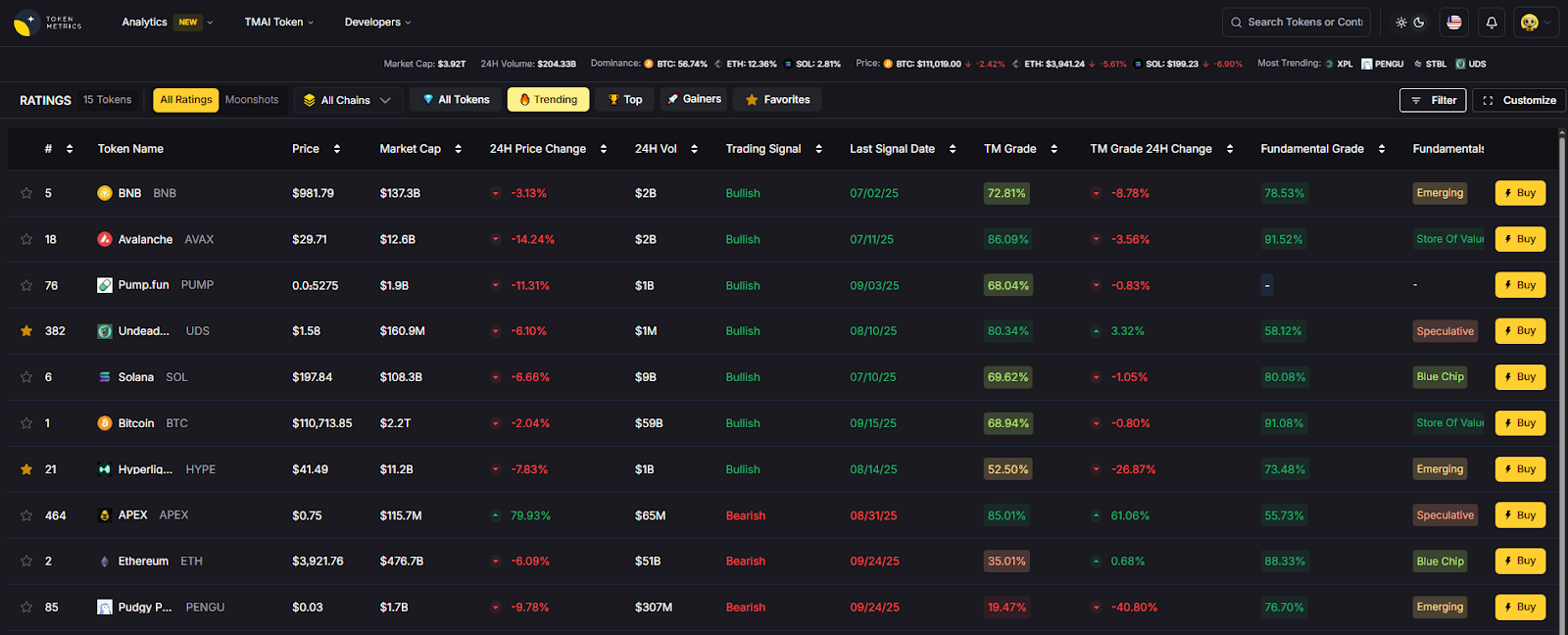
Token Metrics evaluates thousands of digital assets, including gaming tokens, play-to-earn projects, metaverse platforms, and NFT collections. Its AI-powered rating system assesses projects based on critical factors such as: Blockchain infrastructure, smart contract security, and scalability solutions Economic sustainability, token utility, and inflation/deflation mechanisms Developer team expertise, community engagement, and partnership quality Market dynamics including trading volume, liquidity, and holder distribution Gameplay quality, user retention, and player growth rates

Gaming NFT Market Intelligence

Understanding which gaming platforms, blockchain networks, and NFT collections offer superior risk-adjusted returns requires deep market intelligence. Token Metrics delivers sector-specific research, project comparisons, trend forecasting, and risk assessments that highlight red flags like unsustainable tokenomics or technical vulnerabilities.

Portfolio Management for Gaming Assets

Investors building diversified portfolios across cryptocurrencies, gaming tokens, NFT collections, and virtual land benefit from Token Metrics’ portfolio tools. These provide real-time valuation across multiple chains and marketplaces, performance attribution, correlation analysis for diversification, and tax reporting features to simplify complex NFT transactions.

Trading Signals and Actionable Intelligence

Token Metrics’ proprietary algorithms generate trading signals for gaming tokens and NFT projects, helping investors identify optimal entry and exit points. As NFT marketplaces mature and liquidity improves, these signals become increasingly valuable for active portfolio management.

Access Token Metrics today to leverage the analytical firepower needed to capitalize on the gaming NFT revolution.

Challenges and Considerations

Despite the promising outlook, NFTs in gaming face several key challenges:

  • Regulatory Uncertainty: Governments worldwide are still defining how to regulate gaming NFTs, especially concerning securities laws and gambling regulations. About 43% of game publishers cite regulatory concerns as significant barriers to NFT integration.
  • Technical Barriers: Over half of indie developers report limited access to blockchain infrastructure and smart contract expertise as obstacles. High transaction fees and network congestion remain concerns, although Layer-2 solutions are alleviating these issues.
  • Player Skepticism: Many gamers view NFTs as predatory monetization or are concerned about environmental impact. Developers must carefully balance NFT integration with genuine gameplay improvements to overcome resistance.
  • Market Volatility: The value of gaming tokens and NFT assets can be highly volatile, posing financial risks to players whose in-game items fluctuate dramatically in worth.

Addressing these challenges is critical to achieving widespread adoption and ensuring the long-term sustainability of NFT-based gaming ecosystems.

The Road Ahead: 2025 and Beyond

The future of NFTs in gaming extends well beyond digital collectibles and speculation. We are entering a new era where player-owned economies, true digital property rights, and gameplay that rewards skill and engagement redefine the gaming experience. Key developments to watch include:

  • Killer App Emergence: The arrival of a breakthrough game with cultural impact on par with Fortnite or Minecraft could accelerate mainstream adoption overnight.
  • Institutional Investment: Continued venture capital funding and major publisher involvement will legitimize and expand the space.
  • Technological Advancements: Improvements in blockchain scalability, reduced transaction fees, and enhanced user experiences will drive adoption.
  • Regulatory Clarity: Comprehensive frameworks will enable compliant NFT gaming implementations, reducing uncertainty.
  • Cross-Platform Standards: Industry-wide interoperability protocols will allow true asset portability across different games and virtual worlds.

The projection that gaming NFTs will grow nearly ninefold from $4.8 billion to $44.1 billion by 2034 highlights one of the most significant wealth creation opportunities in the digital economy. For players, developers, and investors willing to navigate the evolving landscape, gaming NFTs offer unprecedented potential to revolutionize how we play, trade, and own digital assets.

Ready to capitalize on the gaming NFT revolution? Visit tokenmetrics.com to access cutting-edge research, analytics, and trading intelligence that give you an edge in this explosive market.

Build Smarter Crypto Apps &
AI Agents in Minutes, Not Months
Real-time prices, trading signals, and on-chain insights all from one powerful API.
Grab a Free API Key
About Token Metrics
Token Metrics: AI-powered crypto research and ratings platform. We help investors make smarter decisions with unbiased Token Metrics Ratings, on-chain analytics, and editor-curated “Top 10” guides. Our platform distills thousands of data points into clear scores, trends, and alerts you can act on.
30 Employees
analysts, data scientists, and crypto engineers
Daily Briefings
concise market insights and “Top Picks”
Transparent & Compliant
Sponsored ≠ Ratings; research remains independent
Want Smarter Crypto Picks—Free?
See unbiased Token Metrics Ratings for BTC, ETH, and top alts.
Thank you! Your submission has been received!
Oops! Something went wrong while submitting the form.
 No credit card | 1-click unsubscribe
Token Metrics Team
Token Metrics Team

Recent Posts

NFTs

Best NFT Marketplaces (2025)

Sam Monac
7 min

Why NFT Marketplaces Matter in September 2025

NFT marketplaces are where collectors buy, sell, and mint digital assets across Ethereum, Bitcoin Ordinals, Solana, and gaming-focused L2s. If you’re researching the best NFT marketplaces to use right now, this guide ranks the leaders for liquidity, security, fees, and user experience—so you can move from research to purchase with confidence. The short answer: choose a regulated venue for fiat on-ramps and beginner safety, a pro venue for depth and tools, or a chain-specialist for the collections you care about. We cover cross-chain players (ETH, SOL, BTC), creator-centric platforms, and gaming ecosystems. Secondary searches like “NFT marketplace fees,” “Bitcoin Ordinals marketplace,” and “where to buy NFTs” are woven in naturally—without fluff.

How We Picked (Methodology & Scoring)

  • Liquidity (30%): Active buyers/sellers, depth across top collections, and cross-chain coverage.

  • Security (25%): Venue track record, custody options, proof-of-reserves (where relevant), scams countermeasures, fee/royalty transparency.

  • Coverage (15%): Chains (ETH/BTC/SOL/Immutable, etc.), creator tools, launchpads, aggregators.

  • Costs (15%): Marketplace fees, gas impact, royalty handling, promos.

  • UX (10%): Speed, analytics, mobile, bulk/sweep tools.

  • Support (5%): Docs, help centers, known regional constraints.

We used official product pages, docs/help centers, security/fee pages and cross-checked directional volume trends with widely cited market datasets. We link only to official provider sites in this article. Last updated September 2025.

Top 10 NFT Marketplaces in September 2025

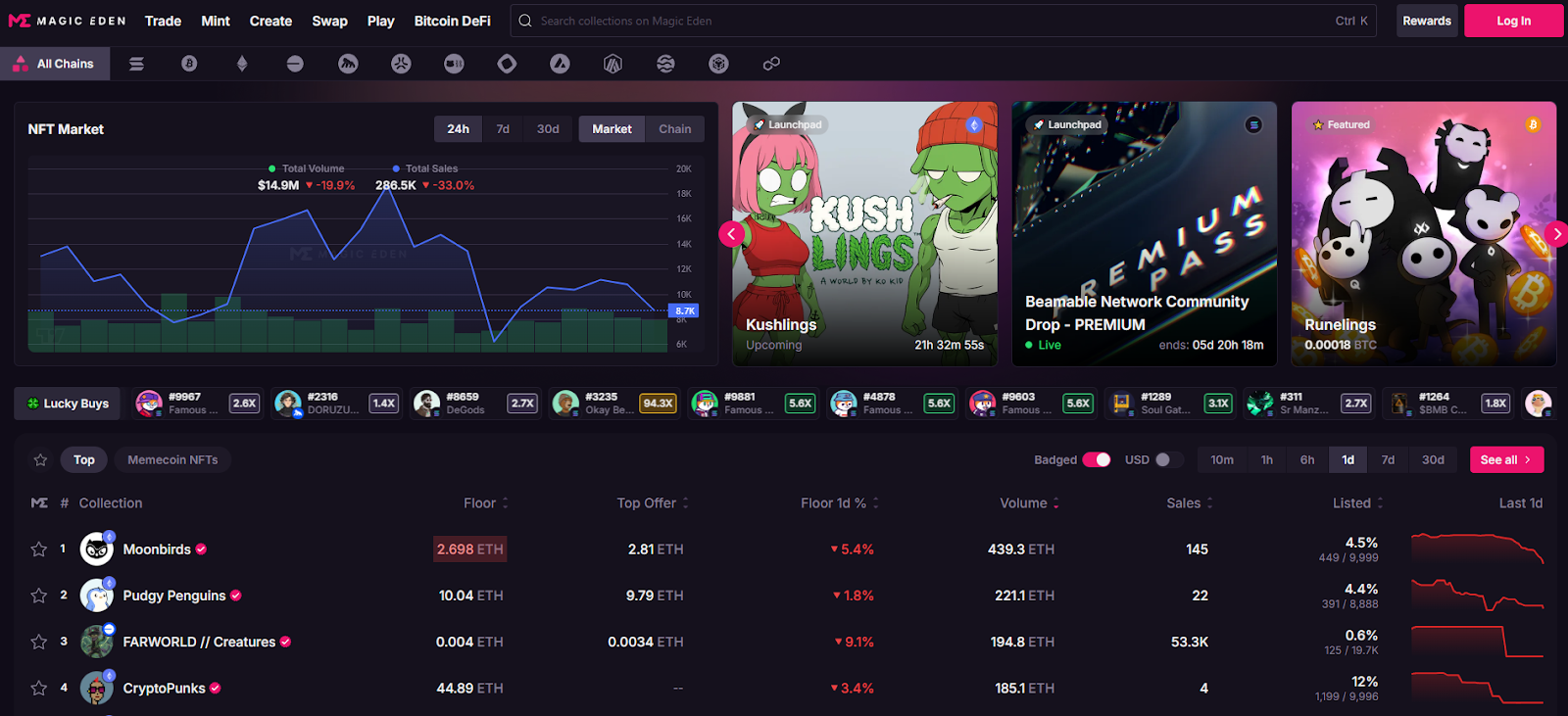
1. Magic Eden — Best for cross-chain collectors (ETH, SOL, BTC & more)

Why Use It: Magic Eden has evolved into a true cross-chain hub spanning Solana, Bitcoin Ordinals, Ethereum, Base and more, with robust discovery, analytics, and aggregation so you don’t miss listings. Fees are competitive and clearly documented, and Ordinals/SOL support is best-in-class for traders and creators. Best For: Cross-chain collectors, Ordinals buyers, SOL natives, launchpad users.
Notable Features: Aggregated listings; trait-level offers; launchpad; cross-chain swap/bridge learning; pro charts/analytics. Consider If: You want BTC/SOL liquidity with low friction; note differing fees per chain. Alternatives: Blur (ETH pro), Tensor (SOL pro).

Regions: Global • Fees Notes: 2% on BTC/SOL; 0.5% on many EVM trades (creator royalties optional per metadata).

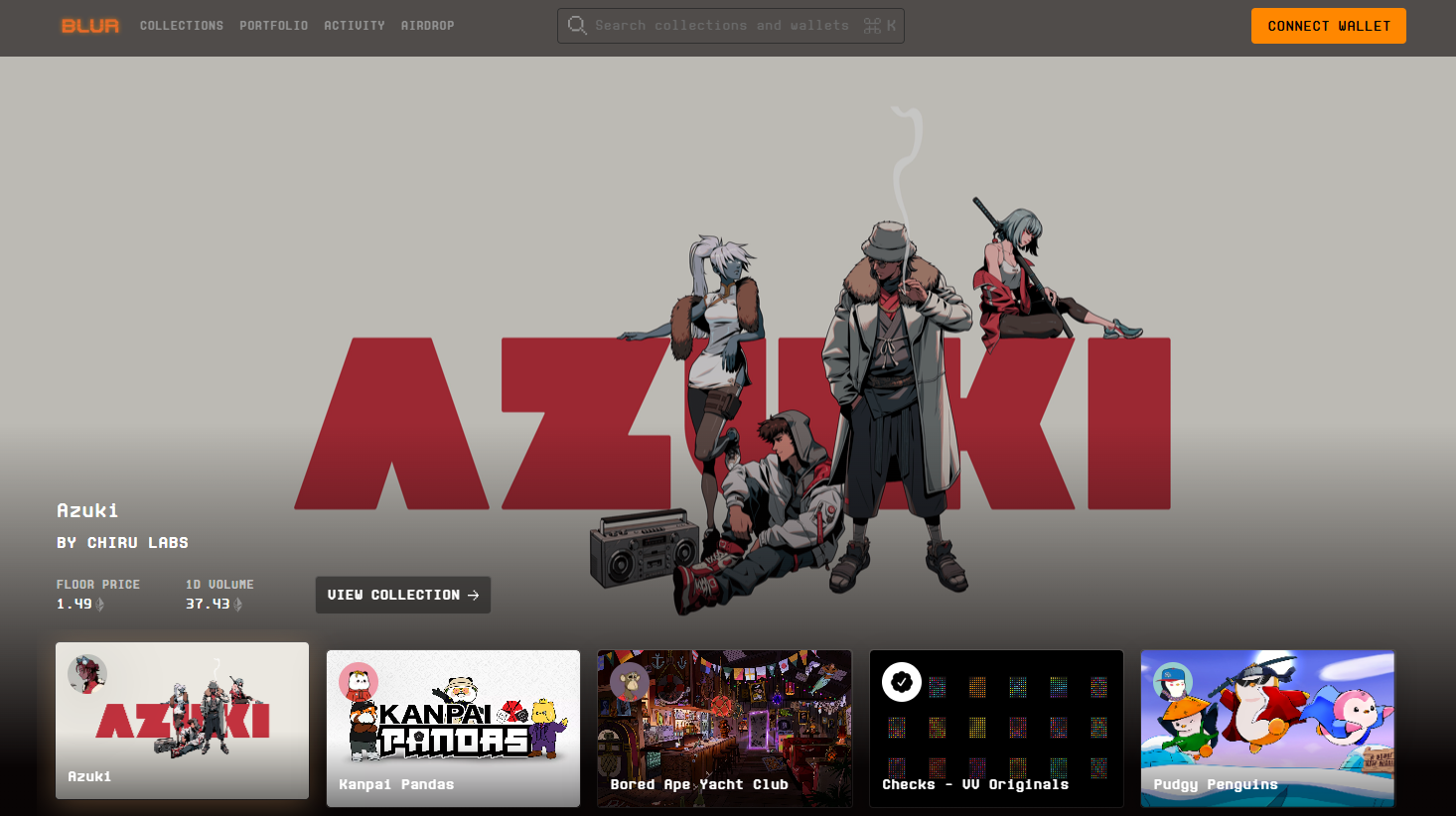
2. Blur — Best for pro ETH traders (zero marketplace fees)

Why Use It: Blur is built for speed, depth, and sweeps. It aggregates multiple markets, offers advanced portfolio analytics, and historically charges 0% marketplace fees—popular with high-frequency traders. Rewards seasons have reinforced liquidity. Best For: Power users, arbitrage/sweep traders, analytics-driven collectors.
Notable Features: Multi-market sweep; fast reveals/snipes; portfolio tools; rewards. Consider If: You prioritize pro tools and incentives over hand-holding UX.
Alternatives: OpenSea (broad audience), Magic Eden (cross-chain).

Regions: Global • Fees Notes: 0% marketplace fee shown on site; royalties subject to collection rules.

3. OpenSea — Best for mainstream access & breadth

Why Use It: The OG multi-chain marketplace with onboarding guides, wide wallet support, and large catalog coverage. OpenSea’s “OS2” revamp and recent fee policy updates keep it relevant for mainstream collectors who want familiar UX plus broad discovery. Best For: Newcomers, multi-chain browsing, casual collectors.
Notable Features: Wide collection breadth; OpenSea Pro aggregator; flexible royalties; clear TOS around third-party/gas fees. Consider If: You want broadest brand recognition; be aware fees may change. Alternatives: Blur (pro ETH), Rarible (community markets).

Regions: Global (note U.S. regulatory headlines under review). Fees Notes: Reported trading fee currently ~1% as of mid-Sept 2025; creator earnings and gas are separate.

4. Tensor — Best for pro Solana traders

Why Use It: Tensor is the Solana power-user venue with enforced-royalty logic, maker/taker clarity, and pro-grade bidding/escrow. Fast UI, Solana-native depth, and creator tools make it the advanced SOL choice. Best For: SOL traders, market-makers, bid/AMM-style flows.
Notable Features: 0% maker / ~2% taker; enforced royalties paid by taker; shared escrow; price-lock mechanics highlighted in community docs. Consider If: You want pro tools on Solana; fees differ from Magic Eden. Alternatives: Magic Eden (SOL/BTC/ETH), Hyperspace (agg).

Regions: Global • Fees Notes: 2% taker / 0% maker; royalties per collection rules

5. OKX NFT Marketplace — Best for multi-chain aggregation + Ordinals

Why Use It: OKX’s NFT market integrates with the OKX Web3 Wallet, aggregates across chains, and caters to Bitcoin Ordinals buyers with an active marketplace. Docs highlight multi-chain support and low listing costs. Note potential restrictions for U.S. residents. Best For: Multi-chain deal-hunters, Ordinals explorers, exchange users.
Notable Features: Aggregation; OKX Wallet; BTC/SOL/Polygon support; zero listing fees per help docs. Consider If: You’re outside the U.S. or comfortable with exchange-affiliated wallets. Alternatives: Magic Eden (multi-chain), Kraken NFT (U.S. friendly).

Regions: Global (U.S. access limited) • Fees Notes: Zero listing fee; trading fees vary by venue/collection.

6. Kraken NFT — Best for U.S. compliance + zero gas on trades

Why Use It: Kraken’s marketplace emphasizes security, compliance, and a simple experience with zero gas fees on trades (you pay network gas only when moving NFTs in/out). Great for U.S. users who prefer a regulated exchange brand. Best For: U.S. collectors, beginners, compliance-first buyers.
Notable Features: Zero gas on trades; creator earnings support; fiat rails via the exchange. Consider If: You prioritize regulated UX over max liquidity.
Alternatives: OpenSea (breadth), OKX NFT (aggregation).

Regions: US/EU • Fees Notes: No gas on trades; royalties and marketplace fees vary by collection.

7. Rarible — Best for community marketplaces & no-code storefronts

Why Use It: Rarible lets projects spin up branded marketplaces with custom fee routing (even 0%), while the main Rarible front-end serves multi-chain listings. Transparent fee schedules and community tooling appeal to creators and DAOs. Best For: Creators/DAOs launching branded stores; community traders.
Notable Features: No-code community marketplace builder; regressive fee schedule on main site; ETH/Polygon support. Consider If: You want custom fees/branding or to route fees to a treasury. Alternatives: Zora (creator mints), Foundation (curated art).

Regions: Global • Fees Notes: Regressive service fees on main Rarible; community markets can set fees to 0%.

8. Zora — Best for creator-friendly mints & social coins

Why Use It: Zora powers on-chain mints with a simple flow and a small protocol mint fee that’s partially shared with creators and referrers, and it now layers social “content coins.” Great for artists who prioritize distribution and rewards over secondary-market depth. Best For: Artists, indie studios, open editions, mint-first strategies.
Notable Features: One-click minting; protocol rewards; Base/L2 focus; social posting with coins. Consider If: You value creator economics; secondary liquidity may be thinner than pro venues.
Alternatives: Rarible (community stores), Foundation (curation).

Regions: Global • Fees Notes: Typical mint fee ~0.000777 ETH; reward splits for creators/referrals per docs.

9. Gamma.io — Best for Bitcoin Ordinals creators & no-code launchpads

Why Use It: Gamma focuses on Ordinals with no-code launchpads and a clean flow for inscribing and trading on Bitcoin. If you want exposure to BTC-native art and collections, Gamma is a friendly on-ramp. Best For: Ordinals creators/collectors, BTC-first communities.
Notable Features: No-code minting; Ordinals marketplace; education hub. Consider If: You want BTC exposure vs EVM/SOL liquidity; check fee line items. Alternatives: Magic Eden (BTC), UniSat (wallet+market).

Regions: Global • Fees Notes: Commission on mints/sales; see support article.

10. TokenTrove — Best for Immutable (IMX/zkEVM) gaming assets

Why Use It: TokenTrove is a top marketplace in the Immutable gaming ecosystem with stacked listings, strong filters, and price history—ideal for trading in-game items like Gods Unchained, Illuvium, and more. It plugs into Immutable’s global order book and fee model. Best For: Web3 gamers, IMX/zkEVM collectors, low-gas trades.
Notable Features: Immutable integration; curated gaming collections; alerts; charts. Consider If: You mainly collect gaming assets and want L2 speed with predictable fees.
Alternatives: OKX (aggregation), Sphere/AtomicHub (IMX partners).

Regions: Global • Fees Notes: Immutable protocol fee ~2% to buyer + marketplace maker/taker fees vary by venue.

Decision Guide: Best By Use Case

  • Regulated U.S. access & zero gas on trades: Kraken NFT.
  • Global liquidity + cross-chain coverage (BTC/SOL/ETH): Magic Eden.
  • Pro ETH tools & zero marketplace fees: Blur.
  • Pro Solana depth & maker/taker clarity: Tensor.
  • Bitcoin Ordinals creators & no-code launch: Gamma.io.
  • Gaming items on Immutable: TokenTrove.

  • Community marketplaces (custom fees/branding): Rarible.
  • Creator-first minting + rewards: Zora.

How to Choose the Right NFT Marketplace (Checklist)

  • Region & eligibility: Are you U.S.-based or restricted? (OKX may limit U.S. users.)
  • Collection coverage & chain: ETH/SOL/BTC/IMX? Go where your target collections trade.

  • Liquidity & tools: Depth, sweep/bulk bids, analytics, trait offers.

  • Fees/royalties: Marketplace fee, royalty policy, and gas impact per chain.
  • Security & custody: Exchange-custodied vs self-custody; wallet best practices.

  • Support & docs: Clear fee pages, dispute and help centers.

  • Red flags: Opaque fee changes, poor communication, or region-blocked access when depositing/withdrawing.

Use Token Metrics With Any NFT Marketplace

  • AI Ratings: Screen collections/coins surrounding NFT ecosystems.
  • Narrative Detection: Spot momentum across chains (Ordinals, gaming L2s).

  • Portfolio Optimization: Balance exposure to NFTs/tokens linked to marketplaces.

  • Alerts & Signals: Track entries/exits and on-chain flows.
    Workflow: Research on TM → Pick marketplace above → Execute buys/mints → Monitor with TM alerts.

 Primary CTA: Start free trial

Security & Compliance Tips

  • Enable 2FA and protect seed phrases; prefer hardware wallets for valuable assets.

  • Understand custody: exchange-custodied (simpler) vs self-custody (control).

  • Complete KYC/AML where required; mind regional restrictions.

  • Verify collection royalties and contract addresses to avoid fakes.

  • Practice wallet hygiene: revoke stale approvals; separate hot/cold wallets.

This article is for research/education, not financial advice.

Beginner Mistakes to Avoid

  • Ignoring fees (marketplace + gas + royalties) that change effective prices.
  • Buying unverified collections or wrong contract addresses.

  • Using one wallet for everything; don’t mix hot/cold funds.

  • Skipping region checks (e.g., U.S. access on some exchange-run markets).
  • Over-relying on hype without checking liquidity and historical sales.

FAQs

What is an NFT marketplace?
An NFT marketplace is a platform where users mint, buy, and sell NFTs (digital assets recorded on a blockchain). Marketplaces handle listings, bids, and transfers—often across multiple chains like ETH, BTC, or SOL.

Which NFT marketplace has the lowest fees?
Blur advertises 0% marketplace fees on ETH; Magic Eden lists 0.5% on many EVM trades and ~2% on SOL/BTC; Tensor uses 0% maker/2% taker. Always factor gas and royalties.

What’s best for Bitcoin Ordinals?
Magic Eden and Gamma are strong choices; UniSat’s wallet integrates with a marketplace as well. Pick based on fees and tooling.

What about U.S.-friendly options?
Kraken NFT is positioned for U.S. users with zero gas on trades. Check any exchange venue’s regional policy before funding.

Are royalties mandatory?
Policies vary: some venues enforce royalties (e.g., Tensor enforces per collection); others make royalties optional. Review each collection’s page and marketplace rules.

Do I still pay gas?
Yes, on most chains. Some custodial venues remove gas on trades but charge gas when you deposit/withdraw.

Conclusion + Related Reads

If you want cross-chain liquidity and discovery, start with Magic Eden. For pro ETH execution, Blur leads; for pro SOL, choose Tensor. U.S. newcomers who value compliance and predictability should consider Kraken NFT. Gaming collectors on Immutable can lean on TokenTrove.
Related Reads:

  • Best Cryptocurrency Exchanges 2025

  • Top Derivatives Platforms 2025

  • Top Institutional Custody Providers 2025

Research

Top Yield Aggregators & Vaults (2025)

Sam Monac
5 min

Why Yield Aggregators & Vaults Matter in September 2025

DeFi never sits still. Rates move, incentives rotate, and new chains launch weekly. Yield aggregators and vaults automate that work—routing your assets into on-chain strategies that can compound rewards and manage risk while you sleep. In short: a yield aggregator is a smart-contract “account” that deploys your tokens into multiple strategies to optimize returns (with risks).

Who is this for? Active DeFi users, long-term holders, DAOs/treasuries, and anyone exploring passive crypto income in 2025. We prioritized providers with strong security postures, transparent docs, useful dashboards, and broad asset coverage. Secondary angles include DeFi vaults, auto-compounders, and yield optimization tools.

How We Picked (Methodology & Scoring)

  • Liquidity (30%) – scale, sustained TVL/volumes and depth across chains/pairs.

  • Security (25%) – audits, disclosures, incident history, contracts/docs clarity.

  • Coverage (15%) – supported assets, strategies, and chain breadth.

  • Costs (15%) – vault/performances fees, hidden costs, gas efficiency.

  • UX (10%) – clarity, portfolio tools, reporting, accessibility.

  • Support (5%) – docs, community, communications, responsiveness.

Data sources: official product/docs, security and transparency pages; Token Metrics testing; cross-checks with widely cited market datasets when needed. Last updated September 2025.

Top 10 Yield Aggregators & Vaults in September 2025

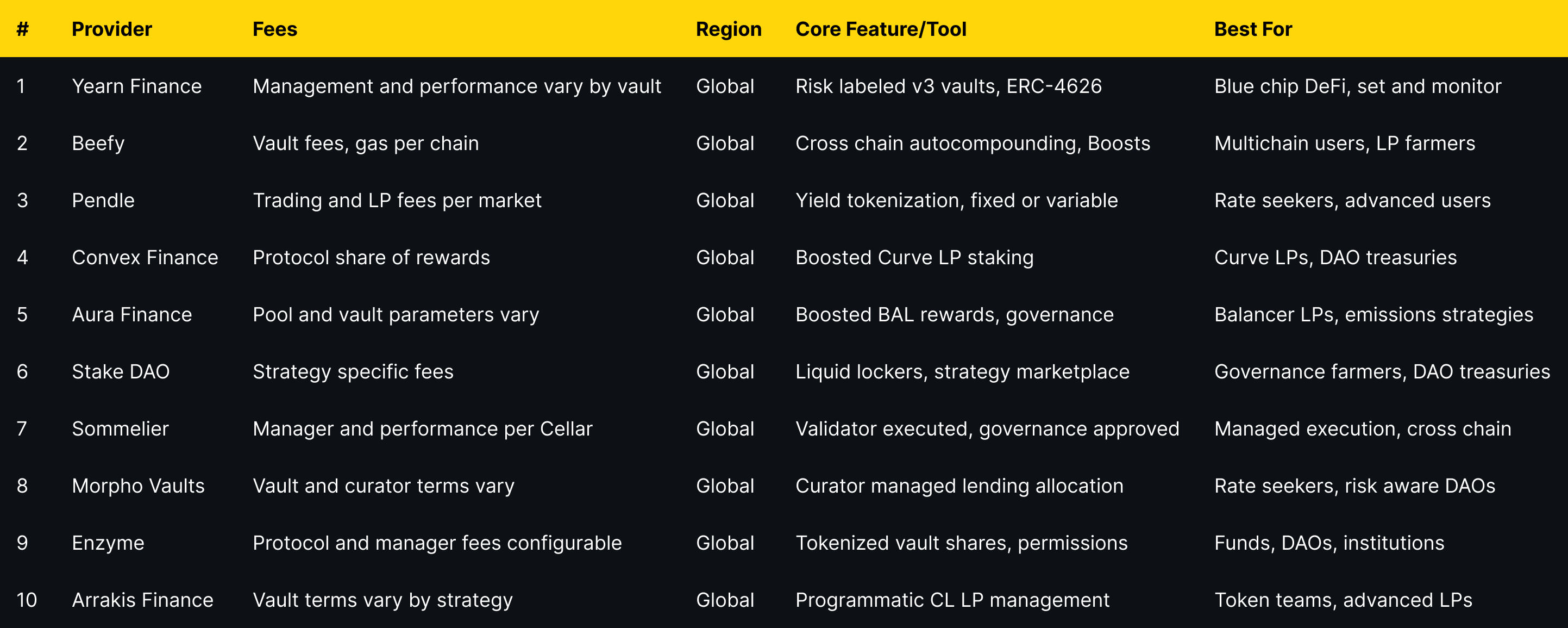
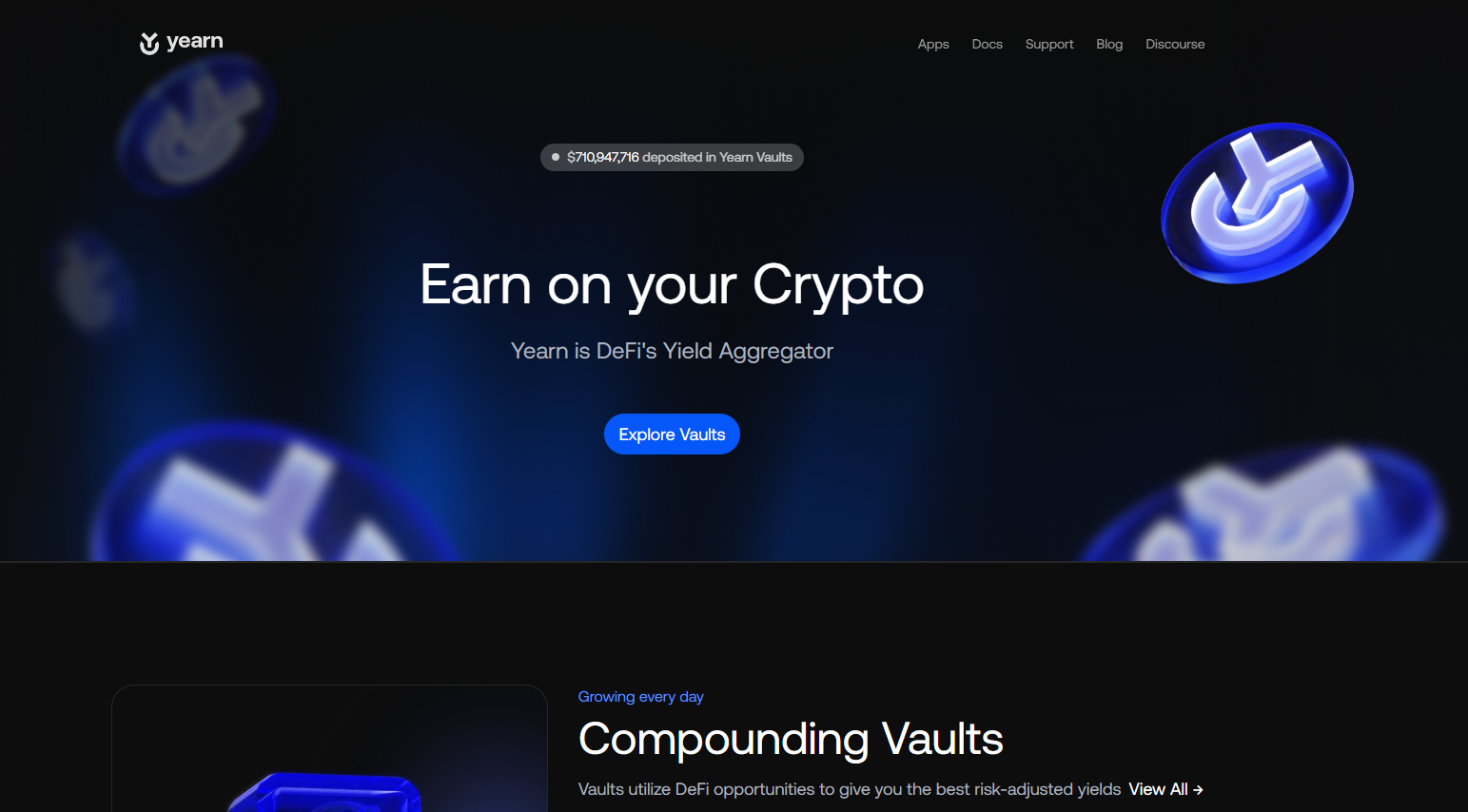
1. Yearn Finance — Best for blue-chip DeFi auto-compounding

  • Why Use It: Yearn’s v3 vaults focus on automated, battle-tested strategies with risk labels and historical APY panes that make evaluation straightforward. You can pick targeted vaults (e.g., Curve/LST strategies) and let contracts handle compounding and rebalancing. Yearn+2Yearn Docs+2

  • Best For: Long-term holders • Blue-chip DeFi exposure • “Set and monitor” users • DAO treasuries

  • Notable Features: Risk-labeled v3 vaults • Multi-strategy routes • ERC-4626 standardization • Transparency via docs/app

  • Consider If: You want conservative, audited strategies with clear dashboards vs. aggressive degen plays.

  • Alternatives: Beefy • Sommelier

  • Regions: Global

  • Fees/Notes: Standard vault/performances fees vary by vault; check each vault page.

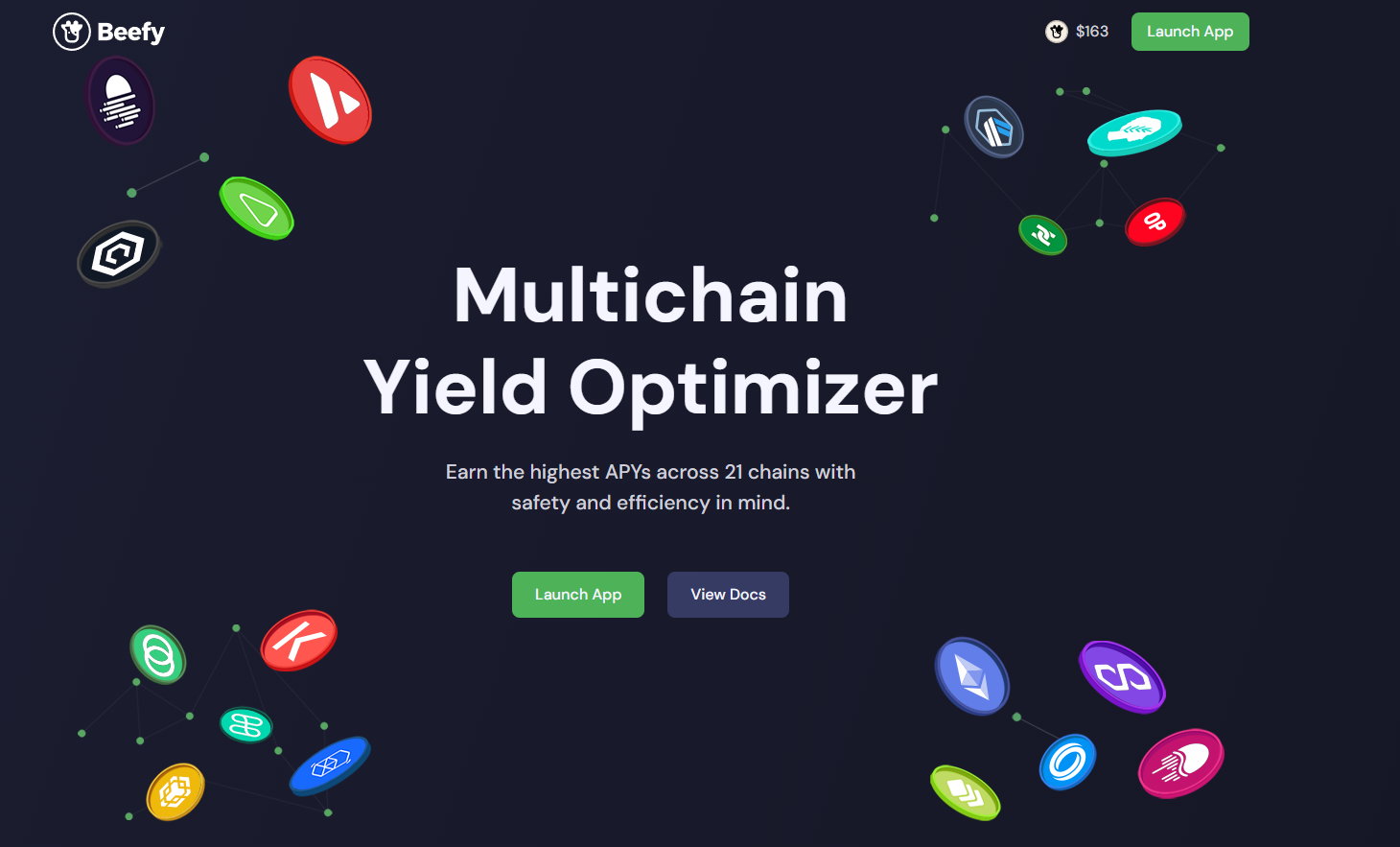
2. Beefy — Best multichain auto-compounder

  • Why Use It: Beefy spans dozens of chains with a huge catalog of auto-compounding vaults (LPs and singles). If you farm across EVM ecosystems, Beefy’s breadth and simple UI make chain-hopping easier—and compounding automatic. beefy.com+1

  • Best For: Power users across multiple chains • Yield farmers • Stablecoin/LP strategies

  • Notable Features: Cross-chain coverage • “Boosts” campaigns • Strategy docs • Partner integrations

  • Consider If: You want wide coverage and simple autocompounding rather than bespoke, strategy-managed funds.

  • Alternatives: Yearn • Aura

  • Regions: Global

  • Fees/Notes: Vault-level fees; gas costs vary by chain.

3. Pendle — Best for fixed yield & yield trading

  • Why Use It: Pendle tokenizes yield so you can earn fixed yield, long/short yield, or accumulate boosted “real yield” when conditions are attractive. It’s ideal if you want to lock in rates or speculate on future APYs with no liquidation risk. Pendle Finance+2Pendle Documentation+2

  • Best For: Rate seekers • Sophisticated DeFi traders • LST/LRT and points farmers

  • Notable Features: Yield tokenization (SY/PT/YT) • Fixed/variable yield markets • vePENDLE incentives

  • Consider If: You understand interest-rate style products and settlement at maturity dates.

  • Alternatives: Yearn (conservative) • Morpho (lending-based yields)

  • Regions: Global

  • Fees/Notes: Trading/LP fees; check markets per asset.

4. Convex Finance — Best for Curve ecosystem boosts

  • Why Use It: Convex lets Curve LPs capture boosted CRV emissions and trading fees without locking CRV themselves. If your LP stack is Curve-heavy, Convex remains the go-to optimizer for rewards and governance alignment. Convex+1

  • Best For: Curve LPs • veCRV stackers • DAO treasuries optimizing Curve positions

  • Notable Features: Boosted staking for Curve LPs • cvxCRV staking • Aggregated rewards flows

  • Consider If: Your liquidity sits primarily on Curve and you want to maximize incentives efficiently.

  • Alternatives: Stake DAO • Aura

  • Regions: Global

  • Fees/Notes: Protocol takes a share of rewards; details in docs.

5. Aura Finance — Best for Balancer LP boosts

  • Why Use It: Aura builds on Balancer to maximize BAL incentives and fees for LPs. Deposit Balancer LP tokens, earn boosted rewards, and participate in governance via locked AURA if you want additional influence over emissions. aura.finance+1

  • Best For: Balancer LPs • Emissions-driven strategies • Governance-active users

  • Notable Features: Boosted BAL rewards • Cross-chain Balancer support • Vote incentives via ve-style mechanics

  • Consider If: Your primary liquidity is on Balancer; Aura is a natural optimizer there.

  • Alternatives: Convex • Stake DAO

  • Regions: Global

  • Fees/Notes: Standard vault and protocol parameters vary by pool.

6. Stake DAO — Best for “liquid lockers” & strategy menus

  • Why Use It: Stake DAO pioneered “liquid lockers” for governance tokens (e.g., CRV, BAL, FXS), offering boosted yields plus liquid representations of locked positions and a broad strategy shelf. stakedao.org+1

  • Best For: Governance farmers • Curve/Balancer/FXS communities • DAO treasuries

  • Notable Features: Liquid lockers • Strategy marketplace • Vote markets/governance tooling

  • Consider If: You want governance exposure with yield and flexibility, not hard locks.

  • Alternatives: Convex • Aura

  • Regions: Global

  • Fees/Notes: Strategy-specific fees; review each locker/strategy page.

7. Sommelier — Best for validator-supervised “Cellar” vaults

  • Why Use It: Sommelier’s Cellars are ERC-4626 vaults curated by strategists and approved via governance; the Cosmos-based validator set executes transactions, aiming for safer, rules-based automation. It’s a nice middle ground between DIY farming and black-box funds. Sommelier+2Sommelier Finance+2

  • Best For: Users wanting managed vaults with on-chain governance • Cross-chain strategy execution

  • Notable Features: Validator-executed strategies • Governance-approved vaults • ERC-4626 standard

  • Consider If: You value managed execution and transparency over maximal degen yields.

  • Alternatives: Yearn • Enzyme

  • Regions: Global

  • Fees/Notes: Vault-specific management/performance fees; see each Cellar.

8. Morpho Vaults — Best for curated lending vaults

  • Why Use It: Morpho Vaults (evolved from MetaMorpho) route deposits across Morpho Blue lending markets, curated by third-party risk experts. It’s lending-centric yield with visible curators, risk budgets, and permissionless vault creation. morpho.org+2morpho.org+2

  • Best For: Rate seekers comfortable with lending risk • Risk-aware DAOs/treasuries

  • Notable Features: Curator-managed allocation • Transparent risk profiles • Permissionless vaults

  • Consider If: You want lending-market yields with curator oversight, not AMM-LP farming.

  • Alternatives: Pendle (rates via yield tokens) • Yearn

  • Regions: Global

  • Fees/Notes: Vault/curator parameters vary; review each vault.

9. Enzyme — Best for custom, institutional-grade vaults

  • Why Use It: Enzyme provides infrastructure to spin up tokenized vaults—useful for DAOs, managers, and institutions who need controls, fee models, and compliance-minded workflows. You can deploy diversified or structured strategies and issue shares to depositors. enzyme.finance+2enzyme.finance+2

  • Best For: Funds/DAOs • Institutional treasuries • Strategy builders needing controls

  • Notable Features: Tokenized vault shares • Configurable fees/permissions • Treasury & structured product tooling

  • Consider If: You want to create and operate vaults (not just deposit).

  • Alternatives: Sommelier • Arrakis (for LP-specific vaults)

  • Regions: Global

  • Fees/Notes: Protocol and manager fees configurable per vault.

10. Arrakis Finance — Best for concentrated-liquidity LP vaults

  • Why Use It: Arrakis V2 focuses on programmatic Uniswap-style LP management. Vaults issue ERC-20 shares, rebalance ranges, and can be set up as private “Pro” vaults for token issuers or public strategies for LPs—great if your yield comes from maker fees and incentives. arrakis.finance+2beta.arrakis.finance+2

  • Best For: Token teams/treasuries • Advanced LPs • Liquidity mining with CL AMMs

  • Notable Features: Modular vault architecture • Programmatic rebalancing • Public & private vault modes

  • Consider If: You prefer fee-based LP yields over farm-and-dump emissions.

  • Alternatives: Gamma-style LP managers (varies) • Enzyme (custom)

  • Regions: Global

  • Fees/Notes: Vault terms vary; check each vault/strategy.

Decision Guide: Best By Use Case

  • Regulated, conservative posture: Yearn, Sommelier, Enzyme

  • Global chain coverage & autocompound: Beefy

  • Curve LP optimization: Convex

  • Balancer LP optimization: Aura

  • Fixed yield / yield trading: Pendle

  • Lending-centric rates with curator oversight: Morpho Vaults

  • LP vaults for token issuers: Arrakis

  • DAO treasuries & strategy builders: Enzyme, Stake DAO

How to Choose the Right Yield Aggregators & Vaults (Checklist)

  • Region/eligibility and front-end access (some sites warn on local restrictions).

  • Asset & chain coverage that matches your portfolio.

  • Custody model (self-custody vs. managed) and who can move funds.

  • Fees: management/performance, withdrawal, gas.

  • Strategy transparency: docs, parameters, risk labels.

  • UX: dashboards, reporting, TVL history.

  • Support: docs, forums, community channels.

  • Red flags: unaudited contracts, opaque fees, admin keys without disclosures.

Use Token Metrics With Any Yield Aggregators & Vaults

  • AI Ratings to quickly screen protocols and assets.
  • Narrative Detection to spot yield rotations (LRTs, stablecoin points, etc.).

  • Portfolio Optimization to balance rate, volatility, and correlation.

  • Alerts/Signals to track entries/exits and net APY shifts.
    Workflow: Research → Select → Execute on provider → Monitor with alerts.


Primary CTA: Start free trial.

Security & Compliance Tips

  • Enable 2FA on wallets/interfaces where applicable; use hardware wallets for size.

  • Understand vault custody: permissions, pausable states, and upgradeability.

  • Follow KYC/AML and tax rules in your jurisdiction; some front-ends gate regions.

  • Diversify across strategies/curators; avoid over-concentration.

  • Practice wallet hygiene: approvals management, separate hot/cold wallets.

This article is for research/education, not financial advice.

Beginner Mistakes to Avoid

  • Chasing only headline APY without reading how it’s produced.

  • Ignoring gas/fee drag when compounding on L1 vs. L2.

  • Depositing into unaudited or opaque vaults.

  • Over-allocating to a single strategy/chain.

  • Forgetting lockups/maturities (e.g., Pendle) and withdrawal mechanics.

FAQs

What is a yield aggregator in crypto?
A yield aggregator is a smart-contract system that deploys your tokens into multiple DeFi strategies and auto-compounds rewards to target better risk-adjusted returns than manual farming.

Are vaults custodial?
Most DeFi vaults are non-custodial contracts—you keep control via your wallet, while strategies execute on-chain rules. Always read docs for admin keys, pausable functions, and upgrade paths.

Fixed vs. variable yield—how do I choose?
If you value certainty, fixed yields (e.g., via Pendle) can make sense; variable yield can outperform in risk-on markets. Many users blend both.

What fees should I expect?
Common fees are management, performance, and withdrawal (plus gas). Each vault shows specifics; compare net, not just gross APY.

Which networks are best for beginners?
Start on mainstream EVM chains with strong tooling (Ethereum L2s, major sidechains). Fees are lower and UI tooling is better for learning.

How safe are these platforms?
Risks include contract bugs, oracle issues, market shocks, and governance. Prefer audited, well-documented protocols with visible risk controls—and diversify.

Conclusion + Related Reads

If you want set-and-forget blue-chips, start with Yearn or Sommelier. Multichain farmers often prefer Beefy. Curve/Balancer LPs should consider Convex/Aura. Rate-sensitive users may like Pendle or Morpho Vaults. Builders and treasuries should look at Enzyme and Arrakis for tailored vault setups.

Related Reads:

  • Best Cryptocurrency Exchanges 2025

  • Top Derivatives Platforms 2025

  • Top Institutional Custody Providers 2025

Sources & Update Notes

We reviewed each provider’s official site, docs, and product pages for features, security notes, and positioning. Third-party datasets were used only to cross-check market presence. Updated September 2025.

Research

Best Crypto Lending and Borrowing Protocols (2025)

Sam Monac
5 min

Why Crypto Lending and Borrowing Protocols Matter in September 2025

DeFi lending/borrowing protocols let you supply crypto to earn yield or post collateral to borrow assets without an intermediary. That’s the short answer. In 2025, these platforms matter because market cycles are faster, stablecoin yields are competitive with TradFi, and new risk-isolation designs have reduced contagion across assets. If you’re researching the best lending/borrowing protocols for diversified yield or flexible liquidity, this guide is for you—whether you’re a first-time lender, an active degen rotating between chains, or an institution exploring programmatic treasury management. We highlight security posture, liquidity depth, supported assets, fees, and UX. We also note regional considerations where relevant and link only to official sources.

How We Picked (Methodology & Scoring)

  • Liquidity (30%): Depth/fragmentation across pools and chains, plus borrow/supply utilization.

  • Security (25%): Audits, bug bounties, incident history, governance safeguards, and transparency.

  • Coverage (15%): Asset breadth, multi-chain reach, stablecoin support.

  • Costs (15%): Rate models, protocol/reserve fees, gas/bridge costs.

  • UX (10%): Clarity of risk, market pages, docs, and integrations.

  • Support (5%): Docs, dev portals, community response.

We relied on official product/docs and security pages; third-party market datasets (e.g., CCData/Kaiko/CoinGecko) were used only for cross-checks. Last updated September 2025.

Top 10 Crypto Lending and Borrowing Protocols in September 2025

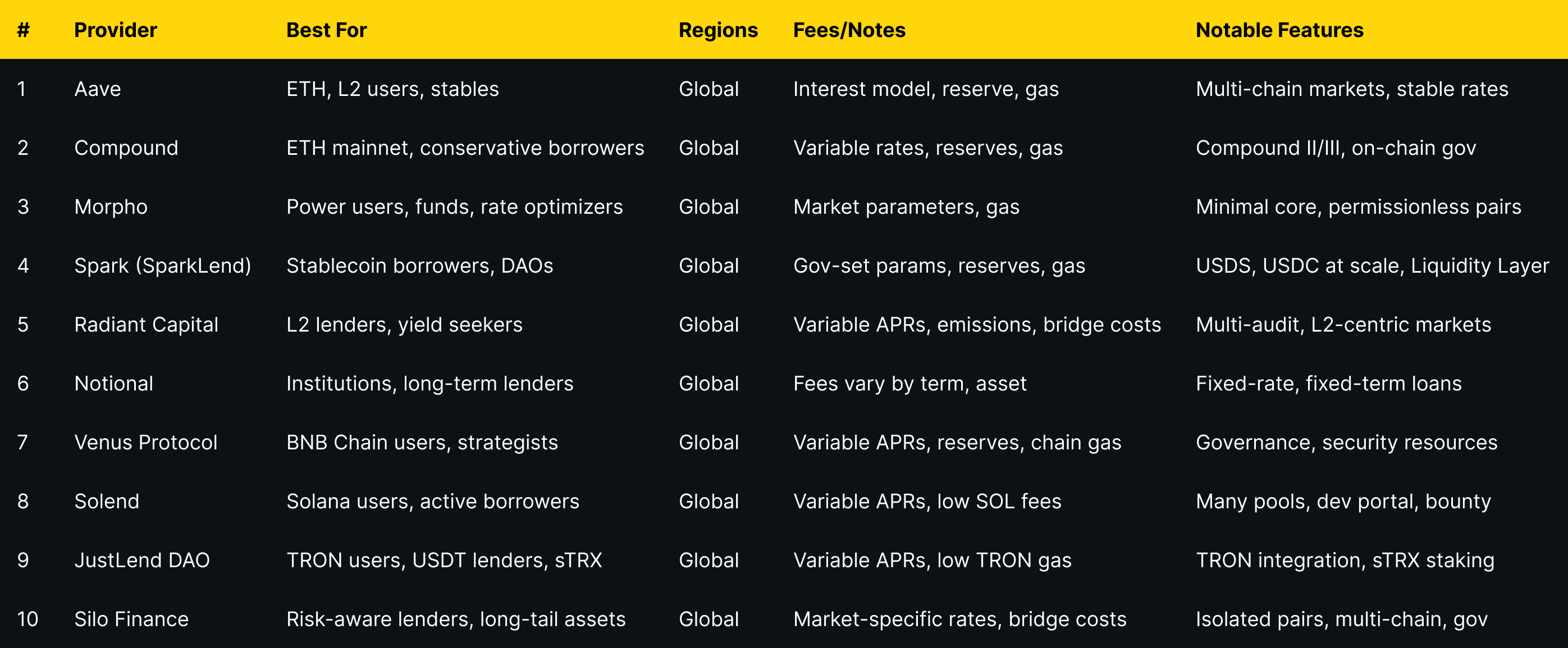
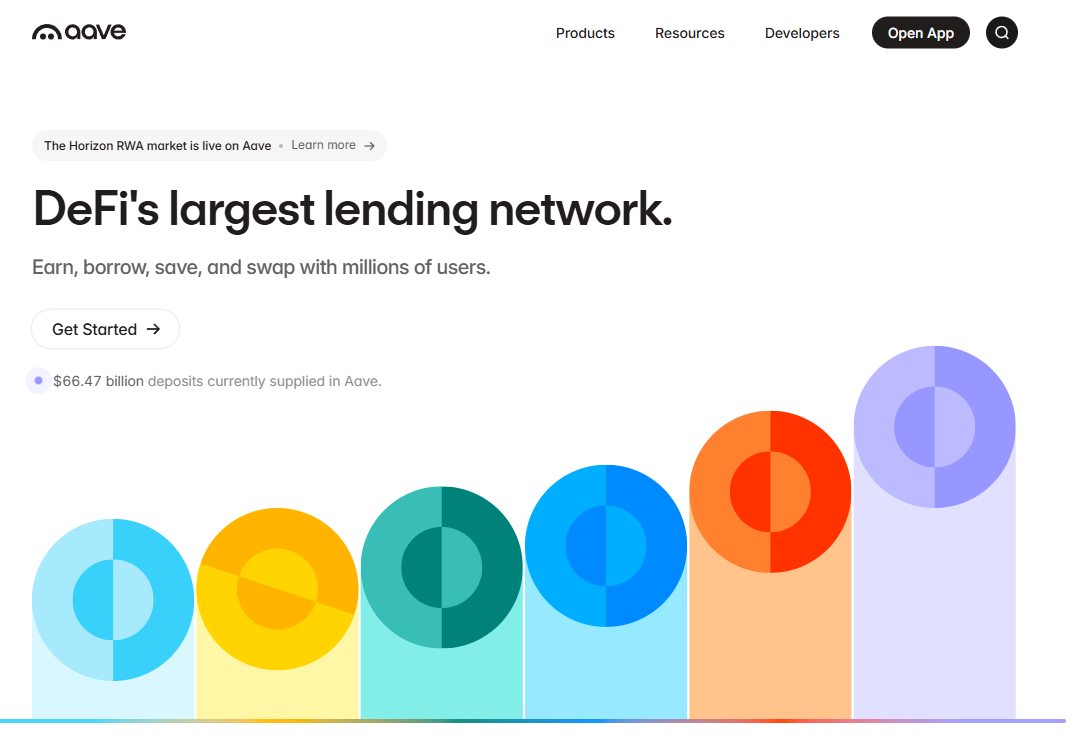
1. Aave — Best for Multi-Chain Liquidity at Scale

Why Use It: Aave remains the blue-chip money market with deep, multi-chain liquidity and granular risk controls across markets. Its non-custodial design and battle-tested rate model make it a default “base layer” for supplying majors and borrowing stables. aave.com+2aave.com+2
Best For: ETH/L2 users, stablecoin lenders, sophisticated borrowers, integrators.
Notable Features: Multiple markets and chains; variable/stable borrow rates; robust docs/dev tooling; governance-led risk parameters. aave.com
Consider If: You want the broadest asset access with conservative risk management.
Regions: Global (DeFi; user eligibility varies by jurisdiction).
Fees/Notes: Interest model + protocol reserve; gas/bridge costs apply. aave.com
Alternatives: Compound, Morpho.

2. Compound — Best for Simplicity and Composability

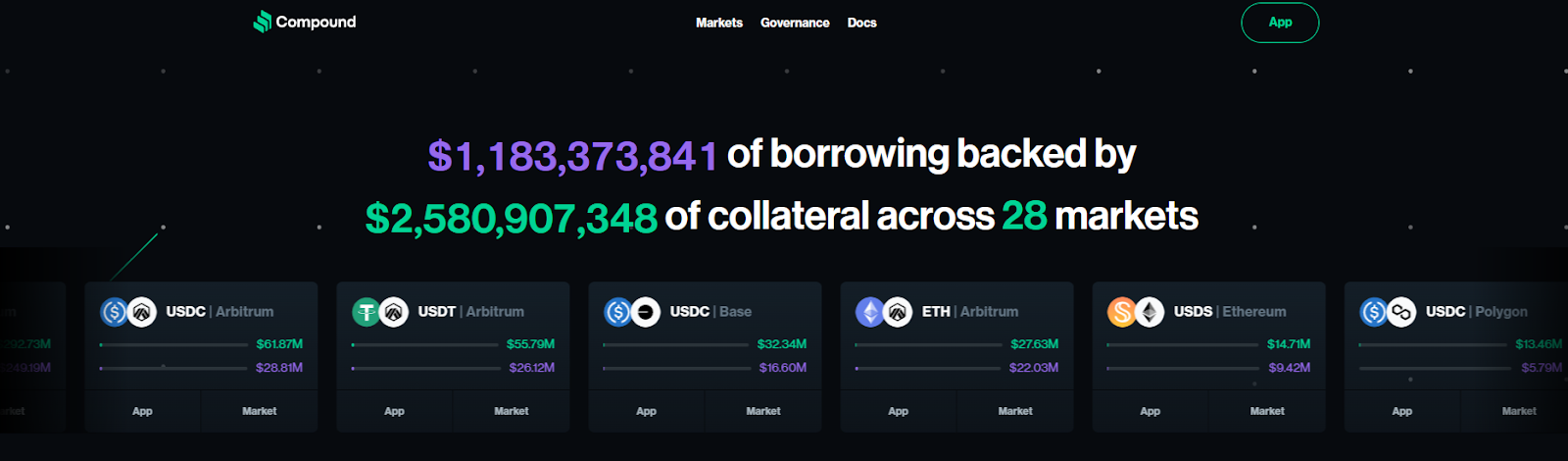
Why Use It: Compound popularized algorithmic interest rates and still offers clean markets and a developer-friendly stack (Compound II/III). For ETH/L2 blue-chips and stables, it’s a straightforward option. compound.finance+1
Best For: ETH mainnet lenders, conservative borrowers, devs needing a stable API/primitive.
Notable Features: Autonomous interest-rate protocol; separate “III” markets; transparent market pages; on-chain governance. compound.finance+1
Consider If: You want a minimal, well-understood money market for majors.
Regions: Global (DeFi; user eligibility varies).
Fees/Notes: Variable rates; protocol reserves; gas applies.
Alternatives: Aave, Spark Lend.

3. Morpho — Best for Efficient, Risk-Scoped Lending (Morpho Blue)

Why Use It: Morpho Blue focuses on trustless, efficient markets with permissionless pair creation and improved capital efficiency. It aims to route lenders/borrowers to “best possible” terms with a narrow, auditable core. morpho.org+2morpho.org+2
Best For: Power users, DeFi funds, integrators optimizing rates, risk-aware lenders.
Notable Features: Morpho Blue minimal core; permissionless markets; lower gas; flexible collateral factors. morpho.org
Consider If: You prioritize rate efficiency and clear risk boundaries.
Regions: Global.
Fees/Notes: Market-specific parameters; gas applies.
Alternatives: Silo Finance, Fraxlend.

4. Spark (SparkLend) — Best for Deep Stablecoin Liquidity via Maker/Sky

Why Use It: SparkLend benefits from direct liquidity provided by Sky (Maker ecosystem), offering transparent, governance-set rates for borrowing USDS/USDC at scale—useful for stablecoin treasuries and market-makers. spark+2spark+2
Best For: Stablecoin borrowers, DAOs/treasuries, conservative lenders focused on stables.
Notable Features: USDS/USDC borrowing at scale; Spark Liquidity Layer; governance-driven rate transparency. spark
Consider If: You want Maker-aligned stablecoin rails with predictable liquidity.
Regions: Global (check local eligibility).
Fees/Notes: Governance-determined parameters; protocol reserves; gas applies.
Alternatives: Aave, Compound.

5. Radiant Capital — Best for Omnichain UX on L2s

Why Use It: Radiant targets cross-chain UX with audited deployments and a community-driven token model—appealing to users active on Arbitrum and other L2s seeking competitive rates and incentives. Radiant Capital
Best For: L2 lenders/borrowers, yield seekers rotating across EVMs.
Notable Features: Multi-audit posture; L2-centric markets; RDNT lockers sharing protocol revenue; incentives. Radiant Capital
Consider If: You’re comfortable with DeFi token incentives and L2 bridging.
Regions: Global.
Fees/Notes: Variable APRs; incentive emissions; gas/bridge costs.
Alternatives: Aave (L2), Silo.

6. Notional — Best for Fixed-Term, Fixed-Rate Lending & Borrowing

Why Use It: Notional offers fixed-rate, fixed-term lending and borrowing, providing users with predictable interest rates and loan durations. This model is particularly appealing to institutional players and long-term investors seeking stability in DeFi markets.

Best For: Institutional borrowers, long-term DeFi investors, and those seeking predictable lending terms.

Notable Features:

  • Fixed-rate and fixed-term loans

  • Transparent interest rate models

  • Supports a wide range of assets

  • User-friendly interface

Consider If: You prefer the certainty of fixed rates and terms in your lending and borrowing activities.

Regions: Global

Fees/Notes: Fees vary based on loan terms and asset type.

Alternatives: Aave, Compound, Morpho

7. Venus Protocol — Best for BNB Chain Liquidity

Why Use It: Venus is the leading money market on BNB Chain, offering broad asset coverage and deep stablecoin pools for users anchored to that ecosystem. It emphasizes security practices and transparency to support its large user base. venus.io+1
Best For: BNB Chain lenders/borrowers, yield strategists, BSC-native projects.
Notable Features: Multichain money market positioning; active governance; security resources. venus.io
Consider If: You are primarily on BNB Chain and need depth.
Regions: Global.
Fees/Notes: Variable APRs; protocol reserves; chain gas fees.
Alternatives: Aave (BSC deployments where available), Radiant.

8. Solend — Best for Solana Speed & Fees

Why Use It: On Solana, Solend is the go-to autonomous money market with many asset pools and fast, low-fee transactions. It’s well suited for active traders and stablecoin lenders who want Solana performance. solend.fi+1
Best For: Solana users, stablecoin lenders, active borrowers hedging perps/DEX LP.
Notable Features: Dozens of pools; developer portal; bug bounty; investor backing. solend.fi
Consider If: You want low fees and high throughput on SOL.
Regions: Global.
Fees/Notes: Variable APRs; Solana fees are minimal but apply.
Alternatives: Kamino Lend (Solana), Aave (EVM).

9. JustLend DAO — Best for TRON-Native Markets

Why Use It: JustLend is TRON’s flagship money market, supporting TRX, USDT, and other TRC-20 assets with competitive rates and growing DAO governance. It’s a practical option for users embedded in the TRON ecosystem. JustLend DAO+1
Best For: TRON users, USDT lenders on TRON, TRX stakers (sTRX).
Notable Features: TRON integration; sTRX staking module; active on-chain proposals. app.justlend.org+1
Consider If: You primarily hold TRC-20s and want native UX.
Regions: Global (note regional availability of TRON gateways).
Fees/Notes: Variable APRs; TRON gas is low.
Alternatives: Venus (BSC), Aave (EVM).

10. Silo Finance — Best for Risk-Isolated Money Markets

Why Use It: Silo builds isolated markets (“silos”) so lenders bear only the risk of the market they choose—reducing cross-asset contagion seen in shared pools. Helpful for long-tail assets under tighter risk parameters. Silo Finance+2Silopedia+2
Best For: Risk-aware lenders, long-tail asset communities, L2 users.
Notable Features: Isolated pairs; transparent docs; multi-chain deployments; active governance. silodocs2.netlify.app
Consider If: You want clear compartmentalization of risk per asset.
Regions: Global.
Fees/Notes: Market-specific rates; gas/bridge costs.
Alternatives: Morpho, Fraxlend.

Decision Guide: Best By Use Case

How to Choose the Right Lending/Borrowing Protocol (Checklist)

  • Verify audits, bug bounties, and incident reports on official docs.

  • Check asset coverage and liquidity depth for your pairs.

  • Understand rate models, reserves, and any protocol fees.

  • Confirm chain costs (gas/bridging) and wallet support.

  • Evaluate risk isolation vs. shared pools; match to your collateral.

  • Prefer transparent governance and live market dashboards.

  • Red flags: opaque documentation, paused markets without detail, or unaudited contracts.

Use Token Metrics With Any Lending/Borrowing Protocol

  • AI Ratings to screen assets and protocols by risk/quality.
  • Narrative Detection to spot trending ecosystems (e.g., L2s, Solana).

  • Portfolio Optimization to balance stable yields vs. volatile collateral.

  • Alerts/Signals to monitor entries, exits, and funding shifts.
    Workflow: Research on Token Metrics → Select protocol/markets → Execute on the protocol → Monitor with TM alerts.

Start free trial

Security & Compliance Tips

  • Use hardware wallets and enable 2FA where relevant (for front-ends).

  • Keep collateral and borrow assets on separate wallets when possible.

  • Respect KYC/AML requirements of any off-ramp or custodial touchpoints.

  • Monitor health factor / LTV; set alerts for liquidations.

  • Prefer audited markets and read parameter pages before depositing.

This article is for research/education, not financial advice.

Beginner Mistakes to Avoid

  • Borrowing volatile assets against volatile collateral without buffers.

  • Ignoring oracle and liquidity risks on long-tail markets.

  • Bridging large sums without test transactions.

  • Chasing emissions without evaluating lockups and exit liquidity.

  • Overlooking governance changes that alter risk parameters.

FAQs

What is a DeFi lending/borrowing protocol?
A smart-contract system that lets users supply assets to earn interest or post collateral to borrow other assets, typically overcollateralized with algorithmic rates.

How do variable and stable borrow rates differ?
Variable rates change with utilization; stable/“fixed” rates are more predictable but can reprice under specific conditions. Always check the protocol’s docs.

Are isolated markets safer than shared pools?
They can reduce cross-asset contagion by containing risk to one market, but you still face collateral, oracle, and liquidation risks.

Which chains are best for low-fee lending?
Solana and several L2s (e.g., Arbitrum, Optimism, Base) offer lower fees than mainnet. Choose based on assets, liquidity, and tooling.

How much collateral should I post?
Many borrowers keep a conservative buffer (e.g., target health factor well above minimum), especially in volatile markets; tailor to your risk tolerance.

Can institutions use these protocols?
Yes—many funds and DAOs integrate with major money markets, often via smart-contract wallets and custom monitors.

Conclusion + Related Reads

If you want breadth and depth, start with Aave or Compound. If you’re optimizing stablecoin flows, Spark stands out. For isolated-risk, asset-specific strategies, Morpho, Silo, and Fraxlend are strong fits. Solana, TRON, and BNB users should look to Solend, JustLend, and Venus respectively. Pick based on chain, risk, and the collateral you actually hold.

Choose from Platinum, Gold, and Silver packages
Reach with 25–30% open rates and 0.5–1% CTR
Craft your own custom ad—from banners to tailored copy
Perfect for Crypto Exchanges, SaaS Tools, DeFi, and AI Products