Back to blog
Research

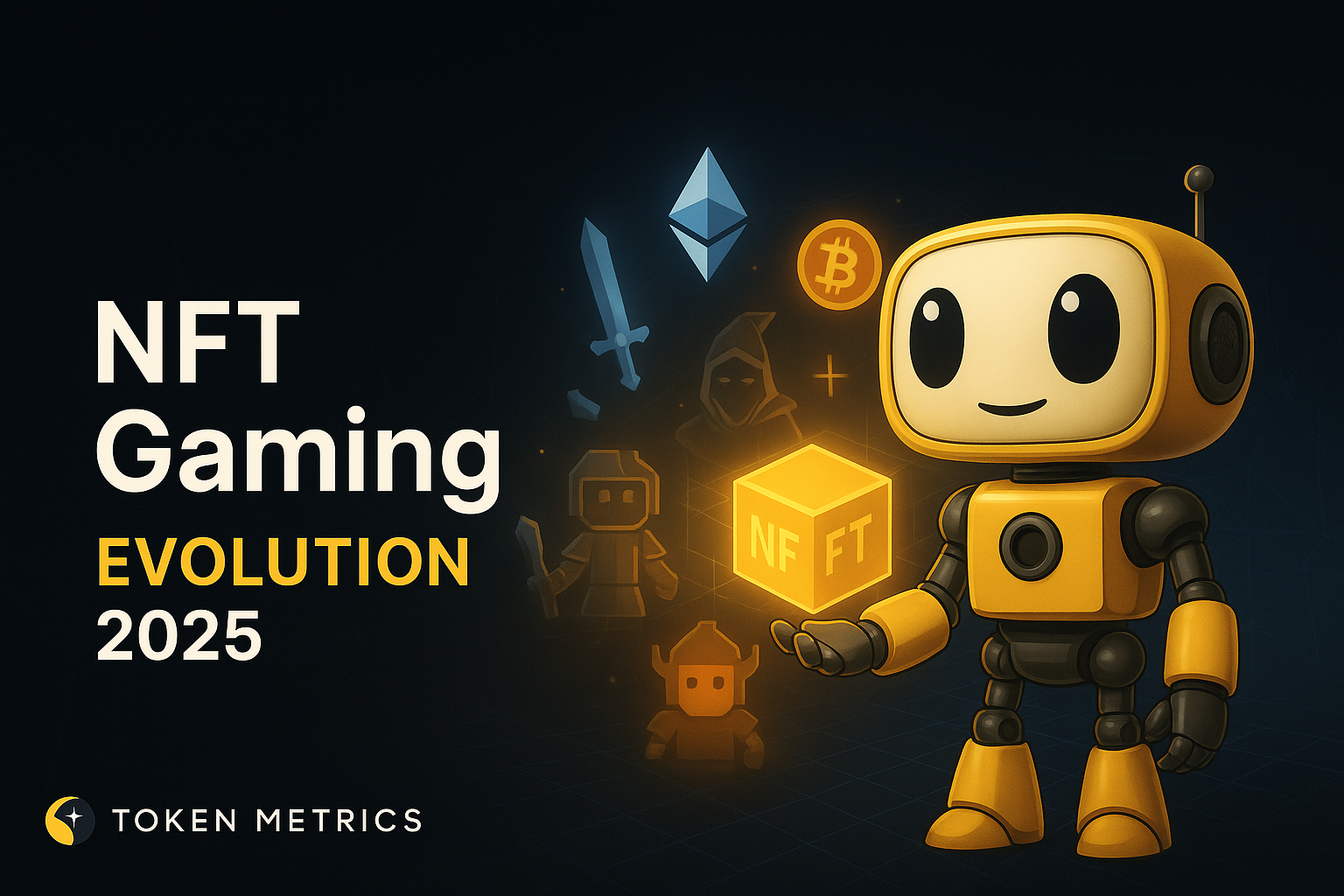
What's the Future of NFTs in Gaming? Market Analysis & 2025 Predictions

Explore the future of gaming NFTs, market growth, key trends, and how Token Metrics' analytics tools can help navigate this evolving digital landscape.
Token Metrics Team
8 min read
Want Smarter Crypto Picks—Free?
See unbiased Token Metrics Ratings for BTC, ETH, and top alts.
Thank you! Your submission has been received!
Oops! Something went wrong while submitting the form.
 No credit card | 1-click unsubscribe

The question of what's the future of NFTs in gaming is no longer theoretical—it's a dynamic reality reshaping the gaming landscape. The intersection of non-fungible tokens (NFTs) and gaming has evolved from a speculative experiment into a multi-billion dollar industry that is revolutionizing how players engage with virtual worlds. In fact, gaming NFTs accounted for over 70% of all NFT activity in the first quarter of 2025, and the market is projected to skyrocket from $4.8 billion in 2024 to an astonishing $44.1 billion by 2034. For game developers, investors, and players alike, understanding this transformation is essential to navigating the future of interactive entertainment.

The Explosive Growth Trajectory

The growth trajectory of NFT gaming is nothing short of explosive. Market forecasts indicate that the NFT gaming market will reach a staggering $0.54 trillion in 2025 and continue expanding at a compound annual growth rate (CAGR) of 14.84%, hitting $1.08 trillion by 2030. Meanwhile, the broader Web3 gaming market, which encompasses blockchain-based games and decentralized applications, is expected to grow from $25.63 billion in 2024 to $124.74 billion by 2032, with an even higher CAGR of 19.34%. Play-to-earn (P2E) NFT games are at the forefront of this surge, with the market projected to climb from $5.4 billion in 2025 to $20.19 billion by 2033, growing at a 17.93% CAGR. These models are attracting players worldwide, with more than 64% of users actively engaging with NFT-based games. Notably, 55% of these players are motivated by the financial incentives enabled by play-to-earn systems, which allow gamers to earn real-world income by playing.

This growth is not a passing bubble but a fundamental restructuring of gaming economies. Unlike traditional games that primarily extract value for publishers and developers, NFT gaming rewards players for their time, skill, and engagement, creating new revenue streams and empowering players in unprecedented ways.

From Speculation to Utility: The Maturation of Gaming NFTs

In the early days of NFT gaming, roughly between 2021 and 2022, the space was dominated by speculation and unsustainable tokenomics. Many projects prioritized financial mechanics over gameplay quality, resulting in inflated expectations and eventual market corrections. Players quickly recognized the limitations of games designed mainly as investment vehicles rather than immersive experiences.

By 2025, the market has matured significantly, with utility and gameplay quality taking center stage. The focus has shifted decisively from purely art-based NFTs to those that grant access to events, decentralized finance (DeFi) protocols, and real-world assets. Today, gaming and sports-related NFT collections constitute over 70% of NFT activity, underscoring that functional and engaging experiences drive sustained adoption.

True Digital Ownership Revolution

One of the most transformative aspects of NFTs in gaming is the concept of true digital ownership. Unlike traditional games where in-game assets are controlled exclusively by the game publisher and hold no tangible value outside the game's ecosystem, blockchain technology enables genuine ownership of digital items. When players acquire an in-game NFT—be it a rare weapon, a unique character, or virtual land—they have verifiable proof of ownership secured by the blockchain.

This ownership is not merely symbolic. Players can trade, sell, or use their NFTs across compatible games, or hold them as investments independent of the developer's decisions. Unlike traditional games, where assets are often locked to one title, NFTs open the door to interoperability and player-driven economies. Statistics reinforce this shift: over 61% of players now value having more control over their in-game assets, and around 58% of gaming projects integrate NFT minting capabilities, empowering users to create, trade, and monetize digital collectibles with greater autonomy.

  1. Sustainable Play-to-Earn Models

    The first generation of play-to-earn games struggled with unsustainable token economies that led to inflationary spirals and market collapse. Today, the emphasis is on creating balanced, sustainable play-to-earn models where earning potential aligns with genuine gameplay value rather than relying on recruitment or speculative hype. Currently, about 55% of P2E games provide crypto-based rewards within stable token economies designed for long-term viability. Developers are incorporating mechanisms such as token sinks, deflationary features, and diversified revenue streams beyond token sales to foster healthy in-game economies. This approach helps maintain the economic integrity of NFT gaming and enhances player trust.

  2. Cross-Chain Interoperability and Multi-Platform Integration

    One of the most promising aspects of NFT gaming is interoperability—the ability for players to use their digital assets across multiple games and platforms. This cross-chain functionality has become a dominant trend in 2025, with projects expanding their presence across various blockchain networks like Kronos, Solana, and Arbitrum to reach broader audiences. Technological advancements such as the ERC-6551 standard enable NFTs to own other assets, creating nested ownership structures that add unprecedented complexity and flexibility to in-game economies. For example, a player might acquire a rare sword in one game and use it across different titles, with blockchain technology ensuring provenance and authenticity. This interoperability not only enhances the gaming experience but also supports the emergence of player-driven economies across virtual worlds.

  3. AI Integration and Dynamic NFTs

    Artificial intelligence is playing an increasingly important role in NFT gaming. Unlike static digital collectibles, many new NFT assets now incorporate dynamic elements that evolve based on player actions, external triggers, or changing conditions. AI-powered procedural generation allows for unique, personalized gaming experiences while preserving the scarcity and value of NFTs. This fusion of AI and NFTs is revolutionizing gameplay mechanics, enabling more immersive and responsive virtual environments that adapt to how players engage with the game. Dynamic NFTs represent a new frontier in digital ownership and interactive storytelling within the gaming world.

  4. Metaverse Expansion and Virtual Worlds

    Blockchain-powered metaverses are becoming more sophisticated, offering enhanced graphics, intuitive interfaces, and richer social features. Competitive events within these virtual worlds are moving beyond experimental phases, with players competing in front of virtual audiences, purchasing NFT tickets, and earning collectible trophies. Virtual real estate remains a key growth area, with the market for virtual land projected to expand from $0.356 billion in 2023 to $4.498 billion by 2032. Players, brands, and investors are increasingly acquiring virtual land to establish persistent digital spaces that transcend individual games, contributing to the rise of vibrant virtual economies.

  5. Mainstream AAA Adoption

    While early NFT gaming initiatives were primarily driven by indie studios and blockchain-native developers, 2025 is witnessing major game publishers entering the space. Industry giants like Ubisoft, Square Enix, Nexon, and Epic Games have announced blockchain-based projects, lending credibility and potentially introducing millions of traditional gamers to NFT integration. Although no AAA publisher has yet fully integrated NFTs into a blockbuster title, expectations are high that between 2025 and 2030, a major release will feature NFT elements, especially as regulatory clarity improves and market demand solidifies. This transition marks a new era in gaming, blending the best of traditional games with the innovative potential of blockchain technology.

Regional Dynamics and Market Leadership

Geographically, the Asia-Pacific region leads NFT gaming adoption, commanding approximately 38-40% of the market share. This dominance is fueled by a massive mobile-first gamer base, increasing digitalization, and supportive government policies in countries like Japan and South Korea. The region's soaring smartphone usage and growing interest in crypto assets further accelerate NFT adoption. North America follows with 25-29% market share, characterized by strong crypto adoption, high digital literacy, and nearly half of American gamers having interacted with at least one blockchain-based game. Europe holds about 20-21% of the market, benefiting from rising NFT awareness and regulatory frameworks like the Markets in Crypto-Assets (MiCA) regulation, which provides clearer guidelines for developers and investors.

Token Metrics: Essential Intelligence for Gaming NFT Investment

As gaming NFTs transition from speculative tokens to foundational gaming infrastructure representing hundreds of billions in value, investors require sophisticated analytical tools to identify opportunities and manage risk. Token Metrics, a premier crypto trading and analytics platform, offers comprehensive intelligence tailored to the gaming NFT landscape.

Comprehensive Gaming NFT Analysis

Token Metrics evaluates thousands of digital assets, including gaming tokens, play-to-earn projects, metaverse platforms, and NFT collections. Its AI-powered rating system assesses projects based on critical factors such as: Blockchain infrastructure, smart contract security, and scalability solutions Economic sustainability, token utility, and inflation/deflation mechanisms Developer team expertise, community engagement, and partnership quality Market dynamics including trading volume, liquidity, and holder distribution Gameplay quality, user retention, and player growth rates

Gaming NFT Market Intelligence

Understanding which gaming platforms, blockchain networks, and NFT collections offer superior risk-adjusted returns requires deep market intelligence. Token Metrics delivers sector-specific research, project comparisons, trend forecasting, and risk assessments that highlight red flags like unsustainable tokenomics or technical vulnerabilities.

Portfolio Management for Gaming Assets

Investors building diversified portfolios across cryptocurrencies, gaming tokens, NFT collections, and virtual land benefit from Token Metrics’ portfolio tools. These provide real-time valuation across multiple chains and marketplaces, performance attribution, correlation analysis for diversification, and tax reporting features to simplify complex NFT transactions.

Trading Signals and Actionable Intelligence

Token Metrics’ proprietary algorithms generate trading signals for gaming tokens and NFT projects, helping investors identify optimal entry and exit points. As NFT marketplaces mature and liquidity improves, these signals become increasingly valuable for active portfolio management.

Access Token Metrics today to leverage the analytical firepower needed to capitalize on the gaming NFT revolution.

Challenges and Considerations

Despite the promising outlook, NFTs in gaming face several key challenges:

  • Regulatory Uncertainty: Governments worldwide are still defining how to regulate gaming NFTs, especially concerning securities laws and gambling regulations. About 43% of game publishers cite regulatory concerns as significant barriers to NFT integration.
  • Technical Barriers: Over half of indie developers report limited access to blockchain infrastructure and smart contract expertise as obstacles. High transaction fees and network congestion remain concerns, although Layer-2 solutions are alleviating these issues.
  • Player Skepticism: Many gamers view NFTs as predatory monetization or are concerned about environmental impact. Developers must carefully balance NFT integration with genuine gameplay improvements to overcome resistance.
  • Market Volatility: The value of gaming tokens and NFT assets can be highly volatile, posing financial risks to players whose in-game items fluctuate dramatically in worth.

Addressing these challenges is critical to achieving widespread adoption and ensuring the long-term sustainability of NFT-based gaming ecosystems.

The Road Ahead: 2025 and Beyond

The future of NFTs in gaming extends well beyond digital collectibles and speculation. We are entering a new era where player-owned economies, true digital property rights, and gameplay that rewards skill and engagement redefine the gaming experience. Key developments to watch include:

  • Killer App Emergence: The arrival of a breakthrough game with cultural impact on par with Fortnite or Minecraft could accelerate mainstream adoption overnight.
  • Institutional Investment: Continued venture capital funding and major publisher involvement will legitimize and expand the space.
  • Technological Advancements: Improvements in blockchain scalability, reduced transaction fees, and enhanced user experiences will drive adoption.
  • Regulatory Clarity: Comprehensive frameworks will enable compliant NFT gaming implementations, reducing uncertainty.
  • Cross-Platform Standards: Industry-wide interoperability protocols will allow true asset portability across different games and virtual worlds.

The projection that gaming NFTs will grow nearly ninefold from $4.8 billion to $44.1 billion by 2034 highlights one of the most significant wealth creation opportunities in the digital economy. For players, developers, and investors willing to navigate the evolving landscape, gaming NFTs offer unprecedented potential to revolutionize how we play, trade, and own digital assets.

Ready to capitalize on the gaming NFT revolution? Visit tokenmetrics.com to access cutting-edge research, analytics, and trading intelligence that give you an edge in this explosive market.

Build Smarter Crypto Apps &
AI Agents in Minutes, Not Months
Real-time prices, trading signals, and on-chain insights all from one powerful API.
Grab a Free API Key
About Token Metrics
Token Metrics: AI-powered crypto research and ratings platform. We help investors make smarter decisions with unbiased Token Metrics Ratings, on-chain analytics, and editor-curated “Top 10” guides. Our platform distills thousands of data points into clear scores, trends, and alerts you can act on.
30 Employees
analysts, data scientists, and crypto engineers
Daily Briefings
concise market insights and “Top Picks”
Transparent & Compliant
Sponsored ≠ Ratings; research remains independent
Want Smarter Crypto Picks—Free?
See unbiased Token Metrics Ratings for BTC, ETH, and top alts.
Thank you! Your submission has been received!
Oops! Something went wrong while submitting the form.
 No credit card | 1-click unsubscribe
Token Metrics Team
Token Metrics Team

Recent Posts

Research

Is Web3 Just a Buzzword or Is It Real? Separating Hype from Reality in 2025

Talha Ahmad
5 min

The question “Is Web3 just a buzzword or is it real?” reverberates across tech conferences, and especially in the Twitter bio of those who want to signal they are 'in the know' about the future of the internet and decentralized platforms. As we navigate through 2025, the debate about whether Web3 represents a true revolution in the internet or merely another marketing buzzword has intensified. Advocates tout it as the next internet built on decentralization and user empowerment, while skeptics dismiss it as a vapid marketing campaign fueled by hype and venture capitalists. The truth, as with many technological paradigm shifts, lies somewhere between these extremes.

Understanding the Web3 Phenomenon

Web3, also known as Web 3.0, is envisioned as the next generation of the internet, built on blockchain technology and decentralized protocols. Unlike the early days of the web—Web1, characterized by static pages and read-only content—and web 2.0, which was dominated by interactive platforms controlled by big tech companies, Web3 promises a new paradigm where users can read, write, and own their digital interactions. Web1 was primarily about connecting people through basic online platforms, while web 2.0 expanded on this by enabling greater collaboration and interaction among individuals. This represents a fundamental shift from centralized servers and platforms toward a user-controlled internet. The current internet faces challenges such as centralization and data privacy concerns, which Web3 aims to address through decentralization and user empowerment.

The term “web3” was first coined by Gavin Wood, co-founder of Ethereum and founder of Polkadot, in 2014 to describe a decentralized online ecosystem based on blockchain technology. Interest in Web3 surged toward the end of 2021, driven largely by crypto enthusiasts, venture capital types, and companies eager to pioneer token-based economics and decentralized applications. At its core, Web3 challenges the legacy tech company hegemony by redistributing power from centralized intermediaries to users collectively, promising digital ownership and governance rights through decentralized autonomous organizations (DAOs) and smart contracts.

The Case for Web3 Being Real: Tangible Applications in 2025

Despite the public’s negative associations with hype and marketing buzzwords, Web3 has demonstrated real value in several key areas by 2025.

Advocates of Web3 often refer to it as the 'promised future internet,' envisioning a revolutionary shift that addresses issues like centralization and privacy.

As the next phase of the internet's evolution, Web3 is beginning to show tangible impact beyond its initial hype.

Financial Revolution Through DeFi

Decentralized finance (DeFi) stands out as one of the most mature and actively implemented sectors proving that Web3 is more than just a buzzword. DeFi platforms enable users worldwide to lend, borrow, trade, and invest without relying on centralized intermediaries like banks. These platforms operate 24/7, breaking down barriers imposed by geography and time zones. DeFi empowers users to control their own money, eliminating the need for traditional banks and giving individuals direct access to their digital assets.

Millions of users now engage with DeFi protocols daily, and traditional financial institutions have begun adopting tokenized assets, bridging the gap between legacy finance and decentralized finance. By participating in these systems, users can accrue real value and tangible benefits, earning rewards and profits through blockchain-based activities. This integration signals a shift towards a more inclusive financial system, powered by blockchain technology and crypto assets.

Asset Tokenization Revolution

Web3’s impact extends beyond cryptocurrencies and JPEG non-fungible tokens (NFTs). Web3's influence is not limited to Bitcoin and other cryptocurrencies; it also encompasses a wide range of tokenized assets. Real-world asset tokenization is redefining how we perceive ownership and liquidity. Assets such as real estate, carbon credits, and even U.S. Treasury bonds are being digitized and traded on blockchain platforms, enhancing transparency and accessibility.

For instance, Ondo Finance tokenizes U.S. government bonds, while Mattereum offers asset-backed tokens with legal contracts, ensuring enforceable ownership rights. Agricultural tracking systems in Abu Dhabi collaborate with nearly 1,000 farmers to tokenize produce and supply chain data, illustrating practical applications of tokenization in diverse industries.

Enterprise Adoption and Infrastructure

The Web3 ecosystem has experienced unprecedented growth, with over 3,200 startups and 17,000 companies actively operating in the space as of 2025. This rapid expansion, supported by more than 2,300 investors and nearly 9,800 successful funding rounds, reflects a robust market eager to explore blockchain’s potential. The underlying infrastructure of blockchain technology is fundamental to this growth, enabling decentralization, enhanced security, and privacy across the internet.

Major industries—including finance, healthcare, supply chain, and entertainment—are integrating blockchain technology to enhance security, transparency, and efficiency. Enterprises are deploying decentralized applications and smart contracts to manage digital assets, identity verification, and transactional data, moving beyond speculative use cases to practical, scalable solutions. Web3 aims to deliver improved, interoperable service experiences across digital platforms, creating seamless and user-centric online services.

Digital Identity and Data Ownership

A core promise of Web3 is empowering users with control over their data and digital assets. Decentralized platforms host data across distributed networks, allowing users to maintain greater control and privacy over their information. Unlike Web2 platforms that monetize user information through centralized servers and walled gardens, decentralized social networks and user-controlled internet services give individuals ownership and governance over their data. This shift addresses growing concerns about privacy, censorship, and data exploitation, enabling users to monetize their digital presence directly.

The Reality Check: Valid Criticisms and Challenges

While Web3 has made impressive strides, it is not without significant challenges that temper the hype. Some critics argue that Web3 is a false narrative designed to reframe public perception without delivering real benefits.

Technical Limitations Still Persist

Scalability issues remain a critical hurdle. Ethereum, the most widely used Web3 platform, continues to face slow transaction speeds and prohibitively high gas fees during peak demand, sometimes exceeding $20 per transaction. This inefficiency limits the average person's ability to engage seamlessly with decentralized applications.

Current blockchain networks typically process fewer than 100 transactions per second, a stark contrast to legacy systems like Visa, which handle tens of thousands. Although layer-2 solutions such as Arbitrum and zk-Rollups are addressing these scalability issues, broad adoption and full integration are still works in progress.

User Experience Barriers

The complexity of Web3 applications poses a significant barrier to mass adoption. Managing wallets, private keys, gas fees, and bridging assets between chains can be intimidating even for tech-savvy users. For Web3 to become mainstream, platforms must prioritize intuitive interfaces and seamless user experiences, a challenge that the ecosystem continues to grapple with.

Regulatory Uncertainty

Governments worldwide are still defining regulatory frameworks for decentralized technologies. The fragmented and evolving legal landscape creates uncertainty for innovators and investors alike. Without clear guidelines, companies may hesitate to launch new services, and users may remain wary of engaging with decentralized platforms.

Environmental and Ethical Concerns

Blockchain technologies, especially those relying on proof-of-work consensus, have drawn criticism for their substantial energy consumption. This environmental impact conflicts with global sustainability goals, prompting debates about the ecological viability of a blockchain-based internet. Transitioning to more energy-efficient consensus mechanisms remains a priority for the community.

Token Metrics: Navigating Web3's Reality with Data-Driven Insights

In this complex and rapidly evolving landscape, distinguishing genuine innovation from hype is crucial. Token Metrics offers a powerful AI-driven platform that analyzes over 6,000 crypto tokens daily, providing comprehensive market intelligence to evaluate which Web3 projects deliver real value.

Unlike traditional online platforms dominated by a small group of companies, Token Metrics empowers users with decentralized insights, reducing reliance on centralized authorities and supporting a more user-driven ecosystem.

By leveraging technical analysis, on-chain data, fundamental metrics, sentiment analysis, and social data, Token Metrics helps users identify projects with sustainable tokenomics and governance structures. Its dual scoring system—Trader Grade for short-term potential and Investor Grade for long-term viability—enables investors, developers, and business leaders to make informed decisions grounded in data rather than speculation.

Token Metrics tracks the maturity of various Web3 sectors, from DeFi protocols to enterprise blockchain solutions, helping users separate signal from noise in an ecosystem often clouded by hype and false narratives.

The Verdict: Web3 in 2025 – Evolution, Not Revolution

In 2025, the question “Is Web3 just a buzzword or is it real?” defies a simple yes-or-no answer. Web3 is neither a complete failure nor a fully realized vision; it is an evolving ecosystem showing clear progress alongside persistent challenges.

Web3 has been touted as the solution to all the things people dislike about the current internet, but the reality is more nuanced.

What's Definitively Real

  • Financial Infrastructure: DeFi protocols handle billions in total value locked, with millions of users conducting real financial transactions daily.
  • Asset Tokenization: Diverse real-world assets are successfully digitized, creating new markets and enhancing liquidity.
  • Enterprise Adoption: Companies across sectors are leveraging blockchain for practical, transparent, and secure applications.
  • Digital Ownership: NFTs and tokenization have introduced new models for ownership and monetization of digital content.

What Remains Challenging

  • Mass Adoption: Complex user experiences continue to impede mainstream engagement.
  • Scalability: Technical limitations prevent Web3 from matching the performance of established internet services.
  • Regulatory Framework: Unclear and evolving regulations create uncertainty.
  • Sustainability: Environmental concerns about energy consumption persist.

The Path Forward: Pragmatic Decentralization

Web3 is not dead; it is maturing and shedding its earlier excesses of hype and get-rich-quick schemes. The vision of a fully decentralized internet remains a north star, but the community increasingly embraces pragmatic approaches.

Communities play a crucial role in Web3 by driving decentralized governance, fostering innovation, and enabling user participation through collective decision-making and user-created groups.

Rather than demanding all-or-nothing decentralization, most successful projects pursue “progressive decentralization,” balancing user control with practical considerations. This approach acknowledges that decentralization is a feature to be integrated thoughtfully—not an ideological mandate.

Key Trends Shaping Web3's Future

  • AI Integration: The convergence of artificial intelligence and blockchain is powering smarter, more efficient decentralized applications.
  • As these technologies evolve, the future may see a fully decentralized version of the internet, where blockchain networks enable user ownership, transparency, and the removal of centralized authorities.
  • Improved User Experience: New tools and mobile apps are making Web3 accessible to a broader audience.
  • Regulatory Clarity: Governments are moving toward clearer frameworks that support innovation while ensuring compliance.
  • Infrastructure Maturation: Layer-2 solutions and advanced blockchain architectures are steadily resolving scalability issues.

Conclusion: Beyond the Binary Debate

The debate over whether Web3 is real or just a buzzword presents a false dichotomy. In 2025, Web3 is both a real technological shift with tangible applications and an ecosystem still grappling with hype and speculation. James Grimmelmann, a Cornell University law and technology professor, has expressed skepticism about Web3's decentralization claims, highlighting ongoing concerns about centralization and data privacy.

We are witnessing Web3’s transition from a speculative fairy story to a building phase, where decentralized social networks, token-based economics, and user-generated content platforms are already reshaping digital interactions. The key lies in focusing on the fundamental value these technologies bring—digital ownership, security, and user empowerment—rather than being distracted by marketing buzzwords. The public's negative associations with Web3, including concerns about scams, gambling, and marketing gimmicks, continue to fuel skepticism and distrust regarding its true value and decentralization.

For businesses, developers, and individuals navigating this landscape, platforms like Token Metrics offer essential tools to separate genuine innovation from hype. The future of the internet will not be determined by maximalist visions or outright dismissal but by practical implementations that solve real problems.

The builders focused on identity, ownership, censorship resistance, and coordination are laying the foundation for a decentralized internet that benefits users collectively. Just as the internet evolved through cycles of boom and bust, so too will Web3. The critical question is not whether Web3 is real or hype, but how swiftly we can move beyond speculation toward sustainable value creation.

Research

What Are the Core Skills Needed for Blockchain Development? A Complete 2025 Guide

Talha Ahmad
5 min

The blockchain revolution has evolved from a niche curiosity into a foundational element of modern digital infrastructure. As we move through 2025, the demand for skilled blockchain developers is skyrocketing, driven by the rapid expansion of blockchain technology across various sectors. Experts predict that the global blockchain technology market will reach an astounding USD 1,879.30 billion by 2034. Whether you are an aspiring blockchain developer or an experienced software engineer looking to transition into this dynamic field, understanding what are the core skills needed for blockchain development is essential to thrive in today’s competitive landscape.

Understanding Blockchain Development in 2025

Blockchain development involves creating and maintaining decentralized applications (DApps), blockchain protocols, and innovative blockchain solutions. This technology is revolutionizing industries ranging from finance and healthcare to supply chain management by offering secure, transparent, and immutable systems. In 2025, blockchain developers typically fall into two main categories:

Blockchain Core Developers focus on the foundational layers of blockchain technology. They design and build blockchain architecture, including consensus algorithms such as Proof of Work (PoW), Proof of Stake (PoS), and Proof of History (PoH). Their work ensures the security, scalability, and resilience of blockchain networks by managing blockchain nodes and maintaining network security. These core developers possess a thorough knowledge of distributed ledger technology, cryptographic principles, and network architecture.

On the other hand, Blockchain Software Developers leverage existing blockchain platforms and protocols to build decentralized applications and smart contracts. They specialize in smart contract development, integrating frontend web development with blockchain backends, and creating user-friendly decentralized apps (DApps). These developers work on blockchain applications that interact with blockchain transactions, digital assets, and decentralized exchanges, often utilizing APIs to connect blockchain services with traditional business processes.

Understanding this distinction is critical to identify the core blockchain developer skills required for each role and to tailor your learning path accordingly.

Essential Programming Languages for Blockchain Development

Mastering specific programming languages is a cornerstone of blockchain developer technical skills. Here are the top languages that every blockchain professional should consider:

1. Solidity: The King of Smart Contracts

Solidity reigns supreme in the blockchain space, especially for Ethereum-based development. Created by Gavin Wood in 2014, Solidity is a statically typed language specifically designed for writing smart contracts. It combines the familiarity of C++, JavaScript, and Python syntax, making it accessible for many software developers.

Solidity’s strong community support, extensive documentation, and widespread adoption make it the backbone of approximately 90% of smart contracts deployed today. Major decentralized finance (DeFi) platforms like Compound, Uniswap, and MakerDAO rely heavily on Solidity for their smart contract infrastructure. For any developer aiming to become a blockchain developer, proficiency in Solidity and smart contract logic is indispensable.

2. Rust: Performance and Security Combined

Rust is gaining significant traction in blockchain development due to its focus on memory safety and high performance. Unlike languages with garbage collection, Rust’s ownership model guarantees memory safety without sacrificing speed, reducing common programming pitfalls such as race conditions and memory corruption.

Rust is extensively used in cutting-edge blockchain platforms like Solana, NEAR, and Polkadot. Developers familiar with C++ will find Rust’s syntax approachable, while appreciating its enhanced security features. For blockchain core developers working on blockchain systems that demand speed and reliability, Rust is a top blockchain developer skill.

3. JavaScript: Bridging Web2 and Web3

JavaScript remains a versatile and essential language, especially for integrating blockchain applications with traditional web interfaces. Its extensive ecosystem, including frameworks like Node.js, React.js, Angular, and Vue.js, enables developers to build responsive frontends and backend services that interact seamlessly with blockchain networks.

Libraries such as Web3.js and Ethers.js facilitate blockchain integration, allowing developers to manage blockchain transactions, interact with smart contracts, and maintain decentralized applications. JavaScript skills are vital for blockchain software developers aiming to create intuitive decentralized apps and blockchain services.

4. Python: Simplicity Meets Power

Python’s simplicity and versatility make it a popular choice for blockchain development, particularly for scripting, backend integration, and prototyping. Python is also the foundation for Vyper, a smart contract language designed to complement Solidity with a focus on security and simplicity.

Python’s easy-to-learn syntax and broad application in data science and machine learning make it a valuable skill for blockchain developers interested in emerging technologies and AI integration within blockchain solutions.

5. Go: Google's Blockchain Powerhouse

Go (Golang) is renowned for its user-friendliness, scalability, and speed, making it ideal for blockchain development. It powers prominent projects such as Go-Ethereum (the official Ethereum client), Hyperledger Fabric, and various DeFi protocols.

For blockchain developers focusing on enterprise blockchain applications and network architecture, Go offers the tools necessary to build efficient distributed systems and maintain decentralized networks.

Critical Technical Skills Beyond Programming

While programming languages form the foundation, several other technical competencies are essential to excel in blockchain development.

Smart Contract Development

Smart contracts are self-executing agreements coded directly into blockchain networks. Proficiency in creating smart contracts is central to blockchain development involves creating automated, transparent, and secure agreements without intermediaries. Developers must master gas optimization to reduce transaction fees, apply security best practices to prevent vulnerabilities, and adopt rigorous testing and deployment strategies to ensure contract reliability.

Blockchain Architecture and Cryptography

A deep understanding of blockchain architecture is vital. This includes knowledge of consensus mechanisms such as PoW, PoS, and emerging alternatives, which govern how blockchain networks agree on the validity of transactions. Familiarity with cryptographic principles, including hash functions, cryptographic hash functions, digital signatures, and public key cryptography, is necessary to secure blockchain transactions and digital assets.

Moreover, blockchain developers should understand how blockchain nodes communicate within distributed networks, the structure of data blocks, and how blockchain consensus ensures data integrity across decentralized systems.

Web Development Integration

Modern blockchain applications require seamless integration between traditional web technologies and blockchain backends. Developers use libraries like Web3.js, Ethers.js, and Web3.py to connect decentralized apps with user-friendly interfaces. Skills in frontend frameworks (React.js, Angular, Vue.js), backend development (Node.js, Python), and API development are essential to build responsive and scalable blockchain applications that cater to diverse user needs.

Essential Development Tools and Frameworks

Development Frameworks

Frameworks such as Hardhat and Truffle simplify blockchain development by providing comprehensive environments for compiling, testing, and deploying smart contracts. Hardhat is a flexible JavaScript-based framework favored for its powerful debugging capabilities, while Truffle offers an end-to-end development suite for scalable blockchain applications. For beginners, Remix IDE presents a browser-based environment ideal for learning and experimenting with smart contracts.

Testing and Security Tools

Security is paramount in blockchain development. Developers must rigorously test smart contracts using tools like Remix, Hardhat, and Truffle to simulate various scenarios and identify vulnerabilities. Adhering to security best practices, such as leveraging established libraries like OpenZeppelin, conducting professional security audits, and following industry-standard coding conventions, ensures that blockchain applications remain secure against attacks like reentrancy or denial-of-service.

Blockchain Platforms and Networks

Proficiency across different blockchain platforms is crucial. Ethereum remains the most popular blockchain development platform, supported by a vast ecosystem and extensive developer resources. Layer 2 solutions such as Polygon, Arbitrum, and Optimism address Ethereum’s scalability challenges, while alternative blockchains like Solana, Binance Smart Chain, and Avalanche cater to specific use cases with unique performance attributes.

Enterprise-focused platforms like Hyperledger Fabric offer permissioned blockchain networks tailored for business applications, emphasizing privacy and compliance. Understanding these platforms enables developers to select the appropriate blockchain ecosystem for their projects.

The Role of Token Metrics in Blockchain Development Success

Beyond technical skills, understanding token economics and market dynamics is increasingly important for blockchain developers. Token Metrics is an invaluable platform offering AI-powered analytics that help developers navigate the cryptocurrency market and make informed technical decisions.

Why Token Metrics is Essential for Developers

Token Metrics equips developers with market intelligence by analyzing over 6,000 tokens daily, providing insights into which blockchain platforms and projects are gaining traction. This knowledge aids developers in selecting technologies and designing blockchain solutions aligned with market trends.

The platform’s comprehensive analysis of token economics supports developers working on DeFi protocols, decentralized finance applications, and tokenized ecosystems. Real-time performance tracking and sentiment analysis help developers evaluate project viability, guiding architecture choices and consensus mechanism implementations.

Leveraging Token Metrics for Career Growth

By using Token Metrics, blockchain professionals can build expertise that combines technical proficiency with market awareness—an increasingly sought-after combination in the blockchain industry. The platform’s scoring systems teach developers to evaluate projects systematically, a skill crucial for leadership roles.

Staying current with emerging trends through Token Metrics’ real-time alerts ensures developers remain at the forefront of innovation, enabling them to create innovative solutions that meet evolving market demands.

Advanced Skills for 2025 and Beyond

Emerging Technologies Integration

The blockchain space is rapidly evolving, with new languages like Move, Cadence, Cairo, and Ligo addressing challenges related to scalability, security, and usability. Integration with AI and machine learning technologies is becoming more prevalent, enhancing blockchain applications’ capabilities.

Cross-chain development skills, including knowledge of interoperability protocols and bridges, are essential as decentralized networks become more interconnected. Privacy-preserving technologies like zero-knowledge proofs (zk-SNARKs and zk-STARKs) are critical for developing secure, confidential blockchain applications.

Performance Optimization

Efficient transaction processing and scalability are vital for blockchain usability. Developers must master gas optimization techniques to minimize transaction fees and implement scalability solutions such as Layer 2 protocols and sidechains. Load testing ensures that blockchain applications can handle high volumes of transactions without compromising performance.

Security and Auditing

Security remains a top priority. Developers should acquire skills in code review methodologies, vulnerability assessments, penetration testing, and formal verification to audit smart contracts thoroughly. Choosing programming languages with strong typing and memory safety features helps prevent common security threats, reinforcing blockchain security.

Building Your Blockchain Development Career

Learning Path Recommendations

To become a proficient blockchain developer, a structured learning path is beneficial:

Phase 1: Foundation (2-3 months)
Start by mastering a core programming language such as Python or JavaScript. Build a solid understanding of blockchain basics, cryptographic concepts, and blockchain fundamentals. Utilize platforms like Token Metrics to gain insights into market dynamics.

Phase 2: Specialization (4-6 months)
Learn Solidity and focus on smart contract development. Gain hands-on experience with development frameworks like Hardhat or Truffle. Build and deploy simple decentralized applications on testnets to apply your knowledge practically.

Phase 3: Advanced Development (6-12 months)
Delve into advanced topics such as Layer 2 solutions, cross-chain interoperability, and blockchain consensus algorithms. Contribute to open-source blockchain projects and develop expertise in specific blockchain ecosystems to build a robust portfolio.

Portfolio Development

A strong portfolio is essential for showcasing your blockchain developer skills. Include smart contracts with clean, audited code, full-stack DApps featuring intuitive user interfaces, and contributions to open-source blockchain projects. Demonstrate your understanding of token economics and market dynamics to highlight your comprehensive blockchain expertise.

Industry Outlook and Opportunities

The blockchain development landscape in 2025 offers unprecedented opportunities fueled by exponential market growth. The expanding blockchain industry creates demand across multiple sectors:

  • DeFi and Financial Services: Innovating next-generation financial applications that disrupt traditional financial services.
  • NFTs and Digital Assets: Developing marketplaces and platforms for tokenizing digital assets.
  • Enterprise Blockchain: Building permissioned networks tailored for business applications requiring privacy and compliance.
  • Web3 Infrastructure: Designing the protocols and tools that power decentralized applications and services.

As blockchain technology continues to integrate with emerging technologies, blockchain professionals with a blend of technical and soft skills will be pivotal in driving the future of decentralized solutions.

Conclusion: Your Path to Blockchain Development Success

In 2025, what are the core skills needed for blockchain development extends beyond just programming. It encompasses a thorough understanding of blockchain architecture, cryptographic principles, smart contract development, and seamless web integration. Equally important is market awareness, token economics knowledge, and the ability to evaluate projects critically.

Platforms like Token Metrics provide indispensable market intelligence that complements technical skills, empowering developers to make informed decisions and create innovative blockchain applications. The blockchain revolution is still unfolding, and developers who combine technical proficiency with market insight will lead the next wave of innovation.

Start your journey today by mastering the fundamentals, leveraging professional tools, and building projects that demonstrate both your technical competence and market understanding. The future of decentralized technology depends on blockchain developers equipped with the right skills to build secure, scalable, and transformative blockchain systems.

Research

How Do I Start a Career in Web3: Your Complete Guide to Success in 2025

Talha Ahmad
5 min

The digital revolution has ushered in an era of unprecedented opportunity, and nowhere is this more evident than in the rapidly expanding Web3 ecosystem. As we navigate through 2025, the landscape of decentralized technologies, blockchain applications, and crypto innovations continues to evolve at breakneck speed, creating a wealth of career opportunities for forward-thinking professionals. If you're wondering how do I start a career in Web3, this comprehensive guide will provide you with the essential knowledge, skills, and strategies to build a successful career in this exciting and constantly evolving industry.

Understanding the Web3 Revolution

Web3 represents the third iteration of the internet as we know it—a decentralized web built on principles of trust, transparency, and individual ownership. Unlike the centralized nature of Web2, where tech giants control data and platforms, Web3 leverages blockchain technology, smart contracts, and cryptography to facilitate peer-to-peer interactions and create more robust, transparent systems. This paradigm shift empowers users with control over their data and digital assets, enabling new forms of interaction through decentralized applications (dApps) and decentralized autonomous organizations (DAOs).

The Web3 career landscape has fundamentally shifted as well. According to the 2025 Web3.Career Intelligence Report, job postings have reached all-time highs, reflecting an industry that has matured beyond experimentation into execution. This maturation has drastically changed the skills that matter most, especially with the rise of hybrid work models and geographic arbitrage opportunities. For anyone eyeing a career in Web3, understanding this revolution is the first step toward success.

The Current State of Web3 Careers in 2025

The Web3 job market is experiencing explosive growth across both technical and non-technical domains. Since 2023, the market has seen a staggering 300% surge in job openings by 2025. This growth is fueled by the industry’s transition from speculative hype to building practical, real-world blockchain projects and blockchain based applications that solve tangible problems.

Key market insights include:

  • Web3 Jobs currently lists over 66,000 active positions, ranging from blockchain developers and smart contract developers to community managers and tokenomics specialists.
  • Contrary to popular belief, non-technical jobs are now rising faster than technical roles, highlighting the diverse career paths available.
  • There has been a 50% reduction in fully remote jobs year-over-year, signaling a structural shift toward hybrid work models.

Salary and compensation in Web3 can vary significantly depending on the specific job role, with some roles commanding much higher pay due to specialized skills or responsibilities. The explosive growth in the Web3 job market is influenced by various factors such as skills, experience, and regional demand.

This growing demand reflects the high demand for skilled professionals who possess a solid understanding of Web3 technologies and business models.

Essential Skills for Web3 Success

Technical Skills

To build a successful career in Web3, acquiring the right technical skills is crucial.

  • Blockchain Fundamentals: A solid foundation in blockchain technology is essential. This includes understanding decentralized systems, consensus algorithms, and the architecture of peer-to-peer networks.
  • Programming Languages: Proficiency in certain programming languages is highly sought after. These include:
    • Solidity for smart contract development on Ethereum.
    • Rust for high-performance blockchain systems.
    • JavaScript for frontend web development and Web3 integration.
    • Python for backend development and blockchain data analysis. Learning a programming language such as Solidity or Vyper is crucial for developing smart contracts and decentralized applications, as these languages directly impact smart contract security, readability, and functionality.
  • Smart Contract Development: Since smart contracts are the backbone of many Web3 applications, mastering Solidity and understanding how to write, deploy, and audit smart contracts is vital. This skill opens doors to roles such as smart contract developer and blockchain developer.
  • Web3 Libraries and Frameworks: Familiarity with tools like Web3.js, ethers.js, and frontend frameworks such as React is important for building user-friendly decentralized apps.

If you are new to JavaScript, you can learn JavaScript through online platforms like freeCodeCamp, Codecademy, or Udemy, which offer courses tailored for Web3 and blockchain development.

Non-Technical Skills

Web3 careers are not limited to coding. Several non-technical skills are equally important:

  • Understanding the Web3 Ecosystem: A good understanding of decentralized finance (DeFi), non-fungible tokens (NFTs), the metaverse, and various types of decentralized applications is essential for many roles. While NFTs are often associated with digital art, their applications extend far beyond, impacting creative industries and marketing strategies.
  • Community Management: Given the decentralized nature of Web3, community building and engagement are critical. Being active in online communities and managing blockchain communities can lead to roles like community manager or content creator.
  • Analytics and Research: The ability to analyze market trends, token performance, and blockchain data is increasingly valuable, especially for roles like crypto analyst or tokenomics specialist.

Top Web3 Career Opportunities in 2025

Technical Roles

  1. Blockchain Developer: These professionals design and build decentralized systems and blockchain based applications. dApp developers in this role are responsible for designing and implementing a decentralized application, which requires programming skills in languages like Solidity and experience with frameworks such as Web3.js for seamless blockchain integration. Their responsibilities include writing code, managing data structures, and ensuring security. Salaries range from $80,000 to over $200,000 depending on experience and location.
  2. Smart Contract Developer: Writing and deploying smart contracts on platforms like Ethereum is a core function. This role requires strong programming skills and an understanding of decentralized applications architecture, including the ability to implement a decentralized application using Solidity and frameworks like Web3.js.
  3. Web3 Frontend Developer: Creating responsive, intuitive interfaces that interact with blockchain backends is key. Knowledge of JavaScript and Web3 libraries is essential.

Non-Technical Roles

  1. Crypto Analyst: Professionals who analyze token economies, decentralized finance protocols, and market trends to provide actionable insights.
  2. Community Manager: Building and maintaining engaged communities around Web3 projects is a vital role given the emphasis on decentralization.
  3. Web3 Project Manager: Overseeing blockchain product development from conception to launch, requiring skills in project management and understanding of the Web3 ecosystem.
  4. Tokenomics Specialist: Designing and analyzing economic models for token ecosystems, critical for sustainable project growth.

The Role of Token Metrics in Web3 Career Success

For professionals entering the Web3 space, understanding the crypto market and developing analytical skills is crucial. Token Metrics is an AI-powered crypto analytics platform that provides cutting edge technology and market intelligence essential for career development.

Advanced Market Intelligence

Token Metrics helps you identify promising tokens early by leveraging AI analytics that combine technical analysis, on-chain data, sentiment analysis, and more. This insight is invaluable for roles such as crypto analyst, tokenomics specialist, and blockchain developer.

Professional Development Tools

The platform supports career growth by enabling users to:

  • Develop market expertise through daily scans of over 6,000 tokens.
  • Build analytical skills with AI-powered rating systems that teach systematic project evaluation.
  • Stay current with real-time signals and alerts to keep up with new trends.

Career-Enhancing Features

Token Metrics consolidates research, portfolio management, and trading into a unified interface, providing:

  • AI-powered analytics for both retail and institutional users.
  • Comprehensive scoring systems that evaluate tokens’ short-term and long-term viability.
  • Sector-specific analysis that builds expertise valuable across diverse Web3 roles.

Your Step-by-Step Web3 Career Roadmap

Phase 1: Foundation Building (1-3 months)

Start by building a basic understanding of blockchain and web development fundamentals:

  1. Learn blockchain basics such as decentralized networks, consensus algorithms, and smart contracts.
  2. Master the fundamentals of web development including HTML, CSS, and JavaScript.
  3. Begin using tools like Token Metrics to grasp market dynamics and develop analytical thinking.

Phase 2: Skill Development (3-6 months)

  1. Dive deeper into smart contract development by studying Ethereum’s architecture, the Ethereum Virtual Machine (EVM), and Solidity.
  2. Build simple decentralized applications (dApps) or smart contracts to gain hands on experience.
  3. Engage with online communities on Discord, Twitter Spaces, and community forums to learn from industry professionals.

Phase 3: Professional Development (6-12 months)

  1. Contribute to open source projects related to Web3 to gain practical experience and showcase your skills.
  2. Network actively by attending meetups, hackathons, and conferences. While sharing your LinkedIn profile can be helpful, authentic engagement and meaningful participation in Web3 communities often precede formal connections and are more valuable for building trust.
  3. Specialize in an area such as decentralized finance, non fungible tokens, or decentralized autonomous organizations to deepen your expertise.

Creating a Professional Portfolio for Web3

Building a professional portfolio is a critical step toward a successful career in Web3. In this constantly evolving industry, your portfolio serves as a showcase of your skills, creativity, and hands-on experience with blockchain technologies. To stand out in the competitive Web3 job market, highlight your proficiency in key programming languages such as Solidity, JavaScript, and Python—these are essential for smart contract development and building decentralized applications.

Include detailed examples of your work, such as deployed smart contracts, decentralized finance projects, or contributions to decentralized autonomous organizations. If you’ve participated in open source blockchain projects or created your own decentralized applications, be sure to feature these prominently. Demonstrate your understanding of the broader Web3 ecosystem by including projects that touch on decentralized finance, governance, or innovative uses of blockchain technology.

A strong portfolio not only displays your technical skills but also your ability to solve real-world problems using decentralized technologies. By curating a collection of relevant projects and achievements, you’ll position yourself as a capable and motivated candidate ready to thrive in the exciting industry of Web3.

Crafting a Compelling Web3 Cover Letter

A compelling cover letter can set you apart in the Web3 job market, serving as your personal introduction to hiring managers and project leads. When applying for a job in this industry, your cover letter should clearly communicate your passion for blockchain technologies, your strong programming skills, and your relevant experience with smart contracts and decentralized applications.

Start by thoroughly researching the company and carefully reviewing the job description. Tailor your cover letter to address the specific skills and qualifications they are seeking, using language that mirrors the job posting. Highlight your experience with smart contract development, your familiarity with blockchain technologies, and any notable projects or achievements that demonstrate your expertise.

Be sure to emphasize your ability to adapt to new trends and your enthusiasm for contributing to the company’s mission within the rapidly changing Web3 landscape. A well-crafted cover letter that showcases your skills, relevant experience, and genuine interest in the industry can make a significant impact, increasing your chances of landing an interview and advancing your career in Web3.

Exploring Content Creation and Writing Careers in Web3

The Web3 industry is not just for developers—there is a high demand for skilled content creators and writers who can translate complex concepts like smart contracts, blockchain technology, and decentralized finance into engaging, accessible content. As blockchain technologies and decentralized autonomous organizations continue to grow, top companies and projects are seeking professionals who can educate, inform, and inspire their communities.

To build a successful career in content creation and writing within Web3, focus on developing a strong understanding of the industry’s core concepts and trends. Hone your writing and storytelling skills, and learn to communicate technical information in a user-friendly way. Experiment with different formats, such as blog posts, articles, social media threads, and video scripts, to showcase your versatility.

Engage with online communities and connect with industry professionals to stay updated on the latest developments and opportunities. By building a portfolio of high-quality content and actively participating in the Web3 ecosystem, you can establish yourself as a go-to resource for blockchain-based projects, decentralized autonomous organizations, and top companies in this exciting industry. With the right skills and network, content creation offers a dynamic and rewarding path in the world of Web3 careers.

Overcoming Common Challenges

Breaking into Web3 Without Experience

Starting a Web3 career without prior experience can be daunting, but several strategies can improve your chances:

  • Build a strong portfolio on GitHub featuring personal projects and contributions to open source.
  • Engage in continuous learning to stay updated with the latest developments in blockchain technology and Web3.
  • Use analytics tools like Token Metrics to demonstrate your market understanding during job applications and interviews.

Geographic Opportunities

An important trend is the dramatic geographic salary differences, creating unprecedented opportunities. Web3 professionals in emerging markets can earn 3-10 times local rates, and many companies hiring offer the flexibility to work remotely, broadening access to exciting career opportunities worldwide.

Salary Expectations and Growth Potential

Web3 careers offer competitive compensation that often surpasses traditional tech roles:

  • Entry-level positions typically pay between $50,000 and $80,000.
  • Mid-level roles range from $80,000 to $150,000.
  • Senior positions can command $150,000 to $300,000 or more.
  • Specialized roles, especially in high-demand areas, can exceed $500,000.

Many jobs also offer equity or token compensation, which can significantly increase total earnings.

The Future of Web3 Careers

The Web3 ecosystem continues to mature, with several key trends shaping future career opportunities:

  1. Integration with Traditional Industries: Blockchain is increasingly used beyond cryptocurrency, including supply chain, healthcare, and media sectors.
  2. AI Integration: Combining Web3 and AI skills will be highly valuable as AI becomes mandatory in many applications.
  3. Regulatory Clarity: Clearer regulations will encourage more traditional companies to enter the Web3 space, expanding job opportunities.

Building Your Professional Network

Success in Web3 heavily depends on community engagement and networking:

  • Join blockchain communities on Discord, Telegram, and Twitter.
  • Attend industry events such as conferences, hackathons, and meetups.
  • Contribute to discussions by writing articles on platforms like Medium or Mirror.
  • Engage actively with projects, as many hire from their communities.

Continuous Learning and Adaptation

Given the constantly evolving nature of Web3, continuous learning is essential:

  • Stay updated by following industry publications, podcasts, and thought leaders.
  • Experiment with new protocols, DeFi platforms, NFT marketplaces, and decentralized apps.
  • Use professional tools like Token Metrics to keep pace with market trends and deepen your expertise.

Conclusion: Your Web3 Journey Starts Now

The Web3 revolution is creating unprecedented opportunities for professionals willing to embrace decentralized technologies and innovative business models. Working in Web3 offers the chance to engage with cutting edge technology, develop new skills, and participate in an exciting industry with vast growth potential.

Success requires a combination of technical proficiency, market understanding, and active community involvement. Platforms like Token Metrics provide the analytical foundation needed to navigate the complex crypto landscape, making your journey smoother and more informed.

Whether you aspire to be a developer, analyst, marketer, or entrepreneur, the decentralized future has a place for your talents. Start today by learning, building personal projects, and contributing to the ecosystem. The future is decentralized, and it’s being built by professionals like you. Your Web3 career journey begins with the first step—embrace the revolution and unlock your potential in this dynamic and rewarding field.

Choose from Platinum, Gold, and Silver packages
Reach with 25–30% open rates and 0.5–1% CTR
Craft your own custom ad—from banners to tailored copy
Perfect for Crypto Exchanges, SaaS Tools, DeFi, and AI Products