Crypto Basics

Will Shiba Inu Coin Reach $1 - Complete Analysis

Explore the future potential of Shiba Inu coin, will it reach $1? Dive into a comprehensive analysis of its price trends, market factors, and predictions.
Marcus K
8 Minutes
MIN

In the ever-changing landscape of the cryptocurrency markets, a distinctive category known as "meme coins" has emerged, generating both interest and investment. 

Among these, Shiba Inu (SHIB) has become particularly noteworthy, attracting considerable attention from both industry experts and crypto enthusiasts. 

The rapid rise of SHIB has led to a pressing question that resonates across financial forums and professional analyses: Will Shiba Inu reach the significant milestone of $1 in the near future?

In this in-depth analysis, we'll explore all the possible scenarios, opportunities and challenges with Shiba Inu to answer this burning question.

Shiba Inu Overview

Shiba Inu, named after the Japanese dog breed, is a decentralized meme token that was created in August 2020. Marketed as the "Doge Killer," it aims to provide a fresh perspective in the world of cryptocurrencies.

Shiba Inu Growth Story

Creation and Listing on Minor Exchanges - Shiba Inu came into existence in August 2020, amidst a rising trend in meme coins. During its early days, SHIB was more of a niche and underground token, accessible only through minor exchanges and decentralized trading platforms. 

The creators designed SHIB with the intention of fostering a community-driven cryptocurrency, rather than concentrating power within a central organization. 

While its price remained low, and the trading volume was modest, the coin's unique concept and committed community laid the groundwork for future growth.

Significant Price Spikes and Major Exchange Listings - 2021 was a landmark year for Shiba Inu, marked by explosive price growth and mainstream recognition. 

The coin experienced unprecedented price spikes, particularly during the spring months. This surge was fueled by a combination of celebrity endorsements, social media buzz, and the wider bull market in cryptocurrencies. Major exchanges like Binance, Coinbase, and Kraken listed SHIB, further boosting its accessibility and credibility. 

By the end of 2021, Shiba Inu had cemented itself as a prominent player in the crypto landscape, attracting a diverse investor base and achieving a multi-billion dollar market cap.

Community Growth and Market Penetration - As Shiba Inu entered 2022, the community's focus shifted towards sustainability, utility, and long-term growth. The development team introduced new use cases, such as ShibaSwap, an exchange platform, and collaborated with various retailers to accept SHIB as payment. 

These initiatives aimed at transforming SHIB from a meme coin to a functional cryptocurrency with real-world applications. The community also saw robust growth, with active participation in governance, development, and promotional activities. 

Additionally, the team's efforts in charity and global outreach helped in further market penetration, maintaining the momentum, and establishing Shiba Inu as more than just a fleeting trend.

Shiba Inu Current Stats

Price (as of writing): $0.000008215

Market Cap: $4.84 Billion

Circulating Supply: 589.35T SHIB

Shiba Inu Price

Will Shiba Inu Reach $1?

No, with the current tokenomics, Shiba Inu will not be able to reach $1. Just think about it; to reach $1, Shiba Inu would have to soar by more than 12,100,000% from where it's sitting right now. That's no small feat!

Now, there are things out there that could trigger a bullish run for this meme cryptocurrency. But hitting that $1 target? Well, that's a different story altogether.

Here's something to chew on: As something grows larger, it becomes tougher for it to keep growing at the same rate. It's like a snowball effect but in reverse. 

Small increases in adoption or other boosts can make a huge difference when you're starting small, but as you grow, those same changes don't pack the same punch.

That explains why Shiba Inu was able to make such mind-blowing gains across 2021's trading. It started as a little pup and grew into a big dog!

But now, it's a different game. Shiba Inu has already risen more than expected from its initial price. So, while the jump to $1 might seem smaller in terms of percentage points compared to what it's already done, pulling off that performance again? It's almost like trying to catch lightning in a bottle twice.

Also Read - Is Shiba Inu Dead? - Complete Analysis

Factors Influencing Shiba Inu's Price

Several factors can push SHIB towards the $1 mark or keep it away:

a) Supply & Demand - Shiba Inu's large supply can inhibit growth toward $1. The team combats this by burning tokens, reducing the supply, and potentially increasing scarcity, thus affecting the price.

b) Adoption & Use Cases - The more SHIB is adopted through listings, partnerships, and real-world applications, the more demand may grow. This growth in usage can push its price upward.

c) Community Support - SHIB's community plays a vital role in its success. Through promotion, development, and holding the token, a united community can positively impact its price.

d) Regulatory Factors - Government regulations around cryptocurrencies can be a double-edged sword. Supportive policies may boost growth, while restrictive ones might hinder it, significantly impacting Shiba Inu's journey toward $1.

Is Shiba Inu a good investment for the long term?

Shiba Inu's status as a meme coin and its speculative nature makes it a complex choice for investment. While it has captured significant attention and experienced extraordinary growth, it's still seen largely as a high risk/high reward asset. 

Its future as a viable currency is uncertain, as real-world adoption and acceptance as payment remain limited. Investors considering Shiba Inu must be aware of its speculative appeal and tread with caution, keeping in mind that its value could be tied more to short-term trading opportunities rather than long-term financial stability or growth. 

The decision to invest in Shiba Inu should align with an individual's risk tolerance, investment strategy, and an understanding of the rapidly evolving cryptocurrency landscape.

Future Outlook of Shiba Inu

The future outlook of Shiba Inu is marked by both potential and uncertainty. As a meme coin, it has shown remarkable growth and gained significant popularity. 

However, its long-term sustainability hinges on broader acceptance, real-world use cases, and the ability to transition from a speculative asset to a functional currency. 

The Shiba Inu development team's efforts towards creating platforms like ShibaSwap and fostering partnerships may pave the way for further growth. 

Investors and market watchers should closely monitor regulatory developments, community engagement, and technological advancements within the Shiba Inu ecosystem, as these factors will likely shape the coin's future trajectory. 

The dynamic nature of the crypto market adds to the complexity, making Shiba Inu's future an intriguing but cautiously optimistic prospect.

Frequently Asked Questions

Q1. What Is ShibaSwap, and How Does It Relate to Shiba Inu's Growth?

ShibaSwap is a decentralized exchange platform developed by the Shiba Inu team. It allows users to trade, stake, and farm various tokens, including SHIB. By providing a tangible use case, ShibaSwap has contributed to the coin's growth and broader acceptance.

Q2. How Can I Buy Shiba Inu, and What Exchanges Support It?

Shiba Inu is available on several major exchanges like Binance, Coinbase, and Kraken. Purchasing SHIB usually involves creating an account on one of these platforms, depositing funds, and then trading them for SHIB tokens.

Q3. Has Shiba Inu Implemented Any Token Burns, and How Does It Affect the Price?

Shiba Inu has implemented token burns to reduce its circulating supply. By creating scarcity, these burns can have a positive impact on the token's price, although it's just one of many factors influencing its value.

Q4. What Are Some Real-World Use Cases for Shiba Inu?

While Shiba Inu started as a meme coin, efforts have been made to increase its real-world usability. This includes being accepted by some online retailers and being used within the ShibaSwap platform.

Q5. Is Shiba Inu Associated with Any Charitable Causes?

Shiba Inu has been involved in various charitable initiatives, reflecting the community's desire to make a positive impact. Details on specific partnerships and contributions would depend on ongoing community decisions and collaborations.

Q6. What Are the Risks Associated with Investing in Shiba Inu?

Like many cryptocurrencies, investing in Shiba Inu carries risks, including market volatility, regulatory changes, technological vulnerabilities, and dependence on community support. Potential investors should conduct thorough research and consider their risk tolerance before investing.

Q7. How Does Shiba Inu Compare to Dogecoin?

Shiba Inu is often compared to Dogecoin, as both started as meme coins. While they share thematic similarities, they differ in technology, community goals, use cases, and market strategies. A detailed comparison would require analysis of specific aspects such as tokenomics, development roadmaps, and community engagement.

Conclusion

Shiba Inu's journey encapsulates the excitement, potential, and uncertainty that defines the cryptocurrency landscape. Its rise from a meme coin to a recognized digital asset provides valuable insights for both investors and enthusiasts. 

While questions about its long-term viability and price milestones remain, the underlying story of community-driven growth, speculative investment, and the quest for real-world application offers lessons that extend beyond this single token. 

While the question of whether Shiba Inu will reach the $1 mark remains speculative, its growth story, factors influencing its price, and its future outlook provide valuable lessons for investors and enthusiasts alike. 

Disclaimer

The information provided on this website does not constitute investment advice, financial advice, trading advice, or any other sort of advice and you should not treat any of the website's content as such.

Token Metrics does not recommend that any cryptocurrency should be bought, sold, or held by you. Do conduct your own due diligence and consult your financial advisor before making any investment decisions.

Build Smarter Crypto Apps &
AI Agents in Minutes, Not Months
Real-time prices, trading signals, and on-chain insights all from one powerful API.
Grab a Free API Key
Token Metrics Team
Token Metrics Team

Recent Posts

Crypto Basics

What is Peer to Peer Crypto Exchange? A Complete Guide for Beginners

Token Metrics Team
8 min
MIN

Introduction to P2P Crypto Exchange

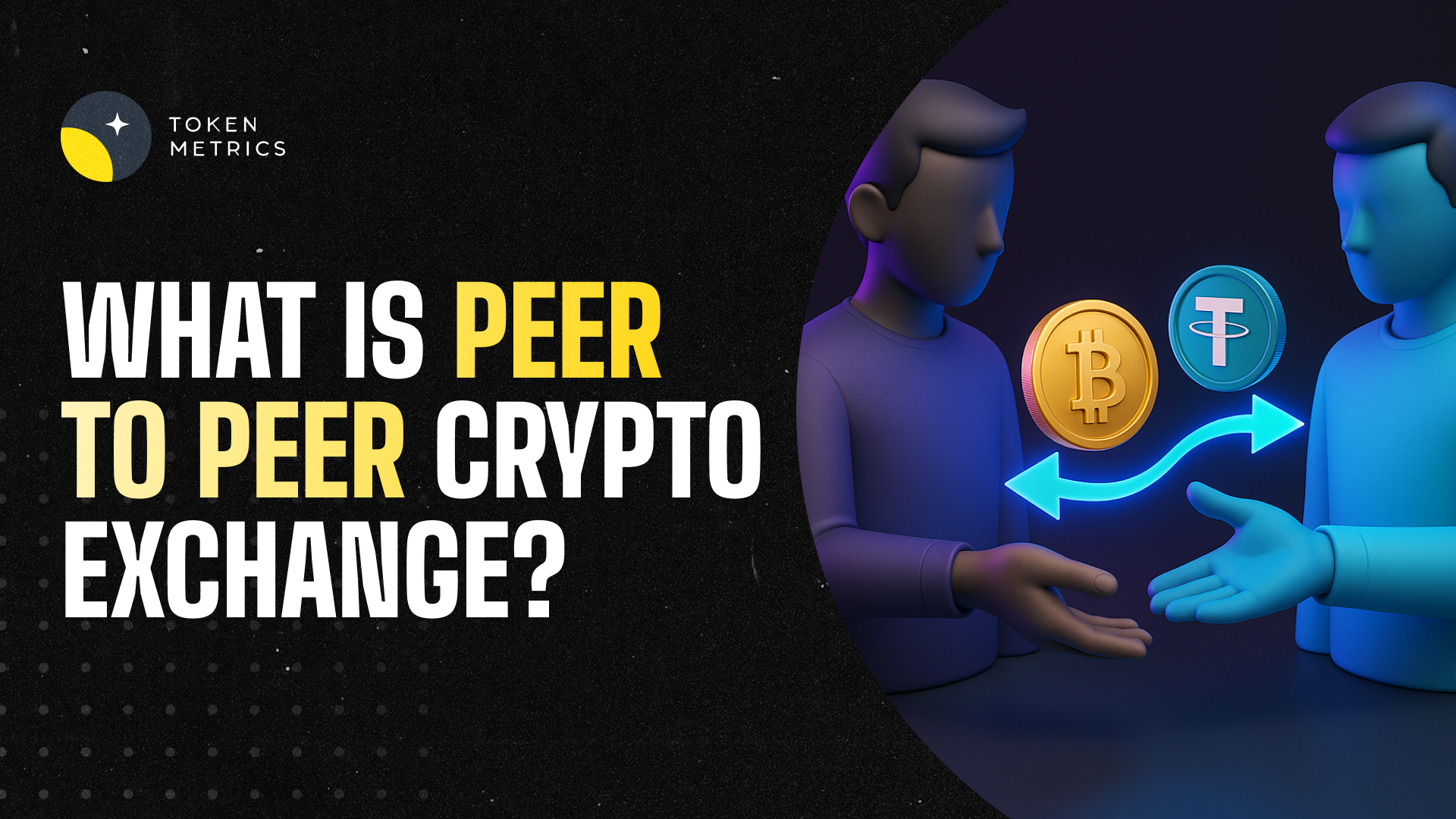
Understanding what is peer to peer crypto exchange is essential for anyone interested in trading digital assets in today’s evolving cryptocurrency market. A peer to peer (P2P) crypto exchange is a platform that enables users to trade cryptocurrencies directly with one another without the involvement of a central authority. Unlike centralized exchanges, which act as intermediaries and control the flow of transactions, P2P crypto exchanges facilitate decentralized trading, creating a secure and transparent environment for crypto trading.

This decentralized nature offers several advantages, including lower trading fees and greater control over transactions. P2P crypto exchanges are rapidly gaining popularity among users seeking a more cost-effective and convenient way to trade digital assets. By eliminating the middleman, these platforms foster a global marketplace where buyers and sellers can connect directly, making crypto trading more accessible and efficient.

How P2P Crypto Trading Works

P2P crypto trading operates by connecting buyers and sellers directly through a trading platform that acts as a facilitator rather than a controller. Users on these platforms can create personalized trading offers, specifying the amount of cryptocurrency they wish to buy or sell and the transaction terms. One of the key features of P2P trading is the flexibility in choosing payment options. Traders can select from diverse payment methods, including bank transfers, cash payments, and other convenient payment methods, depending on what suits them best.

To ensure secure and transparent transactions, P2P crypto exchanges rely heavily on escrow services. When a trade is initiated, the cryptocurrency is held in escrow by the platform until both parties confirm the transaction terms have been met. This mechanism protects users from fraud and guarantees that the digital assets are only released when the agreed conditions are fulfilled. The entire network supporting P2P crypto trading is built on blockchain technology, which validates transactions and maintains a secure ledger, ensuring fast and secure transactions across the global market.

Benefits of Decentralized Trading

Decentralized trading through P2P crypto exchanges offers multiple benefits that appeal to users looking for more control and cost savings. One of the most significant advantages is the lower trading fees compared to traditional exchanges. Since P2P platforms do not rely on a central authority to manage trades, they can operate with reduced overhead costs and pass those savings on to users.

Moreover, P2P crypto exchanges provide a secure and transparent way to trade digital assets, reducing the risk of scams that can be prevalent in other trading environments. Users enjoy more autonomy, negotiating directly with their trading partners and creating personalized trading offers tailored to their needs. This level of customization is not typically available on centralized exchanges.

The rise of decentralized finance (DeFi) has further propelled the popularity of P2P crypto exchanges. By enabling peer-to-peer transactions without intermediaries, these platforms embody the core principles of DeFi, empowering users to manage their crypto assets securely and independently.

Comparison to Traditional Exchanges

When comparing P2P crypto exchanges to traditional exchanges, several key differences stand out. Unlike traditional exchanges that often charge significant trading fees, many P2P crypto exchanges either charge minimal fees or none at all, making them a more attractive option for traders looking to maximize their returns.

Security and privacy are other critical areas where P2P platforms excel. Traditional exchanges typically require users to provide extensive personal information to comply with regulatory requirements, which can be a barrier for privacy-conscious users. In contrast, P2P crypto exchanges offer a more private and secure way to trade, often requiring less personal data while still maintaining regulatory compliance.

Additionally, P2P crypto exchanges are designed to be user-friendly and convenient, allowing users to trade digital assets directly with their chosen trading partners. This direct interaction often results in more flexible exchange rates and payment options, enhancing the overall trading experience compared to the more rigid structures of traditional exchanges.

Security Measures

Security is paramount in the world of cryptocurrency transactions, and P2P crypto exchanges implement robust security measures to protect users. Two-factor authentication (2FA) is commonly used to add an extra layer of account security, preventing unauthorized access. Escrow services play a vital role in securing transactions by holding funds until both parties confirm the trade’s completion.

Smart contracts are increasingly integrated into P2P platforms to automate and enforce transaction terms securely and transparently. These self-executing contracts reduce the risk of disputes and fraud by ensuring that trades occur only when predefined conditions are met.

In the event of disagreements, reputable P2P crypto exchanges have a dispute resolution system in place to provide fair and efficient conflict management. Additionally, some platforms utilize distributed hash tables within their network structure to enhance transaction security and transparency, ensuring that all trades rely on validated and trustworthy processes.

Payment Methods

One of the defining features of P2P crypto exchanges is their support for diverse payment methods, catering to users worldwide. Traders can select the most convenient payment method for their needs, whether that’s bank transfers, cash payments, or other secure payment methods. This flexibility allows for seamless trading of digital assets across different regions and currencies.

P2P platforms often support multiple fiat currencies, broadening the accessibility of crypto trading to a global audience. The use of escrow services further ensures that payments are secure and transparent, minimizing the risk of fraud during transactions. By accommodating a wide array of payment options, P2P crypto exchanges make it easier for users to engage in crypto trading regardless of their preferred financial systems.

Regulatory Compliance

Despite their decentralized nature, P2P crypto exchanges must adhere to regulatory compliance standards to maintain legitimacy and trust. This includes enforcing anti-money laundering (AML) and know-your-customer (KYC) regulations to verify that all users are legitimate traders and to reduce fraudulent activities.

Reputable platforms implement strict security protocols such as two-factor authentication and escrow services to protect users and comply with legal requirements. Regulatory compliance is essential not only for protecting users but also for fostering a secure trading environment that encourages wider adoption of P2P crypto trading in the global market.

The Role of P2P Crypto Exchange in the Market

P2P crypto exchanges play a pivotal role in the broader crypto market by offering a secure, transparent, and cost-effective alternative to traditional trading platforms. Their decentralized networks allow users to trade digital assets directly, cutting down on intermediaries and associated fees.

The integration of blockchain technology and smart contracts ensures that transactions are validated and secure, providing users with confidence in their trades. As a result, P2P crypto exchanges are becoming increasingly popular, especially among users seeking lower costs and more control over their crypto assets. Their influence in the global marketplace is expected to grow, further shaping the future of cryptocurrency exchange.

Types of P2P Networks

P2P networks can be categorized into different types based on their structure and functionality. Structured networks utilize distributed hash tables to organize and locate resources efficiently, ensuring secure and transparent transactions within the network. This structure is particularly beneficial for P2P crypto exchanges as it enhances the reliability and security of the trading platform.

Unstructured networks, on the other hand, are more flexible and less organized, often used for applications like file sharing and communication. While they offer adaptability, they may lack the robustness required for secure crypto trading.

Hybrid networks combine elements of both structured and unstructured networks, offering a balance between security, flexibility, and efficiency. This hybrid approach allows P2P crypto exchanges to leverage the benefits of both network types, creating a more secure and user-friendly trading environment for digital assets.

In summary, understanding what is peer to peer crypto exchange reveals a powerful and evolving method for trading digital assets. By enabling direct trades between parties without a central authority, P2P crypto exchanges provide a secure, transparent, and cost-effective alternative to traditional exchanges. With robust security measures, diverse payment options, and regulatory compliance, these platforms are well-positioned to play a significant role in the future of cryptocurrency trading. Whether you are a beginner or an experienced trader, exploring P2P crypto trading offers exciting opportunities in the dynamic crypto market.

Crypto Basics

How to Sell Large Amounts of Crypto: Essential Tips and Strategies

Token Metrics Team
6 min
MIN

Selling large amounts of crypto requires careful planning, a solid understanding of the market, and knowledge of the different trading methods available. Whether you want to sell bitcoin or other digital assets, it’s important to consider factors such as the current market price, tax implications, and security measures to ensure a smooth and profitable transaction. In this article, we will explore how to sell large amounts of crypto effectively, covering everything from centralized exchanges to peer-to-peer platforms and over-the-counter (OTC) trading.

Introduction to Crypto Sales

When it comes to how to sell large amounts of crypto, understanding the market landscape is the first step. There are several trading methods to choose from, including centralized exchanges, peer-to-peer platforms, and OTC trading desks. Each option offers unique advantages and challenges, so selecting the right approach depends on your specific needs and the amount of bitcoin or other crypto assets you intend to sell.

Tax implications also play a crucial role in crypto sales. Selling digital assets like Bitcoin often triggers a taxable event, subject to capital gains tax. Knowing how these taxes apply in your jurisdiction and maintaining accurate transaction records can help you stay compliant and avoid unexpected liabilities.

Another key consideration is the current market price and price fluctuations. Since cryptocurrencies are volatile assets, large transactions can impact the market price, leading to price slippage and unfavorable rates. Therefore, minimizing market impact by using strategic selling methods is essential to maximize returns.

Finally, opting for a user-friendly platform with low trading fees and robust security measures ensures a straightforward process. Features like two-factor authentication and withdrawal limits help protect your holdings while providing flexibility in managing large transactions.

Trading Methods

Centralized exchanges are a popular choice for selling bitcoin due to their convenience and liquidity. Platforms like Token Metrics, Binance and Coinbase allow users to sell crypto quickly, but they often come with high transaction fees and withdrawal limits that can affect large transactions. Additionally, these exchanges have a verification process and security protocols such as two-factor authentication to safeguard user accounts.

Peer-to-peer trade platforms offer an alternative by enabling you to sell bitcoin directly to other users. This method often involves lower fees and more flexible payment methods, including bank transfers and cash. Peer-to-peer platforms facilitate trade directly between parties, reducing the market impact and providing a more personalized service. However, they require caution to avoid security risks when dealing with other users.

For substantial amounts of bitcoin, OTC trading desks are particularly suitable. OTC services allow buyers and sellers to conduct large transactions privately, avoiding the price fluctuations and market impact associated with regular exchange orders. OTC desks offer personalized service and often have lower withdrawal fees and transaction costs compared to major exchanges. Using OTC trading can help you sell crypto safely and efficiently without affecting the overall market price.

Another option is using crypto debit cards, which allow you to convert bitcoin to fiat currency and spend it directly. While convenient, these cards may have high fees and limited withdrawal options, making them less ideal for very large sums.

Crypto Exchange Options

When selecting where to sell crypto, major exchanges and crypto trading platforms like Token Metrics, Binance, Coinbase, and Kraken stand out due to their extensive payment methods and strong security measures. These platforms support bank transfers, credit cards, and sometimes even crypto debit cards, providing flexibility in how you receive funds.

Security is paramount on centralized exchanges. Reputable exchanges implement rigorous security measures, including cold storage for digital currencies, regular security audits, and mandatory two-factor authentication. Enabling two-factor authentication on your exchange account is essential to prevent unauthorized access and protect your crypto holdings.

Some major exchanges offer personalized services tailored for large transactions. These services can help minimize market impact by facilitating limit orders or OTC transactions through their internal desks. Choosing an exchange with low trading fees and withdrawal fees can significantly improve your net proceeds when selling large amounts of crypto.

Alternative Sales Methods

Bitcoin ATMs provide a quick and convenient way to sell bitcoin directly for cash. Using a bitcoin ATM, you can send bitcoin to a deposit address or scan a QR code to complete the transaction within a few hours. However, bitcoin ATMs often charge high fees and have limited withdrawal limits, making them less suitable for selling large sums.

Peer-to-peer platforms like LocalBitcoins or Paxful allow you to sell bitcoin directly to other users. These platforms offer a variety of payment methods and typically have lower fees than centralized exchanges. Peer-to-peer trade can be a straightforward process, but it requires vigilance to avoid scams or security risks when dealing with other users.

OTC trading services are the preferred choice for handling large transactions. OTC desks provide a personalized experience, allowing you to negotiate a specific price and avoid price slippage. These services are designed to handle amounts of bitcoin that would otherwise disrupt the market if sold on regular exchanges.

Additionally, some crypto exchange services such as TransFi’s Ramp offer comprehensive solutions for selling large amounts of bitcoin. They combine the benefits of OTC trading with streamlined payment and withdrawal options, making it easier to convert bitcoin to fiat currency securely and efficiently.

Payment and Withdrawal Options

Choosing the right payment and withdrawal methods is crucial when selling large amounts of crypto. Bank transfers are commonly used for receiving fiat currency after selling bitcoin. While bank transfers are generally secure, they can involve high fees and may take several days to process, which could delay access to your funds.

Crypto debit cards provide an alternative by allowing you to withdraw cash or make purchases directly using your crypto balance. However, these cards often come with high fees and are not accepted everywhere, which limits their usefulness for large transactions.

Peer-to-peer platforms usually support a wide range of payment methods, including cash deposits, bank transfers, and online payment services. Selecting a payment method with low fees and fast processing times helps optimize your sale and reduces the risk of delays.

When using centralized exchanges, be mindful of withdrawal limits and withdrawal fees. Some exchanges impose daily or monthly limits that could restrict how much fiat currency you can access at once. Understanding these limits ahead of time ensures you can plan your sales accordingly.

Security and Safety

Security is a top priority when selling large amounts of bitcoin or other crypto assets. Enabling two-factor authentication on your exchange account and wallets is essential to protect against unauthorized access. This added layer of security helps safeguard your digital assets from hacking attempts.

Reputable exchanges and platforms implement advanced security measures such as cold storage, where the majority of funds are kept offline, and regular security audits to identify vulnerabilities. Using these platforms reduces the risk of losing your crypto due to security breaches.

In addition to platform security, using a secure wallet to store your bitcoin before and after the sale is critical. Hardware wallets or trusted software wallets with strong encryption provide the best protection.

Regularly monitoring your account activity and being aware of potential security risks, such as phishing attacks or suspicious transactions, can help you respond quickly to threats and prevent losses.

Taxes and Regulations

Understanding the tax implications of selling digital assets is vital. In many jurisdictions, selling bitcoin constitutes a taxable event subject to capital gains tax. The amount of tax owed depends on factors like how much bitcoin you sold, the holding period, and your local tax laws.

Tax regulations for cryptocurrencies vary significantly between countries, so it’s important to familiarize yourself with the rules that apply to you. Keeping detailed records of your transactions, including dates, amounts, and prices, will make tax reporting easier and more accurate.

Some countries have specific regulations governing cryptocurrency exchanges and OTC transactions. Compliance with these laws ensures your sales are legitimate and reduces the risk of legal issues.

Consulting a tax professional experienced in digital currencies can provide guidance tailored to your situation, helping you navigate complex tax laws and optimize your tax liabilities.

Avoiding Common Mistakes

Many sellers face challenges when handling large crypto transactions. One common mistake is not understanding the tax implications, which can lead to unexpected capital gains tax bills and financial losses.

Failing to use two-factor authentication leaves accounts vulnerable to hacking and unauthorized access, risking the loss of your crypto holdings.

Choosing an unreliable or unregulated exchange can result in high fees, poor customer service, and even security breaches. Always select reputable exchanges with a solid track record.

Neglecting to monitor your account activity regularly increases the risk of unnoticed fraudulent transactions or security breaches. Staying vigilant helps protect your assets.

Staying Informed and Adapting

The cryptocurrency market is highly volatile and subject to rapid changes. Staying informed about market trends and price fluctuations enables you to time your sales effectively, minimizing market impact and maximizing profit.

Regulations and tax laws surrounding crypto are continually evolving. Keeping up-to-date with these changes ensures you remain compliant and avoid legal complications.

Regularly reviewing and enhancing your security measures, such as updating passwords and enabling new security features, helps protect your accounts from emerging threats.

Adapting your trading strategies in response to market conditions and regulatory changes is key to successful crypto sales over time.

Best Practices for Crypto Sales

To sell large amounts of crypto successfully, choose a reputable exchange or platform that offers low fees, strong security measures, and flexible payment options. Understanding the tax implications and maintaining accurate transaction records will keep you compliant and prepared for tax season.

Always enable two-factor authentication and use secure wallets to safeguard your crypto assets. Regularly monitor your accounts for suspicious activity to prevent losses.

Finally, stay informed about market trends, regulatory updates, and security best practices. By adapting your approach to changes in the crypto landscape, you can maximize profits, minimize risks, and sell bitcoin or other digital currencies with confidence.

Crypto Basics

The Top Crypto Country: Where to Invest in Digital Currency in 2025

Token Metrics Team
6 min
MIN

Introduction to Crypto Trading

Crypto trading, the process of buying and selling digital assets on online platforms, has rapidly evolved into a global phenomenon. With the global crypto trading volume now surpassing $1 trillion, it is clear that digital currencies have become a significant part of the financial landscape. For anyone looking to enter this dynamic market, understanding the trends in crypto adoption and cryptocurrency adoption is crucial. These trends influence market liquidity, regulatory developments, and the overall health of the crypto ecosystem.

The role of crypto friendly countries cannot be overstated in this context. Nations with supportive regulations create an environment where crypto trading can thrive, offering investors and traders the confidence to participate actively. Additionally, investors should familiarize themselves with the various types of crypto assets and crypto investments available, ranging from established cryptocurrencies like Bitcoin and Ethereum to emerging altcoins and decentralized finance (DeFi) tokens. This knowledge is essential for making informed decisions and capitalizing on opportunities in the crypto market.

Crypto Adoption and Cryptocurrency Adoption

Crypto adoption refers to the increasing acceptance and use of digital currencies worldwide. Today, over 500 million people own cryptocurrency, signaling a significant shift towards digital finance. In 2024, global crypto ownership reached an estimated 559 million people, highlighting the rapid growth in adoption. This surge in adoption is driven by several factors, including enhanced regulatory clarity, improved security measures, and the growing ease of use of digital currencies.

Countries recognized as the most crypto friendly, such as Portugal and Germany, have played a pivotal role in fostering this growth. These nations offer favorable tax rates and regulations that attract crypto investors and traders, encouraging broader participation in the market. India ranks first in the world for cryptocurrency adoption in 2024, further emphasizing the global nature of this trend. The global crypto adoption trend is expected to continue its upward trajectory, fueled by ongoing innovations in blockchain technology and the expanding crypto space. As new applications and use cases emerge, more individuals and institutions are likely to engage with digital assets, further solidifying the role of cryptocurrency in the global financial system.

Crypto Friendly Countries and Regulations

A crypto friendly country is characterized by a regulatory environment that supports the growth and use of digital assets. One of the defining features of such countries is the presence of low or zero capital gains tax on crypto transactions, which significantly benefits investors and traders. Nations like Singapore and Malta have distinguished themselves as leaders in this regard, providing clear regulations and tax benefits that make them attractive destinations for crypto investments. Germany considers cryptocurrencies as private money for tax purposes, allowing tax-free gains if held for more than a year, further enhancing its appeal to crypto investors.

Key components of a crypto friendly country’s regulatory framework often include oversight by a financial market authority and legislation such as a virtual financial assets act, which provide legal certainty and consumer protection. Moreover, the legal tender status of cryptocurrencies, as seen with Bitcoin in some jurisdictions, further enhances a country’s crypto friendliness by integrating digital currency into the mainstream economy. This regulatory clarity and support create a stable environment for crypto businesses, virtual asset service providers, and investors to operate confidently.

Crypto Investors and Crypto Assets

Crypto investors have a diverse array of crypto assets to choose from, including well-known cryptocurrencies like Bitcoin and Ethereum, as well as numerous altcoins and tokens associated with decentralized finance projects. Understanding the different types of crypto investments, such as crypto trading, crypto mining, and holding digital assets for long-term appreciation, is essential for making sound investment decisions.

Some jurisdictions, known as crypto tax havens—such as the Cayman Islands and Bermuda—offer highly attractive tax rates, encouraging both individual and institutional crypto investors to establish a presence there. For many investors, personal crypto gains and income tax considerations are paramount. Several countries provide zero tax or significantly reduced tax rates on crypto gains, making them appealing for those seeking to minimize tax liabilities while maximizing returns from their crypto investments.

Crypto Transactions and Crypto Tax

When engaging in crypto transactions, including buying, selling, or exchanging cryptocurrencies, investors must be mindful of the tax implications. Capital gains tax and income tax are the most common forms of taxation applied to crypto transactions across various jurisdictions. However, crypto taxation policies differ widely from country to country.

Some nations offer tax exemptions or low tax rates on crypto transactions, positioning themselves as attractive destinations for crypto traders and investors. It is vital for participants in the crypto market to understand the specific crypto tax regulations and compliance requirements in their country of residence to avoid unexpected tax liabilities. Proper knowledge of crypto taxation ensures smoother navigation through the complex financial and regulatory landscape of digital assets.

Crypto Users and Bitcoin Users

The number of crypto users and Bitcoin users worldwide has grown exponentially, with over 100 million people now actively using cryptocurrency wallets. This expanding user base is a testament to the increasing mainstream acceptance of digital currencies. The number of Bitcoin users is projected to reach 1.1 billion by 2030, reflecting the long-term potential and growing integration of cryptocurrencies into everyday life. The cryptocurrency industry continues to evolve, driven by technological advancements and innovative applications within the crypto space.

Regions like Crypto Valley in Switzerland have emerged as global hubs for blockchain innovation and crypto development, attracting startups and established firms alike. Similarly, cities such as Hong Kong and Dubai have become major centers for crypto and blockchain activities, supported by strong regulatory frameworks and favorable tax rates. Malta has established itself as a global hub for blockchain and cryptocurrency enterprises, offering a supportive environment for businesses and investors. These locations exemplify what it means to be a top crypto country, combining legal certainty with vibrant ecosystems that foster growth and adoption.

Cryptocurrency Payments

The use of cryptocurrency payments is on the rise, with a growing number of businesses accepting digital currencies for goods and services. This trend is supported by the expansion of decentralized finance (DeFi) platforms and decentralized exchanges (DEX), which facilitate seamless and secure crypto transactions without intermediaries.

Purchasing real estate and other tangible assets using cryptocurrency is becoming increasingly common, especially in crypto friendly countries that offer tax benefits for such transactions. Furthermore, investment programs like citizenship by investment are being tailored to attract crypto investors, providing additional incentives and opportunities for wealth diversification. These developments highlight the practical utility of digital currencies beyond mere speculation, embedding them deeper into everyday financial activities.

Investing in Crypto

Investing in crypto typically involves acquiring and holding digital assets with the expectation of generating returns through price appreciation. Investors can access crypto investments through various platforms, including crypto exchanges and brokerage services. However, the volatile nature of the crypto market necessitates a clear understanding of both the risks and benefits associated with these investments.

Successful crypto investing requires a disciplined approach, emphasizing diversification and risk management to mitigate potential losses. Awareness of security concerns, market fluctuations, and regulatory changes is essential for safeguarding investments. By combining knowledge with strategic planning, investors can position themselves to capitalize on opportunities within the evolving crypto market.

Advanced Crypto Tools

The crypto market has seen the emergence of advanced tools designed to enhance trading efficiency and security. Trading bots and algorithmic trading platforms enable crypto traders to execute complex strategies with speed and precision, often outperforming manual trading methods.

Security remains a top priority in the crypto ecosystem. Wallet security solutions, such as hardware wallets and cold storage, provide robust protection against theft and hacking. Additionally, the crypto community benefits from extensive educational resources and forums, fostering a well-informed investor base. Staying updated with the latest news and regulatory developments is crucial for making timely and informed decisions in this fast-moving space.

Crypto Security

Protecting digital assets from theft and loss is fundamental in the crypto industry. Essential security measures include two-factor authentication, encryption, and secure storage solutions. Both wallet security and exchange security are vital considerations, with many platforms now offering advanced features to safeguard user funds.

Investors must also be aware of risks such as market volatility and potential manipulation, which can impact the value of their crypto assets. Employing diversification and risk management strategies helps mitigate these risks, contributing to a more resilient investment portfolio.

Visa Options for Crypto Investors

Several countries offer visa options and citizenship by investment programs tailored to crypto investors. Nations like Portugal and Germany provide pathways that enable crypto users to benefit from favorable tax regimes and legal protections while enjoying the benefits of residency or citizenship.

Understanding the specific requirements and advantages of these programs is essential for crypto investors considering relocation or diversification. Consulting with financial advisors or immigration experts can provide valuable guidance, ensuring that investors make well-informed decisions aligned with their personal and financial goals.

Crypto Friendly Banking Systems

A supportive banking system is crucial for facilitating crypto transactions and investments. Crypto friendly banking systems, which include both traditional banks with crypto services and digital banks specializing in digital assets, offer the infrastructure needed for seamless integration of crypto and fiat currencies.

Investors and businesses should research the available banking options, considering factors such as regulatory compliance, transaction fees, and service offerings. Engaging with financial advisors or banking experts can help identify the best solutions tailored to individual needs within the crypto space.

Additional Resources

For those seeking to deepen their understanding of crypto and blockchain technology, numerous additional resources are available. Online courses, tutorials, and community forums provide accessible education on the fundamentals and advanced concepts of digital currencies.

A solid grasp of these basics is indispensable for making informed investment decisions and navigating the complexities of the crypto market. Professional advice from financial advisors or investment experts can further enhance one’s knowledge and strategic approach, ensuring a well-rounded and confident participation in the evolving world of digital assets.

In conclusion, identifying the top crypto country for investment in 2025 involves evaluating factors such as regulatory clarity, tax benefits, security, and the overall strength of the crypto ecosystem. Countries like Portugal, Germany, Singapore, Malta, Hong Kong, and the United Arab Emirates stand out as leaders in fostering global crypto adoption and providing favorable environments for crypto investors and businesses. By considering these elements, crypto users and investors can position themselves advantageously within the global market, tapping into the immense potential of digital currencies and blockchain innovation.

Choose from Platinum, Gold, and Silver packages
Reach with 25–30% open rates and 0.5–1% CTR
Craft your own custom ad—from banners to tailored copy
Perfect for Crypto Exchanges, SaaS Tools, DeFi, and AI Products