Crypto Basics

10 Best Crypto Exchanges for Investing and Trading

Discover the best crypto exchanges for both investing and trading in 2023. Explore top platforms with a range of features and benefits for crypto enthusiasts.
Marcus K
9 Minutes
MIN

In the bustling world of cryptocurrencies, knowing where to trade or invest can be a daunting task. With the number of available exchanges growing rapidly, finding the right fit tailored to your needs is essential. Whether you're a newbie or a seasoned trader, there's an exchange out there for you. 

In this comprehensive post, we simplify the choices by breaking down the 10 best crypto exchanges, their advantages, disadvantages, and whom they're most suited for.

What are Crypto Exchanges?

Crypto exchanges are digital platforms where users can buy, sell, or trade cryptocurrencies for other digital or fiat currencies. Think of them as the stock markets of the crypto world. 

They play a pivotal role in the crypto ecosystem by providing liquidity, price determination, and a gateway for new entrants to join the digital currency revolution.

List of Best Cryptocurrency Exchanges in 2023

Dive into our curated list of top cryptocurrency exchanges tailored for both seasoned traders and newcomers alike. As you journey ahead, you'll discover the ideal platform that aligns with your crypto trading and investment needs.

Note - While exchanges are generally considered safe platforms for crypto trading, it's crucial to stay updated on crypto market news and developments. 

This is because even highly reputed platforms are not entirely immune to the risks of hacks, scandals and regulatory actions.

1. Binance

Binance, founded in 2017 by Changpeng Zhao, skyrocketed to global fame within a year. Originating from China and later relocating due to regulations, this exchange is known for its vast array of cryptocurrencies and impressive trading volume. 

Binance's commitment to innovation, seen in features like their Binance Smart Chain, makes it a force to reckon with in the crypto world.

Best For: Intermediate to advanced traders.

Pros:

  • Massive Trading Volume: Offers liquidity for a vast array of tokens.
  • Variety of Cryptos: Lists numerous cryptocurrencies and pairs.
  • Advanced Tools: Advanced charting tools and features for pro traders.

Cons:

  • Complex UI can be overwhelming for beginners.
  • Past minor security breaches, though funds were safe.
  • Regulatory concerns in some countries.

2. Coinbase

Established in San Francisco in 2012, Coinbase stands as one of the most beginner-friendly exchanges. Brian Armstrong and Fred Ehrsam aimed to create a platform where anyone could safely buy and sell Bitcoin.

With its easy-to-use interface and robust security measures, Coinbase remains a top choice for newcomers to the crypto space.

Best For: Beginners to intermediate users.

Pros:

  • Intuitive Interface: Ideal for new crypto enthusiasts.
  • High Security: Features like 2FA and insurance for funds.
  • Regulated: Complies with U.S. financial regulations.

Cons:

  • Limited number of cryptocurrencies.
  • Higher fees compared to other exchanges.
  • May monitor and limit certain transactions.

3. Kraken

Jesse Powell founded Kraken in 2011, following the infamous Mt. Gox hack. With an emphasis on security and regulatory compliance, Kraken has built a reputation for being a safe haven for crypto assets. Its ability to handle fiat currencies adds versatility for traders and investors alike.

Best For: Intermediate to experienced traders.

Pros:

  • Security Measures: Robust security with cold storage and encrypted wallets.
  • Fiat Options: Multiple fiat currencies supported.
  • Low Fees: Competitive fee structure.

Cons:

  • User interface can be complex for beginners.
  • Limited payment methods.
  • Customer service can be slow.

Also Check - Kraken Latest Offerings

4. Gemini

Gemini, birthed in 2014 by the famous Winklevoss twins, places a strong emphasis on regulatory compliance and security. Based in New York, it's one of the few exchanges to earn a BitLicense, allowing operations in the state. 

With its clean design and institutional-grade security measures, Gemini has carved out a niche among crypto enthusiasts.

Best For: Beginners to intermediate users.

Pros:

  • Regulated: Stringent compliance with U.S. regulations.
  • Security: Offers insurance on user deposits.
  • Clean UI: Simplistic and user-friendly design.

Cons:

  • Limited range of cryptocurrencies.
  • High fees compared to competitors.
  • Limited global availability.

Also Check - Gemini Latest Offerings

5. Huobi

Initially established in China in 2013 by Leon Li, Huobi has since expanded its operations globally. Renowned for its extensive list of available cryptocurrencies, it caters to both the Eastern and Western crypto markets. 

Despite regulatory hurdles in its home country, Huobi thrives due to its adaptability and forward-thinking approach.

Best For: Intermediate to advanced traders.

Pros:

  • Token Variety: Extensive range of cryptocurrencies.
  • Global Reach: Available in many countries.
  • Futures Trading: Offers derivatives and futures.

Cons:

  • Complex platform for newcomers.
  • Regulatory concerns in certain areas.
  • Some reports of poor customer service.

6. eToro

eToro, founded in 2007, initially started as a general trading platform but swiftly incorporated cryptocurrencies into its offerings. 

The platform is widely recognized for its user-friendly interface and "social trading" features, allowing users to mimic the trading strategies of established crypto traders.

Best for: Beginners and those interested in social trading.

Pros:

  • User-Friendly: Intuitive interface ideal for beginners.
  • Social Trading: Follow and replicate experienced traders' moves.
  • Diverse Portfolio: Offers a wide range of assets beyond just cryptocurrencies.

Cons:

  • Withdrawal Fees: Can be higher compared to other platforms.
  • Platform Limitations: Some advanced trading tools are lacking.
  • Crypto Ownership: Users can't transfer certain cryptos to external wallets.

Also Check - eToro Latest Offerings

7. Crypto.com

Emerging in 2016, Crypto.com has quickly established itself as a comprehensive crypto ecosystem. Beyond its exchange, it offers a popular mobile app, a Visa card program, and crypto lending services. Its mission is to accelerate the world's transition to cryptocurrency.

Best for: Those seeking a comprehensive crypto ecosystem, from trading to everyday spending.

Pros:

  • All-In-One Solution: From trading to spending, it covers a broad spectrum of crypto activities.
  • Competitive Rates: Offers some of the best staking and interest rates in the industry.
  • Security: Features ISO/IEC 27001:2013 certification and utilizes cold storage.

Cons:

  • Complex Fee Structure: With multiple services, the fee structure can be intricate.
  • User Experience: Some users report occasional app glitches.
  • Limited Trading Tools: More advanced traders might find the platform's tools insufficient.

8. OKX

OKX, founded in 2017 and based in Malta, has rapidly emerged as a dominant player in the crypto exchange space. Its diverse offering, from spot trading to futures trading, appeals to a broad range of traders. With a constant drive to innovate, OKX remains at the cusp of crypto trading technology.

Best For: Advanced traders.

Pros:

  • Variety of Services: Spot, futures, and margin trading available.
  • High Liquidity: Large trading volume.
  • Mobile App: Intuitive and feature-rich app for trading on-the-go.

Cons:

  • Overwhelming for new users.
  • History of freezing withdrawals.
  • Regulatory challenges in some regions.

9. KuCoin

Founded in 2017, KuCoin is often dubbed the "People's Exchange" due to its user-centric approach. With a vast array of tokens, especially new and emerging ones, the platform attracts both new and seasoned traders. 

Its native KuCoin Shares (KCS) not only provides trading discounts but also underscores its ambition in the crypto space.

Best For: Intermediate users.

Pros:

  • Range of Tokens: Numerous altcoins and newer tokens available.
  • KuCoin Shares: Their own token offers trading discounts.
  • User-friendly: Intuitive interface suitable for newcomers.

Cons:

  • Lacks regulatory clarity.
  • Limited fiat currency support.
  • Customer support can be slow.

10. Bitstamp

Bitstamp, founded in 2011 by Nejc KodriÄŤ and Damijan Merlak, stands as Europe's longest-standing crypto exchange. With a focus on simplicity and reliability, it has drawn a consistent user base.

As one of the first platforms to provide a gateway between fiat and crypto, Bitstamp holds a significant place in crypto history.

Best For: Intermediate users.

Pros:

  • Reputation: Trusted in the crypto community for years.
  • Security: Offers multisig wallets and two-factor authentication.
  • Fiat Support: Supports several major fiat currencies.

Cons:

  • Limited range of cryptocurrencies.
  • The Interface can feel outdated.
  • Slower verification process.

Frequently Asked Questions

Q1. How do crypto exchanges ensure the security of users' funds?

Most crypto exchanges implement a combination of cold and hot storage solutions. Cold storage means keeping a majority of the funds offline, away from potential online threats.

Q2. Are there differences in fees between these exchanges?

Yes, each exchange has its own fee structure which can vary based on factors like trading volume, type of transaction, and membership tiers. It's always recommended to check the exchange's official site for the most up-to-date fee information.

Q3. Can I trade on multiple exchanges simultaneously?

Yes, many traders use multiple exchanges to capitalize on arbitrage opportunities or to access different coins. However, managing assets on multiple platforms can be complex, so tools like portfolio trackers or aggregators can be useful.

Q4. What should I consider when choosing an exchange for staking or earning interest on my holdings?

When considering staking or interest, look into the offered rates, the reputation of the exchange, withdrawal conditions, and whether the platform uses insured or secured wallets. Not all exchanges offer these services, so research is crucial.

Q5. How do centralized exchanges differ from decentralized exchanges (DEX)?

Centralized exchanges are managed by companies that oversee the trading process, ensure liquidity, and hold users' funds. Decentralized exchanges operate without a central authority, facilitating peer-to-peer trades directly between users.

Q6. Why do some exchanges have a different price for the same cryptocurrency?

Prices can vary due to factors like trading volume, liquidity, regional demand, and the specific pairs being traded. Arbitrage traders often exploit these price differences by buying on one exchange and selling on another.

Q7. How do I know if a crypto exchange is available in my country?

Many exchanges provide a list of supported countries on their website. Additionally, regulatory news or local crypto communities can provide insights into which exchanges operate in specific regions.

Q8. Can I transfer my cryptocurrency holdings from one exchange to another?

Yes, you can transfer your holdings by using the withdrawal function on your current exchange and inputting the deposit address of your new exchange. Always double-check addresses and be aware of withdrawal fees.

Conclusion

Picking the right crypto exchange can greatly influence your trading and investing experience. Factors such as security, fees, ease-of-use, and token variety play a crucial role. 

Whether you're just starting out or are a crypto veteran, these ten exchanges offer a range of features to cater to your needs. 

Always ensure to do further research and consider your personal requirements before settling on an exchange. Remember, in the dynamic world of crypto, informed decisions are the best decisions.

Disclaimer

The information provided on this website does not constitute investment advice, financial advice, trading advice, or any other sort of advice and you should not treat any of the website's content as such.

Token Metrics does not recommend that any cryptocurrency should be bought, sold, or held by you. Do conduct your own due diligence and consult your financial advisor before making any investment decisions.

Build Smarter Crypto Apps &
AI Agents in Minutes, Not Months
Real-time prices, trading signals, and on-chain insights all from one powerful API.
Grab a Free API Key
Token Metrics Team
Token Metrics Team

Recent Posts

Research

What’s the Best Time to Trade Cryptocurrency?

Token Metrics Team
8 min
MIN

Cryptocurrency trading is a 24/7 market—unlike stocks, there’s no opening or closing bell. This leads many traders to wonder: “When is the best time to trade cryptocurrency?”

The truth is, timing your trades can make a huge difference in profitability. Trading during periods of high liquidity or increased volatility can provide better opportunities, while poorly timed trades can lead to slippage and losses.

In this guide, we’ll explore the best times to trade crypto, how different time zones affect price movements, and how Token Metrics can help you identify the right moments to enter or exit trades using AI-powered insights.

Why Timing Matters in Crypto Trading

Even though the crypto market never sleeps, trading activity is not equal throughout the day.

  • High liquidity: When more traders are active, spreads are tighter, making it easier to enter and exit trades at good prices.
  • Volatility opportunities: Price swings create profit potential—but also risk.
  • Market overlaps: When multiple regions are active, volume surges.

Knowing when the market is most active can help you reduce trading fees, minimize slippage, and maximize your gains.

The Best Times to Trade Cryptocurrency

1. Overlap Between U.S. and European Markets (1:00 PM – 5:00 PM UTC)

The busiest period for crypto trading is when U.S. and European sessions overlap.

  • Why?

    • The U.S. is home to major crypto exchanges and institutional traders.
    • Europe contributes significant trading volume and liquidity.

  • Benefits:

    • Higher volatility for short-term traders.
    • Tighter spreads for efficient execution.

This overlap often sees the biggest price movements of the day—perfect for day traders and scalpers.

2. Early U.S. Trading Hours (12:00 PM – 3:00 PM UTC)

The start of the U.S. session brings increased activity from institutional investors and retail traders waking up to market news.

  • Best for:

    • News-based trades (after U.S. economic announcements).
    • Entering/exiting positions with high liquidity.

3. Weekend Volatility (Saturday & Sunday)

Crypto is unique because weekend trading can be extremely volatile due to:

  • Lower liquidity (fewer institutional players).
  • Retail-driven price movements.

  • Who benefits:

    • Swing traders looking for sharp moves.
    • Those willing to tolerate higher risk for bigger gains.

4. After Major News & Events

The “best time” isn’t always about the clock—it’s about market catalysts.

  • Regulatory updates.
  • Exchange announcements.
  • Macro events (interest rate changes, economic data).

These events can cause instant surges or drops—great for traders who react quickly.

Does the Day of the Week Matter?

Yes. Research shows:

  • Mondays & Fridays: Often more volatile as traders adjust positions before/after the weekend.
  • Midweek (Tuesday–Thursday): Tends to have steady, higher trading volumes.

For swing traders, entering positions midweek may reduce erratic weekend exposure.

How Token Metrics Helps You Trade at the Right Time

Timing trades isn’t just about watching charts—it’s about analyzing multiple data points in real time. That’s where Token Metrics gives you a powerful edge.

1. AI-Powered Trading Signals

Get real-time bullish and bearish alerts based on 80+ data points, helping you know when to enter or exit trades confidently.

2. Narrative Tracking

Our AI monitors emerging crypto narratives (AI tokens, DeFi, RWA, etc.) so you can act before the crowd—crucial for timing market moves.

3. Trader & Investor Grades

Use Trader Grades for short-term opportunities and Investor Grades for long-term positions, aligning your trades with market momentum.

4. AI-Driven Indices

Don’t want to time trades manually? Token Metrics offers auto-managed crypto indices that rebalance based on AI-identified market conditions.

Tips for Timing Crypto Trades

  1. Trade During High Liquidity Windows: Overlaps between U.S. and European sessions are best.
  2. Watch for News: Major announcements can create rapid price moves—be ready.
  3. Avoid Low-Volume Hours: Late-night trading (UTC) often has higher slippage.
  4. Use AI for Precision: Let Token Metrics guide entry and exit points with data-backed insights.
  5. Set Alerts: Use Token Metrics’ customizable alerts for price, grades, and signals so you never miss an opportunity.

Example: Using Token Metrics for Timing

Imagine you’re planning to trade Ethereum. Instead of guessing when to enter:

  • You use Token Metrics Trader Grades to spot when ETH has strong short-term potential.
  • You set AI-powered alerts for price changes and bullish signals.
  • You execute your trade during the U.S.-EU overlap when liquidity is highest—reducing slippage and maximizing efficiency.

This data-driven approach takes the guesswork out of timing.

Final Thoughts

So, what’s the best time to trade cryptocurrency?

  • Weekdays during the U.S.-EU overlap (1:00–5:00 PM UTC) offer the best liquidity and volatility.
  • Early U.S. hours and weekends can also present opportunities—but with higher risks.
  • Major news events often create the best entry/exit windows.

But the truth is, there’s no universal “perfect time.” The real key is using data-driven insights to trade at your best time—when probabilities are in your favor.

That’s why Token Metrics is essential for traders. With AI-powered trading signals, narrative tracking, and portfolio management tools, Token Metrics helps you time the market intelligently, not emotionally.

Whether you’re a day trader chasing volatility or a long-term investor, Token Metrics puts the right data at your fingertips—so you can trade with confidence, anytime.

Research

How Do I Keep My Cryptocurrency Safe?

Token Metrics Team
8 min
MIN

The cryptocurrency market has created life-changing wealth for millions, but it has also attracted hackers, scammers, and bad actors. From exchange hacks to phishing scams and rug pulls, billions of dollars in crypto have been lost due to poor security practices.

If you’re serious about trading or investing in crypto, one of your top priorities should be keeping your cryptocurrency safe. In this guide, we’ll walk through the biggest risks to your crypto security, best practices to protect your assets, and how Token Metrics can help you make informed, safe decisions when navigating the crypto market.

Why Is Cryptocurrency Security So Important?

Unlike a traditional bank account, cryptocurrency transactions are irreversible. If your funds are stolen, there’s usually no way to recover them.

  • No centralized authority: There’s no bank to call for refunds.
  • Pseudonymous transactions: It’s nearly impossible to trace funds once they’re moved.
  • High-value targets: Hackers actively target crypto investors due to the potential for large payoffs.

This means you are your own bank—and you’re responsible for protecting your funds.

Common Threats to Your Cryptocurrency

Before learning how to protect your crypto, you need to know what you’re up against:

1. Exchange Hacks

Crypto exchanges are frequent targets for hackers. Even top-tier exchanges like Mt. Gox and FTX have experienced devastating losses.

2. Phishing Attacks

Scammers use fake websites, emails, or social media accounts to trick you into revealing your private keys or login credentials.

3. Malware & Keyloggers

Cybercriminals install malicious software on your devices to steal passwords and seed phrases.

4. Rug Pulls & Scams

Fraudulent projects lure investors with promises of high returns, then disappear with the funds.

5. Human Error

Lost passwords, mishandled private keys, or accidental transfers can lead to permanent loss of funds.

How to Keep Your Cryptocurrency Safe

Here’s a step-by-step approach to safeguarding your crypto:

1. Use a Secure Wallet

Hardware Wallets:

  • The safest option for long-term storage.
  • Devices like Ledger or Trezor keep your private keys offline, out of reach of hackers.

Software Wallets:

  • Convenient for active trading but more vulnerable to attacks.
  • Use reputable wallets like MetaMask or Trust Wallet and enable strong security features.

Pro Tip: Use a hardware wallet for long-term holdings and a software wallet for small, active trading balances.

2. Enable Two-Factor Authentication (2FA)

Always enable 2FA on your exchange accounts, wallets, and email addresses.

  • Use Google Authenticator or Authy, not SMS-based 2FA, which is susceptible to SIM swaps.

3. Beware of Phishing & Fake Websites

  • Double-check URLs before logging into exchanges or wallets.
  • Never click links from suspicious emails or DMs.
  • Bookmark the official websites of your exchanges and platforms.

4. Keep Your Seed Phrase Offline

Your wallet’s seed phrase is the master key to your funds.

  • Write it down on paper and store it securely (safe, vault).
  • Avoid storing it in digital form (cloud storage, photos).
  • Consider splitting the phrase into parts and storing them in separate locations.

5. Research Projects Before Investing

Many scams and rug pulls target uninformed investors chasing hype.

How Token Metrics Helps:

  • Use AI-powered Investor Grades to assess projects for long-term viability.
  • Leverage Moonshot Finder to discover vetted early-stage tokens with real growth potential—not scams.

6. Diversify Your Storage

Don’t keep all your crypto in one place.

  • Use multiple wallets for different purposes (trading vs. holding).
  • Spread funds across hardware, software, and exchange wallets.

7. Stay Updated on Threats

The crypto landscape changes fast.

  • Follow credible crypto news platforms.
  • Monitor regulatory updates and security alerts.
  • Use Token Metrics to stay ahead of market narratives and avoid projects flagged as high-risk.

How Token Metrics Helps You Stay Secure

While Token Metrics isn’t a wallet or exchange, it’s a powerful AI-powered platform designed to help you make safer investment decisions.

1. AI-Powered Risk Analysis

Token Metrics uses AI-driven evaluations to score projects, helping you avoid high-risk tokens and scam projects.

2. Investor & Trader Grades

Our proprietary grading system helps you quickly identify safe, high-quality assets for both short-term trading and long-term holding.

3. Moonshot Finder

Interested in low-cap tokens? The Moonshot Finder helps you spot legitimate early-stage projects before they pump—without falling into scams.

4. Narrative & Market Tracking

Stay ahead of emerging narratives and security concerns with Token Metrics’ real-time AI-driven analysis, helping you dodge risky trends.

Practical Security Checklist for Every Crypto Holder

  1. Use a hardware wallet for long-term holdings.
  2. Enable 2FA on all accounts—never rely on SMS-based security.
  3. Store seed phrases offline and securely.
  4. Avoid suspicious links and verify all URLs.
  5. Research every project using platforms like Token Metrics.
  6. Diversify storage across multiple wallets.
  7. Stay informed about new threats and market risks.

Final Thoughts

So, how do you keep your cryptocurrency safe? It comes down to strong storage practices, personal vigilance, and making informed investment decisions.

While hardware wallets and 2FA secure your assets, knowing where to invest is just as important. That’s where Token Metrics comes in—using AI-powered analysis to help you avoid scams, choose safe projects, and trade with confidence.

In crypto, you are your own bank—so take your security seriously. And with Token Metrics guiding your decisions, you can navigate this high-risk market safely and profitably.

Research

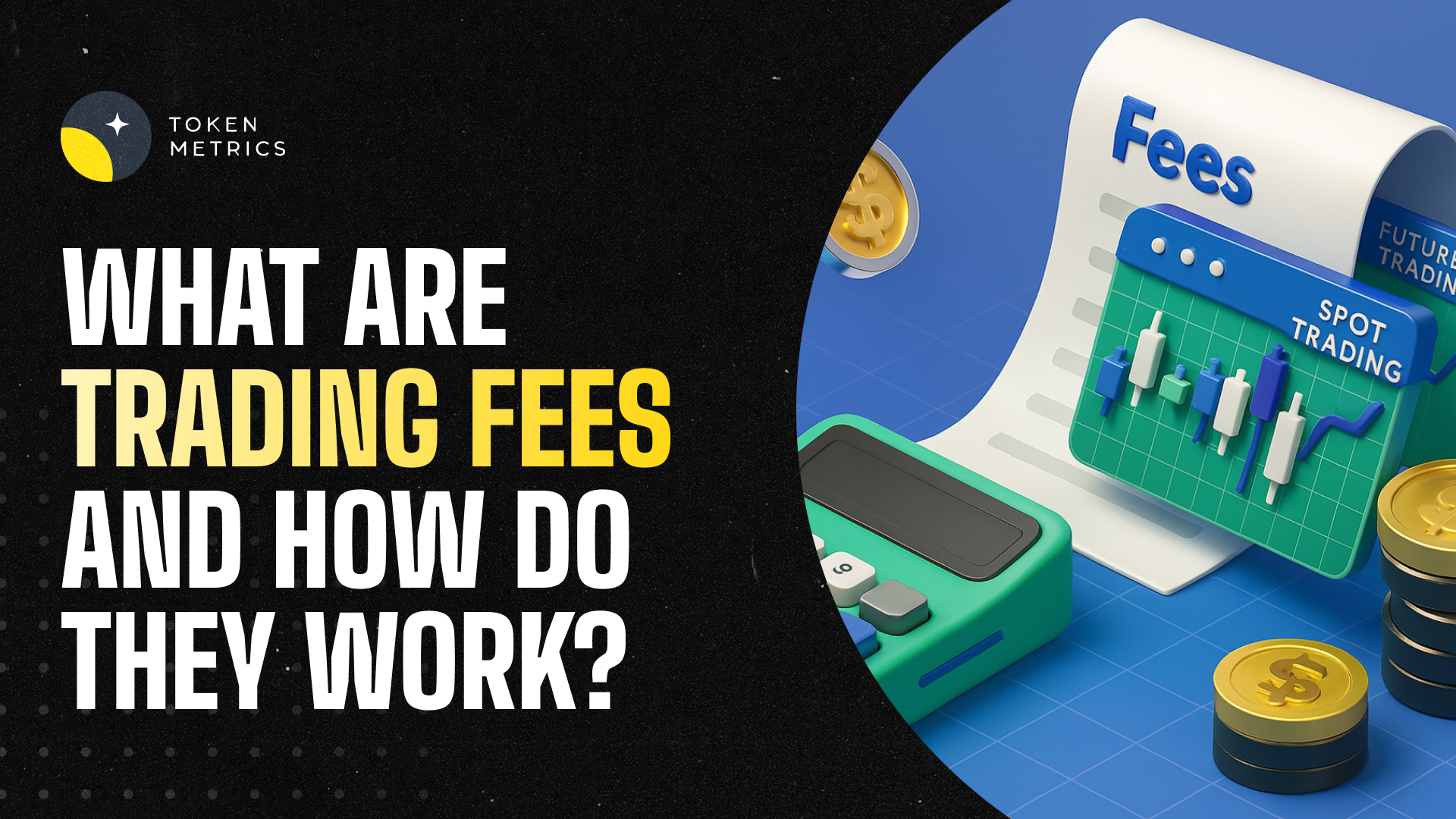
What Are Trading Fees and How Do They Work?

Token Metrics Team
8 min
MIN

If you’ve ever bought or sold cryptocurrency, you’ve likely noticed that exchanges charge trading fees. While these fees may seem small at first glance, they can add up significantly over time, especially for frequent traders.

Understanding how trading fees work is essential for maximizing your profits and choosing the right platform and strategy. In this guide, we’ll explain what trading fees are, how they’re calculated, the different types of fees, and how Token Metrics can help you minimize costs while optimizing your trades.

What Are Trading Fees?

Trading fees are charges imposed by cryptocurrency exchanges whenever you execute a trade—whether you’re buying, selling, or swapping digital assets.

  • Purpose:

    • They compensate exchanges for providing liquidity, security, and order-matching services.
    • They discourage spam orders that could overload the exchange.

Example:
If you buy $1,000 worth of Bitcoin with a 0.1% trading fee, you’ll pay $1 in fees for that transaction.

How Are Trading Fees Calculated?

Most crypto exchanges calculate fees based on:

  1. Trade Value (Percentage):

    • The most common model.
    • Fees are a percentage of the total trade amount (e.g., 0.1% per trade).

  2. Flat Fees:

    • Some platforms charge a fixed fee per trade, regardless of trade size.

  3. Tiered Fee Structures:

    • Frequent traders often benefit from lower fees when they reach certain monthly trading volumes.

Maker vs. Taker Fees

Many exchanges use a maker-taker model to incentivize liquidity:

  • Maker Fees:

    • You pay a lower fee (or sometimes nothing) when you add liquidity by placing a limit order that isn’t immediately matched.

  • Taker Fees:

    • You pay a higher fee when you remove liquidity by placing a market order that is filled instantly.

Example:
On Binance, makers might pay 0.08%, while takers pay 0.1%.

Types of Crypto Trading Fees

When trading crypto, you’ll encounter more than just trading fees:

1. Trading (Transaction) Fees

  • Charged when buying or selling crypto.
  • Often range from 0.05%–0.5% depending on the exchange.

2. Deposit Fees

  • Some exchanges charge when funding accounts via credit card, PayPal, or bank transfers.
  • Crypto deposits are typically free.

3. Withdrawal Fees

  • Charged when moving funds off the exchange.
  • Often fixed per withdrawal (e.g., 0.0005 BTC).

4. Network (Gas) Fees

  • Separate from exchange fees, paid to blockchain validators.
  • Ethereum and other networks can have high gas fees during peak demand.

Why Do Trading Fees Matter?

Even small fees can significantly impact your profits, especially if you trade often.

Example:

  • A day trader making 50 trades/month with a 0.1% fee per trade on $1,000 positions will pay $50/month in fees.
  • Over a year, that’s $600 lost to fees—before considering withdrawal or gas costs.

This is why reducing fees is crucial for active traders.

How to Minimize Trading Fees

1. Use Low-Fee Exchanges

Compare platforms—Binance, Bybit, and Kraken often offer competitive rates for high-volume traders.

2. Increase Your Trading Volume

Many exchanges lower fees as your monthly trading volume increases.

3. Use Limit Orders

Save on fees by acting as a maker instead of a taker whenever possible.

4. Pay with Exchange Tokens

Some exchanges offer discounts when fees are paid with their native token (e.g., BNB on Binance).

5. Optimize Your Trading Strategy with AI

Instead of making dozens of small trades, use data-driven insights from Token Metrics to make high-probability trades—reducing overall fee impact.

How Token Metrics Helps You Save on Fees

Token Metrics isn’t an exchange—it’s an AI-powered crypto research and trading platform designed to maximize your profits.

Here’s how it helps with trading fees:

1. AI-Powered Trade Optimization

Token Metrics provides bullish/bearish trading signals based on 80+ technical indicators, helping you enter fewer but higher-quality trades—minimizing unnecessary fees.

2. Trader & Investor Grades

Our proprietary grading system helps you identify top-performing cryptos, reducing guesswork and avoiding costly trial-and-error trading.

3. AI-Managed Indices

Instead of manually rebalancing portfolios (and paying multiple trading fees), use Token Metrics AI-driven crypto indices, which rebalance intelligently while keeping transaction costs low.

4. Narrative Tracking

Our AI detects emerging crypto narratives early, helping you position yourself before the market gets crowded—reducing the need for excessive short-term trading.

Practical Example: Using Token Metrics to Reduce Fees

Imagine you’re trading altcoins manually and make 20 trades/month.

  • At 0.2% per trade on $1,000 positions, you pay $40/month in fees.
  • With Token Metrics AI signals, you cut this down to 8 high-probability trades per month—reducing your fees by 60% while increasing win rates.

This is how data-driven trading saves both money and stress.

Final Thoughts

So, what are trading fees and how do they work? They’re the charges exchanges take for facilitating trades, withdrawals, and transactions—and while they may seem small, they can eat into your profits quickly.

The good news? You can minimize trading fees with the right strategies—and Token Metrics can help.

By providing AI-powered trading signals, long-term Investor Grades, and automated crypto indices, Token Metrics helps you reduce unnecessary trades, make smarter decisions, and maximize your returns—all while minimizing the impact of trading fees.

Whether you’re a beginner or advanced trader, using Token Metrics means trading smarter, not harder.

Choose from Platinum, Gold, and Silver packages
Reach with 25–30% open rates and 0.5–1% CTR
Craft your own custom ad—from banners to tailored copy
Perfect for Crypto Exchanges, SaaS Tools, DeFi, and AI Products