Back to blog
Research

Best Yield Marketplaces for Real-World Assets (RWAs) in 2025

Explore the top real-world asset (RWA) yield marketplaces for 2025, including reviews, key criteria, risks, and practical strategies for safe, sustainable returns.
Token Metrics Team
29 min read
Want Smarter Crypto Picks—Free?
See unbiased Token Metrics Ratings for BTC, ETH, and top alts.
Thank you! Your submission has been received!
Oops! Something went wrong while submitting the form.
 No credit card | 1-click unsubscribe
  • What this guide covers: A comprehensive evaluation of 10 leading platforms that enable tokenized real-world asset trading and yield generation across private credit, treasuries, real estate, and structured finance
  • Quick verdict: Ondo Finance for institutional-grade treasury exposure at ~5% APY, Maple Finance for crypto-collateralized credit facilities delivering 9-12% net yields, Goldfinch Prime for diversified access to private credit funds from Apollo and Ares
  • One key limitation to know: Many RWA platforms enforce strict accreditation requirements (minimum $50K-200K) and geographic restrictions, particularly excluding US investors from certain products due to securities regulations

Why Yield Marketplaces for RWAs Matter in January 2025

The real-world asset tokenization market has experienced explosive growth, surging from $85 million in April 2020 to over $25 billion by mid-2025—representing a staggering 245-fold increase driven primarily by institutional demand for yield, transparency, and regulatory clarity. Private credit dominates at approximately 61% of total tokenized assets, followed by treasuries at 30%, with major asset managers like BlackRock, Apollo, and Franklin Templeton now actively tokenizing institutional-grade products.

The convergence of traditional finance and decentralized infrastructure has created unprecedented opportunities for investors seeking stable, real-world yields without exposure to cryptocurrency volatility. The tokenized RWA market is projected to reach between $9.43 trillion and $18.9 trillion by 2030, with regulatory frameworks in Singapore, Hong Kong, and Dubai providing clear pathways for compliant innovation.

For crypto-native investors, RWA yield marketplaces offer a critical bridge to sustainable income streams backed by productive assets rather than purely speculative token emissions. Traditional allocators gain 24/7 access to fractional ownership, instant settlement, and programmable compliance—advantages impossible in legacy financial infrastructure.


How We Evaluated These Providers

We assessed platforms across six weighted criteria totaling 100 points:

  • Yield Quality & Sustainability (30%): Consistency of returns, asset backing, historical performance, and correlation to traditional markets
  • Security & Risk Management (25%): Custody solutions, audit history, legal recourse, collateralization ratios, and default handling protocols
  • Asset Coverage & Diversity (15%): Range of underlying assets, tranching options, and exposure across credit curves
  • Accessibility & Costs (15%): Minimum investments, fee structures, geographic availability, and KYC requirements
  • Liquidity & Redemption (10%): Secondary market depth, withdrawal timelines, and tokenization standards
  • Infrastructure & Compliance (5%): Regulatory licenses, blockchain integrations, and institutional partnerships

Data sources: Official platform documentation, on-chain analytics from RWA.xyz and DeFiLlama, third-party audits, and regulatory filings. Research conducted October 2024-January 2025.

Verification approach: Every fee structure, yield figure, and regional restriction cited was verified on official platform pages or regulatory disclosures. Unverifiable claims were excluded.


The Contenders: Quick Comparison  

Provider Reviews by Use Case

For Treasury-Backed Stability (4-5% Yield)

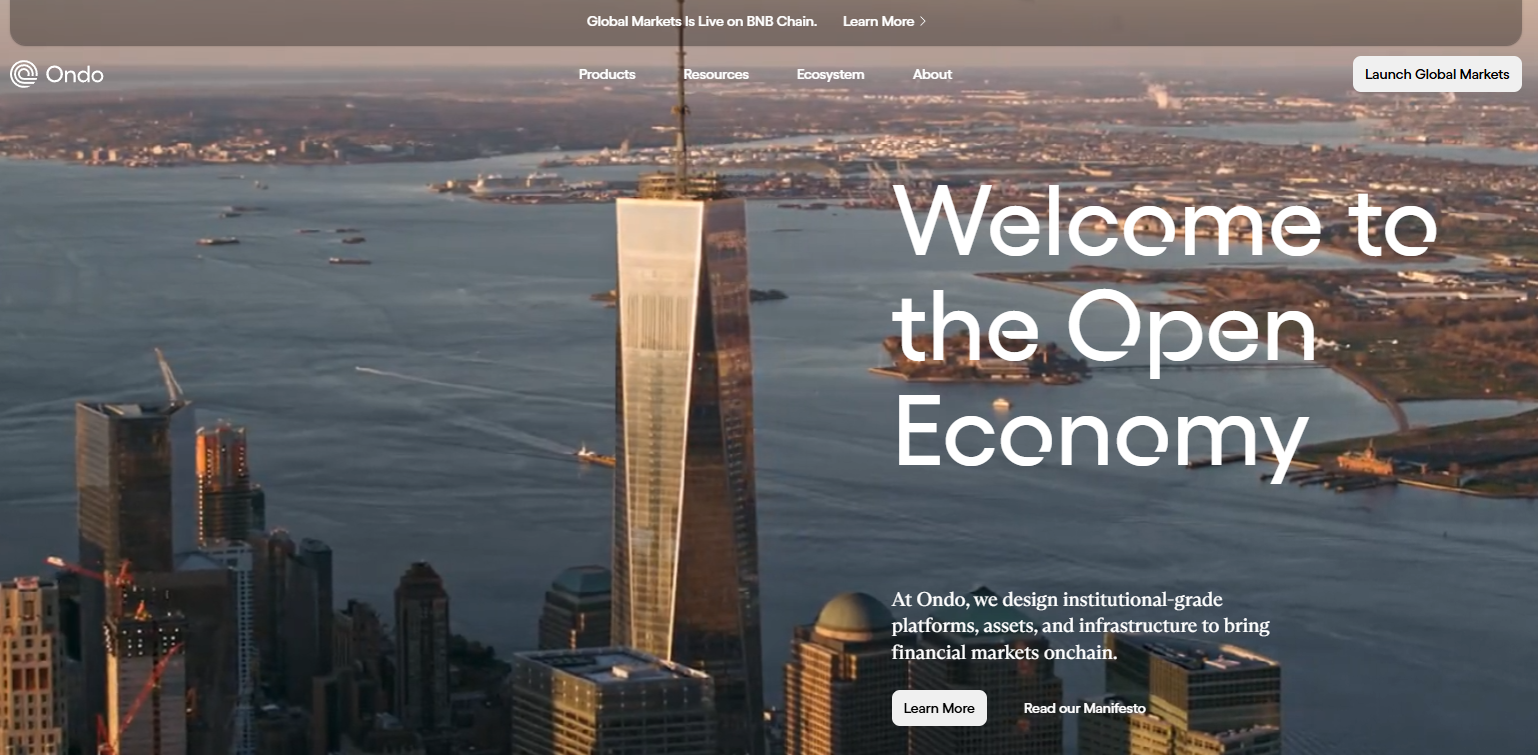
Top Pick: Ondo Finance — Institutional Treasury Tokenization Pioneer

Overview
 Ondo Finance manages over $1.6 billion in tokenized assets, offering institutional-grade access to US Treasury exposure through OUSG (backed by BlackRock's BUIDL fund) and USDY (a yield-bearing stablecoin). The platform bridges TradFi stability with DeFi composability through multi-chain deployment across Ethereum, Solana, Base, and XRP Ledger.

Ideal For

  • Institutional allocators seeking low-volatility dollar exposure
  • DeFi protocols requiring yield-bearing collateral
  • Treasuries managing idle stablecoin holdings
  • Investors prioritizing regulatory compliance and brand-name backing

Standout Features

  • Approximately 5% APY from short-term US Treasuries with daily interest payouts via rebasing mechanism
  • Integration with Ripple's RLUSD stablecoin for instant minting and redemption 24/7
  • Comprehensive SEC-registered infrastructure through acquisition of Oasis Pro, including broker-dealer, ATS, and transfer agent licenses
  • Strategic partnerships including anchor position in Fidelity's FDIT tokenized money market fund and launch of Ondo Global Markets for tokenized equities

Pricing
 Management fees embedded in net yield; typical 0.15-0.30% annual fee depending on product. OUSG requires $100K minimum; USDY accessible at lower thresholds with 4.29% APY.

Availability
 Global except US persons for certain products. Ethereum, Solana, Polygon, Aptos, Sei, Base, XRP Ledger, and Sui supported.

Worth Noting
 OUSG designed for qualified purchasers with extended lockup periods; less suitable for retail or high-frequency traders. Platform prioritizes institutional relationships over retail accessibility.

Alternatives to Consider: Franklin Templeton BENJI, OpenEden TBILL  

Runner-Up: Franklin Templeton BENJI — Legacy Asset Manager Innovation

Overview
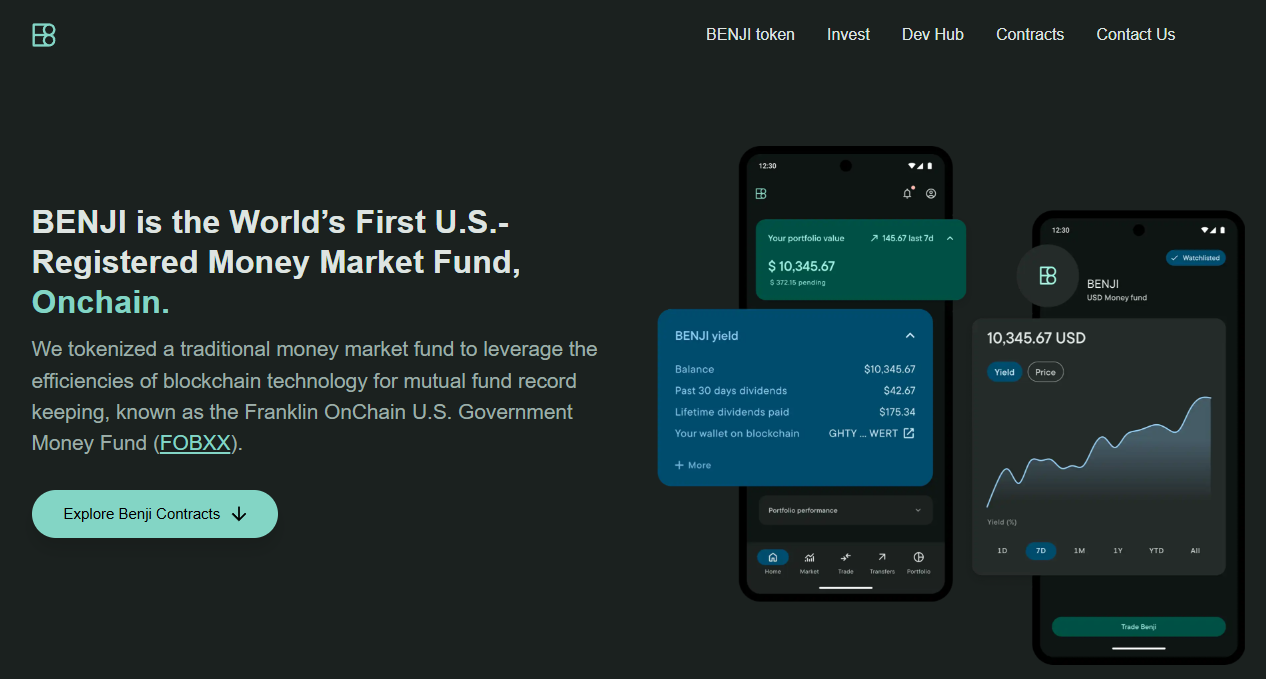
 Franklin Templeton's $775 million Franklin OnChain U.S. Government Money Fund (BENJI) pioneered tokenized mutual funds in 2021, offering exposure to US government securities across eight blockchains with patent-pending intraday yield calculation.

Ideal For

  • Investors seeking regulated 40 Act fund structure
  • Collateral managers requiring second-by-second yield accrual
  • Multi-chain strategies needing broad blockchain compatibility
  • Users prioritizing traditional asset manager credibility

Standout Features

  • Intraday yield tracking down to the second, enabling proportional earnings even for partial-day holdings
  • Direct stablecoin purchases and redemptions with wallet-to-wallet transfer capability
  • 63% of AUM deployed on Stellar Network for optimal cost efficiency
  • Integrated with DeFi protocols for collateral and leverage applications

Pricing
 7-day current yield approximately 4.5-5.5% gross; 0.25% management fee. No minimum investment restrictions beyond standard mutual fund requirements.

Availability
 Global availability with specific KYC requirements. Active on Stellar, Ethereum, Arbitrum, Base, Avalanche, Polygon, Aptos, Solana, BNB Chain.

Worth Noting
 Traditional mutual fund constraints apply including daily NAV calculations and potential redemption delays during market stress.

Alternatives to Consider: Backed bIB01, Superstate Short Duration Government Securities  

For Institutional Credit Exposure (8-12% Yield)

Top Pick: Maple Finance — Premier Crypto-Collateralized Lending

Overview
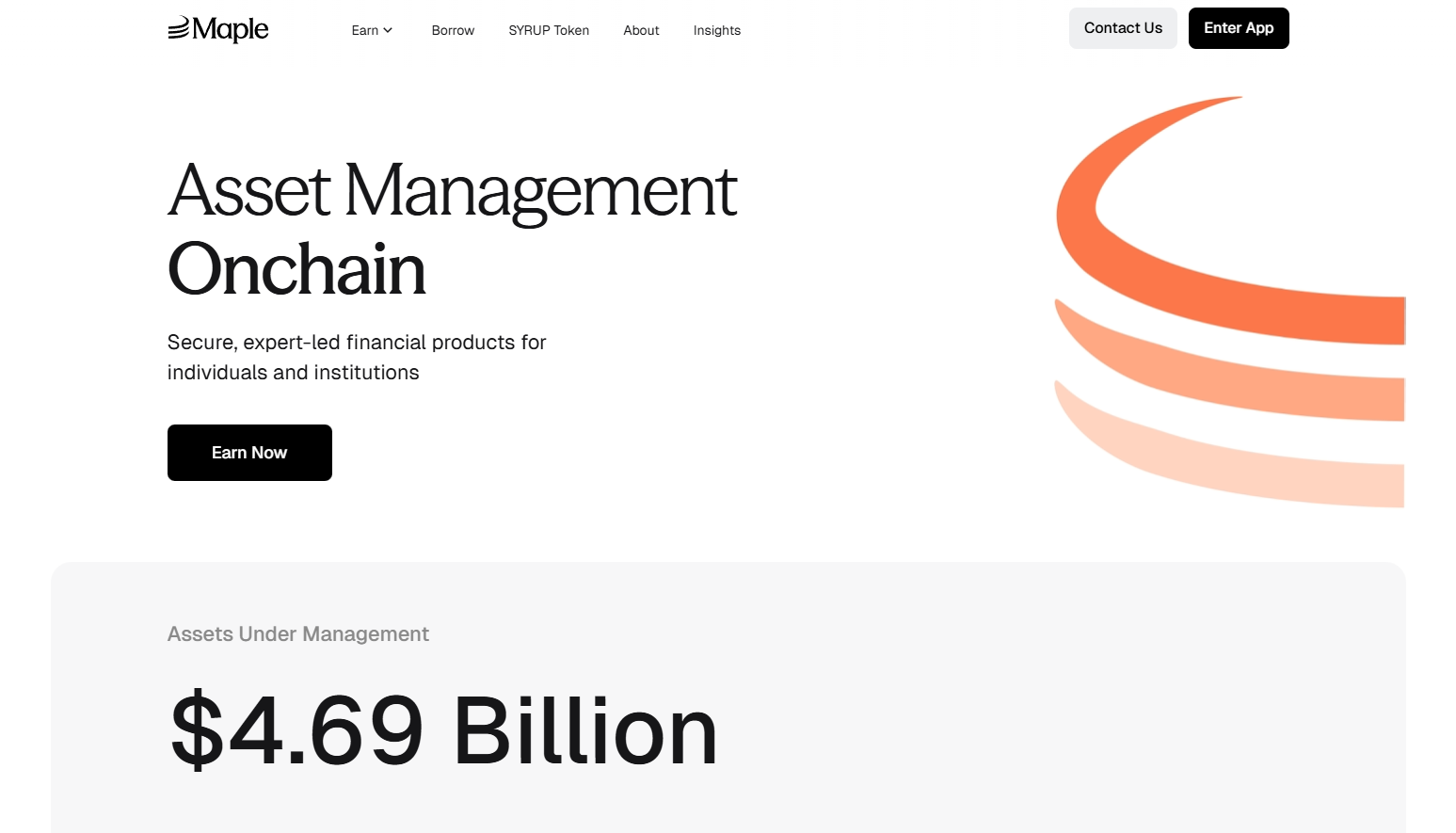
 Maple Finance manages over $4 billion in assets, specializing in institutional over-collateralized lending backed by Bitcoin, Ethereum, Solana, and XRP, targeting $100 billion in annual loan volume by 2030. The platform introduced SyrupUSDC for permissionless retail access alongside KYC-gated institutional pools.

Ideal For

  • Institutional lenders seeking exposure to cryptocurrency-backed credit
  • Liquidity providers comfortable with smart contract risk
  • Allocators targeting floating-rate, senior-secured structures
  • Investors seeking alternatives to traditional stablecoin farming

Standout Features

  • Consistent 9-12% net yields through undercollateralized institutional facilities and structured credit products
  • Strategic integration with Aave's $40 billion protocol bringing syrupUSDT to Plasma instance and syrupUSDC to core markets
  • Partnerships with Bitwise, Lido Finance (stETH-backed credit lines), and EtherFi (weETH collateral) expanding institutional adoption
  • Robust risk management combining decades of TradFi expertise with real-time on-chain monitoring

Pricing
 Variable by pool; typical effective yields 9-12% after protocol fees. Minimum investments pool-dependent, generally $10K-$50K for retail syrup products.

Availability
 Global with KYC requirements for lending. Institutional Maple requires accreditation; Syrup.fi open to broader participants.

Worth Noting
 Platform transitioned from uncollateralized to over-collateralized model after 2022 market turmoil. Historical defaults impacted certain pools; robust recovery mechanisms now in place.

Alternatives to Consider: Credix (emerging markets), TrueFi (uncollateralized DeFi)  

Runner-Up: Goldfinch Prime — Institutional Private Credit Access

Overview
 Goldfinch Prime aggregates exposure to multi-billion dollar private credit funds from Ares, Apollo, Golub Capital, and KKR, providing on-chain access to institutional-grade senior secured loans with over $1 trillion in collective AUM.

Ideal For

  • Non-US investors seeking diversified private credit exposure
  • Allocators targeting institutional fund performance without direct fund access
  • Participants seeking uncorrelated yield to crypto markets
  • Investors comfortable with longer lockup periods

Standout Features

  • Exposure to 1000+ senior secured loans across industries through vetted fund managers with 10+ years experience
  • Target returns of 9-12% net of fees with strict eligibility criteria including >90% senior secured portfolios and <0.75% target non-accrual rates
  • Heron Finance manages fund selection and vetting while fund managers handle all underwriting and default resolution
  • USDC-based deposits converted to proportional GPRIME tokens for continuous offering structure

Pricing
 Net yields 9-12% after embedded management fees and profit sharing. Minimum investments vary by pool structure; typically institutional minimums apply.

Availability
 Non-US persons only due to regulatory structure. KYC and accreditation verification required.

Worth Noting
 Exposure is indirect through fund shares rather than direct loan origination; fund managers absorb individual borrower default risk into aggregate yields. Liquidity limited compared to Treasury products.

Alternatives to Consider: Centrifuge private credit pools, Credix fintech lending


For Real Estate & Diversified Assets (6-10% Yield)

Top Pick: Centrifuge — Multi-Asset Tokenization Infrastructure

Overview
 Centrifuge operates as a multichain infrastructure platform enabling asset managers to tokenize real estate, trade finance, carbon credits, and structured credit with $1.2 billion TVL and recent 10x growth driven by the first on-chain CLO and tokenized S&P 500 index fund.

Ideal For

  • Investors seeking exposure to asset-backed securities beyond treasuries
  • Allocators comfortable evaluating tranched credit structures
  • Participants prioritizing transparency and on-chain asset verification
  • Portfolio managers wanting diversification across real-world credit types

Standout Features

  • Asset-agnostic architecture supporting structured credit, real estate mortgages, US treasuries, carbon credits, and consumer finance with full collateralization and legal recourse for investors
  • V3 platform enables cross-chain interoperability across Ethereum, Base, Arbitrum, Avalanche, BNB Chain, and Plume with integrated KYC and compliance-as-a-feature
  • Senior/junior tranche structures allowing risk-return customization
  • Partnership with Chronicle Labs for real-time price feeds and integration with Circle for USDC on/off-ramping

Pricing
 Yields vary by pool and tranche: typically 6-8% for senior tranches, 10-14% for junior tranches. Management fees embedded; pool-specific minimums apply.

Availability
 Global with KYC requirements. Pools may have additional jurisdictional restrictions based on underlying asset location.

Worth Noting
 Platform complexity requires understanding of tranched structures and asset-specific risks. Less liquid credit instruments offer less frequent pricing updates than treasury products.

Alternatives to Consider: RealT (US residential real estate focus), Republic (equity crowdfunding)


For Emerging Market Credit (12-18% Yield)

Top Pick: Credix — Latin American Fintech Lending

Overview
 Credix specializes in providing credit facilities to fintech lenders in Latin America, offering high-yield exposure to underserved credit markets with institutional-grade underwriting and local market expertise.

Ideal For

  • Sophisticated investors seeking higher risk-adjusted returns
  • Allocators comfortable with emerging market credit risk
  • Participants with extended investment horizons (12-24 months typical)
  • Investors seeking geographic diversification from US/EU markets

Standout Features

  • Target yields 12-18% reflecting emerging market risk premiums
  • Focus on fintech infrastructure enabling financial inclusion
  • Partnerships with established Latin American credit originators
  • Robust due diligence and monitoring of borrower networks

Pricing
 Pool-dependent yields typically 12-18% gross with management fees of 1-2%. Minimum investments generally $50K+ for accredited investors.

Availability
 Non-US persons primarily; requires accreditation verification and enhanced KYC given emerging market exposure.

Worth Noting
 Higher yields reflect higher credit and currency risk. Platform experienced challenges during regional economic volatility; enhanced risk controls now implemented.

Alternatives to Consider: Goldfinch V1 pools (emerging market focus), TrueFi uncollateralized pools


For Tokenization Infrastructure (Platform Providers)

Top Pick: Securitize — Industry-Leading Issuance Platform

Overview
 Securitize has tokenized over $4.5 billion in assets for 1.2 million investors across 3,000+ clients, operating as an SEC-registered transfer agent with integrated ATS for secondary trading. The platform powers major offerings including BlackRock's BUIDL fund.

Ideal For

  • Asset managers seeking turnkey tokenization solutions
  • Issuers requiring SEC-compliant digital security infrastructure
  • Institutional clients needing integrated custody and compliance
  • Projects prioritizing regulatory alignment and brand credibility

Standout Features

  • DS Protocol automates token issuance, transfer agent functions, and regulated secondary trading with $47 million funding led by BlackRock
  • Recent launch of STAC tokenized AAA CLO fund with BNY custody demonstrating institutional adoption trajectory
  • Comprehensive investor onboarding, KYC/AML, and reporting infrastructure
  • Partnerships with major asset managers and integration with Zero Hash for fiat conversion

Pricing
 Platform fees vary by issuance size and complexity; typically 0.5-2% of AUM plus basis point fees on transactions. White-label solutions available for enterprise clients.

Availability
 Global operations with jurisdiction-specific compliance modules. Primary focus on US, EU, and APAC institutional markets.

Worth Noting
 Securitize is an issuance platform rather than direct investment product; investors access opportunities through partner funds and offerings launched on the infrastructure.

Alternatives to Consider: Tokeny (EU-focused), Polymath/Polymesh (security token specialists)


Complete Provider Directory

  • Backed Finance: European MiCA-compliant tokenization platform offering bIB01 (Swiss government bond exposure) and bC3M (commodity basket). Strong focus on regulatory alignment with modest 3-5% yields and low entry barriers.
  • Swarm Markets: Decentralized platform enabling fractional ownership of real estate and private credit with $1K-$50K minimums. Emphasizes accessibility while maintaining compliance through distributed infrastructure.
  • TrueFi: Uncollateralized lending protocol using on-chain credit scoring and portfolio diversification. Higher risk-return profile (8-15% targets) with full transparency of borrower pools and performance metrics.
  • Archax: UK FCA-regulated platform for institutional tokenization of bonds, funds, and money markets. Focus on traditional finance compatibility with stringent accreditation requirements.

Making Your Selection: Key Questions

  • What yield stability do you require?
     Treasury-backed platforms (Ondo, Franklin Templeton) offer predictable 4-5% returns with minimal volatility. Credit-focused platforms (Maple, Goldfinch) target 9-12% but introduce credit risk and performance variability.
  • What is your risk tolerance for underlying collateral?
     Government securities provide lowest risk; over-collateralized crypto loans add smart contract and liquidation risks; uncollateralized emerging market credit carries highest default potential.
  • Do you meet accreditation and minimum investment thresholds?
     Many institutional products require $50K-$200K minimums and qualified purchaser status. Retail-accessible options like USDY and syrupUSDC lower barriers but may sacrifice yield.
  • What liquidity do you need?
     Treasury tokens generally offer daily liquidity; private credit pools may have quarterly redemption windows; real estate tokenization can involve 12-24 month lockups.
  • How important is regulatory compliance?
     Platforms like Ondo, Franklin Templeton, and Securitize prioritize SEC registration and traditional fund structures. Purely DeFi-native protocols offer less regulatory clarity but greater composability.
  • What blockchain ecosystems do you operate in?
     Multi-chain deployment (Ondo, Centrifuge) provides flexibility; single-chain specialization (some Maple pools) may offer optimization but limits interoperability.
  • Do you have geographic restrictions?
     US persons often excluded from highest-yield opportunities due to securities laws. European investors benefit from MiCA framework; APAC sees growing regulatory clarity.
  • What level of transparency do you require?
     On-chain native protocols offer real-time asset verification; hybrid models may rely on periodic attestations and third-party audits.
  • Are you seeking passive income or active yield strategies?
     Treasury staking provides set-and-forget returns; DeFi integrations enable leverage, collateral strategies, and yield optimization requiring active management.
  • How much operational complexity can you handle?
     Single-platform solutions simplify but limit optionality; multi-protocol strategies maximize returns but require gas management, tax tracking, and security across multiple platforms.

Maximizing Your Setup with Token Metrics

Token Metrics provides critical intelligence for navigating RWA yield opportunities through data-driven analysis and market insights.

Research Phase: Leverage Token Metrics' fundamental analysis to evaluate tokenized asset protocols, comparing on-chain metrics, TVL trends, and yield sustainability indicators. Our RWA sector reports identify emerging platforms and highlight regulatory developments across jurisdictions.

Portfolio Construction: Use quantitative scoring to allocate across risk tiers—balancing stable treasury exposure with higher-yield credit products. Token Metrics' portfolio tools help optimize diversification while monitoring correlation to traditional crypto markets.

Ongoing Monitoring: Real-time alerts notify you of yield changes, protocol upgrades, and risk events. Our dashboard aggregates performance across multiple RWA platforms, tracking your yield-bearing positions alongside broader cryptocurrency holdings.

Risk Management: Token Metrics' risk analytics assess smart contract security, custody arrangements, and counterparty exposure. Our reports flag platforms with concerning yield sustainability metrics or operational red flags before they impact your capital.

Start your Token Metrics free trial to access institutional-grade RWA research and optimize your real-world asset allocation.  

Essential Security Practices

  • Custody Verification: Confirm that platforms use institutional-grade custodians (Coinbase Custody, BitGo, Fireblocks) for underlying assets. Verify proof-of-reserve attestations and third-party audits.
  • Smart Contract Risk: Review audit reports from reputable firms (Trail of Bits, OpenZeppelin, Certora). Understand upgrade mechanisms and timelock protections on protocol contracts.
  • Legal Structure Assessment: Examine SPV formation, bankruptcy remoteness, and investor recourse mechanisms. Ensure tokenization structure provides actual legal claim on underlying assets, not just economic exposure.
  • Regulatory Compliance: Verify platforms maintain necessary licenses (broker-dealer, transfer agent, ATS) in relevant jurisdictions. Confirm offerings comply with securities laws in your domicile.
  • Counterparty Risk: Understand who services loans, manages defaults, and handles liquidations. Evaluate track records of asset originators and credit underwriters.
  • Liquidity Risk Management: Never allocate more than you can afford to lock up for stated redemption periods. Maintain buffer capital for market volatility and potential redemption delays.
  • Tax Implications: Consult tax professionals on treatment of tokenized yield—may be classified as interest income, dividends, or capital gains depending on structure and jurisdiction.
  • Geographic Restrictions: Verify you're eligible to participate based on residency. Using VPNs or misrepresenting location can result in frozen funds and legal liability.
  • Platform Concentration: Diversify across multiple RWA providers to reduce single-point-of-failure risk. No single platform should represent majority of yield allocation.
  • Documentation: Maintain records of all transactions, yield distributions, and platform communications for tax reporting and potential disputes.

This article is for research and educational purposes, not financial advice. RWA investments carry risks including loss of principal.


What to Avoid

  • Ignoring minimum holding periods: Many RWA products enforce lockups or redemption windows. Treating them as liquid positions can leave you unable to access capital when needed.
  • Chasing unsustainably high yields: Promised returns significantly above market rates often indicate excessive risk. Verify underlying asset performance and historical consistency before committing capital.
  • Overlooking platform liquidity: Token existence on-chain doesn't guarantee exit liquidity. Check secondary market depth and historical spread between minting and redemption prices.
  • Neglecting jurisdictional compliance: Accessing platforms not available in your region can result in frozen accounts and regulatory penalties. Always verify eligibility before depositing funds.
  • Underestimating smart contract risk: Even well-audited protocols face exploitation risk. Size positions appropriately and monitor security incident disclosures across the ecosystem.
  • Failing to verify asset backing: Don't rely on marketing claims. Demand proof-of-reserve, third-party attestations, and transparent reporting on underlying collateral.
  • Concentrating in single asset class: Over-allocating to one RWA category (e.g., all private credit) eliminates diversification benefits. Balance across treasuries, credit, and real estate where possible.
  • Ignoring fee structures: Management fees, performance fees, and transaction costs compound over time. Calculate net yields after all costs when comparing platforms.

Reader Questions Answered

What's the difference between tokenized treasuries and yield-bearing stablecoins?

 Tokenized treasuries (like OUSG) represent direct ownership of US Treasury securities with yield passed through to holders. Yield-bearing stablecoins (like USDY) maintain $1 peg while distributing treasury yields via rebasing or airdrops. Treasuries may fluctuate slightly with NAV; yield stablecoins prioritize price stability.

Are RWA yields taxable differently than crypto staking rewards?

 Likely yes, though tax treatment varies by jurisdiction. RWA yields from treasuries or credit facilities often classified as interest income taxed at ordinary rates. Crypto staking may be treated as income at receipt or capital gains at sale depending on location. Consult tax professionals for specific guidance.

Can I use tokenized RWAs as collateral in DeFi protocols?

 Increasingly yes. Platforms like Maple, Ondo (via Flux Finance), and Centrifuge enable using tokenized assets as DeFi collateral. However, support varies by protocol and asset—USDY and OUSG see broader integration than niche real estate tokens. Liquidation risks apply if collateral value drops.

What happens if the platform goes bankrupt?

 Properly structured tokenization isolates assets in bankruptcy-remote SPVs, protecting investor claims even if platform operator fails. However, redemption processes may be delayed and require legal navigation. This is why verifying legal structure and custodial arrangements is critical.

How liquid are RWA tokens compared to stablecoins?

 Significantly less liquid. While stablecoins have billions in daily DEX volume, most RWA tokens trade thinly or only through platform-controlled redemption mechanisms. Treasury tokens offer better liquidity than private credit or real estate, but all lag traditional stablecoins substantially.

Do I need to be an accredited investor?

 Depends on the platform and your location. US-based offerings often require accreditation; international platforms may have lower barriers. Products like USDY, syrupUSDC, and BENJI target broader accessibility, while institutional credit pools restrict to qualified purchasers.

What are the main risks that could cause loss of principal?

 (1) Underlying asset default (credit risk), (2) smart contract exploitation, (3) platform insolvency without proper asset segregation, (4) regulatory action freezing operations, (5) stablecoin de-pegging for yield products denominated in USDC/USDT, (6) liquidation cascades in collateralized structures.

How do yields compare to traditional finance alternatives?

 Tokenized treasuries (4-5%) match conventional money market funds but with 24/7 access. Private credit RWAs (9-12%) offer premiums over corporate bonds due to illiquidity and platform novelty. Emerging market RWA yields (12-18%) comparable to EM debt funds with added smart contract risk.


Bottom Line

Real-world asset yield marketplaces represent the maturation of blockchain infrastructure beyond speculation into productive finance. For investors seeking stable, asset-backed returns uncorrelated to cryptocurrency volatility, platforms like Ondo Finance and Franklin Templeton deliver institutional-grade treasury exposure with DeFi composability. Those comfortable with credit risk can access superior yields through Maple Finance's collateralized institutional lending or Goldfinch Prime's diversified private credit exposure.

The key to success: match platform selection to your specific risk tolerance, liquidity needs, and regulatory constraints. Treasury products suit conservative allocators prioritizing capital preservation; credit platforms reward investors accepting higher risk for enhanced returns; multi-asset infrastructure like Centrifuge offers diversification across real-world credit types.

Start with smaller allocations to understand platform mechanics, redemption processes, and yield consistency before committing substantial capital. The RWA sector's rapid growth will continue creating opportunities, but also attracting lower-quality offerings—due diligence remains paramount.

Related Resources:


About This Research

Methodology: This guide evaluated 20+ RWA platforms through analysis of official documentation, on-chain data, regulatory filings, and third-party audits. Platforms selected represent meaningful TVL (>$100M), regulatory compliance, and operational track record. Final selection prioritized diversity across asset classes and investor accessibility tiers.

Research Sources:

  • Ondo Finance: Product documentation, tokenomics, OUSG/USDY specifications, Oasis Pro acquisition disclosure
  • Maple Finance: Platform whitepaper, syrupUSDC mechanics, Aave integration announcement, CEO interviews
  • Centrifuge: V3 technical documentation, pool analytics, Republic partnership details
  • Goldfinch: Prime pool specifications, fund manager criteria, Heron Finance structure
  • Franklin Templeton: BENJI platform technical details, intraday yield patent documentation, multi-chain deployment
  • Securitize: DS Protocol documentation, STAC fund launch details, BlackRock partnership announcements
  • RWA.xyz: Platform TVL data, tokenization metrics, market growth analysis
  • DeFiLlama: Protocol TVL tracking, historical performance data
  • BCG/Ripple: RWA market projections and industry research
  • VanEck, Coinbase, Binance: Sector research reports on RWA growth trajectories

All data current as of January 2025. Platform features and yields subject to change; verify current terms on official websites before investing.

Build Smarter Crypto Apps &
AI Agents in Minutes, Not Months
Real-time prices, trading signals, and on-chain insights all from one powerful API.
Grab a Free API Key
About Token Metrics
Token Metrics: AI-powered crypto research and ratings platform. We help investors make smarter decisions with unbiased Token Metrics Ratings, on-chain analytics, and editor-curated “Top 10” guides. Our platform distills thousands of data points into clear scores, trends, and alerts you can act on.
30 Employees
analysts, data scientists, and crypto engineers
Daily Briefings
concise market insights and “Top Picks”
Transparent & Compliant
Sponsored ≠ Ratings; research remains independent
Want Smarter Crypto Picks—Free?
See unbiased Token Metrics Ratings for BTC, ETH, and top alts.
Thank you! Your submission has been received!
Oops! Something went wrong while submitting the form.
 No credit card | 1-click unsubscribe
Token Metrics Team
Token Metrics Team

Recent Posts

Research

Predictable Crypto: The Index That Moves to Stablecoins When It Should (2025)

Token Metrics Team
5 min read

If you’ve ever wished for a crypto index that participates broadly in bull markets yet steps aside when risk turns south, this is it. Token Metrics Global 100 is a rules-based index that holds the top 100 crypto assets when our market signal is bullish—and moves fully to stablecoins when it isn’t. It rebalances weekly, shows transparent holdings and transaction logs, and can be purchased in one click with an embedded wallet. That’s disciplined exposure, minus the micromanagement. → Join the waitlist to be first to trade TM Global 100.

Why Indices Matters in October 2025

Two things define this cycle: speed and uncertainty. Narratives rotate in weeks, not months, and individual-coin risk can swamp portfolios. Indices let you own the market when conditions warrant, while a regime-switching approach aims to sidestep drawdowns by cutting risk to stablecoins. (A crypto index is a rules-based basket tracking a defined universe—here, a top-100 market-cap set—with scheduled rebalances.)

How the TM Global 100 Index Works (Plain English)

  • Regime switching: Bull: hold the top 100 by market cap. Bear: move fully to stablecoins, wait for a bullish re-entry signal.
  • Weekly rebalancing: Updates weights and constituents to reflect the current top-100 list.
  • Transparency: A Strategy modal explains rules; a Gauge shows the live market signal; Holdings appear in Treemap + Table; and every rebalance/transaction is logged.
  • What you’ll see on launch: Price tile • “100 tokens” • “rebalances weekly” • one-click Buy Index flow. → See the strategy and rules. (TM Global 100 strategy)

Benefits at a Glance (Why This Beats DIY)

  • Time back: No more tracking 100 tickers or manual reweights. The weekly job runs for you.
  • Discipline on drawdowns: The stablecoin switch enforces risk management when the signal turns.
  • Less execution drag: One embedded wallet checkout vs. dozens of small trades that add slippage and fees.
  • See everything: Gauge → Treemap → Transactions Log—know what you hold, and what changed.
  • Own the market when it’s worth it: Capture broad upside in bullish regimes with top-100 breadth.

Step-by-Step: How to Get Early Access (Waitlist)

  1. Open the Token Metrics Indices hub.
  2. Tap TM Global 100 and select Join Waitlist.
  3. (Optional) Connect wallet to preview the one-click Buy flow and funding options.
  4. On launch, you’ll receive an email and in-app prompt.
  5. Click Buy Index → review fees/slippage/holdings → confirm. Most users finish in ~90 seconds.
  6. Track your position under My Indices with real-time P&L and a full transactions history. → Join the waitlist to be first to trade TM Global 100.

Decision Guide: Is This Right for You?

  • Hands-Off Allocator: Want broad exposure without micromanaging? Consider TM Global 100 for rules-based coverage.
  • Active Trader: Prefer a disciplined core that exits to stables while you run satellite bets.
  • TM Member/Prospect: Already read our research? This turns it into an actionable, one-click index.
  • New to On-Chain: Embedded wallet + clear fees and logs lower the operational lift.
  • Skeptical of Black Boxes: Full strategy copy, holdings, and rebalance logs are visible—no mystery knobs.

About Token Metrics

Token Metrics is a leading crypto analytics and research platform providing transparent, data-driven indices, ratings, and strategies for every investor. Explore our Global Indices and upgrade your crypto investing journey today.

FAQs

What is a “crypto index”?

A rules-based basket that tracks a defined universe (here: top-100 market cap), with scheduled rebalances and clear inclusion criteria.

How often does the index rebalance?

Weekly, with additional full-portfolio switches when the market regime changes.

What triggers the move to stablecoins?

A proprietary market signal. Bullish: hold top-100. Bearish: move fully to stablecoins until re-entry.

Can I fund with USDC or fiat?

You’ll use the embedded wallet and supported on-chain assets; USDC is supported for selling. Funding options surface based on chain/wallet at checkout.

Is the wallet custodial?

No. It’s an embedded, self-custodial smart wallet—you control funds.

How are fees shown?

At checkout, you’ll see estimated gas, platform fee, max slippage, and minimum expected value before confirming.

How do I join the waitlist?

Visit the Indices hub, open TM Global 100, and tap Join Waitlist; we’ll notify you at launch.

Security, Risk & Transparency

  • Self-custody: Embedded smart wallet; you hold keys.
  • Operational clarity: Strategy modal, Holdings treemap/table, and Transactions log.
  • Fee & slippage preview: All shown before you confirm.
  • Regime logic limits: Signals can be wrong; switching can incur spreads and gas.
  • Region notes: Chain and asset support may vary by user wallet and jurisdiction.

Crypto is volatile and can lose value. Past performance is not indicative of future results. This article is for research/education, not financial advice.

Conclusion

If you want broad upside when it’s worth it and stablecoins when it’s not—with weekly rebalances, transparent logs, and a 90-second buy flow—Token Metrics Global 100 was built for you. Join the waitlist now and be first to trade at launch.

Research

How Do I Prioritize Features When Building a Web3 MVP?

Token Metrics Team
10 min read

Building a Web3 minimum viable product presents unique challenges that traditional software development doesn't face. You're not just creating an application—you're architecting an ecosystem where technology, economics, and community coordination intersect. With blockchain's immutable nature and the complexity of decentralized systems, knowing which features to prioritize can mean the difference between launching a successful project and wasting months building the wrong things.

In 2025, Web3 MVP development requires more than technical skills. It demands speed, clarity, and the ability to learn from real users fast. This comprehensive guide will walk you through proven prioritization strategies specifically designed for Web3 projects, helping you make informed decisions that maximize your chances of achieving product-market fit.

Understanding the Web3 MVP Challenge

A minimum viable product is a simplified version of your product that includes only the core features necessary to meet the needs of early adopters. In Web3, an MVP allows startups to explore decentralized applications and blockchain functionalities without committing extensive resources upfront.

The stakes are uniquely high in Web3. Smart contract immutability means you can't easily patch bugs after deployment. Scope creep poses existential dangers since adding features often requires complete system overhauls rather than simple updates. Security vulnerabilities aren't just reputational problems—they're existential threats that can drain millions in seconds.

Before diving into feature prioritization, understand what makes Web3 MVP development different from traditional software. You're simultaneously solving technical problems, fostering communities, creating economic systems through tokenomics, and building foundational infrastructure for a decentralized internet.

The Foundation: Identifying Core Value

Before applying any prioritization framework, you must answer one fundamental question: What specific problem does your Web3 project solve, and for whom? Conduct thorough market research to identify your target audience, assess viability, gauge problem-solving potential, and devise strategies to align your product with customer requirements.

In crypto, understanding the optimal approach for delivering value and effectively communicating benefits is paramount. Define precise, unambiguous metrics that will quantitatively evaluate the efficacy of your launch. For Web3 applications, this might include the number of wallet connections, transaction volume, total value locked, or active community members.

Successful projects like Uniswap demonstrate this principle perfectly. Starting in 2018 with under $50,000, no CEO, and no marketing blitz—just a smart contract on Ethereum and a vision for trustless token swaps—Uniswap focused exclusively on solving one problem: enabling decentralized token exchanges. By 2025, it has surpassed $3 trillion in total trading volume by maintaining laser focus on core functionality before expanding.

The MoSCoW Prioritization Framework for Web3

The MoSCoW method creates a hierarchy for your feature requests based on their importance. Developed by Dai Clegg while working at Oracle in 1994, this framework divides features into four unambiguous categories, particularly useful in conjunction with fixed timeframes.

  • Must Have (M): These are non-negotiable requirements to launch your product. An easy way to identify Must Have features is asking: "What happens if this requirement isn't met?" If the answer is "cancel the project," it's a Must Have. For a Web3 DEX, Must Haves might include wallet connection, token swapping functionality, basic liquidity pool creation, and essential smart contract security audits. These are the features that define your product's core value proposition.
  • Should Have (S): These features are important but not immediately critical. They significantly enhance user experience and can be included in the first release if resources permit, but the product can launch without them. For our DEX example, Should Haves might include advanced trading features like limit orders, portfolio tracking, or multi-chain support for additional networks beyond your primary blockchain.
  • Could Have (C): These are desirable enhancements that would improve user satisfaction but aren't necessary for launch. Often called "nice-to-haves," they're the first to be removed if timelines or resources become constrained. Could Have features might include advanced analytics dashboards, social features, gamification elements, or integrations with other DeFi protocols.
  • Won't Have (W): These features are explicitly excluded from the current iteration. They may be reconsidered for future releases, but are intentionally deferred to maintain focus and prevent scope creep.

The MoSCoW framework ensures you build a genuine minimum viable product by prioritizing Must Have features while creating contingency within requirements. This approach is particularly effective in Web3 where resource constraints and technical complexity demand ruthless prioritization.

Value vs. Complexity Analysis

Another powerful prioritization technique for Web3 MVPs involves plotting features on a two-dimensional matrix: Value against Complexity (or Effort). Value represents the benefit your customers and business receive from a feature. Does it alleviate customer pain points? Will it drive user adoption? Does it strengthen your competitive position? In Web3, value might also include community building potential, network effects, or tokenomic alignment.

Complexity encompasses what it takes for your organization to deliver the feature: development time, required expertise, infrastructure costs, security audit requirements, gas optimization needs, and ongoing maintenance burden.

Plot each potential feature on a 2x2 grid:

  • High Value, Low Complexity: These are your quick wins. Prioritize these features first—they deliver maximum impact with minimal investment. Examples might include integrating a widely-used wallet provider or implementing standard ERC-20 token support.
  • High Value, High Complexity: These are strategic initiatives that define your competitive advantage. Plan these carefully, break them into smaller deliverables, and build them after quick wins demonstrate traction. Examples might include novel AMM algorithms or cross-chain bridging infrastructure.
  • Low Value, Low Complexity: These are fill-in tasks suitable when waiting for dependencies or during low-activity periods. Don't let these distract from higher priorities.
  • Low Value, High Complexity: Avoid these entirely—they're resource drains that won't move the needle on user adoption or business success.

Community-Driven Prioritization in Web3

Unlike traditional software, Web3 projects succeed by building active communities from day one. Your community becomes both your testing ground and marketing engine, making community-driven prioritization essential.

Create dedicated Discord channels for testing feedback. Run community polls to validate feature prioritization decisions. Use governance forums to gather input on economic parameter changes and roadmap decisions.

This community involvement serves multiple purposes beyond feature validation. It provides extensive testing coverage no internal team could match, builds community investment in your project's success, and creates feedback loops that traditional QA processes miss.

However, maintain roadmap discipline. Active communities generate constant feature requests and suggestions. While input is valuable, allowing every suggestion to influence your roadmap leads to scope creep and delayed launches. Communicate priorities and reasoning regularly, and use governance forums to discuss potential changes transparently.

Security and Audit Prioritization

In Web3, security isn't just another feature—it's the foundation everything else builds upon. Hacks are existential threats, not merely reputational problems. Design smart contracts as modular systems from the beginning. Use proxy patterns that allow upgrades while maintaining security. Plan clear upgrade paths for adding functionality without compromising existing security guarantees.

Prioritize comprehensive security audits for all smart contracts before mainnet deployment. Budget 15-25% of development resources for security reviews, formal verification where appropriate, and bug bounty programs. This isn't optional—it's the price of admission in Web3.

Progressive Decentralization Strategy

Don't try to build fully autonomous organizations from the start. Launch with appropriate centralized control and create clear roadmaps for progressive decentralization. Your initial MVP should prioritize functionality and security over complete decentralization.

Many successful Web3 projects launched with admin keys and centralized control, then gradually transferred governance to the community as the system matured and edge cases were addressed. Premature decentralization often leads to governance paralysis, inability to respond to emergencies, and security vulnerabilities. Plan your decentralization roadmap as carefully as your feature roadmap.

Real-World Data: Learning from Token Metrics

Token Metrics exemplifies smart feature prioritization in Web3 analytics platforms. Rather than trying to build every possible crypto analysis tool simultaneously, Token Metrics focused on core value propositions first: AI-powered token ratings, smart contract audits, and comprehensive market analytics.

As the premier crypto trading and analytics platform, Token Metrics demonstrates how strategic feature prioritization creates competitive advantages. The platform started with essential Must Have features—reliable data feeds, AI rating algorithms, and intuitive interfaces—before expanding to Should Have capabilities like automated trading indices and cross-chain analytics.

In March 2025, Token Metrics launched integrated on-chain trading, transforming from an analytics platform into an end-to-end solution. This strategic expansion came only after establishing market leadership in analytics, demonstrating smart sequencing of high-value features.

Token Metrics' approach illustrates several key prioritization principles for Web3 builders: Start with data quality and reliability as non-negotiable Must Haves. Without accurate, real-time blockchain data, no analytics features matter. Build AI-powered insights as differentiators once core data infrastructure is solid. Token Metrics' Trader Grades (0-100) and Investor Grades provide unique value that competing platforms lack. Layer on convenience features like integrated trading only after achieving product-market fit with core analytics. This sequencing prevents premature complexity while building toward a comprehensive platform. Continuously gather user feedback to validate feature priorities. Token Metrics evolved from pure analytics to trading integration based on customer requests for a direct path from research to execution.

For Web3 builders, Token Metrics' journey offers valuable lessons. Prioritize features that deliver immediate, measurable value to early adopters. Build trust through reliability and security before expanding functionality. Listen to your community but maintain roadmap discipline. Sequence features strategically, ensuring each addition builds on proven foundations.

AI-Assisted Prioritization in 2025

Web3 development in 2025 increasingly leverages AI tools for smarter feature prioritization. AI-driven user analytics can predict which features will drive adoption, while AI-generated feature scoring helps teams make data-driven decisions faster.

Use AI to analyze competitor offerings, identify gaps in the market, and predict user behavior patterns. These tools shave weeks off development timelines and reduce human bias in prioritization decisions. However, AI should inform human judgment, not replace it. Your understanding of community needs, technical constraints, and strategic vision remains irreplaceable.

Practical Implementation Timeline

A realistic Web3 MVP development timeline might look like:

  1. Week 1-2: Problem interviews and hypothesis development. Validate that your identified problem is real and your proposed solution resonates with potential users.
  2. Week 3-4: No-code or low-code prototype to validate user flow. Collect 20-50 user responses before writing a single line of smart contract code.
  3. Week 5-8: Build lean MVP prototype focusing exclusively on Must Have features. Instrument analytics and set clear KPIs for measuring success.
  4. Week 9-12: Iterate based on user data. Deploy to testnet and expand testing to broader community. Begin security audit processes for smart contracts.
  5. Week 13-16: Security hardening, audit remediation, and mainnet deployment preparation.

This aggressive timeline requires ruthless feature prioritization. Every feature not classified as Must Have gets deferred—no exceptions.

Common Prioritization Mistakes to Avoid

  • Overloading Must Haves: Teams often classify too many features as Must Haves, leading to extended timelines and resource depletion. Be ruthless—if launching without it won't invalidate your core value proposition, it's not truly a Must Have.
  • Ignoring technical debt: Choosing quick implementations that create maintenance nightmares undermines long-term success. Balance speed with code quality, especially for immutable smart contracts.
  • Feature parity battles: Trying to match every competitor feature leads to unfocused products that don't excel at anything. Identify your unique value proposition and double down.
  • Neglecting tokenomics: In Web3, your economic model isn't just a fundraising mechanism—it's a core product feature requiring the same design rigor as smart contracts. Poor tokenomics kills promising projects.
  • Building in isolation: Launching without community building leads to products nobody uses. Start community engagement on day one, before you have a product to show.

Conclusion

Prioritizing features for a Web3 MVP requires balancing technical constraints, community needs, security requirements, and business objectives. The most successful projects use structured frameworks like MoSCoW alongside value-complexity analysis, while maintaining flexibility to adapt as they learn from real users.

Discover Crypto Gems with Token Metrics AI

Platforms like Token Metrics demonstrate how strategic feature prioritization creates sustainable competitive advantages. By focusing relentlessly on core value propositions—accurate data, AI-powered insights, and user-friendly interfaces—before expanding to integrated trading, Token Metrics built the premier crypto analytics platform through disciplined execution.

Your Web3 MVP journey begins with identifying the single most important problem you're solving and the minimum feature set required to solve it. Apply proven prioritization frameworks, engage your community early, prioritize security above all else, and plan for progressive decentralization. Most importantly, launch quickly to start the learning cycle—market feedback is the only true validation of your priorities.

The future belongs to Web3 builders who recognize they're not just creating products, but architecting ecosystems. Master feature prioritization, and you'll dramatically increase your odds of building something users actually want in the decentralized internet of tomorrow.

Research

Why Is Web3 UX Still Poor Compared to Web2? Understanding the Challenges in 2025

Token Metrics Team
11 min read

Web3 promises to revolutionize the internet by decentralizing control, empowering users with data ownership, and eliminating middlemen. The technology offers improved security, higher user autonomy, and innovative ways to interact with digital assets. With the Web3 market value expected to reach $81.5 billion by 2030, the potential seems limitless. Yet anyone who's interacted with blockchain products knows the uncomfortable truth: Web3 user experience often feels more like punishment than promise. From nerve-wracking first crypto transactions to confusing wallet popups and sudden unexplained fees, Web3 products still have a long way to go before achieving mainstream adoption. If you ask anyone in Web3 what the biggest hurdle for mass adoption is, UX is more than likely to be the answer.

This comprehensive guide explores why Web3 UX remains significantly inferior to Web2 experiences in 2025, examining the core challenges, their implications, and how platforms like Token Metrics are bridging the gap between blockchain complexity and user-friendly crypto investing.

The Fundamental UX Gap: Web2 vs Web3

To understand Web3's UX challenges, we must first recognize what users expect based on decades of Web2 evolution. Web2, the "read-write" web that started in 2004, enhanced internet engagement through user-generated content, social media platforms, and cloud-based services with intuitive interfaces that billions use daily without thought.

Web2 applications provide seamless experiences: one-click logins via Google or Facebook, instant account recovery through email, predictable transaction costs, and familiar interaction patterns across platforms. Users have become accustomed to frictionless digital experiences that just work.

Web3, by contrast, introduces entirely new paradigms requiring users to manage cryptographic wallets, understand blockchain concepts, navigate multiple networks, pay variable gas fees, and take full custody of their assets. This represents a fundamental departure from familiar patterns, creating immediate friction.

Core Challenges Plaguing Web3 UX

  1. Complex Onboarding and Wallet Setup

The first interaction with most decentralized applications asks users to "Connect Wallet." If you don't have MetaMask or another compatible wallet, you're stuck before even beginning. This creates an enormous barrier to entry where Web2 simply asks for an email address.

Setting up a Web3 wallet requires understanding seed phrases—12 to 24 random words that serve as the master key to all assets. Users must write these down, store them securely, and never lose them, as there's no "forgot password" option. One mistake means permanent loss of funds.

Most DeFi platforms and crypto wallets nowadays still have cumbersome and confusing interfaces for wallet creation and management. The registration process, which in Web2 takes seconds through social login options, becomes a multi-step educational journey in Web3.

  1. Technical Jargon and Blockchain Complexity

Most challenges in UX/UI design for blockchain stem from lack of understanding of the technology among new users, designers, and industry leaders. Crypto jargon and complex concepts of the decentralized web make it difficult to grasp product value and master new ways to manage funds.

Getting typical users to understand complicated blockchain ideas represents one of the main design challenges. Concepts like wallets, gas fees, smart contracts, and private keys must be streamlined without compromising security or usefulness—a delicate balance few projects achieve successfully.

The blockchain itself is a complex theory requiring significant learning to fully understand. Web3 tries converting this specialized domain knowledge into generalist applications where novices should complete tasks successfully. When blockchain products first started being developed, most were created by experts for experts, resulting in products with extreme pain points, accessibility problems, and complex user flows.

  1. Multi-Chain Fragmentation and Network Switching

Another common headache in Web3 is managing assets and applications across multiple blockchains. Today, it's not uncommon for users to interact with Ethereum, Polygon, Solana, or several Layer 2 solutions—all in a single session.

Most products require users to manually switch networks in wallets, manually add new networks, or rely on separate bridges to transfer assets. This creates fragmented and confusing experiences where users must understand which network each asset lives on and how to move between them.

Making users distinguish between different networks creates unnecessary cognitive burden. In Web2, users never think about which server hosts their data—it just works. Web3 forces constant network awareness, breaking the illusion of seamless interaction.

  1. Unpredictable and Confusing Gas Fees

Transaction costs in Web3 are variable, unpredictable, and often shockingly expensive. Users encounter sudden, unexplained fees that can range from cents to hundreds of dollars depending on network congestion. There's no way to know costs precisely before initiating transactions, creating anxiety and hesitation.

Web3 experiences generally run on public chains, leading to scalability problems as multiple parties make throughput requests. The more transactions that occur, the higher gas fees become—an unsustainable model as more users adopt applications.

Users shouldn't have to worry about paying high gas fees as transaction costs. Web2 transactions happen at predictable costs or are free to users, with businesses absorbing payment processing fees. Web3's variable cost structure creates friction at every transaction.

  1. Irreversible Transactions and Error Consequences

In Web2, mistakes are forgivable. Sent money to the wrong person? Contact support. Made a typo? Edit or cancel. Web3 offers no such mercy. Blockchain's immutability means transactions are permanent—send crypto to the wrong address and it's gone forever.

This creates enormous anxiety around every action. Users must triple-check addresses (long hexadecimal strings impossible to memorize), verify transaction details, and understand that one mistake could cost thousands. The nerve-wracking experience of making first crypto transactions drives many users away permanently.

  1. Lack of Customer Support and Recourse

Web2 platforms offer customer service: live chat, email support, phone numbers, and dispute resolution processes. Web3's decentralized nature eliminates these safety nets. There's no one to call when things go wrong, no company to reverse fraudulent transactions, no support ticket system to resolve issues.

This absence of recourse amplifies fear and reduces trust. Users accustomed to consumer protections find Web3's "code is law" philosophy terrifying rather than empowering, especially when their money is at stake.

  1. Poor Error Handling and Feedback

Web3 applications often provide cryptic error messages that technical users struggle to understand, let alone mainstream audiences. "Transaction failed" without explanation, "insufficient gas" without context, or blockchain-specific error codes mean nothing to average users.

Good UX requires clear, actionable feedback. Web2 applications excel at this—telling users exactly what went wrong and how to fix it. Web3 frequently leaves users confused, frustrated, and unable to progress.

  1. Inconsistent Design Patterns and Standards

Crypto designs are easily recognizable by dark backgrounds, pixel art, and Web3 color palettes. But when hundreds of products have the same mysterious look, standing out while maintaining blockchain identity becomes challenging.

More problematically, there are no established UX patterns for Web3 interactions. Unlike Web2, where conventions like hamburger menus, shopping carts, and navigation patterns are universal, Web3 reinvents wheels constantly. Every application handles wallet connections, transaction confirmations, and network switching differently, forcing users to relearn basic interactions repeatedly.

  1. Developer-Driven Rather Than User-Centric Design

The problem with most DeFi startups and Web3 applications is that they're fundamentally developer-driven rather than consumer-friendly. When blockchain products first launched, they were created by technical experts who didn't invest effort in user experience and usability.

This technical-first approach persists today. Products prioritize blockchain purity, decentralization orthodoxy, and feature completeness over simplicity and accessibility. The result: powerful tools that only experts can use, excluding the masses these technologies purportedly serve.

  1. Privacy Concerns in User Research

The Web3 revolution caught UI/UX designers by surprise. The Web3 community values privacy and anonymity, making traditional user research challenging. How do you design for someone you don't know and who deliberately stays anonymous?

Researching without compromising user privacy becomes complex, yet dedicating time to deep user exploration remains essential for building products that resonate with actual needs rather than developer assumptions.

Why These Challenges Persist in 2025

Despite years of development and billions in funding, Web3 UX remains problematic for several structural reasons:

  • Technical Constraints: Blockchain's decentralized architecture inherently creates friction. Distributed consensus, cryptographic security, and immutability—the features making Web3 valuable—also make it complex.
  • Rapid Evolution: Due to rapid progress in Web3 technology, UX designers face unique challenges building interfaces that can adapt to new standards, protocols, and developments without complete redesigns. They must plan for future innovations while maintaining consistent experiences.
  • Limited UX Talent: Many UX designers still aren't into Web3, making it hard to understand and convey the value of innovative crypto products. The talent gap between Web2 UX expertise and Web3 understanding creates suboptimal design outcomes.
  • Economic Incentives: Early Web3 projects targeted crypto-native users who tolerated poor UX for technology benefits. Building for mainstream users requires different priorities and investments that many projects defer.

The Path Forward: Solutions Emerging in 2025

Despite challenges, innovative solutions are emerging to bridge the Web3 UX gap:

  • Account Abstraction and Smart Wallets: Modern crypto wallets embrace account abstraction enabling social recovery (using trusted contacts to restore access), seedless wallet creation via Multi-Party Computation, and biometric logins. These features make self-custody accessible without sacrificing security.
  • Email-Based Onboarding: Forward-looking approaches use email address credentials tied to Web3 wallets. Companies like Magic and Web3Auth create non-custodial wallets behind familiar email login interfaces using multi-party compute techniques, removing seed phrases from user experiences entirely.
  • Gasless Transactions: Some platforms absorb transaction costs or implement Layer 2 solutions dramatically reducing fees, creating predictable cost structures similar to Web2.
  • Unified Interfaces: Progressive platforms abstract blockchain complexity, presenting familiar Web2-like experiences while handling Web3 mechanics behind the scenes. Users interact through recognizable patterns without needing to understand underlying technology.

Token Metrics: Bridging Complexity with User-Friendly Analytics

While many Web3 UX challenges persist, platforms like Token Metrics demonstrate that sophisticated blockchain functionality can coexist with excellent user experience. Token Metrics has established itself as a leading crypto trading and analytics platform by prioritizing usability without sacrificing power.

  • Intuitive Interface for Complex Analysis: Token Metrics provides personalized crypto research and predictions powered by AI through interfaces that feel familiar to anyone who's used financial applications. Rather than forcing users to understand blockchain intricacies, Token Metrics abstracts complexity while delivering actionable insights.
  • Eliminating Technical Barriers: Token Metrics removes common Web3 friction points:
    • No Wallet Required for Research: Users can access powerful analytics without connecting wallets, eliminating the primary barrier to entry plaguing most DeFi applications.
    • Clear, Actionable Information: Instead of cryptic blockchain data, Token Metrics presents human-readable insights with clear recommendations. Users understand what actions to take without decoding technical jargon.
    • Predictable Experience: The platform maintains consistent interaction patterns familiar to anyone who's used trading or analytics tools, applying Jakob's Law—users have same expectations visiting similar sites, reducing learning strain.
  • Real-Time Alerts Without Complexity: Token Metrics monitors thousands of cryptocurrencies continuously, providing real-time alerts via email, SMS, or messaging apps about significant developments. Users stay informed without monitoring blockchain explorers, understanding gas prices, or navigating complex interfaces. This separation between sophisticated monitoring and simple notification demonstrates how Web3 functionality can deliver value through Web2-familiar channels.
  • Integrated Trading Experience: Token Metrics launched integrated trading in 2025, transforming the platform into an end-to-end solution where users analyze opportunities and execute trades without leaving the ecosystem. This unified experience eliminates the multi-platform juggling typical of Web3 investing. The seamless connection between analytics and execution showcases how thoughtful UX design bridges blockchain capabilities with user expectations, proving that Web3 doesn't require sacrificing usability.
  • Educational Without Overwhelming: Token Metrics provides educational resources helping users understand crypto markets without forcing deep technical knowledge. The platform demystifies complex topics through accessible explanations, gradually building user confidence and competence. This approach recognizes that mainstream adoption requires meeting users where they are—not demanding they become blockchain experts before participating.

The Future of Web3 UX

The ultimate success of Web3 hinges on user experience. No matter how revolutionary the technology, it will remain niche if everyday people find it too confusing, intimidating, or frustrating. Gaming, FinTech, digital identity, social media, and publishing will likely become Web3-enabled within the next 5 to 10 years—but only if UX improves dramatically.

UX as Competitive Advantage: Companies embracing UX early see fewer usability issues, higher retention, and more engaged users. UX-driven companies continually test assumptions, prototype features, and prioritize user-centric metrics like ease-of-use, task completion rates, and satisfaction—core measures of Web3 product success.

Design as Education: Highly comprehensive Web3 design helps educate newcomers, deliver effortless experiences, and build trust in technology. Design becomes the bridge between innovation and adoption.

Convergence with Web2 Patterns: Successful Web3 applications increasingly adopt familiar Web2 patterns while maintaining decentralized benefits underneath. This convergence represents the path to mass adoption—making blockchain invisible to end users who benefit from its properties without confronting its complexity.

Conclusion: From Barrier to Bridge

Web3 UX remains significantly inferior to Web2 in 2025 due to fundamental challenges: complex onboarding, technical jargon, multi-chain fragmentation, unpredictable fees, irreversible errors, lack of support, poor feedback, inconsistent patterns, developer-centric design, and constrained user research. These aren't superficial problems solvable through better visual design—they stem from blockchain's architectural realities and the ecosystem's technical origins. However, they're also not insurmountable. Innovative solutions like account abstraction, email-based onboarding, gasless transactions, and unified interfaces are emerging.

Platforms like Token Metrics demonstrate that Web3 functionality can deliver through Web2-familiar experiences. By prioritizing user needs over technical purity, abstracting complexity without sacrificing capability, and maintaining intuitive interfaces, Token Metrics shows the path forward for the entire ecosystem. For Web3 to achieve its transformative potential, designers and developers must embrace user-centric principles, continuously adapting to users' needs rather than forcing users to adapt to technology. The future belongs to platforms that make blockchain invisible—where users experience benefits without confronting complexity. As we progress through 2025, the gap between Web2 and Web3 UX will narrow, driven by competition for mainstream users, maturing design standards, and recognition that accessibility determines success. The question isn't whether Web3 UX will improve—it's whether improvements arrive fast enough to capture the massive opportunity awaiting blockchain technology. For investors navigating this evolving landscape, leveraging platforms like Token Metrics that prioritize usability alongside sophistication provides a glimpse of Web3's user-friendly future—where powerful blockchain capabilities enhance lives without requiring technical expertise, patience, or tolerance for poor design.

Choose from Platinum, Gold, and Silver packages
Reach with 25–30% open rates and 0.5–1% CTR
Craft your own custom ad—from banners to tailored copy
Perfect for Crypto Exchanges, SaaS Tools, DeFi, and AI Products