Back to blog
Crypto Basics

What is Ethereum 2.0? - Complete Analysis of Future Roadmap

Dive into the details of Ethereum 2.0, its transformative upgrades, and its future path. A comprehensive analysis of this groundbreaking upgrade awaits.
Marcus K
8 Minutes
Want Smarter Crypto Picks—Free?
See unbiased Token Metrics Ratings for BTC, ETH, and top alts.
Thank you! Your submission has been received!
Oops! Something went wrong while submitting the form.
 No credit card | 1-click unsubscribe

Cryptocurrency enthusiasts and investors alike have been eagerly watching the development of Ethereum 2.0, also known as Eth2 or "Serenity." 

This major update to the Ethereum blockchain promises to deliver a faster, more secure, and more scalable platform that can address the growing demand for decentralized applications (dApps) and services. 

But what exactly is Ethereum 2.0, and what changes will it bring? Let's delve into it!

Ethereum's Journey So Far

Before we dive into Ethereum 2.0, it's crucial to understand where Ethereum comes from. Launched in 2015 by Vitalik Buterin, Ethereum introduced a new way of leveraging blockchain technology. 

Unlike Bitcoin, which mainly serves as digital money, Ethereum brought about the concept of smart contracts, which are self-executing contracts with the terms of the agreement directly written into lines of code.

These smart contracts powered the rise of decentralized applications (dApps), leading to Ethereum's popularity. 

However, as the network started to grow, it became evident that it would face issues with scalability, security, and energy efficiency, which Ethereum 2.0 aims to address.

What is Ethereum 2.0?

Ethereum 2.0, is an upgrade to the existing Ethereum blockchain. This upgrade is significant because it's not just a few tweaks here and there - it's a complete overhaul of the network, aiming to improve its speed, efficiency, and scalability while maintaining decentralization and security.

Key to the Ethereum 2.0 upgrade are two main technical changes:

Proof-of-Stake (PoS): Ethereum 2.0 is switching its consensus mechanism from Proof-of-Work (PoW), where miners solve complex mathematical problems to validate transactions and create new blocks, to Proof-of-Stake (PoS). 

In PoS, validators are chosen to create new blocks based on the amount of Ethereum they hold and are willing to 'stake' as collateral.

Sharding: To address scalability issues, Ethereum 2.0 will introduce shard chains. Instead of having every transaction processed on the main Ethereum chain, sharding will create 64 new chains to process transactions and smart contracts parallelly, significantly increasing network capacity.

Why Move to Ethereum 2.0?

The primary motivators for transitioning to Ethereum 2.0 stem from the limitations that have emerged as Ethereum has grown. 

High transaction fees and slow processing times are two significant challenges facing the Ethereum network. These are mainly due to its existing consensus mechanism, Proof-of-Work (PoW), which demands significant computational power and energy, making it less efficient and scalable. 

The current Ethereum network (Layer 1) is capable of processing only about 15 transactions per second (TPS), which is insufficient considering the rising demand for its platform. 

Ethereum 2.0, with its shift to Proof-of-Stake (PoS) and the implementation of shard chains, will significantly increase its transaction speed and capacity, reduce costs, and improve energy efficiency, making the network more scalable and sustainable in the long term.

Also Read - Is Ethereum Dead?

Ethereum vs Ethereum 2.0

While the original Ethereum has been groundbreaking, introducing the world to smart contracts and dApps, Ethereum 2.0 is set to take it to a new level. 

In Ethereum, all transactions rely on the same single chain, which can lead to congestion and high transaction fees. On the other hand, Ethereum 2.0 will implement shard chains, dividing the network into 64 smaller chains that can process transactions and smart contracts parallelly, greatly improving the network's performance.

Moreover, Ethereum 2.0 will shift from the energy-intensive PoW consensus mechanism to PoS. In the PoS model, validators are selected to create new blocks based on their stake in the network, which is less energy-intensive and more secure, as it discourages malicious activity by making it expensive and counterproductive.

The Roadmap to Ethereum 2.0

The Ethereum 2.0 upgrade is not happening overnight. It's a multi-year journey divided into several phases:

Phase 0 - Beacon Chain: Launched in December 2020, the Beacon Chain introduced the PoS consensus mechanism. The Beacon Chain is running parallel to the existing Ethereum network, preparing it for the next phase.

Phase 1 - Shard Chains: Expected in 2023, this phase will see the introduction of 64 shard chains. This won't yet support accounts or smart contracts but will allow the storage of data.

Phase 1.5 - Merging: The existing Ethereum network (ETH1) and Beacon Chain (ETH2) are expected to merge, signaling the end of Proof-of-Work for Ethereum. This phase is expected to be in late 2023 or early 2024.

Phase 2 - Execution Environments: This final stage will make shard chains fully functional, enabling them to process transactions and smart contracts. The exact timeline is unclear but may happen in 2024 or later.

The Impact of Ethereum 2.0

The move to Ethereum 2.0 has massive implications for the Ethereum network and the broader crypto ecosystem:

Increased Scalability: With the implementation of shard chains, Ethereum's ability to handle transactions will increase drastically, reducing fees and improving user experience.

Energy Efficiency: The switch from PoW to PoS is a significant step towards energy efficiency, addressing one of the biggest criticisms of blockchain technology.

Security Enhancements: Ethereum 2.0 introduces several security enhancements like the slashing mechanism where dishonest validators lose their staked Ether.

Impact on Ether's Value: The upgrade could impact Ether's value. Staking encourages holding, potentially driving up demand for Ether. However, this is speculative and many factors could influence Ether's price.

Future Outlook of Ethereum Ecosystem

With Ethereum 2.0 on the horizon, the future of the Ethereum ecosystem seems promising. Ethereum 2.0's improved scalability, speed, and security could further solidify Ethereum's position as the go-to platform for dApps and smart contracts, making it even more appealing for developers. 

Moreover, the PoS consensus mechanism introduces an element of passive income generation for Ethereum holders who choose to stake their Ether, which could attract more users and investors to the ecosystem.

However, it's essential to note that the successful implementation of Ethereum 2.0 is not without challenges. The upgrade is a complex process, and potential technical difficulties or delays could impact Ethereum's price and its user base's confidence. 

Also, competitors like Cardano and Polkadot, which already operate on a PoS consensus mechanism, are eyeing to capture a share of Ethereum's market.

Therefore, while the future of Ethereum seems promising, it is not devoid of challenges and uncertainties. As we inch closer to the complete rollout of Ethereum 2.0, staying updated and adapting to changes will be crucial for users, developers, and investors alike.

Frequently Asked Questions

Q1. When will Ethereum 2.0 be fully launched?

The exact timeline for Ethereum 2.0's full launch is uncertain, with the final phase expected to be implemented around 2024 or later. However, this is subject to change depending on development progress and unforeseen challenges.

Q2. Can I still use my Ether (ETH) during the transition to Ethereum 2.0?

Yes, you can still use your Ether as usual. The transition to Ethereum 2.0 is designed to be smooth, allowing users to continue their activities without disruption.

Q3. How can I become a validator on Ethereum 2.0?

To become a validator on Ethereum 2.0, you'll need to stake a minimum of 32 Ether. Remember, staking involves risks, including the potential loss of your staked Ether if you fail to validate transactions correctly.

Q4. What are the benefits of staking in Ethereum 2.0?

By staking in Ethereum 2.0, you have an opportunity to earn rewards for participating in the network's operation. This could provide a source of passive income. However, it's crucial to understand the risks and responsibilities associated with being a validator.

Q5. Will Ethereum 2.0 be more energy-efficient than the current Ethereum network?

Yes, one of the main advantages of Ethereum 2.0 is its improved energy efficiency. The shift from Proof-of-Work to Proof-of-Stake eliminates the energy-intensive mining process, reducing Ethereum's energy consumption significantly.

Q6. What is the impact of Ethereum 2.0 on DeFi and dApps?

Ethereum 2.0 is expected to significantly enhance the performance of decentralized applications (dApps) and DeFi protocols. With increased scalability, lower transaction fees, and faster speeds, dApps and DeFi on Ethereum will become more efficient, potentially attracting even more developers and users to the ecosystem.

Conclusion

Ethereum 2.0 is undoubtedly one of the most anticipated developments in the blockchain space. This upgrade aims to take Ethereum to the next level, addressing issues of scalability, security, and sustainability that have long plagued the platform. 

However, it's important to remember that Ethereum 2.0 is a complex, multi-year project, and patience will be crucial. 

For investors and developers, the transition to Ethereum 2.0 will bring new opportunities but also potential challenges. As always in the crypto world, it's essential to do your research, stay informed, and adapt to changes as they come.

Remember that investing in crypto, like any investment, involves risk. It's always advisable to understand the technology behind it, consider your financial situation, investment goals, and if necessary, seek advice from financial advisors.

Stay tuned to Token Metrics for more updates on Ethereum 2.0 and the crypto industry's latest happenings.

Disclaimer

The information provided on this website does not constitute investment advice, financial advice, trading advice, or any other sort of advice and you should not treat any of the website's content as such.

Token Metrics does not recommend that any cryptocurrency should be bought, sold, or held by you. Do conduct your own due diligence and consult your financial advisor before making any investment decisions.

Build Smarter Crypto Apps &
AI Agents in Minutes, Not Months
Real-time prices, trading signals, and on-chain insights all from one powerful API.
Grab a Free API Key
About Token Metrics
Token Metrics: AI-powered crypto research and ratings platform. We help investors make smarter decisions with unbiased Token Metrics Ratings, on-chain analytics, and editor-curated “Top 10” guides. Our platform distills thousands of data points into clear scores, trends, and alerts you can act on.
30 Employees
analysts, data scientists, and crypto engineers
Daily Briefings
concise market insights and “Top Picks”
Transparent & Compliant
Sponsored ≠ Ratings; research remains independent
Want Smarter Crypto Picks—Free?
See unbiased Token Metrics Ratings for BTC, ETH, and top alts.
Thank you! Your submission has been received!
Oops! Something went wrong while submitting the form.
 No credit card | 1-click unsubscribe
Token Metrics Team
Token Metrics Team

Recent Posts

Crypto Basics

10 Best Crypto Tools for Investors and Traders

S. Vishwa
10 Minutes

Cryptocurrency trading is a thrilling yet challenging endeavor. To navigate this dynamic market successfully, you need the right tools. With the abundance of cryptocurrency tools available, finding the best ones can be overwhelming. 

Fear not! This comprehensive guide will explore the top crypto tools for investors and traders in 2024. These tools will help you analyze the market, manage your portfolio, make informed decisions, and stay ahead.

Understanding Crypto Tools

Crypto tools are software applications, platforms, and resources specifically designed to assist traders and investors in the cryptocurrency market. 

These tools provide various functionalities to help users manage their crypto assets, analyze market data, make informed trading decisions, and enhance their overall trading experience. 

In today's digital age, where security is paramount, crypto tools utilize cryptography and cryptographic algorithms to securely transmit and store financial data.

Types of Crypto Tools

There are different types of crypto tools available, each serving a specific purpose within the cryptocurrency space. Let's explore the main categories of crypto tools:

1. Crypto Tracking and Portfolio Management Tools

Crypto tracking and portfolio management tools are essential for traders and investors to monitor their crypto investments effectively. These tools provide real-time data on crypto prices, market capitalization, trading volumes, etc. 

They allow users to track their gains, review their portfolio's performance, and assess the value of each crypto asset. Notable tools in this category include CoinStats and CoinTracking.

2. Crypto Trading Tools

Crypto trading tools streamline the process by seamlessly providing a centralized platform to buy, sell, and trade cryptocurrencies. 

These tools eliminate the need to navigate multiple exchanges and provide real-time market data, enabling users to capitalize on market opportunities swiftly. Tradedash and Coinigy are popular choices for crypto trading tools.

3. Crypto Tax Tools

Crypto tax tools simplify the management of taxes related to crypto transactions. These tools help users calculate profits, losses, and capital gains from their crypto trades and deduct relevant expenses.

They ensure tax compliance and provide a consolidated view of crypto holdings across multiple exchanges and wallets. Cointracking.info and Token Tax are standout options in this category.

4. Crypto Charting Tools

Crypto charting tools enable traders to visualize market trends, technical analysis indicators, and price patterns. These tools provide detailed charts to track and interpret market movements effectively. 

By utilizing charting tools, traders can make informed decisions, strategize effectively, and optimize their trading performance. TradingView and Cryptowat.ch are highly regarded charting tools in the crypto space.

5. Crypto Research Tools

Crypto research tools offer comprehensive data and analysis to help investors make informed decisions. These tools provide information on price history, market capitalization, technical analysis, and on-chain data. 

They analyze data from various sources, such as exchanges, blockchain explorers, and social media platforms, to create reports and visualizations. Notable crypto research tools include Token Metrics and Glassnode.

List of Best Crypto Tools

Now that we understand the different types of crypto tools, let's dive into the top 10 crypto tools for investors and traders in 2024. These tools have been carefully selected based on their features, user-friendliness, and overall reputation in the crypto community.

1. Token Metrics

Token Metrics is an innovative AI-powered analytics platform designed for crypto research and analysis. It leverages advanced machine learning algorithms and artificial intelligence to provide users comprehensive resources and insights for navigating the cryptocurrency market. 

In addition to accurate predictions and forecasts, Token Metrics offers technical analysis tools, custom indicators, AI crypto indices, and AI chatbot to empower investors and traders to make informed decisions. 

Moreover, it provides educational resources like webinars, tutorials, and market research reports to keep users updated on the latest crypto trends and developments. 

Overall, Token Metrics is a valuable asset for anyone looking to invest in cryptocurrencies, offering a wealth of data and insights to navigate the dynamic crypto market effectively.

2. TradingView

TradingView is a widely used charting platform that provides real-time market data, advanced charting tools, and social trading features. 

It offers various technical analysis indicators and drawing tools to help traders analyze market trends and make informed trading decisions. 

TradingView also allows users to publish their trading ideas and analysis, creating a collaborative community of traders. With its extensive charting capabilities and social features, TradingView is a go-to tool for crypto traders.

3. CoinMarketCap

CoinMarketCap is one of the most recognized and widely used cryptocurrency market data platforms. It provides real-time data on thousands of cryptocurrencies, including prices, market capitalization, trading volumes, etc. 

CoinMarketCap also offers a range of additional features, such as a news feed, educational resources, and a portfolio tracker. With its extensive coverage and user-friendly interface, CoinMarketCap is a go-to tool for crypto investors and traders.

4. Cryptowat.ch

Cryptowat.ch is a popular cryptocurrency charting and trading platform. It provides real-time market data, advanced charting tools, and customizable trading interfaces. 

Cryptowat.ch offers various technical analysis indicators and overlays to help traders analyze price trends and patterns. 

The platform also supports trading on multiple exchanges, allowing users to execute trades seamlessly. With its intuitive interface and extensive charting capabilities, Cryptowat.ch is a valuable tool for crypto traders.

5. Binance

Binance, the world's largest cryptocurrency exchange, controls over 70% of the crypto spot trading volume. 

The platform provides a wide range of services, including spot trading, crypto loans, NFT marketplace, self-custodial crypto wallet, and various other offerings. 

Moreover, Binance caters to the needs of advanced traders by providing access to its API, enabling them to execute sophisticated trades and seamlessly connect to automated trading platforms or crypto arbitrage scanners. 

This comprehensive suite of services and features makes Binance a one-stop solution for individuals and institutions seeking to engage in cryptocurrency. 

With its user-friendly interface and robust security measures, Binance has established itself as a trusted and reliable platform for cryptocurrency enthusiasts and professionals alike

6. Koinly

Koinly is a crypto tax tool that simplifies calculating and reporting taxes on cryptocurrency investments. It supports over 6,000 cryptocurrencies and integrates with popular exchanges and wallets to automatically import transaction data. 

Koinly provides accurate tax calculations, including capital gains, income, and gift reports, and generates tax reports in various formats for easy filing. 

With its user-friendly interface and comprehensive tax features, Koinly is a valuable tool for crypto investors and traders.

7. Tradedash

Tradedash is a powerful crypto trading platform that offers a range of advanced features for experienced traders. It provides a comprehensive trading interface with real-time market data, advanced charting tools, and customizable trading strategies. 

Tradedash also offers advanced order types, such as stop-loss and take-profit orders, to help traders manage their risk effectively. 

With its intuitive interface and advanced trading features, Tradedash is a top choice for traders looking to take their crypto trading to the next level.

8. DefiLlama

DefiLlama is a prominent platform that offers users a comprehensive understanding of the decentralized finance (DeFi) market. 

By tracking a wide array of DeFi projects, it delivers detailed insights into each protocol's Total Value Locked (TVL), price, trading volume, and other vital metrics. 

Moreover, it allows users to access real-time data on the top DeFi protocols, monitor their performance, view the composition of different DeFi portfolios, and assess their risk exposure. 

With its user-friendly interface and advanced analytical tools, DefiLlama serves as a valuable resource for investors and traders navigating the dynamic DeFi ecosystem.

9. CoinDesk

CoinDesk stands out as a prominent source of cryptocurrency news, offering extensive coverage of blockchain and Web3 topics. Also known for its comprehensive reporting, the platform delivers crucial insights into crypto. 

Moreover, CoinDesk hosts a diverse and popular podcast network, making it a go-to choice for crypto enthusiasts. Staying abreast of the latest developments is crucial for those conducting cryptocurrency research. CoinDesk emerges as a top-tier platform for accessing up-to-date information in this rapidly evolving industry.

10. Lunarcrush

Lunarcrush is an invaluable social media analytics tool for cryptocurrency enthusiasts and investors. It offers real-time data and analysis on various cryptocurrencies, including market capitalization, trading volume, price movements, and social media sentiment. 

Notably, its advanced social listening capabilities allow users to track and analyze conversations and mentions about specific cryptocurrencies across platforms like Twitter, Reddit, and Telegram. 

This grants valuable insights into community sentiment. Furthermore, Lunarcrush provides customized alerts, interactive tools, and charts like the HODL Waves chart, offering insights into long-term investor behavior and sentiment.

Frequently Asked Questions

Q1. Are crypto tools safe to use?

Crypto tools are generally safe if they have a good reputation, utilize strong security measures such as encryption and two-factor authentication, and have a reliable track record. Users need to do their due diligence and choose reputable tools.

Q2. Do crypto tools come with a cost?

While some crypto tools may offer premium (paid) versions with additional features, many essential crypto tools are free. Users can access basic features and functionality without incurring any costs.

Q3. Can crypto tools support all types of cryptocurrencies and NFTs?

The range of supported cryptocurrencies and NFTs varies depending on the crypto tool. Users need to check whether their chosen tool supports the specific cryptocurrencies and NFTs they are interested in.

Q4. How can users choose the right crypto tool for their needs?

Users should consider security, user interface, supported cryptocurrencies, fees, and customer support when selecting a crypto tool. Choosing a tool that aligns with your specific requirements and preferences is essential.

Q5. What are the advantages of using crypto tracking and portfolio management tools?

Crypto tracking and portfolio management tools allow users to monitor their crypto investments, track gains and losses, review portfolio performance, and assess the value of each crypto asset. These tools provide a consolidated view of holdings across multiple exchanges and wallets, enabling effective portfolio management.

Q6. What features should traders look for in crypto trading tools?

Traders should look for features such as real-time market data, advanced charting tools, customizable trading interfaces, order types, and seamless integration with multiple exchanges. These features enhance trading efficiency and enable traders to capitalize on market opportunities.

Q7. How do crypto tax tools simplify the tax management process?

Crypto tax tools automate the calculation of profits, losses, and capital gains from crypto trades. They provide tax reports in various formats, including capital gains, income, and mining reports, to simplify the tax filing process. These tools save time and ensure tax compliance for frequent crypto traders.

Q8. What are the benefits of using crypto research tools?

Crypto research tools provide comprehensive data and cryptocurrency analysis, helping investors make informed decisions. These tools offer insights into price history, market capitalization, on-chain metrics, and news. They enable users to stay updated on market trends, project fundamentals, and industry developments.

Q9. How can crypto charting tools aid traders in making trading decisions?

Crypto charting tools allow traders to visualize market trends, analyze technical indicators, and identify price patterns. These tools allow traders to make informed decisions based on chart patterns, support and resistance levels, and other technical analysis indicators.

Conclusion

In the dynamic world of cryptocurrency trading, the right tools can make all the difference. By leveraging the power of crypto tools, you can enhance your trading strategies, minimize risks, and optimize your investment opportunities. 

These tools provide valuable insights and functionalities, from cryptocurrency exchanges and trading platforms to hardware wallets and market analysis resources. 

Whether you're a beginner or an experienced trader, incorporating crypto tools into your trading journey can help you confidently navigate the crypto space and achieve your investment goals in 2024 and beyond.

Disclaimer

The information provided on this website does not constitute investment advice, financial advice, trading advice, or any other advice, and you should not treat any of the website's content as such.

Token Metrics does not recommend that you should buy, sell, or hold any cryptocurrency. Conduct your due diligence and consult your financial advisor before making investment decisions.

Crypto Basics

8 Best Bitcoin Wallets of 2023 for BTC Investors

Marcus K
8 Minutes

Cryptocurrencies like Bitcoin have gained immense popularity in recent years, and with that popularity comes the need for secure and convenient ways to store and manage these digital assets. That's where Bitcoin wallets come in. 

This article will explore the best Bitcoin wallets available in 2023, providing the information you need to make an informed decision.

What is a Bitcoin Wallet?

A Bitcoin wallet is a digital storage solution that allows you to securely store, send, and receive Bitcoin and other cryptocurrencies. 

It consists of a pair of cryptographic keys: a public key, which serves as your wallet address and allows others to send Bitcoin to you, and a private key, which grants you access to your funds and authorizes transactions. 

While your Bitcoin is stored in the blockchain, the wallet is simply a tool to manage and access your funds.

Types of Bitcoin Wallets

Many types of Bitcoin wallets are available, each with advantages and considerations. Let's explore the most common types:

Hot Wallets

Hot wallets are connected to the internet, allowing easy access to your cryptocurrencies. They come in various forms, including web, desktop, and mobile wallets. 

Hot wallets are convenient for those who need frequent access to their funds but are generally considered less secure than cold wallets.

Cold Wallets

Cold wallets are offline storage solutions that offer higher security for your Bitcoin. They are typically hardware wallets or paper wallets. Cold wallets are ideal for long-term storage and for those who prioritize safety.

Hardware Wallets

Hardware wallets are physical devices that store your private keys offline. They are often in the form of USB devices and offer enhanced security features. Hardware wallets are considered one of the most secure options for storing Bitcoin.

Paper Wallets

Paper wallets are physical documents that contain your private and public keys. They are typically printed as QR codes and offer high security since they are stored offline. Paper wallets are a cost-effective option for long-term storage.

Choosing the Best Bitcoin Wallet for Your Needs

When choosing a Bitcoin wallet, it's essential to consider factors such as security, ease of use, supported cryptocurrencies, and your preferences. Here are some things to keep in mind:

Security: Look for wallets prioritizing security features such as two-factor authentication, encryption, and seed phrase backups. Cold wallets generally offer the highest level of protection.

Ease of Use: Consider your level of technical expertise and choose a wallet with a user-friendly interface and intuitive features. Some crypto wallets are designed for beginners, while others cater to advanced users.

Supported Cryptocurrencies: Ensure that your chosen wallet supports the cryptocurrencies you own or plan to invest in. Different wallets have varying levels of compatibility.

Backup and Recovery: Look for wallets offering backup and recovery options if you lose access to your wallet or get damaged. Seed phrases or private key backups are essential for wallet recovery.

Customer Support: Consider the wallet provider's availability and quality of customer support. It can be vital if you encounter issues or have questions about your wallet.

List of Best Bitcoin Wallets

Now that we understand the different types of Bitcoin wallets and the factors to consider, let's explore the best ones available in 2023.

1. Coinbase Wallet

Coinbase Wallet is a popular choice for both beginners and experienced users. It offers a user-friendly interface and seamless integration with the Coinbase cryptocurrency exchange. 

As a non-custodial wallet, users have complete control over their private keys and are not reliant on the exchange for security.

One of the critical features of Coinbase Wallet is its support for multiple cryptocurrencies. It allows users to manage and exchange their assets easily within the wallet. 

The wallet also includes security features such as biometric authentication and a seed phrase for account recovery.

Coinbase Wallet is available on both desktop and mobile devices, making it convenient for users to manage their assets on the go. 

While the wallet is free, transaction fees may apply when sending or receiving cryptocurrencies.

2. Trust Wallet

Trust Wallet is a mobile-first wallet that supports over 40 blockchains and thousands of tokens. It is known for its user-friendly interface and advanced features, such as a built-in decentralized exchange (DEX) that allows users to trade tokens directly within the wallet.

Trust Wallet is acquired by the popular cryptocurrency exchange Binance and offers high security and privacy. 

It includes features such as a seed phrase for account recovery and support for hardware wallets. Trust Wallet is available for iOS and Android devices and is free to use, although transaction fees may apply.

3. Trezor

Trezor is a leading hardware wallet provider offering secure offline cryptocurrency storage. It supports over 1,000 cryptocurrencies and provides advanced security features, making it an ideal choice for those who prioritize the safety of their digital assets.

Trezor wallets are physical devices that store private keys offline, ensuring protection against hacks and cyber attacks. The wallets include two-factor authentication, encrypted backups, multiple wallets, and account support.

The Trezor Model T and Trezor One are the two models Trezor offers. They are compatible with various cryptocurrencies and provide a user-friendly asset management interface. 

While the upfront cost may be higher than other wallet options, the long-term security benefits make it a worthwhile investment.

4. Ledger

Ledger is another reputable hardware wallet provider offering secure offline cryptocurrency storage. The Ledger Nano X and Ledger Nano S are the two models that support over 1,800 cryptocurrencies.

Like Trezor, Ledger wallets provide a high level of security through offline storage and advanced security features. They include a user-friendly interface called Ledger Live, which allows users to manage their assets and perform transactions. 

Ledger wallets are compatible with various third-party wallets and services, providing flexibility for users.

While the initial cost of a Ledger wallet may be a consideration, its enhanced security and peace of mind make it a popular choice among cryptocurrency enthusiasts.

5. Exodus

Exodus is a user-friendly desktop and mobile wallet that supports over 130 cryptocurrencies. It offers a sleek design and intuitive interface, making it accessible to beginners and experienced users.

One of the standout features of Exodus is its built-in exchange, which allows users to trade assets directly within the wallet. It also provides features such as customizable transaction fees and support for hardware wallets. 

Exodus emphasizes security with features like a seed phrase for account recovery and encrypted private keys stored on the user's device.

Exodus is free, though transaction fees may apply when sending or receiving cryptocurrencies. The wallet also offers 24/7 customer support, providing users with assistance when needed.

6. Mycelium

Mycelium is a mobile wallet geared towards advanced users. It primarily focuses on Bitcoin and Ethereum and offers features like hardware wallet integration, multiple account support, and watch-only addresses.

Mycelium has a long history in cryptocurrency and is known for its security and technical features. The wallet stores private keys on the user's device and protects them with a PIN code. 

While Mycelium may not be as user-friendly as some other wallets, it is a popular choice among those with a deep understanding of cryptocurrencies.

Mycelium is available for both iOS and Android devices and is free to use. Transaction fees may apply when sending or receiving cryptocurrencies.

7. ZenGo

ZenGo is an innovative mobile wallet offering a unique wallet security approach. It eliminates the need for a seed phrase or private key, relying instead on biometric authentication and a unique cryptographic protocol for account recovery.

ZenGo is known for its user-friendly interface and support for multiple cryptocurrencies. It offers a secure and convenient way to manage crypto assets, minimizing the risk of losing access to funds due to misplaced or forgotten seed phrases.

ZenGo is available for both iOS and Android devices and is free to use. Transaction fees may apply when sending or receiving cryptocurrencies.

8. Crypto.com DeFi Wallet

Crypto.com DeFi Wallet is a hot wallet designed for users prioritizing security and versatility. It incorporates two-factor authentication for enhanced security and supports over 500 tokens and coins.

As part of the broader Crypto.com ecosystem, this wallet offers a user-friendly interface and diverse support for crypto coins and ERC-20 tokens. It includes features such as crypto staking, allowing users to earn rewards on their assets.

Crypto.com DeFi Wallet is available for both iOS and Android devices and is free to use. Transaction fees may apply for trading and transferring cryptocurrencies within the network.

Conclusion

Choosing the right Bitcoin wallet is crucial for securely managing your cryptocurrency assets. Whether you prefer a hot wallet's convenience or a cold wallet's enhanced security, plenty of options are available to suit your needs.

Consider security, ease of use, supported cryptocurrencies, and your preferences when selecting a wallet. The wallets mentioned in this article represent some of the best options available in 2023, each with its features and advantages.

Remember, it's crucial to prioritize the security of your Bitcoin and other cryptocurrencies. Keep your private keys and seed phrases secure, and avoid sharing them with anyone.

With the right Bitcoin wallet, you can confidently manage your cryptocurrency assets and take advantage of the exciting opportunities offered by the world of digital currencies.

Disclaimer

The information provided on this website does not constitute investment advice, financial advice, trading advice, or any other advice, and you should not treat any of the website's content as such.

Token Metrics does not recommend buying, selling, or holding any cryptocurrency. Conduct your due diligence and consult your financial advisor before making investment decisions.

Crypto Basics

Dogecoin (DOGE) Price Prediction 2025, 2030 - Forecast Analysis

Marcus K
5 Minutes

Click here to buy Cryptocurrencies from Gate.io

In the dynamic landscape of cryptocurrencies, Dogecoin (DOGE) has ascended as a notable meme coin. Garnering attention from influential figures in the industry, such as Elon Musk, DOGE has gained widespread interest among investors and traders.

Also, there is a growing curiosity among individuals about the future trajectory of Dogecoin and the sustainability of its upward price trend.

This article aims to explore the diverse factors influencing the price dynamics of Dogecoin, offering a thorough analysis and a comprehensive prediction of its price movements in the years ahead.

Dogecoin Overview

Dogecoin (DOGE) has captured the attention of cryptocurrency enthusiasts worldwide. Initially created as a playful counterpart to Bitcoin, it has evolved into a significant player in the crypto market. 

With its origins rooted in the popular "Doge" meme featuring a Shiba Inu dog, Dogecoin has gained a dedicated following and a strong community.

Historical Performance of Dogecoin

Since its launch in December 2013, Dogecoin has experienced both remarkable highs and challenging lows. In 2021, it reached an all-time high of $0.7605, generating substantial profits for early investors and miners.

Dogecoin Price Chart
Start Your Free Trial Today and Uncover Your Token's Price Prediction and Forecast on Token Metrics.

However, it has also faced deep corrections and periods of volatility, leading to questions about its long-term potential.

Dogecoin Current Fundamentals

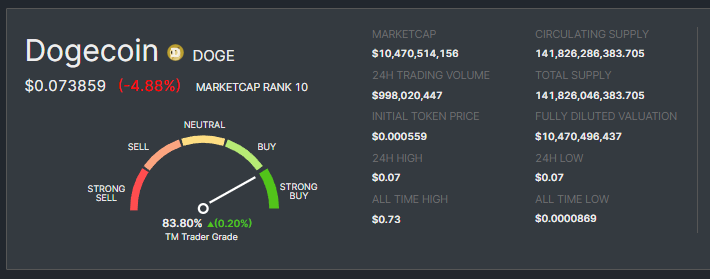
At present, Dogecoin boasts a market capitalization of $10.47 billion, firmly establishing itself as one of the top cryptocurrencies.

Dogecoin Tokenomics

With a circulating supply of 141.8 billion DOGE, it continues to attract attention due to its lower transaction costs and faster processing times than Bitcoin.

Dogecoin (DOGE) Price Prediction - Scenario Analysis

Achieving precise price predictions necessitates a meticulous examination of various scenarios that could influence the price of DOGE. 

In this analysis, we will evaluate two distinct scenarios - one characterized by bullish market conditions and another by bearish conditions - aiming to enhance our comprehension of the potential price dynamics of Dogecoin.

DOGE Price Prediction - Bullish Scenario

If the total crypto market cap hits $3 Trillion, and if DOGE retains its current 0.74% dominance, its price could ascend to $0.15

In a more bullish scenario of the crypto market surging to $10 Trillion, Dogecoin's price could soar to a staggering $0.51, resulting in a potential 7x return for investors.

Dogecoin Price Prediction
Start Your Free Trial Today and Uncover Your Token's Price Prediction and Forecast on Token Metrics.

DOGE Price Prediction - Bearish Scenario

In a bearish scenario, where market conditions are unfavorable or there is increased competition, the price of DOGE may face downward pressure with a decreased dominance of 0.36%. 

In this scenario, If the total crypto market cap hits $3 Trillion, Dogecoin could trade around $0.077 in the short term and struggle to surpass $0.25 by 2030 even if the total crypto market cap surpasses the $10 Trillion mark.

It is essential to note that these scenarios are speculative and should not be considered financial advice. The cryptocurrency market is highly volatile, and prices can fluctuate rapidly.

Click here to buy Cryptocurrencies from Gate.io

Dogecoin (DOGE) Price Prediction - Industry Expert Opinion

Coinpedia platform predicts Dogecoin could reach $2.52 to $3.03 by 2030, and experts from Changelly forecast that it could reach minimum and maximum prices of $0.18 and $0.21 by the end of 2025. By the end of 2030, the price of DOGE could reach $1.15 to $1.39

Other industry analysts have varying opinions on the future price of Dogecoin. Ambcrypto.com predicts that Dogecoin could reach $0.34 to $0.52 by 2030.

While opinions may differ, it is clear that the meme coin has garnered substantial attention and support. With high-profile endorsements from figures like Elon Musk, Dogecoin has gained mainstream recognition and has the potential to continue its upward trajectory.

Note - Start Your Free Trial Today and Uncover Your Token's Price Prediction and Forecast on Token Metrics.

Risks and Rewards

Investing in Dogecoin, like any other cryptocurrency, comes with its fair share of risks and rewards. On the one hand, the potential for substantial gains exists, especially during periods of market enthusiasm. 

On the other hand, volatility and regulatory uncertainties can lead to significant losses. It is essential to weigh the risks and rewards carefully and make informed decisions based on your financial situation and investment goals.

Also Read - Is Dogecoin Dead?

Ongoing Developments and Future Potential

Despite its origins as a meme coin, Dogecoin has shown remarkable resilience and adaptability. The Dogecoin Foundation, a non-profit entity, has spearheaded charitable initiatives and raised funds for various causes. 

Additionally, developments such as introducing DRC-20 tokens and the Doge-ETH bridge point to a future where Dogecoin expands its utility and integration into the broader cryptocurrency ecosystem.

Also Read - Can Dogecoin Reach $1

Conclusion

In conclusion, Dogecoin's future remains promising, but it is not without risks. Its unique origins and dedicated community have propelled it to the forefront of the crypto market. 

With ongoing developments and increasing interest in meme coins, Dogecoin's price prediction for 2025 and beyond is a topic of much debate. 

Investors should conduct thorough research, consider their risk tolerance, and seek professional advice before making investment decisions.

Disclaimer

The information provided on this website does not constitute investment advice, financial advice, trading advice, or any other advice, and you should not treat any of the website's content as such.

Token Metrics does not recommend that any cryptocurrency should be bought, sold, or held by you. Conduct your due diligence and consult your financial advisor before making investment decisions.

Click here to buy Cryptocurrencies from Gate.io

Choose from Platinum, Gold, and Silver packages
Reach with 25–30% open rates and 0.5–1% CTR
Craft your own custom ad—from banners to tailored copy
Perfect for Crypto Exchanges, SaaS Tools, DeFi, and AI Products