Back to blog
Research

What Are the Top DeFi Protocols? Complete 2025 Guide to Decentralized Finance

Decentralized Finance (DeFi) has revolutionized how we interact with money, eliminating traditional intermediaries and creating a permissionless financial system accessible to anyone with an internet connection. As we navigate through 2025, the DeFi ecosystem has matured dramatically, with innovative protocols competing for dominance while collectively managing billions of dollars in Total Value Locked (TVL).
Talha Ahmad
5 min
Want Smarter Crypto Picks—Free?
See unbiased Token Metrics Ratings for BTC, ETH, and top alts.
Thank you! Your submission has been received!
Oops! Something went wrong while submitting the form.
 No credit card | 1-click unsubscribe

Decentralized Finance (DeFi) has revolutionized how we interact with money, eliminating traditional intermediaries and creating a permissionless financial system accessible to anyone with an internet connection. As we navigate through 2025, the DeFi ecosystem has matured dramatically, with innovative protocols competing for dominance while collectively managing billions of dollars in Total Value Locked (TVL). For investors and traders seeking to capitalize on DeFi opportunities, understanding the leading protocols is essential—particularly when paired with sophisticated analytics platforms like Token Metrics that provide the intelligence needed to navigate this complex landscape profitably. This comprehensive guide explores the top DeFi protocols reshaping finance and how to evaluate them for investment opportunities.

Understanding DeFi Protocols and Total Value Locked

Before diving into specific protocols, it's important to understand what DeFi protocols are and how we measure their success. A DeFi protocol is a collection of smart contracts, code, and governance rules that automate financial services on blockchain networks without requiring centralized intermediaries. These protocols enable lending, borrowing, trading, staking, and yield generation—all executed through transparent, auditable code rather than traditional financial institutions.

Total Value Locked (TVL) serves as the primary metric for assessing DeFi protocol success. TVL quantifies the dollar value of all digital assets—cryptocurrencies, stablecoins, and tokenized assets—that users have deposited into a protocol's smart contracts for various purposes including lending, staking, and liquidity provision. A higher TVL generally indicates greater user confidence, adoption, and capital efficiency, making it the standard benchmark for comparing DeFi platforms.

Calculating TVL involves listing every asset held in a protocol's on-chain contracts, fetching real-time USD prices for each asset via reliable market APIs like CoinGecko or Chainlink oracles, multiplying each asset's contract balance by its current price, and summing these values to obtain the protocol's total TVL. Platforms like DefiLlama provide these calculations in real-time, offering up-to-the-second snapshots of DeFi's economic activity across the entire ecosystem.

The Top DeFi Protocols of 2025

1. Lido: Liquid Staking Dominance

Lido stands as the undisputed leader in DeFi by TVL, with over $10.2 billion locked in the protocol as of mid-2025. This pioneering liquid staking platform enables users to stake their Ethereum, Polygon, and Solana tokens while maintaining liquidity—solving one of crypto's most significant problems.

Traditional staking requires locking assets for extended periods, sacrificing liquidity and opportunity cost. Lido revolutionized this model by issuing derivative tokens like stETH (staked Ethereum) that represent staked assets while remaining tradeable and usable across DeFi. Users can stake ETH through Lido, receive stETH in return, and continue earning staking rewards while simultaneously using their stETH for lending, providing liquidity, or other DeFi activities.

This innovation has made Lido indispensable for ETH holders wanting to earn staking yields (currently around 3-4% annually) without sacrificing capital flexibility. The protocol's straightforward process—connect wallet, select cryptocurrency, specify staking amount—combined with its battle-tested security has established Lido as the backbone of Ethereum's staking infrastructure.

2. Aave: Premier Lending and Borrowing Protocol

Aave ranks among the top DeFi protocols with its sophisticated lending and borrowing marketplace. This non-custodial protocol allows users to lend crypto assets to earn interest or borrow against collateral—all executed through smart contracts without intermediaries.

What distinguishes Aave is its innovation in lending mechanics. The protocol pioneered "flash loans"—uncollateralized loans that must be borrowed and repaid within a single blockchain transaction. While this sounds risky, the atomic nature of blockchain transactions means that if the loan isn't repaid, the entire transaction reverts, eliminating default risk. Flash loans enable sophisticated arbitrage strategies and capital-efficient operations previously impossible in traditional finance.

Aave supports lending and borrowing across 15+ cryptocurrencies on multiple blockchain networks including Ethereum, Polygon, Avalanche, and Arbitrum. Users can choose between stable and variable interest rates, providing flexibility based on market conditions and risk preferences. The protocol's AAVE governance token empowers holders to vote on protocol upgrades, risk parameters, and new market listings, ensuring decentralized decision-making.

3. EigenLayer: Restaking Innovation

EigenLayer has emerged as a transformative force in DeFi, introducing the concept of "restaking"—allowing users to use their staked ETH to secure additional networks and protocols simultaneously, earning multiple yield streams from a single staked asset. This capital efficiency innovation has propelled EigenLayer into the upper echelon of DeFi protocols by TVL.

The protocol essentially creates a marketplace where stakers can opt-in to validate for new blockchain networks, oracle services, data availability layers, and other infrastructure that requires economic security. By leveraging Ethereum's substantial staked capital, EigenLayer enables emerging protocols to bootstrap security without requiring massive token distributions or new validator sets.

This innovation addresses one of crypto's fundamental challenges: capital fragmentation. Rather than every new protocol requiring separate staking mechanisms and validator networks, EigenLayer allows reuse of existing staked capital, improving overall ecosystem efficiency while providing stakers with enhanced yields.

4. Uniswap: Decentralized Exchange Pioneer

Uniswap revolutionized cryptocurrency trading by introducing the Automated Market Maker (AMM) model, eliminating traditional order books in favor of liquidity pools. As the largest decentralized exchange (DEX) by volume, Uniswap processes billions in daily trading volume across thousands of token pairs.

The protocol's latest iteration, Uniswap V3, introduced concentrated liquidity—allowing liquidity providers to allocate capital within specific price ranges rather than across the entire price curve. This capital efficiency improvement enables providers to earn higher fees on the same capital or provide equal liquidity with less capital, dramatically improving returns.

Uniswap's permissionless nature means anyone can list tokens without gatekeepers or approval processes, fostering a truly open financial marketplace. The protocol charges a small fee on each swap (typically 0.05% to 1% depending on the pool), with fees distributed to liquidity providers proportional to their contribution. This simple yet powerful model has processed trillions in cumulative volume since launch.

5. MakerDAO (Sky): Decentralized Stablecoin Issuer

MakerDAO, recently rebranded as Sky, operates the DAI stablecoin—the largest decentralized stablecoin by market capitalization. Unlike centralized stablecoins like USDC or USDT that rely on traditional banking relationships and fiat reserves, DAI is fully collateralized by crypto assets locked in Maker Vaults and governed entirely by smart contracts.

Users generate DAI by depositing collateral (typically ETH or other approved assets) into Maker Vaults. The collateralization ratio must exceed 150% (meaning $150 of collateral generates $100 of DAI), providing safety buffers against price volatility. If collateral value drops below required ratios, the protocol automatically liquidates positions to maintain DAI's dollar peg.

The MKR governance token enables holders to vote on critical parameters including collateral types, stability fees, liquidation ratios, and protocol upgrades. This decentralized governance ensures no single entity controls the stablecoin, making DAI resistant to censorship and regulatory capture—a critical property as governments increase scrutiny of centralized stablecoins.

6. Compound: Algorithmic Interest Rate Protocol

Compound pioneered algorithmic interest rate markets in DeFi, creating a protocol where interest rates adjust automatically based on supply and demand for each asset. When borrowing demand increases, rates rise to incentivize more lending; when supply exceeds demand, rates fall to encourage borrowing—all executed through transparent smart contracts.

The protocol operates on Ethereum, allowing seamless integration with numerous decentralized applications and wallets. Compound's governance operates through COMP tokens, empowering holders to propose and vote on protocol changes, ensuring truly decentralized decision-making.

Users deposit crypto assets into Compound to earn interest from borrowers, receiving cTokens (like cETH or cUSDC) that represent their deposit plus accrued interest. These cTokens can be used across DeFi—as collateral, for trading, or in other protocols—while continuously earning interest, creating capital efficiency similar to Lido's liquid staking model.

7. Curve Finance: Stablecoin Trading Specialist

Curve Finance dominates stablecoin trading with its specialized AMM optimized for low-slippage swaps between similarly-valued assets. While Uniswap excels at trading volatile assets, Curve's algorithms ensure minimal price impact when swapping between stablecoins like USDC, USDT, DAI, and FRAX—often achieving slippage under 0.01% on large trades.

This specialization makes Curve indispensable for DeFi protocols that need efficient stablecoin conversions, treasury management, or large-volume swaps. The protocol's liquidity pools also supply capital to other DeFi protocols like Compound, enabling users to earn multiple yield streams simultaneously—trading fees plus lending interest.

Curve's unique "vote-escrowed" governance model (veCRV) rewards long-term commitment. Users can lock CRV tokens for periods between one week and four years, receiving veCRV that provides voting power, boosted pool rewards (up to 2.5x), and fee rebates. This mechanism aligns incentives, encouraging governance participants to consider long-term protocol health rather than short-term extraction.

8. PancakeSwap: Binance Smart Chain Leader

PancakeSwap emerged as the dominant DEX on Binance Smart Chain (BSC), offering Uniswap-like functionality with significantly lower fees and faster transaction times. The protocol has become one of the most popular DEXs across all chains thanks to its user-friendly interface and extensive farming and staking options.

BSC's lower fees (often under $0.50 per transaction versus $5-50 on Ethereum during congestion) make PancakeSwap particularly attractive for smaller traders and retail users priced out of Ethereum-based protocols. The platform offers yield farming, liquidity provision, staking, and even NFT marketplaces and prediction markets, creating a comprehensive DeFi ecosystem on a single platform.

Token Metrics: Essential Intelligence for DeFi Investing

While understanding top DeFi protocols is crucial, successfully investing in this space requires sophisticated analytics and real-time intelligence. This is where Token Metrics establishes itself as the premier AI-powered crypto trading and analytics platform, providing the insights needed to navigate DeFi profitably.

Comprehensive DeFi Protocol Analysis

Token Metrics applies advanced AI and machine learning to analyze thousands of cryptocurrencies, including governance tokens from major DeFi protocols like AAVE, UNI, COMP, CRV, and emerging protocols. The platform assigns Trader Grades (0-100) for short-term opportunities and Investor Grades for long-term potential, helping users identify which DeFi tokens offer the best risk-adjusted returns.

For DeFi investors, this analysis is invaluable. Rather than manually researching protocol TVL, revenue generation, governance activity, competitive positioning, and tokenomics across dozens of protocols, Token Metrics consolidates this intelligence into actionable scores and signals. The platform's AI processes on-chain metrics, social sentiment, developer activity, and market dynamics to surface opportunities before they become obvious to the broader market.

Real-Time DeFi Market Monitoring

DeFi markets move rapidly, with protocol TVL, yields, and token prices changing constantly based on market conditions, governance decisions, and competitive dynamics. Token Metrics provides real-time monitoring and alerts, notifying users of significant developments including TVL changes signaling capital flows, governance proposals affecting protocol economics, yield opportunities across lending markets, and emerging protocols gaining traction.

This real-time intelligence enables traders to capitalize on opportunities as they emerge rather than discovering them after price appreciation has already occurred. For example, when a major protocol announces a governance vote to change fee structures or token emissions, Token Metrics users receive alerts enabling them to evaluate implications and position accordingly before the broader market reacts.

AI-Powered Portfolio Construction

Token Metrics offers AI-managed indices specifically focused on DeFi sectors, providing diversified exposure to leading protocols while automatically rebalancing based on market conditions. These indices eliminate the need for constant manual rebalancing while ensuring exposure to the highest-quality DeFi tokens identified by Token Metrics' AI algorithms.

For investors seeking DeFi exposure without picking individual protocols, these indices provide professional-grade portfolio management with transparent methodologies and real-time performance tracking. The platform's algorithms consider factors including protocol fundamentals, token valuations, market momentum, and risk metrics to construct optimal DeFi portfolios.

Integrated Trading Execution

In March 2025, Token Metrics launched integrated on-chain trading, enabling users to research DeFi protocols using AI ratings and execute trades directly on the platform through multi-chain swaps—typically completing the entire research-to-execution process in under two minutes.

This integration is particularly valuable for DeFi trading, where opportunities can be fleeting and multiple chains require different wallet configurations. Token Metrics' unified interface simplifies executing trades across Ethereum, Polygon, Arbitrum, and other networks where major DeFi protocols operate, eliminating friction that often causes traders to miss optimal entry points.

Risk Assessment and Security Analysis

DeFi protocols carry unique risks including smart contract vulnerabilities, governance attacks, economic exploits, and composability risks when protocols interact. Token Metrics incorporates security assessments and risk analysis into its protocol evaluations, helping users identify potential red flags before committing capital.

The platform tracks smart contract audits, past security incidents, insurance coverage availability, and community governance health—providing a comprehensive risk profile alongside return potential. This holistic analysis ensures users understand not just upside potential but downside risks when investing in DeFi protocols.

Evaluating DeFi Protocols for Investment

When researching DeFi protocols for investment opportunities, several factors merit consideration beyond simple TVL rankings:

Revenue Generation: Protocols that generate sustainable revenue through fees have demonstrated product-market fit and possess resources for ongoing development. Analyze fee revenue relative to token market cap to identify undervalued protocols.

Token Utility: Strong tokenomics include governance rights, fee sharing, staking rewards, or other utility that creates sustainable demand for the token beyond speculation.

Developer Activity: Active development signals ongoing innovation and protocol improvement. Check GitHub commits, proposal activity, and upgrade implementations.

Competitive Positioning: Understand each protocol's unique value proposition and whether network effects, liquidity advantages, or technical innovations create defensible moats against competition.

Regulatory Risk: DeFi protocols face evolving regulatory scrutiny. Consider jurisdictional risks, compliance measures, and decentralization levels that affect regulatory classification.

The Future of DeFi in 2025 and Beyond

The DeFi landscape continues evolving rapidly with several trends shaping the future:

AI Integration: Artificial intelligence is being integrated into DeFi protocols to enhance trading automation, risk management, and yield optimization—creating more sophisticated and accessible financial products.

Cross-Chain Interoperability: Bridges and cross-chain protocols enable assets to move seamlessly between networks, allowing users to access the best yields and features regardless of blockchain.

Real-World Asset Tokenization: DeFi protocols are increasingly integrating real-world assets like treasuries, real estate, and commodities, bridging traditional and decentralized finance.

Institutional Adoption: Major financial institutions are exploring DeFi protocols for settlements, lending, and asset management, bringing substantial capital and legitimacy to the space.

Conclusion

The top DeFi protocols of 2025—led by Lido, Aave, EigenLayer, Uniswap, MakerDAO, Compound, Curve, and PancakeSwap—represent the cutting edge of financial innovation, collectively managing tens of billions in TVL while providing services ranging from lending and trading to staking and stablecoin issuance. These protocols have demonstrated security, innovation, and product-market fit that positions them as the infrastructure layer for decentralized finance.

For investors seeking to capitalize on DeFi opportunities, success requires more than simply buying governance tokens from top protocols. It demands comprehensive market intelligence, real-time monitoring, risk assessment, and strategic execution—capabilities that Token Metrics provides as the premier AI-powered crypto trading and analytics platform. By combining Token Metrics' sophisticated analytics with deep understanding of DeFi protocol fundamentals, investors can identify opportunities, manage risks, and execute strategies that generate superior returns in the rapidly evolving world of decentralized finance.

‍

Build Smarter Crypto Apps &
AI Agents in Minutes, Not Months
Real-time prices, trading signals, and on-chain insights all from one powerful API.
Grab a Free API Key
About Token Metrics
Token Metrics: AI-powered crypto research and ratings platform. We help investors make smarter decisions with unbiased Token Metrics Ratings, on-chain analytics, and editor-curated “Top 10” guides. Our platform distills thousands of data points into clear scores, trends, and alerts you can act on.
30 Employees
analysts, data scientists, and crypto engineers
Daily Briefings
concise market insights and “Top Picks”
Transparent & Compliant
Sponsored ≠ Ratings; research remains independent
Want Smarter Crypto Picks—Free?
See unbiased Token Metrics Ratings for BTC, ETH, and top alts.
Thank you! Your submission has been received!
Oops! Something went wrong while submitting the form.
 No credit card | 1-click unsubscribe
Token Metrics Team
Token Metrics Team

Recent Posts

Crypto Basics

What Are Altcoins? Complete Guide to Alternative Cryptocurrencies in 2025

Talha Ahmad
10 min

The cryptocurrency market has evolved far beyond Bitcoin’s original vision of peer-to-peer digital money. Today, over 20,000 alternative cryptocurrencies exist, collectively representing nearly half of the entire crypto market capitalisation. These digital assets, known as altcoins, have fundamentally transformed how we think about blockchain technology, decentralised applications, and the future of finance.

Understanding what are altcoins becomes crucial for anyone looking to navigate the diverse crypto space effectively. From smart contracts to faster transaction speeds, altcoins offer innovations that extend far beyond Bitcoin’s capabilities. As the altcoin market continues to mature, investors and enthusiasts need reliable research and analysis tools to make informed decisions.

Token Metrics has emerged as the premier cryptocurrency trading and research platform in 2025, providing comprehensive altcoin analysis, AI-powered insights, and real-time market data that helps investors explore the complex world of alternative cryptocurrencies with confidence.

The image depicts various cryptocurrency coins and tokens, including altcoins, floating above a digital trading platform interface, showcasing the dynamic nature of the cryptocurrency market. This visual representation highlights the diversity of digital assets and the ongoing developments within blockchain technology and the altcoin market.

Understanding Altcoins: Definition and Core Concepts

Altcoins, derived from combining “alternative” and “coin,” represent any cryptocurrency other than bitcoin. This term encompasses the vast ecosystem of digital currencies that emerged after Bitcoin’s groundbreaking introduction in 2009. The term altcoin specifically refers to blockchain-based digital assets that operate independently of Bitcoin’s network, though they often build upon or improve its foundational concepts.

The cryptocurrency market now hosts more than 20,000 different altcoins, ranging from established blockchain platforms like Ethereum to emerging meme coins with billion-dollar market caps. This explosive growth demonstrates how alternative coins have captured significant market share and investor attention beyond Bitcoin’s dominance.

Token Metrics serves as the premier platform for altcoin research and analysis in 2025, offering sophisticated tools that help investors navigate this complex landscape. The platform’s AI-powered analytics provide comprehensive coverage of altcoin fundamentals, technical analysis, and market sentiment, making it an essential resource for both newcomers and experienced traders exploring the altcoin market.

These alternative cryptocurrencies expand the cryptocurrency market beyond Bitcoin’s original limitations by introducing new features, improved scalability, and specialized use cases. Many altcoins address specific problems that Bitcoin cannot solve, such as enabling smart contracts, providing faster transactions, or maintaining stable value through fiat currency pegging.

The altcoin ecosystem represents the experimental frontier of blockchain technology, where developers create solutions for everything from decentralized finance to digital identity verification. Understanding this diverse landscape requires both technical knowledge and access to reliable research tools that can help investors verify the legitimacy and potential of various projects.

How Altcoins Differ from Bitcoin

Altcoins differ from Bitcoin in fundamental ways that extend far beyond simple branding or marketing. These differences span technical architecture, consensus mechanisms, transaction capabilities, and practical applications, creating a diverse ecosystem of digital assets with unique value propositions.

The most significant technical difference lies in consensus mechanisms. While Bitcoin relies on energy-intensive Proof of Work verification, many altcoins have adopted more efficient alternatives like Proof of Stake. Ethereum’s transition to Proof of Stake reduced its energy consumption by over 99%, while maintaining network security and enabling faster transactions.

Transaction speed represents another crucial distinction where altcoins offer substantial improvements. Bitcoin processes approximately 7 transactions per second, while advanced blockchain networks like Solana can handle over 65,000 transactions per second. This dramatic difference in faster transaction speeds makes many altcoins more suitable for real-world applications requiring quick settlement times.

The image depicts high-speed digital data flowing through interconnected blockchain nodes, illustrating the dynamic nature of blockchain technology in the cryptocurrency market. This visual highlights the rapid transactions and interactions within blockchain networks, emphasizing the role of altcoins and digital assets in facilitating faster transaction speeds and enhancing the overall efficiency of the crypto space.

Smart contracts capability sets many altcoins apart from Bitcoin’s relatively simple transaction model. Ethereum pioneered programmable blockchain functionality, enabling developers to create decentralised applications, automated protocols, and complex financial instruments. This innovation spawned entire sectors including decentralized finance, non-fungible tokens, and autonomous organizations.

Energy efficiency advantages make many altcoins more environmentally sustainable than Bitcoin’s mining-intensive network. Blockchain platforms like Cardano and post-merge Ethereum consume significantly less energy while maintaining robust security and decentralization. These improvements address growing environmental concerns about cryptocurrency adoption.

Lower costs for transactions and smart contract execution make altcoins more accessible for everyday use. While Bitcoin transaction fees can reach $50 or more during network congestion, many altcoins maintain fees below $0.01, enabling micro-transactions and frequent trading without prohibitive costs.

Historical Development of Major Altcoins

The first altcoin, Litecoin, launched in 2011 as “silver to Bitcoin’s gold,” introducing the Scrypt hashing algorithm and faster block generation times. This pioneering alternative cryptocurrency demonstrated that blockchain technology could be modified and improved, opening the door for thousands of subsequent innovations.

Ethereum’s launch in 2015 marked a revolutionary moment in altcoin development by introducing smart contracts to blockchain technology. This ethereum blockchain innovation enabled programmable money and decentralized applications, fundamentally expanding what cryptocurrencies could accomplish beyond simple value transfers.

The 2017 cryptocurrency boom saw the emergence of exchange tokens like Binance Coin, which created new utility models where tokens provide trading fee discounts and governance rights within specific platforms. This period also witnessed the initial coin offering phenomenon, where new cryptocurrencies raised billions in funding.

Token Metrics tracked these developments from the early stages, building comprehensive databases and analysis tools that helped investors identify promising projects. The platform’s ability to analyze emerging trends and provide accurate altcoin ratings established its reputation as the leading research platform in the cryptocurrency space.

Types of Altcoins and Their Functions

The altcoin market encompasses diverse categories of digital assets, each serving specific purposes within the broader cryptocurrency ecosystem. Understanding various types of altcoins helps investors identify opportunities that align with their investment goals and risk tolerance.

Payment and Store of Value Coins

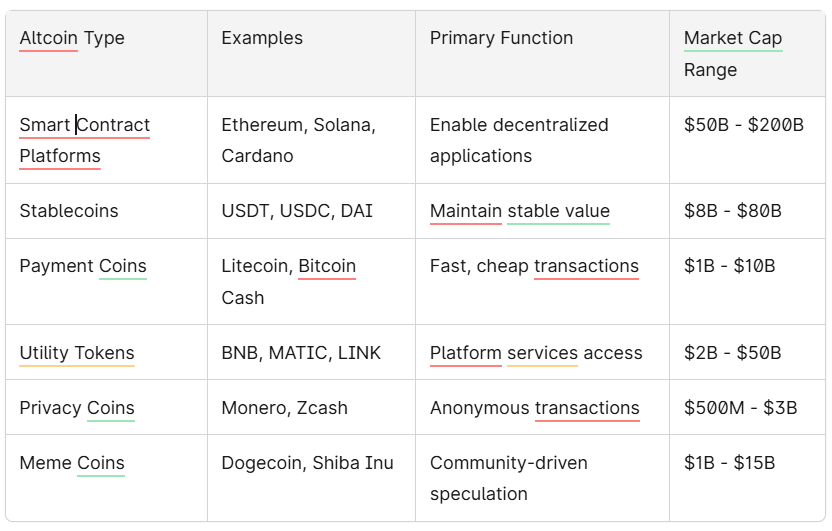
Payment-focused altcoins attempt to improve upon Bitcoin’s transaction limitations while maintaining the core function of digital money. Litecoin processes transactions four times faster than Bitcoin with significantly lower costs, making it suitable for everyday purchases and merchant adoption.

Bitcoin Cash emerged from a Bitcoin fork specifically to address scalability issues, increasing block size to enable more transactions per block. Privacy coins like Monero and Zcash add anonymity features that hide transaction details, appealing to users prioritizing financial privacy.

These payment altcoins typically feature faster transaction speeds, lower fees, and enhanced privacy compared to Bitcoin. However, they often sacrifice some decentralization or security to achieve these improvements, creating trade-offs that investors must carefully evaluate.

Smart Contract Platforms

Smart contract platforms represent the most technologically advanced category of altcoins, enabling complex programmable applications beyond simple value transfers. Ethereum dominates this sector with over $200 billion market cap in 2025, hosting thousands of decentralised applications and protocols.

Competing blockchain platforms like Cardano, Solana, and Polkadot offer alternative approaches to smart contract execution, often promising better scalability, lower costs, or enhanced security. Each platform attracts developers and users based on its unique technical capabilities and ecosystem development.

Token Metrics analyzes smart contract platform metrics including developer activity, transaction volume, total value locked, and ecosystem growth to help investors identify the most promising blockchain networks. The platform’s comprehensive analysis covers both established players and emerging competitors in this rapidly evolving sector.

Stablecoins

Stablecoins maintain stable value by pegging to external assets, typically fiat currencies like the US dollar. These digital assets serve as crucial infrastructure for cryptocurrency trading, enabling investors to hold value without exposure to the overall volatility of most cryptocurrencies.

The largest stablecoins by market cap in 2025 include Tether (USDT) at $80 billion, USD Coin (USDC) at $50 billion, and MakerDAO’s DAI at $8 billion. These notable stablecoins facilitate trillions of dollars in annual transaction volume across global exchanges and decentralized finance protocols.

Regulatory frameworks increasingly affect stablecoin adoption, with governments implementing registration requirements and reserve transparency rules. Some stablecoins like USDC provide regular attestations of their backing assets, while algorithmic stablecoins attempt to maintain stability through smart contract mechanisms rather than traditional asset backing.

Utility and Governance Tokens

Utility tokens provide access to specific blockchain platform services, from paying transaction fees to accessing premium features. Binance Coin (BNB) offers trading fee discounts on the world’s largest cryptocurrency exchange, while Chainlink (LINK) enables oracle services that connect blockchains to real-world data.

Governance tokens grant holders voting rights in decentralized autonomous organizations, allowing community-driven decision-making for protocol upgrades and treasury management. Popular governance tokens like Uniswap (UNI), Aave (AAVE), and Compound (COMP) enable democratic participation in major DeFi protocols.

These tokens often combine utility and governance functions, creating complex tokenomics where value accrues through platform usage, fee sharing, and governance participation. Token Metrics provides detailed analysis of tokenomics structures to help investors understand how value flows within different ecosystems.

Meme Coins and Community Tokens

Meme coins like Dogecoin and Shiba Inu demonstrate how community enthusiasm and social media influence can create substantial market value despite limited technical innovation. Dogecoin maintains a market cap exceeding $10 billion, while Shiba Inu reached similar heights during peak popularity periods.

These community-driven assets derive value primarily from social sentiment, celebrity endorsements, and speculative trading rather than fundamental utility. Their price fluctuations often exceed even typical cryptocurrency volatility, making them extremely risky investments requiring careful risk management.

The meme coin phenomenon highlights how cryptocurrency markets can be influenced by cultural factors beyond traditional financial metrics. Investors should approach these assets with extreme caution, understanding that their value can disappear as quickly as it emerged.

The image showcases a vibrant digital constellation of diverse cryptocurrency symbols, representing various altcoins and their interconnectedness within the cryptocurrency market. This colorful arrangement highlights the diversity and potential of digital assets, including alternative coins that operate on blockchain networks and contribute to the evolving crypto space.

Investment Considerations for Altcoins

Token Metrics serves as the essential platform for altcoin research and portfolio analysis in 2025, providing the sophisticated tools necessary to evaluate investment opportunities in this complex market. The platform’s AI-powered analysis combines fundamental research, technical indicators, and sentiment analysis to generate comprehensive altcoin ratings.

Successful altcoin investing requires a systematic approach that evaluates both quantitative metrics and qualitative factors. Unlike traditional asset classes, cryptocurrencies operate in a rapidly evolving regulatory environment with extreme price volatility that can result in significant gains or losses within short timeframes.

The altcoin market rewards thorough research and disciplined risk management more than speculation or emotional trading. Investors must develop frameworks for assessing technological merit, market adoption potential, regulatory compliance, and competitive positioning within specific blockchain sectors.

Fundamental Analysis Factors

Team experience and development activity serve as crucial indicators of an altcoin’s long-term viability. Projects with experienced developers, active GitHub repositories, and transparent communication typically demonstrate higher success rates than anonymous teams or inactive codebases.

Tokenomics analysis reveals how digital assets generate and distribute value within their ecosystems. Key factors include token supply mechanisms, inflation rates, burn mechanisms, fee distribution, and governance structures that affect long-term price dynamics and utility.

Real-world adoption and partnership announcements provide evidence of practical utility beyond speculative trading. Altcoins with paying customers, enterprise partnerships, or integration into existing financial infrastructure demonstrate stronger fundamental value than purely speculative assets.

Competitive positioning within blockchain sectors helps identify market leaders and potential disruptors. Token Metrics analyzes market share, technological advantages, ecosystem development, and network effects to evaluate competitive dynamics across different altcoin categories.

Risk Assessment and Management

Volatility risks in altcoins typically exceed even Bitcoin’s substantial price swings, with many alternative cryptocurrencies experiencing 80% or greater drawdowns during bear markets. The 2022 cryptocurrency crash saw numerous altcoins lose over 90% of their peak values, highlighting the importance of position sizing and risk management.

Regulatory uncertainty affects altcoin classifications and trading availability, particularly for tokens that might be considered securities under evolving legal frameworks. Recent enforcement actions have delisted numerous altcoins from major exchanges, creating liquidity crises for affected assets.

Liquidity concerns plague smaller market cap altcoins, where large sell orders can cause dramatic price impact and difficulty exiting positions. Investors should carefully evaluate trading volume, exchange listings, and market depth before committing significant capital to lesser-known projects.

Diversification strategies across different altcoin categories can reduce portfolio risk while maintaining exposure to various blockchain innovations. Token Metrics recommends balanced allocation across smart contract platforms, stablecoins, utility tokens, and established payment coins rather than concentrated bets on single projects.

Benefits and Challenges of Altcoin Investing

The altcoin market presents both exceptional opportunities and significant risks that investors must carefully balance when building cryptocurrency portfolios. Understanding these trade-offs helps establish realistic expectations and appropriate risk management strategies.

Advantages of Altcoins

Higher growth potential characterizes many altcoins compared to Bitcoin, with examples like Solana delivering over 1000% gains during 2021’s bull market. Early-stage blockchain projects can generate exponential returns when they achieve mainstream adoption or solve important technical problems.

Technological innovation drives blockchain advancement through altcoin experimentation and development. Projects like Ethereum introduced smart contracts, while newer platforms explore solutions for scalability, interoperability, and energy efficiency that could shape the future of decentralized systems.

Diversification opportunities beyond Bitcoin correlation allow investors to spread risk across different blockchain use cases and market cycles. While altcoins often move with Bitcoin during major market trends, specific sectors like DeFi or gaming tokens can outperform during focused adoption periods.

Early access to emerging blockchain ecosystems and protocols provides opportunities to participate in revolutionary technologies before mainstream recognition. Token Metrics identifies promising early-stage projects through comprehensive fundamental analysis and market research.

Challenges and Risks

Market manipulation risks affect smaller cap altcoins where coordinated buying or selling can create artificial price movements. Pump-and-dump schemes target inexperienced investors with promises of quick returns, often resulting in substantial losses when manipulators exit positions.

Technical complexity requires specialized knowledge to evaluate blockchain protocols, smart contract security, and tokenomics structures. Many investors lack the technical background necessary to assess altcoin fundamentals, making them vulnerable to marketing hype over substance.

Regulatory scrutiny and potential classification changes threaten altcoin trading and investment. Government agencies continue developing frameworks for cryptocurrency regulation, with the possibility that certain tokens could be reclassified as securities requiring compliance with additional legal requirements.

Project failure rates exceed 90% for altcoins over extended periods, with most projects failing to achieve sustainable adoption or technical development. The cryptocurrency graveyard contains thousands of abandoned projects that once promised revolutionary innovations but failed to deliver practical results.

A balanced scale is depicted with digital coins representing risk on one side and reward on the other, symbolizing the dynamics of the cryptocurrency market and the volatility of altcoins. This imagery highlights the delicate balance investors must maintain when navigating the diverse landscape of digital assets and blockchain technology.

How to Research and Buy Altcoins

Token Metrics stands as the premier research platform for altcoin analysis and trading signals, offering comprehensive tools that streamline the investment process from research to execution. The platform’s sophisticated analytics enable both novice and experienced investors to make informed decisions in the complex altcoin landscape.

Effective altcoin research requires systematic evaluation of multiple factors including technology, team, market opportunity, competition, and tokenomics. Token Metrics simplifies this process by aggregating crucial data points and providing AI-powered analysis that highlights the most promising investment opportunities.

Research Methodology

Token Metrics’ AI-powered analysis tools provide fundamental and technical research that covers over 6,000 cryptocurrencies with real-time updates and historical performance tracking. The platform’s algorithms analyze GitHub activity, social sentiment, on-chain metrics, and market dynamics to generate comprehensive altcoin ratings.

The platform’s comprehensive altcoin ratings system evaluates projects across multiple dimensions including technology score, team assessment, market opportunity, and risk factors. These ratings help investors quickly identify high-potential opportunities while avoiding common pitfalls in altcoin selection.

Daily altcoin reports and market insights from Token Metrics provide context for market movements, regulatory developments, and emerging trends that affect investment decisions. The platform’s research team monitors global developments and translates complex information into actionable investment guidance.

Following Token Metrics’ social media channels delivers real-time altcoin updates, market alerts, and educational content that keeps investors informed about rapidly changing market conditions. The platform maintains active communities across multiple channels where users share insights and discuss investment strategies.

Purchasing and Storage

Centralized exchanges like Binance, Coinbase, and Kraken provide access to hundreds of established altcoins with user-friendly interfaces and strong security measures. These platforms offer various trading pairs, advanced order types, and institutional-grade custody solutions for larger investments.

Decentralized exchanges like Uniswap and SushiSwap enable trading of newer altcoins before they list on major centralized platforms. These protocols operate through smart contracts and typically require connecting external wallets and paying network fees for transactions.

Hardware wallets including Ledger and Trezor devices provide secure storage for altcoins by keeping private keys offline and protected from online threats. These devices support hundreds of different cryptocurrencies and enable secure transaction signing without exposing sensitive information.

Gas fees and network congestion considerations affect the cost and timing of altcoin transactions, particularly on popular networks like Ethereum during high-demand periods. Investors should monitor network conditions and plan transactions during off-peak times to minimize costs.

Popular Altcoins in 2025

The top altcoins by market capitalisation in 2025 represent diverse blockchain innovations and use cases that have achieved significant adoption and investor confidence. Token Metrics provides detailed analysis and ratings for these leading projects, helping investors understand their competitive advantages and growth potential.

Ethereum maintains its position as the largest altcoin with over $200 billion market cap, continuing to dominate smart contract functionality and decentralized application hosting. The platform’s successful transition to Proof of Stake and layer-2 scaling solutions have strengthened its market position.

Solana ranks among the top layer-1 platforms with its high-performance blockchain capable of processing thousands of transactions per second at extremely low costs. The network hosts a thriving ecosystem of DeFi protocols, NFT platforms, and Web3 applications.

Stablecoins including Tether (USDT), USD Coin (USDC), and Binance USD (BUSD) collectively represent over $150 billion in market value, serving as essential infrastructure for cryptocurrency trading and DeFi applications globally.

BNB continues growing as the native token of the world’s largest cryptocurrency exchange, providing utility for trading fee discounts, participation in token launches, and governance within the Binance ecosystem.

Cardano, Polkadot, and Avalanche represent alternative smart contract platforms with unique approaches to scalability, interoperability, and consensus mechanisms. Each platform attracts developers and users based on specific technical advantages and ecosystem development.

Token Metrics’ top-rated altcoins for 2025 include emerging projects in artificial intelligence, real-world asset tokenization, and layer-2 scaling solutions that demonstrate strong fundamentals and growth potential according to the platform’s comprehensive analysis framework.

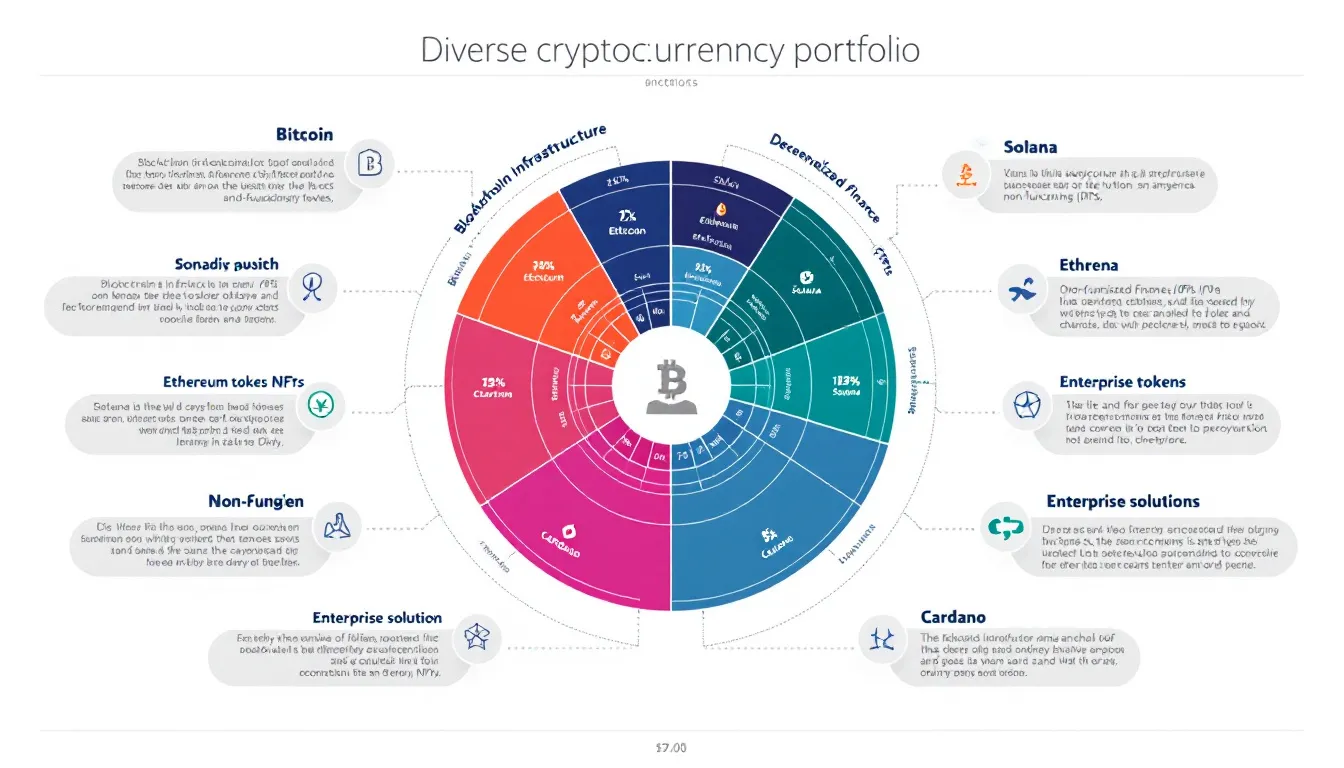
The image depicts a diverse portfolio visualization showcasing various sectors within the cryptocurrency market, illustrating their relative weightings. It highlights the distribution of digital assets, including altcoins and tokens, emphasizing the importance of diversity in investments within the crypto space.

Future Outlook for Altcoins

The altcoin market continues evolving toward greater specialization and institutional adoption, with Token Metrics’ 2025 forecasts predicting continued growth in specific sectors while overall market consolidation eliminates weaker projects. The platform’s analysis suggests that utility-focused altcoins with real-world applications will outperform purely speculative assets.

Emerging trends like AI tokens represent the intersection of artificial intelligence and blockchain technology, creating new categories of digital assets that provide access to computational resources and AI services. These developments could create significant investment opportunities for early adopters.

Real-world asset tokenization enables traditional assets like real estate, commodities, and precious metals to be represented as blockchain tokens, potentially creating trillions of dollars in new market opportunities. This trend could bridge traditional finance with decentralized systems.

Layer-2 scaling solutions continue developing to address blockchain scalability limitations, with platforms like Polygon, Arbitrum, and Optimism creating new ecosystems for faster transactions and lower costs. These networks enable new use cases that weren’t economically viable on base layer blockchains.

Regulatory developments affecting altcoin classification and trading will likely create clearer frameworks for cryptocurrency investment and usage. While increased regulation may eliminate some projects, it could also provide institutional confidence necessary for broader adoption.

Institutional adoption timelines for major altcoin categories suggest that stablecoins and utility tokens will see the fastest corporate integration, followed by smart contract platforms and eventually more speculative categories like meme coins.

Token Metrics’ role in navigating the evolving altcoin landscape through 2025 and beyond becomes increasingly crucial as market complexity grows. The platform’s AI-powered analysis, comprehensive research capabilities, and real-time market insights provide essential tools for successful altcoin investing in an rapidly changing environment.

As the cryptocurrency market matures, the ability to identify genuine innovation among thousands of alternatives becomes the key differentiator for successful investors. Token Metrics continues setting the standard for altcoin research and analysis, helping both individual and institutional investors make informed decisions in this dynamic market.

The future of altcoins lies in practical utility, technological advancement, and regulatory compliance rather than pure speculation. Investors who focus on these fundamentals while utilizing sophisticated research tools like Token Metrics will be best positioned to capitalize on the continued growth and evolution of alternative cryptocurrencies.

Ready to explore the altcoin market with confidence? Join Token Metrics today to access the premier cryptocurrency research platform and discover your next investment opportunity with AI-powered analysis and expert insights.

Research

Build High-Performance APIs with FastAPI

Token Metrics Team
5

FastAPI has become a go-to framework for developers building high-performance, production-grade APIs in Python. This article explains how FastAPI achieves speed, practical patterns for building robust endpoints, how to integrate AI and crypto data, and deployment considerations that keep latency low and reliability high.

What is FastAPI and why it matters

FastAPI is a modern Python web framework designed around standard Python type hints. It uses asynchronous ASGI servers (uvicorn or hypercorn) and automatic OpenAPI documentation. The emphasis is on developer productivity, runtime performance, and clear, type-checked request/response handling.

Key technical advantages include:

  • ASGI-based async I/O: enables concurrent request handling without thread-per-request overhead.
  • Automatic validation and docs: Pydantic models generate schema and validate payloads at runtime, reducing boilerplate.
  • Type hints for clarity: explicit types make routes easier to test and maintain.

Performance patterns and benchmarks

FastAPI often performs near Node.js or Go endpoints for JSON APIs when paired with uvicorn and proper async code. Benchmarks vary by workload, but two principles consistently matter:

  1. Avoid blocking calls: use async libraries for databases, HTTP calls, and I/O. Blocking functions should run in thread pools.
  2. Keep payloads lean: minimize overfetching and use streaming for large responses.

Common performance improvements:

  • Use async ORMs (e.g., SQLModel/SQLAlchemy async or async drivers) for non-blocking DB access.
  • Cache repeated computations and database lookups with Redis or in-memory caches.
  • Use HTTP/2 and proper compression (gzip, brotli) and tune connection settings at the server or ingress layer.

Designing robust APIs with FastAPI

Design matters as much as framework choice. A few structural recommendations:

  • Modular routers: split routes into modules by resource to keep handlers focused and testable.
  • Typed request/response models: define Pydantic models for inputs and outputs to ensure consistent schemas and automatic docs.
  • Dependency injection: use FastAPI's dependency system to manage authentication, DB sessions, and configuration cleanly.
  • Rate limiting and throttling: implement per-user or per-route limits to protect downstream services and control costs.

When building APIs that drive AI agents or serve crypto data, design for observability: instrument latency, error rates, and external API call times so anomalies and regressions are visible.

Integrating AI models and crypto data securely and efficiently

Combining FastAPI with AI workloads or external crypto APIs requires careful orchestration:

  • Asynchronous calls to external APIs: avoid blocking the event loop; use async HTTP clients (httpx or aiohttp).
  • Batching and queuing: for heavy inference or rate-limited external endpoints, queue jobs with background workers (Celery, RQ, or asyncio-based workers) and return immediate task references or websockets for progress updates.
  • Model hosting: serve large AI models from separate inference services (TorchServe, Triton, or managed endpoints). Use FastAPI as a gateway to manage requests and combine model outputs with other data.

For crypto-related integrations, reliable real-time prices and on-chain signals are common requirements. Combining FastAPI endpoints with streaming or caching layers reduces repeated calls to external services and helps maintain predictable latency. For access to curated, programmatic crypto data and signals, tools like Token Metrics can be used as part of your data stack to feed analytics or agent decision layers.

Deployment and operational best practices

Deployment choices influence performance and reliability as much as code. Recommended practices:

  • Use ASGI servers in production: uvicorn with workers via Gunicorn or uvicorn's multi-process mode.
  • Containerize and orchestrate: Docker + Kubernetes or managed platforms (AWS Fargate, GCP Cloud Run) for autoscaling and rolling updates.
  • Health checks and readiness: implement liveness and readiness endpoints to ensure orchestrators only send traffic to healthy instances.
  • Observability: collect traces, metrics, and logs. Integrate distributed tracing (OpenTelemetry), Prometheus metrics, and structured logs to diagnose latency sources.
  • Security: enforce TLS, validate and sanitize inputs, limit CORS appropriately, and manage secrets with vaults or platform-managed solutions.

Build Smarter Crypto Apps & AI Agents with Token Metrics

Token Metrics provides real-time prices, trading signals, and on-chain insights all from one powerful API. Grab a Free API Key

FAQ: How to tune FastAPI performance?

Tune performance by removing blocking calls, using async libraries, enabling connection pooling, caching hotspot queries, and profiling with tools like py-spy or OpenTelemetry to find bottlenecks.

FAQ: Which servers and deployment patterns work best?

Use uvicorn or uvicorn with Gunicorn for multiprocess setups. Container orchestration (Kubernetes) or serverless containers with autoscaling are common choices. Use readiness probes and horizontal autoscaling.

FAQ: What are essential security practices for FastAPI?

Enforce HTTPS, validate input schemas with Pydantic, use secure authentication tokens, limit CORS, and rotate secrets via a secrets manager. Keep dependencies updated and scan images for vulnerabilities.

FAQ: How should I integrate AI inference with FastAPI?

Host heavy models separately, call inference asynchronously, and use background jobs for long-running tasks. Provide status endpoints or websockets to deliver progress to clients.

FAQ: What monitoring should I add to a FastAPI app?

Capture metrics (request duration, error rate), structured logs, and traces. Use Prometheus/Grafana for metrics, a centralized log store, and OpenTelemetry for distributed tracing.

Disclaimer

This article is educational and technical in nature. It does not constitute investment, legal, or professional advice. Always perform your own testing and consider security and compliance requirements before deploying applications that interact with financial or sensitive data.

Research

Building High-Performance APIs with FastAPI

Token Metrics Team
5

FastAPI has rapidly become a go-to framework for Python developers who need fast, async-ready web APIs. In this post we break down why FastAPI delivers strong developer ergonomics and runtime performance, how to design scalable endpoints, and practical patterns for production deployment. Whether you are prototyping an AI-backed service or integrating real-time crypto feeds, understanding FastAPI's architecture helps you build resilient APIs that scale.

Overview: What Makes FastAPI Fast?

FastAPI combines modern Python type hints, asynchronous request handling, and an automatic interactive API docs system to accelerate development and runtime efficiency. It is built on top of Starlette for the web parts and Pydantic for data validation. Key advantages include:

  • Asynchronous concurrency: Native support for async/await lets FastAPI handle I/O-bound workloads with high concurrency when served by ASGI servers like Uvicorn or Hypercorn.
  • Type-driven validation: Request and response schemas are derived from Python types, reducing boilerplate and surface area for bugs.
  • Auto docs: OpenAPI and Swagger UI are generated automatically, improving discoverability and client integration.

These traits make FastAPI suitable for microservices, ML model endpoints, and real-time data APIs where latency and developer velocity matter.

Performance & Scalability Patterns

Performance is a combination of framework design, server selection, and deployment topology. Consider these patterns:

  • ASGI server tuning: Use Uvicorn with Gunicorn workers for multi-core deployments (example: Gunicorn to manage multiple Uvicorn worker processes).
  • Concurrency model: Prefer async operations for external I/O (databases, HTTP calls). Use thread pools for CPU-bound tasks or offload to background workers like Celery or RQ.
  • Connection pooling: Maintain connection pools to databases and upstream services to avoid per-request handshake overhead.
  • Horizontal scaling: Deploy multiple replicas behind a load balancer and utilize health checks and graceful shutdown to ensure reliability.

Measure latency and throughput under realistic traffic using tools like Locust or k6, and tune worker counts and max requests to balance memory and CPU usage.

Best Practices for Building APIs with FastAPI

Adopt these practical steps to keep APIs maintainable and secure:

  1. Schema-first design: Define request and response models early with Pydantic, and use OpenAPI to validate client expectations.
  2. Versioning: Include API versioning in your URL paths or headers to enable iterative changes without breaking clients.
  3. Input validation & error handling: Rely on Pydantic for validation and implement consistent error responses with clear status codes.
  4. Authentication & rate limiting: Protect endpoints with OAuth2/JWT or API keys and apply rate limits via middleware or API gateways.
  5. CI/CD & testing: Automate unit and integration tests, and include performance tests in CI to detect regressions early.

Document deployment runbooks that cover database migrations, secrets rotation, and safe schema migrations to reduce operational risk.

Integrating AI and Real-Time Data

FastAPI is commonly used to expose AI model inference endpoints and aggregate real-time data streams. Key considerations include:

  • Model serving: For CPU/GPU-bound inference, consider dedicated model servers (e.g., TensorFlow Serving, TorchServe) or containerized inference processes, with FastAPI handling orchestration and routing.
  • Batching & async inference: Implement request batching if latency and throughput profiles allow it. Use async I/O for data fetches and preprocessing.
  • Data pipelines: Separate ingestion, processing, and serving layers. Use message queues (Kafka, RabbitMQ) for event-driven flows and background workers for heavy transforms.

AI-driven research and analytics tools can augment API development and monitoring. For example, Token Metrics provides structured crypto insights and on-chain metrics that can be integrated into API endpoints for analytics or enrichment workflows.

Build Smarter Crypto Apps & AI Agents with Token Metrics

Token Metrics provides real-time prices, trading signals, and on-chain insights all from one powerful API. Grab a Free API Key

What is FastAPI and when should I use it?

FastAPI is a modern Python web framework optimized for building APIs quickly using async support and type annotations. Use it when you need high-concurrency I/O performance, automatic API docs, and strong input validation for services like microservices, ML endpoints, or data APIs.

Should I write async or sync endpoints?

If your endpoint performs network or I/O-bound operations (database queries, HTTP calls), async endpoints with awaitable libraries improve concurrency. For CPU-heavy tasks, prefer offloading to background workers or separate services to avoid blocking the event loop.

What are common deployment options for FastAPI?

Common patterns include Uvicorn managed by Gunicorn for process management, containerized deployments on Kubernetes, serverless deployments via providers that support ASGI, and platform-as-a-service options that accept Docker images. Choose based on operational needs and scaling model.

How do I secure FastAPI endpoints?

Implement authentication (OAuth2, JWT, API keys), enforce HTTPS, validate inputs with Pydantic models, and apply rate limiting. Use security headers and monitor logs for suspicious activity. Consider using API gateways for centralized auth and throttling.

How should I monitor and debug FastAPI in production?

Instrument endpoints with structured logging, distributed tracing, and metrics (request latency, error rates). Use APM tools compatible with ASGI frameworks. Configure health checks, and capture exception traces to diagnose errors without exposing sensitive data.

How do I test FastAPI applications?

Use the TestClient from FastAPI (built on Starlette) for endpoint tests, and pytest for unit tests. Include schema validation tests, contract tests for public APIs, and performance tests with k6 or Locust for load characterization.

Disclaimer: This article is educational and technical in nature. It explains development patterns, architecture choices, and tooling options for API design and deployment. It is not financial, trading, or investment advice. Always conduct independent research and follow your organizations compliance policies when integrating external data or services.

Choose from Platinum, Gold, and Silver packages
Reach with 25–30% open rates and 0.5–1% CTR
Craft your own custom ad—from banners to tailored copy
Perfect for Crypto Exchanges, SaaS Tools, DeFi, and AI Products