Back to blog
Research

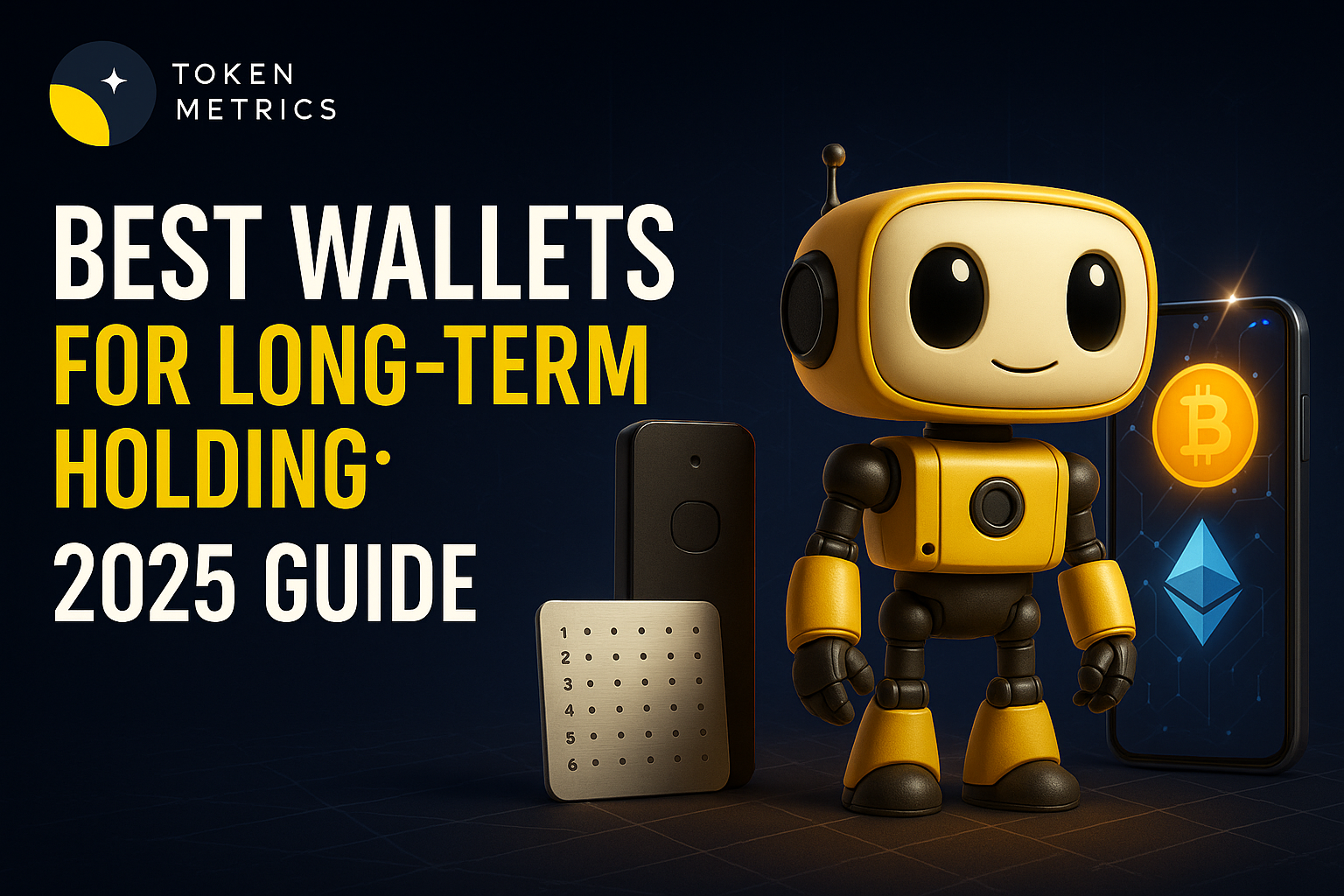
What Wallet Should I Use for Long-Term Holding? Complete 2025 Guide

Discover essential wallets and security practices for long-term crypto holding in 2025. Learn how to protect your investments with hardware and cold storage solutions.
Token Metrics Team
14 min read
Want Smarter Crypto Picks—Free?
See unbiased Token Metrics Ratings for BTC, ETH, and top alts.
Thank you! Your submission has been received!
Oops! Something went wrong while submitting the form.
 No credit card | 1-click unsubscribe

Choosing the right cryptocurrency wallet for long-term holding is one of the most critical decisions for serious investors. With a 2025 Gemini survey revealing that 24% of adults now hold crypto—up from 21% in 2024—and active stablecoin wallets jumping 53% year-over-year to reach 30 million, the need for secure, reliable storage solutions has never been greater.

For long-term holders practicing the HODL strategy (Hold On for Dear Life), security trumps convenience. Bitcoin was worth $0.0009 when it first started trading in 2009; today, it approaches $90,000. Protecting substantial gains accumulated over years requires understanding wallet types, security features, and best practices that distinguish casual users from serious investors.

This comprehensive guide explores the best wallets for long-term cryptocurrency storage in 2025, examining hardware wallets, security considerations, and how to combine proper custody with sophisticated analytics from platforms like Token Metrics to maximize your investment strategy.

Understanding Cryptocurrency Wallets

Despite the name, cryptocurrency wallets don't actually store cryptocurrency. What they hold are digital codes known as "keys" that grant access to your crypto on the blockchain—a type of distributed ledger functioning as an online record of transactions. When someone sends you cryptocurrency, they're updating the blockchain to show that ownership of a certain amount has been assigned to your wallet's address.

The Two Keys: Public and Private

Wallets rely on two critical pieces of information:

  • Public Key: A string of letters and numbers automatically generated by the wallet provider, functioning like a bank account number. For example: B1fpARq39i7L822ywJ55xgV614. This can be shared freely to receive funds without compromising security.
  • Private Key: Another string of numbers and letters that only the wallet owner should know. This key signs transactions and proves ownership. Losing your private key means losing access to your cryptocurrency permanently, with no customer service or password reset option available.

The crypto community's mantra "Not your keys, not your crypto" emphasizes that if your cryptocurrency is stored on an exchange, you're not the true owner. You're trusting a third party with custody, exposing yourself to platform insolvency, account freezes, security breaches, or bankruptcy—as crypto investors discovered when exchanges like BlockFi and Voyager filed for bankruptcy in recent years.

Hot Wallets vs. Cold Wallets: Understanding the Difference

Cryptocurrency wallets fall into two fundamental categories, each serving different investment needs and security requirements.

Hot Wallets: Internet-Connected Convenience

Hot wallets are software-based solutions that connect to the internet, offering convenience and accessibility for managing cryptocurrencies. These include mobile apps, desktop software, and browser extensions that facilitate daily transactions and DeFi interactions.

  • Advantages of Hot Wallets:
  • Usually free to download and use
  • Easy access for frequent transactions
  • Direct integration with DeFi protocols and dApps
  • Quick setup without hardware purchases
  • Support for hundreds or thousands of cryptocurrencies
  • Often include built-in exchange features
  • Disadvantages of Hot Wallets:
  • More vulnerable to hackers and online threats
  • Require trust in software developers
  • Susceptible to phishing attacks and malware
  • Private keys potentially exposed to internet-connected devices
  • Less suitable for large holdings or long-term storage

Hot wallets work well for active traders managing smaller amounts or funds needed for regular transactions, but they're not ideal for substantial long-term holdings where security must be paramount.

Cold Wallets: Offline Maximum Security

Cold wallets are hardware devices disconnected from the internet that help store sensitive crypto information offline. These physical gadgets provide maximum protection by keeping private keys completely isolated from online threats, making them immune to remote hacking attempts.

  • Advantages of Cold Wallets:
  • Immune to online hacks and malware
  • Ideal for long-term storage of substantial holdings
  • Physical confirmation required for all transactions
  • Private keys never exposed to internet-connected devices
  • Multiple backup and recovery options
  • Suitable for the HODL strategy
  • Disadvantages of Cold Wallets:
  • Upfront purchase cost ranging from $49 to $500
  • Less convenient for DeFi transactions and frequent trading
  • Physical device can be lost or damaged
  • Recovery depends entirely on seed phrase backups
  • Learning curve for first-time users

For long-term holding, cold wallets represent the gold standard. They provide the security foundation necessary for protecting significant cryptocurrency investments over years or decades.

Top Hardware Wallets for Long-Term Holding in 2025

Ledger: Industry-Leading Security

Ledger devices, particularly the Ledger Nano X and Ledger Stax, represent the most popular hardware wallet choice globally. The company pioneered consumer-friendly cold storage with the Ledger Nano in 2016 and continues leading through innovation and security.

  • Key Features:
  • Secure Element chip providing bank-grade security
  • Support for over 5,500 cryptocurrencies and tokens
  • Bluetooth connectivity for mobile use (Ledger Nano X)
  • Touchscreen interface (Ledger Stax)
  • Ledger Live app for portfolio management
  • NFT storage and display capabilities
  • Integration with major DeFi platforms

Ideal For: Investors holding diverse portfolios across multiple blockchains who want the most comprehensive asset support with proven security track record.

Pricing: Ledger Nano S Plus starts at $79, Nano X at $149, Stax at $279

Trezor: Open-Source Transparency

Trezor, launched in 2014, was the first hardware wallet ever created. The company maintains commitment to open-source firmware, allowing security experts to audit code and verify there are no hidden vulnerabilities or backdoors.

  • Key Features:
  • Fully open-source firmware
  • Touchscreen interface (Trezor Model T)
  • Support for thousands of cryptocurrencies
  • Password manager functionality
  • Shamir Backup for seed phrase recovery
  • Integration with third-party wallets like MetaMask
  • No Bluetooth to eliminate wireless attack vectors

Ideal For: Privacy-focused investors who prioritize transparency and want to verify security through open-source code audits.

Pricing: Trezor Model One starts at $69, Model T at $219

Coldcard: Bitcoin Maximalist's Choice

Coldcard MK4 is a Bitcoin-only wallet designed for advanced users who prioritize privacy and security above all else. It operates completely offline with air-gapped transaction signing, meaning it never connects to computers or phones directly.

  • Key Features:
  • Bitcoin-only focus for maximum security optimization
  • Completely air-gapped operation
  • Open-source firmware
  • Advanced security features like duress PINs
  • SD card for transaction signing without USB
  • Encrypted seed phrase storage
  • No wireless connectivity whatsoever

Ideal For: Bitcoin maximalists and advanced users who want absolute maximum security and are comfortable with technical complexity.

Pricing: Approximately $150

Tangem: Card-Based Simplicity

Tangem offers a unique approach with NFC card-based wallets that operate without screens, batteries, or charging requirements. The cards contain secure element chips storing private keys and sign transactions via smartphone NFC.

  • Key Features:
  • Credit card form factor
  • No batteries or charging needed
  • Supports major cryptocurrencies
  • Multiple card backup system
  • Simple tap-to-sign transactions
  • Extremely durable construction
  • No software updates required

Ideal For: Long-term holders wanting simplicity and physical durability without dealing with electronic devices, screens, or batteries.

Pricing: 2-card set for $50, 3-card set for $70

Material Bitcoin: Ultra-Durable Physical Storage

Material Bitcoin represents the most extreme approach to cold storage—a physical wallet with no electronic components whatsoever. Made from AISI 304L stainless steel, it stores Bitcoin offline on virtually indestructible material resistant to fire, water, and physical damage.

  • Key Features:
  • Zero electronic components (immune to all cyber threats)
  • Fire, water, and shock resistant stainless steel
  • No software updates or compatibility issues
  • Optional seed phrase backup card
  • Extremely simple to use
  • Permanent storage solution
  • Limited to Bitcoin, Ethereum, or USDT

Ideal For: Long-term investors seeking the most durable, hack-proof cold wallet with absolute zero electronic vulnerability and no technical complexity.

Pricing: Varies by configuration

Essential Security Practices for Long-Term Holding

Selecting the right hardware wallet is only the first step. Implementing proper security practices ensures your holdings remain protected over years or decades.

Secure Your Seed Phrase

  • Never store seed phrases digitally (photos, files, cloud storage)
  • Write on durable materials like metal plates designed for seed storage
  • Create multiple physical backups stored in separate secure locations
  • Never share your seed phrase with anyone, ever
  • Consider using Shamir Backup to split seed phrases across multiple locations
  • Protect from fire, water, and physical damage

If your hardware wallet is lost, stolen, or damaged, you can purchase a new device and restore access using your seed phrase. Without the seed phrase backup, your crypto is lost permanently.

Enable All Security Features

  • PIN Protection: Set strong PINs that aren't easily guessable. Hardware wallets typically wipe themselves after several incorrect PIN attempts, protecting against theft.
  • Passphrase (25th Word): Many wallets support optional passphrases adding additional words to seed phrases, creating hidden wallets that don't appear without the passphrase.
  • Firmware Updates: Keep wallet firmware updated with latest security patches. Verify updates come from official sources only.
  • Duress Features: Some wallets like Coldcard allow duress PINs that open decoy wallets with small amounts, protecting main holdings if forced to unlock.

Verify Wallet Authenticity

  • Only purchase hardware wallets directly from manufacturers or authorized resellers.
  • Never buy second-hand devices or from marketplaces like eBay or Amazon where tampering is possible.
  • Check for tamper-evident packaging
  • Verify device hasn't been initialized previously
  • Confirm device generates new seed phrases (never comes with pre-generated phrases)
  • Check holographic seals and security features specific to each brand

Practice Operational Security

  • Use Dedicated Devices: Consider using dedicated computers or phones for crypto management that aren't used for general browsing or downloading software.
  • Verify Addresses: Always verify receiving addresses on the hardware wallet screen itself before confirming transactions. Malware can replace addresses in software, but hardware wallets display authentic addresses.
  • Test Small Amounts First: When setting up new wallets or using new features, test with small amounts before transferring substantial holdings.
  • Avoid Public Wi-Fi: Never access crypto wallets or exchanges over public Wi-Fi networks where traffic can be intercepted.

Plan for Inheritance

Long-term holding requires planning for worst-case scenarios. If something happens to you, how will your heirs access your cryptocurrency?

  • Inheritance Strategies: Document wallet existence and types for executors
  • Store seed phrases in secure locations accessible to trusted individuals after your death
  • Consider using services like Casa that offer key splitting and inheritance protocols
  • Provide clear instructions without compromising security during your lifetime
  • Regularly review and update plans as holdings change

Combining Cold Storage with Active Portfolio Management

Long-term holding doesn't mean "set and forget" entirely. Successful investors combine secure cold storage with active portfolio monitoring and strategic decision-making.

Leveraging Token Metrics for HODL Strategy

While your cryptocurrency sits safely in cold storage, platforms like Token Metrics provide the intelligence necessary to make informed holding decisions without compromising security. Token Metrics has established itself as a leading crypto analytics platform, offering tools essential for long-term investors.

  • Investor Grade Analysis for Hold Decisions: Token Metrics assigns each cryptocurrency an Investor Grade based on fundamentals, development activity, code quality, team credibility, and adoption metrics. This scoring helps identify which projects merit continued holding versus those requiring portfolio rebalancing.
  • Real-Time Monitoring Without Compromising Security: Token Metrics monitors thousands of cryptocurrencies continuously, providing real-time alerts about significant developments—code updates, partnership announcements, security incidents, or regulatory changes—without requiring you to connect cold wallets to exchanges. This separation between monitoring and custody ensures you stay informed without exposing private keys.
  • Portfolio Tracking Across Cold Storage: Token Metrics provides portfolio tracking, allowing you to monitor the value of holdings stored in cold wallets without exposing private keys. By inputting public wallet addresses or tracking positions manually, you maintain oversight of your portfolio performance.
  • Market Intelligence for Accumulation Timing: Token Metrics' AI analytics identify optimal entry points for dollar-cost averaging or lump-sum additions, analyzing market cycles, sentiment, on-chain metrics, and technical patterns to maximize purchase opportunities during market dips.
  • Risk Assessment and Project Monitoring: Token Metrics evaluates project health, spotting early signs of decline or security concerns, enabling proactive exit decisions to protect long-term capital.
  • Tax Optimization and Reporting: Token Metrics integrates with tax tools to maintain accurate records, aiding in tax planning and long-term capital gains management.

Multi-Wallet Strategy for Different Needs

Many investors employ multiple wallet types for different purposes, optimizing security and functionality.

  • Tier 1 - Cold Storage (90% of Holdings): Hardware wallets holding the majority of long-term investments, maximum security.
  • Tier 2 - Hot Wallet (8% of Holdings): Software wallets for moderate transactions, DeFi activities, or active trading.
  • Tier 3 - Exchange Wallet (2% of Holdings): Small amounts on exchanges for immediate trading or liquidity.

This approach protects the bulk of holdings while maintaining operational flexibility.

Best Practices for Different Investor Profiles

Strategies vary based on experience, portfolio size, and risk tolerance:

  • Crypto Beginners: Start simple with trusted brands like Ledger Nano S Plus or Trezor Model One. Focus on Bitcoin and Ethereum, practice seed backup, and transfer small amounts initially.
  • Intermediate Investors: Upgrade to Ledger Nano X or Trezor Model T, implement geographically separated backups, use platforms like Token Metrics, and develop multi-wallet strategies.
  • Advanced Users and Maximalists: Consider Coldcard for Bitcoin-exclusive security, implement multisig or Shamir Backup, verify open-source firmware, and plan inheritance securely.
  • High-Net-Worth: Use multiple hardware wallets with geographical distribution, professional custody services, regular security reviews, and secure storage locations like safes or safety deposit boxes.

The Future of Long-Term Crypto Storage

Wallet technology continues evolving, with several innovative trends:

  • Account Abstraction and Smart Wallets: Enable social recovery, gasless transactions, programmable security rules—making self-custody more accessible with maintained security.
  • Multi-Party Computation (MPC): Splits private keys across multiple parties or devices, eliminating single points of failure while maintaining control.
  • Biometric Security: Incorporating fingerprint, facial recognition, and other biometric methods for additional layers of protection.
  • Cross-Chain Compatibility: Support for multiple ecosystems within a single wallet, facilitating diversification over time.

Conclusion: Securing Your Crypto Future

For long-term cryptocurrency holding, cold wallets—especially hardware wallets—offer the security needed to safeguard substantial investments over the years. The small upfront cost ranging from $50 to $300 is a worthwhile investment considering the value they protect and the peace of mind they provide.

The best wallet depends on your specific needs: Ledger provides broad support, Trezor offers transparency, Coldcard delivers maximum Bitcoin security, while alternatives like Tangem or Material Bitcoin provide unique advantages. Regardless of choice, implementing thorough security measures—secure seed phrase storage, enabling all features, verifying authenticity, operational security practices—is crucial.

Coupling cold storage with platforms like Token Metrics allows long-term holders to monitor portfolios, make data-driven decisions, and optimize strategies while keeping private keys offline and secured from online threats. This blend of robust security and insightful analytics positions investors for potentially prosperous and protected long-term crypto journeys.

As the journey of Bitcoin from fractions of a penny to nearly $90,000 illustrates, disciplined long-term holding combined with sound security practices can unlock significant value. Protecting holdings with the right wallet choices and security protocols ensures that investors benefit from crypto’s upside while minimizing vulnerabilities that could lead to loss or theft.

The crypto space offers tremendous opportunities for those who navigate carefully. Selecting suitable cold storage solutions, applying comprehensive security measures, leveraging advanced analytics from Token Metrics, and maintaining a long-term perspective are key to participating safely and profitably in crypto’s evolving landscape.

Frequently Asked Questions

What are the main differences between hot wallets and cold wallets?

Hot wallets are internet-connected software wallets designed for convenience and frequent trading, but are more vulnerable to hacks and malware. Cold wallets are offline hardware devices or physical storage, significantly more secure and ideal for long-term, large holdings.

Which hardware wallet is best for long-term holding?

Ledger wallets (Nano X, Stax) offer broad crypto support, Trezor emphasizes open-source transparency, Coldcard is best for advanced Bitcoin users, Tangem offers card-based simplicity, and Material Bitcoin is unmatched for physical durability. Choose based on supported coins, transparency, and user comfort.

How do I recover funds if my hardware wallet is lost or damaged?

Use your recovery seed phrase to reinitialize your wallet on a new device. Without the backup seed phrase, crypto funds are lost permanently, so always store multiple physical copies in secure locations.

Is it safe to use a hot wallet for long-term storage?

Hot wallets are only as secure as your devices. They are convenient for small, frequent transactions but should not be used for significant long-term holdings due to their exposure to online threats.

Can I store NFTs and altcoins in a hardware wallet?

Most modern hardware wallets support thousands of cryptocurrencies and can store NFTs. Ledger and Trezor are particularly strong in this area. Always check updated compatibility lists before purchasing.

What should I do to protect my wallet’s seed phrase?

Never keep your seed phrase digitally or online. Write it on a metal or durable material, make multiple copies, store them in secure, geographically separated locations, and never share it, ever.

How does Token Metrics help cold storage investors?

Token Metrics allows you to track your cold storage portfolios by inputting public addresses. You receive investor-grade analytics, real-time alerts on your holdings, and never expose your private keys or compromise your wallet’s offline status.

How should I plan for crypto inheritance?

Document all wallet types, locations, and access information securely. Leave clear instructions for trusted heirs or executors and consider inheritance-specific services or protocols. Update plans regularly as your portfolio evolves.

Build Smarter Crypto Apps &
AI Agents in Minutes, Not Months
Real-time prices, trading signals, and on-chain insights all from one powerful API.
Grab a Free API Key
About Token Metrics
Token Metrics: AI-powered crypto research and ratings platform. We help investors make smarter decisions with unbiased Token Metrics Ratings, on-chain analytics, and editor-curated “Top 10” guides. Our platform distills thousands of data points into clear scores, trends, and alerts you can act on.
30 Employees
analysts, data scientists, and crypto engineers
Daily Briefings
concise market insights and “Top Picks”
Transparent & Compliant
Sponsored ≠ Ratings; research remains independent
Want Smarter Crypto Picks—Free?
See unbiased Token Metrics Ratings for BTC, ETH, and top alts.
Thank you! Your submission has been received!
Oops! Something went wrong while submitting the form.
 No credit card | 1-click unsubscribe
Token Metrics Team
Token Metrics Team

Recent Posts

Research

Advanced Trader's Secret Weapon: Core Index Position with Satellite Trading Strategy

Token Metrics Team
8 min read

Professional traders know something that most retail investors miss: the path to consistent crypto returns isn’t about hitting every moonshot or timing every swing perfectly. It’s about combining disciplined, systematic exposure with strategic, high-conviction plays, all guided by a clear trading plan.

Enter the core-satellite strategy—a portfolio construction approach used by institutional investors in traditional markets for decades and now adapted by sophisticated crypto traders to balance returns and risk. When executed with the right tools, such as essential indicators and analysis platforms, this approach can improve risk-adjusted outcomes while freeing up mental bandwidth for the trades that truly matter.

What Is the Core-Satellite Strategy?

The core-satellite approach divides a portfolio into two distinct components, each serving a specific purpose:

The Core (60–80% of capital): A stable, diversified position designed to capture broad market exposure with minimal active management. This is the foundation—steady, rules-based, and disciplined—focused on long-term growth and stability. The core exists to participate in major market moves while mitigating the impact of catastrophic individual asset failures.

The Satellites (20–40% of capital): Active trading positions based on high-conviction theses, technical setups, or specific catalysts. These are tactical plays where traders leverage analysis, timing skills, and market insights to seek outperformance.

The strength of this structure is that it removes the pressure to be right about everything. The core ensures you’re never completely out of the market during explosive rallies, while satellites provide the flexibility to take calculated risks on targeted opportunities.

Why Advanced Traders Need a Disciplined Core

If you’re an active crypto trader, you may recognize the paradox of skill: the better you get at identifying opportunities, the more tempting it becomes to deploy most or all of your capital into high-conviction plays. That approach carries material risks:

  • Opportunity Cost Risk: With a fully allocated set of 3–5 positions, a sector rotation can cause you to miss broader market movement. A DeFi position doesn’t benefit when AI tokens suddenly rally.
  • Emotional Exhaustion: Managing a fully active portfolio requires constant monitoring and judgment. Every position feels high-stakes, creating decision fatigue that can degrade trading quality over time. A lack of discipline often leads to impulsive decisions and avoidable mistakes.
  • Drawdown Exposure: Concentration amplifies both gains and losses. One or two wrong calls can set back months of progress, even with a solid win rate, illustrating how easy it is to lose money without proper risk controls.
  • Rebalancing Complexity: Attempting diversified exposure through active management means constant rebalancing, transaction costs, and execution slippage—on top of finding and executing your best ideas.

A disciplined core helps address these issues by providing a stable foundation that requires minimal intervention while maintaining broad market participation.

Token Metrics: The Platform Powering Smart Traders

This is where Token Metrics can transform the workflow. As a crypto trading and analytics platform, it offers institutional-grade research combined with actionable execution tools. As a comprehensive trading hub, it integrates advanced charting, indicator support, and streamlined execution to support effective strategies.

What sets Token Metrics apart:

  • AI-Powered Asset Ratings: Proprietary algorithms analyze thousands of cryptocurrencies across technical indicators, on-chain metrics, development activity, social sentiment, and fundamentals—producing quantitative ratings designed to cut through noise.
  • Comprehensive Market Signals: Real-time bull/bear regime detection using signal processing that blends price action, volatility, and correlation structures—refined through years of testing.
  • Research Infrastructure: Deep-dive reports on emerging narratives, sector rotations, and specific token analysis from a team combining traditional finance expertise with native crypto insights.
  • Portfolio Tools: Watchlists, performance tracking, and infrastructure to manage positions efficiently.

Even with strong analysis, execution matters. The platform’s latest innovation—automated index products—gives advanced traders a disciplined core position to complement active trading.

TM Global 100: The Disciplined Core Position

The TM Global 100 Index is designed to serve as the core in a core-satellite strategy. Key considerations for advanced traders include position sizing, risk management, and consistent rules-based exposure.

Automatic Broad Exposure

The index holds the top 100 cryptocurrencies by market capitalization, rebalancing weekly. This means:

  • You participate in the next category winner automatically.
  • Sector rotations can work in your favor—when flows shift to DeFi, AI, gaming, or infrastructure, you’re positioned in leaders.
  • New tokens entering the top 100 are added automatically; declining projects are removed. Assets within the index are actively traded to maintain exposure with disciplined, systematic management.

Intelligent Risk Management

The regime-switching mechanism implements what many traders intend to do but often struggle with under pressure: reducing exposure when conditions deteriorate.

When Token Metrics proprietary signals detect bearish conditions, the index moves to stablecoins, systematically selling assets to help preserve capital during downturns. When bullish conditions return, it redeploys to the top 100. This systematic approach removes emotion from core management.

Zero Maintenance Required

Advanced traders can focus on identifying specific opportunities and executing tactical trades. TM Global 100 runs autonomously—no manual rebalancing, no constant monitoring, no gas fees from continual adjustments.

Complete Transparency

Holdings are visible at any time through real-time treemaps and tables, with transaction logs showing every rebalance. You maintain full visibility while outsourcing execution.

Technical Analysis and Satellite Trading

Technical analysis is a cornerstone of active trading, equipping traders to interpret historical price behavior and anticipate potential trends. By mastering these tools, traders can build structured strategies that use patterns and indicators to identify potential entry and exit zones.

Moving averages help smooth price data to reveal trend direction and potential reversals. Combined with candlestick patterns—visual representations of price action that can signal shifts in sentiment—these tools can help traders spot opportunities and manage trades with greater confidence.

For newer traders, understanding how to interpret price charts and analyze real-time data is essential. A well-structured trading course can accelerate learning, covering support/resistance, key patterns, and risk management practices in the stock market and other asset classes.

Ultimately, technical analysis supports informed decisions grounded in objective data rather than emotion. With continuous refinement and discipline, traders can navigate volatility, manage risk, and work toward long-term trading consistency.

With 60–80% of capital deployed in the TM Global 100 core, attention can shift to satellites. This is where the Token Metrics research platform becomes a competitive advantage:

  • High-Conviction Thesis Plays: Use AI ratings and research reports to surface assets with strong fundamentals that haven’t reached top-100 status yet. Apply appropriate position sizing across markets such as crypto, forex, commodities, and stocks where relevant.
  • Technical Setups: Monitor technical tools to identify short-term opportunities. With a core providing baseline exposure, trade breakouts, oversold bounces, and momentum signals. Use moving averages and volume for confirmation and consider higher timeframes for signal reliability.
  • Narrative Rotations: When research identifies emerging narratives (e.g., new Layer 2 launches, evolving regulation, or technological breakthroughs), use satellites to overweight those themes.
  • Event-Driven Trades: Major unlocks, protocol upgrades, partnership announcements, or macro events can create tactical windows. A core position provides stability while satellites target catalysts. For example, moving averages and volume on a price chart can help gauge momentum after an event and inform potential exit timing.

Consistent practice is essential to master these techniques and improve trading performance.

Implementation: A Practical Framework

Here is a common way sophisticated traders put the approach into practice:

Portfolio Allocation:

  • 70% in TM Global 100 (core position)
  • 30% in 5–8 satellite positions (each approximately 3–6% of total capital)

Position Management:

  • Core: Set and review periodically to ensure allocation hasn’t drifted significantly.
  • Satellites: Active management with clearly defined entry/exit criteria, stop losses, and profit-taking rules.

Rebalancing Rules:

  • If satellites outperform significantly, skim profits and move excess back to the core.
  • If satellites underperform but the core maintains value, there is dry powder from stable portfolio value.
  • Maintain a rough 70/30 split, allowing about 10% variance before rebalancing.

Avoiding common errors—such as improper position sizing or neglected rebalancing—helps support long-term consistency.

Risk Management:

  • The core position includes downside considerations via stablecoin switching.
  • Satellites use strict stop losses (often 15–25% depending on volatility).
  • No single satellite exceeds roughly 8% of total portfolio exposure.

Track Performance: Regularly monitor results to identify what’s working and refine the plan.

Real-World Edge: Time Arbitrage

One of the most underrated benefits of the core-satellite approach is time arbitrage. By reducing day-to-day portfolio maintenance, you can reallocate time and focus to high-impact work:

  • Conduct deeper research on satellite opportunities.
  • Wait for higher-quality setups instead of forcing marginal trades.
  • Maintain emotional equilibrium during volatility.
  • Preserve decision-making energy for critical moments.

Professional traders understand that attention is finite. The core-satellite structure helps optimize how it’s spent and can support a disciplined approach to long-term portfolio building.

Getting Started

Implementing this strategy with Token Metrics is straightforward:

  • Join the TM Global 100 waitlist at tokenmetrics.com/indices/global-100.
  • Access the Token Metrics research platform to identify satellite opportunities using AI ratings, market signals, and analyst reports.
  • At launch, deploy a core allocation to TM Global 100 via the one-click embedded wallet once your account is set up and funded.
  • Construct 5–8 satellite positions using Token Metrics analytics.
  • Track performance through the unified dashboard with real-time P&L and transaction history.

Education is key to successful trading. Users can access educational videos and tutorials to learn more about the platform, trading strategies, and technical analysis—helping both beginners and advanced traders make informed decisions. The embedded self-custodial wallet means you maintain control of funds while accessing institutional-grade index management.

The Bottom Line

Many market participants overcomplicate strategies or follow the crowd. Advanced traders benefit from smarter infrastructure. The core-satellite framework—supported by the Token Metrics analytics platform and the TM Global 100 Index—offers systematic market exposure while preserving the flexibility to apply a trading edge where it matters most.

Build a disciplined core, express high-conviction ideas as satellites, and let a rules-based process help shape outcomes over time. If you have questions, explore additional articles and engage with the community—share experiences and ask for feedback. Click here to get early access to TM100 indices at Token Metrics.

Enhance Your Trading with Token Metrics

Token Metrics offers real-time prices, trading signals, and on-chain insights to help you make informed decisions. Start Trading Smarter Today

FAQs

What is a core-satellite crypto portfolio?

It’s a structure that combines a rules-based core for broad market exposure with smaller, actively managed satellite positions targeting specific opportunities, themes, or catalysts. The goal is balance and discipline.

How does TM Global 100 fit into this approach?

TM Global 100 functions as a rules-based, diversified core that rebalances weekly and can shift to stablecoins in bearish regimes, allowing traders to focus on active satellite ideas while maintaining market participation.

What tools help manage risk in satellite positions?

Common practices include predefined entry/exit criteria, stop losses sized to volatility, position size limits, and regular performance reviews. Objective rules help reduce emotional decision-making.

Why is technical analysis useful for satellites?

Technical analysis provides structured ways to interpret price action, trends, and momentum. Tools like moving averages, volume, and candlestick patterns can help time entries and exits with greater consistency.

How often should a portfolio be rebalanced?

Many traders monitor allocations periodically and set thresholds (for example, allowing a variance around a target split) before rebalancing. The core’s systematic processes can reduce maintenance demands.

Does this framework apply beyond crypto?

Yes. The core-satellite concept originated in traditional markets and can be adapted to asset classes such as equities, commodities, and forex, depending on tools, liquidity, and risk tolerance.

Disclaimer

This content is for educational and informational purposes only and should not be interpreted as investment, financial, legal, or tax advice. Digital assets are volatile and carry risk, including potential loss of capital. Always conduct independent research and consider consulting a qualified professional before making financial decisions. References to specific indices, platforms, or tools are for illustration and do not constitute endorsements or recommendations.

Research

Slippage and Gas Fees Killing Your Returns? One-Trade Index Solution for 2025

Token Metrics Team
9 min read

Every crypto trader understands the frustration of carefully calculating expected profits, executing trades, and then watching as slippage and gas fees quietly eat away at those returns. In 2025’s volatile crypto market, these hidden costs have become more than just a minor annoyance—they are systematically killing portfolio performance for both active traders and passive investors alike. This points to a deeper problem: the current crypto trading system is fundamentally flawed, with inefficiencies and complexities that undermine user confidence and adoption. If you manage a diversified crypto portfolio with dozens of tokens, chances are you’re bleeding value every time you rebalance or transfer funds. Understanding exactly how much these fees impact your profits is the first crucial step toward saving your portfolio from further losses.

The Hidden Tax on Crypto Portfolio Management

To fully grasp the challenge, it’s important to break down the real cost of building and maintaining a diversified crypto portfolio in today’s environment. Two major factors contribute to the erosion of your returns: slippage and gas fees.

Slippage occurs when the price at which your trade executes differs from the price you initially expected. This discrepancy is driven by factors such as market volatility, low liquidity, and order book depth. For smaller-cap altcoins within the top 100 tokens, slippage can easily reach 1-3% per trade. This means that even if you think you’re buying or selling at a certain price, the actual execution price might be worse, reducing your value and profits.

Gas fees are another critical cost to watch closely. Every on-chain transaction—whether swapping tokens on decentralized exchanges or transferring assets between wallets—requires payment of gas fees to miners or validators who confirm transactions on the blockchain. During periods of network congestion, especially on Ethereum and other popular chains, gas prices can spike dramatically. Gas fees are calculated based on current network activity and the complexity of each trade, so understanding this calculation helps traders anticipate costs and optimize their transactions. It’s not uncommon to pay $20 to $50 or more for a single transaction. These fees are not just occasional expenses; they add up quickly and can severely impact the profitability of frequent trades.

Network congestion and the choice of blockchain can also affect the speed at which transactions are confirmed, with slower speeds leading to delays and potentially higher costs during busy periods.

When you combine these two factors, the costs compound rapidly. Imagine managing a portfolio of 50 to 100 tokens and rebalancing monthly. Each rebalance involves dozens of trades, each incurring slippage and gas fees. This results in a significant drag on your overall portfolio performance.

For example, consider a trader managing a $50,000 portfolio spread across 100 tokens who decides to rebalance monthly. Assuming an average gas fee of $15 per swap and 1.5% average slippage, the cost of rebalancing just once would be approximately $1,500 in gas plus $750 lost to slippage—totaling $2,250, or 4.5% of the portfolio value, wiped out before any market movement occurs. Over a year of monthly rebalances, these costs can exceed 20% of the initial capital, enough to completely erase gains from even a modest bull market.

The Effects of Low Liquidity

Low liquidity is one of the most persistent challenges in the crypto trading world, and its impact on your portfolio can be both immediate and severe. When liquidity dries up—whether due to market volatility, volume spikes, or simply a lack of active traders—executing trades becomes riskier and more expensive. For traders dealing with large trades or those who set tight slippage tolerance, low liquidity can quickly turn a profitable strategy into a costly mistake.

In markets with low liquidity, even modest buy or sell orders can trigger significant price moves, causing the actual execution price to deviate sharply from what you expected. This slippage is especially pronounced on decentralized exchanges, where order books are often thin and a single large trade can move the market. For example, attempting to swap a sizable amount of a low-liquidity token can result in a short squeeze, where the price spikes rapidly, leaving you with fewer tokens for your dollar and eroding your profits.

The risks don’t stop at unfavorable prices. Low liquidity also increases the likelihood of failed transactions, particularly if you set a strict slippage protection limit. If the market can’t deliver your trade within your specified slippage tolerance, the transaction may fail entirely—forcing you to pay gas fees for a trade that never completes. In periods of network congestion, this problem is magnified: not only do you face higher gas prices as users compete to get their transactions confirmed, but the odds of failed or delayed trades rise as well.

To navigate these challenges, traders rely on a combination of tools and strategies. Monitoring volume indicators can help you gauge the current liquidity of a token or market, allowing you to adjust your trade size or slippage tolerance accordingly. Some participants opt to break up large trades into smaller transactions to minimize price impact, while others use slippage protection features to cap potential losses—though this can increase the risk of failed transactions and wasted gas fees.

Timing is also crucial. Trading during periods of lower network congestion—such as off-peak hours—can help you secure lower fees and faster transaction speeds. Additionally, choosing decentralized exchanges that leverage layer two solutions or alternative chains can further reduce costs and improve execution reliability.

Diversification remains a key defense against the risks of low liquidity. By spreading your portfolio across more liquid tokens and markets, you reduce your exposure to sudden price moves and failed trades. For instance, if you notice that a particular token’s volume has dropped, it may be wise to adjust your allocation or avoid trading it until conditions improve.

Consider the example of a trader attempting to execute a large swap on a thinly traded token. Without proper precautions, they might see the price move dramatically against them, or worse, have their transaction fail and still pay a hefty gas fee. By using slippage protection, monitoring liquidity, and timing trades to avoid network congestion, traders can save money, reduce risk, and protect their portfolio’s value.

In the fast-moving world of crypto, staying informed about liquidity conditions and adapting your trading strategies is essential. Whether you’re a seasoned trader or just starting out, keeping a close watch on gas fees, slippage, and market volume can help you avoid costly mistakes and manage your portfolio effectively—even when liquidity is scarce. By leveraging analytical tools and maintaining flexibility in your approach, you can navigate the challenges of low liquidity to support long-term portfolio objectives.

Token Metrics: Leading the Crypto Analytics Revolution

This is where Token Metrics steps in to change the game. As one of the leading crypto trading and analytics platforms in 2025, Token Metrics has built its reputation on delivering institutional-grade research, data-driven insights, and powerful tools tailored to both retail and professional traders. In addition to analytics, Token Metrics provides essential services that enable seamless data flow and value transfer across the crypto ecosystem.

Founded on the principle that cryptocurrency investing should be systematic, accessible, and intelligent, Token Metrics offers comprehensive analytics covering thousands of digital assets. The platform combines proprietary market signals, AI-powered ratings, and deep quantitative analysis with on-chain data and technical indicators. As an app, Token Metrics streamlines the crypto trading process for users. But beyond just research, Token Metrics recognized a crucial problem: even the best analysis can be undermined by poor trade execution, which slippage and gas fees exacerbate.

To address this, Token Metrics developed automated index solutions designed to help eliminate the execution tax that impacts portfolio returns. These tools allow users to save on fees, reduce risk, and improve overall portfolio efficiency by streamlining the trade process. By focusing on key trading strategies and metrics, Token Metrics helps users make informed decisions with robust supporting data.

Introducing the One-Trade Solution: TM Global 100

The TM Global 100 Index is Token Metrics’ innovative response to the slippage and gas fee crisis. By streamlining exposure to the top-100 crypto assets, the index helps mitigate risks that typically affect arbitrage strategies, such as slippage and execution delays, making it easier for participants to maintain portfolio consistency. Instead of executing dozens of individual trades to achieve broad market exposure, this rules-based index delivers a complete top-100 crypto portfolio through a single transaction.

Single-Transaction Execution

The key advantage of the TM Global 100 is that you only need to execute one trade to gain exposure to 100 tokens. This means paying one gas fee instead of dozens and experiencing minimal slippage on a single, larger transaction rather than accumulated slippage across many smaller trades. Since blockchain networks have limited space, executing a single transaction also helps avoid network congestion and keeps transaction costs lower, improving overall efficiency.

The math is compelling: one transaction versus 100 transactions represents a 99% reduction in gas fees alone. Even if the index rebalances weekly—which it does automatically—you pay no extra gas fees because all internal adjustments happen within the index structure.

Automated Weekly Rebalancing at Zero Cost

Traditional portfolio management requires constant monitoring, manual calculations, and repeated trades to maintain target allocations. The TM Global 100 automates this entire process, rebalancing weekly to reflect the current top-100 tokens by market capitalization. This means no need to watch 100 different tickers across multiple decentralized exchanges, no manual rebalance timing decisions, and no accumulated transaction costs from frequent adjustments.

This automated rebalancing flow ensures your portfolio stays aligned with market shifts without the need to sign off on every trade or pay additional fees. Automation also helps catch sudden market changes or potential issues early, supporting timely adjustments.

Regime-Switching Protection

Beyond cost savings, the TM Global 100 incorporates intelligent risk management through proprietary market signal detection. When market conditions shift from bullish to bearish, the index automatically moves holdings from the top-100 crypto assets into stablecoins, providing capital protection during downturns.

This regime-switching strategy means that during bull markets, you maintain full exposure to the broad upside of the crypto market, while during bear markets, your funds are preserved in stablecoins until positive signals emerge. This automatic adjustment helps avoid the need for panic selling or multiple transactions, and also supports recovery by positioning investors to re-enter the market at more favorable times, further reducing slippage, fees, and risk.

Real-World Impact: Cost Comparison

To illustrate the benefits, let’s compare the costs of two approaches to diversified crypto exposure:

  • DIY Portfolio Management (100 tokens, quarterly rebalancing):
    • Initial build: Approximately $1,500 in gas plus $750 in slippage, totaling $2,250
    • Quarterly rebalances: $2,250 Ă— 4 = $9,000 annually
    • Regime switches (2 per year): $2,250 Ă— 2 = $4,500
    • Total annual execution cost: Around $13,500
  • TM Global 100 Index:
    • Initial purchase: Single transaction with typical gas fee between $15 and $50
    • Weekly rebalances: Included at zero additional cost
    • Regime switches: Automatic and free of extra fees
    • Total annual execution cost: Approximately $50

The difference—more than $13,000 saved annually—directly impacts your portfolio’s performance. When comparing these options, the TM Global 100 approach offers significantly lower transaction costs and more predictable outcomes, allowing you to keep more of your assets working for you instead of spent on fees and slippage.

Getting Started: Join the Waitlist

The TM Global 100 Index launches with an embedded, self-custodial smart wallet, ensuring you have full control of your funds while accessing institutional-grade index investing. The purchase process is simple and takes about 90 seconds:

  1. Visit the Token Metrics Indices hub at tokenmetrics.com/indices
  2. Select TM Global 100 and tap Join Waitlist
  3. Connect your wallet to preview the one-click buy flow. Ensure your wallet can accept the token for a smooth transaction.
  4. Upon launch, receive a notification and execute your purchase. Double-check details such as wallet address and network before confirming.
  5. Track your portfolio performance in real time with transparent holdings, transaction logs, and profit & loss details.
  6. All fees—including estimated gas, platform fees, and maximum slippage—are displayed clearly before you confirm your transaction.

This transparency ensures no surprises or hidden costs, allowing for informed decision-making. Transactions may be blocked due to compliance or verification issues, such as incomplete information or regulatory requirements. If a transaction is pending and not confirmed, you may have the option to cancel it by paying a higher gas fee.

The Bottom Line

In 2025’s fast-moving and often congested crypto networks, execution costs are no longer a minor inconvenience—they are a significant consideration for portfolio management. Slippage and gas fees compound quickly when managing diversified portfolios, potentially impacting 20% or more of your capital annually.

Token Metrics’ TM Global 100 Index addresses this by offering single-transaction access to a complete top-100 portfolio, automated weekly rebalancing, and intelligent regime-switching—all while ensuring full transparency and self-custody. This innovative solution allows you to focus on portfolio growth rather than unnecessary execution costs or the effects of market volatility.

If you’re looking for a more efficient, cost-effective approach to self-managed crypto index investing, joining the TM Global 100 waitlist could be your next step. Explore early access to TM100 indices at Token Metrics.

Discover Crypto Gems with Token Metrics AI

Token Metrics uses AI-powered analysis to help you uncover profitable opportunities in the crypto market. Get Started For Free

FAQs

How do slippage and gas fees impact crypto returns?

Slippage and gas fees can significantly reduce portfolio returns, especially for traders managing diversified portfolios or rebalancing frequently. Each trade may execute at a less favorable price due to slippage, while gas fees accrue for every on-chain transaction. Over time, these costs can compound, eroding the profitability of even a well-performing portfolio.

What is the TM Global 100 Index?

The TM Global 100 Index is a rules-based crypto index offered by Token Metrics. It provides diversified exposure to the top-100 cryptocurrencies in a single transaction, automating rebalancing and implementing regime-switching strategies to help minimize costs and manage risk.

How does automated rebalancing save money?

Automated rebalancing eliminates the need for multiple manual trades, each incurring their own slippage and gas fees. By consolidating portfolio adjustments into a single, internal process, automated indices can reduce execution costs and keep portfolios aligned with market shifts more efficiently.

What is regime-switching and how does it work?

Regime-switching is a risk management feature in the TM Global 100 Index that adjusts portfolio allocations based on proprietary market signals. When bearish market conditions are detected, the index shifts assets into stablecoins to help preserve capital, re-entering the market when positive signals return.

How transparent are fees with Token Metrics' index solutions?

All estimated gas, platform fees, and slippage limits are displayed clearly before transactions are confirmed. This level of fee transparency ensures that users can make fully informed decisions and are never caught off guard by hidden costs.

What are the risks of using crypto index products?

As with all crypto investments, index products involve market risk, potential smart contract vulnerabilities, and regulatory considerations. Users should conduct due diligence and ensure they understand the associated risks before participating.

Disclaimer

This content is for informational and educational purposes only and does not constitute investment advice or an offer to buy or sell any financial instrument. Always conduct your own research and consult with a qualified financial advisor before making any investment decisions. Token Metrics does not guarantee the accuracy or completeness of information or assume any liability for loss or damage resulting from reliance on this content.

Research

Self-Custodial Crypto Index Funds: Keep Your Keys While Investing in 100 Tokens

Token Metrics Team
11 min read

“Not your keys, not your crypto.” This simple mantra has echoed through the cryptocurrency world from Bitcoin’s earliest days and only grows more relevant with each high-profile exchange failure—from Mt. Gox to FTX. As we look to 2025, crypto investors face a central challenge: how to preserve the unmatched security and financial self-sovereignty of self-custody while also accessing sophisticated products like diversified crypto index funds offering exposure to over 100 tokens. The answer? A forward-looking model that merges institutional-grade portfolio techniques with uncompromised asset control: self-custodial crypto index funds.

The Custody Crisis: Why Self-Custody Matters More Than Ever

2024 underscored the urgent need for self-custody. With centralized exchanges losing over $2.2 billion in assets to hacks and operational failures, the inherent vulnerabilities of custodial models—where third parties control your private keys—have come under scrutiny. When assets are held on an exchange, users do not directly own the underlying cryptocurrency but possess a claim dependent on the exchange’s solvency and security. These intermediaries can be hacked, subject to mismanagement, or restricted by regulatory intervention, exposing investors to risks beyond their control.

Self-custody upends this paradigm. By managing a self-custodial wallet, only you possess the private keys required to access your funds. No centralized institution can impose withdrawal restrictions, freeze your holdings, or lose your assets due to oversight. This direct control embodies the core ethos of crypto: financial sovereignty.

Historically, self-custody has posed significant hurdles. Managing large, diversified portfolios—sometimes 100 tokens across multiple blockchains—demanded considerable effort, technical knowledge, and operational discipline. The complexity often pushed even security-conscious investors back toward custodial providers in search of ease and simplicity.

The Revolution: Embedded Smart Wallets Meet Index Investing

Recent technological advances have dismantled the old trade-off between security and complexity. The breakthrough is the combination of embedded smart contract wallets and fully automated index strategies. This blend enables crypto users to retain full asset ownership while accessing diversified crypto indices, simplifying the process to just a few clicks.

Embedded smart wallets are self-custodial by design, integrated into applications using secure schemes like Multi-Party Computation (MPC) and Trusted Execution Environments (TEEs). They simplify access without compromising the fundamental security benefits of self-custody. Traditional vulnerabilities—such as losing a seed phrase—are addressed using methods like key sharding, multi-factor authentication, and social recovery mechanisms, reducing single points of failure and making recovery both secure and user-friendly.

When paired with automated index investment strategies, embedded wallets let individuals invest in the top 100 cryptocurrencies while maintaining full control of their private keys. The infrastructure ensures that only the user holds custody, while smart contracts streamline investing and portfolio management without requiring technical expertise.

Token Metrics TM Global 100: Self-Custody at Scale

Token Metrics has built on these innovations with its TM Global 100 Index, which embeds wallet functionality directly into its platform. As an AI-driven crypto investment research platform, Token Metrics analyzes over 6,000 projects and uses this data for transparent and reliable index construction.

Here’s how it works:

  • One-Click Onboarding: Users generate a smart contract wallet within the platform quickly, relying on familiar authentication (email, biometrics, or social sign-ins) while maintaining full asset control—no separate wallet apps or seed phrases required.
  • Automatic Portfolio Execution: Upon investing, the embedded wallet acquires the top 100 tokens according to market capitalization, optimizing trade batching to minimize gas fees and slippage. All assets are deposited directly in user-controlled wallets, not in platform custody.
  • Seamless Rebalancing: Portfolios are refreshed every week as market caps change, with trades executed by smart contracts. Users retain signing authority (potentially automated through pre-approved session keys) at every step, ensuring self-custodial integrity.
  • Full Transparency: Token Metrics provides real-time portfolio snapshots, transaction histories with on-chain proofs, and comprehensive analytics, reinforcing trust and visibility. Users can always independently verify ownership and activity on the blockchain.

The result is a platform merging sophisticated index exposure with uncompromising asset self-sovereignty.

The Technical Foundation: How Self-Custodial Indices Work

The architecture enabling self-custodial index investing includes several key advancements:

  • Smart Contract Wallets: Wallets function as programmable accounts, unlocking features like multi-signature security, spending limits, modular recoverability, and automatic execution for repetitive tasks such as weekly portfolio rebalancing.
  • Session Keys and Delegated Signing: Users grant limited, clearly scoped permissions for actions (such as automated rebalancing within set parameters) without total control ever leaving their hands. These permissions can be revoked at any time.
  • Modular Security: Drawing on protocols like Safe (formerly Gnosis Safe), users can add layers—such as recovery and spending limit modules—without compromising private key custody.
  • On-Chain Transparency: All transactions are public, auditable, and verifiable. Investors can cross-check holdings, portfolio changes, and smart contract logic on open blockchains. This guarantees transparency and empowers users to exit the system at any point.

Ultimately, the underlying blockchain’s health supports this self-custodial infrastructure, as asset safety and protocol integrity depend on network reliability.

The Security Advantage: Why Self-Custody Wins

Self-custodial index structures offer multiple security and autonomy advantages:

  • Counterparty Risk Elimination: Centralized exchanges continue to attract attacks. In self-custodial models, users’ assets are immune from exchange-specific risks.
  • Regulatory Independence: Decentralized wallet architectures cannot be arbitrarily frozen or shuttered by authorities, preserving user access in varied regulatory environments.
  • No Rehypothecation: Assets in self-custodial wallets are never lent out or put at further risk. There’s no risk of losing assets to mismanaged lending schemes.
  • Direct Ownership: Unlike traditional brokerages, with self-custody individuals have cryptographic and audit-proof control over their wealth.

Token Metrics supports these security advantages by presenting transparent information on anticipated gas fees, platform charges, and execution parameters before every transaction—ensuring clarity with no hidden deductions.

Addressing the Challenges: Self-Custody Simplified

Historically, self-custody presented challenges:

  • Lost Key Risk: Modern embedded wallets add features like social recovery and encrypted cloud backup protected by multi-factor authentication, overcoming the single point-of-failure seed phrase problem.
  • Operational Complexity: Token Metrics abstracts away multi-chain management and hundreds of private keys, providing an intuitively unified portfolio view.
  • Transaction Costs: Smart contract batching drastically lowers fees compared to manual trading and single-asset rebalancing.
  • Inheritance and Recovery: Solutions such as recovery modules allow designated heirs to access funds under predefined conditions, addressing the problem of asset loss due to user incapacity or death.

Accurate tax compliance remains an important consideration as self-custody solutions grow in adoption and sophistication, ensuring users can report gains and losses appropriately.

Performance and Fees: What Investors Need to Know

Any assessment of crypto investing must factor in performance and costs. Index products like the Wave Select 5 Index gauge success by tracking the largest cryptocurrencies’ returns, rebalancing to capture shifting market capitalizations. Administrators adjust weightings to respond to rapid price changes, which can introduce differences in returns versus the underlying assets.

Fees are a critical variable. Management fees for crypto index products, including spot bitcoin ETFs like iShares Bitcoin Trust, range from 0.2%–1% AUM, with expense ratios reflecting greater operational complexity than many traditional funds. Over time, these expenses can significantly affect overall performance. Comparing expense ratios is essential for informed analysis.

It is also important to consider associated risks: crypto markets are volatile and direct ownership via self-custody places responsibility for security—and potential asset loss—squarely on users. Indirect exposure via ETFs or index funds may provide greater familiarity but less control and higher fees. Selecting the right exposure method depends on individual research, risk tolerance, and operational comfort.

The crypto ecosystem is dynamic, and past results do not guarantee future performance. Tax implications should be carefully assessed and, when necessary, discussed with a qualified professional.

Informed investing means understanding performance benchmarks, comparing fees, and evaluating security—without overextending financially.

The 2025 Ecosystem: Growing Infrastructure

The rise of self-custody is not limited to any single provider. The broader ecosystem is converging on these technological solutions. Fireblocks powers embedded wallet infrastructure for fintech and exchange apps, Coinbase’s Wallet-as-a-Service integrates MPC-protected self-custodial options, and Safe secures over $100 billion in institutional assets through modular smart contract wallets. Binance’s Web3 Wallet also applies MPC and embedded solutions for mainstream audiences. Even traditional banks, such as Citi, are exploring crypto custody models—highlighting industry-wide recognition of self-custody’s importance.

The shift means self-custodial investing is no longer a specialist’s tool—it is becoming standard industry practice. Unlike brokerage-based accounts, which pool assets with custodians, self-custody ensures direct asset ownership and operational control by users themselves.

Token Metrics' Comprehensive Advantage

What sets Token Metrics apart in the self-custodial index space?

  • AI-Powered Curation: Not every top 100 token deserves a position. Token Metrics’ Trader and Investor Grades filter assets for momentum and fundamental strength, aiming to include quality crypto assets over speculative entries.
  • Regime-Switching Protection: The TM Global 100 proactively shifts to USDC stablecoins during negative trends, preserving capital—all while keeping assets in user-controlled, self-custodial wallets.
  • Comprehensive Analytics: Institutional-grade research and screening across thousands of tokens inform the methodology, helping distinguish true innovation from short-term trends.
  • End-to-End Integration: From research and execution to monitoring, Token Metrics’ vertically integrated approach streamlines self-custodial index management within a unified, transparent ecosystem.

Regulated investment frameworks, like the Investment Company Act of 1940, generally require third-party custody in traditional ETFs or ETPs. In contrast, self-custodial index models empower users with full asset possession and control at all times.

The Future: Self-Custody as Standard

Every exchange incident, regulatory intervention, or centralized hack reaffirms the value of self-custody. As user and institutional adoption grows, self-custodial index solutions deliver the blend of security and sophistication the crypto market needs. This approach preserves crypto’s core values—sovereignty, censorship resistance, and transparency—while embedding the professionalism expected of modern investment products.

The Token Metrics TM Global 100 Index—combining embedded smart wallets, AI-powered analytics, and automated investment management—points to a future where exposure to hundreds of assets is easily accessible while never relinquishing control of your keys.

Conclusion: Your Keys, Your Crypto, Your Index

The self-custodial index fund is a compelling new standard: it fuses broad market access with unimpeachable personal ownership. As the ecosystem matures through 2025, platforms that blend usability with full sovereignty will shape the next era of digital asset investing.

Token Metrics demonstrates that you can retain your keys and simultaneously participate in sophisticated index strategies tracking 100 tokens—all within a single, secure, and user-friendly platform.

The mantra remains unchanged: "Not your keys, not your crypto." Now, that ethos is compatible with professional-grade investing. Welcome to self-custodial crypto index funds—where you control both security and strategy.

Click here to get early access to TM100 indices at Token Metrics.

Discover Crypto Gems with Token Metrics AI

Token Metrics uses AI-powered analysis to help you uncover profitable opportunities in the crypto market. Get Started For Free

FAQs

How does a self-custodial crypto index fund differ from a traditional index fund?

Self-custodial crypto index funds allow users to maintain full control of their assets and private keys, unlike traditional funds, where assets are held by a third-party custodian. This model leverages smart contract wallets and automated infrastructure to combine the benefits of self-custody with diversified index exposure.

What are embedded smart wallets, and how do they improve security?

Embedded smart wallets are self-custodial wallets built directly into crypto platforms or applications. They use advanced cryptographic techniques such as Multi-Party Computation (MPC) and secure key sharding to reduce single points of failure, enable smooth recovery options, and eliminate the risks associated with seed phrase storage.

Can I transfer my assets out of a self-custodial index platform at any time?

Yes. Because you retain control of the private keys in a self-custodial structure, you can revoke smart contract permissions and withdraw or transfer your assets as you choose, subject to network or gas fees.

What risks should I consider when choosing self-custody for crypto investing?

While self-custody eliminates exchange and custodial counterparty risk, it places responsibility for key management and safe recovery directly on the user. Security hygiene, responsible backup practices, and consideration of inheritance or loss scenarios are all crucial factors. Additionally, tax compliance is an important aspect to manage.

What is regime-switching in crypto index funds?

Regime-switching refers to a risk management technique where, during defined bearish market conditions, an index fund automatically shifts portfolio allocations from risk assets to stablecoins. In Token Metrics’ TM Global 100, this occurs within the user’s self-custodial wallet for added security and stability.

Disclaimer

This post is for informational and educational purposes only and does not constitute financial, investment, or legal advice. Cryptocurrency investments carry risk. Always conduct your own research and consult a qualified advisor before making investment decisions.

Choose from Platinum, Gold, and Silver packages
Reach with 25–30% open rates and 0.5–1% CTR
Craft your own custom ad—from banners to tailored copy
Perfect for Crypto Exchanges, SaaS Tools, DeFi, and AI Products