Back to blog
Research

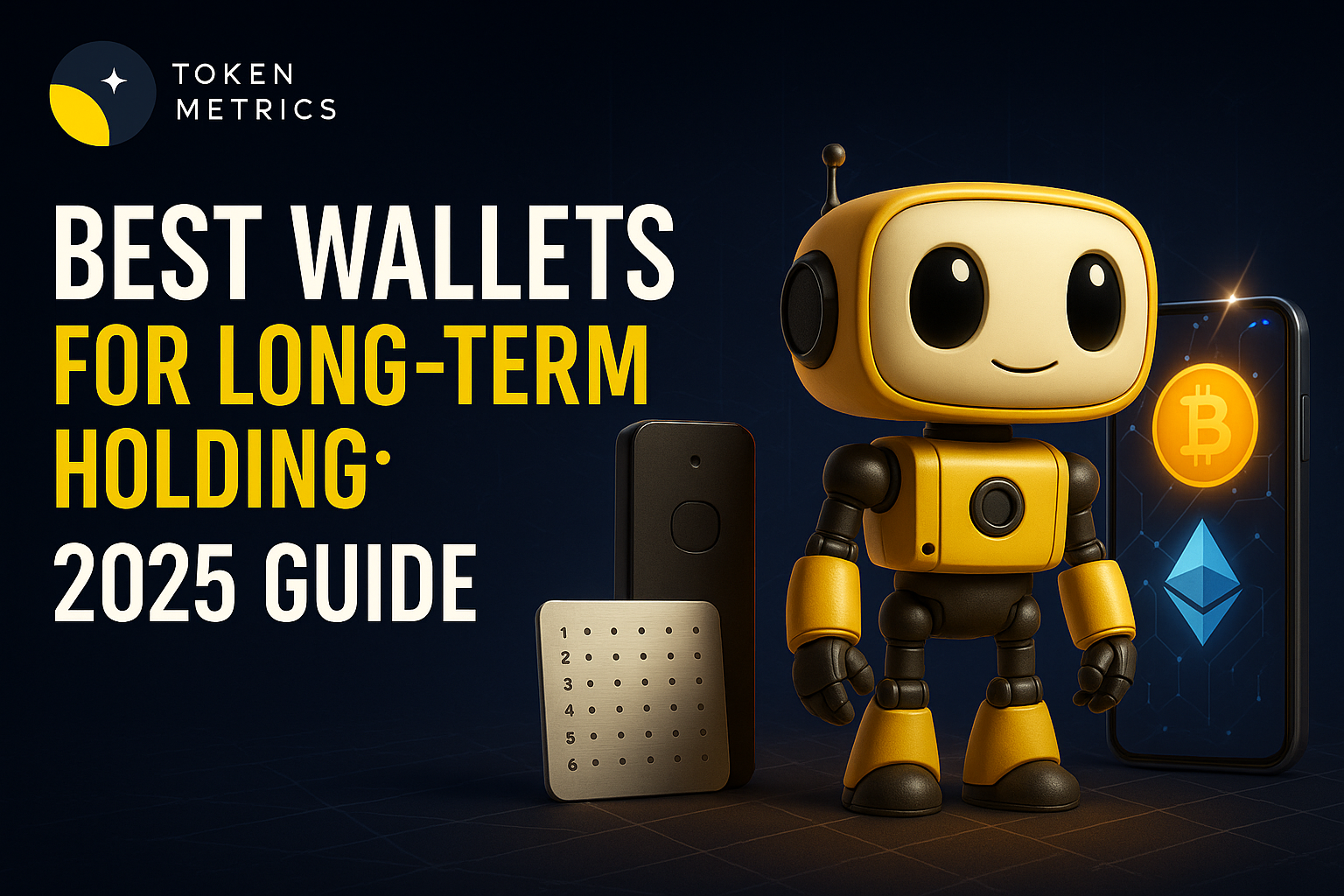
What Wallet Should I Use for Long-Term Holding? Complete 2025 Guide

Discover essential wallets and security practices for long-term crypto holding in 2025. Learn how to protect your investments with hardware and cold storage solutions.
Token Metrics Team
14 min read
Want Smarter Crypto Picks—Free?
See unbiased Token Metrics Ratings for BTC, ETH, and top alts.
Thank you! Your submission has been received!
Oops! Something went wrong while submitting the form.
 No credit card | 1-click unsubscribe

Choosing the right cryptocurrency wallet for long-term holding is one of the most critical decisions for serious investors. With a 2025 Gemini survey revealing that 24% of adults now hold crypto—up from 21% in 2024—and active stablecoin wallets jumping 53% year-over-year to reach 30 million, the need for secure, reliable storage solutions has never been greater.

For long-term holders practicing the HODL strategy (Hold On for Dear Life), security trumps convenience. Bitcoin was worth $0.0009 when it first started trading in 2009; today, it approaches $90,000. Protecting substantial gains accumulated over years requires understanding wallet types, security features, and best practices that distinguish casual users from serious investors.

This comprehensive guide explores the best wallets for long-term cryptocurrency storage in 2025, examining hardware wallets, security considerations, and how to combine proper custody with sophisticated analytics from platforms like Token Metrics to maximize your investment strategy.

Understanding Cryptocurrency Wallets

Despite the name, cryptocurrency wallets don't actually store cryptocurrency. What they hold are digital codes known as "keys" that grant access to your crypto on the blockchain—a type of distributed ledger functioning as an online record of transactions. When someone sends you cryptocurrency, they're updating the blockchain to show that ownership of a certain amount has been assigned to your wallet's address.

The Two Keys: Public and Private

Wallets rely on two critical pieces of information:

  • Public Key: A string of letters and numbers automatically generated by the wallet provider, functioning like a bank account number. For example: B1fpARq39i7L822ywJ55xgV614. This can be shared freely to receive funds without compromising security.
  • Private Key: Another string of numbers and letters that only the wallet owner should know. This key signs transactions and proves ownership. Losing your private key means losing access to your cryptocurrency permanently, with no customer service or password reset option available.

The crypto community's mantra "Not your keys, not your crypto" emphasizes that if your cryptocurrency is stored on an exchange, you're not the true owner. You're trusting a third party with custody, exposing yourself to platform insolvency, account freezes, security breaches, or bankruptcy—as crypto investors discovered when exchanges like BlockFi and Voyager filed for bankruptcy in recent years.

Hot Wallets vs. Cold Wallets: Understanding the Difference

Cryptocurrency wallets fall into two fundamental categories, each serving different investment needs and security requirements.

Hot Wallets: Internet-Connected Convenience

Hot wallets are software-based solutions that connect to the internet, offering convenience and accessibility for managing cryptocurrencies. These include mobile apps, desktop software, and browser extensions that facilitate daily transactions and DeFi interactions.

  • Advantages of Hot Wallets:
  • Usually free to download and use
  • Easy access for frequent transactions
  • Direct integration with DeFi protocols and dApps
  • Quick setup without hardware purchases
  • Support for hundreds or thousands of cryptocurrencies
  • Often include built-in exchange features
  • Disadvantages of Hot Wallets:
  • More vulnerable to hackers and online threats
  • Require trust in software developers
  • Susceptible to phishing attacks and malware
  • Private keys potentially exposed to internet-connected devices
  • Less suitable for large holdings or long-term storage

Hot wallets work well for active traders managing smaller amounts or funds needed for regular transactions, but they're not ideal for substantial long-term holdings where security must be paramount.

Cold Wallets: Offline Maximum Security

Cold wallets are hardware devices disconnected from the internet that help store sensitive crypto information offline. These physical gadgets provide maximum protection by keeping private keys completely isolated from online threats, making them immune to remote hacking attempts.

  • Advantages of Cold Wallets:
  • Immune to online hacks and malware
  • Ideal for long-term storage of substantial holdings
  • Physical confirmation required for all transactions
  • Private keys never exposed to internet-connected devices
  • Multiple backup and recovery options
  • Suitable for the HODL strategy
  • Disadvantages of Cold Wallets:
  • Upfront purchase cost ranging from $49 to $500
  • Less convenient for DeFi transactions and frequent trading
  • Physical device can be lost or damaged
  • Recovery depends entirely on seed phrase backups
  • Learning curve for first-time users

For long-term holding, cold wallets represent the gold standard. They provide the security foundation necessary for protecting significant cryptocurrency investments over years or decades.

Top Hardware Wallets for Long-Term Holding in 2025

Ledger: Industry-Leading Security

Ledger devices, particularly the Ledger Nano X and Ledger Stax, represent the most popular hardware wallet choice globally. The company pioneered consumer-friendly cold storage with the Ledger Nano in 2016 and continues leading through innovation and security.

  • Key Features:
  • Secure Element chip providing bank-grade security
  • Support for over 5,500 cryptocurrencies and tokens
  • Bluetooth connectivity for mobile use (Ledger Nano X)
  • Touchscreen interface (Ledger Stax)
  • Ledger Live app for portfolio management
  • NFT storage and display capabilities
  • Integration with major DeFi platforms

Ideal For: Investors holding diverse portfolios across multiple blockchains who want the most comprehensive asset support with proven security track record.

Pricing: Ledger Nano S Plus starts at $79, Nano X at $149, Stax at $279

Trezor: Open-Source Transparency

Trezor, launched in 2014, was the first hardware wallet ever created. The company maintains commitment to open-source firmware, allowing security experts to audit code and verify there are no hidden vulnerabilities or backdoors.

  • Key Features:
  • Fully open-source firmware
  • Touchscreen interface (Trezor Model T)
  • Support for thousands of cryptocurrencies
  • Password manager functionality
  • Shamir Backup for seed phrase recovery
  • Integration with third-party wallets like MetaMask
  • No Bluetooth to eliminate wireless attack vectors

Ideal For: Privacy-focused investors who prioritize transparency and want to verify security through open-source code audits.

Pricing: Trezor Model One starts at $69, Model T at $219

Coldcard: Bitcoin Maximalist's Choice

Coldcard MK4 is a Bitcoin-only wallet designed for advanced users who prioritize privacy and security above all else. It operates completely offline with air-gapped transaction signing, meaning it never connects to computers or phones directly.

  • Key Features:
  • Bitcoin-only focus for maximum security optimization
  • Completely air-gapped operation
  • Open-source firmware
  • Advanced security features like duress PINs
  • SD card for transaction signing without USB
  • Encrypted seed phrase storage
  • No wireless connectivity whatsoever

Ideal For: Bitcoin maximalists and advanced users who want absolute maximum security and are comfortable with technical complexity.

Pricing: Approximately $150

Tangem: Card-Based Simplicity

Tangem offers a unique approach with NFC card-based wallets that operate without screens, batteries, or charging requirements. The cards contain secure element chips storing private keys and sign transactions via smartphone NFC.

  • Key Features:
  • Credit card form factor
  • No batteries or charging needed
  • Supports major cryptocurrencies
  • Multiple card backup system
  • Simple tap-to-sign transactions
  • Extremely durable construction
  • No software updates required

Ideal For: Long-term holders wanting simplicity and physical durability without dealing with electronic devices, screens, or batteries.

Pricing: 2-card set for $50, 3-card set for $70

Material Bitcoin: Ultra-Durable Physical Storage

Material Bitcoin represents the most extreme approach to cold storage—a physical wallet with no electronic components whatsoever. Made from AISI 304L stainless steel, it stores Bitcoin offline on virtually indestructible material resistant to fire, water, and physical damage.

  • Key Features:
  • Zero electronic components (immune to all cyber threats)
  • Fire, water, and shock resistant stainless steel
  • No software updates or compatibility issues
  • Optional seed phrase backup card
  • Extremely simple to use
  • Permanent storage solution
  • Limited to Bitcoin, Ethereum, or USDT

Ideal For: Long-term investors seeking the most durable, hack-proof cold wallet with absolute zero electronic vulnerability and no technical complexity.

Pricing: Varies by configuration

Essential Security Practices for Long-Term Holding

Selecting the right hardware wallet is only the first step. Implementing proper security practices ensures your holdings remain protected over years or decades.

Secure Your Seed Phrase

  • Never store seed phrases digitally (photos, files, cloud storage)
  • Write on durable materials like metal plates designed for seed storage
  • Create multiple physical backups stored in separate secure locations
  • Never share your seed phrase with anyone, ever
  • Consider using Shamir Backup to split seed phrases across multiple locations
  • Protect from fire, water, and physical damage

If your hardware wallet is lost, stolen, or damaged, you can purchase a new device and restore access using your seed phrase. Without the seed phrase backup, your crypto is lost permanently.

Enable All Security Features

  • PIN Protection: Set strong PINs that aren't easily guessable. Hardware wallets typically wipe themselves after several incorrect PIN attempts, protecting against theft.
  • Passphrase (25th Word): Many wallets support optional passphrases adding additional words to seed phrases, creating hidden wallets that don't appear without the passphrase.
  • Firmware Updates: Keep wallet firmware updated with latest security patches. Verify updates come from official sources only.
  • Duress Features: Some wallets like Coldcard allow duress PINs that open decoy wallets with small amounts, protecting main holdings if forced to unlock.

Verify Wallet Authenticity

  • Only purchase hardware wallets directly from manufacturers or authorized resellers.
  • Never buy second-hand devices or from marketplaces like eBay or Amazon where tampering is possible.
  • Check for tamper-evident packaging
  • Verify device hasn't been initialized previously
  • Confirm device generates new seed phrases (never comes with pre-generated phrases)
  • Check holographic seals and security features specific to each brand

Practice Operational Security

  • Use Dedicated Devices: Consider using dedicated computers or phones for crypto management that aren't used for general browsing or downloading software.
  • Verify Addresses: Always verify receiving addresses on the hardware wallet screen itself before confirming transactions. Malware can replace addresses in software, but hardware wallets display authentic addresses.
  • Test Small Amounts First: When setting up new wallets or using new features, test with small amounts before transferring substantial holdings.
  • Avoid Public Wi-Fi: Never access crypto wallets or exchanges over public Wi-Fi networks where traffic can be intercepted.

Plan for Inheritance

Long-term holding requires planning for worst-case scenarios. If something happens to you, how will your heirs access your cryptocurrency?

  • Inheritance Strategies: Document wallet existence and types for executors
  • Store seed phrases in secure locations accessible to trusted individuals after your death
  • Consider using services like Casa that offer key splitting and inheritance protocols
  • Provide clear instructions without compromising security during your lifetime
  • Regularly review and update plans as holdings change

Combining Cold Storage with Active Portfolio Management

Long-term holding doesn't mean "set and forget" entirely. Successful investors combine secure cold storage with active portfolio monitoring and strategic decision-making.

Leveraging Token Metrics for HODL Strategy

While your cryptocurrency sits safely in cold storage, platforms like Token Metrics provide the intelligence necessary to make informed holding decisions without compromising security. Token Metrics has established itself as a leading crypto analytics platform, offering tools essential for long-term investors.

  • Investor Grade Analysis for Hold Decisions: Token Metrics assigns each cryptocurrency an Investor Grade based on fundamentals, development activity, code quality, team credibility, and adoption metrics. This scoring helps identify which projects merit continued holding versus those requiring portfolio rebalancing.
  • Real-Time Monitoring Without Compromising Security: Token Metrics monitors thousands of cryptocurrencies continuously, providing real-time alerts about significant developments—code updates, partnership announcements, security incidents, or regulatory changes—without requiring you to connect cold wallets to exchanges. This separation between monitoring and custody ensures you stay informed without exposing private keys.
  • Portfolio Tracking Across Cold Storage: Token Metrics provides portfolio tracking, allowing you to monitor the value of holdings stored in cold wallets without exposing private keys. By inputting public wallet addresses or tracking positions manually, you maintain oversight of your portfolio performance.
  • Market Intelligence for Accumulation Timing: Token Metrics' AI analytics identify optimal entry points for dollar-cost averaging or lump-sum additions, analyzing market cycles, sentiment, on-chain metrics, and technical patterns to maximize purchase opportunities during market dips.
  • Risk Assessment and Project Monitoring: Token Metrics evaluates project health, spotting early signs of decline or security concerns, enabling proactive exit decisions to protect long-term capital.
  • Tax Optimization and Reporting: Token Metrics integrates with tax tools to maintain accurate records, aiding in tax planning and long-term capital gains management.

Multi-Wallet Strategy for Different Needs

Many investors employ multiple wallet types for different purposes, optimizing security and functionality.

  • Tier 1 - Cold Storage (90% of Holdings): Hardware wallets holding the majority of long-term investments, maximum security.
  • Tier 2 - Hot Wallet (8% of Holdings): Software wallets for moderate transactions, DeFi activities, or active trading.
  • Tier 3 - Exchange Wallet (2% of Holdings): Small amounts on exchanges for immediate trading or liquidity.

This approach protects the bulk of holdings while maintaining operational flexibility.

Best Practices for Different Investor Profiles

Strategies vary based on experience, portfolio size, and risk tolerance:

  • Crypto Beginners: Start simple with trusted brands like Ledger Nano S Plus or Trezor Model One. Focus on Bitcoin and Ethereum, practice seed backup, and transfer small amounts initially.
  • Intermediate Investors: Upgrade to Ledger Nano X or Trezor Model T, implement geographically separated backups, use platforms like Token Metrics, and develop multi-wallet strategies.
  • Advanced Users and Maximalists: Consider Coldcard for Bitcoin-exclusive security, implement multisig or Shamir Backup, verify open-source firmware, and plan inheritance securely.
  • High-Net-Worth: Use multiple hardware wallets with geographical distribution, professional custody services, regular security reviews, and secure storage locations like safes or safety deposit boxes.

The Future of Long-Term Crypto Storage

Wallet technology continues evolving, with several innovative trends:

  • Account Abstraction and Smart Wallets: Enable social recovery, gasless transactions, programmable security rules—making self-custody more accessible with maintained security.
  • Multi-Party Computation (MPC): Splits private keys across multiple parties or devices, eliminating single points of failure while maintaining control.
  • Biometric Security: Incorporating fingerprint, facial recognition, and other biometric methods for additional layers of protection.
  • Cross-Chain Compatibility: Support for multiple ecosystems within a single wallet, facilitating diversification over time.

Conclusion: Securing Your Crypto Future

For long-term cryptocurrency holding, cold wallets—especially hardware wallets—offer the security needed to safeguard substantial investments over the years. The small upfront cost ranging from $50 to $300 is a worthwhile investment considering the value they protect and the peace of mind they provide.

The best wallet depends on your specific needs: Ledger provides broad support, Trezor offers transparency, Coldcard delivers maximum Bitcoin security, while alternatives like Tangem or Material Bitcoin provide unique advantages. Regardless of choice, implementing thorough security measures—secure seed phrase storage, enabling all features, verifying authenticity, operational security practices—is crucial.

Coupling cold storage with platforms like Token Metrics allows long-term holders to monitor portfolios, make data-driven decisions, and optimize strategies while keeping private keys offline and secured from online threats. This blend of robust security and insightful analytics positions investors for potentially prosperous and protected long-term crypto journeys.

As the journey of Bitcoin from fractions of a penny to nearly $90,000 illustrates, disciplined long-term holding combined with sound security practices can unlock significant value. Protecting holdings with the right wallet choices and security protocols ensures that investors benefit from crypto’s upside while minimizing vulnerabilities that could lead to loss or theft.

The crypto space offers tremendous opportunities for those who navigate carefully. Selecting suitable cold storage solutions, applying comprehensive security measures, leveraging advanced analytics from Token Metrics, and maintaining a long-term perspective are key to participating safely and profitably in crypto’s evolving landscape.

Frequently Asked Questions

What are the main differences between hot wallets and cold wallets?

Hot wallets are internet-connected software wallets designed for convenience and frequent trading, but are more vulnerable to hacks and malware. Cold wallets are offline hardware devices or physical storage, significantly more secure and ideal for long-term, large holdings.

Which hardware wallet is best for long-term holding?

Ledger wallets (Nano X, Stax) offer broad crypto support, Trezor emphasizes open-source transparency, Coldcard is best for advanced Bitcoin users, Tangem offers card-based simplicity, and Material Bitcoin is unmatched for physical durability. Choose based on supported coins, transparency, and user comfort.

How do I recover funds if my hardware wallet is lost or damaged?

Use your recovery seed phrase to reinitialize your wallet on a new device. Without the backup seed phrase, crypto funds are lost permanently, so always store multiple physical copies in secure locations.

Is it safe to use a hot wallet for long-term storage?

Hot wallets are only as secure as your devices. They are convenient for small, frequent transactions but should not be used for significant long-term holdings due to their exposure to online threats.

Can I store NFTs and altcoins in a hardware wallet?

Most modern hardware wallets support thousands of cryptocurrencies and can store NFTs. Ledger and Trezor are particularly strong in this area. Always check updated compatibility lists before purchasing.

What should I do to protect my wallet’s seed phrase?

Never keep your seed phrase digitally or online. Write it on a metal or durable material, make multiple copies, store them in secure, geographically separated locations, and never share it, ever.

How does Token Metrics help cold storage investors?

Token Metrics allows you to track your cold storage portfolios by inputting public addresses. You receive investor-grade analytics, real-time alerts on your holdings, and never expose your private keys or compromise your wallet’s offline status.

How should I plan for crypto inheritance?

Document all wallet types, locations, and access information securely. Leave clear instructions for trusted heirs or executors and consider inheritance-specific services or protocols. Update plans regularly as your portfolio evolves.

Build Smarter Crypto Apps &
AI Agents in Minutes, Not Months
Real-time prices, trading signals, and on-chain insights all from one powerful API.
Grab a Free API Key
About Token Metrics
Token Metrics: AI-powered crypto research and ratings platform. We help investors make smarter decisions with unbiased Token Metrics Ratings, on-chain analytics, and editor-curated “Top 10” guides. Our platform distills thousands of data points into clear scores, trends, and alerts you can act on.
30 Employees
analysts, data scientists, and crypto engineers
Daily Briefings
concise market insights and “Top Picks”
Transparent & Compliant
Sponsored ≠ Ratings; research remains independent
Want Smarter Crypto Picks—Free?
See unbiased Token Metrics Ratings for BTC, ETH, and top alts.
Thank you! Your submission has been received!
Oops! Something went wrong while submitting the form.
 No credit card | 1-click unsubscribe
Token Metrics Team
Token Metrics Team

Recent Posts

Research

Market Cap Weighting vs Equal Weight: Why Top 100 Indices Outperform in Volatile Markets

Token Metrics Team
9 min read

Crypto markets are famous for their rapid swings and unpredictable conditions, making how you construct a portfolio especially critical. The debate between market cap weighting and equal weighting in constructing crypto indices has grown louder as the number of digital assets surges and volatility intensifies. Understanding these methodologies isn’t just academic—it fundamentally affects how portfolios respond during major upswings and downturns, and reveals why broad Top 100 indices consistently deliver different results than more concentrated or equally weighted approaches.

Introduction to Index Weighting

Index weighting determines how an index or portfolio reflects the value and performance of its constituents. Market cap weighting assigns higher weights to larger assets, closely mirroring the aggregate value distribution in the market—so leading tokens like Bitcoin and Ethereum impact the index more significantly. In contrast, equal weighting grants every asset the same allocation, regardless of size, offering a more democratized but risk-altered exposure. Recognizing these differences is fundamental to how risk, diversification, and upside potential manifest within an index, and to how investors participate in the growth trajectory of both established and up-and-coming crypto projects.

Market Cap Weighting Explained: Following Market Consensus

Market cap weighting is a methodology that allocates index proportions according to each asset’s market capitalization—bigger assets, by value, represent a greater portion in the index. For instance, in a Top 100 market cap-weighted index, Bitcoin could make up more than half the portfolio, followed by Ethereum, while the remaining tokens are weighted in line with their market caps.

This approach naturally adjusts as prices and sentiment shift: assets rising in value get larger weights, while those declining are reduced automatically. It removes subjective bias and reflects market consensus, because capitalization is a product of price and token supply, responding directly to market dynamics.

Token Metrics’ TM Global 100 Index is a strong example of advanced market cap weighting tailored to crypto. This index goes beyond mere size by filtering for quality through AI-derived grades—evaluating momentum and long-term fundamentals from over 80 data points. Each week, the index rebalances: new leaders enter, underperformers exit, and proportions adapt, ensuring continuous adaptation to the current market structure. The result is a strategy that, like broad-based indices in traditional equities, balances widespread exposure and efficient updates as the crypto landscape evolves.

Equal Weighting Explained: Democratic Allocation

Equal weighting gives the same allocation to each index constituent, regardless of its market cap. Thus, in an equal-weighted Top 100 index, a newly launched token and a multi-billion-dollar asset both make up 1% of the portfolio. The intention is to provide all assets an equal shot at impacting returns, potentially surfacing emerging opportunities that traditional weighting may overlook.

This approach appeals to those seeking diversification unconstrained by market size and is featured in products like the S&P Cryptocurrency Top 10 Equal Weight Index. In traditional finance and crypto alike, equal weighting offers a different pattern of returns and risk, putting more emphasis on smaller and emerging assets and deviating from market cap heavy concentration.

The Volatility Performance Gap: Why Market Cap Wins

Empirical research and live market experience reveal that during high volatility, Top 100 market cap-weighted indices tend to outperform equal-weighted alternatives. Key reasons include:

  • Automatic Risk Adjustment: As prices fall, particularly for small caps, their market cap—and thus their weight—shrinks. The index reduces exposure naturally, mitigating the impact of the worst performers. Equal weighting, conversely, maintains exposure through rebalancing, meaning losses from declining assets can be compounded.
  • Liquidity Focus: In turbulent periods, trading activity and liquidity typically concentrate in larger assets. Market cap indices concentrate exposure where liquidity is highest, avoiding excessive trading costs. Equal-weighted strategies must buy and sell in less liquid assets, exposing portfolios to higher slippage and trading costs.
  • Volatility Drag: Equal weighting can lock portfolios into frequent reallocations and face "volatility drag," where assets with wild swings undermine cumulative returns. Market cap approaches allow losers and winners to move more organically, reducing forced transactions.
  • Correlation Surge: As overall market stress increases, assets move more in sync, reducing the theoretical diversification benefit of equal weighting. Analytical data—including insights from Token Metrics—shows that correlation spikes increase downside risk in equal-weighted portfolios that hold more high-volatility assets.

The Top 100 Advantage: Breadth Without Excessive Complexity

Why use 100 constituents? The Top 100 format achieves a practical balance between breadth and manageability. It captures a full cross-section of the crypto universe, allowing exposure to leading narratives and innovations, from AI tokens to Real-World Assets (RWAs), as demonstrated repeatedly throughout recent crypto cycles.

Research from Token Metrics highlights that Top 100 indices regularly outperform more concentrated Top 10 indices, thanks in large part to diversified participation in mid-caps following current narratives. The structure enables timely adaptation as capital and attention shift, while the weekly rebalance limits excessive trading.

Operationally, equal weighting becomes logistically complex with 100 assets—it demands near-constant buying and selling as each asset’s price changes. Market cap weighting, meanwhile, achieves most rebalancing automatically via price movement, minimizing execution costs and slippage risk.

Active Factor Risk Consideration

Active factor risk describes how certain characteristics—such as size, sector, or style—can disproportionately impact portfolio returns. Market cap weighting naturally leans toward large caps and leading sectors, making portfolios sensitive to concentration in just a few dominant names. Equal weighting dilutes this, granting more space to smaller, sometimes riskier assets, and can help offset sector concentration. Understanding these dynamics helps portfolio builders balance the trade-offs between diversification, risk, and performance objectives, and highlights the importance of methodological transparency in index design.

When Equal Weighting Makes Sense: The Exception Cases

While market cap weighting often excels in volatile conditions, equal weighting can be appropriate in specific situations:

  • Small, Stable Universes: Indexes tracking just a couple of mega-cap assets (e.g., Bitcoin and Ethereum) can use equal weighting to avoid over-concentration without rebalancing becoming unwieldy.
  • Conviction in Mid-Caps: If analysts strongly believe that mid-cap assets are poised to outperform, equal weighting can intentionally overweight them compared to a cap-weighted approach, though this is an active rather than passive bet.
  • Bull Market Rallies: In sustained, high-correlation upswings, equal weighting may capture upside from small and mid-caps that experience outsized gains. However, these periods are less common in crypto’s turbulent history.

It is crucial to recognize that equal weighting is not fundamentally lower in risk—it simply shifts risk to different parts of the token universe.

Token Metrics’ Intelligent Implementation

Token Metrics integrates multiple layers of process innovation into the market cap weighted paradigm:

  • AI-Powered Filtering: Projects receive scores for both short-term momentum and long-term fundamentals, excluding assets with artificially inflated caps or dubious quality.
  • Regime Switching: Proprietary indicators identify macro bull or bear phases, adapting the index’s allocation towards risk-off assets when appropriate.
  • Optimized Rebalancing: Weekly updates balance responsiveness and cost efficiency, unlike daily or bi-weekly schemes that may increase trading expenses.
  • Transparency: Users can view holdings, rebalancing logs (including associated fees), and methodology, supporting operational clarity and trust.

The Mathematical Reality: Expected Value in Volatile Markets

Market cap weighting’s core advantage is its mathematical fit for volatile markets:

  • Compounding Winners: Assets on a growth trajectory automatically gain additional index weight, reinforcing positive momentum and compounding returns.
  • Reducing Losers: Projects declining in value are swiftly de-prioritized, reducing their drag on the overall portfolio and sidestepping repeated reinvestment in underperformers.
  • Lower Transaction Costs: Because market cap indices require fewer forced trades, especially amid volatility, the cost of index maintenance is consistently reduced compared to equal-weighted alternatives.

Practical Implications for Investors

For those seeking systematic exposure to the digital asset market—regardless of whether they adopt an active or passive approach—the data leans toward broad, market cap-weighted Top 100 methodologies. These strategies enable:

  • Risk-Adjusted Performance: Improved Sharpe ratios, as exposure aligns with the risk-reward profiles present in the market ecosystem.
  • Operational Simplicity: Fewer required adjustments, manageable trade sizes, and streamlined operational execution.
  • Behavioral Discipline: Avoiding emotional rebalancing or systematic reinvestment in declining assets.
  • Scalability: The model accommodates growth in assets under management without running into liquidity barriers posed by small-cap constituents.

The TM Global 100 Index by Token Metrics embodies these features—melding market cap logic with quality assessment, modern rebalancing, regime-aware management, and transparency for users of all expertise levels. Parallels with traditional equity indexing further validate these approaches as effective in a range of asset classes.

Conclusion: Methodology Matches Market Reality

The consistent outperformance of market cap-weighted Top 100 indices is the result of a methodology attuned to crypto’s structural realities. By tracking consensus, managing drawdowns, enabling liquidity, and reducing unnecessary trading, market cap weighting provides a systematic defense against the chaos of volatile markets.

Contemporary implementations, such as those from Token Metrics, optimize these benefits through AI-backed analytics, smart rebalancing, and rigorous quality metrics—delivering robust and scalable exposure for institutional and retail users alike. In crypto, where sharp volatility and fast-evolving narratives are the norm, index construction methodology truly determines which approaches endure through all market cycles.

Discover Crypto Gems with Token Metrics AI

Token Metrics uses AI-powered analysis to help you uncover profitable opportunities in the crypto market. Get Started For Free

FAQ: What is market cap weighting in crypto indices?

Market cap weighting means each constituent’s index representation is proportional to its market value. In practice, this gives larger, more established crypto assets greater influence over index returns. This approach tracks aggregate market sentiment and adjusts automatically as prices move.

FAQ: How does equal weighting differ from market cap weighting?

Equal weighting assigns each asset the same index share, no matter its relative size. While this offers exposure to smaller projects, it increases both diversification and the risk associated with less-established, and often more volatile, tokens. Unlike market cap weighting, it does not adjust based on market value dynamics.

FAQ: Why do market cap-weighted Top 100 indices outperform in volatile markets?

In volatile conditions, market cap weighting reduces portfolio exposure to sharply declining, illiquid, or high-risk tokens, while equal weighting requires ongoing investments in assets regardless of their decline. This difference in automatic risk reduction, transaction costs, and compounding effect yields stronger downside protection and risk-adjusted results.

FAQ: Does equal weighting ever outperform market cap weighting?

Equal weighting can outperform during certain sustained bull markets or in small, stable universes where concentrated risk is a concern. However, over longer periods and during volatility spikes, its frequent rebalancing and mid-cap emphasis usually result in higher risk and potentially lower net returns.

FAQ: How does Token Metrics enhance crypto index construction?

Token Metrics blends market cap weighting with AI-based quality filtering, adaptive rebalancing based on market regimes, and full transparency on holdings and methodology. This modern approach aims to maximize exposure to high-potential tokens while managing drawdown and operational risks.

Disclaimer

This article is for informational and educational purposes only and does not constitute investment, financial, or trading advice. Cryptocurrency markets are highly volatile and subject to rapid change. Readers should conduct their own research and consult professional advisors before making any investment decisions. Neither the author nor Token Metrics guarantees the accuracy, completeness, or reliability of the information provided herein.

Research

Crypto Index for Busy Professionals: Set-and-Forget Strategy with Built-In Protection

Token Metrics Team
16

In today’s fast-paced world, busy professionals juggle demanding careers, family commitments, and personal goals, leaving little time to dive into the complexities of cryptocurrency investing. Yet, the crypto market represents one of the most significant digital asset growth opportunities of the century. With over 6,000 tokens to track, volatile market cycles, and security considerations, actively managing a crypto portfolio can feel overwhelming. Built-in diversification in crypto index funds automatically spreads risk across multiple cryptocurrencies, reducing exposure to the volatility of any single asset. The idea of becoming a crypto day trader is exhausting just to imagine.Fortunately, there is a smarter way. More than 75% of professional investors plan to increase their crypto allocations in 2025, but they’re not spending hours monitoring charts or executing trades. Instead, they rely on automated crypto index strategies designed to work quietly and efficiently, freeing them to focus on their careers and lives. Welcome to the set-and-forget crypto revolution tailored specifically for busy professionals.

Why Set-and-Forget Crypto Fits Busy Professionals

The Busy Professional's Dilemma: Opportunity vs. Time The cryptocurrency market has experienced explosive growth, now boasting over $4 trillion in market capitalization. Bitcoin alone has averaged annual returns exceeding 100% since its inception, while institutional adoption accelerates, with more than $27.4 billion pouring into U.S. Bitcoin ETFs. These figures underscore the immense potential of digital assets as part of a diversified portfolio.However, what the headlines often omit is the staggering time commitment traditionally required to achieve such returns. Successful crypto investing typically demands hundreds of hours researching projects, analyzing market trends, executing timely transactions, managing wallets across multiple blockchains, and navigating complex tax implications. For busy professionals—whether physicians, attorneys, executives, engineers, or entrepreneurs—this level of active management is simply unfeasible.You didn’t build your career by chasing every fleeting opportunity; you succeeded through strategic, disciplined investment approaches. The same principle applies to crypto investing. To harness the growth potential of the cryptocurrency market without sacrificing your valuable time, a different investment strategy is necessary.Crypto index funds investing offers an accessible and straightforward way for busy professionals to gain diversified exposure to cryptocurrencies. This diversified approach helps mitigate risk and simplifies the investment process, making it easier to participate in the crypto market without the need for constant active management.

The Set-and-Forget Philosophy: Why It Works In traditional finance, passive investing through diversified index funds consistently outperforms active trading over the long term. Studies reveal that over 90% of day traders lose money, whereas investors who buy and hold diversified portfolios achieve solid returns with minimal effort. This evidence is now being mirrored in the evolving crypto market.Despite its higher volatility compared to traditional financial markets, the infrastructure for intelligent passive investing in crypto has matured significantly by 2025. This progress enables comprehensive exposure to the crypto market with less than two hours of annual management time—a game changer for busy professionals.The set-and-forget approach thrives on three core advantages:

  • Elimination of Emotional Decision-Making: Automated crypto index strategies operate on predetermined rules, removing the temptation to panic-sell during market crashes or chase FOMO-driven peaks. This disciplined approach consistently outperforms hands-on traders swayed by fear and greed.
  • Compound Growth Through Consistency: Instead of attempting to time the market perfectly, systematic investing captures long-term growth trends. Your portfolio benefits from the overall upward trajectory of the cryptocurrency market, smoothing out short-term volatility. This approach allows investors to gain exposure to the broader crypto market without the need for constant monitoring or active trading.
  • Opportunity Cost Optimization: Every minute spent monitoring crypto charts is time lost from advancing your career, nurturing relationships, or maintaining your health. For high-earning busy professionals, the opportunity cost of active management often exceeds any potential gains. Set-and-forget strategies return your time to your highest-value activities.

How the TM Global 100 Works

Token Metrics TM Global 100: Built for Your Schedule Token Metrics has pioneered a sophisticated set-and-forget crypto index fund designed explicitly for busy professionals: the TM Global 100 Index. Leveraging AI and machine learning to analyze over 6,000 digital assets, Token Metrics brings institutional-grade research and automation to your portfolio.Here’s why TM Global 100 fits seamlessly into your demanding schedule:

90-Second Initial Setup: Setting up your account is as quick as ordering coffee. You connect your embedded smart wallet, review the index methodology and current holdings, choose your investment amount, and execute. No complicated exchange accounts, no juggling multiple wallets, and no manual token purchases. The entire process is streamlined for non-technical users.

Weekly Automatic Rebalancing: Every Monday at 00:00 UTC, your portfolio automatically rebalances to maintain optimal exposure to the top 100 cryptocurrencies by market capitalization. The system sells tokens that have dropped out of the Top 100, buys new entries, adjusts weights to reflect market cap changes, and optimizes transaction fees—all handled by smart contracts. The TM Global 100 is a holdings based index fund that follows a systematic approach to tracking indices of the top cryptocurrencies, ensuring the portfolio remains aligned with market trends. You receive optional notifications but no action is required.

Transparent Monitoring Without Active Management: Token Metrics offers a clean dashboard with an interactive treemap of your holdings, real-time profit and loss tracking, transaction history, and performance analytics. Whether you check monthly, quarterly, or less frequently, your portfolio grows independently of your attention.

Tax Documentation Simplified: All transactions are logged with timestamps, quantities, prices, and fees, making tax reporting straightforward. Export data to popular crypto tax software or share with your accountant without scrambling to reconstruct trades.This infrastructure means you spend just 90 seconds setting up, zero hours managing ongoing operations, and perhaps 30 minutes quarterly reviewing performance. In total, less than two hours annually provides diversified exposure to 100 leading cryptocurrencies.

Index Methodology and Construction: How Your Crypto Index Is Built The foundation of any successful crypto index fund lies in its index methodology and construction. This process determines which cryptocurrencies are included in the fund, how much weight each one carries, and how often the portfolio is adjusted to reflect changes in the market. For busy professionals, understanding these mechanics is key to appreciating how crypto index funds provide diversified exposure while managing the risks of the volatile crypto market.Most crypto index funds start by selecting a universe of individual cryptocurrencies based on specific criteria—such as market capitalization, liquidity, or project fundamentals. For example, a market cap-weighted index fund will allocate a larger portion of the portfolio to established cryptocurrencies like Bitcoin and Ethereum, as their market capitalization dominates the crypto market. This approach helps ensure that your portfolio reflects the overall market trends and reduces the impact of any single cryptocurrency’s performance.Alternatively, some index funds use an equal-weighted methodology, giving each cryptocurrency the same allocation regardless of its market cap. This can increase exposure to emerging projects but may also introduce more volatility. Periodic rebalancing—often weekly or monthly—ensures that the portfolio stays aligned with the chosen index methodology, automatically adjusting for market changes and maintaining diversified exposure.By relying on a transparent, rules-based index methodology, crypto index funds help investors navigate the complexities of the crypto market, spreading risk across a broad portfolio and reducing the need for constant oversight. This systematic approach is especially valuable for those who want to invest in crypto without getting bogged down in the details of individual cryptocurrencies.

Comparing Traditional and Crypto Index Funds

Traditional Index Funds vs Crypto Index Funds: What Busy Professionals Need to Know For busy professionals weighing their investment options, it’s important to understand how traditional index funds and crypto index funds differ significantly. Traditional index funds typically track established indices like the S&P 500, offering diversified exposure to a basket of stocks or bonds. These funds are known for their stability, lower risk, and steady long-term growth, making them a familiar choice for many investors.Crypto index funds, on the other hand, invest in a portfolio of digital assets such as Bitcoin, Ethereum, and other leading cryptocurrencies. While crypto index funds offer the potential for higher returns, they also come with greater volatility and risk due to the rapidly evolving nature of the cryptocurrency market. The value of a crypto index can fluctuate dramatically in response to market trends, regulatory changes, or technological developments.For those new to crypto investing, traditional index funds may feel more comfortable and predictable. However, professionals with a higher risk tolerance and a long-term investment horizon may find that crypto index funds offer unique opportunities for growth and diversification that traditional financial markets can’t match. Ultimately, the right choice depends on your individual risk tolerance, investment goals, and willingness to embrace the dynamic world of digital assets.

Built-In Protection: The Safety Net Busy Professionals Need Unlike traditional buy-and-hold strategies, Token Metrics’ TM Global 100 includes intelligent risk management designed to protect your investment without requiring your attention. This is critical in the highly volatile crypto market, which has historically experienced multiple 80%+ corrections. Market volatility is a significant risk factor, and the TM Global 100 is specifically designed to address this through its automated risk management features.The TM Global 100 employs regime-switching logic, an AI-driven method that dynamically adjusts portfolio exposure based on market conditions. When proprietary market indicators signal bullish regimes, your portfolio holds the full basket of top 100 cryptocurrencies, capturing growth across the market. When bearish signals emerge, the system automatically converts holdings into stablecoins like USDC, preserving capital during downturns. Once conditions improve, funds redeploy back into the crypto market at lower prices.This automated safety net prevents panic-selling and shields your portfolio from severe drawdowns. For busy professionals without time to monitor market changes constantly, this feature offers peace of mind and a disciplined approach to risk.Consider a real-world example: you invest $100,000 in January, and by March, your portfolio grows to $140,000 amid a strong market. In April, bearish signals trigger a shift to stablecoins, locking in your gains. While the broader market drops 40% over the next two months, your position remains stable. When bullish conditions return in July, the system re-enters the market at lower prices, increasing your token holdings—all without you lifting a finger.

AI Filtering, Consistency, and Security

Quality Over Quantity: AI-Powered Filtering Not all cryptocurrencies in the Top 100 by market cap deserve inclusion in your portfolio. Some represent genuine innovation, while others are speculative or risky projects. Token Metrics enhances traditional market cap indexing with sophisticated quality filters powered by AI.Each token is evaluated using two complementary ratings:

Trader Grade: This rating assesses short-term momentum, technical strength, volume trends, and timing signals to ensure tokens demonstrate genuine market strength rather than pump-and-dump schemes.

Investor Grade: This grade evaluates long-term fundamentals such as development activity, network growth, use case viability, team quality, and competitive positioning, highlighting sustainable projects with real value.By analyzing over 80 data points per token, Token Metrics continuously refines your exposure, favoring quality holdings over blind market cap weighting. This institutional-grade due diligence is impossible to replicate manually and crucial for busy professionals who lack time for deep research.

The Compound Effect: Why Consistency Beats Timing One of the biggest pitfalls for busy professionals entering crypto is attempting to time the market perfectly. Waiting for the “right moment” often leads to missed rallies, panic during corrections, and suboptimal returns.Token Metrics’ set-and-forget approach aligns with Nobel Prize-winning economic research showing that consistent, disciplined investing outperforms attempts at market timing. By maintaining systematic exposure during bullish regimes and automatically managing risk during bearish phases, the TM Global 100 captures the long-term growth of the cryptocurrency market without emotional stress or guesswork.In fact, in 2025, over 60% of cryptocurrency trading volume flows through automated systems. Institutional investors, family offices, and professional traders overwhelmingly favor systematic strategies over reactive trading. Token Metrics democratizes access to these sophisticated investment methods for individual busy professionals.

Security Without Complexity Security is a paramount concern for busy professionals considering crypto investments. High-profile exchange hacks, lost private keys, and stolen funds are common headlines. Yet, few have the time or expertise to become cybersecurity experts.Token Metrics addresses these concerns with embedded smart wallet technology that offers self-custody without complexity. Your assets remain under your control, not on vulnerable exchanges. The wallet uses advanced features like multi-party computation, secure key sharding, social recovery mechanisms, and automatic security updates to protect your holdings.This approach combines institutional-grade security with consumer-grade simplicity. You don’t need to memorize seed phrases or manage hardware wallets. The system is designed so that busy professionals can confidently secure their digital assets without technical headaches.

Costs, Taxes, Getting Started, and Conclusion

Investment Minimums and Fees: What to Expect When considering crypto index funds, it’s essential to be aware of investment minimums and fees, as these factors can impact your overall returns. Minimum investment requirements vary by provider, with some crypto index funds accessible for just a few hundred dollars, while others may require a more substantial initial commitment.Management fees are another key consideration. Crypto index funds typically charge annual management fees ranging from 0.5% to 2.5%, which cover the costs of research, trading, and portfolio administration. Some funds may also include additional expenses, such as an expense ratio or transaction fees, which can differ significantly between providers.Before investing, take the time to review the fee structure and minimum investment requirements of any crypto index fund you’re considering. Understanding these costs will help you select a fund that aligns with your investment goals and risk tolerance, ensuring that fees don’t erode your returns over time. For busy professionals, choosing a fund with transparent, reasonable fees and accessible minimums can make crypto investing both efficient and cost-effective.

Tax Implications: Planning Ahead for Peace of Mind Tax implications are an important aspect of investing in crypto index funds that busy professionals can’t afford to overlook. In most jurisdictions, gains from the sale or exchange of cryptocurrencies are subject to capital gains tax, with rates depending on your income bracket and how long you’ve held the investment. The tax treatment of crypto index funds may also vary based on the fund’s structure and local regulations.To avoid surprises at tax time, it’s wise to consult with a tax professional who understands both traditional and digital asset investments. Keeping detailed records of all your transactions—including dates, amounts, and the purpose of each trade—will make tax reporting much simpler and help ensure compliance with current laws.By planning ahead and staying organized, you can minimize your tax liabilities and maximize your after-tax returns. This proactive approach allows you to focus on your long-term investment goals, knowing that your crypto index fund investments are managed efficiently and in line with regulatory requirements. For busy professionals, a little preparation goes a long way toward achieving peace of mind and financial success.

The Cost of Inaction for Busy Professionals While you’ve been “too busy” to invest systematically in crypto, the asset class has created more millionaires in the past decade than perhaps any other investment vehicle. Many of your peers—doctors, lawyers, executives—who allocated even modest portions of their portfolios to crypto index funds have experienced life-changing returns.The question is no longer whether busy professionals should invest in crypto. With 75% of institutional investors increasing allocations and crypto entering mainstream finance through ETFs, stablecoins, and tokenized assets, the opportunity is clear. The real question is how to invest intelligently without sacrificing the time that made you successful in your primary career.Token Metrics’ TM Global 100 offers the answer: broad exposure to crypto’s growth potential, built-in risk management, quality filtering of holdings, automated execution requiring zero ongoing effort, and transparent monitoring that fits your schedule.

Getting Started: Your Two-Hour Annual Commitment For busy professionals ready to add sophisticated crypto exposure to their portfolios, the process is straightforward:Hour One (Initial Setup): Visit the Token Metrics platform, review the TM Global 100 strategy and index methodology, create your embedded smart wallet (takes about 90 seconds), decide your allocation based on your investment goals and risk tolerance, and execute your initial purchase. That’s it.Quarterly 15-Minute Check-ins (Optional): Review your portfolio’s performance dashboard to see current holdings and returns, examine transaction logs to understand rebalancing activity, adjust your allocation if your circumstances change, and export data for tax reporting.This minimal time commitment ensures your crypto portfolio grows systematically while you focus on your career, family, and health.

Conclusion: Smart Professionals Automate The most successful professionals understand a core principle: automate everything that can be systematized and concentrate your energy on what requires your unique skills. Crypto investing is no exception.Token Metrics’ TM Global 100 represents years of development tailored for investors demanding sophistication without constant involvement. AI-powered analytics track over 6,000 projects, weekly automatic rebalancing captures market trends, regime-switching protection manages downside risk, quality filtering ensures legitimate exposure, and embedded wallets provide security without complexity—all functioning seamlessly whether you monitor daily or not.In 2025, the barrier to crypto investing is no longer technical knowledge or education—it’s decisional. Will you let being busy prevent you from participating in one of the most significant wealth-building opportunities of your generation? Or will you spend 90 seconds setting up a systematic, intelligent crypto index fund that works while you focus on what truly matters?For busy professionals who built successful careers through discipline, strategy, and intelligent automation, the choice is clear. Welcome to set-and-forget crypto investing. Your future self will thank you.Click here to get early access to TM100 indices at Token Metrics.

Discover Crypto Gems with Token Metrics AI

Token Metrics uses AI-powered analysis to help you uncover profitable opportunities in the crypto market. Get Started For Free

FAQ: What is a crypto index fund?

A crypto index fund provides diversified exposure to a basket of cryptocurrencies based on rules such as market capitalization, liquidity thresholds, and scheduled rebalancing, reducing reliance on any single asset.

FAQ: How often do crypto index funds rebalance?

Rebalancing schedules vary by provider and methodology. Some funds rebalance weekly or monthly to maintain target weights and reflect market changes, while minimizing tracking error and transaction costs.

FAQ: What are the main risks of crypto index funds?

Key risks include market volatility, regulatory changes, custody/security considerations, and methodology risk (e.g., how constituents are selected and weighted). Transparent rules and risk management can help address these factors.

FAQ: How do fees impact returns?

Management fees, expense ratios, and transaction costs reduce net performance. Reviewing a fund’s full fee schedule helps you understand potential drag on returns and compare providers objectively.

FAQ: What tax considerations apply?

Tax treatment depends on jurisdiction and holding period. Capital gains may apply on sales and rebalancing events. Maintaining detailed records and consulting a qualified tax professional is recommended.

FAQ: How does AI help in crypto indexing?

AI can assist with quality screening, anomaly detection, market regime analysis, and risk controls. Platforms like Token Metrics use data-driven models to support systematic selection and monitoring.

Disclaimer

This article is for educational and informational purposes only and should not be construed as financial, investment, or tax advice. Digital assets are volatile and carry risk. Always conduct your own research and consult qualified professionals regarding your specific circumstances.

Research

Understanding Proprietary Market Signals: How Crypto Indices Detect Bull and Bear Markets

Token Metrics Team
13 min read

In the fast-paced and often unpredictable world of cryptocurrency, understanding how crypto indices detect bull and bear markets is crucial for investors aiming to maximize profits and minimize losses. Unlike traditional financial markets, where a simple 20% price drop might signify a bear market, the crypto market is far more volatile, with frequent sharp price fluctuations that do not necessarily indicate a shift in market regime. This volatility demands more sophisticated tools that analyze a wide range of data points, enabling investors and traders to distinguish genuine bull and bear markets from short-term noise.

Traditional indicators commonly used in traditional finance often fall short when applied to digital assets. To address this challenge, proprietary market signals have emerged as a useful tool that leverages advanced analytics, including artificial intelligence and on-chain data, to detect market regime shifts with greater accuracy. This article explores the limitations of legacy indicators, the architecture behind proprietary signals, and how platforms like Token Metrics are revolutionizing the way market phases are identified and acted upon.

The Inadequacy of Traditional Indicators

Many newcomers to crypto rely heavily on legacy technical indicators such as the Relative Strength Index (RSI), Moving Average Convergence Divergence (MACD), and simple moving averages. These tools have a long history in traditional markets, but they exhibit critical weaknesses when applied to the crypto market cycle.

The Lagging Problem

Traditional indicators are inherently backward-looking. For example, RSI may only indicate that Bitcoin is "overbought" after a significant rally has already occurred, while MACD crossover signals often lag behind actual trend changes by days. This delay means that by the time traders receive warnings, institutional investors and experienced traders have often already adjusted their positions. The widely cited 200-day moving average (MA) is a classic example: it requires 200 days of data to calculate, making it slow to react to rapid market shifts. When Bitcoin’s price dropped below the 200-day MA in March 2025, many declared a bear market, but this signal came too late to capture the onset of the downturn effectively.

The False Signal Epidemic

Crypto's notorious volatility generates frequent false alarms with traditional metrics. A 20% price drop—enough to define a bear market in stocks—can be a routine correction or consolidation in crypto, occurring without a genuine regime change. Bitcoin, for instance, can experience significant price trends downward during an overall bull market and then resume its upward momentum. Relying on these traditional signals often results in premature selling during temporary bear phases or missed opportunities during early bull phases.

Single-Factor Blindness

Legacy indicators typically focus on a single dimension, usually price action. They overlook critical factors like on-chain activity, wallet flows, network fundamentals, trading volume, market sentiment, liquidity, and broader macroeconomic influences such as interest rates or the wider economy. This narrow view produces an incomplete and sometimes misleading picture of the market’s health.

The Architecture of Proprietary Market Signals

Proprietary market signals represent a significant evolution beyond traditional tools by incorporating three key innovations: multi-factor analysis, machine learning adaptation, and signal confluence validation.

Multi-Factor Analysis

Advanced systems evaluate dozens of independent data sources spanning multiple categories to build a nuanced understanding of market conditions:

  • Price Dynamics: Beyond just the current price, these systems analyze momentum shifts, volatility patterns, support and resistance levels, breakout formations, and historical pattern recognition.
  • Volume Intelligence: They assess trading volume across exchanges, volume-weighted price metrics, detect anomalous volume spikes, and monitor liquidity depth.
  • On-Chain Fundamentals: Key metrics include active address growth, transaction counts, whale wallet movements, exchange inflow and outflow ratios, coin age distribution (HODL waves), and network fee trends.
  • Sentiment Signals: These incorporate social media velocity and tone, the greed index, search trends, and institutional sentiment indicators.
  • Market Structure: Factors like Bitcoin dominance shifts, altcoin season indicators, asset correlation patterns, and sector rotation signals are analyzed.
  • Macroeconomic Context: Broader influences such as Federal Reserve policies, global liquidity conditions, regulatory developments, and institutional capital flows are also factored in.

By integrating these diverse data points, proprietary systems develop a holistic view of the crypto market, enabling more accurate detection of bull or bear market regimes.

Machine Learning Adaptation

Unlike static technical indicators, the most sophisticated proprietary systems employ machine learning models that continuously learn from historical outcomes. These AI-powered models analyze thousands of past market setups to identify which combinations of factors preceded genuine breakouts or downturns. This adaptability is critical because the crypto market cycle evolves rapidly; patterns effective in 2020 may not hold in 2025 as the market matures and institutional participation increases.

By constantly refining their algorithms based on new data, these systems maintain their effectiveness across different market phases, including bull markets, bear markets, and sideways consolidations.

Signal Confluence

A defining feature of proprietary signals is the requirement that multiple independent indicators align before a signal is triggered. Instead of reacting to any single metric crossing a threshold, these systems wait for a confluence of price action, volume patterns, on-chain metrics, and sentiment indicators to confirm a setup.

This multi-factor confirmation dramatically reduces false positives. When several data points simultaneously indicate bullish conditions, the probability of a true bull market increases significantly compared to relying on one indicator alone. The same applies to detecting bear markets, where combined signals of selling pressure, declining volume, and negative sentiment provide stronger evidence of a downturn.

Token Metrics: Setting the Standard for Market Intelligence

Token Metrics has emerged as a leader in applying proprietary signal technology to the crypto space, offering what many consider the industry's most sophisticated market detection system. As a cryptocurrency investment research firm leveraging AI and machine learning, Token Metrics analyzes over 6,000 projects, processing more data points and generating more accurate signals than most competitors.

The Token Metrics Signal Architecture

Token Metrics’ Bullish and Bearish Signals operate through a multi-layered system that integrates over 80 data points per token. These include price momentum shifts across various timeframes, higher trading volumes and anomalies, interactions with support and resistance levels, on-chain activity strength, whale wallet flow patterns, social sentiment analysis, and liquidity and order book depth.

Importantly, signals are only triggered when multiple critical factors confirm the setup, following the signal confluence approach that eliminates many false alarms common in traditional methods.

AI-Powered Learning

What sets Token Metrics apart is its continuous machine learning-driven refinement. The platform’s AI models train on outcomes, not just patterns, learning which factor combinations consistently lead to real breakouts or downturns. This outcome-based training ensures the system remains responsive to evolving market dynamics, such as increased institutional adoption and the rise of tokenized real-world assets.

Rigorous backtesting against extensive historical data ensures signals maintain accuracy across bull and bear cycles, avoiding deterioration that plagues static indicators.

Real-World Performance

Token Metrics regularly showcases its signal effectiveness with documented examples. For instance, a Bullish Signal on a lesser-known token, $DEGEN, preceded a +35% breakout despite minimal social media attention. Conversely, a Bearish Signal on $ENA helped users avoid a -22% correction. These examples illustrate how proprietary intelligence offers insights that can assist in managing market risks and opportunities.

How Regime Switching Works in Practice

The practical application of proprietary signals is evident in automated index strategies like Token Metrics’ TM Global 100 Index, which demonstrates systematic regime switching based on real-time market intelligence.

The Detection Process

Token Metrics continuously monitors its proprietary indicators, synthesizing price action, volume, on-chain metrics, sentiment data, and macroeconomic factors into comprehensive assessments of market regimes. When multiple signals align bullishly, the system classifies the environment as a bull market and maintains full exposure to the top 100 cryptocurrencies by market capitalization, capturing upside potential across the ecosystem.

When bearish signals dominate, indicating elevated risk and selling pressure, the index automatically shifts holdings into stablecoins like USDC, preserving capital during downturns often referred to as crypto winter.

The Advantage Over Manual Trading

Manual market timing is challenging for individual investors who must juggle numerous indicators, overcome emotional biases like fear and greed, and execute complex portfolio adjustments efficiently. Proprietary systems remove these obstacles by making emotionless, data-driven decisions automatically. This disciplined approach helps avoid panic sells during bottoms and impulsive buys at tops, common pitfalls for many traders.

Transparency Without Complexity

While the underlying AI and multi-factor models are complex, Token Metrics maintains transparency by providing users with a Market Gauge showing current regime assessments, interactive portfolio visualizations, detailed transaction logs, and performance analytics. This openness fosters trust while safeguarding the proprietary nature of the algorithms.

Beyond Binary: Understanding Market Nuance

Sophisticated proprietary systems recognize that markets are not simply in a binary bull or bear state but operate along a spectrum with varying conviction levels. Token Metrics’ signals can indicate conditions ranging from "strong bullish" to "strong bearish," allowing for nuanced position sizing and risk management.

During strong bullish phases, indices maintain maximum exposure to volatile assets and emerging projects with strong demand. In neutral or uncertain periods, exposure is moderated, and in strong bearish environments, defensive allocations to stablecoins are preferred. This approach helps to optimize returns and manage risk effectively.

The Competitive Moat of Proprietary Intelligence

The significance of proprietary signals lies in the information advantage they offer. Investors who effectively detect regime shifts early can capitalize on opportunities before the broader market recognizes them. By the time mainstream media or lagging indicators declare a bear or bull market, those relying on shared signals may have missed the optimal entry or exit points.

Token Metrics invests heavily in AI infrastructure, data science, and comprehensive data gathering to sustain its competitive edge. Its ability to analyze billions of data points and adapt models swiftly provides insights difficult to replicate manually, democratizing sophisticated market detection for individual investors.

Practical Application for Investors

Understanding how crypto indices detect bull and bear markets is vital, but the key lies in how investors apply this knowledge:

  • Active Traders: Utilize Token Metrics’ Bullish and Bearish Signals to time entries and exits with higher precision. Confirm signals with high Trader Grade tokens for better accuracy.
  • Index Investors: Rely on automated regime switching within the TM Global 100 Index to adjust exposure according to market conditions without manual intervention.
  • Research-Oriented Investors: Use the Market Gauge and signal history to inform portfolio adjustments and risk management strategies.
  • Risk Managers: Treat bearish signals as prompts to reduce exposure or increase allocations to stable assets, aligning with personal risk appetite.

The Future of Market Intelligence

As the crypto ecosystem matures, with innovations in DeFi, AI, and tokenized assets, the need for advanced analytics will intensify. Token Metrics plans to expand its proprietary signal technology with sector-specific indicators, enhanced natural language processing, integration with automated trading, and deeper on-chain health metrics to keep users at the forefront of market intelligence.

Conclusion: Intelligence as Competitive Advantage

In today’s complex financial landscape, accurately identifying market regimes is essential for systemic risk management and opportunity capture. Proprietary signals, powered by AI and multi-factor analysis, offer a comprehensive and adaptive approach that surpasses traditional indicators. Platforms like Token Metrics provide invaluable insights that help investors navigate volatile markets effectively. Recognizing regime shifts early and acting on them systematically can be the difference between sustained success and missed opportunities. Equip yourself with cutting-edge tools to stay ahead in the evolving crypto world.

Discover Crypto Gems with Token Metrics AI

Token Metrics uses AI-powered analysis to help you uncover profitable opportunities in the crypto market. Get Started For Free

What are crypto indices?

Crypto indices are financial instruments that track the performance of a basket of digital assets, typically weighted by market capitalization or other criteria. These indices provide a broad overview of the cryptocurrency market, making it easier to monitor overall trends and benchmark returns without focusing on individual tokens.

How do proprietary signals differ from traditional indicators?

Proprietary signals integrate multiple data sources—including price action, on-chain data, sentiment, and macroeconomic factors—while leveraging machine learning and advanced analytics. Traditional indicators often rely on single-factor price analysis. By synthesizing diverse data, proprietary signals are better equipped to detect genuine market regime shifts and reduce false signals.

How does Token Metrics generate its market signals?

Token Metrics employs a multi-factor, AI-driven system that analyzes over 80 data points per token, including price dynamics, volume, on-chain activity, liquidity, and sentiment. Signals are only triggered when several independent metrics confirm the same market regime, ensuring robustness and reducing the risk of false alerts.

Can individual investors use proprietary market signals?

Yes. Platforms like Token Metrics provide access to proprietary signals, making advanced analytics available to retail investors. This democratizes the sophisticated tools once reserved for institutions and enables individuals to make more informed decisions and manage risk effectively.

How do crypto indices handle market volatility?

Advanced crypto indices employ real-time monitoring and regime-switching algorithms, allowing them to shift allocations—from full exposure to stablecoins—based on current market conditions. This adaptability helps manage risk and reduce the impact of extreme volatility commonly observed in the crypto market.

Disclaimer

This content is for informational and educational purposes only and should not be interpreted as financial advice, investment recommendations, or an offer to buy or sell any asset. The information provided is accurate to the best of our knowledge at the time of publication. Always conduct your own research and consult with a professional advisor before making investment decisions. Cryptocurrency markets are volatile, and past performance is not indicative of future results.

Choose from Platinum, Gold, and Silver packages
Reach with 25–30% open rates and 0.5–1% CTR
Craft your own custom ad—from banners to tailored copy
Perfect for Crypto Exchanges, SaaS Tools, DeFi, and AI Products