Back to blog
Research

What's the Future of NFTs in Gaming? Market Analysis & 2025 Predictions

Explore the future of gaming NFTs, market growth, key trends, and how Token Metrics' analytics tools can help navigate this evolving digital landscape.
Token Metrics Team
8 min read
Want Smarter Crypto Picks—Free?
See unbiased Token Metrics Ratings for BTC, ETH, and top alts.
Thank you! Your submission has been received!
Oops! Something went wrong while submitting the form.
 No credit card | 1-click unsubscribe

The question of what's the future of NFTs in gaming is no longer theoretical—it's a dynamic reality reshaping the gaming landscape. The intersection of non-fungible tokens (NFTs) and gaming has evolved from a speculative experiment into a multi-billion dollar industry that is revolutionizing how players engage with virtual worlds. In fact, gaming NFTs accounted for over 70% of all NFT activity in the first quarter of 2025, and the market is projected to skyrocket from $4.8 billion in 2024 to an astonishing $44.1 billion by 2034. For game developers, investors, and players alike, understanding this transformation is essential to navigating the future of interactive entertainment.

The Explosive Growth Trajectory

The growth trajectory of NFT gaming is nothing short of explosive. Market forecasts indicate that the NFT gaming market will reach a staggering $0.54 trillion in 2025 and continue expanding at a compound annual growth rate (CAGR) of 14.84%, hitting $1.08 trillion by 2030. Meanwhile, the broader Web3 gaming market, which encompasses blockchain-based games and decentralized applications, is expected to grow from $25.63 billion in 2024 to $124.74 billion by 2032, with an even higher CAGR of 19.34%. Play-to-earn (P2E) NFT games are at the forefront of this surge, with the market projected to climb from $5.4 billion in 2025 to $20.19 billion by 2033, growing at a 17.93% CAGR. These models are attracting players worldwide, with more than 64% of users actively engaging with NFT-based games. Notably, 55% of these players are motivated by the financial incentives enabled by play-to-earn systems, which allow gamers to earn real-world income by playing.

This growth is not a passing bubble but a fundamental restructuring of gaming economies. Unlike traditional games that primarily extract value for publishers and developers, NFT gaming rewards players for their time, skill, and engagement, creating new revenue streams and empowering players in unprecedented ways.

From Speculation to Utility: The Maturation of Gaming NFTs

In the early days of NFT gaming, roughly between 2021 and 2022, the space was dominated by speculation and unsustainable tokenomics. Many projects prioritized financial mechanics over gameplay quality, resulting in inflated expectations and eventual market corrections. Players quickly recognized the limitations of games designed mainly as investment vehicles rather than immersive experiences.

By 2025, the market has matured significantly, with utility and gameplay quality taking center stage. The focus has shifted decisively from purely art-based NFTs to those that grant access to events, decentralized finance (DeFi) protocols, and real-world assets. Today, gaming and sports-related NFT collections constitute over 70% of NFT activity, underscoring that functional and engaging experiences drive sustained adoption.

True Digital Ownership Revolution

One of the most transformative aspects of NFTs in gaming is the concept of true digital ownership. Unlike traditional games where in-game assets are controlled exclusively by the game publisher and hold no tangible value outside the game's ecosystem, blockchain technology enables genuine ownership of digital items. When players acquire an in-game NFT—be it a rare weapon, a unique character, or virtual land—they have verifiable proof of ownership secured by the blockchain.

This ownership is not merely symbolic. Players can trade, sell, or use their NFTs across compatible games, or hold them as investments independent of the developer's decisions. Unlike traditional games, where assets are often locked to one title, NFTs open the door to interoperability and player-driven economies. Statistics reinforce this shift: over 61% of players now value having more control over their in-game assets, and around 58% of gaming projects integrate NFT minting capabilities, empowering users to create, trade, and monetize digital collectibles with greater autonomy.

  1. Sustainable Play-to-Earn Models

    The first generation of play-to-earn games struggled with unsustainable token economies that led to inflationary spirals and market collapse. Today, the emphasis is on creating balanced, sustainable play-to-earn models where earning potential aligns with genuine gameplay value rather than relying on recruitment or speculative hype. Currently, about 55% of P2E games provide crypto-based rewards within stable token economies designed for long-term viability. Developers are incorporating mechanisms such as token sinks, deflationary features, and diversified revenue streams beyond token sales to foster healthy in-game economies. This approach helps maintain the economic integrity of NFT gaming and enhances player trust.

  2. Cross-Chain Interoperability and Multi-Platform Integration

    One of the most promising aspects of NFT gaming is interoperability—the ability for players to use their digital assets across multiple games and platforms. This cross-chain functionality has become a dominant trend in 2025, with projects expanding their presence across various blockchain networks like Kronos, Solana, and Arbitrum to reach broader audiences. Technological advancements such as the ERC-6551 standard enable NFTs to own other assets, creating nested ownership structures that add unprecedented complexity and flexibility to in-game economies. For example, a player might acquire a rare sword in one game and use it across different titles, with blockchain technology ensuring provenance and authenticity. This interoperability not only enhances the gaming experience but also supports the emergence of player-driven economies across virtual worlds.

  3. AI Integration and Dynamic NFTs

    Artificial intelligence is playing an increasingly important role in NFT gaming. Unlike static digital collectibles, many new NFT assets now incorporate dynamic elements that evolve based on player actions, external triggers, or changing conditions. AI-powered procedural generation allows for unique, personalized gaming experiences while preserving the scarcity and value of NFTs. This fusion of AI and NFTs is revolutionizing gameplay mechanics, enabling more immersive and responsive virtual environments that adapt to how players engage with the game. Dynamic NFTs represent a new frontier in digital ownership and interactive storytelling within the gaming world.

  4. Metaverse Expansion and Virtual Worlds

    Blockchain-powered metaverses are becoming more sophisticated, offering enhanced graphics, intuitive interfaces, and richer social features. Competitive events within these virtual worlds are moving beyond experimental phases, with players competing in front of virtual audiences, purchasing NFT tickets, and earning collectible trophies. Virtual real estate remains a key growth area, with the market for virtual land projected to expand from $0.356 billion in 2023 to $4.498 billion by 2032. Players, brands, and investors are increasingly acquiring virtual land to establish persistent digital spaces that transcend individual games, contributing to the rise of vibrant virtual economies.

  5. Mainstream AAA Adoption

    While early NFT gaming initiatives were primarily driven by indie studios and blockchain-native developers, 2025 is witnessing major game publishers entering the space. Industry giants like Ubisoft, Square Enix, Nexon, and Epic Games have announced blockchain-based projects, lending credibility and potentially introducing millions of traditional gamers to NFT integration. Although no AAA publisher has yet fully integrated NFTs into a blockbuster title, expectations are high that between 2025 and 2030, a major release will feature NFT elements, especially as regulatory clarity improves and market demand solidifies. This transition marks a new era in gaming, blending the best of traditional games with the innovative potential of blockchain technology.

Regional Dynamics and Market Leadership

Geographically, the Asia-Pacific region leads NFT gaming adoption, commanding approximately 38-40% of the market share. This dominance is fueled by a massive mobile-first gamer base, increasing digitalization, and supportive government policies in countries like Japan and South Korea. The region's soaring smartphone usage and growing interest in crypto assets further accelerate NFT adoption. North America follows with 25-29% market share, characterized by strong crypto adoption, high digital literacy, and nearly half of American gamers having interacted with at least one blockchain-based game. Europe holds about 20-21% of the market, benefiting from rising NFT awareness and regulatory frameworks like the Markets in Crypto-Assets (MiCA) regulation, which provides clearer guidelines for developers and investors.

Token Metrics: Essential Intelligence for Gaming NFT Investment

As gaming NFTs transition from speculative tokens to foundational gaming infrastructure representing hundreds of billions in value, investors require sophisticated analytical tools to identify opportunities and manage risk. Token Metrics, a premier crypto trading and analytics platform, offers comprehensive intelligence tailored to the gaming NFT landscape.

Comprehensive Gaming NFT Analysis

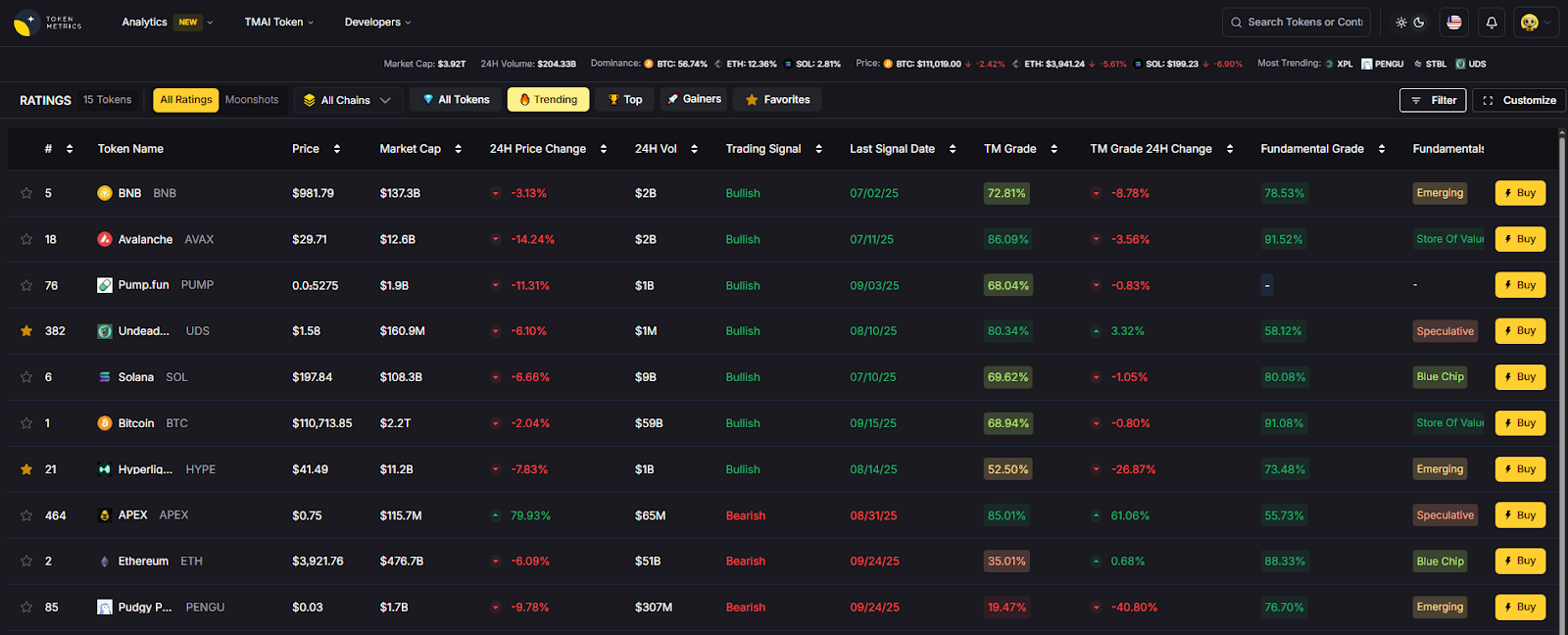
Token Metrics evaluates thousands of digital assets, including gaming tokens, play-to-earn projects, metaverse platforms, and NFT collections. Its AI-powered rating system assesses projects based on critical factors such as: Blockchain infrastructure, smart contract security, and scalability solutions Economic sustainability, token utility, and inflation/deflation mechanisms Developer team expertise, community engagement, and partnership quality Market dynamics including trading volume, liquidity, and holder distribution Gameplay quality, user retention, and player growth rates

Gaming NFT Market Intelligence

Understanding which gaming platforms, blockchain networks, and NFT collections offer superior risk-adjusted returns requires deep market intelligence. Token Metrics delivers sector-specific research, project comparisons, trend forecasting, and risk assessments that highlight red flags like unsustainable tokenomics or technical vulnerabilities.

Portfolio Management for Gaming Assets

Investors building diversified portfolios across cryptocurrencies, gaming tokens, NFT collections, and virtual land benefit from Token Metrics’ portfolio tools. These provide real-time valuation across multiple chains and marketplaces, performance attribution, correlation analysis for diversification, and tax reporting features to simplify complex NFT transactions.

Trading Signals and Actionable Intelligence

Token Metrics’ proprietary algorithms generate trading signals for gaming tokens and NFT projects, helping investors identify optimal entry and exit points. As NFT marketplaces mature and liquidity improves, these signals become increasingly valuable for active portfolio management.

Access Token Metrics today to leverage the analytical firepower needed to capitalize on the gaming NFT revolution.

Challenges and Considerations

Despite the promising outlook, NFTs in gaming face several key challenges:

  • Regulatory Uncertainty: Governments worldwide are still defining how to regulate gaming NFTs, especially concerning securities laws and gambling regulations. About 43% of game publishers cite regulatory concerns as significant barriers to NFT integration.
  • Technical Barriers: Over half of indie developers report limited access to blockchain infrastructure and smart contract expertise as obstacles. High transaction fees and network congestion remain concerns, although Layer-2 solutions are alleviating these issues.
  • Player Skepticism: Many gamers view NFTs as predatory monetization or are concerned about environmental impact. Developers must carefully balance NFT integration with genuine gameplay improvements to overcome resistance.
  • Market Volatility: The value of gaming tokens and NFT assets can be highly volatile, posing financial risks to players whose in-game items fluctuate dramatically in worth.

Addressing these challenges is critical to achieving widespread adoption and ensuring the long-term sustainability of NFT-based gaming ecosystems.

The Road Ahead: 2025 and Beyond

The future of NFTs in gaming extends well beyond digital collectibles and speculation. We are entering a new era where player-owned economies, true digital property rights, and gameplay that rewards skill and engagement redefine the gaming experience. Key developments to watch include:

  • Killer App Emergence: The arrival of a breakthrough game with cultural impact on par with Fortnite or Minecraft could accelerate mainstream adoption overnight.
  • Institutional Investment: Continued venture capital funding and major publisher involvement will legitimize and expand the space.
  • Technological Advancements: Improvements in blockchain scalability, reduced transaction fees, and enhanced user experiences will drive adoption.
  • Regulatory Clarity: Comprehensive frameworks will enable compliant NFT gaming implementations, reducing uncertainty.
  • Cross-Platform Standards: Industry-wide interoperability protocols will allow true asset portability across different games and virtual worlds.

The projection that gaming NFTs will grow nearly ninefold from $4.8 billion to $44.1 billion by 2034 highlights one of the most significant wealth creation opportunities in the digital economy. For players, developers, and investors willing to navigate the evolving landscape, gaming NFTs offer unprecedented potential to revolutionize how we play, trade, and own digital assets.

Ready to capitalize on the gaming NFT revolution? Visit tokenmetrics.com to access cutting-edge research, analytics, and trading intelligence that give you an edge in this explosive market.

Build Smarter Crypto Apps &
AI Agents in Minutes, Not Months
Real-time prices, trading signals, and on-chain insights all from one powerful API.
Grab a Free API Key
About Token Metrics
Token Metrics: AI-powered crypto research and ratings platform. We help investors make smarter decisions with unbiased Token Metrics Ratings, on-chain analytics, and editor-curated “Top 10” guides. Our platform distills thousands of data points into clear scores, trends, and alerts you can act on.
30 Employees
analysts, data scientists, and crypto engineers
Daily Briefings
concise market insights and “Top Picks”
Transparent & Compliant
Sponsored ≠ Ratings; research remains independent
Want Smarter Crypto Picks—Free?
See unbiased Token Metrics Ratings for BTC, ETH, and top alts.
Thank you! Your submission has been received!
Oops! Something went wrong while submitting the form.
 No credit card | 1-click unsubscribe
Token Metrics Team
Token Metrics Team

Recent Posts

Research

Top On and Off-Ramp Providers (Fiat to Crypto) 2025

Sam Monac
5 min

Why Fiat ↔ Crypto On/Off-Ramps Matter in September 2025

Getting money into and out of crypto should be fast, safe, and compliant. In 2025, wallets, dapps, exchanges, and fintechs increasingly rely on crypto on/off-ramp providers to convert fiat to tokens and cash back out to bank rails—all without forcing users to bounce between apps. Definition: an on-ramp lets users buy crypto with fiat; an off-ramp lets them sell crypto back to fiat and withdraw to bank accounts or cards. This guide is for product leaders, devs, and advanced users comparing coverage, fees, and risk controls across global options. We score providers on liquidity, security, asset/market coverage, costs, UX, and support, then recommend the best fits by use case. Secondary angles we considered: fiat to crypto onramp, crypto off-ramp, and common flows like “buy crypto with bank transfer.”

How We Picked (Methodology & Scoring)

  • Liquidity (30%) – depth, uptime, and quote quality across assets/fiat rails.

  • Security (25%) – audits, certifications, KYC/AML controls, trust center disclosures.

  • Coverage (15%) – supported countries, payment methods, off-ramp payout rails.

  • Costs (15%) – transparent fees/spreads; promos (e.g., USDC zero-fee tiers).

  • UX (10%) – speed (KYC/settlement), embeddable widgets, developer docs.

  • Support (5%) – docs, SLAs, live support, incident comms.

Data sources: official product/docs and security pages; licensing and disclosures; limited cross-checks with widely cited market datasets. We only link to official provider sites in this article. Last updated September 2025.

Top 10 Fiat ↔ Crypto On/Off-Ramp Providers in September 2025

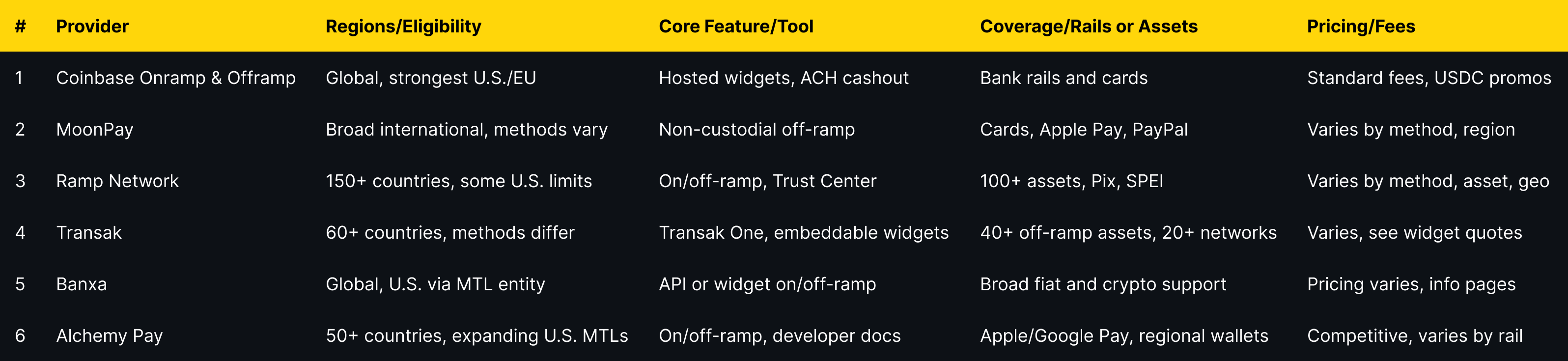
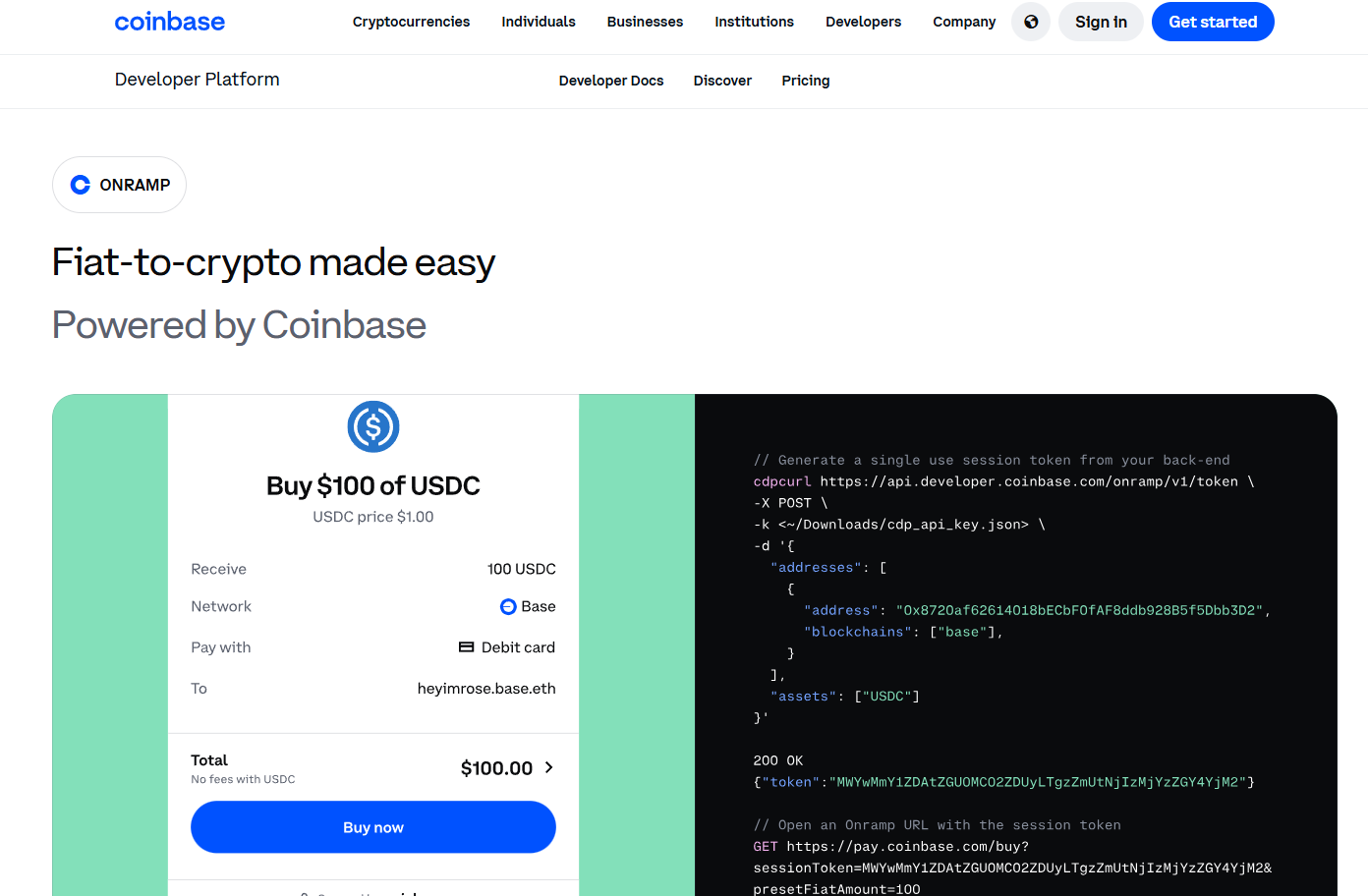
1. Coinbase Onramp & Offramp — Best for USDC flows & regulated U.S./EU coverage

  • Why Use It: Coinbase’s hosted Onramp and Offramp APIs let you embed buy/sell with bank rails and cards, including ACH cashouts, inside your app. Select apps can access zero-fee USDC onramp/offramp promotions and free USDC on Base. Coinbase+2Coinbase+2

  • Best For: U.S./EU wallets & dapps, consumer fintechs, apps prioritizing compliance.

  • Notable Features: hosted widgets; guest checkout for US (no account up to limits); ACH cashout; strong docs & SDKs. Coinbase Developer Docs

  • Fees Notes: Standard fees vary by method; USDC promos may apply. Coinbase

  • Regions: Global reach with strongest support in U.S./EU; method availability varies. Coinbase Developer Docs

  • Consider If: You need a turnkey, regulated option with ACH off-ramp.

  • Alternatives: MoonPay, Ramp Network.

2. MoonPay — Best for non-custodial UX & card coverage

  • Why Use It: MoonPay offers fast card/Apple Pay/PayPal buys and a non-custodial off-ramp, letting users sell crypto while keeping control of keys. Good fit for wallets and NFT apps that want an embedded flow. MoonPay+1

  • Best For: Self-custody wallets, NFT marketplaces, global card-first audiences.

  • Notable Features: Onramp + off-ramp; non-custodial design; quick card settlement. MoonPay+1

  • Fees Notes: Varies by payment method and region.

  • Regions: Broad international availability; local method support varies.

  • Consider If: You want non-custodial off-ramp with strong card acceptance.

  • Alternatives: Transak, Banxa.

3. Ramp Network — Best for global coverage + fast KYC

  • Why Use It: Ramp supports 100+ assets and multiple local rails (cards, bank transfers, Pix, SPEI) with fast, document-free KYC in eligible markets and SOC/ISO certifications published via its Trust Center. rampnetwork.com+2ramp.network+2

  • Best For: Wallets/dapps needing wide country coverage and quick onboarding.

  • Notable Features: On & off-ramp; 100+ assets; local rails incl. Pix & SPEI payouts; strong security disclosures. ramp.network+1

  • Fees Notes: Vary by method, asset, and geography.

  • Regions: 150+ countries; some U.S. states support on-ramp only (no off-ramp). support.rampnetwork.com

  • Consider If: You want breadth plus local rails in LATAM/EU.

  • Alternatives: Transak, Alchemy Pay.

4. Transak — Best for developer tooling & hybrid use cases

  • Why Use It: Transak offers on/off-ramp coverage (40+ off-ramp assets across 20+ networks) with over 64+ supported countries and Transak One to let users fund complex actions (e.g., stake/bridge) from fiat in one flow. Transak Docs+2Transak+2

  • Best For: Developers needing a broad, configurable integration; DeFi apps.

  • Notable Features: Off-ramp to bank; multi-network coverage; business (corporate) on/off-ramp; embeddable widgets. Transak+1

  • Fees Notes: Vary by method; see widget quotes.

  • Regions: 60+ countries; payment methods differ by market. Transak

  • Consider If: You need both retail and corporate on/off-ramp options.

  • Alternatives: Ramp Network, Banxa.

5. Banxa — Best for compliance-heavy enterprise & deep licensing

  • Why Use It: Banxa emphasizes regulated operations with published USA MTL and global license lists, plus enterprise-grade AML/CTF and security disclosures. Strong for partners who need extensive compliance artifacts. Banxa+2Banxa+2

  • Best For: Enterprises, wallets, and exchanges with strict compliance needs.

  • Notable Features: On/off-ramp via API/widget; broad fiat/crypto support; license/AML pages; developer SDKs. Banxa+1

  • Fees Notes: Pricing varies; transparent info pages provided. Banxa

  • Regions: Global (entity-specific); U.S. coverage via MTL entity; details in license PDFs. Banxa

  • Consider If: Your risk/compliance teams require detailed attestations.

  • Alternatives: Zero Hash, Transak.

6. Alchemy Pay — Best for emerging markets & alternative wallets

  • Why Use It: Alchemy Pay bridges fiat and crypto with on/off-ramp across 50+ countries (and expanding), focusing on emerging markets and a wide range of local wallets/payments. It’s actively growing U.S. coverage via new MTLs (e.g., Arizona, South Carolina). docs+2alchemypay.org+2

  • Best For: Dapps targeting emerging markets; global apps needing local wallets.

  • Notable Features: On/off-ramp; Apple/Google Pay & regional wallets; developer docs; business flows. alchemypay.org

  • Fees Notes: Competitive, vary by payment rail.

  • Regions: Global (check country list); growing U.S. state coverage via MTLs. alchemypay.org

  • Consider If: You prioritize local payment methods in APAC/LATAM.

  • Alternatives: Transak, Ramp Network.

7. Kraken — Best regulated exchange on/off-ramp (U.S./EU)

  • Why Use It: Kraken provides fiat funding and withdrawals in USD/EUR/CAD with ACH, SEPA, and card rails, offering a straightforward path to buy/sell and cash out to bank. Useful if you want exchange liquidity plus strong support docs. Kraken+1

  • Best For: Traders and users who prefer exchange-native fiat rails.

  • Notable Features: ACH deposits (no fee for many U.S. clients), cash withdrawals, app guides. Kraken+2Kraken Support+2

  • Fees Notes: Funding/withdrawal fees and holds depend on method (e.g., ACH hold windows). Kraken Support

  • Regions: U.S./EU/Canada; ACH account linking not available in NY, WA, TX. Kraken

  • Consider If: You want deep orderbook liquidity alongside fiat rails.

  • Alternatives: Bitstamp, Coinbase.

8. Bitstamp — Best for EU banking rails & stable UX

  • Why Use It: One of the longest-running exchanges, Bitstamp supports bank deposits (SEPA/International, ACH) and card purchases, plus fiat withdrawals to bank accounts. Simple, well-documented flows are ideal for EU and U.S. users wanting a clean on/off-ramp. Bitstamp+2Bitstamp+2

  • Best For: EU users; U.S. users comfortable with exchange-based cashouts.

  • Notable Features: ACH deposits/withdrawals, SEPA (incl. Instant SEPA), card & Apple/Google Pay availability. Bitstamp+2Bitstamp+2

  • Fees Notes: See Bitstamp fee schedule; varies by method. Bitstamp

  • Regions: EU/UK/US (availability by method).

  • Consider If: You want familiar exchange UX with established bank rails.

  • Alternatives: Kraken, Coinbase.

9. Stripe Crypto Onramp — Best embeddable onramp for U.S./EU apps

  • Why Use It: Stripe’s fiat-to-crypto onramp is a customizable widget/hosted flow you can embed in wallets, NFT apps, and dapps—Stripe handles KYC, fraud, and payments. Ideal for teams already on Stripe. Note: onramp availability is U.S. (excl. Hawaii) + EU. Stripe Docs+2Stripe Docs+2

  • Best For: U.S./EU dapps and platforms standardizing on Stripe.

  • Notable Features: Embedded or hosted onramp; identity & fraud tooling; stablecoin payout stack. Stripe Docs

  • Fees Notes: Stripe pricing applies; quotes shown in onramp UI.

  • Regions: U.S. (minus HI) and EU currently. Stripe Docs

  • Consider If: You need a polished onramp (no off-ramp) with Stripe stack.

  • Alternatives: Coinbase Onramp, MoonPay.

10. Zero Hash — Best turnkey B2B infrastructure (regulated build-out)

  • Why Use It: Zero Hash powers on/off-ramp for enterprises, abstracting licensing and regulatory complexity. B2B partners can convert between fiat and 60+ crypto assets, with quote controls and payout rails. zerohash.com+1

  • Best For: Fintechs, banks, and platforms embedding compliant crypto.

  • Notable Features: API-first; short path to market; configurable quotes; bank payouts. docs.zerohash.com

  • Fees Notes: Enterprise pricing; volume-based.

  • Regions: Coverage varies by solution and jurisdiction.

  • Consider If: You need compliance + infra rather than a retail widget.

  • Alternatives: Banxa, Coinbase (developer).

Decision Guide: Best By Use Case

How to Choose the Right Fiat ↔ Crypto On/Off-Ramp (Checklist)

  • Confirm region & method eligibility (ACH/SEPA/cards; off-ramp availability by country/state).

  • Check asset/fiat coverage for your top flows (BTC, ETH, stablecoins, local fiat).

  • Review security posture (SOC/ISO, trust center, KYC/AML, sanctions screening). Ramp

  • Compare fees & spreads (and promos like zero-fee USDC) and settlement speeds. Coinbase

  • Validate developer experience (docs, hosted vs. embedded, SDKs). Coinbase

  • Ensure support & SLAs meet your needs (status pages, incident comms).

  • Red flags: unclear licensing, no security disclosures, or “global” claims without a country/method matrix.

Use Token Metrics With Any On/Off-Ramp

  • AI Ratings: Screen top assets before you convert.
  • Narrative Detection: Spot sector momentum early.

  • Portfolio Optimization: Size positions to risk.

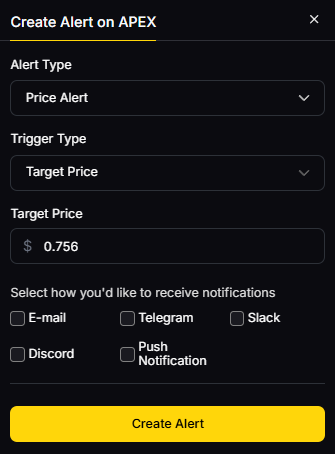
  • Alerts/Signals: Get entries/exits without screen-watching.
    Workflow: Research → Select ramp → Execute buy/sell → Monitor with alerts.


Primary CTA: Start free trial 

Security & Compliance Tips

  • Enable 2FA and use strong unique passwords.

  • Separate custody (self-custody vs. exchange) from ramp accounts as needed.

  • Follow KYC/AML requirements; prepare source-of-funds docs for higher limits.

  • For OTC/RFQ flows, lock quotes and confirm fees before sending. docs.zerohash.com

  • Maintain wallet hygiene: test transfers, verify addresses, track gas/fees.

This article is for research/education, not financial advice.

Beginner Mistakes to Avoid

  • Assuming a provider supports both on- and off-ramp in your country (often not true). support.rampnetwork.com

  • Ignoring ACH hold windows or payout timings when planning cashouts. Kraken Support

  • Overlooking fees/spreads vs. headline “no fee” promos. Coinbase

  • Embedding an onramp without sandbox/testing error states.

  • Not checking licensing & security disclosures before integration. Banxa+1

FAQs

What is a crypto on-ramp vs. off-ramp?
An on-ramp lets users buy crypto with fiat (e.g., card, bank transfer). An off-ramp lets users sell crypto for fiat and withdraw to bank rails or cards. Coinbase

Which providers are best for U.S. ACH cashouts?
Coinbase Offramp and Kraken both support ACH, with method availability depending on state and account status. Coinbase Developer Docs+1

Does Stripe support off-ramp?
Stripe currently offers a fiat-to-crypto onramp (no off-ramp). It’s available in the U.S. (excluding Hawaii) and EU. Stripe Docs

Which options are strongest outside the U.S.?
For broad coverage and local rails, consider Ramp Network (Pix/SPEI), Transak (multi-network off-ramp), and Alchemy Pay (regional wallets). ramp.network+2Transak Docs+2

What about enterprise-grade compliance?
Banxa and Zero Hash publish license/compliance docs and are built for B2B integrations with higher assurance requirements. Banxa+1

Conclusion + Related Reads

The best choice depends on your region, payout rails, and risk posture. If you want a regulated U.S. ACH flow with strong docs, start with Coinbase. Need global coverage and local methods? Ramp, Transak, and Alchemy Pay shine. For enterprise and bank-grade requirements, Banxa and Zero Hash are strong bets. Exchange-based ramps via Kraken or Bitstamp work well if you also need deep liquidity.

Related Reads:

  • Best Cryptocurrency Exchanges 2025

  • Top Derivatives Platforms 2025

  • Top Institutional Custody Providers 2025

Research

Best Crypto Payment Processors for Merchants (2025)

Sam Monac
5 min

Why crypto payment processors for merchants Matter in September 2025

If you sell online (or in-store) and want to accept Bitcoin or stablecoins, choosing the best crypto payment processors can lower costs, expand global reach, and reduce chargeback risk. In one line: a crypto payment processor lets merchants accept digital assets at checkout and settle in crypto or fiat while handling pricing, invoicing, and compliance basics.

In 2025, stablecoin rails and Lightning are improving speed and costs, while major gateways add plugins for Shopify, WooCommerce, and custom APIs. This guide is for startups and enterprises comparing fees, settlement options, asset coverage, and regional availability. We blend live docs research with practical fit notes so you can pick confidently and ship faster.

How We Picked (Methodology & Scoring)

  • Liquidity (30%): breadth of supported assets/rails (BTC, stablecoins, Lightning), reliability of conversion/settlement.
  • Security (25%): custody model, key management options, certifications, and clear incident/disclosure pages.
  • Coverage (15%): e-commerce plugins, API maturity, payouts, and fiat-settlement choices.
  • Costs (15%): transparent processing fees, conversion/payout costs.
  • UX (10%): checkout speed, invoicing, reporting, and developer experience.
  • Support (5%): docs quality, SLA, enterprise support.

Data sources: official product/docs, pricing/security pages, and (for cross-checks only) widely cited market datasets. Last updated September 2025.

Top 10 crypto payment processors for merchants in September 2025

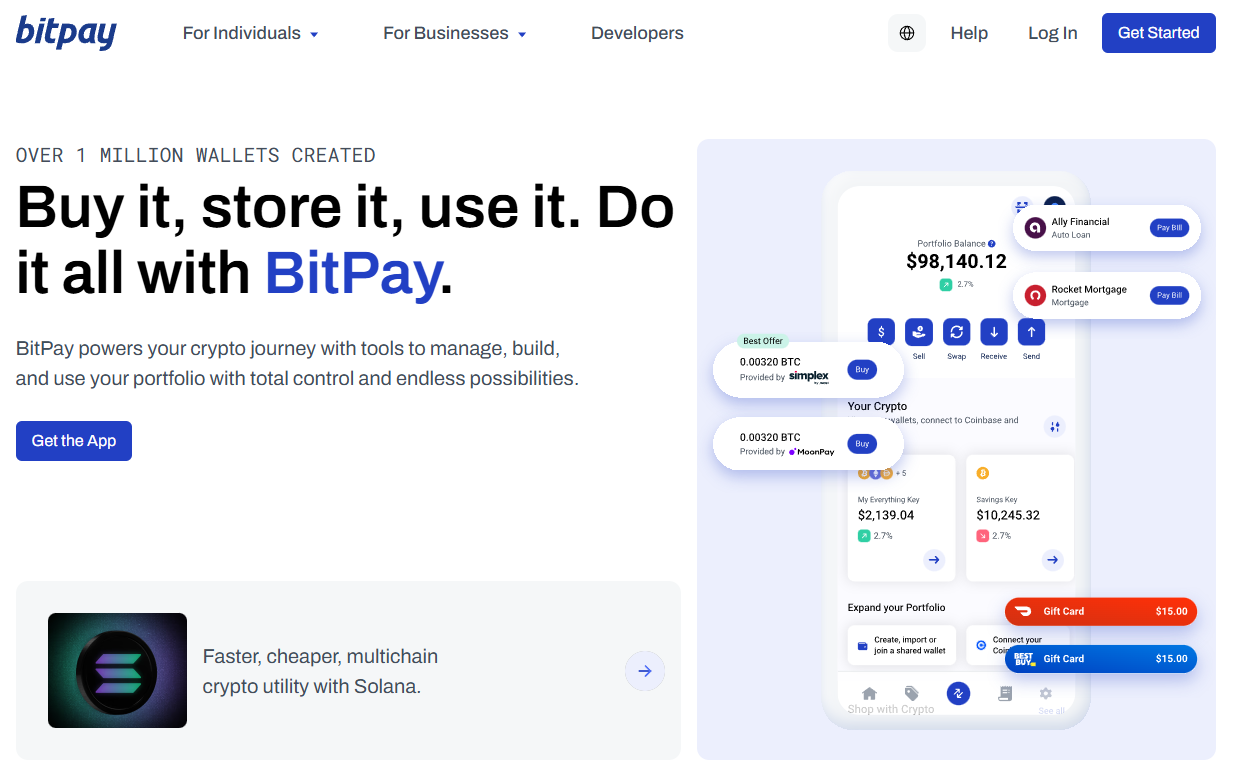
1. BitPay — Best for mature U.S. merchants wanting stable operations

  • Why Use It: One of the longest-running crypto processors with robust invoicing, refunds, accounting exports, and fiat settlement. Tiered pricing and clear policies suit compliance-sensitive teams.
  • Best For: U.S./EU retailers, subscriptions, digital goods, B2B invoices.
  • Notable Features: Branded checkout links; partial/full refunds; mass payouts; settlement in multiple currencies; stablecoin support.
  • Consider If: You want predictable fees and traditional support over maximum coin variety.
  • Fees/Regions: Tiered 1–2% + $0.25 per transaction; extensive global reach.
  • Alternatives: Coinbase Commerce, CoinGate.

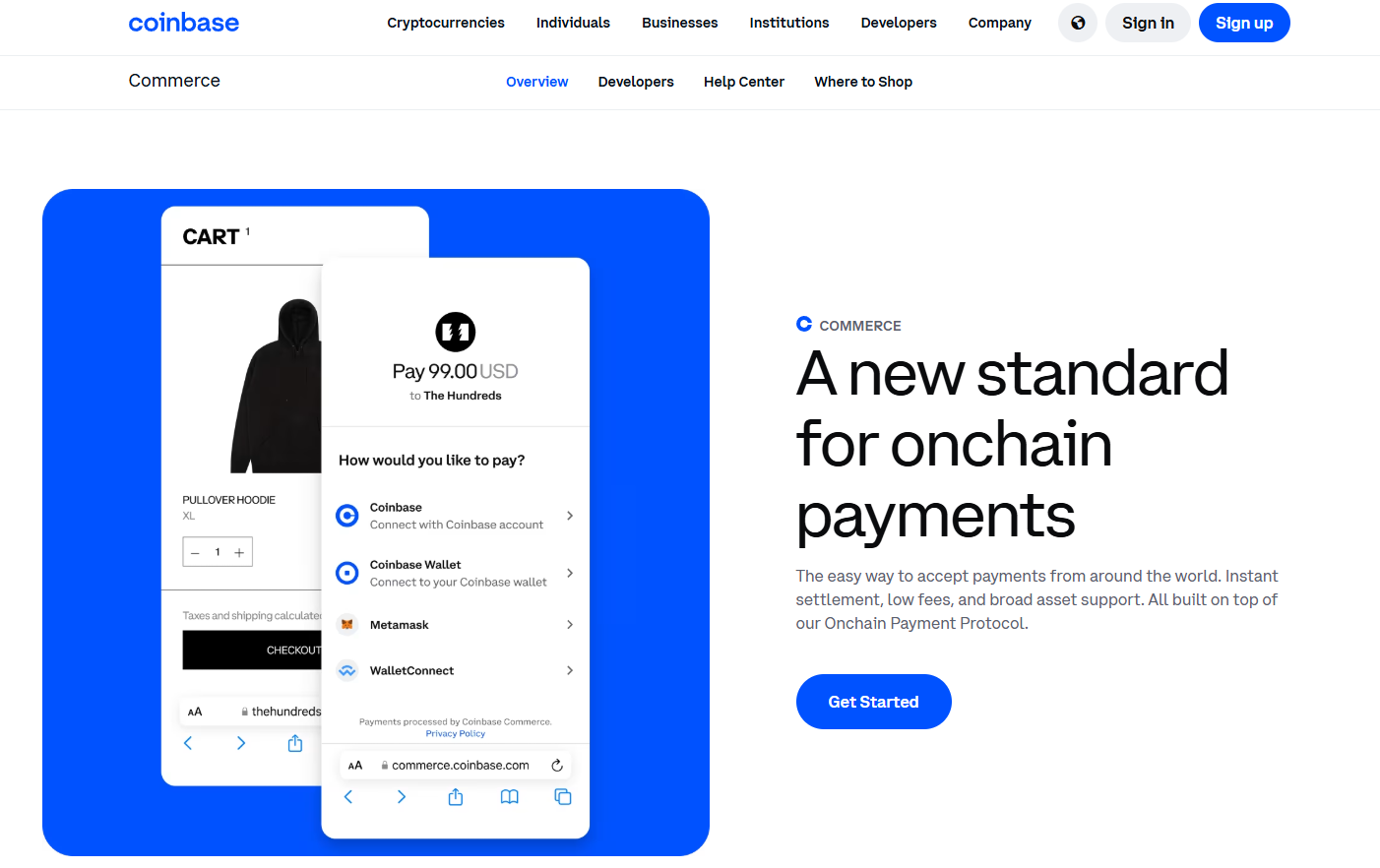
2. Coinbase Commerce — Best for simple USDC/crypto checkout with fiat-style reporting

  • Why Use It: Clean merchant dashboard, simple payment links, and an onchain payment protocol with automatic conversions; integrates neatly with Coinbase ecosystem and USDC flows.
  • Best For: SaaS, creators, and startups already using Coinbase.
  • Notable Features: Payment links; ecommerce plugins; onchain protocol migration; automatic fee display and reporting.
  • Consider If: You want a recognizable brand and 1% flat pricing.
  • Fees/Regions: 1% processing fee; broad availability (jurisdictional limits may apply).
  • Alternatives: BitPay, Crypto.com Pay.

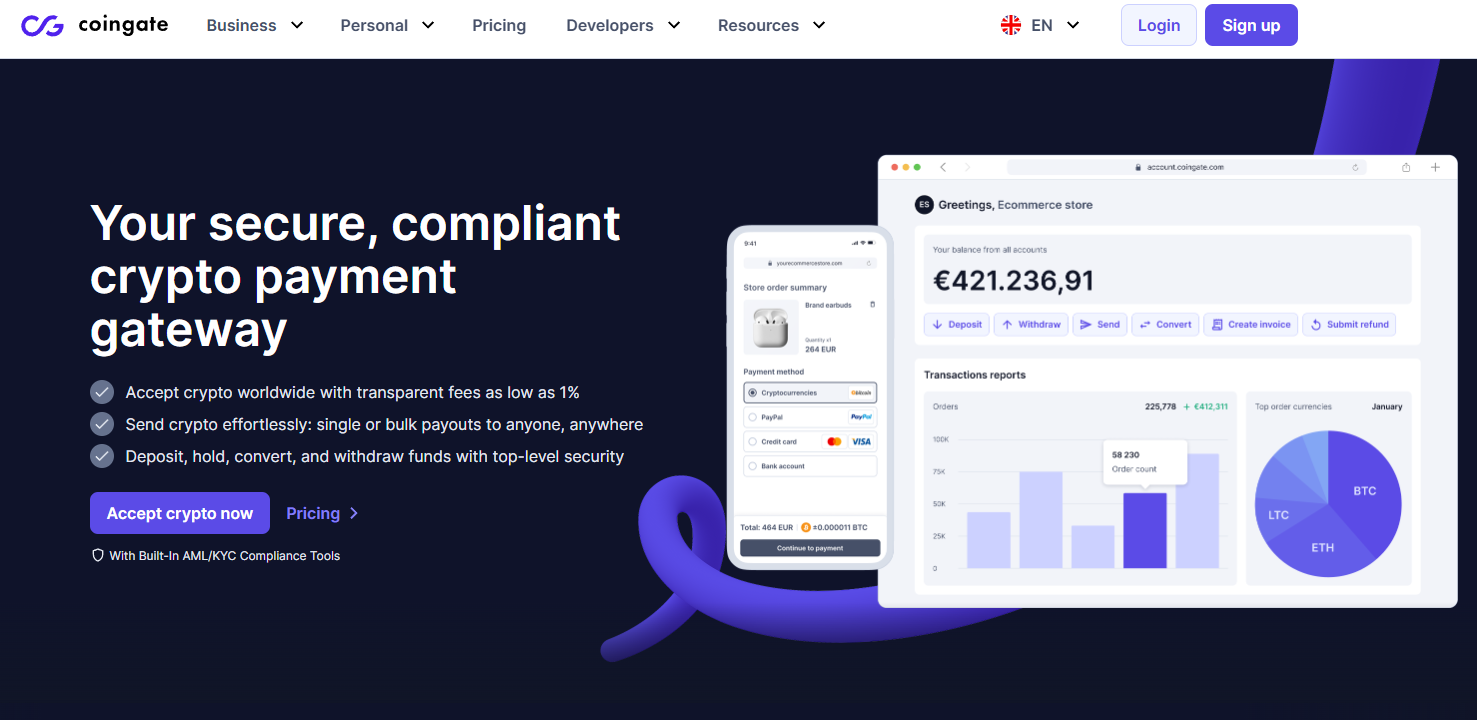
3. CoinGate — Best for multi-coin coverage and EU-friendly payouts

  • Why Use It: Transparent pricing and solid plugin coverage (WooCommerce, OpenCart, etc.) with weekly settlements and crypto payouts.
  • Best For: EU merchants, hosting/VPNs, and globally distributed ecommerce.
  • Notable Features: 1% processing; refunds in crypto; payouts with/without conversion; accepts customers from 180+ countries.
  • Consider If: You need flexible payouts and many altcoins.
  • Fees/Regions: 1% processing; additional small fees for certain payout types; EU/Global.
  • Alternatives: CoinPayments, NOWPayments.

4. CoinPayments — Best for plugins and long-tail altcoin acceptance

  • Why Use It: A veteran gateway with broad coin support and deep ecommerce integrations (BigCommerce, WooCommerce). Good for merchants courting crypto-native audiences.
  • Best For: Online stores, marketplaces, gaming.
  • Notable Features: Auto-conversion between coins; extensive plugin library; merchant tools and invoicing.
  • Consider If: You want low, flat pricing across many assets.
  • Fees/Regions: 0.5% processing (plus network fees); Global.
  • Alternatives: CoinGate, NOWPayments.

5. NOWPayments — Best for lowest advertised base rate with auto-conversion

  • Why Use It: Simple setup, broad coin list, and clear fee tiers—great for testing crypto checkout with minimal overhead.
  • Best For: SMB ecommerce, content creators, charities.
  • Notable Features: 300+ coins; donations/PoS widgets; subscriptions; mass payouts; auto-conversion.
  • Consider If: You value quick launch and wide asset coverage.
  • Fees/Regions: 0.5% monocurrency; 1% with conversion (excl. network fees); Global.
  • Alternatives: CoinPayments, CoinGate.

6. OpenNode — Best for Bitcoin + Lightning with fiat conversion

  • Why Use It: Lightning-native processing for low fees and instant settlement, with optional auto-conversion to local currency to avoid BTC volatility.
  • Best For: High-volume BTC checkouts, gaming, and emerging markets needing fast micro-payments.
  • Notable Features: Hosted checkout; API; automatic conversion; bank settlements; PoS.
  • Consider If: You prioritize Lightning speed and simple, transparent pricing.
  • Fees/Regions: 1% transaction fee; supports many currencies and countries; Global
  • Alternatives: Lightspark, BTCPay Server (self-hosted).

7. Lightspark — Best enterprise Lightning infrastructure

  • Why Use It: Enterprise-grade Lightning with AI-assisted routing, flexible custody models, and SLA-style support—ideal for platforms embedding realtime payments.
  • Best For: Fintechs, exchanges, marketplaces, and PSPs embedding Bitcoin/Lightning.
  • Notable Features: Managed nodes; Predict routing; UMA support; role-based access; audit-ready reporting.
  • Consider If: You need predictable Lightning performance at scale.
  • Fees/Regions: Starter 0.50%; Enterprise 0.30–0.15% with volume tiers; Global.
  • Alternatives: OpenNode, Coinbase Commerce (non-Lightning).

8. Crypto.com Pay — Best for ecosystem reach and co-marketing

  • Why Use It: Merchant app + plugins, catalog placement, and cash settlement with zero crypto price risk claims; strong brand for consumer trust.
  • Best For: Retail, entertainment, and brands wanting exposure to Crypto.com’s user base.
  • Notable Features: API & plugins (Shopify/WooCommerce); recurring for app users; in-store app acceptance; security certifications displayed.
  • Consider If: You want marketing reach alongside payments.
  • Fees/Regions: Availability and settlement options vary by jurisdiction; “300M+ USD processed per annum” marketing stat on site.
  • Alternatives: Coinbase Commerce, BitPay.

9. TripleA — Best for compliance-first global merchants (MAS-licensed)

  • Why Use It: Singapore-based gateway emphasizing licensing and compliance (MAS Major Payment Institution), with global acceptance and fiat settlement.
  • Best For: Regulated industries, cross-border ecommerce, APAC reach.
  • Notable Features: Merchant APIs; ecommerce plugins; settlement to bank accounts; multi-asset support.
  • Consider If: Licensing and audits matter more than long-tail altcoins.
  • Fees/Regions: Pricing by quote; Licensed in Singapore; Global coverage.
  • Alternatives: BitPay, CoinGate.

10. Alchemy Pay — Best hybrid fiat-crypto acceptance with wide country reach

  • Why Use It: Hybrid rails (on/off-ramp + crypto payments) covering 173 countries, with fiat settlement and SDKs for web/app flows; active U.S. licensing expansion.
  • Best For: Global ecommerce, super-apps, and platforms needing both purchase and checkout rails.
  • Notable Features: Checkout SDK; QR/wallet payments; off-ramp payouts; partner integrations.
  • Consider If: You want one vendor for ramps + crypto acceptance.
  • Fees/Regions: Pricing via sales; jurisdictional variability noted; Global/APAC focus with growing U.S. coverage.
  • Alternatives: Crypto.com Pay, Coinbase Commerce.

Decision Guide: Best By Use Case

  • Regulated U.S./EU brands: BitPay, TripleA, Coinbase Commerce.
  • Global altcoin coverage: CoinPayments, CoinGate, NOWPayments.
  • Lightning/micropayments: OpenNode, Lightspark.
  • Ecosystem reach/co-marketing: Crypto.com Pay.
  • All-in-one ramps + acceptance: Alchemy Pay.
  • Simple 1% flat fee and easy links: Coinbase Commerce.

How to Choose the Right crypto payment processors for merchants (Checklist)

  • Confirm regional eligibility and licensing (e.g., U.S., EU, APAC).
  • Compare processing + conversion + payout fees (not just headline rates).
  • Decide on settlement (crypto vs. fiat) and supported currencies.
  • Check plugin coverage (Shopify, WooCommerce) and API maturity.
  • Review security posture (custody model, certifications, disclosures).
  • Validate support/SLA and refund workflows.
  • Red flags: vague fees, no docs/status page, or unclear settlement policies.

Use Token Metrics With Any crypto payment processors for merchants

  • AI Ratings: screen coins and chains your customers actually use.
  • Narrative Detection: spot momentum (e.g., stablecoin or Lightning surges).
  • Portfolio Optimization: model treasury exposure if you keep a crypto balance.
  • Alerts & Signals: monitor market moves that affect checkout conversions.

Workflow: Research in TM → Pick a processor → Go live → Monitor with alerts.

Start free trial

Security & Compliance Tips

  • Enable 2FA and role-based access on the merchant dashboard.
  • Choose custody/settlement that fits your risk (self-custody vs. managed, fiat vs. crypto).
  • Follow KYC/AML and tax rules in each operating region.
  • For RFQ/OTC conversions, document rates/partners.
  • Keep wallet hygiene (whitelists, limited hot-wallet balances).

This article is for research/education, not financial advice.

Beginner Mistakes to Avoid

  • Chasing the lowest “headline rate” while ignoring conversion/payout fees.
  • Forgetting to test refunds, partial payments, and expired invoices.
  • Launching without clear settlement currency and payout timing.
  • Relying on a single chain/asset when your audience uses others.
  • Ignoring jurisdictional limitations and licensing disclosures.

FAQs

What is a crypto payment processor for merchants?
A service that lets businesses accept digital assets (e.g., BTC, USDC) and settle in crypto or fiat while handling pricing, invoicing, and basic compliance/reporting.

Are crypto fees lower than card fees?
Often yes—many gateways list ~0.5–1% base rates, though network and conversion/payout fees can apply. Compare total effective cost per order.

Can I receive USD/EUR instead of crypto?
Most processors offer instant conversion and fiat settlement to bank accounts in supported regions. Check your vendor’s settlement currencies and schedules.

Which is best for Lightning or micro-payments?
OpenNode and Lightspark are built around Lightning for instant, low-cost payments, with enterprise options and APIs.

Is self-hosting a gateway possible?
Yes—projects like BTCPay Server exist for technical teams, but managed gateways reduce operational burden and add fiat settlement options.

Conclusion + Related Reads

Merchants should match checkout rails to customer demand: go BitPay/Coinbase Commerce for simplicity and brand trust, CoinGate/CoinPayments/NOWPayments for broad asset coverage, OpenNode/Lightspark for Lightning speed, and Alchemy Pay/Crypto.com Pay for hybrid rails and reach. Test fees and settlement with a pilot, then scale.

Research

Best Crypto Hardware Wallets for Security 2025

Sam Monac
5 min

Why Crypto Hardware Wallets Matter in September 2025

If you hold crypto, your keys are everything—and the best hardware wallets still offer the strongest defense against malware, phishing, and exchange failures. A hardware wallet is a dedicated, offline signing device that stores private keys and authorizes transactions without exposing secrets to the internet. In 2025, rising on-chain activity and more sophisticated wallet-drainer attacks make physical key management table stakes for both retail and pros.

This guide is for investors, traders, and builders who want maximum security without killing usability. We compare leading devices across security architecture, open-source posture, coin coverage, UX, and ecosystem readiness—so you can match the right wallet to your risk profile and stack. Secondary considerations include “crypto hardware wallet” setup flows, “cold wallet” signing paths, and “secure crypto wallet” recovery options.

How We Picked (Methodology & Scoring)

  • Liquidity (30%) → Practical access to ecosystems: native apps, partner integrations, staking/buy features, and compatibility with third-party wallets.
  • Security (25%) → Secure elements, open-source/ reproducible builds, air-gapped flows (QR/PSBT), anti-exfiltration, audits, and recovery design.
  • Coverage (15%) → Supported chains and tokens (BTC, ETH/L2s, EVM, Solana, etc.).
  • Costs (15%) → Device price and any ongoing subscription/feature fees.
  • UX (10%) → Screen size, inputs, mobile/Bluetooth, onboarding, backups.
  • Support (5%) → Docs, firmware cadence, and customer support options.

We relied on official product and security pages, device docs, and transparency notes, using third-party market datasets only for cross-checks (no third-party links in body). Last updated September 2025.

Top 10 Crypto Hardware Wallets for Security in September 2025

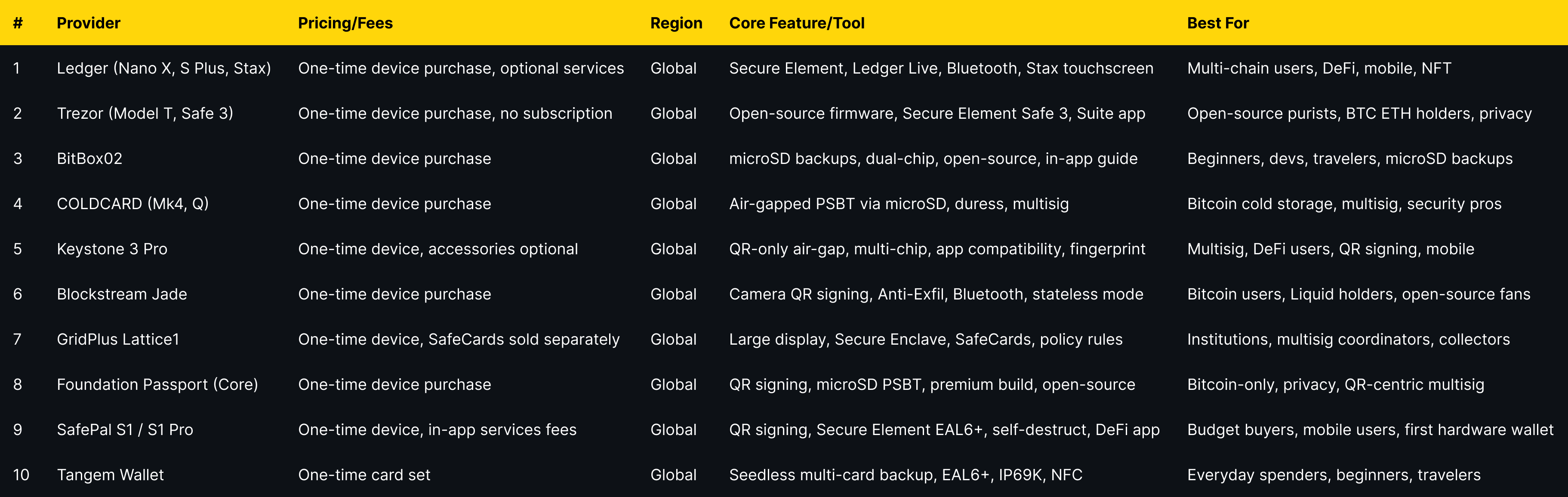
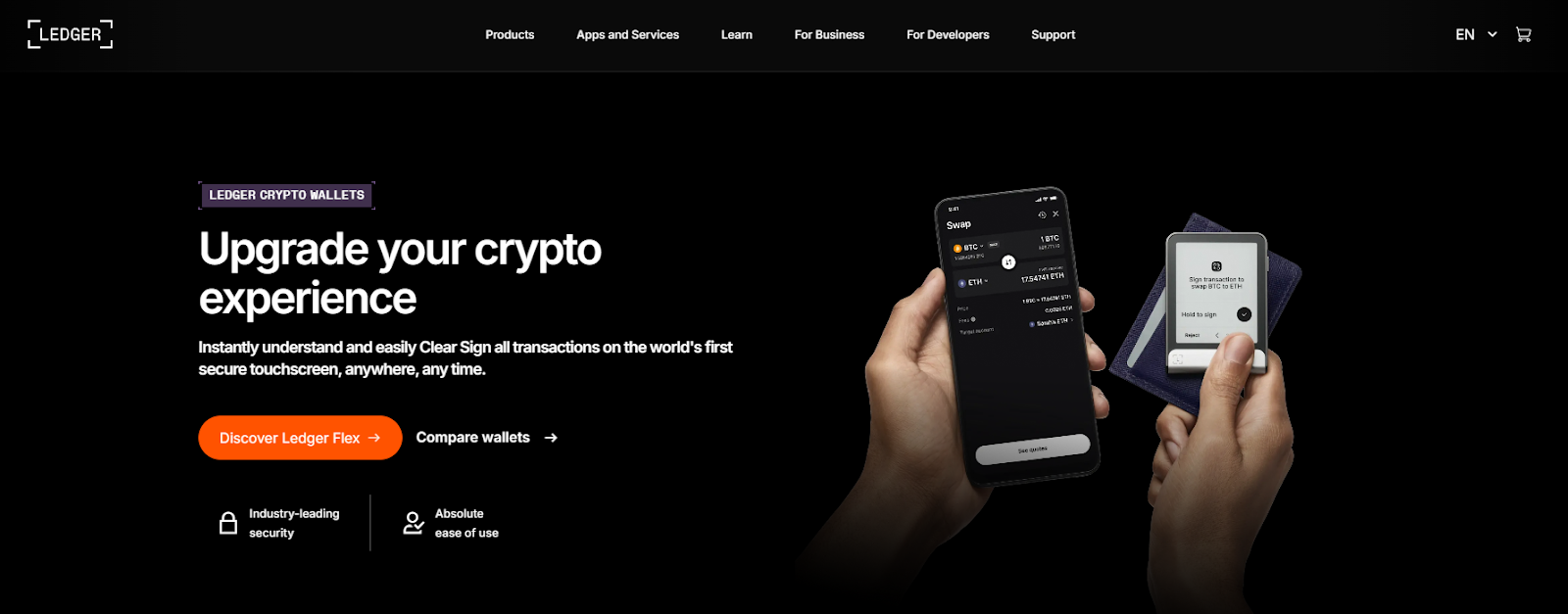
1. Ledger (Nano X • Nano S Plus • Stax) — Best for broad ecosystem + Secure Element

  • Why Use It: Ledger pairs a Secure Element (CC EAL5+/EAL6+) with its BOLOS OS and a polished Ledger Live app for buy/swap/stake and 3rd-party wallet support. It’s the most ubiquitous stack, which means better app integrations and an easy path from cold storage to dApps when you need it.
  • Best For: Multi-chain users, DeFi dabblers, mobile-first holders, NFT collectors.
  • Notable Features: Secure Element, Ledger Live ecosystem, Bluetooth (Nano X), Stax E Ink touchscreen, optional Recover, 50+ wallet integrations.
  • Consider If: You prefer fully open-source firmware elsewhere.
  • Alternatives: Trezor, BitBox02
  • Regions: Global
  • Fees Notes: One-time device purchase; optional services may have fees.

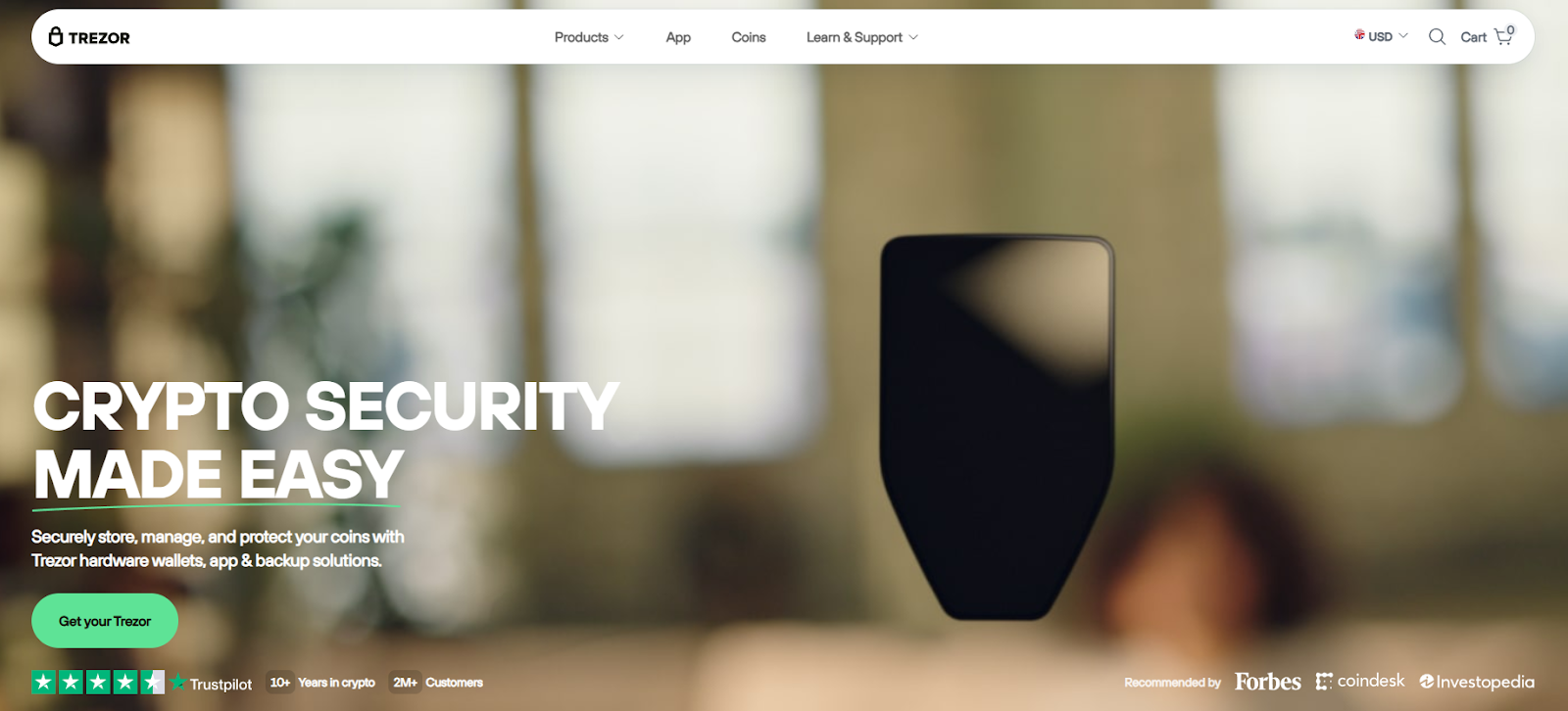
2. Trezor (Model T • Safe 3) — Best open-source experience

  • Why Use It: Trezor prioritizes open-source firmware, transparent security docs, and a clean desktop suite. The Safe 3 adds a Secure Element while keeping passphrase and on-device confirmations simple enough for new users.
  • Best For: Open-source purists, long-term BTC/ETH holders, privacy-minded users.
  • Notable Features: Trezor Suite, passphrase, open-source firmware, Secure Element (Safe 3), Bitcoin-only variant available.
  • Consider If: You need Bluetooth/mobile-first; consider Ledger or Jade.
  • Alternatives: Ledger, BitBox02
  • Regions: Global
  • Fees Notes: One-time device purchase; no subscription.

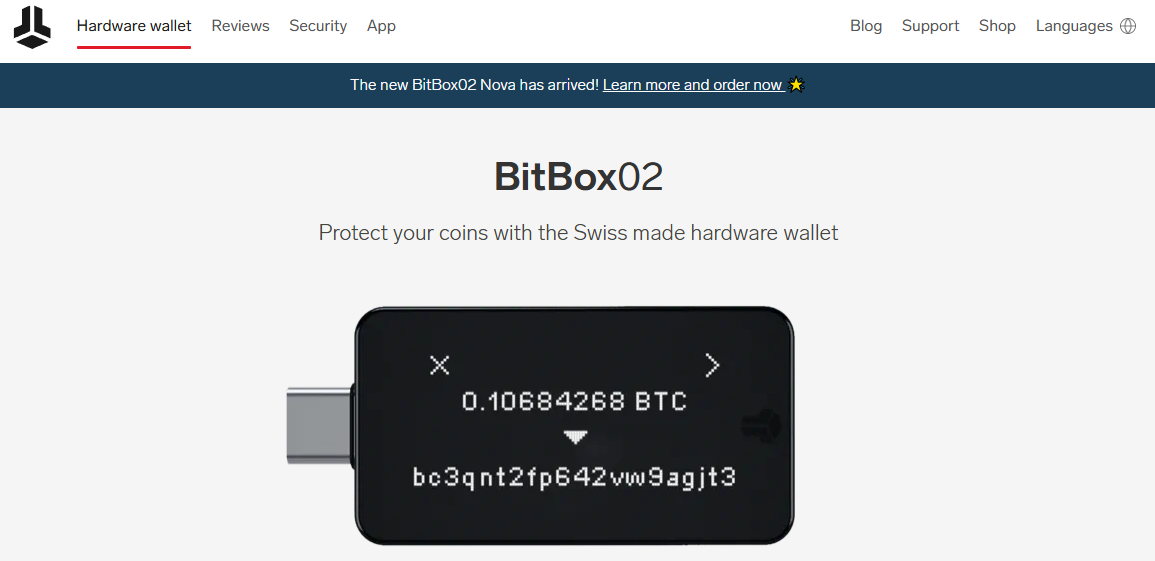
3. BitBox02 (Shift Crypto) — Best for microSD backups + minimalism

  • Why Use It: Swiss-built, open-source, and elegantly simple, BitBox02 uses a secure chip plus epoxy potting and a microSD for fast, offline backups. It’s a great blend of transparent design and sane UX.
  • Best For: Beginners who want a short setup, devs who value open code, travelers who like microSD backups.
  • Notable Features: microSD backup/restore, dual-chip with secure element, open-source, in-app guide.
  • Consider If: You need QR signing; look at Keystone or Passport.
  • Alternatives: Trezor, Keystone
  • Regions: Global
  • Fees Notes: One-time device purchase.

4. COLDCARD (Mk4 / Q) — Best for Bitcoin-only, air-gapped PSBT

  • Why Use It: Long favored by security maximalists, Coldcard is designed for fully air-gapped, PSBT-first workflows. Duress/tamper PINs, seed scrambling, and reproducible builds make it a fortress for BTC savings.
  • Best For: Long-term Bitcoin cold storage, multisig operators, security pros.
  • Notable Features: True air-gapped via MicroSD, PSBT (BIP174), anti-tamper features, duress/multisig tooling.
  • Consider If: You need altcoins; choose Ledger, Trezor, or BitBox02.
  • Alternatives: Passport, Jade
  • Regions: Global
  • Fees Notes: One-time device purchase.

5. Keystone 3 Pro — Best for QR signing across many chains

  • Why Use It: Keystone focuses on fully air-gapped QR workflows—no USB, Bluetooth, Wi-Fi, or NFC—plus Shamir backups and strong multisig support. The 3 Pro adds three security chips and tight compatibility with leading wallet apps.
  • Best For: Multisig setups, DeFi users who prefer QR signing, mobile users.
  • Notable Features: QR-only air-gap, multi-chip architecture, wide app compatibility, fingerprint unlock, large screen.
  • Consider If: You want a huge desktop screen (see Lattice1).
  • Alternatives: Passport, Jade
  • Regions: Global
  • Fees Notes: One-time device purchase; optional accessories.

6. Blockstream Jade (Classic / Plus) — Best affordable open-source (Bitcoin & Liquid)

  • Why Use It: Jade is open-source with optional air-gapped camera signing, Anti-Exfil, and a friendly app. It’s a strong value pick for Bitcoiners who still want modern conveniences like Bluetooth and battery power.
  • Best For: Bitcoin users, Liquid asset holders, open-source fans.
  • Notable Features: Camera for QR, air-gapped transactions, Anti-Exfil, Bluetooth, optional stateless mode.
  • Consider If: You want more chains; consider Ledger/Trezor.
  • Alternatives: COLDCARD, Passport
  • Regions: Global
  • Fees Notes: One-time device purchase.

7. GridPlus Lattice1 — Best for big screen review & SafeCards

  • Why Use It: A 5" touchscreen and SafeCards make policy controls and multi-wallet management feel enterprise-grade. The Secure Enclave and card model are great for households, teams, or power users who hate “blind signing.”
  • Best For: Institutions, multisig coordinators, collectors with many addresses.
  • Notable Features: Large display, Secure Enclave, SafeCards for key portability/limits, policy rules, robust desktop UX.
  • Consider If: You want ultra-portable or budget under $150.
  • Alternatives: Ledger Stax, Keystone
  • Regions: Global
  • Fees Notes: One-time device purchase; SafeCards sold separately.

8. Foundation Passport (Core) — Best for QR + Bitcoin privacy flows

  • Why Use It: Passport emphasizes QR signing, clean UX, and Bitcoin-only focus. Thoughtful hardware (camera, microSD) and transparent docs make it a favorite for air-gapped, privacy-first workflows.
  • Best For: Bitcoin-only users, privacy fans, QR-centric multisig.
  • Notable Features: QR signing, microSD for firmware/PSBT, premium build, open-source ethos.
  • Consider If: You need altcoins/EVM—choose Ledger or Keystone.
  • Alternatives: COLDCARD, Jade
  • Regions: Global
  • Fees Notes: One-time device purchase.

9. SafePal S1 / S1 Pro — Best budget air-gapped option

  • Why Use It: SafePal delivers QR-based, fully air-gapped signing with a Secure Element (CC EAL6+) at a very accessible price point, plus a companion app for swaps and DeFi. Great for newcomers who still want true offline signing.
  • Best For: Budget buyers, mobile users, “first hardware wallet.”
  • Notable Features: QR signing, Secure Element (EAL6+), self-destruct/anti-tamper, rich app integrations.
  • Consider If: You prefer fully open-source firmware (see Trezor/BitBox/Jade).
  • Alternatives: Tangem, Ledger Nano S Plus
  • Regions: Global
  • Fees Notes: One-time device purchase; in-app services may incur fees.

10. Tangem Wallet (2- or 3-card set) — Best card-based, seedless recovery model

  • Why Use It: Tangem uses NFC cards with an EAL6+ secure chip and a 25-year warranty, removing seed phrases in favor of multi-card backups. Tap-to-sign is intuitive, and the rugged, battery-free design suits travel and daily carry.
  • Best For: Everyday spenders, beginners who fear seed phrases, travelers.
  • Notable Features: Seedless multi-card backup, EAL6+ chip, IP69K-rated durability, NFC tap-to-sign, long warranty.
  • Consider If: You want a traditional BIP39 seed and broad third-party wallet support.
  • Alternatives: SafePal S1, Keystone
  • Regions: Global
  • Fees Notes: One-time card set; no charging required.

Decision Guide: Best By Use Case

  • Broad multi-chain + best ecosystem: Ledger
  • Fully open-source first: Trezor, BitBox02, Blockstream Jade
  • Bitcoin-only vaulting: COLDCARD, Passport, Jade
  • QR / air-gapped multisig: Keystone, Passport, Jade
  • Large screen & team workflows: GridPlus Lattice1
  • Budget under $100 (often): SafePal S1, Jade (promos), Trezor Safe 3
  • Seedless, card-based: Tangem
  • Mobile/Bluetooth convenience: Ledger Nano X, Jade

How to Choose the Right Hardware Wallet (Checklist)

  • Confirm security model: Secure Element, open-source, air-gap/QR, PSBT.
  • Match coverage to your assets (BTC-only vs multi-chain/EVM/Solana).
  • Check ecosystem access: companion app, 3rd-party wallet support.
  • Weigh UX: screen size, buttons/touch, Bluetooth, mobile pairing.
  • Review recovery: BIP39/Shamir vs seedless cards; where you’ll store backups.
  • Validate firmware cadence and support.
  • Red flags: blind-signing unclear data; closed update channels; no documented security page.

Use Token Metrics With Any Hardware Wallet

Turn cold storage into a smarter strategy:

  • AI Ratings to screen tokens you plan to hold.
  • Narrative Detection to catch momentum early.
  • Portfolio Optimization to size positions and balance risk.
  • Alerts & Signals to monitor entries/exits—without moving your keys.

Workflow: Research on Token Metrics → Pick assets → Acquire & secure with your wallet → Track performance + alerts.

Start free trial

Security & Compliance Tips

  • Enable PIN + passphrase (where supported) and store backups offline.
  • Prefer air-gapped/QR or PSBT flows for high-value moves.
  • Verify addresses and amounts on-device; avoid blind signing.
  • Keep firmware up to date; download only from official sources.
  • Separate daily hot spending from long-term cold storage.

This article is for research/education, not financial advice.

Beginner Mistakes to Avoid

  • Keeping the only seed phrase in a single location.
  • Re-using the same device for testnets and main funds.
  • Blind-signing smart-contract approvals you don’t understand.
  • Leaving device uninitialized/unpinned in a desk drawer.
  • Buying from unofficial marketplaces or “pre-set up” resellers.

FAQs

What is a hardware wallet?
A hardware wallet is a physical device that stores private keys and authorizes transactions offline, reducing exposure to malware and phishing compared to software wallets.

Do I need a hardware wallet if I use a centralized exchange?
If an exchange is hacked or freezes withdrawals, you can lose access. A hardware wallet lets you self-custody, so you control keys and recovery—many users keep long-term holdings in cold storage and only move funds when needed.

Is a Secure Element required?
Not required, but many devices use a CC EAL5+/EAL6+ Secure Element to resist physical extraction. Open-source firmware and verifiable builds also matter—evaluate the whole model, not just one spec.

What’s the difference between air-gapped QR and USB/Bluetooth?
QR/PSBT keeps signing data offline via camera or microSD. USB/Bluetooth devices can still be safe if the secret keys never leave the secure chip and screens verify data—choose the flow you’ll actually use correctly.

Can I use one wallet for multiple chains?
Yes—multi-chain devices (e.g., Ledger, Trezor, Keystone) support many networks. Bitcoin-focused devices (COLDCARD, Passport, Jade) prioritize BTC security and workflows.

How often should I rotate or back up?
Back up at setup, test recovery once, and review backups quarterly. Rotate seeds if you suspect exposure, or after major life changes.

Conclusion + Related Reads

If you want the widest ecosystem, Ledger is tough to beat. Prefer open-source? Trezor or BitBox02 are excellent defaults. For Bitcoin vaulting, COLDCARD, Jade, or Passport shine. Need team or household management? Lattice1. Budget-friendly air-gap? SafePal. Seedless and ultra-portable? Tangem.
Pick a model you’ll use correctly—then let Token Metrics guide what goes inside it.

Choose from Platinum, Gold, and Silver packages
Reach with 25–30% open rates and 0.5–1% CTR
Craft your own custom ad—from banners to tailored copy
Perfect for Crypto Exchanges, SaaS Tools, DeFi, and AI Products