Back to blog
Crypto Basics

10 Best Crypto Exchanges for Investing and Trading

Discover the best crypto exchanges for both investing and trading in 2023. Explore top platforms with a range of features and benefits for crypto enthusiasts.
Marcus K
9 Minutes
Want Smarter Crypto Picks—Free?
See unbiased Token Metrics Ratings for BTC, ETH, and top alts.
Thank you! Your submission has been received!
Oops! Something went wrong while submitting the form.
 No credit card | 1-click unsubscribe

In the bustling world of cryptocurrencies, knowing where to trade or invest can be a daunting task. With the number of available exchanges growing rapidly, finding the right fit tailored to your needs is essential. Whether you're a newbie or a seasoned trader, there's an exchange out there for you. 

In this comprehensive post, we simplify the choices by breaking down the 10 best crypto exchanges, their advantages, disadvantages, and whom they're most suited for.

What are Crypto Exchanges?

Crypto exchanges are digital platforms where users can buy, sell, or trade cryptocurrencies for other digital or fiat currencies. Think of them as the stock markets of the crypto world. 

They play a pivotal role in the crypto ecosystem by providing liquidity, price determination, and a gateway for new entrants to join the digital currency revolution.

List of Best Cryptocurrency Exchanges in 2023

Dive into our curated list of top cryptocurrency exchanges tailored for both seasoned traders and newcomers alike. As you journey ahead, you'll discover the ideal platform that aligns with your crypto trading and investment needs.

Note - While exchanges are generally considered safe platforms for crypto trading, it's crucial to stay updated on crypto market news and developments. 

This is because even highly reputed platforms are not entirely immune to the risks of hacks, scandals and regulatory actions.

1. Binance

Binance, founded in 2017 by Changpeng Zhao, skyrocketed to global fame within a year. Originating from China and later relocating due to regulations, this exchange is known for its vast array of cryptocurrencies and impressive trading volume. 

Binance's commitment to innovation, seen in features like their Binance Smart Chain, makes it a force to reckon with in the crypto world.

Best For: Intermediate to advanced traders.

Pros:

  • Massive Trading Volume: Offers liquidity for a vast array of tokens.
  • Variety of Cryptos: Lists numerous cryptocurrencies and pairs.
  • Advanced Tools: Advanced charting tools and features for pro traders.

Cons:

  • Complex UI can be overwhelming for beginners.
  • Past minor security breaches, though funds were safe.
  • Regulatory concerns in some countries.

2. Coinbase

Established in San Francisco in 2012, Coinbase stands as one of the most beginner-friendly exchanges. Brian Armstrong and Fred Ehrsam aimed to create a platform where anyone could safely buy and sell Bitcoin.

With its easy-to-use interface and robust security measures, Coinbase remains a top choice for newcomers to the crypto space.

Best For: Beginners to intermediate users.

Pros:

  • Intuitive Interface: Ideal for new crypto enthusiasts.
  • High Security: Features like 2FA and insurance for funds.
  • Regulated: Complies with U.S. financial regulations.

Cons:

  • Limited number of cryptocurrencies.
  • Higher fees compared to other exchanges.
  • May monitor and limit certain transactions.

3. Kraken

Jesse Powell founded Kraken in 2011, following the infamous Mt. Gox hack. With an emphasis on security and regulatory compliance, Kraken has built a reputation for being a safe haven for crypto assets. Its ability to handle fiat currencies adds versatility for traders and investors alike.

Best For: Intermediate to experienced traders.

Pros:

  • Security Measures: Robust security with cold storage and encrypted wallets.
  • Fiat Options: Multiple fiat currencies supported.
  • Low Fees: Competitive fee structure.

Cons:

  • User interface can be complex for beginners.
  • Limited payment methods.
  • Customer service can be slow.

Also Check - Kraken Latest Offerings

4. Gemini

Gemini, birthed in 2014 by the famous Winklevoss twins, places a strong emphasis on regulatory compliance and security. Based in New York, it's one of the few exchanges to earn a BitLicense, allowing operations in the state. 

With its clean design and institutional-grade security measures, Gemini has carved out a niche among crypto enthusiasts.

Best For: Beginners to intermediate users.

Pros:

  • Regulated: Stringent compliance with U.S. regulations.
  • Security: Offers insurance on user deposits.
  • Clean UI: Simplistic and user-friendly design.

Cons:

  • Limited range of cryptocurrencies.
  • High fees compared to competitors.
  • Limited global availability.

Also Check - Gemini Latest Offerings

5. Huobi

Initially established in China in 2013 by Leon Li, Huobi has since expanded its operations globally. Renowned for its extensive list of available cryptocurrencies, it caters to both the Eastern and Western crypto markets. 

Despite regulatory hurdles in its home country, Huobi thrives due to its adaptability and forward-thinking approach.

Best For: Intermediate to advanced traders.

Pros:

  • Token Variety: Extensive range of cryptocurrencies.
  • Global Reach: Available in many countries.
  • Futures Trading: Offers derivatives and futures.

Cons:

  • Complex platform for newcomers.
  • Regulatory concerns in certain areas.
  • Some reports of poor customer service.

6. eToro

eToro, founded in 2007, initially started as a general trading platform but swiftly incorporated cryptocurrencies into its offerings. 

The platform is widely recognized for its user-friendly interface and "social trading" features, allowing users to mimic the trading strategies of established crypto traders.

Best for: Beginners and those interested in social trading.

Pros:

  • User-Friendly: Intuitive interface ideal for beginners.
  • Social Trading: Follow and replicate experienced traders' moves.
  • Diverse Portfolio: Offers a wide range of assets beyond just cryptocurrencies.

Cons:

  • Withdrawal Fees: Can be higher compared to other platforms.
  • Platform Limitations: Some advanced trading tools are lacking.
  • Crypto Ownership: Users can't transfer certain cryptos to external wallets.

Also Check - eToro Latest Offerings

7. Crypto.com

Emerging in 2016, Crypto.com has quickly established itself as a comprehensive crypto ecosystem. Beyond its exchange, it offers a popular mobile app, a Visa card program, and crypto lending services. Its mission is to accelerate the world's transition to cryptocurrency.

Best for: Those seeking a comprehensive crypto ecosystem, from trading to everyday spending.

Pros:

  • All-In-One Solution: From trading to spending, it covers a broad spectrum of crypto activities.
  • Competitive Rates: Offers some of the best staking and interest rates in the industry.
  • Security: Features ISO/IEC 27001:2013 certification and utilizes cold storage.

Cons:

  • Complex Fee Structure: With multiple services, the fee structure can be intricate.
  • User Experience: Some users report occasional app glitches.
  • Limited Trading Tools: More advanced traders might find the platform's tools insufficient.

8. OKX

OKX, founded in 2017 and based in Malta, has rapidly emerged as a dominant player in the crypto exchange space. Its diverse offering, from spot trading to futures trading, appeals to a broad range of traders. With a constant drive to innovate, OKX remains at the cusp of crypto trading technology.

Best For: Advanced traders.

Pros:

  • Variety of Services: Spot, futures, and margin trading available.
  • High Liquidity: Large trading volume.
  • Mobile App: Intuitive and feature-rich app for trading on-the-go.

Cons:

  • Overwhelming for new users.
  • History of freezing withdrawals.
  • Regulatory challenges in some regions.

9. KuCoin

Founded in 2017, KuCoin is often dubbed the "People's Exchange" due to its user-centric approach. With a vast array of tokens, especially new and emerging ones, the platform attracts both new and seasoned traders. 

Its native KuCoin Shares (KCS) not only provides trading discounts but also underscores its ambition in the crypto space.

Best For: Intermediate users.

Pros:

  • Range of Tokens: Numerous altcoins and newer tokens available.
  • KuCoin Shares: Their own token offers trading discounts.
  • User-friendly: Intuitive interface suitable for newcomers.

Cons:

  • Lacks regulatory clarity.
  • Limited fiat currency support.
  • Customer support can be slow.

10. Bitstamp

Bitstamp, founded in 2011 by Nejc KodriÄŤ and Damijan Merlak, stands as Europe's longest-standing crypto exchange. With a focus on simplicity and reliability, it has drawn a consistent user base.

As one of the first platforms to provide a gateway between fiat and crypto, Bitstamp holds a significant place in crypto history.

Best For: Intermediate users.

Pros:

  • Reputation: Trusted in the crypto community for years.
  • Security: Offers multisig wallets and two-factor authentication.
  • Fiat Support: Supports several major fiat currencies.

Cons:

  • Limited range of cryptocurrencies.
  • The Interface can feel outdated.
  • Slower verification process.

Frequently Asked Questions

Q1. How do crypto exchanges ensure the security of users' funds?

Most crypto exchanges implement a combination of cold and hot storage solutions. Cold storage means keeping a majority of the funds offline, away from potential online threats.

Q2. Are there differences in fees between these exchanges?

Yes, each exchange has its own fee structure which can vary based on factors like trading volume, type of transaction, and membership tiers. It's always recommended to check the exchange's official site for the most up-to-date fee information.

Q3. Can I trade on multiple exchanges simultaneously?

Yes, many traders use multiple exchanges to capitalize on arbitrage opportunities or to access different coins. However, managing assets on multiple platforms can be complex, so tools like portfolio trackers or aggregators can be useful.

Q4. What should I consider when choosing an exchange for staking or earning interest on my holdings?

When considering staking or interest, look into the offered rates, the reputation of the exchange, withdrawal conditions, and whether the platform uses insured or secured wallets. Not all exchanges offer these services, so research is crucial.

Q5. How do centralized exchanges differ from decentralized exchanges (DEX)?

Centralized exchanges are managed by companies that oversee the trading process, ensure liquidity, and hold users' funds. Decentralized exchanges operate without a central authority, facilitating peer-to-peer trades directly between users.

Q6. Why do some exchanges have a different price for the same cryptocurrency?

Prices can vary due to factors like trading volume, liquidity, regional demand, and the specific pairs being traded. Arbitrage traders often exploit these price differences by buying on one exchange and selling on another.

Q7. How do I know if a crypto exchange is available in my country?

Many exchanges provide a list of supported countries on their website. Additionally, regulatory news or local crypto communities can provide insights into which exchanges operate in specific regions.

Q8. Can I transfer my cryptocurrency holdings from one exchange to another?

Yes, you can transfer your holdings by using the withdrawal function on your current exchange and inputting the deposit address of your new exchange. Always double-check addresses and be aware of withdrawal fees.

Conclusion

Picking the right crypto exchange can greatly influence your trading and investing experience. Factors such as security, fees, ease-of-use, and token variety play a crucial role. 

Whether you're just starting out or are a crypto veteran, these ten exchanges offer a range of features to cater to your needs. 

Always ensure to do further research and consider your personal requirements before settling on an exchange. Remember, in the dynamic world of crypto, informed decisions are the best decisions.

Disclaimer

The information provided on this website does not constitute investment advice, financial advice, trading advice, or any other sort of advice and you should not treat any of the website's content as such.

Token Metrics does not recommend that any cryptocurrency should be bought, sold, or held by you. Do conduct your own due diligence and consult your financial advisor before making any investment decisions.

Build Smarter Crypto Apps &
AI Agents in Minutes, Not Months
Real-time prices, trading signals, and on-chain insights all from one powerful API.
Grab a Free API Key
About Token Metrics
Token Metrics: AI-powered crypto research and ratings platform. We help investors make smarter decisions with unbiased Token Metrics Ratings, on-chain analytics, and editor-curated “Top 10” guides. Our platform distills thousands of data points into clear scores, trends, and alerts you can act on.
30 Employees
analysts, data scientists, and crypto engineers
Daily Briefings
concise market insights and “Top Picks”
Transparent & Compliant
Sponsored ≠ Ratings; research remains independent
Want Smarter Crypto Picks—Free?
See unbiased Token Metrics Ratings for BTC, ETH, and top alts.
Thank you! Your submission has been received!
Oops! Something went wrong while submitting the form.
 No credit card | 1-click unsubscribe
Token Metrics Team
Token Metrics Team

Recent Posts

Research

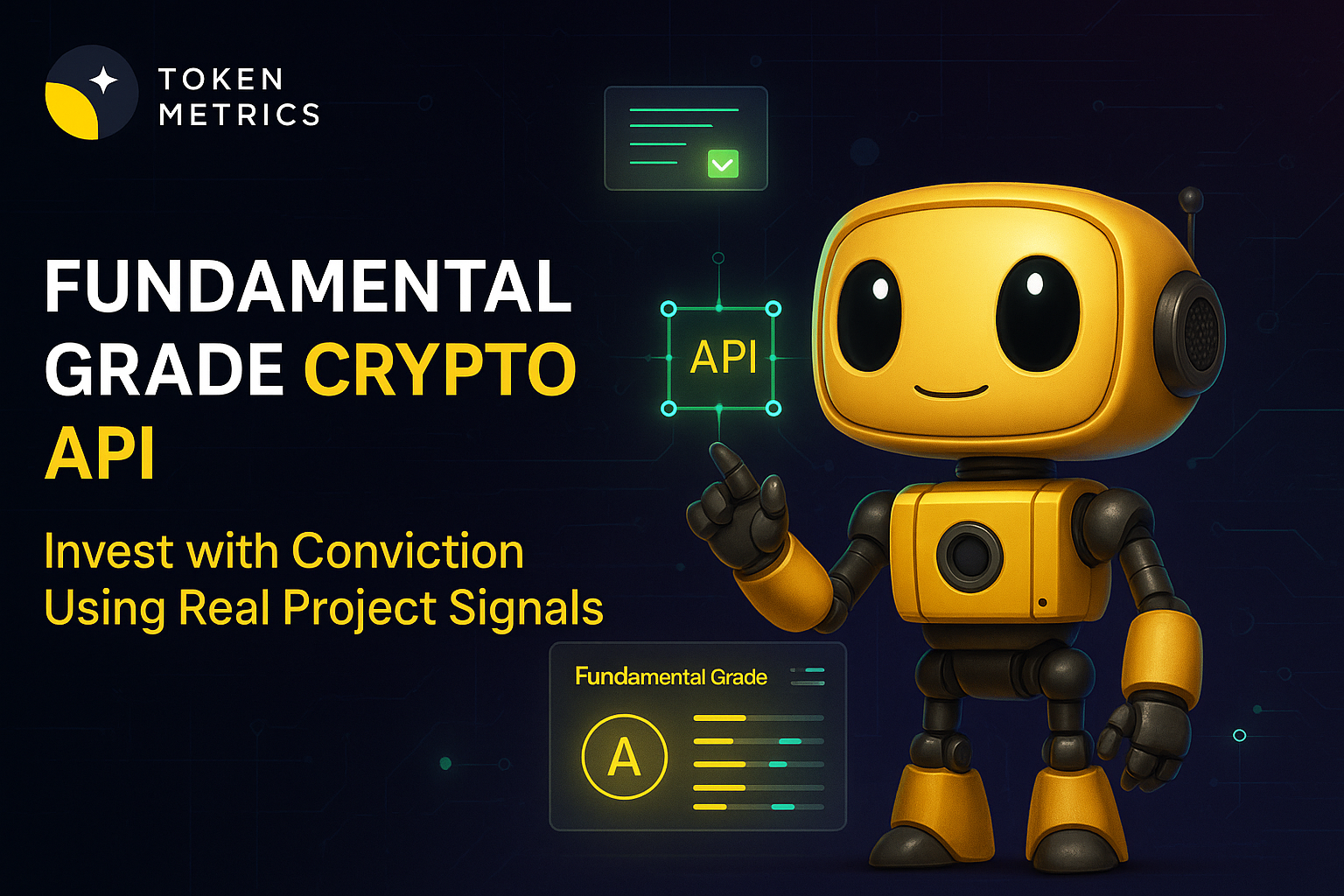
Fundamental Grade Crypto API: Invest with Conviction Using Real Project Signals

Token Metrics Team
4

Most traders chase price action; Fundamental Grade Crypto API helps you see the business behind the token—community traction, tokenomics design, exchange presence, VC signals, and DeFi health—consolidated into one score you can query in code. In a few minutes, you’ll fetch Fundamental Grade, render it in your product, and ship a due-diligence UX that drives trust. Start by grabbing your key at the Get API Key page, Run Hello-TM to verify your first call, then Clone a Template to go live fast.

What You’ll Build in 2 Minutes

A minimal script to fetch Fundamental Grade from /v2/fundamental-grade for any symbol (e.g., BTC).

  • Optional curl to smoke-test your key in seconds.
  • A drop-in pattern to display the grade + key drivers in dashboards, screeners, and research tools.

Endpoints to consider next:

  • /v2/tm-grade (technical/sentiment/momentum)
  • /v2/price-prediction (scenario planning)
  • /v2/resistance-support (risk levels)
  • /v2/quantmetrics (risk/return stats)

Why This Matters

Beyond price, toward quality. Markets are noisy—hype rises and fades. Fundamental Grade consolidates hard-to-track signals (community growth, token distribution, liquidity venues, investor quality, DeFi integrations) into a clear, comparable score. You get a fast “is this worth time and capital?” answer for screening, allocation, and monitoring.

Build trust into your product. Whether you run an investor terminal, exchange research tab, or a portfolio tool, Fundamental Grade lets users justify positions. Pair it with TM Grade or Quantmetrics for a balanced picture: what to buy (fundamentals) and when to act (signals/levels).

Where to Find The Fundamental Grade

The Fundamental Grade is easily accessible in the top right of the API Reference. Grab the cURL request for seamless access!

Build Smarter Crypto Apps & AI Agents with Token Metrics

Token Metrics provides real-time prices, trading signals, and on-chain insights all from one powerful API. Grab a Free API Key

How It Works (Under the Hood)

Fundamental Grade aggregates multiple project-quality signals into a normalized score and label (e.g., Strong / Average / Weak). Typical sub-signals include:

  • Community: momentum across channels (dev activity/user traction signals where applicable).
  • Tokenomics: supply schedule, distribution, unlock dynamics, incentives.
  • Exchange Presence: venue coverage, depth/liquidity proxies.
  • VC/Investor Signals: quality/durability of backing and ecosystem support.
  • DeFi Health: integrations, TVL context, composability footprint.

At query time, you call /v2/fundamental-grade with a symbol; responses include the overall score plus component scores you can visualize. For dashboards with many assets, batch fetches and short-TTL caching keep pages responsive. If you push alerts (e.g., “Fundamental Grade upgraded”), prefer webhooks or queued jobs to avoid hammering the API.

Production Checklist

  • Rate limits: Know plan caps; add client throttling and request queues.
  • Retries/backoff: Exponential backoff + jitter; surface actionable error messages.
  • Idempotency: Prevent duplicate downstream actions on retried calls.
  • Caching: Use memory/Redis/KV with short TTLs; pre-warm popular symbols.
  • Webhooks & jobs: For alerts, use signed webhooks or scheduled jobs; log delivery outcomes.
  • Pagination/Bulk: When covering many tokens, paginate or process in batches.
  • Error catalog: Map 4xx/5xx to user-visible fixes; log request IDs.
  • Observability: Track p95/p99 and error rate per endpoint; alert on spikes.
  • Security: Keep API keys in secrets managers; rotate regularly.

Use Cases & Patterns

  • Screener Maker: Rank tokens by Fundamental Grade, filter by market cap/sector, and add “rising fundamentals” badges for discovery.
  • Dashboard Builder: On each token page, show the headline grade with a component chart; link to methodology for transparency.
  • Research & PM Tools: Flag downgrades/upgrades to prompt re-evaluation; attach notes to component changes (e.g., DeFi health drop).
  • Allocator / Risk: Require a minimum Fundamental Grade before inclusion; rebalance only when grade crosses thresholds.
  • Community/Discord: Post weekly upgrades as digest messages with links back to your app.

Next Steps

  • Get API Key — generate a key and start free.
  • Run Hello-TM — verify your first successful call.
  • Clone a Template — deploy a screener or token page today.
  • Watch the demo: VIDEO_URL_HERE
  • Compare plans: Scale confidently with API plans.

FAQs

1) What does the Fundamental Grade API return?

A JSON payload with the overall score/grade plus component scores (e.g., community, tokenomics, exchange presence, VC backing, DeFi health) and timestamps. Use the overall grade for ranking and component scores for explanations.

2) How fast is the endpoint? Do you publish SLOs?

The API is engineered for predictable latency. For high-traffic dashboards, add short-TTL caching and batch requests; for alerts, use jobs/webhooks to minimize round-trips.

3) Can I combine Fundamental Grade with TM Grade or signals?

Yes. A common pattern is Fundamental Grade for quality filter + TM Grade for technical/sentiment context + Trading Signals for timing and Support/Resistance for risk placement.

4) How “accurate” is the grade?

It’s an opinionated synthesis of multiple inputs—not financial advice. Historical studies can inform usage, but past performance doesn’t guarantee future results. Always layer risk management and testing.

5) Do you offer SDKs and examples?

You can use REST directly (see JS/Python above). The docs include quickstarts, Postman, and ready-to-clone templates—start with Run Hello-TM.

Research

Indices Hub: Join the Waitlist for TM Global 100 (2025)

Token Metrics Team
5

If you’ve been waiting for a simple, rules-based way to own the Token Metrics Global 100—without micromanaging tokens—this hub is for you. The TM Global 100 is a rules-based crypto index that holds the top 100 assets in bull markets and moves to stablecoins in bear markets, with weekly rebalancing and transparent holdings/transaction logs you can verify at any time. It’s designed for hands-off allocators who want disciplined exposure and for active traders who want a core that adapts to regimes—without guesswork or endless rebalancing. Below you’ll find how it works, who it’s for, and exactly how to join the waitlist so you’re first in line when trading opens.

→ Join the waitlist to be first to trade TM Global 100.

Why Indices Matter in October 2025

Search intent right now: investors want credible, rules-based crypto exposure that can participate in upside while reducing drawdown pain. A crypto index is a basket of assets selected and maintained by rules—so you avoid one-off bets and constant manual rebalancing.

With liquidity rotating quickly across sectors, weekly rebalancing helps maintain alignment with current market-cap leaders, while regime switching provides a disciplined, pre-defined response to bearish conditions. The result is a clear, consistent process that removes emotional decision-making and operational drag.

Definition

A crypto index is a rules-based basket of digital assets that’s constructed, weighted, and rebalanced on a set schedule.

How the TM Global 100 Index Works (Plain English)

  • Regime switching: Bullish: Hold the top-100 crypto assets by market cap.
  • Bearish: Exit all positions into stablecoins and wait for a new bullish signal.
  • Weekly rebalancing: Reflects updated rankings and weights across the market-cap universe.
  • Transparency: Strategy modal shows methodology and thresholds; Gauge → Holdings Treemap → Transactions Log make every change visible.

What you’ll see on launch: Price tile, gauge (“rebalances weekly”), 100 tokens, one-click Buy Index flow, and a 90-second checkout via embedded wallet.‍See the strategy and rules.

Benefits at a Glance (Why This Beats DIY)

  • Time saved: No more manual coin-picking, sizing, and calendar rebalances.
  • Lower execution drag: One click vs. dozens of individual orders that can add slippage.
  • Stay current: Weekly rebalances help you capture market-cap changes without constant monitoring.
  • Discipline in drawdowns: Automatic switch to stablecoins removes panic decisions.
  • Radical visibility: Holdings treemap, table, and transactions log show what you own and what changed—every week.
  • Operational simplicity: Embedded wallet and a unified dashboard; no juggling chains and exchanges.

Step-by-Step: How to Get Early Access (Waitlist)

  1. Open the Indices Hub: Head to the Token Metrics Indices hub.
  2. Choose TM Global 100: Open the index page and review the Gauge → Strategy → Holdings.
  3. Join the Waitlist: Add your email to be notified the moment trading opens.
  4. (Optional) Connect Wallet: Pre-connect your wallet for a faster launch-day checkout.

Launch-Day Flow (~90 seconds): Tap Buy Index, review fees/slippage, confirm, and see your position in My Indices. Track Rebalances: After each weekly rebalance or regime change, check the Transactions Log for updates.

→ Join the waitlist to be first to trade TM Global 100.

Decision Guide: Is This Right for You?

  • Hands-Off Allocator: Want broad exposure without micromanaging? Yes—rules-based + weekly rebalances.
  • Active Trader: Need a core that sits in stables during bears while you hunt edges elsewhere? Fits.
  • TM Member/Prospect: Already trust Token Metrics research? This is the rules-based version of “own the market.”
  • Risk-Aware Newcomer: Prefer a clear framework over vibes? Methodology is visible and auditable.
  • DIY Basket Builder: Tired of missed rebalances and slippage? One click can reduce execution drag.
  • Data-First Analyst: Want to verify? See the holdings, weights, and transaction history anytime.

FAQs

1) What is a TM Global 100 index?

It’s a rules-based crypto index that holds the top 100 assets by market cap in bullish regimes and moves to stablecoins in bearish regimes. It rebalances weekly and shows transparent holdings and transactions.

2) How often does the index rebalance?

Weekly, with additional full-portfolio switches when the market regime changes.

3) What triggers the move to stablecoins?

A proprietary market signal. When bearish, the index exits all token positions into stablecoins and waits for a bullish re-entry signal.

4) Can I fund with USDC or fiat?

At launch, funding and settlement options surface based on the embedded wallet and supported chains. USDC payouts are supported for selling; additional entry options may be introduced later.

5) Is the wallet custodial?

No. The Embedded Wallet is self-custodial—you control your funds while using a streamlined, on-chain checkout.

6) How are fees shown?

Before you confirm, the Buy flow shows estimated gas, platform fee, maximum slippage, and the minimum expected value.

7) How do I join the waitlist?

Go to the Token Metrics Indices hub or the TM Global 100 strategy page and submit your email. We’ll notify you the moment trading opens.

Security, Risk & Transparency

  • Self-custody: Embedded smart wallet; you hold the keys.
  • 2FA & session hygiene: Use strong auth practices for your TM account.
  • Fee clarity: Gas, platform fee, and slippage are displayed before you confirm.
  • Auditability: Holdings, treemap, and transactions log are always visible.
  • Model limits: Regime logic can be wrong, and markets can gap; rules reduce discretion—not risk.
  • Regional availability: Product surfaces may vary by region as we expand.

Crypto is volatile and can lose value. Past performance is not indicative of future results. This article is for research/education, not financial advice.

Conclusion

If you want a disciplined, rules-based core that adapts to market regimes, Token Metrics Global 100 is built for you. Weekly rebalances, transparent holdings, and one-click buy remove operational friction so you can focus on your strategy.

→ Click here to get early access to Token Metrics indices.

Research

Top Crypto Index for Hands-Off Portfolios (2025)

Token Metrics Team
4

If you want broad exposure to cryptocurrencies without constant chart monitoring, a top crypto index offers a streamlined way to participate in the market. Token Metrics provides innovative tools to help you understand and access such indices efficiently.

Opening Hook

If you’re seeking an uncomplicated, rules-driven approach to crypto investing that adapts to market conditions, a top crypto index might be worth exploring. These indexes automate the process of capturing upside potential while managing risk during downturns, making crypto investing more accessible for a variety of investor profiles.

What is a Crypto Index?

A crypto index is a systematic, rules-based collection of digital assets that reflects a specific universe—such as the top 100 cryptocurrencies by market capitalization. It relies on transparent methodologies and scheduled rebalancing to ensure that the composition remains aligned with market dynamics. These indexes aim to provide broad exposure while reducing the need for individual asset management.

How Top Crypto Indexes Function in 2025

Many modern crypto indexes incorporate regime switching mechanisms: during bullish periods, they hold top assets; during bear markets, they shift to stablecoins to mitigate losses. Weekly rebalancing updates the constituents based on current market rankings, and transparency tools such as strategy descriptions, gauges, and transaction logs allow users to verify holdings and changes in real-time.

Benefits of Using a Crypto Index Over DIY Approaches

  • Time efficiency: Automates rebalancing and regime switching, saving manual effort.
  • Lower slippage: Executes large baskets with minimal impact on prices.
  • Consistency: Ensures regular rebalancing and discipline during volatile periods.
  • Transparency: Clear logs and dashboards allow for full accountability.
  • Speed: Simplified onboarding with quick allocation processes.

Getting Early Access to Top Crypto Indexes

To gain early exposure, follow these steps:

  1. Open the Token Metrics Indices hub.
  2. Select TM Global 100 and view its details.
  3. Tap “Join Waitlist” and enter your email (optionally connect your wallet).
  4. Review strategy criteria, holdings, and rebalancing rules.
  5. Once launched, connect your wallet, review estimated fees, and confirm your allocation.
  6. Funds appear in your index portfolio, enabling easy tracking and management.

Is This Index Suitable for You?

Consider your investment style:

  • Hands-Off Allocator: Ideal if you prefer broad market exposure with minimal management.
  • Active Trader: Use as a core component, complemented by higher-beta bets.
  • New to Crypto: Great for beginners seeking transparent exposure through simplified flows.
  • DIY Enthusiast: Replace complex basket-building with a rules-based index.
  • Self-Custody User: Benefit from integrated self-custodial wallets with clear transaction records.

FAQs

What is a top crypto index?

It is a rules-based basket that tracks a defined universe of digital assets—such as the top 100 by market cap—using transparent methodology and scheduled rebalancing.

How often does the index rebalance?

The index rebalances weekly, with regime switches occurring when market signals change, ensuring adaptability during different market cycles.

What prompts the move to stablecoins?

A proprietary market-regime signal triggers the transition, exiting token positions to stablecoins during bearish periods and re-entering when signals turn bullish.

Can I fund with USDC or fiat?

At launch, the embedded wallet will support supported funding options based on your chain or wallet. USDC payout is available upon sale; further options may follow.

Is the wallet custodial?

No. It’s an embedded, self-custodial smart wallet—giving you full control over your private keys and funds.

How are fees shown?

Estimated gas, platform fee, slippage, and minimum expected value are displayed before you confirm the transaction, providing full transparency.

How do I join the waitlist?

Visit the Token Metrics Indices hub or the TM Global 100 page, tap “Join Waitlist,” and follow the instructions to register your interest and prepare for launch.

Disclaimer

Crypto assets are highly volatile and can result in significant losses. Past performance does not guarantee future results. This content is for research and educational purposes only and not financial advice.

Choose from Platinum, Gold, and Silver packages
Reach with 25–30% open rates and 0.5–1% CTR
Craft your own custom ad—from banners to tailored copy
Perfect for Crypto Exchanges, SaaS Tools, DeFi, and AI Products