Text Link
Text Link
Text Link
Text Link
Text Link
Thank you! Your submission has been received!
Oops! Something went wrong while submitting the form.

Stop Guessing, Start Trading: The Token Metrics API Advantage

Announcements

Big news: We’re cranking up the heat on AI-driven crypto analytics with the launch of the Token Metrics API and our official SDK (Software Development Kit). This isn’t just an upgrade – it's a quantum leap, giving traders, hedge funds, developers, and institutions direct access to cutting-edge market intelligence, trading signals, and predictive analytics.

Crypto markets move fast, and having real-time, AI-powered insights can be the difference between catching the next big trend or getting left behind. Until now, traders and quants have been wrestling with scattered data, delayed reporting, and a lack of truly predictive analytics. Not anymore.

The Token Metrics API delivers 32+ high-performance endpoints packed with powerful AI-driven insights right into your lap, including:

  • Trading Signals: AI-driven buy/sell recommendations based on real-time market conditions.
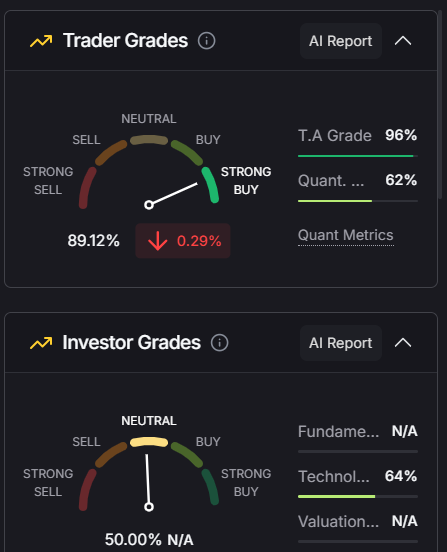
  • Investor & Trader Grades: Our proprietary risk-adjusted scoring for assessing crypto assets.
  • Price Predictions: Machine learning-powered forecasts for multiple time frames.
  • Sentiment Analysis: Aggregated insights from social media, news, and market data.
  • Market Indicators: Advanced metrics, including correlation analysis, volatility trends, and macro-level market insights.

Getting started with the Token Metrics API is simple:

  1. Sign up at www.tokenmetrics.com/api
  2. Generate an API key and explore sample requests.
  3. Choose a tier–start with 50 free API calls/month, or stake TMAI tokens for premium access.
  4. Optionally–download the SDK, install it for your preferred programming language, and follow the provided setup guide.

At Token Metrics, we believe data should be decentralized, predictive, and actionable. 

The Token Metrics API & SDK bring next-gen AI-powered crypto intelligence to anyone looking to trade smarter, build better, and stay ahead of the curve. With our official SDK, developers can plug these insights into their own trading bots, dashboards, and research tools – no need to reinvent the wheel.

Research

Understanding Zero Knowledge Proof: Revolutionizing Privacy and Scalability in Blockchain Technology

Talha Ahmad
5 min
MIN

In the rapidly evolving landscape of blockchain technology, zero knowledge proofs (ZKPs, or zero knowledge proof zkp) have emerged as one of the most transformative innovations, addressing two critical challenges that have long plagued the industry: privacy and scalability. At a high level, zero knowledge proofs are a type of cryptographic proof that enables one party to prove the validity of a statement to another party without revealing any additional information beyond the fact that the statement is true. This cryptographic proof provides privacy and security in blockchain applications, such as transaction validation and identity verification. Zero knowledge proofs represent a revolutionary advance in computational integrity and privacy technology, enabling the secure and private exchange of information without revealing underlying private data. As we navigate through 2025, understanding zero knowledge proof systems has become essential for anyone involved in cryptocurrency trading, DeFi protocols, or blockchain development. Emerging trends like zk-SNARKs and hardware acceleration are driving the blockchain world toward rapid scalability and secure interoperability.

Understanding Zero Knowledge Proofs: The Foundation

Zero knowledge proofs are a powerful cryptographic method that allows one party to prove knowledge of specific data to another party without revealing the data itself. In other words, a prover can convince a verifier that a particular statement is true without disclosing any secret information or other data beyond the statement’s validity. This capability is crucial for preserving user privacy while enabling trustless verification.

The core of zero knowledge proofs lies in the three properties: completeness, soundness, and zero knowledge. Completeness ensures that if the statement is true, an honest verifier will be convinced by an honest prover. For example, if a prover claims to know a secret password, completeness guarantees that the verifier will accept the proof if the prover is truthful. Soundness guarantees that if the statement is false, no dishonest prover can convince the honest verifier otherwise, preventing fraud or deception. The zero-knowledge property ensures that the verifier learns nothing beyond the fact that the statement's truth has been established; no additional knowledge or secret information is revealed during the process.

To explain zero knowledge protocols, consider the classic 'Where's Wally?' scenario. Here, two parties are involved: the prover P, who claims to know Wally's location (the secret), and the verifier. The goal is proving knowledge of Wally's location without revealing it. The protocol works as follows: the verifier randomly chooses which path the prover P must take to reach Wally. The prover P then demonstrates their knowledge by successfully navigating the chosen path. This process is repeated multiple times, and each time, the verifier observes through a small hole—an analogy for seeing just enough to confirm the claim without revealing Wally's location or any other details. What is proved is that the prover P knows Wally's location, not the secret itself. The act of proving is done without revealing any information about Wally's location; the protocol reveals nothing about the secret. This example proves the prover's knowledge and captures the essence of zero knowledge protocols, where the verifier gains confidence in the statement's truth while the secret remains protected.

Proof Systems: Types and Structures in Zero Knowledge

Zero knowledge proof systems come in several distinct forms, each designed to address different security and efficiency requirements in cryptographic protocols. At their core, these proof systems enable one party—the prover—to convince another party—the verifier—that a specific statement is true, all without revealing any secret information or additional data beyond the statement’s validity.

One of the foundational structures in zero knowledge is the interactive proof system. In this approach, the prover and verifier engage in multiple rounds of communication, with the verifier issuing challenges and the prover responding to demonstrate knowledge. This interactive process is essential for certain applications where dynamic verification is required, and it forms the basis for many early zero knowledge protocols.

Beyond interactive proof systems, there are statistical zero knowledge and computational zero knowledge proof systems. Statistical zero knowledge relies on probabilistic techniques to ensure that, even if the verifier is dishonest, they cannot extract meaningful information about the secret, except with negligible probability. Computational zero knowledge, on the other hand, leverages advanced mathematics and the assumed hardness of problems like the discrete logarithm problem to guarantee that, for any efficient adversary, the secret remains secure.

Modern developments have introduced succinct non-interactive arguments of knowledge (SNARKs), which allow users to generate a proof that can be verified quickly and without the need for back-and-forth communication. These non-interactive proof systems are particularly valuable for blockchain applications, where efficiency and scalability are paramount.

The security of these zero knowledge proof systems is rooted in their three essential properties: completeness (an honest prover can always convince an honest verifier), soundness (a dishonest prover cannot convince the verifier of a false statement, except with negligible probability), and zero knowledge (the verifier learns nothing beyond the truth of the statement). By combining these properties with robust mathematical foundations, zero knowledge protocols empower users to prove possession of knowledge or credentials without revealing the underlying secret information, making them a cornerstone of privacy-enhancing technologies in the digital age.

The 2025 ZKP Revolution and Hardware Acceleration

In 2025, zero knowledge proofs are revolutionizing online privacy and security by enabling proofs without revealing secrets or sensitive personal information. This transformation is particularly significant for regulated industries, where data breaches can lead to severe penalties and loss of user trust. Zero knowledge proof systems allow organizations to prove compliance or transaction validity while preserving user privacy and protecting sensitive data.

One of the key trends driving this revolution is hardware acceleration technology. Creating zero knowledge proofs often requires substantial computational power due to the complex mathematical operations involved. The process of generating a proof begins with a given input, which is the data or statement to be proved without revealing the underlying information. Some zero-knowledge proof systems require a trusted setup to securely generate cryptographic parameters before proofs can be created. Specialized hardware accelerators now assist developers in generating proofs more efficiently, making zero knowledge protocols practical and cost-effective for widespread adoption. This advancement is critical for scaling zero knowledge proof systems to support real-world applications with high throughput and low latency.

ZK-Rollups: Scaling Blockchain Infrastructure

Among the most impactful applications of zero knowledge proofs in 2025 are ZK-rollups, which address blockchain scalability challenges by bundling hundreds or thousands of transactions off-chain into a single succinct cryptographic proof posted on-chain. This approach significantly reduces gas fees and network congestion while maintaining security and data integrity.

ZK-rollups operate as layer 2 scaling solutions that shift computation and state storage off the main Ethereum blockchain. They use zero knowledge proofs to validate the correctness of off-chain transactions, enabling a high transaction throughput without compromising security. After processing transactions off-chain, a succinct non-interactive cryptographic proof—often a zk-SNARK—is posted to the mainnet, allowing the network to efficiently verify the validity of the entire batch. The process of verifying these cryptographic proofs ensures the correctness and authenticity of all included transactions without revealing sensitive information.

The efficiency gains are remarkable. For example, in a privacy-preserving withdrawal scenario, a zero knowledge rollup requires only about 296 bytes per transaction, combining essential elements like the root index, nullifier, recipient data, and the zk-SNARK proof. This represents a 77-fold efficiency increase compared to processing transactions directly on layer 1, highlighting the scalability potential of zero knowledge proof systems.

Leading ZK-Rollup Projects and 2025 Ecosystem Growth

The ZK-rollup ecosystem has experienced explosive growth in 2025, with several projects leading the charge to solve scalability challenges while maintaining security and decentralization. Ethereum-based ZK-rollups have become synonymous with enhanced scalability, improved transaction throughput, and reduced gas fees, all while preserving data privacy and integrity.

One prominent example is zkSync, which continues to evolve as a major player by enabling banks and enterprises to future-proof finance and expand into global digital assets with privacy and regulatory compliance. Projects like zkSync leverage advanced cryptographic protocols and are fundamentally built on top of a zero knowledge proof system to deliver scalable, secure, and privacy-preserving blockchain solutions. These ZK-rollup initiatives are not only improving blockchain infrastructure but also opening new investment opportunities in the decentralized finance space throughout 2025.

Token Metrics: Leading ZKP Analysis and Recognition

In the dynamic ZKP landscape of 2025, analytics platforms play a crucial role in identifying promising projects and market opportunities. Token Metrics has established itself as a premier AI-powered crypto trading and analytics platform, revolutionizing crypto investing with automated trading and real-time insights focused on zero knowledge proof technologies.

Token Metrics’ AI platform provides comprehensive analysis of ZK projects, including ZK-rollups, privacy coins, and infrastructure developments. By leveraging machine learning and data-driven methodologies, Token Metrics helps traders and investors navigate the complex zero knowledge proof ecosystem, identifying trends and evaluating tokenomics and technical progress. The platform also evaluates projects based on factors such as scalability, security, and knowledge complexity of their zero-knowledge proof systems.

The Token Metrics Moon Awards further highlight the most innovative and impactful ZK technologies, recognizing platforms and projects that significantly advance privacy-enhancing technologies and scalability solutions. Through these initiatives, Token Metrics continues to support the growth and maturation of zero knowledge proof systems in the blockchain industry.

Real-World Applications and Use Cases

Zero knowledge proofs have far-reaching applications beyond simple transaction privacy. By enabling cryptographic proofs that verify conditions without revealing secret information, zero knowledge protocols empower developers to create secure and privacy-preserving decentralized applications.

Key use cases include:

  • Identity Verification: Users can prove attributes such as age, citizenship, or credentials without disclosing personal details, protecting identity while complying with regulatory requirements.
  • Supply Chain Management: Companies can verify the authenticity and origin of products without exposing proprietary supply chain data or trade secrets.
  • Financial Privacy: Individuals can prove eligibility for loans or investments without revealing exact income or asset details, enhancing transaction privacy.
  • Regulatory Compliance: Organizations can demonstrate compliance with legal frameworks while safeguarding internal operations and customer data from exposure.

Zero-knowledge proofs can also be used to verify other properties of data, such as account balances or location, without revealing the actual information.

These examples showcase how zero knowledge proofs enable secure, private, and efficient verification across diverse industries, enhancing user privacy and transaction privacy simultaneously.

Technical Challenges and Security Considerations

Despite their promise, zero knowledge proof systems face significant technical and security challenges. The advanced mathematics underlying zero knowledge protocols—such as discrete logarithm problems, quadratic residuosity, prime factorization, and one-way functions—require specialized expertise to implement securely and efficiently.

Ensuring the completeness, soundness, and perfect zero knowledge of proofs demands rigorous testing and formal verification. Circuit-layer vulnerabilities and the risk of dishonest provers attempting to cheat the system must be carefully mitigated. Additionally, the complexity of interactive proofs—protocols that require multiple rounds of communication between the prover and verifier—presents unique challenges. The concurrent execution of multiple zero-knowledge protocols further complicates the design, as maintaining security during concurrent interactions is difficult and often requires specialized protocols like witness-indistinguishability.

To address these issues, the development of user-friendly ZKP frameworks and hardware accelerators is underway, abstracting much of the cryptographic complexity and enabling more secure and scalable implementations. Research into scalable transparent argument systems and succinct non-interactive zero knowledge proofs (SNARKs) continues to advance the field, reducing reliance on trusted setups and enhancing proof validity.

Regulatory Environment: Navigating Compliance and Legal Frameworks

As zero knowledge proofs become integral to blockchain, finance, and digital identity systems, the regulatory environment is rapidly adapting to address their unique capabilities and challenges. Regulatory bodies worldwide are recognizing the potential of zero knowledge proof systems to enhance privacy and security, while also raising important questions about compliance and oversight.

A central issue is how zero knowledge proofs can be used to prove identity, ownership, or compliance without revealing sensitive personal data. This ability to verify statements without revealing underlying information is both a strength and a challenge when it comes to meeting anti-money laundering (AML) and know-your-customer (KYC) requirements. Regulators are exploring how proof systems can be designed to satisfy legal obligations while still protecting user privacy.

In the United States, the Securities and Exchange Commission (SEC) has begun to issue guidance on the use of zero knowledge proofs in blockchain-based securities offerings, emphasizing the need for transparency and market integrity. Meanwhile, the European Union’s General Data Protection Regulation (GDPR) places a strong emphasis on user data protection and control. Zero knowledge protocols offer a promising solution by allowing organizations to prove compliance with data protection laws without revealing or storing unnecessary personal information.

Navigating this evolving regulatory landscape requires a deep understanding of both the technical aspects of zero knowledge proofs and the legal frameworks that govern their use. Collaboration between developers, industry stakeholders, and regulators is essential to ensure that zero knowledge proof systems are developed and deployed in a way that upholds compliance, protects user rights, and fosters innovation. As adoption grows, ongoing dialogue and adaptive regulation will be key to unlocking the full potential of zero knowledge technologies while maintaining trust and accountability in digital systems.

Market Trends and Investment Opportunities in 2025

The market for zero knowledge proof technologies is booming in 2025, with growing interest in modular blockchain architectures that integrate ZK-rollups and other privacy-enhancing technologies. The 2nd IEEE International Workshop on Programmable Zero-Knowledge Proofs for Decentralized Applications (ZKDAPPS 2025) underscores the academic and industry focus on advancing ZKP research and practical applications.

Investors are increasingly drawn to infrastructure projects building ZKP tooling, privacy-focused DeFi protocols, and layer 2 scaling solutions. Token Metrics provides invaluable insights into these opportunities, assisting investors in identifying high-growth prospects within the zero knowledge proof ecosystem. As the technology matures, the market is expected to expand further, driven by demand for secure, private, and scalable blockchain solutions.

Future Outlook and Industry Impact

Zero knowledge blockchain projects are poised to become foundational for the next generation of decentralized applications, enabling developers to build scalable Web3 ecosystems that prioritize user privacy and security. The zero knowledge protocol, a fundamental cryptographic innovation, plays a crucial role in enabling privacy and security by allowing verification without revealing sensitive information. As regulatory pressures and user expectations converge, zero knowledge proofs will become standard infrastructure components for blockchain applications requiring both transparency and confidentiality.

The balance between transparency and privacy, scalability and security, positions zero knowledge proofs as critical tools for mainstream blockchain adoption. Organizations recognize that sustainable blockchain solutions must integrate powerful cryptographic tools like zero knowledge protocols to protect identity, data, and transaction privacy while ensuring system integrity.

Conclusion

Zero knowledge proofs represent a paradigm shift in how privacy and scalability are addressed in blockchain technology throughout 2025. From ZK-rollups transforming Ethereum’s scalability to privacy-preserving DeFi applications, zero knowledge proofs are reshaping the cryptocurrency landscape with hardware acceleration and advanced cryptographic innovations.

For investors and traders, understanding zero knowledge proof technology and its market implications is crucial for making informed decisions. Platforms like Token Metrics offer the analytical tools and insights needed to navigate this complex but promising sector. As we progress through 2025, zero knowledge proofs will continue to drive innovation and create new opportunities for those positioned to capitalize on this revolutionary technology.

The future of blockchain lies in solutions that provide both transparency and privacy, scalability and security. Zero knowledge proofs are the key to unlocking this future, making them essential knowledge for anyone serious about the direction of cryptocurrency and blockchain technology.

Research

The Ultimate Guide to Web3 Wallets: Security, Trends, and Smart Trading in 2025

Talha Ahmad
5 min
MIN

The Web3 revolution is fundamentally transforming how users interact with digital assets, and at the core of this transformation are Web3 wallets. Before the rise of Web3 wallets, the crypto wallet was the essential tool for securely managing and storing cryptocurrencies, with Web3 wallets representing an evolution of the traditional crypto wallet. These digital wallets serve as essential gateways, providing access to the decentralized web by enabling seamless interactions with blockchain networks, decentralized applications (dApps), and a wide array of crypto assets. As we advance into 2025, gaining a thorough understanding of Web3 wallets is crucial for anyone looking to actively participate in the evolving cryptocurrency ecosystem.

What Makes Web3 Wallets Essential?

Web3 wallets go far beyond being mere storage solutions for cryptocurrencies. They function as comprehensive digital identity managers, allowing users to securely store, manage, and transfer valuable digital assets while retaining complete control over their private keys. Unlike traditional banking systems or custodial wallets, where institutions hold custody of your funds, Web3 wallets embody the principle of self-custody and true ownership, giving users complete control over their crypto assets. A non custodial wallet, such as Metamask, ensures that only the user has access to their assets and keys, aligning with the principles of decentralization and user sovereignty.

A key difference between Web3 wallets and conventional crypto wallets lies in their ability to interact directly with blockchain networks. While traditional wallets typically support only basic send-and-receive functions, Web3 wallets enable users to connect with smart contracts, decentralized exchanges, NFT marketplaces, and various decentralized finance (DeFi) protocols. These wallets use a public key, which acts as a shareable address derived from the private key, allowing others to send assets to you. The private key is essential for signing transactions and proving ownership, and it must be kept secure to protect your assets. This enhanced functionality makes Web3 wallets indispensable tools for accessing the full spectrum of decentralized finance opportunities and engaging with the decentralized web.

Current Market Landscape and Security Trends

The security market for Web3 wallets is rapidly expanding, with projections estimating a compound annual growth rate (CAGR) of 23.7% from 2024 to 2033, reaching an impressive $68.8 billion by 2033. This growth underscores the critical importance of wallet security as users increasingly entrust these digital wallets with their valuable digital assets.

Recent studies reveal mixed security practices among users: approximately 34.65% of users opt to record and securely store their private keys on paper, 24.75% use encrypted digital storage methods, and only 13.86% rely on professional hardware wallets. These statistics highlight a significant gap in adoption of enhanced security measures, such as hardware wallets, which store private keys offline and provide maximum security.

The security landscape in 2024 has also been challenged by increasingly sophisticated phishing attacks and other cyber threats targeting both decentralized and centralized finance platforms. This evolving threat environment emphasizes the need for robust wallet security measures and comprehensive user education to protect assets effectively.

Types of Web3 Wallets: Finding Your Perfect Match

Hot Wallets vs. Cold Wallets

Web3 wallets come in two primary categories: hot wallets and cold wallets. Hot wallets remain connected to the internet, offering unmatched convenience for frequent transactions and interactions with decentralized applications. Examples include browser extensions like MetaMask, mobile apps such as Trust Wallet, and various web-based wallets. Many hot wallets also feature a built-in dapp browser, enabling users to access and interact with decentralized applications (dApps) directly from within the wallet. These wallets provide an easy-to-use interface and support multichain functionality, allowing users to manage assets across multiple blockchains. However, their constant online connectivity exposes them to higher security risks.

In contrast, cold wallets—often referred to as hardware wallets—store private keys offline, significantly reducing exposure to hacking attempts. Popular hardware wallets like Ledger and Trezor exemplify this category, providing enhanced security for long-term storage of crypto assets. While cold wallets may be less convenient for everyday trading, they offer the highest level of security and are widely regarded as the gold standard for safeguarding valuable digital assets.

Custodial vs. Non-Custodial Solutions

Another important distinction is between custodial and non-custodial wallets. Custodial wallets manage private keys on behalf of users, providing familiar login experiences and recovery options similar to traditional online services. Wallets like Coinbase Wallet fall into this category, appealing to newcomers who prefer institutional custody and the convenience of account recovery options. However, custodial wallets require users to trust third-party services, which conflicts with the Web3 ethos of decentralization and self-sovereignty.

Non-custodial wallets, on the other hand, give users complete control over their private keys and funds. This approach aligns with the decentralized web’s core principles, ensuring users have true ownership and control over their digital assets. While non-custodial wallets demand greater personal responsibility—such as securely managing recovery phrases—they empower users with enhanced privacy and freedom. The recovery phrase is a human-readable backup that allows users to restore access to their wallet if needed.

Browser Extensions and Wallets: Convenience Meets Security

Browser extensions and wallets have become a popular choice for users looking to manage digital assets and interact with decentralized applications (dApps) directly from their web browsers. These browser extensions, such as MetaMask, offer a streamlined and user-friendly interface, making it easy to store, send, and receive cryptocurrencies, as well as interact with smart contracts on various blockchain networks. The convenience of accessing your wallet and assets with just a few clicks has made browser extensions a go-to solution for many in the Web3 space.

However, this convenience comes with its own set of security considerations. Because browser extensions are connected to the internet, they can be susceptible to phishing attacks and other security threats targeting users’ private keys and digital assets. To keep your wallet secure, it’s crucial to choose reputable and well-reviewed browser extensions, regularly update your wallet software, and remain vigilant against suspicious links or pop-ups.

For users seeking enhanced security, pairing a browser extension with a hardware wallet is highly recommended. Hardware wallets store private keys offline, significantly reducing the risk of unauthorized access even if your browser extension is compromised. This combination allows users to interact with decentralized applications and sign transactions securely, ensuring that private keys never leave the safety of the hardware wallet. By following these best practices, users can enjoy the convenience of browser extensions while keeping their digital assets and private keys protected.

User Experience and Interface: Designing for the Next Billion Users

As Web3 wallets aim to reach mainstream adoption, delivering an exceptional user experience and intuitive interface is more important than ever. The next generation of users will expect wallets to be as easy to use as traditional financial apps, without needing to understand the complexities of blockchain technology. To meet these expectations, wallet developers are focusing on user-centric design, ensuring that every feature and interaction is clear, accessible, and straightforward.

Key features such as two-factor authentication, transaction verification, and clear asset management tools are becoming standard, providing users with both security and peace of mind. Wallet interfaces should present information in a concise and understandable way, guiding users through each step of managing their digital assets. Adaptability is also crucial—wallets must offer a seamless experience across mobile devices, desktops, and browser extensions, so users can access their assets wherever they are.

By prioritizing intuitive design and robust security features, Web3 wallets can lower the barrier to entry for new users and make managing digital assets a smooth, stress-free experience. This focus on user experience is essential for onboarding the next billion users into the decentralized web.

User Journeys and Onboarding: Making Web3 Accessible

A seamless user journey and onboarding process are essential for making Web3 wallets accessible to everyone, regardless of their technical background. The best wallets guide users step-by-step through creating a wallet, securing their digital assets, and interacting with decentralized applications. Clear instructions, interactive tutorials, and responsive customer support help users feel confident as they navigate the world of Web3.

User education is a cornerstone of effective onboarding. Leading wallets provide comprehensive resources, including guides on security best practices, explanations of key concepts, and tips for safely managing assets. This educational approach empowers users to make informed decisions and reduces the risk of costly mistakes.

By simplifying the onboarding process and offering robust support, Web3 wallets can help users quickly get started, securely store their assets, and begin interacting with the decentralized ecosystem. Making Web3 technology approachable and understandable is key to driving widespread adoption and ensuring users can fully benefit from the opportunities it offers.

Earning Rewards and Incentives: Maximizing Wallet Benefits

Web3 wallets are not just tools for storing and managing digital assets—they also open the door to a variety of rewards and incentives. Many wallets, including Trust Wallet and Coinbase Wallet, offer users the ability to earn rewards through staking, yield farming, and participation in decentralized finance (DeFi) protocols. These opportunities can provide a valuable source of passive income, making wallets even more attractive for users looking to grow their assets.

To maximize these benefits, users should conduct their own research and carefully review the terms and conditions of each reward program. Understanding the risks, requirements, and potential returns is essential for making informed decisions. Wallets that prioritize transparency make it easy for users to discover, compare, and participate in different earning opportunities.

By taking advantage of these reward programs, users can enhance their Web3 experience and unlock additional value from their digital assets. As wallets continue to innovate, expect even more ways to earn rewards and participate in the decentralized economy directly from your wallet interface.

2025 Development Trends Shaping the Future

The Web3 wallet industry is evolving rapidly, with 2025 poised to accelerate innovations that position wallets as essential infrastructure for digital life. Several key trends are shaping this future landscape:

Enhanced User Experience: Developers are striving to create wallet software that combines Web2-like simplicity with full Web3 functionality. This includes streamlined onboarding, intuitive interfaces, and seamless integration with everyday apps, making it easier for users to connect, verify, and manage their assets.

Multi-Chain Interoperability: Modern wallets increasingly support multiple blockchains, allowing users to store and manage tokens, NFTs, and other digital assets across various ecosystems from a single interface. This multichain support addresses the fragmented blockchain landscape and simplifies asset management.

Advanced Security Features: Security remains paramount, with wallets adopting biometric authentication, multi-signature capabilities, and AI-powered fraud detection to significantly reduce risks. These added security layers help users maintain wallet security and protect against phishing attacks and unauthorized transactions.

Social Recovery Options: New wallet architectures are incorporating social recovery mechanisms, enabling users to regain access to their wallets through trusted contacts instead of relying solely on recovery phrases. This innovation enhances account recovery without compromising security.

Smart Trading with Analytics Platforms

While Web3 wallets provide the essential infrastructure to store and manage crypto assets, many now allow users to buy, sell, and swap cryptocurrencies directly within the wallet interface, making asset management more efficient. Successful trading in the complex cryptocurrency market requires sophisticated analytics and market intelligence. Platforms like Token Metrics are becoming invaluable resources for traders and investors seeking data-driven insights.

Token Metrics leverages artificial intelligence and machine learning to offer comprehensive crypto research, token ratings, price predictions, and portfolio optimization tools. This next-generation platform consolidates trading signals, market trend analysis, and index data, empowering users to make informed decisions in a highly volatile and sentiment-driven market.

By combining traditional financial analysis with cutting-edge AI technology, Token Metrics helps users identify potential crypto moonshots, optimize their portfolios, and manage risk effectively. This integration of analytics with wallet functionality enables users to authorize transactions confidently and interact with decentralized applications more strategically.

Security Best Practices for Web3 Wallet Users

Maintaining wallet security is critical for protecting your digital assets. Here are essential security practices every Web3 wallet user should follow:

Seed Phrase Management: Always store your recovery phrase securely in multiple physical locations, preferably using durable metal backup solutions. Avoid storing seed phrases digitally or sharing them with anyone to prevent unauthorized access.

Transaction Verification: Before authorizing any transaction, carefully verify recipient addresses, transaction details, and smart contract interactions. Vigilance helps defend against phishing attacks and fraudulent transactions. When swapping tokens within your Web3 wallet, always double-check all information to avoid errors or falling victim to scams.

Regular Updates: Keep your wallet software, including browser extensions and mobile apps, up to date. Enable automatic updates where possible to benefit from the latest security patches and enhanced features.

Network Awareness: Exercise caution when connecting to public Wi-Fi networks and consider using VPN services to add privacy layers, reducing exposure to potential network-based attacks.

Exchanges and Wallet Integration: Bridging CeFi and DeFi

The integration of exchanges and wallets is playing a pivotal role in bridging the gap between centralized finance (CeFi) and decentralized finance (DeFi). Modern Web3 wallets are increasingly offering seamless connectivity with both centralized exchanges and decentralized platforms, allowing users to manage, swap, and transfer assets across multiple ecosystems without leaving their wallet interface.

This integration enables users to enjoy the liquidity, speed, and familiar features of centralized exchanges while also accessing the transparency, control, and innovative services of DeFi protocols. Features such as in-wallet token swaps, fiat on-ramps, and direct access to decentralized applications are becoming standard, making it easier than ever to move assets between CeFi and DeFi environments.

By supporting multiple blockchains and exchange integrations, Web3 wallets empower users with true ownership and flexibility over their digital assets. This convergence is driving the next generation of financial services, where users can interact with both traditional and decentralized platforms from a single, secure wallet—unlocking new possibilities for trading, investing, and managing crypto assets in 2025 and beyond.

Integration with DeFi and Future Opportunities

Web3 wallets are increasingly serving as gateways to the expanding decentralized finance ecosystem. They enable users to participate in yield farming, liquidity mining, decentralized exchanges, and lending protocols with ease. The integration between wallets and DeFi platforms is deepening, with features like gas optimization, transaction batching, and automated strategy execution becoming more common.

Looking ahead, wallets are expected to incorporate built-in DeFi functionalities, direct fiat on-ramps, and advanced portfolio management tools. This evolution will further blur the lines between traditional finance and decentralized alternatives, empowering users to earn rewards, swap tokens, collect NFTs, and manage assets across multiple chains—all from a single, secure digital wallet.

Conclusion

Web3 wallets form the foundational infrastructure that enables users to engage confidently with the decentralized economy. As the market evolves with enhanced security features, improved user experiences, and deeper DeFi integration, selecting the right wallet becomes increasingly important for both casual holders and active traders.

Understanding the differences between wallet types, adopting best security practices, and leveraging powerful analytics platforms like Token Metrics will empower users to manage their crypto assets securely and make smarter trading decisions. The future of Web3 wallets is bright, with ongoing innovation focused on making decentralized finance accessible, secure, and user-friendly.

As we progress through 2025, Web3 wallets will continue to play a pivotal role in our digital financial lives, offering users complete control, enhanced security, and seamless interaction with the decentralized web. Embracing these tools is essential for anyone seeking to thrive in the next generation of the internet.

Research

Solana vs Bitcoin vs Ethereum: The Ultimate 2025 Cryptocurrency Showdown

Talha Ahmad
5 min
MIN

As we navigate through 2025, the cryptocurrency landscape continues to evolve at a breakneck speed, with three giants dominating the conversation: Solana, Bitcoin, and Ethereum. These crypto coins represent distinct visions for the future of blockchain technology, each offering unique features and advantages that appeal to different segments of the market. Cryptocurrencies are increasingly viewed as an alternative to traditional currencies and assets, providing new options for storing and transferring value.

Understanding the key differences between Solana vs Bitcoin vs Ethereum is crucial for investors, developers, and crypto enthusiasts who want to stay ahead in this rapidly changing industry. Recent developments, such as the SEC approval of a Bitcoin ETF, have made Bitcoin more accessible to a broader audience, encouraging easier entry into cryptocurrency investing.

Introduction to Cryptocurrencies

Cryptocurrencies are decentralized digital currencies that leverage cryptography to ensure secure and transparent transactions across a global network. Since the inception of Bitcoin, the crypto market has expanded rapidly, introducing a diverse range of crypto coins that serve various purposes. While many investors are drawn to trading crypto for its potential returns, others see cryptocurrencies as a way to participate in decentralized finance (DeFi) protocols or to buy Bitcoin as a long-term store of value.

Unlike Bitcoin, which primarily functions as a decentralized digital currency and a hedge against traditional financial systems, other blockchain platforms like Ethereum and Solana have evolved to power decentralized applications and smart contracts. The Solana blockchain, for example, is renowned for its high-speed, low-cost transactions, making it a popular choice among developers and investors seeking scalable solutions. As the crypto market matures, these platforms continue to drive innovation, offering new ways to store, transfer, and create value in a secure and decentralized manner.

Current Market Position: September 2025 Snapshot

The crypto market in 2025 has matured significantly, marked by increased institutional adoption and broader mainstream acceptance. As of September 15, 2025, Solana (SOL) is trading at an impressive price of $235.69, boasting a market capitalization of $138.75 billion. This represents remarkable growth from its previous lows and highlights Solana’s rise as a serious competitor in the blockchain space.

Meanwhile, Bitcoin (BTC) remains solidly above $118,000, reinforcing its status as digital gold and a reliable store of value. Ethereum (ETH), on the other hand, is on track for a consistent recovery, driven by ongoing upgrades and expanding use cases. This overall bullish sentiment reflects the growing confidence investors have in these leading blockchain platforms.

For traders and analysts seeking comprehensive insights into the crypto market, Token Metrics stands out as a premier crypto trading and analytics platform. It offers advanced AI-driven analysis, price predictions, and portfolio optimization tools that help thousands of investors navigate the volatile cryptocurrency market with confidence.

Bitcoin: The Digital Gold Standard

Bitcoin continues to reign as the undisputed king of cryptocurrencies, widely regarded as the original decentralized digital currency and a trusted store of value. Unlike traditional currencies, Bitcoin operates independently of any central bank, further emphasizing its decentralized nature. Its primary value proposition lies in its role as digital gold—a decentralized store of value that serves as a hedge against the traditional banking system and fiat currencies like the dollar.

Institutional adoption of Bitcoin has accelerated in 2025, with an increasing number of corporations adding BTC to their treasury reserves. This growing acceptance underscores Bitcoin’s reputation as a safe haven asset in times of economic uncertainty. The Bitcoin decentralized network enables secure, peer-to-peer transactions, which are fundamental to its accessibility and resilience.

Bitcoin’s strength is rooted in its simplicity and security. The Bitcoin network has operated without major issues for over 15 years, building unmatched trust among investors worldwide. In 2025, Bitcoin’s development continues with new commits for Taproot++ features, including experimentation with vault primitives, demonstrating ongoing commitment to improving security and functionality despite its mature status. As a store of value, Bitcoin is often compared to precious metals like gold, with both serving as safe haven assets and stores of wealth.

However, Bitcoin’s limitations are well-known. Its consensus mechanism, Proof of Work (PoW), demands significant energy consumption, raising environmental concerns. Additionally, Bitcoin processes roughly 7 transactions per second, resulting in slower transaction speeds compared to newer blockchain platforms. This makes Bitcoin less suitable for applications requiring high-frequency transactions but reinforces its role as a secure and decentralized store of value and as a form of digital money used for both storing value and as a medium of exchange.

Unlike some other cryptocurrencies that may be classified as securities, Bitcoin is generally considered a commodity, which subjects it to lighter regulatory oversight and has important implications for its adoption and ETF approval prospects.

Ethereum: The Smart Contract Pioneer

Ethereum stands as the second largest cryptocurrency by market capitalization, trailing only Bitcoin. Unlike Bitcoin, Ethereum functions as a versatile blockchain platform designed to power decentralized applications (DApps) and decentralized finance (DeFi) protocols through its smart contract capabilities.

Ethereum’s ecosystem has expanded rapidly in 2025. Notably, Layer 2 scaling solutions like StarkNet and zkSync have attracted contributions from over 1,100 developers, enhancing Ethereum’s performance and addressing scalability challenges. These advancements enable Ethereum to support a wide range of Solana vs Bitcoin vs Ethereum: The Ultimate 2025 Cryptocurrency Showdown

As we navigate through 2025, the cryptocurrency landscape continues to evolve at a breakneck speed, with three giants dominating the conversation: Solana, Bitcoin, and Ethereum. These crypto coins represent distinct visions for the future of blockchain technology, each offering unique features and advantages that appeal to different segments of the market. Understanding the key differences between Solana vs Bitcoin vs Ethereum is crucial for investors, developers, and crypto enthusiasts who want to stay ahead in this rapidly changing industry.

Current Market Position: September 2025 Snapshot

The crypto market in 2025 has matured significantly, marked by increased institutional adoption and broader mainstream acceptance. As of September 15, 2025, Solana (SOL) is trading at an impressive price of $235.69, boasting a market capitalization of $138.75 billion. This represents remarkable growth from its previous lows and highlights Solana’s rise as a serious competitor in the blockchain space.

Meanwhile, Bitcoin (BTC) remains solidly above $118,000, reinforcing its status as digital gold and a reliable store of value. Ethereum (ETH), on the other hand, is on track for a consistent recovery, driven by ongoing upgrades and expanding use cases. This overall bullish sentiment reflects the growing confidence investors have in these leading blockchain platforms.

For traders and analysts seeking comprehensive insights into the crypto market, Token Metrics stands out as a premier crypto trading and analytics platform. It offers advanced AI-driven analysis, price predictions, and portfolio optimization tools that help thousands of investors navigate the volatile cryptocurrency market with confidence.

Bitcoin: The Digital Gold Standard

Bitcoin continues to reign as the undisputed king of cryptocurrencies, widely regarded as the original decentralized digital currency and a trusted store of value. Its primary value proposition lies in its role as digital gold—a decentralized store of value that serves as a hedge against the traditional banking system and fiat currencies like the dollar.

Institutional adoption of Bitcoin has accelerated in 2025, with an increasing number of corporations adding BTC to their treasury reserves. This growing acceptance underscores Bitcoin’s reputation as a safe haven asset in times of economic uncertainty.

Bitcoin's strength is rooted in its simplicity and security. The Bitcoin network has operated without major issues for over 15 years, building unmatched trust among investors worldwide. In 2025, Bitcoin's development continues with new commits for Taproot++ features, including experimentation with vault primitives, demonstrating ongoing commitment to improving security and functionality despite its mature status.

However, Bitcoin’s limitations are well-known. Its consensus mechanism, Proof of Work (PoW), demands significant energy consumption, raising environmental concerns. Additionally, Bitcoin processes roughly 7 transactions per second, resulting in slower transaction speeds compared to newer blockchain platforms. This makes Bitcoin less suitable for applications requiring high-frequency transactions but reinforces its role as a secure and decentralized store of value.

Ethereum: The Smart Contract Pioneer

Ethereum stands as the second largest cryptocurrency by market capitalization, trailing only Bitcoin. Unlike Bitcoin, Ethereum functions as a versatile blockchain platform designed to power decentralized applications (DApps) and decentralized finance (DeFi) protocols through its smart contract capabilities.

Ethereum’s ecosystem has expanded rapidly in 2025. Notably, Layer 2 scaling solutions like StarkNet and zkSync have attracted contributions from over 1,100 developers, enhancing Ethereum’s performance and addressing scalability challenges. These advancements enable Ethereum to support a wide range of decentralized services while maintaining security and decentralization.

Ethereum’s versatility is its greatest strength. It hosts the majority of blockchain innovation, from DeFi protocols and NFT marketplaces to enterprise blockchain solutions and tokenization platforms. However, Ethereum remains volatile, with its price potentially rising above $5,000 or falling below $2,000 depending on market trends, regulatory developments, and technological upgrades such as Ethereum ETFs and institutional investments.

Token Metrics’ advanced analytics platform offers real-time tracking of Ethereum’s extensive DeFi ecosystem, helping investors and developers identify emerging opportunities and assess risks across hundreds of Ethereum-based protocols.

Solana: The High-Speed Challenger

Solana has emerged as the most formidable challenger to Ethereum’s smart contract dominance. In 2024 and continuing into 2025, Solana experienced a significant rise in new token launches, accounting for over 87% of all tokens created across tracked platforms. This surge is largely attributed to Solana’s low transaction fees and exceptional speed.

The Solana blockchain boasts technical specifications that enable thousands of transactions per second with minimal fees, making it ideal for high-frequency trading, gaming, and consumer applications that demand fast, cheap transactions. However, Solana is considered more centralized than Bitcoin because running nodes on its network requires higher hardware specifications, which limits the number of participants who can operate nodes. Nodes in Solana are responsible for validating transactions, maintaining the ledger, and supporting the network’s speed and scalability, but the higher requirements for nodes can impact the overall decentralization of the network. Its unique consensus mechanism combines Proof of History (PoH) with Proof of Stake (PoS), enabling parallel transaction processing and remarkable scalability without relying on traditional Layer 2 solutions.

Looking ahead to 2026, Solana is poised to continue its upward trajectory, with price projections ranging between $400 and $450. This growth is expected to be fueled by further advancements in blockchain scalability and increasing adoption across DeFi and NFT sectors.

Solana’s ecosystem has flourished in niches where Ethereum’s higher fees create barriers to entry. It has become a hub for memecoin trading, gaming, and decentralized applications that require faster speeds and lower costs.

Consensus Mechanisms: How They Secure the Network

At the heart of every cryptocurrency lies a consensus mechanism—a system that ensures all transactions are validated and recorded securely across the network. In the crypto market, the most common consensus mechanisms are Proof of Work (PoW), Proof of Stake (PoS), and Proof of History (PoH), each with its own approach to maintaining trust and security.

Bitcoin relies on Proof of Work, where miners use computational power to solve complex puzzles, validate transactions, and create new blocks. This process is energy-intensive but has proven effective in securing the Bitcoin network. Solana, on the other hand, combines Proof of Stake with its innovative Proof of History, allowing validators to process transactions in parallel and achieve much faster speeds with greater energy efficiency. Ethereum has transitioned from PoW to PoS, enabling the network to scale more efficiently while reducing its environmental impact. Understanding these consensus mechanisms is crucial for anyone looking to invest in or use cryptocurrencies, as they directly influence the network’s security, scalability, and overall performance.

Technical Comparison: Architecture and Performance

When comparing Solana vs Bitcoin vs Ethereum, the differences in their underlying architecture and consensus mechanisms are key to understanding their unique strengths. Block creation and validation play a crucial role in determining transaction throughput and network speed, with each blockchain handling blocks differently to optimize performance.

Bitcoin uses Proof of Work (PoW), prioritizing security and decentralization over speed. Its conservative approach ensures immutability but limits transaction throughput. Bitcoin’s consensus mechanism gains unmatched security and resistance to attacks, but at the cost of efficiency.

Ethereum transitioned to Proof of Stake (PoS) with Ethereum 2.0, significantly improving energy efficiency while maintaining decentralization. Additionally, Layer 2 solutions like Arbitrum and Optimism offer scalability enhancements without compromising the security of the Ethereum main chain. Ethereum gains scalability and reduced energy consumption through its PoS upgrade and Layer 2 integrations.

Solana’s innovative Proof of History (PoH) consensus mechanism, combined with PoS, allows for parallel transaction processing, resulting in much faster speeds and higher scalability. Unlike Bitcoin and Ethereum, Solana achieves these speeds without relying on Layer 2 scaling, setting it apart as a high-performance blockchain platform. The robust code underlying each blockchain is essential for ensuring both security and optimal performance, making software implementation a critical factor in their ongoing development.

Tokenomics and Use Cases

Tokenomics—the economic design and distribution of cryptocurrency tokens—plays a pivotal role in shaping the value and utility of each crypto asset. Bitcoin’s tokenomics are defined by its fixed supply of 21 million coins, making it a secure store of value and a popular hedge against inflation. This scarcity is a key reason why many investors choose to buy Bitcoin as a long-term investment.

Solana’s tokenomics are more dynamic, with a variable supply and a focus on incentivizing network participation and powering decentralized applications. The Solana blockchain is designed to support a wide range of use cases, from high-frequency trading to gaming and DeFi protocols, making it a versatile platform for developers and users alike.

Ethereum stands out for its robust support of smart contracts and decentralized finance. Its token, ETH, is essential for executing transactions and interacting with DeFi protocols, NFT marketplaces, and other decentralized applications. As a result, Ethereum has become a cornerstone of the crypto market, driving innovation and enabling new forms of value creation. For investors and developers, understanding the tokenomics and use cases of each cryptocurrency is key to navigating the rapidly evolving market.

Cryptocurrency Regulation and Security

As the crypto market grows, regulation and security have become top priorities for investors and users. The regulatory landscape for cryptocurrency is still developing, with some countries embracing clear guidelines while others impose stricter controls or outright bans. This patchwork of regulations can create uncertainty and contribute to the market’s volatility.

Security is another critical concern, as the decentralized nature of crypto makes it a target for hackers and scammers. High-profile breaches of exchanges and wallets have underscored the importance of robust security measures. Investors are encouraged to use secure wallets, enable two-factor authentication, and stay informed about the latest security practices to protect their assets. As the industry matures, both regulation and security are expected to play increasingly important roles in shaping the future of the crypto market, helping to build trust and stability for all participants.

Investment Perspective: Risk and Reward Analysis

In 2025, the primary reason for investing in cryptocurrencies is long-term growth potential, cited by 49% of respondents, while

investors can purchase cryptocurrencies using various methods, including bank transfer, which allows for secure and direct funding from their bank accounts.

Cryptocurrencies enable secure transactions over the internet, making them accessible to a global audience.

Making an Informed Decision

Choosing which cryptocurrency to invest in or use requires a thoughtful and informed approach. Investors should carefully research each asset’s tokenomics, consensus mechanism, and real-world use cases, as well as consider the security and regulatory environment surrounding the crypto market. Staying updated with the latest news and market trends is essential, given the volatile nature of cryptocurrencies.

It’s also important for investors to assess their own financial goals and risk tolerance before making any decisions. Whether you’re interested in decentralized finance, trading, or using crypto as a store of value, taking the time to understand the unique features of Bitcoin, Solana, and Ethereum can help you make confident choices. By prioritizing research and security, investors can better navigate the dynamic world of crypto and position themselves for long-term value and success.

Recent Posts

No Item Found
Research

Cardano (ADA) Price Prediction July 2025: Can ADA Break $100 This Bull Cycle?

Token Metrics Team
8 min
MIN

As of July 12, 2025, Cardano (ADA) is showing renewed strength, climbing toward the critical $0.75 resistance level as Bitcoin soars above $112,000. After months of consolidation, the smart contract platform is gaining attention from investors, driven by key upgrades, growing DeFi activity, and a broader crypto bull market.

But can ADA reclaim the $1.00 milestone—or even surge beyond $1.50—by the end of the year?

In this highly informative and SEO-optimized article, we’ll explore Cardano’s 2025 price outlook, fundamental drivers, potential risks, and how Token Metrics’ AI tools can help you make smarter, data-backed investment decisions.

🔍 Quick Snapshot: Cardano in July 2025

  • Current Price: ~$0.74
  • Resistance: $0.75 (major), $0.80 (breakout trigger)
  • Support: $0.62 (short-term), $0.50 (long-term)
  • Year-to-Date Institutional Inflows: $73M
  • Daily Active Addresses: ~30,000
  • TVL Growth Since April: +21%
  • ETF Approval Probability: 75%

🚀 Key Catalysts for Cardano’s Bullish Momentum

✅ 1. The Plomin Hard Fork: Governance Upgrade

The Plomin Hard Fork, implemented in Q1 2025, marked a turning point in Cardano’s evolution. It introduced:

  • Decentralized on-chain governance
  • Community-driven protocol updates
  • Greater autonomy for ADA holders

This governance upgrade enhanced Cardano’s appeal to long-term investors and DeFi developers by aligning protocol evolution with community consensus.

✅ 2. Rising DeFi Activity on Cardano

Cardano’s DeFi ecosystem is gaining traction, with Total Value Locked (TVL) increasing by 21% since April. Leading protocols like Minswap, Indigo, and LiQwid have seen significant upticks in user activity and liquidity.

This growth signals:

  • Greater developer interest
  • Improved user adoption
  • Strengthening demand for ADA as collateral and transaction gas

✅ 3. Potential Integration of $RLUSD Stablecoin

Cardano could soon integrate Ripple’s newly launched $RLUSD stablecoin, offering:

  • Seamless liquidity for ADA-based DeFi protocols
  • Cross-chain interoperability with Ripple and Ethereum ecosystems
  • Stability for yield-generating DeFi strategies

Stablecoin adoption is a key growth driver for any Layer-1 network aiming to scale its DeFi infrastructure.

✅ 4. Institutional Capital Inflows

Cardano has attracted $73 million in institutional inflows in 2025 so far, according to data from leading asset managers. This shows:

  • Rising confidence in ADA’s long-term value
  • Anticipation of ETF approval in the U.S. or Europe
  • ADA’s inclusion in emerging crypto index products

With a 75% probability of ETF approval, institutional demand could surge further in Q4.

📈 Cardano Price Prediction for 2025

Analysts and machine learning models—including those from Token Metrics—project a bullish range for ADA in 2025, depending on technical and macroeconomic conditions.

Breakout Level to Watch: $0.80
Support to Hold: $0.62

⚠️ Potential Risks to ADA’s Growth

Despite bullish fundamentals, Cardano still faces several challenges that could cap or delay price gains:

❌ 1. Low Daily Active Users

With only 30,000 daily active addresses, Cardano still lags behind competitors like:

  • Solana (~500,000 DAU)
  • Ethereum (~400,000 DAU)

Low user activity may:

  • Limit dApp growth
  • Weaken DeFi liquidity
  • Lower investor excitement

❌ 2. Strong Competition

Cardano must compete with:

  • Ethereum’s mature DeFi and NFT ecosystems
  • Solana’s blazing-fast, low-cost transactions
  • New entrants like Aptos and Sui

ADA needs to differentiate itself with real-world adoption and enterprise use cases.

❌ 3. Profit-Taking and Macro Uncertainty

Even in a bull market, sharp corrections happen. ADA could:

  • Face sell-offs at key resistance ($0.80, $1.00)
  • React negatively to macro risks like inflation or Fed policy
  • Be impacted by whale liquidation events

🧠 How Token Metrics Helps You Predict ADA’s Next Move

In crypto’s high-volatility environment, AI-driven research tools are essential. Token Metrics empowers ADA investors with real-time signals, grades, and analytics to stay ahead of the market.

✅ 1. AI-Powered Price Predictions

Token Metrics' machine learning models forecast ADA’s short- and long-term price movements based on:

  • Historical trading patterns
  • On-chain data (TVL, active addresses)
  • Market sentiment
  • Exchange flow analysis

These forecasts update in real time as market conditions evolve.

✅ 2. Trader & Investor Grades for ADA

  • Trader Grade: Indicates short-term momentum and technical strength. Ideal for swing traders.
  • Investor Grade: Evaluates ADA’s long-term fundamentals and ecosystem health.

Grades are updated daily, providing clarity even during volatile market swings.

✅ 3. Buy/Sell Signals

Token Metrics issues real-time bullish and bearish signals on ADA, helping users:

  • Avoid emotional trades
  • Enter during early momentum
  • Exit before trend reversals

Each signal is backed by over 80 on-chain and technical data points.

✅ 4. Token Details Page

ADA’s dedicated page includes:

  • Live price chart
  • ROI since listing
  • Exchange and wallet data
  • Historical grading performance
  • AI-based outlooks and narratives

It’s a comprehensive research hub for Cardano investors.

✅ 5. Custom Alerts

Set up personalized alerts for ADA based on:

  • Price targets (e.g., alert me at $1.00)
  • Percentage changes (e.g., +10% move)
  • Grade improvements or downgrades

Receive alerts via email, Discord, Telegram, or Slack, keeping you informed 24/7.

📉 Bearish Scenario: What If ADA Fails to Break Out?

If ADA cannot break above $0.80, it may retrace toward:

  • $0.62 (short-term support)
  • $0.50 (key historical demand zone)

In that case, investors should:

  • Monitor Token Metrics’ bearish signals
  • Look for re-entry setups at lower prices
  • Track DeFi TVL and whale accumulation

✅ Final Thoughts: Is ADA a Strong Buy in 2025?

Cardano is making meaningful strides:

  • Governance decentralization (Plomin Hard Fork)
  • Growing DeFi ecosystem
  • Strong institutional interest
  • Potential ETF approval

If these trends continue and Bitcoin remains in a bull cycle, ADA could reach $1.10–$1.65 by year-end.

However, investors should stay cautious of competition, user activity metrics, and potential volatility.

With Token Metrics, you can:

  • Predict price movements with AI
  • Track technical and fundamental grades
  • Get alerts before the crowd reacts

🔗 Start Using Token Metrics to Trade ADA Smarter

Ready to take advantage of Cardano’s potential?

👉 Visit tokenmetrics.com
🚀 Access AI price predictions, moonshot opportunities, and real-time signals
📲 Set custom alerts so you never miss a breakout

Research

Ripple (XRP) Price Prediction 2025: Will XRP Hit $500 This Bull Cycle?

Token Metrics Team
8 min
MIN

Ripple’s native token, XRP, is experiencing renewed momentum in 2025, surging to $2.58 and breaking the long-standing $2.50 resistance level. This price movement coincides with Bitcoin's rally past $112,000, signaling that XRP is riding the current bull market wave.

But what’s driving this surge in XRP? Is it sustainable? And could we see XRP hit $5, $7—or even $10—before the end of 2025?

In this highly informative and SEO-optimized blog post, we analyze the factors behind XRP’s rise, evaluate its future potential, and explain why Token Metrics’ AI-powered price prediction tools offer unmatched insights for crypto investors.

🚀 XRP’s Bullish Breakout: A New Chapter in 2025

In July 2025, XRP’s breakout above $2.50 marks one of its strongest price performances since the 2017 bull run. Key drivers behind this bullish trend include:

✅ 1. Ripple’s Legal Victory Against the SEC

Ripple finalized its years-long lawsuit with the U.S. Securities and Exchange Commission (SEC) by paying a $50 million settlement—without admitting XRP is a security. This outcome:

  • Removes a major legal overhang
  • Boosts investor and institutional confidence
  • Clears the path for U.S. regulatory clarity

With the lawsuit resolved, XRP is now eligible for listings, ETF consideration, and greater adoption in regulated financial environments.

✅ 2. Launch of RLUSD Stablecoin

Ripple has successfully launched RLUSD, its native stablecoin backed 1:1 by U.S. dollars. RLUSD provides:

  • Liquidity for XRP-based DeFi
  • Seamless on/off ramps for cross-border payments
  • Utility for RippleNet’s institutional clients

This ecosystem expansion strengthens Ripple’s value proposition and increases XRP utility and demand.

✅ 3. Potential Approval of XRP ETFs

With Ethereum and Bitcoin ETFs already active, XRP is next in line. Analysts estimate:

  • A 90%+ likelihood of XRP ETF approval before 2026
  • Significant inflows from institutional investors upon approval

ETF listings would make XRP easily accessible in retirement accounts, financial advisors’ portfolios, and wealth management platforms—further legitimizing the asset.

✅ 4. Expanding Global Financial Partnerships

Ripple now boasts partnerships with 300+ financial institutions, including:

  • Santander
  • Standard Chartered
  • SBI Holdings
  • Integration with Wormhole for cross-chain liquidity

This positions XRP as a global standard for cross-border payments—a market worth $150+ trillion annually.

📈 XRP Price Prediction for 2025

Analysts and AI models predict a strong upside potential for XRP during this bull cycle. Here's a breakdown of possible scenarios:

Breakout Level to Watch: $3.40
Support Level: $2.10

⚠️ Risks and Challenges Ahead

Despite the bullish momentum, XRP still faces several risks:

❌ 1. Regulatory Ambiguity Outside the U.S.

Although the SEC case is resolved, Ripple faces:

  • Different classifications of XRP in Europe and Asia
  • New compliance standards (e.g., MiCA)
  • Potential resistance from central banks promoting CBDCs

❌ 2. Stablecoin Competition

RLUSD must compete with:

  • USDT and USDC (dominant players)
  • CBDCs and national digital currencies
  • Traditional payment rails like SWIFT GPI

Failure to achieve rapid RLUSD adoption could cap XRP's growth potential.

❌ 3. Market Volatility and Profit-Taking

After explosive gains, whales may lock in profits, causing sharp pullbacks. Key support at $2.10 must hold to maintain bullish structure.

🧠 Why Token Metrics Has the Best XRP Price Prediction Tools

In a fast-moving market, investors need real-time, data-driven predictions—not guesswork. Token Metrics offers the most advanced tools for XRP investors.

✅ 1. AI-Powered Price Forecasts

Token Metrics uses machine learning models trained on years of crypto market data to generate high-accuracy price forecasts.

For XRP, these models consider:

  • Whale wallet accumulation
  • Cross-border transaction volume
  • Stablecoin liquidity metrics
  • Token velocity and exchange flows

The result? A forward-looking price forecast you can trust.

✅ 2. XRP Buy/Sell Signals

The Token Metrics platform issues real-time bullish or bearish signals based on:

  • Technical indicators (MACD, RSI)
  • Exchange net flow
  • Trend strength
  • Historical reversal patterns

These signals help you:

  • Enter at optimal times
  • Avoid fake breakouts
  • Time your profit-taking during rallies

✅ 3. Trader and Investor Grades

Token Metrics assigns every token—including XRP—a:

  • Trader Grade (short-term trend strength)
  • Investor Grade (long-term fundamental health)

Both are AI-calculated using 80+ metrics, and they update daily. This helps you:

  • Decide whether to swing trade or HODL XRP
  • Compare XRP with other cross-border payment tokens

✅ 4. Custom Alerts and Analysis

With Token Metrics, you can set personalized alerts for XRP:

  • Price thresholds (e.g., alert me if XRP hits $3.40)
  • Percent change triggers (e.g., alert me on +15% move)
  • Grade changes (e.g., notify me if Trader Grade goes above 80)

Alerts are delivered via email, Slack, Telegram, or Discord—so you never miss a key movement.

✅ 5. Detailed Token Page for XRP

The XRP profile page on Token Metrics provides:

  • Live price chart and ROI
  • Real-time exchange volume
  • Whale wallet movements
  • Historical signal success rates

Everything you need for informed XRP investing in one place.

📊 XRP vs. Other Altcoins in 2025

While many altcoins are chasing narratives (AI, memecoins, DePIN), XRP’s case is fundamentally driven by:

  • Regulatory clarity
  • Real-world adoption
  • Enterprise integrations

Token Metrics’ crypto indices help investors diversify by creating thematic portfolios (e.g., “Institutional Adoption,” “Layer-1 Networks,” “Cross-Border Payments”)—with XRP often at the top of the cross-border category.

📉 What If XRP Corrects?

Corrections are part of every bull market. If XRP fails to hold above $2.50:

  • A retracement to $2.10 is likely
  • A break below $2.10 could lead to a retest of $1.80
  • Traders should watch BTC’s movement closely—if Bitcoin reverses sharply, XRP could follow

Use Token Metrics’ bearish signal alerts to de-risk in real time.

✅ Final Thoughts: XRP Is One to Watch in 2025

With legal clarity, a new stablecoin, ETF approval potential, and over 300 institutional partnerships, Ripple and XRP are in their strongest position in years.

If Bitcoin continues its uptrend and XRP breaks above $3.40, the next major rally could take it to $5–$10 by the end of 2025.

But success depends on regulatory support, stablecoin adoption, and institutional inflows—all factors Token Metrics tracks daily with precision.

🔍 Take Action: Use Token Metrics to Trade XRP Smarter

  • Track XRP’s real-time price predictions
  • Monitor short- and long-term signal strength
  • Set alerts for breakouts or corrections
  • Analyze fundamentals and on-chain data

👉 Start now at tokenmetrics.com and gain an edge in XRP trading and investing

Research

Ethereum Price Prediction 2025: Will ETH Hit $10,000 This Bull Cycle?

Token Metrics Team
8 min
MIN

Ethereum is once again at the center of attention in the crypto market. With its price surging past $3,000 and Bitcoin breaking above $112,000, many analysts now believe ETH could reach $5,000–$10,000 before the end of 2025.

This renewed momentum is backed by strong technical upgrades, institutional demand, and a thriving decentralized finance (DeFi) ecosystem. But can Ethereum overcome its challenges and hit a new all-time high? In this highly informative and SEO-optimized article, we’ll break down Ethereum’s 2025 price outlook—and show how Token Metrics’ AI-powered tools help investors track key price signals, monitor risk, and discover hidden opportunities.

🔥 Ethereum in 2025: Bullish Momentum Is Building

Ethereum’s bullish breakout above $3,000 signals strong investor confidence. Several catalysts are driving this uptrend:

✅ 1. The Pectra Upgrade

Ethereum’s highly anticipated Pectra upgrade is designed to improve scalability and transaction throughput. This upgrade will:

  • Reduce network congestion
  • Prepare Ethereum for future sharding
  • Support faster Layer-2 rollups

This scalability boost is expected to attract more developers, dApps, and users, further increasing demand for ETH.

✅ 2. ETF Inflows and Institutional Adoption

Ethereum ETFs are gaining traction, with $12 billion in assets under management (AUM) as of July 2025. Major asset managers like Fidelity, BlackRock, and VanEck have brought ETH exposure to traditional finance.

These ETFs are:

  • Enabling long-term institutional accumulation
  • Reducing supply on exchanges
  • Increasing price stability

Ethereum is now firmly on the radar of pension funds, family offices, and sovereign wealth funds.

✅ 3. DeFi TVL and Layer-2 Adoption

Ethereum remains the undisputed leader in decentralized finance. As of July 2025:

  • Total Value Locked (TVL) across Ethereum DeFi protocols sits at $72.64 billion
  • Layer-2 solutions like Optimism, Arbitrum, and Base are capturing a growing share of transactions

Layer-2s help reduce fees, increase speed, and unlock new user growth. They are essential for Ethereum to scale while maintaining security.

💡 Ethereum Price Prediction for 2025

With strong fundamentals, investor demand, and bullish momentum, here’s what analysts are forecasting:

Key breakout level to watch: $4,000
Key support level: $2,500

⚠️ Ethereum Risks and Challenges

Despite bullish catalysts, Ethereum faces several potential headwinds that could slow or stall price growth:

❌ 1. Competition from Faster Blockchains

Blockchains like Solana, Aptos, and Sui offer high-speed, low-cost alternatives. They continue to attract developers and DeFi projects due to:

  • Lower gas fees
  • Faster finality
  • Simpler user experience

Ethereum’s dominance could erode if it fails to keep pace with these innovations.

❌ 2. Gas Fee Volatility

When usage surges, Ethereum gas fees can spike, pricing out retail users. This could limit dApp usage and reduce ETH demand during key moments in the bull cycle.

❌ 3. Regulatory Uncertainty

Though the U.S. has become more crypto-friendly, some regions still lack clear ETH guidance. New regulations affecting:

  • Staking
  • DeFi protocols
  • Ethereum as a commodity/security

…could introduce market volatility.

🧠 How Token Metrics Helps You Predict Ethereum's Price

In a market as fast-moving as crypto, investors need tools that offer real-time insights and predictive analytics. That’s where Token Metrics shines.

✅ 1. AI-Powered Price Prediction Models

Token Metrics uses machine learning to forecast Ethereum’s short- and long-term price targets based on:

  • Historical price patterns
  • Exchange flow data
  • On-chain activity
  • Market sentiment
  • Technical indicators

Its Ethereum model is continuously updated, adapting to market changes in real time.

✅ 2. Trader and Investor Grades

  • Trader Grade: Evaluates short-term momentum. Perfect for swing traders looking to time ETH breakouts or pullbacks.
  • Investor Grade: Measures long-term health based on fundamentals. Ideal for HODLers and ETH stakers.

These grades allow users to track Ethereum’s strength against thousands of other tokens.

✅ 3. Real-Time Bullish/Bearish Signals

Token Metrics issues daily buy/sell signals on Ethereum, helping users:

  • Avoid emotional decisions
  • Buy into strength
  • Exit during early weakness

These signals are backed by AI algorithms that consider:

  • Price action
  • RSI/MACD
  • Exchange flows
  • On-chain metrics

✅ 4. Custom Alerts

Set Ethereum alerts by:

  • Price level
  • Percent change
  • Grade movement
  • Signal trigger

Get alerts via email, Telegram, Discord, or Slack—so you never miss a trade.

✅ 5. Ethereum Token Details Page

Get all key ETH metrics in one place:

  • Live price and chart
  • Grading history
  • Exchange volume
  • Wallet analysis
  • Historical ROI

All powered by Token Metrics’ AI research engine.

📊 Layer-2s and Staking Metrics to Watch

To forecast Ethereum demand, investors should track:

🔹 Layer-2 Activity

  • TVL growth on Arbitrum, Optimism, Base, and zkSync
  • Daily transactions and user adoption rates

🔹 Staking Ratios

  • % of ETH supply staked (currently ~24%)
  • Staking APY and validator participation
  • Locked vs. liquid staked ETH

Token Metrics includes Layer-2 project ratings and staking-related altcoin analysis for advanced users.

📉 Bearish Scenario: What If ETH Drops?

While $5,000–$10,000 is possible, ETH could face a correction if:

  • Bitcoin fails to hold above $100,000
  • U.S. interest rates rise sharply
  • ETH gas fees spike, pushing users to cheaper L1s
  • Layer-2 adoption slows or faces security concerns

In that case, ETH could fall back to $2,500–$2,800, a key demand zone.

Token Metrics’ alerts and AI models help users manage risk and spot early trend reversals.

✅ Final Thoughts: Is Ethereum Ready for $10,000?

Ethereum has everything going for it in 2025:

  • A major technical upgrade (Pectra)
  • Exploding institutional demand via ETFs
  • A thriving DeFi ecosystem
  • Layer-2 scaling in full effect

If macro conditions remain favorable and Bitcoin sustains its rally, Ethereum could realistically test $10,000 before the end of the year.

But crypto markets remain volatile. Investors should use AI tools like Token Metrics to:

  • Track short- and long-term trends
  • Monitor bullish or bearish signals
  • Stay updated on ecosystem metrics (TVL, staking, gas fees)

🛠️ Start Using Token Metrics for Ethereum Predictions

Ready to invest in Ethereum smarter?

  • 🔍 Get AI-driven ETH price predictions
  • 🚀 Track daily buy/sell signals
  • 📈 Monitor ETH Layer-2 growth
  • 🧠 Discover Ethereum-based altcoin opportunities

👉 Sign up today at tokenmetrics.com and level up your crypto research game.

Research

Top 5 Crypto Trading Platforms in July 2025 – Token Metrics Leads the Crypto AI Revolution

Token Metrics Team
8 min
MIN

Cryptocurrency trading continues to evolve rapidly in 2025, driven by the rise of AI, automation, and real-time analytics. Choosing the right platform is critical to your success as a trader or investor. In this comprehensive guide, we’ll explore the top 5 crypto trading platforms in July 2025, explain what crypto trading is, discuss its different types, and show why Token Metrics stands out as the best AI-powered analytics and moonshot discovery platform.

What Is Crypto Trading?

Crypto trading involves buying and selling cryptocurrencies like Bitcoin (BTC), Ethereum (ETH), and thousands of altcoins on digital platforms to make a profit. Traders capitalize on price fluctuations by entering positions in the market—either manually or using automation.

Unlike traditional stock trading, crypto trading is:

  • Decentralized: No central authority or intermediary
  • 24/7: Markets never close
  • Highly volatile: Prices can swing dramatically in minutes
  • Global: Access from anywhere with an internet connection

Types of Crypto Trading

There are several crypto trading strategies and approaches depending on your goals, risk tolerance, and available tools:

1. Spot Trading

Buying and selling actual cryptocurrencies at current market prices. It’s simple and widely used by beginners.

2. Margin Trading

Using borrowed funds to increase exposure. This amplifies gains but also increases risk.

3. Derivatives Trading

Traders speculate on future prices using products like futures and options without owning the underlying assets.

4. Scalping

A short-term strategy that aims to profit from small price movements—often requiring advanced bots or tools.

5. Swing Trading

Holding a position for several days or weeks to capitalize on medium-term trends.

6. Automated Trading (Bot Trading)
Using algorithms or AI to execute trades based on predefined strategies or signals.

7. Copy Trading

Mimicking the trades of successful traders through social platforms.

Top 5 Crypto Trading Platforms in July 2025

Here are the best platforms based on performance, tools, security, and innovation:

1. Token Metrics – Best for AI Crypto Trading and Moonshot Discovery

Website: tokenmetrics.com

Token Metrics is not a traditional exchange but a powerful AI-driven analytics and trading platform. It helps users discover high-potential tokens, evaluate them using real-time data, and automate smarter trades.

Key Features:

  • AI-Powered Token Grades: Evaluate tokens with Investor and Trader Grades based on 80+ data points (technical, fundamental, on-chain).
  • Bullish/Bearish Signals: Real-time alerts to buy or sell based on AI predictions.
  • Moonshots: Daily algorithmic picks of hidden altcoin gems poised for explosive growth.
  • Prebuilt Indices: AI-managed portfolios based on market trends (e.g., DeFi, AI, Layer 1).
  • Custom Alerts: Get notified by price, percent change, or grade triggers via email, SMS, or Telegram.
  • API & SDK Access: Build bots and AI agents using Token Metrics data with Python and TypeScript SDKs.
  • $TMAI Token: Powers the ecosystem and is used for community participation, Moonshots, and future governance.

Token Metrics empowers retail traders and institutional investors with AI precision, data transparency, and deep insights that traditional platforms simply don’t offer.

Why It Stands Out: No other platform blends AI-driven analytics, moonshot discovery, and real-time alerts with developer tools at this scale. It’s ideal for both hands-on traders and automated trading systems.

2. Binance – Best for Global Liquidity and Trading Pairs

Website: binance.com

Binance is the largest centralized exchange by volume and offers extensive spot, margin, and futures trading. It supports hundreds of tokens and provides access to a robust launchpad, NFT marketplace, and staking.

Pros:

  • Over 600+ coins and trading pairs
  • Advanced trading tools and mobile apps
  • Low trading fees and deep liquidity

Cons:

  • Regulatory scrutiny in some countries
  • Complex UI for beginners

Best For: Professional traders seeking high liquidity and advanced tools.

3. Coinbase – Best for Beginner-Friendly Experience

Website: coinbase.com

Coinbase is the go-to platform for beginners and U.S. traders. It provides an intuitive interface, secure storage, and educational resources.

Pros:

  • Easy to use
  • Licensed and regulated in the U.S.
  • FDIC-insured USD balances

Cons:

  • Higher fees than competitors
  • Limited number of altcoins compared to Binance

Best For: Beginners and passive investors in regulated regions.

4. Kraken – Best for Security and Staking

Website: kraken.com

Kraken is known for its strong security protocols and staking services. It offers spot, margin, and futures trading with a reputation for transparency.

Pros:

  • High-level security features
  • 24/7 support
  • Low latency trading

Cons:

  • UI not as intuitive as Coinbase
  • Limited educational content

Best For: Traders prioritizing security and staking rewards.

5. Bitget – Best for Copy Trading and Derivatives

Website: bitget.com

Bitget is gaining popularity for its copy trading features and derivatives market. It allows users to replicate the trades of successful investors automatically.

Pros:

  • Strong copy trading ecosystem
  • Competitive futures trading fees
  • Integrated strategy center

Cons:

  • Smaller selection of tokens vs. Binance
  • Less known in the U.S.

Best For: Passive traders and futures enthusiasts.

Why Token Metrics Is the Future of AI Crypto Trading

While exchanges like Binance and Coinbase focus on execution, Token Metrics gives you the intelligence to know what to trade and when. Its AI-powered platform serves as the brain behind your trades—scanning thousands of tokens daily and distilling actionable insights in real time.

Whether you want to:

  • Catch early moonshots
  • Build a winning portfolio
  • Automate signals into bots
  • Backtest trading strategies using real data
  • Receive alerts before major breakouts

…Token Metrics is the most powerful analytics and trading assistant available in 2025.

Final Thoughts

Choosing the best crypto trading platform depends on your trading style and goals. For execution, Binance and Coinbase remain strong contenders. But if you're looking to gain an unfair advantage through AI, automate your workflow, and catch the next 10x altcoin before the crowd, Token Metrics is unmatched.

As AI continues to reshape crypto in 2025, platforms like Token Metrics will become the go-to infrastructure for intelligent investing. Don’t just trade crypto—trade with insight.

Crypto Basics

Crypto Moonshot Trading Strategy: How to Use Buy/Sell Signals for Maximum Gains in July 2025

Token Metrics Team
8 min
MIN

In the world of crypto, everyone dreams of discovering the next moonshot—that early-stage altcoin with the potential to deliver 10x, 50x, or even 100x returns. But finding the right token is only half the battle. The real key to success lies in your trading strategy—knowing when to buy, when to hold, and when to sell.

In this highly informative and SEO-optimized guide, we'll walk you through a proven crypto moonshot trading strategy using AI-powered buy/sell signals, real-time metrics, and automated tools. Whether you're a beginner or an experienced trader, this guide will help you maximize profits and reduce risks in 2025’s volatile crypto markets.

What Is a Moonshot in Crypto?

A crypto moonshot is an early-stage cryptocurrency with high upside potential—typically characterized by:

  • Low market cap (often under $50M)
  • Early listings (usually on DEXs or small exchanges)
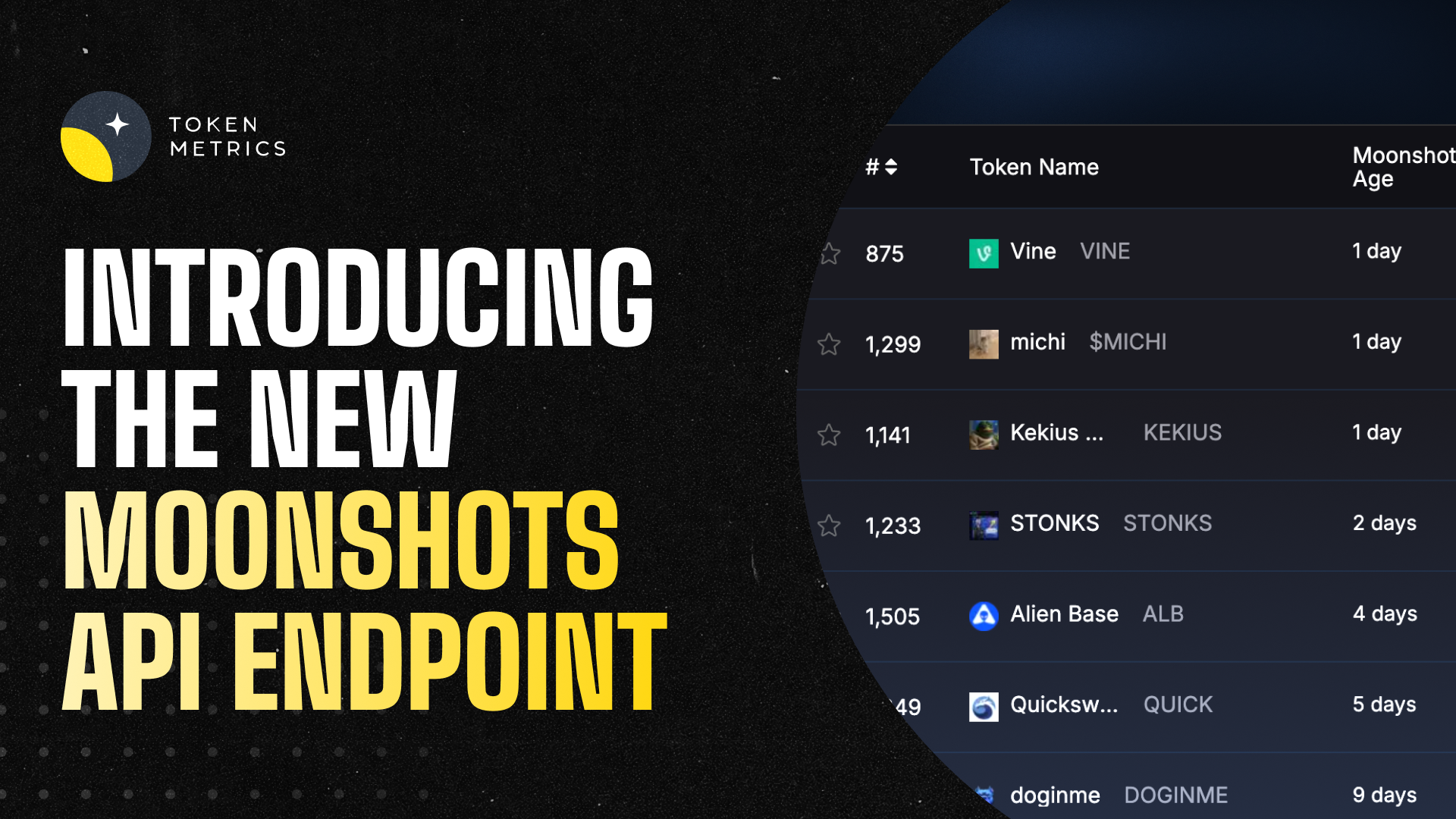
  • Strong momentum or narrative (AI, DePIN, RWA, etc.)
  • Undervalued fundamentals

Moonshots are not just about luck—they require precise timing, data-driven decisions, and a disciplined trading strategy.

Why You Need a Moonshot Trading Strategy

While moonshots offer huge potential returns, they also come with extreme volatility. Without a clear entry and exit strategy, traders risk:

  • Buying too late (after the pump)
  • Selling too early (missing major gains)
  • Holding too long (watching gains vanish)

That’s why successful moonshot trading is all about executing at the right moment, based on real-time buy and sell signals.

How Buy/Sell Signals Work in Moonshot Trading

Buy/sell signals are automated indicators based on technical analysis, AI modeling, and data trends. When applied to moonshots, they help traders:

  • Identify breakout momentum (Buy signal)
  • Detect overbought or reversal zones (Sell signal)
  • Avoid emotional decision-making
  • Automate trades and alerts

Token Metrics—one of the top AI crypto analytics platforms in 2025—offers integrated buy/sell signals as part of its Moonshots feature.

Token Metrics Moonshots: AI-Powered Buy/Sell Signals

Token Metrics uses artificial intelligence to monitor over 6,000 tokens and identify daily Moonshots—early-stage tokens with exceptional upside potential. Each token is scored using over 80 data points, including:

  • Price momentum
  • Market cap growth
  • Exchange activity
  • On-chain volume
  • Social sentiment
  • Developer engagement

The platform then issues Bullish (buy) and Bearish (sell) signals to help traders time their entries and exits more precisely.

Step-by-Step: Moonshot Trading Strategy Using Buy/Sell Signals

Here’s a structured approach to building a winning moonshot trading strategy using Token Metrics:

Step 1: Discover New Moonshots

  • Log into Token Metrics and navigate to the Ratings Page.
  • Click the “Moonshots” tab to view tokens flagged by AI as high-upside.
  • Prioritize tokens with:

    • High and rising Trader Grade
    • Increasing 24H volume
    • Market cap under $100M
    • Bullish signal in the last 48 hours

Step 2: Review Buy Signals

  • Each Moonshot token includes a Bullish Signal if AI algorithms detect a breakout pattern.
  • This buy signal is triggered when a token shows:

    • Positive trend momentum
    • Strength across technical indicators (RSI, MACD, trendlines)
    • Accelerating volume or wallet activity

Pro Tip: Combine Bullish signals with a recent Moonshot entry (within the past 3 days) for the best short-term upside potential.

Step 3: Set Entry Price and Allocation

  • Enter the trade using a small allocation (e.g., 1–3% of your total portfolio) to manage risk.
  • Use Token Metrics' Swap Widget to buy directly from the Moonshots page—saving time and avoiding DEX errors.

Step 4: Monitor Price Action and Grade Movement

  • Use the Token Details Page to track:

    • Real-time price chart
    • Live ROI since entry
    • Any changes in Trader Grade
    • Buy/Sell signal updates

Token Metrics continuously analyzes live data. If momentum starts to fade, the platform may issue a Bearish Signal, suggesting it's time to exit.

Step 5: Execute Sell Based on Bearish Signal or ROI Target

There are two ways to exit your moonshot trade:

🟢 Method A: Sell on Bearish Signal

  • When the token’s momentum weakens, AI may flag a Bearish Signal
  • This means a possible trend reversal, ideal for short-term traders looking to lock in gains.

🟢 Method B: Set ROI Targets

  • Sell 50% of your position at 2x, 30% at 5x, and hold the rest for a potential 10x+
  • Use Token Metrics alerts to track when ROI milestones are hit

Pro Tip: Combine both methods—sell early if a Bearish Signal appears, or scale out using a profit-taking ladder.

Risk Management Tips for Moonshot Trading

Even with powerful tools, moonshot trading is high-risk. Follow these tips to protect your capital:

1. Start Small

Never go all-in on a single Moonshot. Spread your bets across multiple tokens to increase your odds of success.

2. Use Stop Losses

Set a stop loss between 20%–30% below your entry price to prevent major drawdowns.

3. Track Past Moonshots

Use Token Metrics’ Past Moonshots view to study which tokens succeeded and what signals preceded them.

4. Leverage Alerts

Use custom alerts to get notified when:

  • A new Moonshot is added
  • A token hits your ROI target
  • A Bearish signal is triggered

Tools to Supercharge Your Strategy

Token Metrics integrates with:

  • Telegram, Slack, and Discord alerts
  • API and SDK access to automate trades
  • Swap widget for 1-click buying from Moonshots page
  • MCP Server to unify data across agents and trading bots

Final Thoughts: Trade Moonshots Like a Pro

In 2025, crypto markets are more efficient than ever. Random guessing and influencer hype don’t cut it anymore.

To win, you need:
✅ Smart discovery
✅ Timely entries
✅ Strategic exits
✅ Reliable signals

With Token Metrics Moonshots and AI-powered buy/sell signals, you get the full toolkit to trade early-stage altcoins with confidence. It’s the edge every trader needs in the age of intelligent automation.

Get Started Today

  • 🔥 Sign up at tokenmetrics.com
  • 🔍 Explore the Moonshots tab
  • 📈 Track live buy/sell signals
  • 🛒 Buy instantly using the swap widget

🧠 Trade smarter, not harder

Crypto Basics

Crypto Moonshot - The Ultimate Guide to High-Risk, High-Reward Opportunities in Crypto in July 2025

Token Metrics Team
8 min
MIN

In both tech and investing, the term “moonshot” has become a buzzword. But what does it really mean—especially in the world of cryptocurrency? In 2025, where crypto markets move faster than ever and fortunes are made in weeks, understanding what a moonshot is—and how to spot one—can be the difference between average returns and life-changing gains.

In this guide, we’ll explore what a moonshot is, where the term originated, how it applies to crypto, and how platforms like Token Metrics are using AI to identify real moonshot opportunities before they go mainstream.

What Is a Moonshot?

At its core, a moonshot refers to a bold, ambitious goal or project that aims for massive success—despite high risk and low probability. The term comes from the U.S. Apollo missions, which set out to put a man on the moon in the 1960s—a seemingly impossible goal at the time.

In the tech world, “moonshot” often describes breakthrough innovations with radical upside potential, like:

  • Electric cars replacing gasoline
  • AI replacing human labor
  • SpaceX launching Mars colonization

In crypto, a moonshot is an early-stage altcoin with the potential for 10x, 50x, or even 100x returns—if discovered before the crowd.

What Is a Moonshot in Crypto?

A crypto moonshot is a low-cap cryptocurrency project that has strong fundamentals, an emerging narrative, or technical signals that suggest it could deliver explosive gains in a short timeframe.

These tokens are usually:

  • Undervalued or under-the-radar
  • Not yet listed on major exchanges like Binance or Coinbase
  • In sectors with rising interest (AI, DePIN, Layer 2, RWA, etc.)
  • Backed by a solid team, roadmap, or tech innovation

But moonshots come with high risk. For every 100x winner, there are dozens of tokens that go to zero. That’s why smart investors use data, not hype, to find real opportunities.

Why Do Traders Hunt for Moonshots?

1. Asymmetric Returns

With moonshots, you risk $100 for the chance to earn $10,000. That level of upside doesn’t exist in traditional markets.

2. Small Capital, Big Potential

You don’t need millions to win big. Moonshots give retail traders a fighting chance to outperform institutions—if they find the token early enough.

3. Innovation at the Edge

Moonshot tokens often represent the bleeding edge of blockchain innovation—from decentralized AI to tokenized real-world assets.

The Problem with Finding Moonshots

Despite the massive upside, most traders miss the real moonshots and end up buying the hype too late.

Why?

  • Too much noise: Social media is flooded with pump-and-dump schemes.
  • Lack of research: Retail investors often follow influencers instead of analyzing fundamentals.
  • Fragmented data: It’s hard to compare tokens across metrics like on-chain activity, technicals, sentiment, and fundamentals.

This is why platforms like Token Metrics are changing the game.

How Token Metrics Helps You Find Real Moonshots

Token Metrics is an AI-powered crypto analytics and trading platform that includes a dedicated Moonshots feature—designed to help users find early-stage altcoins before they pump.

What Makes It Different:

  • AI-driven token scoring using 80+ metrics
  • Real-time Trader Grades and Investor Grades
  • Transparent entry dates, market caps, and live ROI
  • In-app Buy button for instant on-chain swaps

You don’t have to guess. The platform’s AI analyzes thousands of tokens daily and surfaces a curated list of Moonshots based on data—not hype.

How to Use Token Metrics Moonshots?

Step 1: Go to the Ratings Page

From your Token Metrics dashboard, click on the Ratings tab to access AI scores for thousands of tokens.

Step 2: Click the “Moonshots” Tab

Inside Ratings, select the Moonshots tab to view tokens with the highest potential based on current trends.

Step 3: Review the Data

Each Moonshot includes:

  • Trader Grade (with change %)
  • 24H volume
  • Market cap
  • Entry date
  • ROI since entry

You can also explore Past Moonshots to verify previous performance.

Step 4: Do Your Due Diligence

Click a token to open its full details page—real-time chart, top holders, fundamental analysis, exchange listings, and more.

Step 5: Buy Instantly

Click the Buy button to use the integrated swap widget for direct on-chain purchases—no need to leave the platform.

Are Moonshots Legit?

Yes—if you use the right tools.

Moonshots are not meme coins or influencer pumps. A legitimate moonshot is backed by data, momentum, and real fundamentals.

With Token Metrics, you can:

  • Avoid emotional trading
  • Use AI insights to guide decisions
  • See historical results to validate picks
  • Get alerts when new moonshots emerge

In short: Moonshots are legit if they’re backed by research—not hype.

Final Thoughts: Why Moonshots Matter in 2025

The crypto landscape is becoming more competitive every day. Gone are the days when you could randomly buy a new token and expect 10x returns.

In 2025, traders need smart tools, real data, and automated insights to stay ahead of the curve.

That’s where Moonshots come in.

They represent the cutting edge of early-stage discovery—where small bets can lead to massive wins. And with platforms like Token Metrics leading the charge, moonshot investing is becoming smarter, faster, and more accessible than ever before.

Crypto Basics

What Is Moonshot Crypto? How Token Metrics Is Revolutionizing Early-Stage Altcoin Discovery in July 2025

Token Metrics Team
8 min
MIN

In 2025, crypto markets are more competitive—and more crowded—than ever. Thousands of tokens launch every month, and most vanish into obscurity. But every now and then, a hidden gem explodes, delivering 10x, 50x, or even 100x returns to early investors.

These rare, high-upside tokens are called moonshots.

In this article, we’ll break down what moonshot crypto really means, why it matters, and how you can discover legit moonshot opportunities using Token Metrics, the leading AI-powered crypto analytics platform.

What Is Moonshot Crypto?

A moonshot in the crypto world refers to a low-market-cap altcoin that has the potential to rise exponentially in value. The term is derived from the phrase “shooting to the moon,” symbolizing massive growth in a short time.

Common Traits of Moonshot Tokens:

  • Low market cap (usually under $50M)
  • Early-stage with limited exchange listings
  • Strong narrative (AI, DePIN, RWA, Gaming, etc.)
  • Innovative tech or use-case
  • Undervalued or undiscovered by the broader market

Moonshots aren’t guaranteed winners. They’re high-risk, high-reward opportunities—but for savvy investors, they can be game-changers.

Why Moonshots Matter in Crypto Trading

In traditional markets, consistent 2x or 3x returns are considered extraordinary. In crypto, however, early access to the right token can yield 100x+ returns in a matter of weeks.

Moonshots are especially important because:

  • They maximize asymmetric risk-reward.
  • They help small portfolios outperform big capital.
  • They offer access to innovation early, before VC rounds or CEX listings.

The challenge? Finding these tokens before the crowd does. That’s where Token Metrics comes in.

Introducing Token Metrics Moonshots

Token Metrics Moonshots is a proprietary feature that uses artificial intelligence to scan the entire crypto market and identify high-potential altcoins before they go viral.

Instead of relying on social media hype or guessing based on charts, Token Metrics analyzes over 80+ data points per token, including:

  • Technical indicators
  • On-chain activity
  • Fundamental quality
  • Social sentiment
  • Exchange volume
  • Developer metrics

The AI then surfaces a curated list of Moonshot tokens that show early signals of explosive growth.

How to Use Token Metrics to Find Moonshot Cryptos

Here’s a step-by-step guide to accessing and using the Moonshots feature on Token Metrics:

Step 1: Go to the Ratings Page

  • From the Token Metrics dashboard, navigate to the Ratings tab.
  • This is the hub where tokens are scored and ranked using Trader Grades and Investor Grades powered by AI.

Step 2: Click on the “Moonshots” Tab

  • Inside the Ratings page, you’ll find the Moonshots tab at the top.
  • This section displays the tokens that Token Metrics' AI has flagged as high-upside, early-stage opportunities.

Step 3: Review Key Metrics

For each Moonshot token, Token Metrics shows:

  • Trader Grade and how it’s changed recently
  • 24H volume and market cap
  • Date of entry (when the token was flagged)
  • Live ROI (how much it has gained since being listed)

Want to verify the results? Switch to Past Moonshots to see performance over 7 or 14 days.

Step 4: Choose a Token to Explore

  • Click on any token to view its Token Details Page.
  • This gives you access to real-time charts, fundamentals, code audits, exchange listings, and top wallet holders.
  • Use this page to build confidence before investing.

Step 5: Buy in Seconds

  • Token Metrics integrates a swap widget that lets you buy Moonshot tokens directly from the platform.
  • No need to jump between apps or copy wallet addresses—just click Buy and swap instantly.

Is Moonshot Crypto Legit?

Let’s address the elephant in the room: Is Moonshot crypto real, or just marketing hype?

Here’s why Moonshots are not only legit—but one of the most powerful trading tools in the crypto space:

✅ Transparent Performance

  • Every Moonshot is tracked in real time.
  • You can see the exact date it was added, entry price, and ROI since entry.
  • Toggle to Past Moonshots to validate historical performance.

✅ AI-Driven, Not Hype-Driven

  • Token Metrics doesn’t rely on influencers or speculation.
  • It uses quantitative models to scan thousands of tokens daily and surface winners based on hard data.

Moonshot vs Meme Coin: What's the Difference?

Not all low-cap coins are Moonshots.

Who Should Use Moonshots?

✅ Retail Traders

Looking for early entries into next-gen altcoins

✅ Crypto Investors

Seeking data-backed portfolio diversification

✅ DeFi Enthusiasts

Exploring new sectors like RWA, AI, Gaming, or Layer 2

✅ Builders and Analysts

Using Token Metrics API to integrate Moonshot data into dashboards, bots, or research workflows

Moonshots Are Now a Developer Tool Too

With the Token Metrics API and MCP Server, developers can access Moonshot data in real time using:

  • OpenAI Agents
  • Claude Desktop
  • Cursor IDE
  • Windsurf
  • CLI and VS Code integrations

Build AI crypto trading agents, compliance dashboards, or custom alerts with a single unified key and protocol. Start free at
👉 https://app.tokenmetrics.com/en/api

Final Thoughts: Moonshots Are the New Alpha

In 2025, finding alpha in crypto requires more than luck or hype—it requires precision, speed, and data-driven tools.

Token Metrics Moonshots is one of the only legit, AI-powered solutions that lets retail and institutional traders alike discover early-stage crypto projects before they go parabolic.

So, what is Moonshot crypto?
It’s not a meme. It’s a method.

Crypto Basics

How to Invest in Cryptocurrency Using Token Metrics AI Tools (July 2025 Guide)

Token Metrics Team
8 min
MIN

Cryptocurrency continues to redefine global finance, and in 2025, more investors than ever are looking to tap into the opportunities it offers. But with over 20,000+ tokens in the market and extreme volatility, investing in crypto isn’t as simple as “buy and hold.” To succeed, you need a strategy powered by real-time data, AI analytics, and smart risk management.

That’s where Token Metrics comes in. This AI-powered crypto research and investment platform helps investors make data-backed decisions with confidence. In this guide, we’ll walk you through how to invest in cryptocurrency step-by-step—using Token Metrics’ powerful AI tools.

What Is Cryptocurrency Investing?

Cryptocurrency investing involves allocating capital into digital assets like Bitcoin, Ethereum, or altcoins with the goal of generating long-term returns. Unlike traditional investing, crypto markets are:

  • Decentralized: No central authority controls them.
  • 24/7: They never close.
  • Highly volatile: Prices can swing 10–50% in a single day.
  • Innovation-driven: New projects can rise or fall quickly based on tech adoption.

To succeed, you need more than luck—you need data, insights, and tools that give you an edge.

Step-by-Step: How to Invest in Cryptocurrency Using Token Metrics

✅ Step 1: Educate Yourself

Before investing, understand the basics:

  • What is blockchain?
  • What is a cryptocurrency token?
  • How does trading differ from investing?
  • What are the risks?

Token Metrics offers research pages, video tutorials, and AI-generated insights to help you get up to speed quickly.

✅ Step 2: Choose a Crypto Investment Strategy

There are several ways to invest in crypto:

1. HODLing (Buy and Hold)

  • Ideal for long-term believers in projects like Bitcoin or Ethereum.
  • Token Metrics’ Investor Grade helps you identify strong long-term assets based on fundamentals, code quality, and adoption metrics.

2. Swing Trading

  • Capitalize on medium-term market cycles (7–30 days).
  • Use Token Metrics’ Trader Grade to spot assets with strong short-term upside momentum.

3. Narrative/Thematic Investing

  • Invest based on trends like AI, Real World Assets (RWA), or DePIN.
  • Token Metrics offers AI-powered indices and sector filters to help you find tokens that match your belief in a growing niche.

4. Moonshot Investing

  • Target low-cap altcoins with explosive growth potential.
  • Token Metrics’ Moonshots feature uses AI to highlight daily tokens with 10x–100x potential—before they hit major exchanges.

✅ Step 3: Discover Tokens with Token Metrics AI Tools

Token Metrics scans 6,000+ tokens daily and gives each one a score based on:

  • Technical Analysis (MACD, RSI, trend)
  • On-Chain Data (volume, wallets, transfers)
  • Fundamental Metrics (team, roadmap, tokenomics)
  • Sentiment & Social Data (buzz, mentions, FUD)
  • Exchange Data (liquidity, slippage, volume)

Top features include:

📊 Ratings Page

  • View Trader and Investor Grades for all tokens.
  • Sort by market cap, volume, or recent performance.

🚀 Moonshots

  • AI-curated list of high-upside altcoins.
  • View live ROI, Trader Grade, market cap, and entry date.

📈 Signals

  • Real-time Bullish and Bearish alerts for major tokens.
  • Combine with custom alerts to automate decision-making.

📥 Custom Alerts

  • Set alerts for price changes, grade movements, or signal triggers.
  • Get notifications via email, Telegram, or Slack.

🛠️ Token Details Page

  • Dive deep into token charts, historical performance, wallet holders, and exchange listings—all in one place.

✅ Step 4: Build Your Portfolio

Once you’ve identified the tokens you want to invest in, it’s time to create a diversified crypto portfolio. Here’s how:

  • Allocate 60% to long-term holds (BTC, ETH, strong layer-1s).
  • Allocate 20% to sector themes (AI, DePIN, Gaming, RWAs).
  • Allocate 20% to moonshots with strict risk management.

Token Metrics offers AI-generated portfolios and model indices to help you follow proven allocation strategies.

✅ Step 5: Execute Trades Safely

Once you’re ready to invest, Token Metrics makes execution simple:

  • Click the “Buy” button directly from any Token Details or Moonshots page.
  • Use the integrated on-chain swap widget to buy instantly.
  • No need to manually copy contract addresses or search on DEXs.

✅ Step 6: Monitor and Adjust

Use Token Metrics to continuously monitor your investments:

  • Watch for Trader Grade downgrades or bearish signals.
  • Use Past Moonshots to analyze winning and losing patterns.
  • Export data for backtesting or share with advisors.

Advanced users can also plug into the Token Metrics API or MCP Server to build custom dashboards, AI bots, and automated strategies.

Why Token Metrics Is the Best Crypto Investment Tool in 2025

Here’s what makes Token Metrics different from other platforms:

Tips for Investing in Cryptocurrency Safely

  • Use a secure wallet: Store your tokens in hardware wallets like Ledger or Trezor.
  • Never invest more than you can afford to lose: Crypto is volatile. Stay disciplined.
  • Avoid emotional trading: Let Token Metrics’ AI help you stay data-driven.
  • Stick to your strategy: Whether it’s HODLing or Moonshot hunting, don’t deviate based on hype.
  • Use alerts to avoid missing out on sudden moves.

Final Thoughts: Invest Smarter, Not Harder

In 2025, crypto investing is no longer about gambling or following influencers. It’s about using AI, data, and automation to make smarter, faster, and more profitable decisions.

With Token Metrics, you gain access to:

  • Proven AI-driven analytics
  • Moonshot altcoin discovery
  • Real-time signals and alerts
  • Tools for long-term investing and short-term trading
  • The infrastructure to build your own AI crypto bots and agents

Whether you’re new to crypto or looking to take your portfolio to the next level, Token Metrics is the ultimate investment companion.

Crypto Basics

Bitcoin Price Prediction for July 2025: Key Trends, Insights, and What Investors Can Expect

Token Metrics Team
8 min
MIN

As of July 2025, Bitcoin (BTC) is experiencing a major breakout, surging past $119,000 after breaching the critical $110,000 resistance level. This surge, driven by institutional capital inflows, supply constraints, and favorable macroeconomic trends, has reignited optimism in the broader crypto market.

But how high can Bitcoin go in 2025—and beyond? Is this rally sustainable? What are the risks? In this highly informative and SEO-optimized blog post, we’ll provide a detailed Bitcoin price prediction for 2025, using real-time data from the Token Metrics AI crypto trading and research platform, along with key macro, on-chain, and policy-level insights.

🚀 The Bullish Breakout: Bitcoin Turns Upward in June 2025

On June 28, 2025, the Token Metrics AI signal for Bitcoin turned bullish, signaling a strong shift in momentum. Since then, Bitcoin has:

  • Surged past $118,000
  • Broken the psychological and technical resistance at $110,000
  • Shown strong price action supported by both on-chain and institutional metrics

This wasn’t just a technical rally—it’s been fundamentally driven by several powerful tailwinds.

📊 Institutional Adoption: The Driving Force Behind Bitcoin’s Surge

1. Bitcoin Spot ETFs See Billions in Inflows

Major financial institutions—BlackRock, Fidelity, and Charles Schwab—have led the charge in Bitcoin ETF adoption. As of Q3 2025:

  • Total net inflows to U.S.-based Bitcoin ETFs have surpassed $25 billion
  • These products are now used in 401(k)s, pension funds, and private wealth portfolios

Institutional buyers are not flipping BTC like retail investors. Instead, they’re accumulating and holding, tightening supply and driving long-term demand.

2. Declining Exchange Reserves

Another bullish on-chain indicator: BTC reserves on exchanges have dropped from 3.25 million to just 2.55 million BTC—a level not seen since 2017. This suggests:

  • More Bitcoin is being moved to cold wallets
  • Less BTC is available for sale
  • Market sentiment is shifting from “sell” to “HODL”

When supply tightens while demand rises, prices move up—a simple but powerful formula playing out in real time.

📈 Policy Tailwinds: Pro-Crypto Regulations in the U.S.

The current U.S. regulatory landscape is the most Bitcoin-friendly in history.

🔹 Bitcoin Reserve Proposal

There are growing discussions in U.S. policy circles around holding Bitcoin as a strategic reserve asset, similar to gold. This has further validated BTC as:

  • A legitimate sovereign-grade asset
  • A hedge against inflation and geopolitical uncertainty

🔹 Clarity on Custody and Taxes

Clear guidelines on:

  • Crypto tax treatment for institutions
  • Custodianship rules for ETFs and banks
  • Greenlight for banks to hold digital assets

…have dramatically increased institutional confidence in Bitcoin.

💰 Macroeconomic Trends Supporting BTC’s Growth

1. Weakening U.S. Dollar

The U.S. Dollar Index (DXY) has fallen due to:

  • Rising national debt
  • Slowing economic growth
  • High interest rates suppressing consumer demand

This has led investors to rotate into store-of-value assets like Bitcoin.

2. Rising Geopolitical Risk

Tensions in the Middle East (e.g., Israel-Iran) and ongoing trade disputes have fueled demand for assets that are:

  • Borderless
  • Non-sovereign
  • Resistant to censorship

Bitcoin fits all three criteria, increasing its role as a digital safe haven in times of global instability.

⚠️ Risks to Monitor in 2025

While the Bitcoin outlook is bullish, several risks could slow momentum:

❌ 1. Energy Usage Concerns

Bitcoin’s Proof-of-Work (PoW) consensus mechanism remains energy-intensive. Critics argue this could:

  • Attract stricter environmental regulations
  • Reduce adoption in ESG-conscious portfolios

❌ 2. Regional Regulatory Uncertainty

Not all jurisdictions are as pro-Bitcoin as the U.S. In 2025, some countries (especially in Asia and Europe) continue to:

  • Restrict Bitcoin trading
  • Propose heavy taxation
  • Limit institutional adoption

❌ 3. Price Corrections

With BTC up significantly since the start of 2025, short-term pullbacks are likely. Corrections of 15–25% are common in bull cycles—investors should be prepared with clear entry and exit strategies.

📉 Bear Case Scenario

If institutional inflows slow down or new regulation spooks the market:

  • Bitcoin could retrace to $90,000–$100,000
  • This would represent a healthy correction, not a full trend reversal
  • Long-term fundamentals still remain intact

📊 Token Metrics AI Forecast: Bitcoin Price Prediction for 2025–2026

Using on-chain data, macro indicators, and real-time signals from the Token Metrics platform, the current forecast is:

This outlook is supported by Token Metrics AI signals, which have maintained a bullish position since late June 2025.

🧠 How Token Metrics Helps You Navigate Bitcoin and Beyond

While Bitcoin is a macro asset, altcoins often outperform it in bull markets. Token Metrics helps investors identify these opportunities with:

🚀 Moonshots

  • Daily low-cap altcoin picks with 10x–100x potential
  • Live ROI, market cap, and trader grade metrics
  • AI-driven early discovery engine

📈 Real-Time Buy/Sell Signals

  • Use Trader Grade for short-term trades
  • Use Investor Grade for long-term conviction picks

💹 Crypto Indices

  • Thematic portfolios (AI, RWA, Layer 1s, etc.)
  • Easy exposure to sectors likely to boom after BTC leads the rally

🔔 Take Action Today

If you’re looking to ride the current Bitcoin bull cycle and find the next big altcoins to complement your portfolio, start using Token Metrics today:

✅ Track real-time signals
✅ Discover early Moonshots
✅ Analyze risk with AI
✅ Make informed crypto investment decisions

👉 Sign up now at TokenMetrics.com

Thank you! Your submission has been received!
Oops! Something went wrong while submitting the form.

Featured Posts

Crypto Basics Blog

Research Blogs

Announcement Blogs

Unlock the Secrets of Cryptocurrency

Sign Up for the Newsletter for the Exclusive Updates